


Dota 2 Ability Draft Guide: Rules, Best Combos and the Abilities Everyone Fights For

Ability Draft (AD) is the one mode in Dota 2 where the meta does not exist. Every game is a scramble to snap up the most powerful abilities before opponents do, then figure out whether your four picks actually work together. Half the lobby wants the same five abilities. The other half is improvising on the fly.
This guide covers everything: how AD rules actually work, the snake draft pick order, which abilities are almost always first-picked, how attribute heroes behave when you give them someone else’s kit, and ten-plus ability combos that genuinely win games. If you have played AD and kept losing the draft before the laning phase even started, the sections on draft strategy and priority tier are where to go first.
In This Guide
What Is Ability Draft in Dota 2?
Ability Draft is an official Dota 2 game mode where the abilities of a random set of heroes are pooled together and every player drafts four of them — three regular abilities and one ultimate. The hero model you end up with is random; what matters is which abilities you select in the draft.
The result is a sandbox unlike anything in normal modes. A support hero can end up with a carry-level physical damage toolkit. A strength hero can run a full magic nuke combo. Heroes that are mediocre in regular play become terrifying when handed the right abilities. And heroes that are normally strong can become completely useless if the right abilities are gone before the draft reaches them.
AD does not affect your ranked MMR — it uses a separate hidden matchmaking rating. This makes it a popular stress-relief option for players who want competitive feel without stakes. For a full breakdown of which modes do and do not give MMR, see our guide on which game modes affect MMR in Dota 2. This guide is also part of our Dota 2 game modes overview, which covers every available mode in detail.
How Ability Draft Works: Rules and Pick Order
Before you can draft well, you need to understand the structure. Here is what actually happens when an AD lobby launches.
The Hero Pool
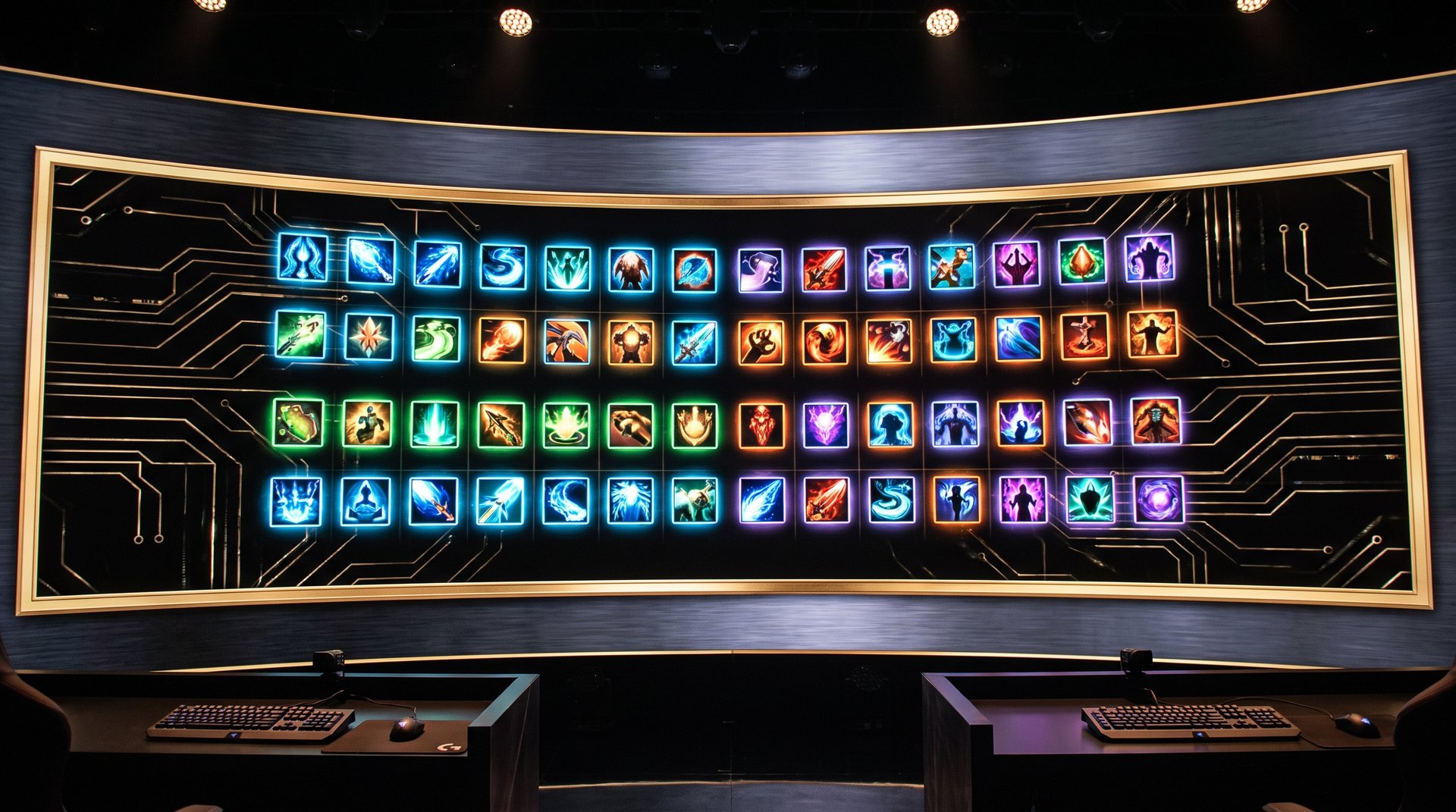
When an AD match starts, Dota 2 randomly selects approximately 24 heroes from the full roster. Each of those heroes contributes their abilities to the shared pool. Regular abilities (Q, W, E) go into the regular ability pool. Ultimates (R) go into a separate ultimate pool. The abilities are displayed on a shared drafting screen for all players to see simultaneously.
The hero model you are assigned is also random and comes from this same set. Your hero’s base attributes — strength, agility, or intelligence — determine your stat growth and which attribute your chosen abilities scale with. This is relevant because some ability effects scale with the primary attribute of the hero using them.
Pick Order: Snake Draft
Ability Draft uses a snake draft structure. With 10 players, the pick order works like this:
| Round | Direction | Picks |
|---|---|---|
| Round 1 | Forward | Players 1 through 10 |
| Round 2 | Reverse | Players 10 through 1 |
| Round 3 | Forward | Players 1 through 10 |
| Round 4 (ultimates) | Reverse | Players 10 through 1 |
The first three rounds draft from the regular ability pool. The fourth round drafts from the ultimate pool only — each player takes exactly one ultimate in this final round.
The snake structure means the player who picks first overall also picks last in the second round. Pick positions alternate between first and last advantage. Players who pick late in round one compensate by picking early in round two, giving everyone a reasonably fair chance at second-tier picks if the top abilities are gone.
Each pick has a time limit. If a player runs out of time, a random ability is selected for them. This is devastating if it happens on your ultimate pick round, so always have a backup in mind before the timer reaches single digits.
Ability Interactions
One key rule: abilities still work the way they did on their original hero, with one important exception — stat-scaling numbers use your hero’s stats, not the original hero’s. Mana and health costs stay the same. Cooldowns stay the same. But if an ability scales with agility and you are playing a strength hero, the damage output will be lower than on its original carrier.
Some abilities have built-in synergies on their original hero — for example, an ability that passively procs off an attack modifier. In AD, those synergies do not automatically transfer. You have to build your own synergies from scratch using abilities from different hero kits.
Abilities Everyone Fights For
Every AD lobby has a short list of abilities that get taken within the first two picks of round one, regardless of which heroes those abilities originally belonged to. Here is a breakdown of the most consistently contested regular abilities and ultimates, and why they are valued so highly.
Most Contested Regular Abilities
| Ability | Original Hero | Why It Is Contested |
|---|---|---|
| Berserker’s Call | Axe | Forces all nearby enemies to attack you, pairing with Counter Helix or any passive for guaranteed procs. Initiation without a blink still works if you can get into range first. |
| Counter Helix | Axe | Pure damage passive that procs on every 4th attack against you. Stacks with almost any kit that draws attacks — Call, Borrowed Time, anything that invites aggression. |
| Pulse Nova | Leshrac | Sustained AoE magic damage on a toggle. Pairs with almost anything and turns any hero into a teamfight presence throughout the fight’s duration. |
| Death Ward | Witch Doctor | Channeled, high single-target damage with bouncing attack chains. Needs protection to channel safely but the raw output is among the highest in the pool. |
| Mana Void | Anti-Mage | Explodes an enemy for damage equal to their mana deficit. Pairs with any mana-burn or mana-reduction ability to one-shot high-intelligence targets. |
| Moment of Courage | Legion Commander | Passive that gives a chance on attack to trigger lifesteal plus a bonus attack. One of the best right-click passives in any given pool. |
| Heartstopper Aura | Necrophos | Passive percentage-based HP drain on all nearby enemies. Strongest in extended fights and against high-HP targets — and it never needs activation. |
Most Contested Ultimates
Ultimates are drafted last but they often define a draft’s identity more than the regular abilities do. These are the ultimates you almost never see left over when the pool closes:
| Ultimate | Original Hero | Why It Is First-Picked |
|---|---|---|
| Chronosphere | Faceless Void | Stops time for all enemies in a large radius. No dispel, no save, no counterplay if you are inside. The risk of freezing your own teammates still applies in AD. |
| Ball Lightning | Storm Spirit | Costs mana, travels infinitely, repositions instantly. Offensive, defensive, escape, and initiation in one button. The most versatile movement ultimate in the pool. |
| Fiend’s Gate | Underlord | Teleports your entire team to a target location. In AD it is a global tactical tool for any hero — not just Underlord. |
| Winter’s Curse | Winter Wyvern | Freezes a target and forces nearby allies to attack it. In a good combo, it converts the enemy’s highest-damage carry into their team’s executioner for the duration. |
| False Promise | Oracle | Delays all damage and healing on an ally until expiry, then heals double the damage taken. One of the strongest defensive ultimates in the game, on any hero. |
| Borrowed Time | Abaddon | Passively triggers when you drop below a threshold, converting all incoming damage into healing. The best personal survival ultimate in any pool. |
| Ice Blast | Ancient Apparition | Applies a mark that, if completed, kills below a health percentage threshold and prevents all regeneration on marked targets. Counters illusion-based combos and sustain-heavy picks. |
How Attribute Heroes Work in Ability Draft
In standard Dota 2, a hero’s primary attribute determines their damage type and stat scaling. In Ability Draft, your hero body is random but your abilities come from elsewhere. This creates mismatches you need to plan around before picking.
Primary Attribute and Ability Scaling
Many abilities explicitly state they scale with primary attribute or have conditional effects tied to hero type. If you take an ability that was designed for an agility hero and you are running a strength hero, you will deal less physical damage from attack-speed-based procs and your stat gain per level will look different.
The most important thing to check when you see an ability you want is whether its damage or proc value scales with agility, strength, or intelligence — or whether it has a flat value. Flat-value abilities are attribute-neutral. Scaling abilities demand that you match the original hero’s attribute, or accept a weakened version of the ability on your kit.
Base Stats and Attack Animations
Your hero’s attack animation and projectile speed are fixed to the hero you were randomly assigned. Some heroes have slow attack animations that make right-click builds feel clunky even if the abilities are perfect. Sniper and Drow Ranger have clean, fast animations. Beastmaster and Ogre Magi do not. This matters when you are building around a passive attack modifier that procs on hit.
Mana Pool Considerations
Intelligence heroes start with higher mana and mana regen. Strength heroes have larger HP pools. Agility heroes get better armor scaling. None of this changes based on the abilities you pick — it is tied to your hero body. If you are running a mana-intensive combo on a strength hero, buy Arcane Boots and Soul Ring early, or plan around abilities that generate their own mana (like Bloodstone or Nether Ward).
Best Ability Combos in Ability Draft
The goal of every good AD draft is to end up with four abilities that form at least one core combo. Here are ten combinations that have proven consistently strong, along with why each works and what it needs to function reliably.
1. Chronosphere + Ball Lightning
The most famous AD combo. You walk into a teamfight with Ball Lightning to position perfectly, drop Chronosphere, then continue using Ball Lightning to stay mobile inside the sphere while enemies are frozen. Ball Lightning is one of the only movement abilities that works inside Chronosphere without ending it, since you are the caster. The result: a hero who freezes all enemies and remains impossible to catch at the same time.
What it needs: enough mana to sustain both abilities. At least one damage source on top — Pulse Nova or Laguna Blade are popular additions. This combo is difficult to stop once built around.
2. Berserker’s Call + Counter Helix
The classic Axe kit reassembled by one player in AD. Call forces everyone nearby to attack you; Counter Helix fires on every 4th incoming attack for pure AoE damage. The result is a hero that destroys entire groups faster the more enemies are swinging at it. Add a defensive ability — Aphotic Shield, Refraction, or any damage-mitigation passive — to hold the group long enough for Helix to proc repeatedly through the crowd.
3. Pulse Nova + Heartstopper Aura
Two passive-to-active AoE damage sources layered together. Pulse Nova deals flat magic damage per second on a toggle. Heartstopper drains a percentage of enemy max HP passively. In extended fights against high-HP targets, Heartstopper makes enemies easier to kill; Pulse Nova secures them. Neither ability requires you to hit a single target, making this combo effective against illusion-heavy opponents who split your attention.
4. Mana Void + Mana Burn + Diffusal Blade
Mana Void deals damage based on the target’s missing mana. If you can drain enemy mana first, the Void detonation becomes a one-shot. Anti-Mage’s Mana Break passive or Pugna’s Nether Blast provide the drain; Diffusal Blade amplifies it further as an item. The combo is especially brutal against intelligence heroes with large mana pools, and it punishes anyone who stacks mana items.
5. Death Ward + Winter’s Curse
Winter’s Curse freezes a target and forces their nearby allies to attack them. During that forced-attack window, you channel Death Ward and focus every shot on the frozen target. In the window where a hero is being attacked by their own team, they die before they can respond. Both abilities deal damage independently, but the overlap window is devastating — and Death Ward’s bouncing can hit enemies standing still due to the curse.
6. Borrowed Time + Counter Helix
A durability combo. Borrowed Time converts all incoming damage into healing, so when opponents try to kill you, they trigger Counter Helix procs that deal pure damage back to them. The more enemies are in range swinging, the faster they kill themselves. This combination is particularly effective when opponents have predictable high-physical-damage kits and no way to create distance quickly.
7. Omnislash + Berserker’s Call
Use Berserker’s Call to lock enemies in place and force them to attack you. Then activate Omnislash, which triggers a series of rapid strikes across nearby targets. Because Call groups enemies together, Omnislash’s strike targets are maximized. The combination requires no setup items — just accurate casting range and correct timing of Call before the Omnislash window opens to maximize the number of enemies in range.
8. Fiend’s Gate + Ice Blast
Fiend’s Gate teleports your whole team across the map. First cast Ice Blast to mark a target globally, then use Fiend’s Gate to port your team on top of them before the blast detonates. Alternatively, combine Fiend’s Gate with any pushing ability — Nature’s Call, Plague Wards, or split-push items — to instantly relocate a setup to the opposite side of the map. This combo wins through map control rather than single-target kills.
9. Lasso + Ball Lightning or Omnislash
Batrider’s Lasso locks a target and physically drags them wherever you move. In AD, pairing it with Ball Lightning lets you skate through the enemy team while dragging their carry behind you. Pairing it with Omnislash turns you into a kill machine while keeping the priority target pulled out of position. Lasso into any hard stun is also reliable — the leash prevents the target from walking away while the stun follows up. Hard to counter without a reliable disjoint ability.
10. Pounce + Any Hard Stun
Pounce (Slark) snares a target and deals damage. It also creates a leash that prevents the target from moving far — not a full stun, but enough to hold them in place for a follow-up. Pair with Primal Roar, Echo Slam, or any reliable AoE stun to chain the crowd control. The key is that Pounce gives you a short window for a longer-cooldown stun to land, extending lockdown beyond what a single ability could achieve on its own.
11. Aphotic Shield + Death Ward
Aphotic Shield absorbs damage and explodes for AoE when destroyed. Cast it on yourself before channeling Death Ward — the explosion from the shield provides area disruption that interrupts attackers trying to cancel your channel. It also gives you an HP buffer during the most dangerous phase of the cast. This combo is a good example of using a defensive ability to enable an offensive channel rather than as pure mitigation.
Strategy: How to Draft Well in Ability Draft
Most AD losses happen in the draft before the game even starts. Here are the principles that separate players who consistently build coherent kits from those who collect four strong abilities that do not work together.
Decide Your Ultimate Before Round One Begins
The regular ability rounds happen before the ultimate round, but you should decide which ultimate you want before your first pick. Why? Because regular abilities need to complement your ultimate. If you want Chronosphere, you need a reliable way to get into melee range — Ball Lightning if available, or a blink or dash ability from the regular pool. Build your regular picks around the ultimate you have already reserved mentally.
Take At Least One Survival Ability
AD is full of players who build pure damage kits and die before the first item spike. Unless you have Borrowed Time in your kit (which solves survival on its own), take at least one ability that provides defense: Aphotic Shield, Refraction, Armlet synergy, a heal-over-time, or any damage mitigation passive. A four-ability pure offense kit will get burst down in a teamfight before it can output enough damage to matter.
Match Your Abilities to Your Hero’s Attribute
You got a strength hero body but the pool has amazing intelligence-scaling abilities. Do not force a mismatch. Either pick flat-damage abilities that do not care about your primary attribute, or accept a support role for this game and focus on utility picks — stuns, heals, saves. The worst AD decision is picking four right-click DPS abilities on an intelligence hero with poor attack animation and low base damage.
Watch What Your Opponents Are Taking
After round one you know what each opponent has in Q, W, and E. Look for patterns: if two opponents both took damage passives, they are likely building physical DPS. In round two, either take abilities that counter physical output — evasion, healing, Ghost Scepter synergy — or confirm your own kill setup is faster than theirs. The draft is not just about building your own kit; it is about anticipating what you will face in the midgame.
Do Not Over-Value Ultimates That Need Team Coordination
Winter’s Curse and Chronosphere both require the rest of your team to not stand in the wrong place. In a random AD lobby, this coordination is unreliable. Unless you are playing with a premade group that communicates, value ultimates that work independently of ally positioning: Ball Lightning, Borrowed Time, Fiend’s Gate, False Promise, and Ice Blast all function without requiring your teammates to play around them.
The Two-Button Rule
A kit that does one thing reliably beats a kit that tries to do four things inconsistently. If you are unsure which regular ability to take in round three, ask: does this pick make my core two-ability combo better, or does it introduce a second combo that requires completely different positioning? Simplicity wins in AD because your allies cannot be counted on to set up complex chains for you, and your opponents are not standing still while you figure it out.
Ability Draft and MMR: What You Need to Know
Ability Draft uses a separate hidden matchmaking rating from your ranked MMR. Playing AD — even hundreds of hours of it — does not affect the MMR that determines your medal. Your ranked badge and the MMR shown on your profile are tied to Ranked All Pick, not to AD or any other custom-mode play.
This is one of the reasons AD is popular among higher-bracket players: you can experiment with unusual ability combinations, play aggressively, and have competitive-feeling matches without any risk to your badge. If you are grinding ranked and want to improve without touching your MMR, AD is one of the best experimental labs available in the game.
That said, the separate AD matchmaking creates its own bracket. Experienced AD players know the full ability pool and will consistently out-draft players who are new to the mode. If you keep losing drafts, reading guides like this one and studying ability tier lists from community sites (Dotabuff tracks AD winrates by ability) will accelerate your learning significantly faster than raw game volume.
For players focused on climbing ranked, our MMR boosting guide explains every method for accelerating rank progress in the modes that actually count. If you are comparing services to help with the climb, our breakdown of the best Dota 2 boosting services covers what to look for before committing. For players unsure whether boosting is the right call, the is Dota 2 boosting safe guide covers the risk profile honestly and without sales pressure.
Common AD Mistakes to Avoid
These are the most consistent mistakes made by players in their first 20 to 30 AD games:
- Picking abilities because they are strong on their original hero. Counter Helix on Axe is strong because Axe also has Call. In AD, a standalone Counter Helix without a way to force attacks is much weaker. Judge the ability in your specific context, not its original one.
- Not taking Ball Lightning when it is in the pool. Ball Lightning is almost always worth taking over any regular ability except a direct combo-completer for your specific kit.
- Building four ultimates across the draft. Ultimates have long cooldowns and most require regular abilities to set them up. Four players taking an ultimate each in round four is expected — four regular abilities that are all pure utility with no damage is not.
- Ignoring the ultimate pool during regular picks. If you can see that Chronosphere is available and an opponent is drafting toward it, consider taking an ability that counters it in round two rather than waiting for the ultimate round.
- Underestimating mana costs. AD heroes almost always run out of mana faster than regular Dota 2 heroes do. Buy mana regen items unless you have a passive mana-restore ability or a Bloodstone build.
AD rewards players who know the full ability pool broadly, not just their favorite heroes. The more hero kits you understand in regular Dota 2, the faster you can identify what is and is not in any given pool — and the better your draft decisions will be. For newer players, our Best Turbo Heroes guide covers heroes with the most self-contained kits, which also tend to contribute the most flexible and dangerous abilities to an AD pool.
Struggling to Draft in Ability Draft?
AD is complex, but the underlying pattern recognition is teachable. Our Immortal-ranked coaches run AD-specific sessions where you draft live, they explain why each pick is correct or incorrect in real time, and you play through the game with active feedback on your decision-making.
Book a Dota 2 Coaching Session Explore Boosting Options



