

Best Turbo Heroes 2026: What Actually Wins Fast Games

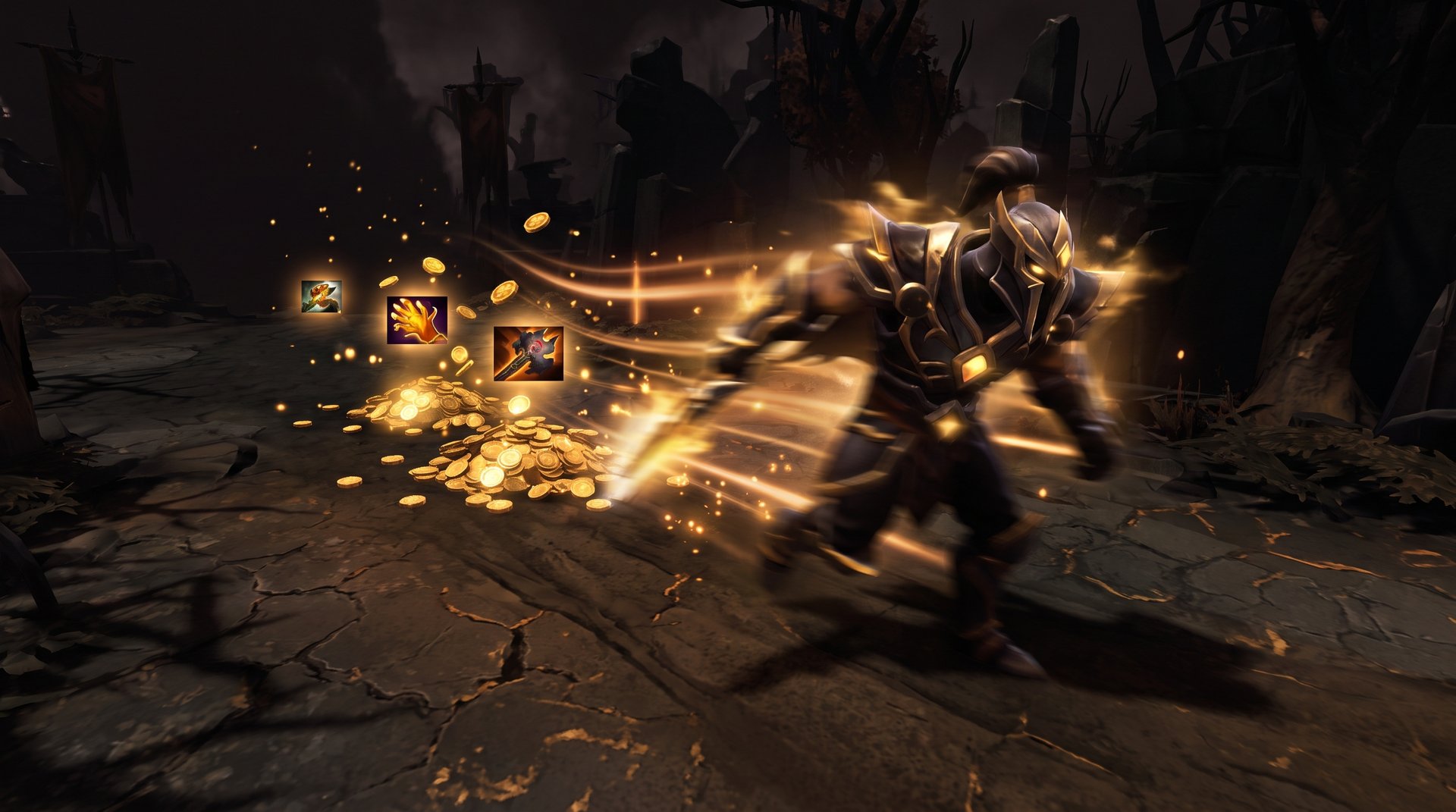
Turbo mode games are decided in the first ten minutes. The gold multiplier is doubled, heroes hit their power spikes two to three times faster than in ranked, and anyone who picks a slow, scaling hero finds themselves steamrolled before a farming pattern exists. If you want to win Turbo games consistently — whether for fun, Battle Cup, or warming up — the hero you pick matters far more than skill expression alone.
This guide ranks the best Turbo heroes in the current patch across every role, explains exactly why each one excels in the accelerated format, and gives you actionable tips on drafting and playing them to close games fast. Fifteen heroes, three roles, one clear answer for each position.
Contents
What Makes a Hero Good in Turbo Mode?
Turbo gives every hero 2x gold income and reduced respawn timers. That sounds like it levels the playing field, but it actually amplifies the advantages already built into certain kits:
- Item dependency resolved early. Carries that need a specific 2,000-gold item to come online hit that item in under six minutes. Slow heroes that needed two items to be relevant still need two items — they just get there slightly faster. Heroes already strong at low gold thresholds become oppressive.
- Snowball potential explodes. One kill in Turbo generates momentum that compounds. Heroes that convert one kill into three — through resets, low-cooldown stuns, or global pressure — create runaway leads before the opposing team can regroup.
- Forgiving kits scale the bracket. Turbo is played by people with fewer games, friends in party, or players on alt accounts. Heroes with point-and-click crowd control, large AoE ultimates, and simple item builds punish mistakes that better players would dodge in ranked.
- Map pressure wins without coordination. A hero that can globally push lanes or teleport everywhere punishes scattered Turbo opponents who have no map discipline.
Any hero that checks three or more of those boxes belongs on this list. The tier list below reflects community win-rate data (Stratz, current patch, 10,000+ games minimum per hero) combined with observations from TeamSmurf coaches who play hundreds of Turbo games monthly as part of their warm-up and hero-testing routines.
The Full Turbo Tier List
S-tier heroes maintain above 57% win rate in Turbo across all skill brackets. A-tier sits at 54 to 57%. B-tier is still above the 50% baseline and worth picking, but requires more from the player to unlock their full value.
| Hero | Tier | Role | Why It Excels in Turbo |
|---|---|---|---|
| Wraith King | S | Carry (Pos 1) | Double life trivializes early deaths; fast Radiance snowballs |
| Juggernaut | S | Carry (Pos 1) | Level 1 Blade Fury wins every early fight; Omnislash closes games |
| Zeus | S | Mid (Pos 2) | Global damage, low cooldown, punishes scattered teamfights instantly |
| Tinker | S | Mid (Pos 2) | Boots of Travel comes at 5 minutes; map dominance from minute 6 |
| Axe | A | Offlane (Pos 3) | Blink + Berserker’s Call rushable; Culling Blade resets fights |
| Bristleback | A | Offlane (Pos 3) | Passive stacking tank; Quill Spray farms and kills simultaneously |
| Sven | A | Offlane / Carry | God’s Strength + battlecry is a one-button teamfight win |
| Lion | A | Support (Pos 4) | Hex + stun + Finger combo deletes heroes instantly |
| Crystal Maiden | A | Support (Pos 5) | Free mana aura keeps team spamming; Freezing Field AoE devastates |
| Lina | A | Mid / Support | Long-range nuker; fast build means Dragon Slave hits enormous damage |
| Sniper | B | Carry (Pos 1) | Safe range, easy farm, Assassinate secures kills cross-map |
| Mirana | B | Pos 2 / Pos 4 | Sacred Arrow one-shots in Turbo; Moonlight Shadow enables full team |
| Nature’s Prophet | B | Offlane / Mid | Split push + global ult; sprout traps heroes for easy kills |
| Omniknight | B | Support (Pos 5) | Guardian Angel hard-counters physical damage carries at any item level |
| Pudge | B | Support (Pos 4) | One hook = one kill; forgiving in Turbo’s chaotic teamfights |
Best Turbo Carry Heroes (Pos 1 and 2)
1. Wraith King — The Unkillable Snowball
Wraith King is the single most reliable Turbo carry in the current patch. The reason is simple: Reincarnation means you get two lives per death, and in Turbo where respawn timers are already short, losing a teamfight costs almost nothing when your carry resurrects on the spot. Opponents burn their cooldowns on the first life, then die to a fully respawned WK fighting from 100% health.
The Turbo gold multiplier means you hit Radiance in five to six minutes. Once Radiance is active, creep waves and Roshan both die in seconds. A 6-minute Radiance on WK turns the entire early game into a one-sided farming lead that only your team benefits from. Follow it with Armlet, Assault Cuirass, or Heart of Tarrasque depending on what the enemy team has, and the game is usually over by minute 15.
Why Turbo specifically? WK’s weakness in ranked — the window where he is item-vulnerable and easy to kill — barely exists. The gold comes too fast for opponents to exploit it, and his double life keeps him relevant through that phase entirely.
Item priority: Phase Boots — Radiance — Armlet — Assault Cuirass or BKB (if heavy magic).
2. Juggernaut — Level 1 Blade Fury Wins Lanes
Juggernaut enters lane with a 5-second magic-immunity spin that farms, kills, and makes him impossible to zone. No other carry in the game has that level of aggression at level 1. In Turbo, where lane fights break out constantly in the first two minutes, a player who right-clicks and Blade Furys simultaneously will win nine out of ten early skirmishes.
The fast gold means Battlefury arrives at four to five minutes. That is a two-target cleave that clears every wave in the game, followed by Abyssal Blade for a reliable stun into Omnislash. The 12-second Omnislash window with Aghanim’s Scepter kills anything in the game without the opponent being able to respond.
Why Turbo specifically? Juggernaut needs gold to be threatening. Turbo removes that constraint entirely. His floor is high — the Blade Fury lane dominance is item-independent — and his ceiling is extremely powerful once items arrive.
Item priority: Phase Boots — Battlefury — Abyssal Blade — Aghanim’s Scepter or Butterfly.
3. Zeus — Global Pressure That Never Turns Off
Zeus does not care about positioning, map awareness, or the enemy team’s draft. Static Field removes a percentage of current HP on every spell. Thundergod’s Wrath hits every enemy on the map, reveals invisible heroes, and scales directly with Spell Amp items that are affordable in Turbo’s accelerated economy. There is no escape.
The correct Turbo Zeus build moves past Arcane Boots immediately into Kaya, then Bloodstone, then Octarine Core. In ranked this item timing takes 25 minutes. In Turbo you have it by minute 10. At that item level, the global ultimate deals 900 to 1,200 damage per cast, hitting every enemy on the map simultaneously, often before anyone has built meaningful magic resistance.
Why Turbo specifically? Zeus is already strong in ranked. In Turbo the fast item timing means he hits the “global death every 20 seconds” power spike before any hero can build meaningful magic resistance to answer it.
Item priority: Power Treads — Kaya — Bloodstone — Octarine Core.
4. Tinker — Unlimited Map Presence From Minute 5
In ranked, Tinker takes until the 20-minute mark to have Boots of Travel and start dominating the map. In Turbo, BoT arrives at five minutes or earlier. That is 15 minutes of additional map dominance compared to standard games — effectively a Tinker who has been active for nearly the entire game when the match is still in its midpoint.
Turbo Tinker teleports between lanes every 30 seconds, resets Rearm, and returns to base for a full heal with no time penalty. Every Laser silences the enemy carry. Every Dagon or Ethereal Blade into Dagon kills a support in two clicks. Heroes without BKB or Linken’s Sphere simply cannot exist when Tinker is four items ahead at the ten-minute mark.
Why Turbo specifically? Tinker’s power ramp scales directly with net worth. Turbo doubles his gold income. The curve becomes almost unfair at mid-game timings that no other game mode can match.
Item priority: Boots of Travel — Blink Dagger — Dagon — Ethereal Blade — Shiva’s Guard.
5. Lina — Long-Range Burst That Scales Indefinitely
Lina has the highest base attack damage of any intelligence hero and the longest-range Dragon Slave in the mid lane. Turbo removes mana problems — her Fiery Soul stacks charge her attack speed, which generates passive value from last hits — and gives her access to Aghanim’s Scepter fast enough that her ultimate becomes a 1,000-damage kill shot with a 6-second cooldown by minute 9.
She answers every situation: run down a support with fire bonus attack speed, burst a carry with Dragon Slave plus Laguna Blade, or control a teamfight from maximum range. Against physical carries, she also has the attack speed to be a meaningful right-click threat herself at the item levels Turbo permits.
Item priority: Power Treads — Eul’s Scepter (setup for Laguna) — Aghanim’s Scepter — Daedalus or Bloodthorn.

Best Turbo Offlane Heroes (Pos 3)
6. Axe — The One-Button Teamfight Reset
Blink Dagger into Berserker’s Call is the single most reliable initiation combo in the game, and in Turbo it is ready in three minutes. Berserker’s Call forces every enemy to attack Axe for 3.2 seconds, triggering Counter Helix on each hit and often killing supports outright. Culling Blade then resets the fight with a kill bounce that triggers a 20% movement speed buff for your team.
Axe is deliberately simple — he does not require vision control, mechanical skill, or complex item builds to be effective. His strength comes entirely from his kit’s inherent win condition: get close, activate Berserker’s Call, win. In Turbo where coordination is low and initiations go unpunished, this rotation works repeatedly.
Why Turbo specifically? The one situation Axe struggles with in ranked — gap-closing against long-range heroes before Blink — barely exists in Turbo because games are smaller in scope and heroes group up constantly.
Item priority: Phase Boots — Blink Dagger — Blade Mail — Heart of Tarrasque or Crimson Guard.
7. Bristleback — The Forgiving AoE Tank
Bristleback does not die in Turbo. His passive reduces all damage taken from behind or from the sides, and his Quill Spray stacks compound with every hit or stack he takes. In a format where heroes group up constantly, Bristleback runs into the middle of fights, sprays quills in all directions, builds Warpath stacks for bonus attack speed and damage, and outlasts everything around him.
He is particularly strong when your team has weak carry players or unreliable cores. Bristleback reliably generates kills and can solo heroes who are half-stacked on Quills. He farms jungle camps instantly at 2 to 3 Quill stacks, meaning his item progression is surprisingly fast even without direct last hits.
Why Turbo specifically? His passive sustain and tankiness become dominant earlier because opponents cannot afford to ignore him or focus him repeatedly without losing the fight in the process.
Item priority: Phase Boots — Vanguard — Eternal Shroud (vs magic) or Aghanim’s Scepter — Assault Cuirass.
8. Sven — The Late-Game Monster That Arrives Early
Sven’s God’s Strength and Warcry combo makes him one of the most feared heroes in the game. In ranked, he needs 25 minutes to feel dangerous. In Turbo, God’s Strength is active with a full item set behind it by the 12-minute mark. The combination of 100% bonus damage, 16% damage reduction from Warcry, and 100% cleave means one fully charged Sven can clear an entire enemy team with four auto-attacks.
His Storm Hammer stun into auto-attacks is accessible to any skill level. There is no mechanical requirement beyond activating God’s Strength and right-clicking. That reliability, combined with Turbo’s accelerated gold, makes him a staple pick when you want a physical carry that teamfights are decided by.
Why Turbo specifically? Sven’s weakness in ranked is being shut down before he farms. In Turbo, he hits his power spike before opponents have the net worth to shut him down effectively, and his teamfight win condition is too binary to answer reactively.
Item priority: Phase Boots — Echo Sabre — Blink Dagger — Daedalus — Heaven’s Halberd or Assault Cuirass.
Best Turbo Support Heroes (Pos 4 and 5)
9. Lion — The One-Combo Support
Lion has two point-and-click disables — one of which is a targeted hex — and one of the highest-damage nukes in the game in Finger of Death. The spell-power build in Turbo (Arcane Boots — Aether Lens — Aghanim’s Scepter) pushes Finger of Death to deal 1,000 to 1,400 damage per cast with a 5-second cooldown at high talent levels. That kills most heroes from full health at the midgame.
Lion’s hexes and stuns have no skill-check. Point and click means there is no gap between executing the combo at 3,000 MMR versus 6,000 MMR. In Turbo where enemy heroes will often stand still or group, Lion chains hex into stun into Finger and deletes one hero every 10 seconds. Even a support player who does little else can carry games with this rotation.
Why Turbo specifically? The item build that makes Lion a one-shot machine takes too long in ranked to justify the investment every game. In Turbo it arrives before the game ends, and no hero without a Linken’s or BKB survives the full combo.
Item priority: Arcane Boots — Aether Lens — Aghanim’s Scepter — Bloodstone.
10. Crystal Maiden — Free Mana for the Whole Team
Crystal Maiden’s Brilliance Aura gives the entire team free mana regeneration. In ranked this is useful; in Turbo it is decisive. Every hero on your team has effectively no mana limit with CM on the field. Your Tinker rearms endlessly. Your Zeus fires global ultimates without managing resources. Your Lina never needs to recall for mana. The entire team plays more aggressively and fires more spells.
Frostbite is a 3-second root that also functions as a 7-second duration on creeps, making it a reliable farm and kill tool. Crystal Nova provides a persistent slow. Freezing Field, her ultimate, deals AoE damage in a 10-meter radius for as long as she channels — in Turbo teamfights where heroes group and lack the coordination to immediately silence or kill her, this frequently wins fights from a comfortable distance.
Why Turbo specifically? The mana aura value scales with every spell your team fires. Turbo games fire more spells per minute than ranked. The compounding value of unlimited mana in a high-spell-use format makes her impact visibly larger than in standard games.
Item priority: Arcane Boots — Glimmer Cape — Force Staff (mobility) — Aghanim’s Scepter.
11. Omniknight — The Answer to Physical Carries
When the enemy team has Wraith King, Juggernaut, or Sven — all dominant Turbo picks on this list — Omniknight’s Guardian Angel makes them temporarily irrelevant. Guardian Angel grants your entire team 100% physical damage immunity for 6 seconds. No carry in the game deals damage through that window. In Turbo where teamfights run on 30-second cycles, one Guardian Angel per fight effectively means your team wins two out of every three exchanges.
Heavenly Grace gives a tankiness boost plus regeneration on a short cooldown. Purification heals for a large burst while simultaneously dealing damage to nearby enemies — a double-purpose value that means Omniknight generates both offense and defense every 7 seconds. He requires minimal items to reach his full effectiveness; the goal is to stay alive and press buttons on cooldown.
Why Turbo specifically? Physical carries are disproportionately dominant in Turbo (see Wraith King and Sven on this list). Omniknight is the direct counter, and his ultimate is nearly unkillable during the window it matters most. Opponents cannot draft around Guardian Angel in casual Turbo — they simply lose the fight they could not answer.
Item priority: Arcane Boots — Mekansm — Holy Locket — Aghanim’s Scepter (upgrades Guardian Angel AoE and extends duration).
Turbo vs Ranked — Does the Practice Transfer?
We cover this question in detail in our post on whether Turbo skill actually transfers to ranked, but the short answer is: yes, specific mechanics transfer well, while the macro strategy does not.
The heroes on this Turbo tier list are NOT always strong ranked picks. Wraith King is solid but not S-tier in ranked meta. Tinker is niche and requires deep game knowledge to use in full-length games. Zeus translates well, but his item timing expectations and positioning are completely different in a 45-minute ranked game versus a 12-minute Turbo game.
If you are using Turbo specifically to practice heroes for your MMR climb in ranked, prioritize heroes that are strong in both formats: Juggernaut, Zeus, Axe, Lion, and Crystal Maiden all appear on ranked meta guides as well as this list. Those are your crossover picks where Turbo practice pays direct dividends in ranked performance.
For pure Turbo grinding — fun, Battle Cup warmup, or achievement hunting — lean on the S and A tier picks regardless of ranked meta. Winning is the goal, and these heroes win Turbo most reliably.
Also see our guide to best early-tempo heroes for ranked games if you want to carry the Turbo mindset — fast objectives, early aggression, limited farming windows — into the standard ranked format.
Tips to Win More Turbo Games
Hero selection is 60% of the win in Turbo. The remaining 40% comes down to consistent decisions:
- Prioritize kills over farm in the first five minutes. Every hero generates almost equal gold from last hits in Turbo. First blood and early kills create experience leads that translate to level advantages, which in Turbo are more decisive than in ranked because games end before the level cap is relevant.
- Pick Roshan at the first opportunity. With Turbo’s gold income, Roshan dies before the 5-minute mark at the game’s natural first window. The Aegis is devastating on any of the carries listed above. Do not wait for perfect timing or full vision control — move on it with three heroes.
- Build for the game in front of you. Turbo accelerates gold, but it also accelerates the enemy’s net worth. A carry that rushes damage items against a full physical team is dead before they use those damage items. Check the enemy heroes and adjust your first big purchase accordingly.
- Win the lanes, push immediately. Unlike ranked, there is almost no comeback mechanic in Turbo once one team has a significant gold lead. Take tier 1 towers the moment they are exposed. Groups of three with a support can end games from a single Roshan fight and high-ground push.
- Do not tilt on a loss. Turbo games are heavily decided by draft and first-fight momentum. A single bad pick or a lost first fight can cascade into a 10-minute loss. That is normal in the format. The hero pool approach here — picking reliable S and A tier heroes consistently — gives you the best win rate over a meaningful sample size.
If you find yourself stuck in a losing pattern even with strong Turbo picks, the underlying issue is often a ranked performance gap rather than a Turbo-specific problem. Understanding what legitimate Dota 2 boosting and coaching services offer is worth knowing if you want professional help identifying your plateau. Our review of the best Dota 2 boosting services covers every major provider with verified pricing and player feedback.
Ready to Climb Ranked — Not Just Turbo?
Turbo is great for warmup, but your ranked MMR is what actually defines your bracket. TeamSmurf’s Dota 2 specialist boosters can carry you to your target rank, or our coaches can show you exactly what is holding your MMR back.


