TI 2026 Rewards Guide: Fantasy, Bundles, Aegis

The TI 2026 rewards guide most players need is not another generic list of cosmetics. The real question is simpler: what gives points, what is just monetization, and what is the fastest route to the only rewards that actually matter — Terrain Tokens, Tyrian Regalia, Dota Plus time, and the Collectible Aegis discount.
Valve pushed this system live on July 30 alongside the TI 2026 predictions panel, the fantasy relaunch, and new supporter bundles. The tournament itself runs in Shanghai from August 13 to August 23, with the Swiss-style group stage on August 13 to 16 and the main event playoffs on August 20 to 23. That timing matters, because if you miss the early locks, you are donating percentile EV to people who simply showed up on time.
This post is deliberately different from our fantasy-card breakdown and our TI predictions post. Here, the angle is the reward economy: what is confirmed, how the percentile chase really works, where casual players waste points, and when it makes sense to spend money on bundles instead of spending brainpower on fantasy edges. If you want the highest-value path with the least wasted effort, this is the map.
Table of Contents
What Valve Added for TI 2026
Valve bundled several systems into one TI 2026 rollout. The surface-level version is “predictions, fantasy, and supporter bundles are back.” The useful version is more specific.
First, predictions returned with an early lock. Multiple outlets covering the rollout noted that Group Stage predictions must be submitted by August 13. Second, fantasy came back as a free engagement layer rather than a paywalled grind, with points translating into placement against the rest of the field. Third, Valve reopened the annual bundle economy with supporter packs for all 16 TI 2026 competitors, talent bundles across four broadcast languages, and a separate community-broadcast category.
The money split is also unusually important this year. Valve publicly tied 50% of supporter-bundle sales to the team or talent being supported and 30% to the TI 2026 prize pool. That means bundles are no longer just profile clutter for whales. They are half donation, half flex, and only indirectly part of the event hype cycle.
From a player perspective, the biggest change is not the storefront. It is the reward ladder. The top end includes Dota Plus time, Terrain Tokens, Tyrian Regalia treasures, and discounts on the physical Collectible Aegis. Hotspawn’s early compendium coverage also noted that the physical Aegis becomes purchasable after the event on August 27 at $150, with discount tiers available to strong percentile finishers.
Confirmed TI 2026 Rewards
The biggest trap in TI season is people talking about rewards in vague terms. “Good rewards” means nothing. The confirmed high-end rewards are concrete.
| Placement Band | Confirmed Rewards | What It Means |
|---|---|---|
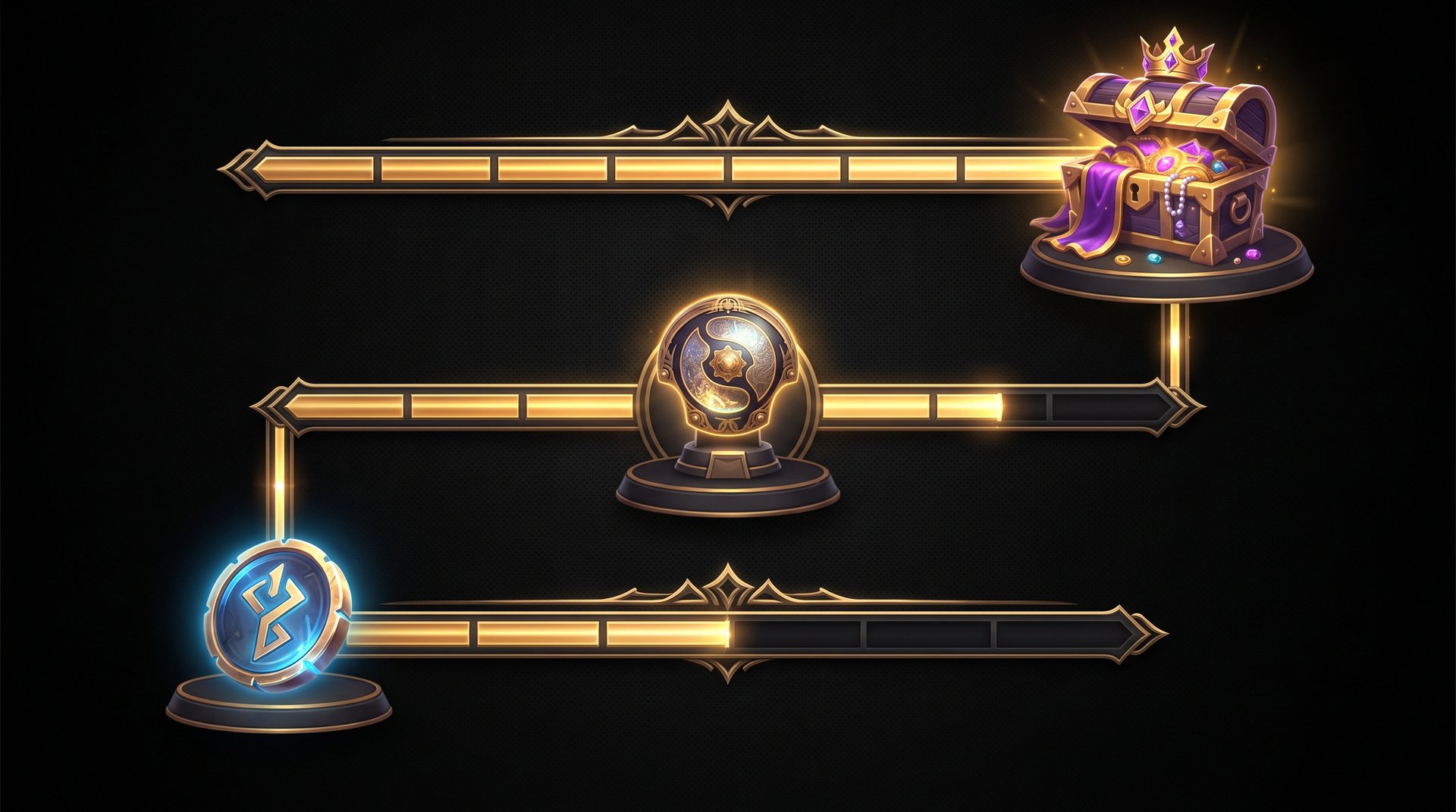
| Top 100 | 12 months of Dota Plus, 1 Terrain Token, 100% physical Aegis discount, 5 Tyrian Regalia | The true sweat bracket. This is for people treating every fantasy lock like a mini draft. |
| Top 1,500 | 6 months of Dota Plus, 1 Terrain Token, 100% physical Aegis discount, 2 Tyrian Regalia | The first elite target that still has a realistic path if you are disciplined from day one. |
| 95th percentile | 2 months of Dota Plus, 1 Terrain Token, 50% Aegis discount, 1 Tyrian Regalia | The best value target for most players. You do not need perfection, just fewer mistakes than the crowd. |
Two extra details matter here. First, the Terrain Token replaced the old Arcana-style chase item in this event’s reward conversation. Second, Tyrian Regalia is not filler. Multiple reports on the update described it as a treasure containing five refreshed Immortal items, which means the item pool has actual collector value instead of the usual half-dead seasonal junk.
There is also a smaller but still relevant background gain through fantasy scoring. Phrasemaker’s fantasy guide noted that every 1,000 Fantasy Points grants 300 Dota Plus Shards. That is not the headline reward, but it means active participation keeps paying even if you miss the top placements.
If you are asking whether top 100 is worth chasing, the Immortal-player answer is “usually no.” Top 100 is for people who will min-max every lock, chase every edge, and probably follow every series more closely than they follow their own pubs. Top 1,500 and 95th percentile are the practical goals. They offer the same prestige items that casual players actually care about, without requiring absurd accuracy.
How You Actually Earn Points
The reward chase looks more intimidating than it really is because Valve mixes cosmetic monetization with competitive participation. Strip that away and the logic is simple: points come from decisions, not purchases.
| System | What It Does | Reward Impact |
|---|---|---|
| Group Stage Predictions | You lock event outcomes before the August 13 deadline | High leverage because missed locks are permanent dead points |
| Fantasy | You score through player performance during the event | Main source of ongoing percentile movement |
| Dota Plus Shards | 300 shards per 1,000 fantasy points | Small side reward, not a reason to force bad picks |
| Supporter Bundles | You buy cosmetics for teams, talent, or community broadcasts | No direct fantasy edge, but supports teams and the TI pool |
This is why high-MMR players approach the TI reward system differently from casuals. A casual looks at the cosmetic menu first. An Immortal player looks at the deadline map first. Missing one early lock is the same as starting lane with your courier dead. You can still play from there, but now every correct move is just recovery.
The second big edge is understanding what fantasy usually rewards. Raw KDA highlight reels are not enough. Fantasy systems traditionally overvalue players who produce volume: more series, more game time, more farming patterns, more teamfight participation, more stable involvement. That is why disciplined players chase repeatable fantasy environments rather than emotionally picking their favorite stars.
That matters even more this TI because the format opens with a Swiss group stage. Swiss formats are brutal for lazy fantasy players. The field does not simply sort itself into easy favorites and easy bottom feeders right away. If you are trying to score rewards, you want reliable series volume and predictable involvement, not coin-flip narratives.
One more subtle point: the 95th percentile target is easier than it sounds because a shocking number of players either forget to lock predictions, leave fantasy slots empty, or buy bundles and assume they are “participating.” Showing up properly is already an edge.
That is also why copying one influencer spreadsheet usually backfires. Public consensus helps you avoid terrible picks, but once a whole audience copies the same obvious angles, your real edge comes from execution quality: updating on time, avoiding empty slots, and making one or two cleaner volume bets than the crowd. In percentile systems, discipline compounds harder than hot takes.
Fastest Route to 95th Percentile
If your goal is to actually secure a Terrain Token or a Tyrian Regalia without turning TI into a second job, the path is straightforward.
1. Treat August 13 like a hard MMR deadline
The first hard edge is obvious and still missed constantly: do not lose free EV by missing the August 13 Group Stage prediction lock. If you miss it, you are now relying on fantasy variance alone to climb percentile bands that other players reached with full participation.
2. Target consistency, not heroics
The 95th percentile reward tier is not top 100. You do not need to out-brain every analyst on the planet. You need fewer dead slots and fewer panic picks than the average user. In practical terms, that means choosing players from teams with a high chance to play full value series, not just one explosive stomp.
3. Avoid overfitting to one hot patch story
Patch 7.41e changed the pub mood immediately, but that does not mean every patch winner becomes a fantasy winner. This is classic pub-player logic: a hero feels broken in ranked, so people assume every pro who touches it becomes an auto-lock. That is how you torch fantasy points. TI fantasy is more about role volume, series volume, and team stability than about one Reddit clip of a broken mid hero.
4. Spend money only after you understand your reward path
The correct order is decision-making first, bundle buying second. If you want to support a team, great. If you want cosmetics, also fine. But do not confuse supporter-bundle spending with leaderboard progress. Your reward climb is won by accurate participation and clean lock discipline.
5. Respect the lazy-player tax
This is the hidden Immortal insight. Every large event leaderboard has a huge chunk of players who opt in emotionally and play it badly. They do not read the rules, they miss one lock, they panic-swap picks late, and they assume one prediction post on social media solves everything. Your job is not to be genius. Your job is to be organized.
There is also a time-to-value question here. If grinding the leaderboard starts eating the same hours you were planning to use for ranked climbing, you need to think like a real player, not a content goblin. If TI season is tanking your pub focus, either simplify your event routine or offload your ladder climb through TeamSmurf’s MMR boost service. The whole point of a reward event is upside, not self-inflicted queue damage.
Supporter Bundles: Worth Buying or Not?
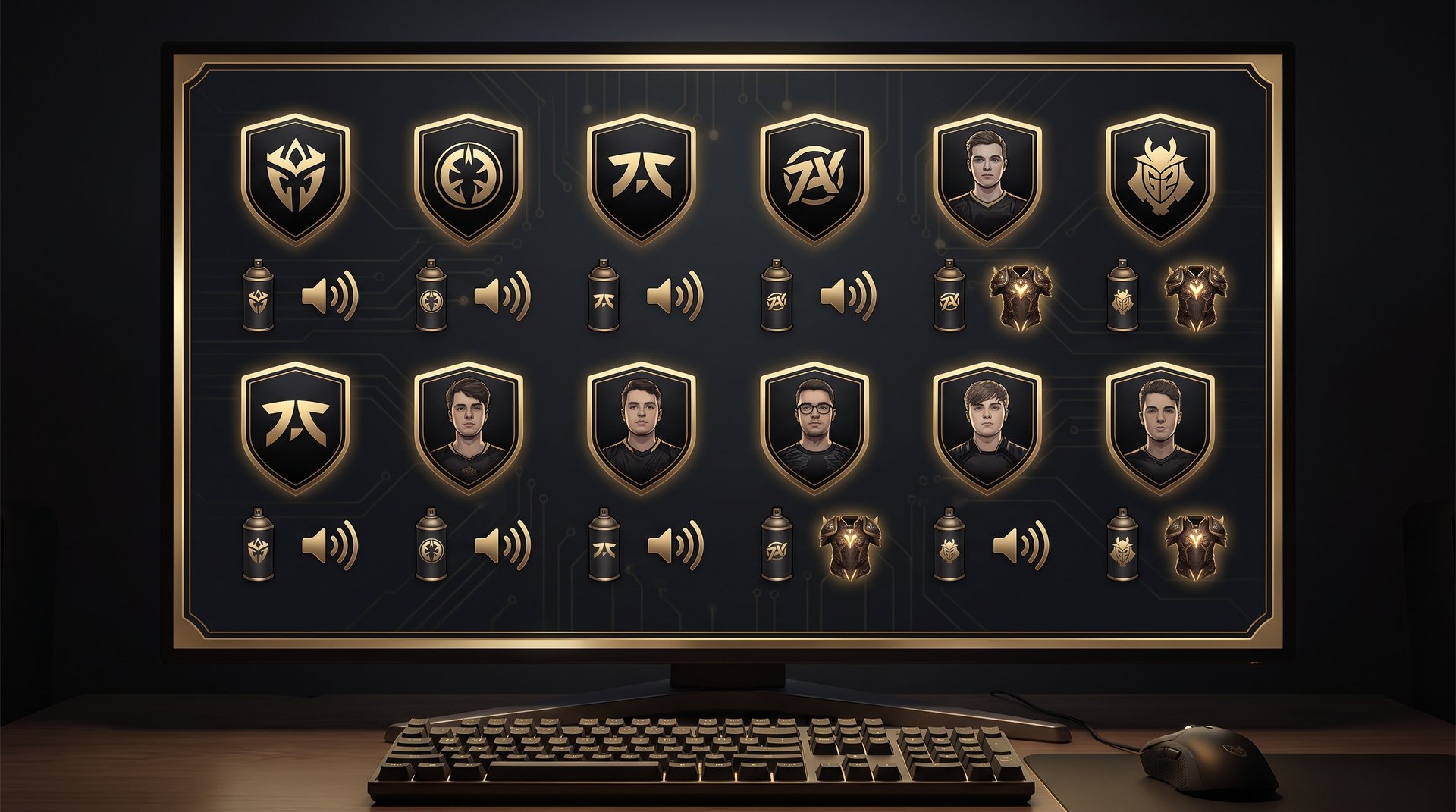
Supporter bundles are good this year, but they are good for a different reason than many players think. As of this rollout, Valve made bundles available for all 16 TI competitors, for broadcast talent in four languages, and for a new community-broadcast category. Coverage of the release also noted common bundle contents like custom sprays, loading screens, voice lines, emotes, and a health-bar badge.
The real argument for buying one is not percentile gain. It is alignment. 50% of the sale goes directly to the team or talent you pick, while 30% goes to the TI 2026 prize pool. If you already know you are cheering for Falcons, Liquid, Xtreme, or one of the qualifier stories, the bundle is basically a cleaner support mechanism than pretending you are only buying cosmetics.
| Bundle Question | Good Buy | Bad Buy |
|---|---|---|
| “Will this help my reward percentile?” | No, not directly | Buying it for leaderboard value is a mistake |
| “Will this support my team or talent?” | Yes, 50% goes to the selected creator side | Only bad if you do not care about the cosmetics or the support angle |
| “Does it grow the TI pool?” | Yes, 30% goes into the prize pool | No issue here, just know what you are paying for |
| “Should I buy one before I finish predictions?” | Only if you already handled the lock deadlines | Bad sequencing if you spend first and forget the actual points systems |
From a high-MMR perspective, the best way to think about bundles is this: they are fandom spend, not competitive EV. Buy them because you want a Falcon or Liquid voice line in your pubs. Buy them because you want the event to have a fatter pool than the base $1.6 million. Buy them because the talent or community-cast ecosystem matters to you. Just do not lie to yourself that they are a shortcut to a Terrain Token.
This also explains why some players feel disappointed after buying a bundle. They expected the purchase to feel like progression. It is not progression. It is patronage plus cosmetics. The progression still has to be earned.
The Deadline Plan Most Players Need
If you only remember one section from this TI 2026 rewards guide, make it this one. Rewards are won on schedule discipline.
| Date | What Happens | Best Player Move |
|---|---|---|
| July 30 | TI 2026 rewards system, predictions, fantasy, and bundles go live | Learn the system immediately instead of waiting for social summaries |
| August 13 | Group Stage predictions lock | Submit early and recheck before the deadline |
| August 13-16 | Swiss-style group stage | Track fantasy volume and do not chase random hype picks |
| August 20-23 | Main event playoffs | Protect your percentile lead with cleaner, lower-variance choices |
| August 27 | Physical Aegis purchase window opens | Claim discount value only if your finish makes it worth it |
The best routine is boring, and that is why it works. Lock predictions early. Check them again. Keep a simple note of fantasy deadlines. Avoid trying to recreate a stats department every night. And if you are busy during TI week, decide in advance whether you want a casual participation run or a 95th-percentile run.
Most players fail because they improvise. They try to do event prep the same way they play low-stakes pubs: late, distracted, and based on emotion. That works fine for a Turbo game. It is awful for percentile systems.
The upside of this structure is that it gives lower-volume players a real chance. Because so much of the edge comes from simply being accurate and on time, you can still beat louder and more obsessed players if they are sloppy.
What This Means for Your Actual MMR Grind
TI season always leaks into pubs. Players copy hero priorities badly, overforce pro patterns they do not understand, and spend half the week arguing about tournament drafts instead of fixing their own lane mechanics. That creates two different opportunities.
For improving players, this is a coaching window. When everyone else is distracted by the event layer, disciplined players can climb by sticking to clean fundamentals: better lane resource trades, better smoke timings, and better objective calls. If you want help turning the TI chaos into actual rank gain, TeamSmurf coaching is the right fit because it keeps you focused on the game you are playing, not the fantasies in your head.
For burned-out players, TI season is often the exact moment to stop pretending solo queue is a relaxing hobby. If you want the event rewards and you still want your rank moving, the cleanest route is often to skip the grind with a specialist boost or use structured sessions from our MMR boosting guide and Dota 2 boosting safety guide so you are not bleeding time in tilted pubs.
The final Immortal take is this: the TI 2026 reward ladder is generous if you are disciplined and mediocre if you are casual. That is not a complaint. It is actually why the system works. The people who get value from it are the ones who treat it like a real competition, not a passive login calendar.
FAQ
Want TI Rewards and Better Rank at the Same Time?
TI week is when a lot of players lose MMR while pretending they are “studying the meta.” If you want the event rewards without throwing your ladder progress away, use TeamSmurf’s Dota 2 specialists to keep your climb efficient.
Get MMR Boost Book Coaching Fix Low Priority