PARIVISION TI 2026: Why Satanic’s Team Are the Favorites

PARIVISION enter The International 2026 as the tournament favorites — and it is not even close. The Serbian organization competes under the name TEAM VISION at TI due to Valve’s restrictions on gambling-related branding, but every serious Dota 2 fan already knows who they are: the team that won the Esports World Cup 2026, took DreamLeague Season 29 in a grueling five-game series, and built their run around an 18-year-old carry who is statistically the best in the world right now.
With group stage starting August 13 in Shanghai’s Oriental Sports Center, the question everyone is asking is not whether TEAM VISION will dominate — it is whether anyone has enough firepower to stop them. In this deep dive, we break down exactly why PARIVISION are the team to beat, who has the best shot at knocking them out, and what their TI run will look like.
Table of Contents
The TEAM VISION Roster: Five Players, One Clear Mission
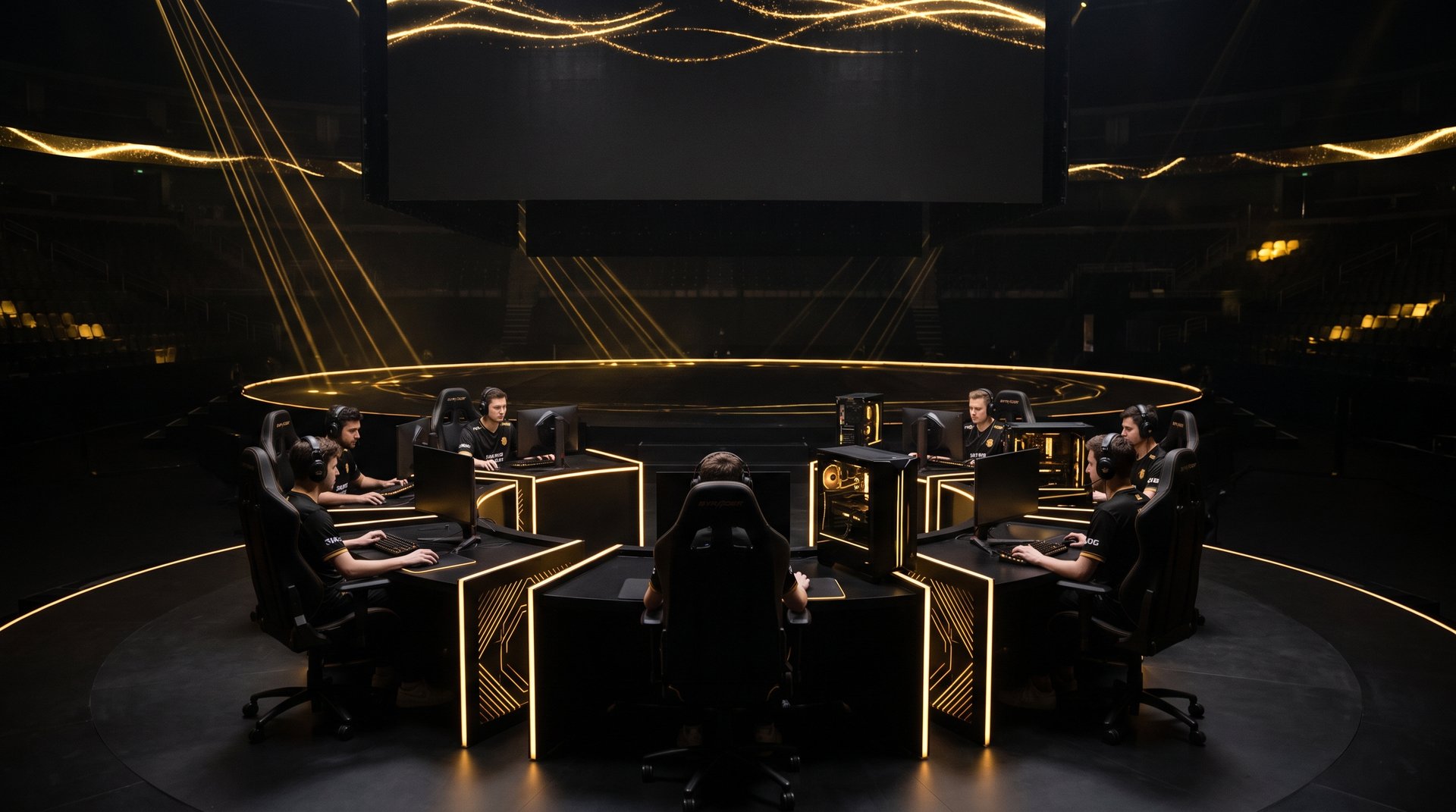
PARIVISION’s roster is one of the most fascinating in competitive Dota 2: it blends raw youth with seasoned experience in a combination that has proven nearly unbeatable when everyone is firing at peak level. Here is a breakdown of all five players heading into TI 2026.
| Player | Role | Notable |
|---|---|---|
| Satanic (Alan Gallyamov) | Carry (pos 1) | Highest GPM at EWC 2026, Rookie of the Year 2025 |
| No[o]ne (Volodymyr Minenko) | Mid (pos 2) | Veteran with TI experience across multiple organizations |
| Noticed (Evgeniy Ignatenko) | Offlane (pos 3) | Consistent presence in draft-heavy lineups |
| Dukalis (Andrey Kuropatkin) | Soft Support (pos 4) | Strong playmaking and vision control |
| 9Class (Naltakyan Edgar) | Hard Support (pos 5) | Disciplined lane support, high-impact initiator |
Satanic — The Carry Built Different
You will read more about Satanic in his own section below because he deserves it, but the short version is this: Alan “Satanic” Gallyamov, born October 13, 2007, is currently 18 years old and already the most statistically dominant carry in professional Dota 2. His GPM, XPM, and last-hit numbers led all tier-1 players in early 2026 data, and at EWC he extended his own lead by a considerable margin. When your carry is farming faster than every other pos-1 in the tournament while dying less frequently, you have an enormous structural advantage in every game you play.
No[o]ne — The Veteran Anchor
Volodymyr “No[o]ne” Minenko is the experienced backbone of this squad. A veteran mid player who has competed at the highest level of Dota 2 for nearly a decade, No[o]ne brings two things money cannot buy: composure under TI pressure and the ability to play multiple strategic roles within a draft. At TI, where psychological stability matters as much as mechanics, having a mid laner who has been in high-stakes elimination matches before is a genuine edge. No[o]ne also gives coach Puppey significant flexibility — he can be built as a kill-lane hero to accelerate Satanic’s farm, or he can run a semi-carry mid that adds a second late-game win condition to the lineup.
Noticed — The Offlane Glue
Evgeniy “Noticed” Ignatenko plays the offlane role that most carry-centric teams treat as a necessary sacrifice — but Noticed refuses to go down quietly. His offlane work throughout the EWC run was understated precisely because it was doing its job: denying the enemy carry a free lane while creating enough space for Satanic to snowball. A good pos-3 is invisible when it works. Noticed has made himself invisible in the best possible sense.
Dukalis and 9Class — The Foundation
Andrey “Dukalis” Kuropatkin and Naltakyan “9Class” Edgar form a support duo that has developed strong synergy over their time together in the organization. Dukalis handles the playmaking — vision control, catch setups, mid-game skirmishes — while 9Class plays the disciplined hard support role, focusing on laning survival, protecting Satanic’s early game, and transitioning into a utility initiator as the game develops. Neither player is going to win you a highlight reel, but both execute the roles they were built for with consistency that shows up across a long TI bracket.
A Season of Peaks and Valleys: How PARIVISION Got Here
The PARIVISION story heading into TI 2026 is not a straight line upward — it is a revenge arc. The team entered the 2025-2026 season with clear talent but inconsistent results, and for much of the early circuit they were not seriously discussed as TI favorites. Then everything clicked, and clicked hard.
DreamLeague Season 27: The Promise (December 2025)
PARIVISION finished third at DreamLeague Season 27 in December 2025 — the first major Tier-1 result after Puppey joined as head coach. Third place at a DreamLeague event is not headline news, but it signaled something important: the team was building structure under Puppey’s guidance and their late-game execution was tightening. The coaching change had clicked faster than most observers expected.
ESL One Birmingham: The Stumble (March 2026)
A fourth-place finish at ESL One Birmingham in March 2026 was the low point of the season. PARIVISION missed multiple opportunities to convert advantages in the elimination bracket, and genuine questions arose about whether they could perform when the stakes were highest. That result also cost them a direct TI invitation — Valve’s invite criteria weight the full-season arc, and PARIVISION’s slow start meant they would need to qualify through the European regional ladder.
It would turn out to be a blessing in disguise. The grind of going through qualifiers kept the team sharp and hungry. They defeated Virtus.pro 2-1 to secure the second European slot at TI — proving their late-season results were not a fluke.
DreamLeague Season 29: The Breakthrough (May 2026)
The DreamLeague Season 29 grand final against Aurora Gaming went the full five maps. The series lasted almost four hours before PARIVISION closed it out on map five. Winning a long, punishing series in a grand final is a completely different mental challenge from dominating group stages — it requires resilience, belief, and the ability to reset after a deficit. PARIVISION had all three. The DreamLeague Season 29 title was their first Tier-1 championship of the season and it changed the narrative around the team completely.
EWC 2026: The Coronation (July 2026)
The Esports World Cup 2026 in Paris was where PARIVISION stopped being a “rising team” and became the best team in the world. They reached the grand final and faced BetBoom Team — a squad that had been their consistent rival throughout the season. BetBoom took the opening game in 47 minutes, forcing a real test of PARIVISION’s character. The team responded with a grueling 62-minute game two to level the series, then produced two dominant performances to seal the championship 3-1.
Game four told the whole story. PARIVISION built a 29-7 kill lead in 36 minutes. Against BetBoom — one of the most mechanically capable teams in Europe — that margin is not just a win, it is a statement. The prize: $750,000 and 1,000 EWC Club Championship points. Heading into TI, those are not just trophies — they are proof.
| Tournament | Result | Date |
|---|---|---|
| DreamLeague Season 27 | 3rd place | December 2025 |
| ESL One Birmingham | 4th place | March 2026 |
| EU TI Qualifier | Qualified (beat VP 2-1) | June 2026 |
| DreamLeague Season 29 | 1st place (beat Aurora 3-2) | May 2026 |
| Esports World Cup 2026 | 1st place (beat BetBoom 3-1) | July 2026 |
What Makes Satanic Untouchable: A Carry Player Deep Dive
You cannot write about PARIVISION without writing about Satanic. Alan “Satanic” Gallyamov is the engine of this team, and understanding how he operates explains why TEAM VISION are so difficult to draft against and so dangerous to play against in the late game.
Satanic was named Rookie of the Year for the 2025 competitive season. At the time, that felt like recognition of potential. In 2026, it looks like an understatement. He has led all tier-1 Dota 2 players in average GPM, XPM, and last hits — across all roles, not just carries. That means the best farming carry in the world is farming faster than most mid players who are operating free on their own side of the map.
| Metric | Satanic’s Standing | Source / Context |
|---|---|---|
| GPM at EWC 2026 | Highest in tournament | By considerable margin (Spectral.gg stats) |
| Deaths (EWC) | Among lowest of any pos-1 | High farm, low risk profile |
| XPM (tier-1 players) | Leading across all roles | Level advantage — earlier power spikes |
| Career Earnings | $180,000+ | Accumulated since October 2024 debut |
| Age at TI 2026 | 18 years old | Born October 13, 2007 |
The numbers matter, but what makes Satanic truly special is the efficiency-to-output ratio. He is not just farming fast — he is farming fast while making fewer mistakes than any carry player at his level. His death count at EWC was among the lowest of any pos-1 in the field. High farm plus low deaths means he reaches his item timings consistently, and when a carry in a pro game hits their power spikes while the enemy carry is still a couple of items behind, the snowball is genuinely difficult to stop.
The Hero Pool Problem
Satanic’s hero pool creates a drafting nightmare for opponents. He can play the mechanically intensive solo-carry heroes that require precise last-hitting and aggressive positioning. He can also play the teamfight carries that scale into extended fights and clean up mass combat. You cannot simply ban the heroes you fear most — Satanic will punish you on the next option instead, often with equal or greater effectiveness.
This versatility forces opponents into a drafting dilemma. Spend three bans on his known best heroes and give up flexibility on your own side. Or accept that one of his secondary picks hits the field and figure out how to match it. PARIVISION’s coaches under Puppey know how to exploit whichever hole the enemy ban phase creates.
What Satanic Can Teach Your Pub Play
From a learning perspective, watching how Satanic approaches the farming game in professional matches is genuinely educational. His early-game decisions — when he contests lane pulls versus when he hugs tower, how he positions to deny without overextending, how he transitions from safe lane into the jungle at the right timing window — are textbook high-MMR carry mechanics.
If you want to internalize those patterns in your own ranked games, working with coaches who operate at the same level as the players you are studying is the fastest route. TeamSmurf’s Dota 2 coaching service connects you with Immortal-rank players who think about carries the same way Satanic does — starting from fundamentals, not just hero guides.
The Puppey Effect: What TI1-Level Coaching Looks Like
Clement “Puppey” Ivanov won the very first International back in 2011 with Na’Vi. He has competed and coached at Dota 2’s highest level for fifteen years. When a coach carries that resume, it changes how a team operates in ways that are subtle but decisive over the course of a tournament bracket.
Puppey joined PARIVISION in December 2025, right before DreamLeague Season 27. The immediate impact was structural: their draft flexibility increased, their mid-game transitions became less reactive, and the team started playing with more conviction in high-stakes moments. Third place at DreamLeague S27 was the first data point. First place at EWC 2026 was the proof.
Why Puppey Matters at TI Specifically
Regular season tournaments test talent. TI tests something different — it tests whether a team can adapt across a bracket where opponents have studied their entire season’s worth of replays. Teams that collapse at TI typically do so because preparation was not deep enough or in-game shot calling breaks under pressure. Puppey has navigated this environment across more TI iterations than almost anyone currently in competitive Dota 2. He knows what preparation at that level actually needs to look like, and he knows how to keep a squad mentally stable when the stakes are at their highest.
The other thing Puppey brings is pattern recognition that goes fifteen years deep. If he has seen a specific hero in a specific draft position before — across every TI he has participated in — he has an informed opinion on the matchup. That institutional knowledge cannot be replicated by a first-year coach, no matter how talented they were as a player.
The Trust Factor
Coaching in Dota 2 is as much about player trust as it is about game knowledge. Satanic is 18. No[o]ne is a veteran who has been in competitive Dota for nearly a decade. Getting both of them to execute the same system requires a coach who commands respect from both ends of the experience spectrum. Puppey earns that respect from both sides — younger players look up to what he has accomplished, veterans respect someone who has played at their level and beyond. That dynamic shows up in PARIVISION’s late-game execution: they do not panic, they run the system.
TEAM VISION Draft Identity: The Tactics Behind the Dominance
Understanding how PARIVISION wins requires understanding HOW they play — not just that they win. Their draft identity is built around a principle that sounds simple but is remarkably difficult to execute: give Satanic the conditions to reach his power spikes as fast as possible, then play a controlled teamfight game from the moment he hits his items.
The Satanic Enablement System
Every draft decision flows from one question: “How do we get Satanic ahead fast and keep him there?” The support duo of Dukalis and 9Class are selected for their ability to dominate the laning phase, not for flashy mechanics. Dominating the safe lane means Satanic gets uncontested farm in the early game. No[o]ne’s mid is typically chosen for lane priority — the ability to create space in the early-to-mid transition by shoving mid and rotating to create kills before the enemy safe-lane carry has their first major item.
Noticed’s offlane role is typically a hero that creates chaos in the enemy triangle without requiring heavy resources. This three-lane structure gives Satanic the ideal environment: safe-lane dominance, strong rotations from mid, and a disruption offlane that keeps the enemy team on the back foot at the moment when they most need to be applying pressure.
Drafting Against Them Is a Trap
The difficulty in drafting against PARIVISION is that over-spending bans on Satanic’s known hero pool simply forces him onto his second-best options — which are still better than most carries’ primary picks. Teams that use three bans targeting the carry often end up giving up control heroes for the support duo, or strong offlane options for Noticed, and PARIVISION punishes those gaps from the very first wave.
The other trap is trying to end the game fast. PARIVISION are comfortable in long games because Satanic’s farm rate means the longer the game, the larger the item advantage on his side. Teams that opt for early aggression need to convert into a genuine economic lead — because any game that reaches the 30-minute mark with Satanic anywhere close to even on farm is a game PARIVISION likely closes out.
Who Can Actually Stop Them: The Three Realistic Challengers
PARIVISION are the favorites, but Dota 2 TI history is full of teams that entered as the clear best squad and did not leave with the Aegis. TI favorites lose. So who has the most realistic shot at beating TEAM VISION in Shanghai’s bracket?
Team Yandex — The Closest Rival
Team Yandex have the strongest overall season record of any team at TI 2026. They won DreamLeague Season 27, won PGL Wallachia Season 7, and took BLAST Slam VII — three separate Tier-1 events across the full campaign. Their EWC run ended at 3rd place, just behind PARIVISION, and across the full season they have accumulated more tournament wins than any other team heading into Shanghai.
The key to Team Yandex is TI-champion Martin “Saksa” Sazdov at support. Having a player who has won the Aegis before — and who built this roster himself — changes how the team operates under pressure. Saksa enables his younger teammates to operate with confidence in elimination scenarios. If any team can match PARIVISION’s structural approach to the game, it is Team Yandex, and their head-to-head record against PARIVISION in recent months is tight enough to make a potential grand final between these two genuinely unpredictable.
BetBoom Team (BoomBoys) — The Revenge Factor
BetBoom Team, competing as BoomBoys at TI, have one of the strongest motivations in the field. They lost the EWC 2026 grand final to PARIVISION after taking the first game and forcing game two into a 62-minute grind. That 3-1 defeat stings, and BetBoom have been PARIVISION’s most consistent challenger throughout the season. They understand how PARIVISION’s system works because they have played against it in the highest-stakes situations multiple times.
The danger with BetBoom is that they are one of the very few teams with the individual mechanical ceiling to match Satanic’s carry in a straight lane battle. If their pos-1 can reach equal farm in the early game, the macro opens up significantly for BetBoom’s style. Their mid-game teamfight coordination is also among the best in the field. A BetBoom versus PARIVISION best-of-five is genuinely anyone’s series.
Team Liquid — Fresh Off Essence II
Team Liquid’s 3-0 sweep of Team Falcons in the 1win Essence II grand final — the last major tournament before TI — is the kind of momentum result that forces the entire field to recalibrate. Liquid have historically performed well at TI. Their roster carries experience in high-pressure elimination matches and their captain-level decision-making is strong enough to execute in bracket play.
The question for Liquid is whether their late-season form translates to the specific pressure environment of TI. Essence II was a 3-0 sweep of one opponent. TI is a Swiss group stage followed by a double-elimination bracket against every elite team simultaneously. Liquid are a genuine threat in the upper bracket, but face real questions about how they perform in a potential matchup against PARIVISION’s farming system across four or five games.
| Team | TI Outlook | Key Advantage vs TEAM VISION |
|---|---|---|
| TEAM VISION (PARIVISION) | Tournament favorites | N/A — they set the benchmark |
| Team Yandex | Strong contender | Season consistency, Saksa’s TI experience |
| BoomBoys (BetBoom) | Credible upset pick | Revenge motivation, deep matchup knowledge |
| Team Liquid | Bracket threat | Momentum from Essence II, TI pedigree |
| Team Spirit | Wildcard | Two-time TI champions, format knowledge |
One more name worth watching: Team Spirit. The two-time TI champions (TI10 and TI11) qualified through the European qualifier and enter TI 2026 without the pressure of being favorites. Teams that have won TI before know something about the format that first-timers do not — the grind of a Swiss group stage followed by a brutal bracket tests things that regular-season results do not capture. Spirit have passed that test twice. They are not favored, but they are never a team you feel safe facing in an elimination match.
Our TI 2026 Prediction: TEAM VISION Wins It
TEAM VISION wins TI 2026. We are not hedging on this one.
The combination of Satanic’s farming dominance, Puppey’s institutional preparation, and the squad’s proven ability to close out grueling series — DreamLeague Season 29 game five, EWC game four where they built a 29-7 kill lead in 36 minutes against BetBoom — gives them the most complete profile of any team at this event. They have demonstrated they can handle grand final pressure twice in quick succession. That is not luck. That is a system that works under the hardest conditions.
The path: TEAM VISION navigate the Swiss group stage comfortably, potentially dropping one match to Team Yandex or BoomBoys to prevent a perfect run. In the upper bracket, expect controlled wins until a genuinely tight series against one of those two teams. The grand final goes three or four maps — this is not a clean sweep — and PARIVISION close it out in map four. The Aegis goes to the team that already earned everything else worth earning this season.
The biggest risk is a bracket scenario where they face both Team Yandex and BetBoom in consecutive upper bracket matches while one team has perfect opponent-specific preparation. In Dota 2, precise preparation from a team that knows your system well can disrupt even the strongest structures. But across the Swiss group stage format — where best-of-ones reward teams that execute clean advantages rather than teams that have been studying specific opponents for weeks — PARIVISION’s ability to play their system in any matchup is the biggest structural edge in the field.
If you want to understand what you are watching at TI 2026 at a deeper level, your own Dota 2 bracket matters. Watching Satanic manage a farm lead while your teammates are playing a completely different game is frustrating in a way that makes it hard to extract real learning. Getting your MMR to where the macro concepts you see in pro Dota show up in your lobbies is the step that makes TI a study session instead of just entertainment. Our guides on how MMR boosting works and whether it is safe answer the questions we get most often.
Hit Your Target MMR Before TI Ends
Watching the best Dota 2 team in the world is inspiring. Watching it while stuck in a bracket where those ideas never show up is just painful. TeamSmurf’s Immortal-rank boosters get you to the MMR where Dota actually looks like what you see on the TI stream — fast decisions, real macro, and games that are worth analyzing.
Get Your MMR Boost Book a Coaching Session