Drafting for Solo Queue: Flexible Openers That Scale

In solo queue, you control exactly one hero out of five. Your team draft is not coordinated in advance, your teammates do not know your play style, and the collective draft that emerges is often incoherent. The heroes your teammates pick before you may create no identifiable win condition. The heroes your teammates pick after you may actively work against the strategy you intended to pursue.
The correct response to this reality is not to play a rigid strategy and hope the team cooperates. It is to build a personal hero pool of flexible openers — heroes that win in multiple game states, contribute effectively regardless of team composition, and provide the kind of consistent independent impact that does not require teammate coordination to be effective. This guide covers the theory of flexible openers, the specific heroes that define the category in the current 7.41c meta, draft positioning strategy in solo queue, and ban priority decisions that protect your own playability rather than responding to enemy threats.
If you want to experience how higher-bracket players draft and position in solo queue, a coaching session focused on draft theory provides a more direct upgrade than any single hero guide. Alternatively, a targeted MMR boost places you in a bracket where the drafting and decision patterns you are developing here are standard rather than exceptional.
Table of Contents
- What Makes a Hero Flexible in Solo Queue
- Tier 1 Flexible Openers for 7.41c
- Tier 2 Situational Flexible Heroes
- Ban Priority Strategy for Solo Queue
- Pick Order and Positioning
- Adapting Your Draft to Teammate Picks
- When to Draft Comfort vs Counter
- Building a 3-4 Hero Solo Queue Pool
- Frequently Asked Questions
What Makes a Hero Flexible in Solo Queue
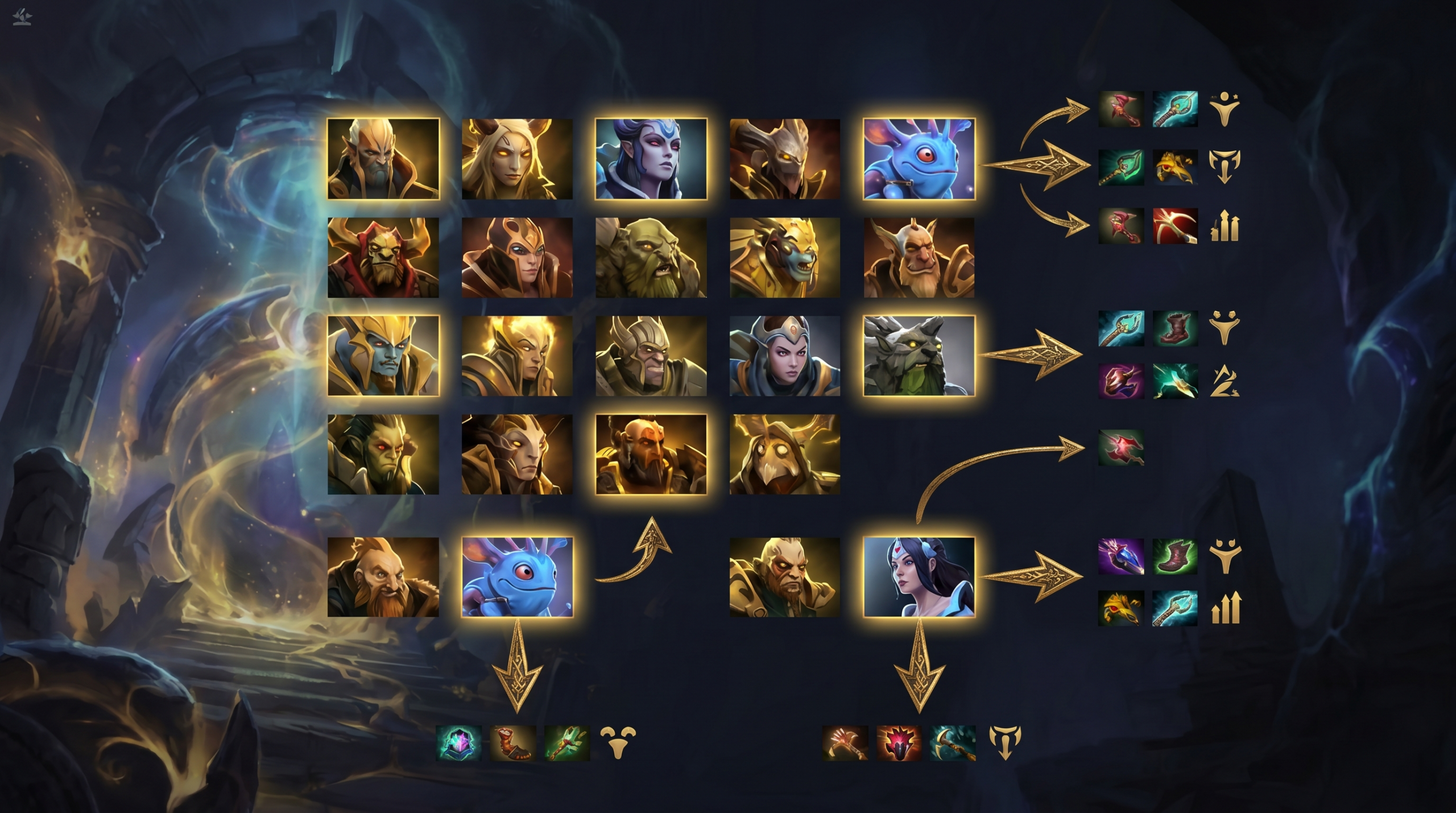
A flexible hero in the solo queue context is defined by four properties. First, the hero provides independent win condition impact — they can contribute to winning a game without requiring specific ally positioning or coordination. Second, the hero is role-versatile — they can be played effectively in multiple positions (typically at least two distinct roles) without requiring a fundamentally different item build. Third, the hero has a consistent power spike that does not depend on team cooperation — their timing and impact is predictable regardless of how the broader game develops. Fourth, the hero matchups are broadly neutral — they do not have a small set of counters that appear in most games and shut them down completely.
Heroes that fail these criteria are rigid openers: they are very strong in specific conditions but underperform when those conditions are not met. A rigid opener picked in the first or second phase of the draft in solo queue will frequently land in an incoherent team composition because your teammates subsequent picks do not reinforce the win condition the rigid opener requires.
The Independent Win Condition Requirement
The most critical property on the list is independent win condition impact. In coordinated team queue, heroes that require setup — a disable from an ally to land their ultimate, a follow-up from a specific role to convert a stun into a kill — are entirely viable because the coordination exists. In solo queue, that coordination is absent in approximately 40-50% of games. A hero whose power depends on coordination is a coin flip in solo queue: dominant when the team happens to cooperate and passive when they do not.
Flexible openers have independent win conditions. Invoker can win mid lane against most opponents and split-push effectively without ally involvement. Dragon Knight has a predictable farming and fighting curve that does not require ally coordination to execute. Nature’s Prophet can generate constant pressure across the entire map without ally action. These heroes do not need their team to win fights — they generate advantages through actions entirely within the solo player control.
Tier 1 Flexible Openers for 7.41c
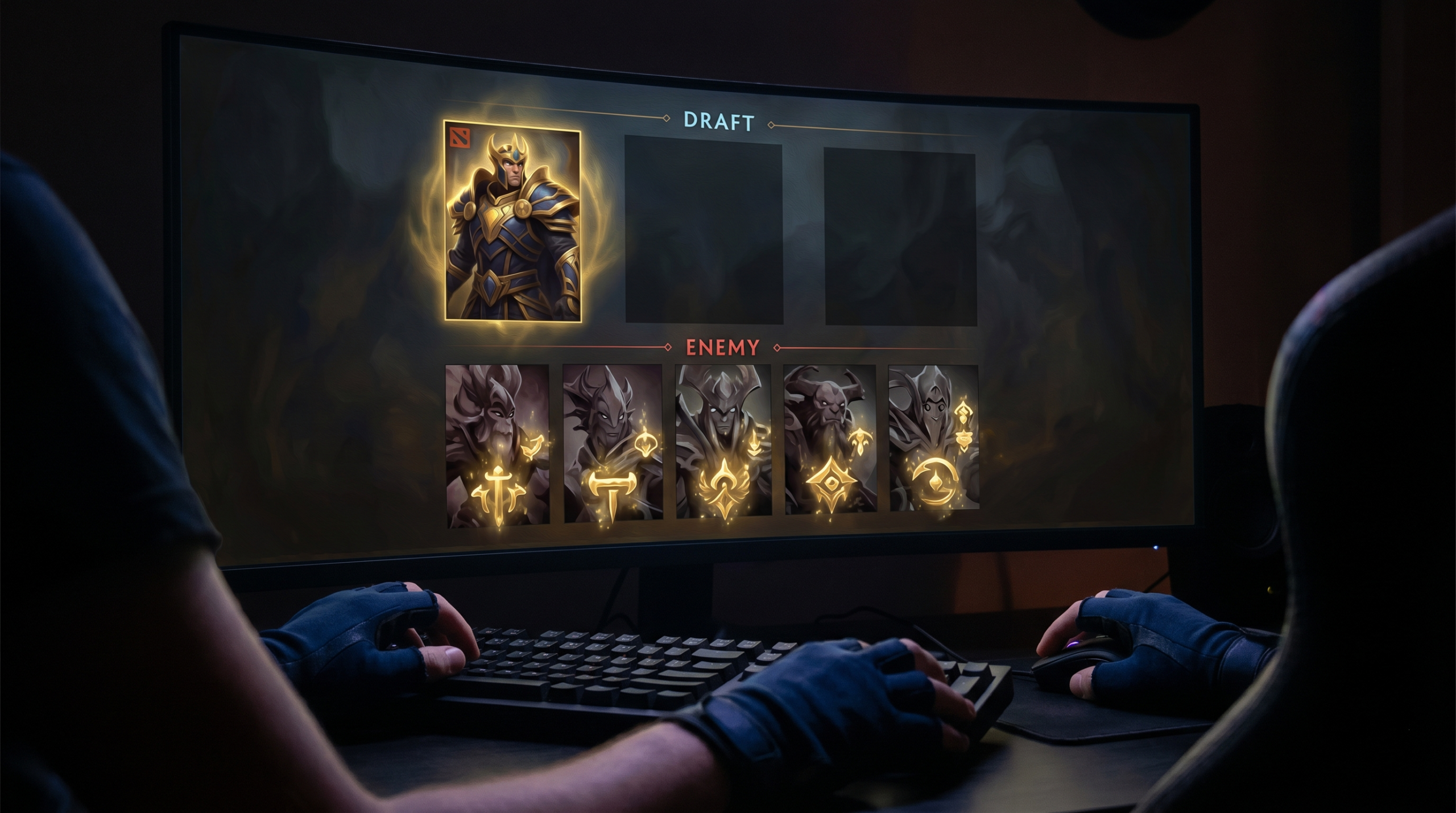
The following heroes represent the highest-value flexible openers in the current 7.41c meta. Each entry includes viable roles, the core item path that makes them flexible rather than rigid, the independent win condition they provide, and the conditions under which they remain strong despite adverse drafts.
Invoker (Mid, Offlane)
Invoker is the quintessential flexible opener because his spell kit adapts to the game state he is placed in. Against physical damage heavy compositions, Invoker builds toward Ice Wall and Cold Snap — spells that counter right-click dominant heroes effectively even without ally follow-up. Against magic damage heavy compositions, Invoker builds toward EMP and Tornado — spells that drain mana and provide lockdown against caster compositions. The same hero with the same core items (Aghanim Scepter as the primary power spike) provides fundamentally different utility depending on the game state at the time of purchase.
Invoker independent win condition is his ability to farm and split-push with Ghost Walk, using Force Staff or Blink Dagger to escape ganks and generate constant creep and structure damage across the map. He does not require team fights to generate advantages — he generates them through relentless pressure on structures while the enemy team must respond. This solo map pressure is effective even when the rest of your team is underperforming.
Dragon Knight (Mid, Offlane)
Dragon Knight is the most reliable flexible opener for players who want consistent, low-variance performance across a wide range of matchups. His durability, straightforward mechanics, and predictable power curve make him effective in both mid and offlane roles with virtually the same core item build (Blink Dagger, Black King Bar, Assault Cuirass).
Dragon Knight independent win condition is his tower push capability. In Dragon Form, his attack speed bonus and splash damage allows him to take down towers faster than most heroes who are not specifically built for pushing. He does not require allies to push structures — he can take tier 1 and tier 2 towers alone while the enemy is occupied elsewhere. This solo push capability generates structural advantages even in games where the team is not coordinated enough for organized fights.
In the 7.41c meta, Dragon Knight is particularly effective because his durability makes him resistant to the burst damage compositions that dominate the bracket level below Divine. He is difficult to burst down even without BKB and provides reliable teamfight presence as both an initiator and a frontline fighter.
Wraith King (Carry, Offlane)
Wraith King is among the most reliably flexible carries in solo queue because Reincarnation provides a second life that is not dependent on ally behavior. In a game where your team cannot protect you or follow up on your initiation, the guaranteed second life means that fights which should result in your death frequently result in your survival and the fight continuing with you at 50% health after resurrection. This independent survivability makes Wraith King effective in chaotic games where the coordination needed to protect a fragile carry simply does not exist.
Wraith King item build flexibility is also notable. A standard Radiance plus Skull Basher build works in games where you have farm access. A Blink Dagger plus Bloodthorn build works in games where you need to be more aggressive in fights. The hero strength is not tightly coupled to a single item build, which means he adapts more gracefully to games where farm access is contested.
Earthshaker (Pos 3, Pos 4, Pos 5)
Earthshaker role versatility is the most extreme on this list. He is legitimately playable and effective in three distinct positions: pos 3 offlane (with a farming item build leading to Blink Dagger plus Aghanim Scepter), pos 4 roaming support (Blink Dagger rush, roam and gank from minute 5), and pos 5 hard support (Brown Boots into Blink Dagger, sacrifice gold for teammate farm). No other hero in the current meta offers three-position versatility at a competitive level.
Earthshaker independent win condition is the Echo Slam ultimate — a spell that provides multiplied damage on each successive hit, making it disproportionately strong in team fights against bunched enemies. In games where your team has no AoE damage or crowd control, Earthshaker provides both simultaneously through a single ability. This independent AoE impact does not require ally coordination to be effective — a solo Echo Slam on 3 clustered enemies provides 1,000+ damage regardless of what your team is doing.
Tidehunter (Offlane, Pos 4)
Tidehunter Ravage is the highest-impact teamfight ultimate in the game at its power level. A Ravage that catches 3 or more enemy heroes provides a 2.5-second AoE stun that converts team fights regardless of how well your team is coordinated — the stun duration is long enough for even uncoordinated follow-up to result in kills. This independent fight-winning capability makes Tidehunter a reliable flexible opener despite his relatively low individual carry potential.
In the 7.41c meta, Tidehunter Kraken Shell passive makes him resistant to burst damage, which is valuable in a meta where physical burst compositions are common. His Anchor Smash reduces enemy attack damage by 80 points, which is particularly effective against right-click carries who dominate the 3,000-5,000 MMR bracket.
Nature Prophet (Mid, Pos 3, Pos 4)
Nature Prophet is the archetypal solo queue flexible opener because his Teleportation ability allows him to appear anywhere on the map at any time. This global mobility creates a constant presence across all three lanes and in every jungle area without requiring coordination. He does not need to be in the right place — he can teleport to the right place. This global presence converts into constant pressure on enemy structures, emergency response to ally deaths, and farm efficiency across the entire map rather than a single lane.
Nature Prophet item build adapts completely to the game state: a Daedalus crit build for games where he can split-push undisturbed, a Scythe of Vyse build for games that require more team fight contribution, and a Bloodthorn plus Nullifier build for games against high-mobility opponents who can escape split-push pressure. This item flexibility means he performs differently in different games rather than following a rigid path that may be suboptimal for the specific matchup.
Tier 2 Situational Flexible Heroes
The following heroes are flexible openers in specific conditions rather than universally. They should be the second or third pick in your draft, added to reinforce a win condition that a Tier 1 flexible opener established, rather than the first pick that everything else is built around.
Pugna (Mid, Pos 3)
Pugna Nether Ward is one of the highest-value anti-magic abilities in the game in compositions where the enemy team is caster-heavy. In games where the enemy team has a Lina mid, an Ogre Magi support, and a Kunkka offlane, Pugna Nether Ward effectively shuts down the primary damage source of all three heroes simultaneously. In games without caster-heavy opponents, Pugna impact is significantly reduced. He is a conditionally flexible opener: first-pick in explicitly caster-heavy matchups, late-pick in all other contexts.
Clockwerk (Pos 3, Pos 4)
Clockwerk provides chase and isolation capabilities that no other hero at his price tier replicates. His Battery Assault plus Hookshot combination can isolate and kill a single target without any ally assistance. In solo queue games where your team cannot reliably coordinate onto a single target, Clockwerk independent target isolation capability provides kill opportunities that would not exist for a less self-sufficient hero. He pairs effectively with Earthshaker in the same draft since both heroes can initiate independently and the combination covers both single-target and AoE fight scenarios.
| Hero | Roles | Core Item Path | Independent Win Condition | Pick Timing |
|---|---|---|---|---|
| Invoker | Mid, Offlane | Aghs + Blink | Solo split-push, spell adaptation to meta | 1st or 2nd pick |
| Dragon Knight | Mid, Offlane | Blink + BKB + AC | Solo tower push in Dragon Form | 1st or 2nd pick |
| Wraith King | Carry, Offlane | Radiance or Blink + Basher | Reincarnation provides fight extension | 1st or 2nd pick |
| Earthshaker | Pos 3/4/5 | Blink (all positions) | Echo Slam AoE regardless of ally follow-up | Any position |
| Tidehunter | Offlane, Pos 4 | Blink + Shivas | Ravage AoE stun converts any fight | 1st or 2nd pick |
| Nature Prophet | Mid, Pos 3/4 | Build adapts by game | Global Teleportation, constant map pressure | 1st or 2nd pick |
Ban Priority Strategy for Solo Queue
In solo queue at most MMR brackets, players use bans reactively — banning the heroes they personally find annoying to play against rather than banning strategically to protect their own draft or disrupt the enemy. This is a significant error. The correct ban priority in solo queue is determined by one question: which heroes create the most difficult conditions for my planned first pick?
Protecting Your First Pick
Before entering the draft, identify the 3 heroes that most directly counter your intended first pick. These are your primary ban targets. A Dragon Knight player should identify Lina, Viper, and Timbersaw as the three heroes that most effectively limit Dragon Knight offlane or mid lane. Those three heroes are the ban priority regardless of what the enemy team appears to be drafting toward.
Secondary ban priority is heroes that are extremely strong in the current meta whose strength does not depend on any specific team composition. In the 7.41c meta, this typically includes Brewmaster, Primal Beast, and Muerta depending on the current tier state.
When to Deviate From Your Ban Priority
Deviate from your pre-planned ban priority when you can clearly see the enemy team committing to a win condition that your planned first pick cannot effectively address. If the enemy team has first-picked a support and then picks Phantom Assassin and Arc Warden in sequence, the three-hero combination is a specific strategy that requires a specific counter. In this case, re-evaluate whether your planned first pick can function against this lineup before proceeding with your pre-planned bans.
Pick Order and Positioning
In Dota 2 ranked drafts, picks alternate between teams in a specific order. Understanding pick order allows you to maximize the information advantage available in later picks while minimizing the information disadvantage of early picks.
First Pick Advantage and Risk
First pick reveals your hero to the enemy team before they have committed to their draft. For a rigid opener, first pick is a significant disadvantage — the enemy team can select direct counters. For a flexible opener, first pick is nearly neutral because the enemy team cannot determine which role or win condition you are pursuing. This is one of the primary strategic advantages of building a flexible opener pool.
Late Pick Adaptation
If your flexible opener is not taken in the first pick phase, picking in the last two positions provides maximum information about both the enemy draft and your own team composition. With this information, you can select the specific flexible opener from your pool that best complements your team and counters the enemy. A player with a 3-4 hero flexible opener pool who always picks last has a meaningful strategic advantage over players who pick on intuition regardless of draft order.
Adapting Your Draft to Teammate Picks
After your teammates have picked, evaluate the emerging team composition and select the role and win condition that best fills the gap. The most common gaps in randomly assembled solo queue drafts are: a lack of crowd control (no stuns or slows), a lack of farming priority assignment (three heroes all wanting the same resources), or a lack of a coherent late game (all heroes peak at different times with no game plan for the 35-minute mark).
Flexible openers address these gaps differently depending on their specific strengths. Earthshaker addresses a crowd control gap. Dragon Knight addresses a frontline tank gap. Invoker addresses an AoE damage or split-push gap. The ability to identify which gap your team has and select the appropriate flexible opener is the core skill that this guide is designed to develop.
When to Draft Comfort vs Counter
The comfort vs counter decision is one of the most debated questions in solo queue drafting. The correct answer depends on the bracket level.
At Herald through Archon (0-4,000 MMR), comfort almost always outperforms counter-pick. The skill execution required to leverage a counter-pick advantage is significant — it requires precise mechanics and specific game knowledge about the matchup that most players at these brackets have not developed. A player who is 60% comfortable on Invoker and 90% comfortable on Dragon Knight should almost always draft Dragon Knight even when Invoker theoretically counters the enemy draft.
At Legend through Ancient (4,000-6,000 MMR), the decision becomes more balanced. At this bracket, players have sufficient hero mastery on multiple heroes that counter-picks can be executed effectively. The decision should factor in both comfort level and counter-pick value.
At Divine and Immortal, counter-picks are the primary draft consideration when the counter is clear and the execution requirement is within reach. Players at this bracket have generally mastered the mechanical requirements of their hero pool and can reliably leverage matchup advantages when identified.
| Bracket | Comfort vs Counter Priority | Reasoning |
|---|---|---|
| Herald-Archon (0-4k) | Comfort wins strongly | Execution gap prevents leveraging counter advantages |
| Legend-Ancient (4k-6k) | Balanced decision | Both factors matter; evaluate case by case |
| Divine-Immortal (6k+) | Counter priority when viable | Mechanical floors sufficient to execute counter matchups |
Building a 3-4 Hero Solo Queue Pool
The ideal solo queue pool contains 3-4 heroes that cover all three of the primary first-pick scenarios: a primary hero you play at your highest win rate, a secondary hero that covers the most common matchups where your primary hero is countered, and a tertiary hero that provides role flexibility when the team emerging composition requires a specific role you would not normally play.
Pool Construction Example: Carry Focused
Primary: Wraith King (carry, late game tank). Secondary: Dragon Knight (mid or offlane, provides flexibility when carry position is contested by teammate). Tertiary: Earthshaker (pos 3 or pos 4, provides crowd control that carry-heavy compositions often lack). This three-hero pool covers carry, mid/offlane, and support-adjacent roles, ensuring you can contribute positively to almost any team composition.
Pool Construction Example: Mid Focused
Primary: Invoker (mid, highest ceiling flexible opener). Secondary: Dragon Knight (mid or offlane, lower mechanical requirement as fallback when Invoker is banned or matchup is specifically unfavorable). Tertiary: Nature Prophet (mid, pos 3, or pos 4, provides global pressure utility in games where Dragon Knight linear push strategy is being countered). This pool covers three distinct playstyles and ensures viable options in nearly every draft scenario.
Pool Rotation and Patch Adaptation
Review your pool after each major balance patch. A hero that was a reliable flexible opener in the previous patch may have been nerfed enough to lose its independent win condition, or a new patch buff may have elevated a previously weaker hero into the Tier 1 category. Pool review after major patches is part of effective solo queue preparation, not just a one-time selection exercise.
Players considering MMR calibration services should ensure their flexible opener pool is fully developed before calibration — the heroes you play in calibration games should be your highest-comfort, highest-win-rate flexible openers to maximize the expected MMR outcome from the calibration sequence.
Ready to Skip the Grind?
Team Smurf’s Immortal boosters handle your MMR.