Replay Review SOP: 20-Minute Audit for Busy Players

Most Dota 2 players know they should review replays. Almost none of them do it consistently, because the process is undefined. Without a structure, replay review turns into 45 minutes of watching your own games and noticing everything vaguely — you died here, you missed that stun, the team fight went wrong somehow. That kind of unfocused review produces almost no improvement because it generates observations without diagnostic value.
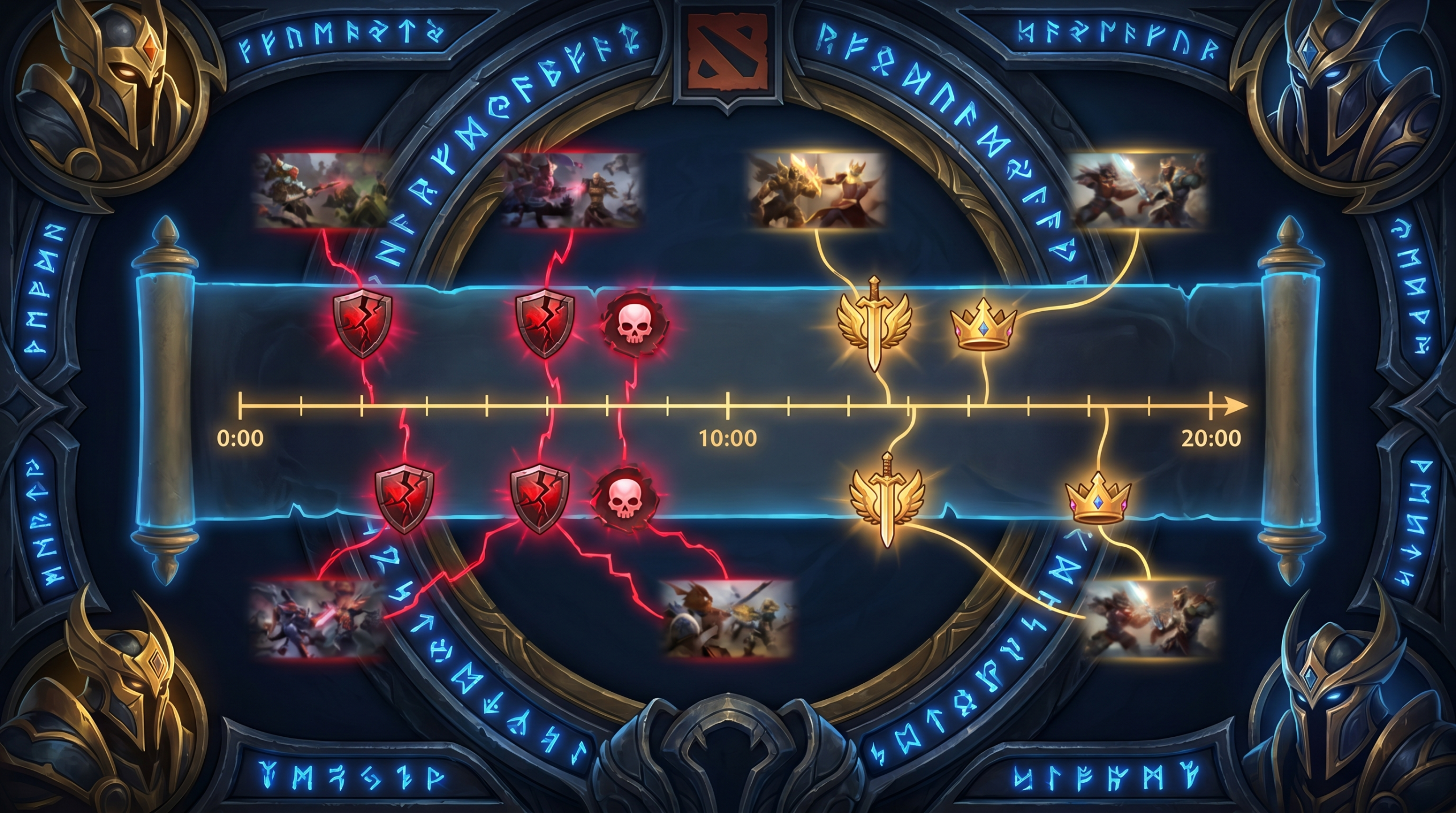
This guide provides a complete 20-minute replay review Standard Operating Procedure for busy players. The protocol divides 20 minutes into four focused audit segments, each targeting a specific phase of the game with specific metrics and questions. After running this SOP on a replay, you will leave with one or two concrete, specific behaviors to change in your next game — not vague impressions about playing better.
Players who combine structured replay review with Dota 2 coaching develop significantly faster than those who do either alone — the coach can identify patterns across multiple replay audit sessions that you may not recognize from individual reviews.
Table of Contents
- Which Replay to Review
- Replay Review Setup
- Segment 1 (Minutes 0-5): Laning Phase Audit
- Segment 2 (Minutes 5-10): First Death and Rotation Audit
- Segment 3 (Minutes 10-15): Mid-Game Decision Audit
- Segment 4 (Minutes 15-20): Teamfight and Objective Audit
- SOP Output: What to Do With Your Findings
- Pattern Tracking Across Multiple Reviews
- Frequently Asked Questions
Which Replay to Review
The most valuable replays to review are not your worst games — they are your lost games where you played reasonably well but the game still ended in a loss. These games contain the most diagnostic information because the loss cannot be attributed entirely to catastrophic mistakes. Something more subtle caused the defeat, and finding it teaches you more than re-watching a game where you fed 10 times.
The Review Selection Criteria
Select replays that meet at least two of these three criteria: the game lasted more than 25 minutes (meaning neither team had a decisive early advantage that made the outcome obvious), your personal performance statistics were near or above your median for that hero (meaning the loss was not simply due to you having a bad game), and you remember at least one specific moment in the game where you were uncertain what the correct decision was.
That third criterion is particularly useful because uncertain decision moments are exactly the learning opportunities that replay review can resolve. You made a choice in real-time with incomplete information. The replay lets you see what the complete information was and evaluate whether your choice was optimal given full game state knowledge.
Recency Requirement
Review replays within 48 hours of playing them. After 48 hours, your emotional memory of specific decisions fades, which reduces the diagnostic value of the review. The replay shows you what happened; your memory provides the context of what you were thinking when it happened. That context is essential for determining whether a mistake was a knowledge gap (you did not know the correct action) or an execution gap (you knew the correct action but did not execute it).
If you cannot review replays within 48 hours consistently, prioritize the most recent game from your last session rather than an older game that feels memorable for some other reason.
Replay Review Setup
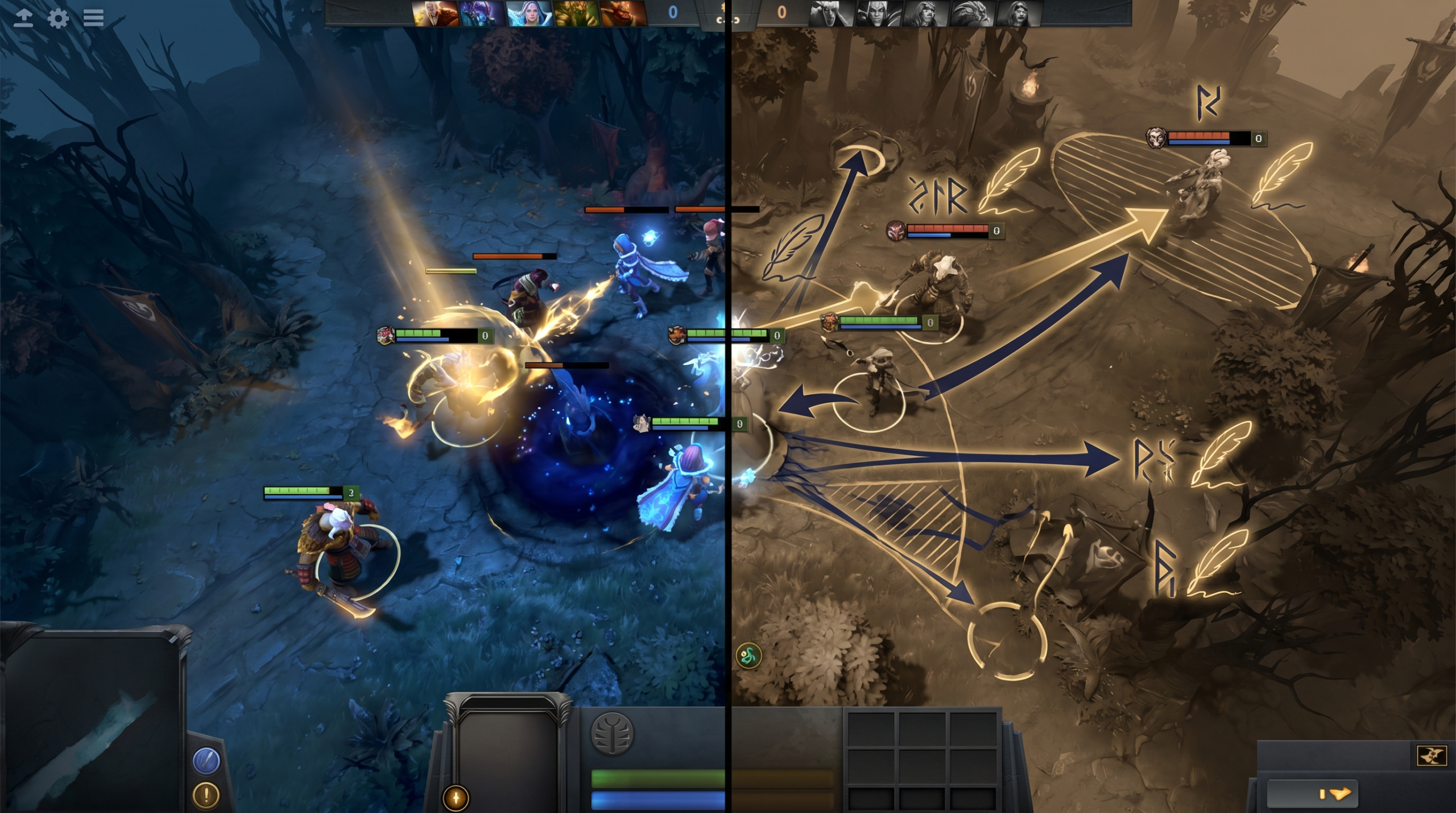
Before starting the 20-minute timer, complete the following setup steps. These steps take approximately 5 minutes and are not part of the 20-minute audit — they are prerequisites for a useful audit.
Pre-Review Setup Steps
Step 1: Open your tracking document. This should be a note, spreadsheet, or physical paper where you will write findings during the review. A replay review with no written output produces findings that you will not remember tomorrow. The written record is mandatory.
Step 2: Write the match ID, your hero, your role, the final result, and your final statistics at the top of the document. This context is useful when reviewing the document later for pattern analysis.
Step 3: Set the playback speed to 2x in the Dota 2 replay viewer. Most of the early laning phase can be evaluated at 2x speed. You will slow down to 1x during team fights and critical decision moments.
Step 4: Identify your starting focus question for the review. This is a specific question about the game based on your current weekly improvement focus area. For example: “Did I use Blink Dagger at the start of fights or reactively during fights?” Having a focus question prevents unfocused observation during the review.
Segment 1 (Minutes 0-5): Laning Phase Audit
The first 5 minutes of your 20-minute review are dedicated entirely to the laning phase of the game. Use the replay scrubber to fast-forward to minute 0:00 and watch at 2x speed until minute 10:00 of game time. You are looking for four specific things during this segment.
Last Hit Differential at 10 Minutes
Pause at exactly minute 10:00 and record your last hits. Compare this to the Dota 2 wiki’s published average last hits for your hero and role at 10 minutes. A carry hero should have 60-80 last hits at 10 minutes in a favorable lane; 50-60 in a neutral lane; 40-50 in a difficult lane. A significant gap below these ranges indicates an early game farm priority issue.
While watching the laning phase, identify the three 30-second windows where you fell farthest behind on last hits. Were you rotating? Were you being harassed? Were you missing hits due to animation timing? The specific cause of the deficit determines the fix.
Positioning at Minutes 2 and 5
Pause at minute 2:00 and minute 5:00 and evaluate your character’s position relative to the creep wave and enemy heroes. At minute 2:00, the primary position question is: are you standing closer to the enemy tower than your creep wave? If yes, you are overextended and exposing yourself to kill attempts. At minute 5:00, the primary question is: can the enemy supports currently threaten you with a combo from where they are standing?
Note both positions in your tracking document with a single word each: “safe,” “neutral,” or “exposed.” If both positions are “exposed,” your early game positioning is the primary issue to address from this review.
Support Harassment Pattern (Carry Reviews)
If you are reviewing a carry game, watch specifically for the moments when enemy supports successfully landed harassment on you. For each harassment hit, ask: were you in range because you were aggressing on a creep, because you were trying to deny a creep, or because you were not paying attention to enemy support positioning? The answer determines the fix — harassment from creep aggression requires zone awareness improvement, harassment from deny attempts requires range management on denies, and harassment from inattention requires position discipline in the lane.
Segment 2 (Minutes 5-10): First Death and Rotation Audit
The second segment covers minutes 10-15 in your review timer, focused on the game’s minute 10-20 window. This period contains the first significant deaths, the first rotation decisions, and the first objective attempts. The key audit questions in this segment are: why did your first death happen, and were your rotation decisions optimal?
First Death Analysis
Identify your first death in the replay. Scrub back 30 seconds before the death and watch at 1x speed. Answer four questions: Was the enemy team in a position to kill you that you should have seen coming? Did you have sufficient resources (health, mana, defensive items) to escape if you had made a different decision 10 seconds earlier? Was the death a result of a specific opponent ability that you underestimated the range or damage of? And — critically — did the death result from a proactive choice you made (attempting a fight) or a reactive situation (being caught by a rotation)?
Each answer points to a different correction. Deaths from not seeing the enemy position = minimap discipline issue. Deaths from insufficient resources = health management issue. Deaths from underestimated ability ranges = hero knowledge gap. Deaths from proactive fights = risk assessment issue. Deaths from being caught = positioning and map awareness issue.
Missed Rotation Windows
After analyzing the first death, watch the period from minute 10 to minute 15 at 2x speed and identify two specific moments where a rotation from your lane to another lane would have been achievable and potentially valuable. For each moment, ask: did you rotate, or did you stay in lane? If you stayed in lane, was the farm value of staying greater than the value of the rotation opportunity? Write your evaluation for both moments.
This exercise develops the habit of seeing rotation opportunities in real-time. Players who regularly review missed rotation windows develop stronger peripheral awareness of off-lane opportunities because they have trained themselves to recognize the signal pattern — a pushed wave at minute 12, enemy mid hero overextended, your own hero has cooldowns available — even while focused on their own lane farming.
Segment 3 (Minutes 10-15): Mid-Game Decision Audit
The third segment covers minutes 15-20 in your review timer, focused on game minute 20-30. This is the game phase with the highest density of consequential decisions: smoke walks, Roshan attempts, tower sieges, and the first major team fights. The audit questions in this segment focus on decision quality in ambiguous situations.
Item Timing Evaluation
Check your item progression at the minute 20 mark. For each major item in your build, evaluate whether the timing was optimal relative to the game’s current state. A Blink Dagger completed at minute 22 in a game where the first major fight happened at minute 18 means you were unable to contribute optimally to that fight. A Hand of Midas completed at minute 12 in a game where your team needed immediate fight power may have delayed impact items in exchange for long-term farm efficiency in a game that needed short-term power.
Item timing is one of the highest-leverage decisions in Dota 2 because it determines what you can and cannot do in every fight during the mid-game. A single item timing error can cascade across 10 minutes of game time, affecting every fight and objective in that window.
BKB Usage Pattern (Physical Carries)
If you are reviewing a carry game where Black King Bar was in your build, scrub through every team fight in the minute 20-30 window and record when you activated BKB relative to when the first enemy disable landed. Write each fight as a single data point: “activated before disable” (optimal) or “activated after disable” (reactive). A pattern of reactive BKB usage is one of the most common carry performance gaps at the 3,000-6,000 MMR range and one of the most directly improvable.
Segment 4 (Minutes 15-20): Teamfight and Objective Audit
The final segment covers the last 5 minutes of your review timer and focuses on team fights and major objectives. Select the single most consequential team fight in the game — the fight that most directly determined the outcome — and watch it at 1x speed twice.
First Watch: Your Perspective
During the first watch, observe only your own hero. Track your position relative to the fight center, when you used each ability, your health management during the fight, and your exit position after the fight. Write three specific observations about your own performance.
Second Watch: Game State Perspective
During the second watch, observe the entire team fight from a high camera position (use the free camera mode in the Dota 2 replay viewer). Now that you know what you were doing during the fight, observe what everyone else was doing simultaneously. Identify: was there a position that would have allowed you to participate more effectively in the fight? Was there an enemy hero who was left undisabled due to a positioning gap? Was there a moment when the fight turned and your team was unable to recover?
Objective Conversion Check
After the key team fight, check whether your team converted the fight outcome into an objective. How long after the fight did your team begin pushing toward the nearest structure? Was there a period of post-fight farm dispersion that delayed the objective push past the optimal window? Write your observation about the post-fight objective conversion.
This part of the audit develops a habit that many players at the 2,000-5,000 MMR range lack entirely: conscious awareness of the post-fight window and its limited duration. Players who internalize this pattern through replay review become significantly better at calling and executing post-fight objectives in their live games. This is a skill that MMR boost order boosters use constantly — every kill is followed immediately by an objective call.
| Segment | Review Timer | Game Time Focus | Primary Questions |
|---|---|---|---|
| 1: Laning Audit | 0-5 min | Game minutes 0-10 | Last hits at 10, positioning at 2 and 5 minutes, harassment pattern |
| 2: First Death and Rotation | 5-10 min | Game minutes 10-20 | First death cause, 2 missed rotation windows |
| 3: Mid-Game Decisions | 10-15 min | Game minutes 20-30 | Item timing at minute 20, BKB usage pattern |
| 4: Teamfight and Objectives | 15-20 min | Key team fight | Position quality, ability timing, post-fight objective conversion |
SOP Output: What to Do With Your Findings
After completing the 20-minute review, you should have a tracking document with specific observations from each segment. The next step is to synthesize these observations into actionable behavior changes for your next game.
Identifying the Primary Finding
From all your segment observations, identify the single finding that represents the highest-leverage change you could make. This is typically the observation that appears most frequently across segments (a positioning error that appears in segment 1, segment 2, and segment 4 is a systemic issue) or the observation that is most directly connected to the game outcome (the fight that cost you the game turned on a single item or ability timing decision).
Write this primary finding as a single behavioral rule: “Before every team fight, position behind the front-line hero rather than alongside them.” This rule is what you carry into your next game as the active behavior change.
Secondary Findings
Write 1-2 secondary findings from the review, but do not attempt to address them in the next game. Secondary findings are notes for future review cycles — when you have addressed the primary finding through consistent application over several games, the secondary findings become candidates for the next primary focus.
Attempting to fix more than one behavior at a time in a live game splits attention and degrades execution on both changes. One behavioral change per game cycle is the correct protocol, regardless of how many improvements the review reveals.
Pattern Tracking Across Multiple Reviews
The compounding value of the 20-minute SOP comes from running it consistently across multiple games over multiple weeks. Each individual review produces one primary finding. After 5 reviews, you have 5 primary findings. If three of those five findings point to the same underlying issue, you have identified a deep pattern that a single game’s review would not have revealed.
The Pattern Log
Maintain a separate pattern log document alongside your individual review documents. After each review, add the primary finding to the pattern log with the date and match ID. After 5 reviews, examine the pattern log for repetition. Repeated findings are systematic gaps; non-repeated findings are one-off mistakes.
Systematic gaps should define your improvement focus for the following 2-3 weeks of structured play. One-off mistakes can be noted and dismissed unless they appear a second time.
Using Replay Review With Coaching
If you are using Dota 2 coaching sessions, bring your pattern log to each coaching session. The pattern log gives your coach a condensed view of your self-identified weaknesses across multiple games, which allows them to focus the coaching session on verifying and deepening your own analysis rather than spending the first 10 minutes diagnosing what you already know.
The most effective coaching sessions are those where the player has done meaningful self-analysis beforehand and the coach’s role is to validate, challenge, or reframe that analysis with higher-level perspective. The 20-minute replay SOP produces exactly that kind of prepared input for coaching.
Ready to Skip the Grind?
Team Smurf’s Immortal boosters handle your MMR.
Get Your Boost Now Talk to Our Team