Best Solo-Queue Heroes: Win Without Coordination (2026)

You queue up. Your team locks in three carries without a word. The support picks Pudge. Nobody buys wards. You lose before the first team fight even happens.
Solo queue in Dota 2 is brutal — not because the game is unfair, but because you share your fate with four strangers who may have completely different ideas of how to win. The fastest way to take back control is through hero selection. The right hero lets you impact the game through your own individual play, not through hoping your teammates execute a plan.
This guide covers the best Dota 2 heroes for solo queue in 2026, ranked by role and self-sufficiency. Every pick on this list can win games even when your team is playing in five different directions at once.
Contents
What Makes a Hero Solo-Queue Friendly
Not every strong hero in the professional meta translates to solo queue dominance. In organized play, heroes like Enigma and Tidehunter are terrifying because five coordinated players enable their ultimates. In solo queue, those same heroes spend 40 minutes waiting for a fight that never comes together.
The heroes that excel in solo queue share a set of traits that make them effective regardless of what your teammates do:
- Self-sufficient damage: They can create kills through their own kit without requiring precise setup from allies. A Lion can Hex, Stun, and Finger someone to death without any help. A Phantom Assassin just needs to right-click.
- Built-in survivability: They have escapes, damage avoidance, or enough tankiness to survive in situations where no peel comes. Juggernaut’s Blade Fury gives spell immunity on demand. Bristleback turns his back and regenerates through almost anything.
- Solo win condition: They know what winning looks like and can pursue it independently. Zeus presses R and applies global pressure every 100 seconds whether his team groups or not. Shadow Shaman can rat a set of barracks with zero team support.
- Forgiving mistakes: The best solo queue heroes have some built-in error correction. If you misposition, Puck can Phase Shift out. If your team engages badly, Juggernaut can Omnislash through the chaos and still come out ahead.
- Clear itemization: They don’t require 10 different components to be useful. A carry who needs Battlefury, Manta, and BKB before they contribute will lose to disorganized teamfights before reaching that point. Bristleback with four Vanguard components and a Sange is already a nightmare.
These criteria cut across all five positions. Whether you play carry, mid, offlane, or support, there is a solo-queue-friendly option available to you in any draft. If you want to skip the grind entirely and invest in a professional Dota 2 boosting service to reach your target medal faster, that is always an option — but the heroes below will give you the best chance to get there solo.
Solo Queue Tier List 2026
The table below rates each hero’s solo queue value on a simple tier system. S tier heroes are self-sufficient enough to carry games with minimal team cooperation. A tier heroes are strong and reliable. B tier heroes are viable but require slightly more team engagement to reach their ceiling.
| Hero | Role | Tier | Key Strength |
|---|---|---|---|
| Juggernaut | Carry (Pos 1) | S | Blade Fury immunity, Omnislash cleanup, built-in heal |
| Zeus | Mid (Pos 2) | S | Global ult punishes anyone, anywhere, regardless of team |
| Bristleback | Offlane (Pos 3) | S | Unkillable in lane, farms through chaos, infinite sustain |
| Lion | Support (Pos 4/5) | S | Hex plus Stun plus Finger delivers kills alone |
| Phantom Assassin | Carry (Pos 1) | A | Burst crit, simple build path, Blur for survival |
| Storm Spirit | Mid (Pos 2) | A | Chases anyone down, escapes any gank, mana-based ceiling |
| Timbersaw | Offlane (Pos 3) | A | High armor, punishes melee clusters, great sustain |
| Shadow Shaman | Support (Pos 4/5) | A | Shackle into Wards solo kills, can rat barracks alone |
| Sniper | Carry (Pos 1) | A | Safe farm, global Assassinate, shrapnel for objectives |
| Puck | Mid (Pos 2) | A | Phase Shift forgives mistakes, strong solo kill pattern |
| Dragon Knight | Offlane (Pos 3) | B | Tanky, sustainable, solo Roshan with BKB |
| Crystal Maiden | Support (Pos 4/5) | B | Strong laner, global ult, mana aura benefits self |
| Anti-Mage | Carry (Pos 1) | B | Efficient silent farmer, Blink for self-rescue |
| Windranger | Mid (Pos 2) | B | Windrun escapes ganks, Shackle for solo kills |
Best Solo-Queue Carries (Position 1)
The carry role lives and dies by farm efficiency and late-game presence. In solo queue, your supports may never rotate to protect you, your midlaner may feed, and your offlaner may abandon the lane in the first five minutes. The carries below survive that environment and still find a way to win.
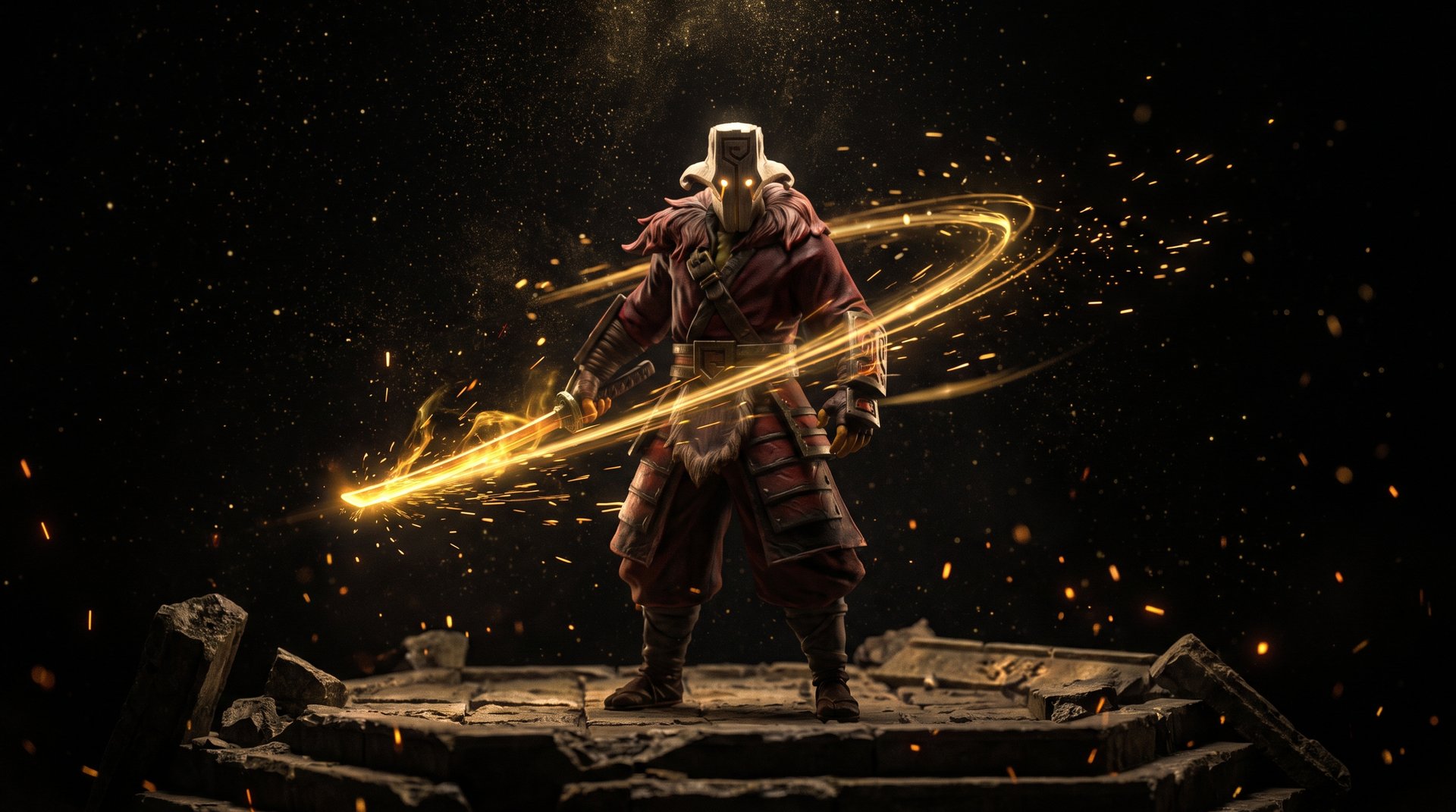
Juggernaut — The Complete Solo Carry
Juggernaut has been a solo queue staple for years for one simple reason: his kit handles every solo-queue problem independently. Lane getting crushed? Blade Fury gives you spell immunity for five seconds while you chase, farm, or escape. Getting focused in a teamfight? Blade Fury again. Need a fight-winning move without team coordination? Omnislash locks onto anyone in range and cannot be interrupted by most abilities.
Healing Ward gives Juggernaut and his entire team a fountain-level sustain effect during fights, which is a teamfight tool that requires zero coordination to deploy — just drop it and let allies walk near it. His item builds are flexible: Battlefury for farming, Phase Boots into Aghanim’s Scepter for a more aggressive route, or Maelstrom into Mjollnir if you need to accelerate tempo.
In solo queue, Juggernaut is the answer to “I don’t know what my team is doing.” Pick him, farm safely, join when fights start, and Omnislash anyone who reaches low health. His win condition is simple enough to execute alone but powerful enough to end games.
Phantom Assassin — High-Risk, High-Reward Burst
PA’s appeal in solo queue is the same as in any format: she can delete any hero in two or three right-clicks once her critical strike is stacked. In solo queue this matters even more because there is no guarantee your team can sustain a long fight. PA doesn’t need a long fight. She needs three seconds and a proc.
Blur’s evasion makes her naturally tanky against physical damage, and Phantom Strike closes distance and locks down fleeing targets without requiring stun support from teammates. The build path is narrow enough to be consistent: Power Treads into Battle Fury (or Desolator for a faster tempo), then BKB, then Satanic. You will know exactly what to buy every game.
Her weakness in solo queue is that she needs a safe laning stage. If your trilane or support play leaves her starved, she arrives 20 minutes too late. Pick her when the draft gives you a reasonable farming lane.
Sniper — Safe Farm and Global Pressure
Sniper is underrated as a solo queue carry because players underestimate how much the Assassinate ultimate contributes to a chaotic game. Every 15-20 seconds, you have a global ranged nuke that stuns and deals significant damage — and you can use it to finish kills from across the map, secure Roshan’s health during an attempt, or shut down a channeling ultimate without being anywhere near the fight.
Shrapnel is a free harassment and objective tool in lane. In the midgame, dropping Shrapnel on a Roshan attempt or tower siege applies enough damage to create solo objectives your team doesn’t have to commit to. Sniper’s attack range means he farms safely without needing a support babysitter and contributes to fights from behind the chaos.
Anti-Mage — The Silent Efficiency Farmer
Anti-Mage requires patience that solo queue often doesn’t reward, but his ceiling is high enough to deserve mention. Blink Dagger lets him escape misplays without a team to peel for him. Mana Burn passively punishes intelligence heroes without requiring any input. Once Battlefury is online, his farm rate becomes absurd on any map state.
His solo-queue limitation is his reliance on farm time. He is a B-tier solo queue pick rather than S because if your team loses the game before 35 minutes, Anti-Mage is irrelevant. Pick him when you read a draft that goes long — two or three tanky enemies who will not die quickly but also won’t close out the game fast.
Best Solo-Queue Mid Heroes (Position 2)
The mid lane has a disproportionate impact on solo queue games because a strong mid snowballs before anyone else reaches the item threshold to carry. The heroes below have natural kill patterns, strong lane presence, and win conditions that don’t require five-man grouping.
Zeus — The Global Pressure Machine
Zeus is the closest thing Dota 2 has to a hero who punishes enemies for existing. Thundergod’s Wrath hits every enemy on the map every time you cast it. In solo queue, where enemies often farm in isolation without wards, the global ultimate delivers damage and reveals positions regardless of where your team is or what they’re doing.
His laning is aggressive and reliable. Lightning Bolt applied on top of Arc Lightning chip damage makes Zeus one of the most oppressive midlaners against melee heroes. He doesn’t need his team to set up kills — he needs the enemy to be low enough for a Bolt, which he can arrange through his own lane dominance.
Aghanim’s Scepter gives him a second, shorter-cooldown global: Nimbus, which applies a storm that hits enemies passing under it. In solo queue, enemies rarely coordinate well enough to avoid Nimbus, turning it into free damage on anyone trying to farm the jungle or push without vision. Pair Zeus with an MMR boosting strategy guide approach — identify which games you can snowball through early aggression and commit.
Storm Spirit — Mobile Solo Assassin
Storm Spirit is a higher skill-cap pick but rewards the investment with an unmatched ability to chase down solo enemies anywhere on the map. Once Bloodstone is online, Ball Lightning’s mana cost drops to a manageable level and he becomes a hero with no escape limit — he can cover the entire map in seconds.
In solo queue, this matters because you will constantly see overextended enemies farming without vision. A Storm Spirit player who understands mana efficiency will find kills all over the map independently of his team. His laning, however, requires practice — he is susceptible to aggression before level 6. Once the ult is up, the game changes completely.
Puck — The Safe High-Upside Option
Puck is one of the most forgiving mid heroes for players who are still developing their game sense. Phase Shift provides an interrupt immunity that can cancel incoming damage at precisely the right moment, which covers positioning mistakes that would kill most other heroes. In solo queue, where you cannot always predict when you will get jumped, this built-in error correction is invaluable.
Illusory Orb plus Ethereal Jaunt allows Puck to create kills by zoning enemies into bad positions, then closing with a Dream Coil that doesn’t require team follow-up — a single target caught in a Dream Coil link that stretches will take massive damage alone. His item builds scale naturally: Blink Dagger into Witch Blade or Orchid gives him strong kill potential at every stage.
Best Solo-Queue Offlaners (Position 3)
The offlane role in solo queue is particularly chaotic. You may receive no support, you may face a dual lane with aggressive supports, and your carries may never rotate to relieve pressure. The offlaners below are designed to survive this environment independently and contribute to the game through their own actions.
Bristleback — The Unkillable Offlaner
Bristleback is the gold standard for solo-queue offlaners. His passive reduces incoming damage from behind and his Quill Spray stacks allow him to shrug off sustained damage in a way that leaves enemies frustrated. In the laning stage, he can absorb abuse that would destroy any other hero and come out with enough stacks to begin dealing meaningful damage.
His win condition scales naturally: Warpath stacks increase his damage output with every ability cast, and Vanguard or Pipe into Crimson Guard gives him enough physical mitigation to become nearly unkillable through focused fire. He doesn’t need his team to engage first — he walks in, turns his back, and lets the stacks do the work.
In teamfights, Bristleback is excellent at disrupting enemy backlines through Quill Spray pressure and forcing attention away from teammates. Even if your carry is having a terrible game, Bristleback can survive long enough for fights to turn in your favor by virtue of never dying and dealing consistent attrition damage.
Timbersaw — Geometry Punisher
Timbersaw punishes something that happens constantly in solo queue: enemies clumping together without awareness. Whirling Death and Timber Chain deal percentage-based magic damage that scales regardless of enemy armor, making him effective throughout the entire game without specific counter-building.
His high strength gain and Reactive Armor passive make him a nightmare to burst in lane. Against melee-heavy lineups — which are common in solo queue where players gravitate toward right-click heroes — Timbersaw’s Reactive Armor builds massive armor stacks that make him effectively invincible to physical damage.
The limitation is that Timbersaw requires tree coverage to shine with Timber Chain. Open areas with minimal trees reduce his mobility significantly. That said, the current map layout provides enough forested sections near the offlane to make him consistently viable across most drafts.
Dragon Knight — The Roshan Threat
Dragon Knight occupies a specific niche in solo queue: the hero who can use Roshan to win games without needing team coordination. With BKB active, Dragon Knight can tank Roshan’s attacks in Elder Dragon Form independently once the item is online. This creates a persistent threat that solo queue teams struggle to counter because it doesn’t require “let’s all go Roshan at 25” communication that rarely happens.
His laning is stable and hard to bully. Dragon Blood gives him strong regeneration and high armor from early levels, and Breathe Fire as a level-1 or level-2 first pick provides enough wave clear and harassment damage to zone enemies without needing a support follow-up. He scales reasonably into the mid game with Aghanim’s Scepter and Assault Cuirass.
Best Solo-Queue Supports (Position 4/5)
Solo-queue supports face the hardest mental challenge: you invest resources and time in helping carries who may not know how to convert your setup into kills. The supports below minimize this dependency by being capable of executing the entire kill combo themselves, or by providing so much lane value that the investment pays off even without a coordinated carry.
Lion — The Reliable Solo Assassin
Lion is the best support for solo queue for a straightforward reason: he can kill anyone alone. Earth Spike plus Hex plus Mana Drain plus Finger of Death is a four-ability combo that, at full mana and appropriate levels, can deliver enough burst damage and control to eliminate any hero in the game without a carry right-clicking.
This is enormously valuable in solo queue because it means Lion’s impact doesn’t depend on whether his carry can follow up. He creates the kill opportunity and executes it simultaneously. His Hex is a pure disable that counters Blink Daggers, Spirit Breaker charges, and other escape mechanisms that often cause problems in disorganized play.
Mana Drain in lane is a free harassment tool that punishes mana-dependent opponents relentlessly. Against heroes like Storm Spirit or Puck, draining their mana from 600 to 0 every 20 seconds effectively removes their threat. Lion is also a late-game scaling support — Finger of Death’s damage scales with levels and Aghanim’s Scepter gives it a chain effect.
Shadow Shaman — The Objective Threat
Shadow Shaman has one of the strongest independent win conditions of any support in Dota 2: his Serpent Wards can take down a set of barracks without any help. With Aghanim’s Scepter, the wards become permanent structures that force enemies to respond. In solo queue, this creates a way to win games through objective pressure rather than through team coordination.
His laning is strong with Hex and Shackle providing multiple seconds of control that give any carry a free window to deal damage. Even if your carry wastes the setup, the Shackle duration is long enough to convert a kill through your own basic attacks and Ether Shock. Shadow Shaman is a hero who comes into every fight with a plan that doesn’t require teammates to read his mind.
Crystal Maiden — The Strong Laner
Crystal Maiden sits at B-tier because her lane presence and mana aura provide consistent value, but her ultimate Freezing Field requires positioning near enemies for an extended duration — something that becomes dangerous in disorganized fights where your team doesn’t peel for you. That said, she is still one of the strongest lane supports for ensuring your carry has a productive early game.
Arcane Aura benefits Crystal Maiden herself in addition to teammates, making her mana pool more sustained than other supports. Frostbite provides a long root that, combined with Crystal Nova’s slow, creates kill opportunities even without coordinated right-click follow-up. Her global “Ring” ultimate, when properly channeled behind the enemy, can decide teamfights alone.
How to Win More Solo Queue Games
Hero selection is the most important lever, but how you approach each game determines whether you actually convert it. These strategies apply regardless of the hero you choose:
Pick Your Hero Early and Own It
In solo queue, the temptation is to counterpick or flex-pick based on what teammates choose. Resist this. Lock in a hero you know deeply and play that hero through the draft noise. Consistent performance on three to five heroes in your pool will outperform situational picks on heroes you are less comfortable with. Mastery beats meta every time at the level where solo queue operates.
Focus on Your Sphere of Control
The biggest mental trap in solo queue is trying to manage your team’s decisions. Your team will make bad calls. Accept it before the game starts. Your job is to maximize your own farm, positioning, and fight contribution. When a fight breaks out without you, you either respond quickly or accept the trade and take an objective of your own. Never flame, never instruct, never wait for team consensus — just play.
Identify Your Win Condition Pre-Game
Every hero on this list has a clear win condition. Before the game starts, name it. If you are playing Juggernaut, your win condition is reaching Diffusal/Battlefury by 20 minutes and joining fights with Omnislash available. If you are playing Zeus, your win condition is killing the enemy midlaner twice before level 11 and applying global pressure from the safety of your base. If you play toward a named win condition rather than reacting to the game, you will make fewer aimless decisions.
Mute Generously
All-chat and team-chat flame in solo queue costs you mental bandwidth you need for decision-making. Mute anyone who starts tilting in the first five minutes. The mute button exists for a reason. A focused brain outperforms a distracted one in every game of Dota 2. You do not need to hear 14 opinions on why the last fight went wrong — you need to focus on the next one.
Consider Professional Help for the Grind
If you have been stuck at the same medal for multiple seasons despite consistent effort, solo queue grind may not be the most efficient path. Our professional MMR boost service places an Immortal-ranked booster on your account who climbs efficiently and methodically. Many players use a boost to break out of a bracket, then use the new environment to improve their own gameplay at a higher level. Read our full safety guide for Dota 2 boosting to understand how we protect your account throughout the process.
Stuck in Solo Queue Hell?
Sometimes the bracket you are in does not reflect your actual skill level. TeamSmurf pairs you with Immortal-ranked Dota 2 specialists who climb your MMR professionally, safely, and fast — no automation, no bots, just real high-ranked players on your account.