Jungling in 2026: When Farming Jungle Beats Staying in Lane

Every Dota 2 player faces the same question at some point in the laning phase: should I stay here and contest the lane, or should I turn around and hit that jungle camp? The answer sounds simple but it is not. Make the wrong call and you sacrifice lane control. Make the right call and you open a gold gap your opponent can never close.
In 2026, jungling is not a niche strategy reserved for Enigma or Lycan. It is a core skill that every player in every role needs to understand. This guide breaks down the decision framework, the economic math, the hero categories, and the specific scenarios where the jungle beats the lane — so you know exactly when to rotate and when to hold your ground.
In This Guide
What Each Jungle Camp Is Worth
Before you can decide whether to jungle, you need to understand what the jungle is actually worth in gold and experience. Dota 2 has four tiers of neutral creep camp, each with a different risk profile and return on time invested.
Jungle camps respawn every 60 seconds as long as no unit is standing inside the camp spawn box when the timer fires. This means a cleared camp is available again one minute later — a consistent, predictable gold stream that runs parallel to the lane economy. Neutral creeps also scale as the game goes on, gaining additional health, armor, and gold bounty every 7.5 minutes. A large camp you clear at minute 30 is worth meaningfully more than the same camp at minute 8.
| Camp Tier | Example Creeps | Approximate Gold | Approximate XP | Best Used By |
|---|---|---|---|---|
| Small | Kobold Foreman, Satyr Trickster | 55-80 gold | 80-115 XP | Any hero, safe entry point |
| Medium | Centaur Khan, Satyr Hellcaller | 70-105 gold | 110-145 XP | Most carries and mids from level 4 |
| Large | Ogre Magi, Wildwing Ripper | 95-135 gold | 140-185 XP | Heroes with AoE or high single-target DPS |
| Ancient | Mud Golems, Thunderhide | 155-205 gold | 270-370 XP | Dedicated junglers or carries with Radiance |
For context, a standard lane creep wave is worth roughly 150-200 gold. A single medium camp clears in 8-15 seconds for most heroes. That means a well-timed jungle rotation between waves can add 70-100 extra gold to what would otherwise be dead time. Do that three times in the laning phase and you are 250 gold ahead before the first teamfight even starts.
Ancient camps are the exception. They sit at the opposite end of the risk curve — high gold, high XP, but also high health pools and damage output. Most heroes cannot safely farm ancients until they have a core item. The key distinction is that ancients do not grant XP to enemies when killed, making them safer to farm without feeding opponent levels in the process.
The scaling mechanic also changes the calculus at different game stages. By the 30-minute mark, camps have grown through several scaling intervals, making a double-stacked large camp potentially worth 250-280 gold on a single clear. If your opponent is not touching jungle while you are systematically farming it, the gold gap compounds over time.
The Three Decision Rules: Lane vs Jungle
Most players treat the lane versus jungle decision as a feeling. It should be a framework. Once you internalize these three rules, you will stop second-guessing yourself mid-game and start making consistent, high-quality decisions every minute.
Rule One: Leave When Staying Produces Nothing
The most underrated signal is creep position. If the enemy has pushed the wave inside your tower range, you are essentially farming for free — but so is the tower. The moment your tower is handling the wave and you have no enemy to pressure, there is no reason to stand in lane. The camp behind your Tier 1 tower is your fastest rotation. Walk there, clear it in under 15 seconds, and return before the next wave arrives. You just turned dead time into 80-100 gold.
The same logic applies when you are the aggressor. If you have pushed the wave to the enemy tower and the enemy hero is hugging the tower defensively, you cannot last-hit the wave anyway. Turning around and hitting the nearest camp is correct. Your opponent is frozen under tower, the wave is pushed out, and the camp is free gold sitting idle.
This rule also applies in the mid lane specifically. After pushing the wave hard, a mid hero who walks to a nearby camp and clears it before returning is executing one of the highest gold-efficiency patterns in the game. The wave resets toward them as they return, and they lose no meaningful lane presence.
Rule Two: Leave When You Are Losing the Lane Anyway
This is the rule most players get wrong. When they are being crushed in lane, they stay out of pride, or the hope that something will change. It will not change unless an ally comes to help. The correct response to a lost lane is to stop feeding your opponent the satisfaction of zoning you and start taking value from the jungle instead.
A large camp behind your Tier 1 gives you 95-135 gold and meaningful XP. Standing in a lane where the enemy denies 80% of creeps gives you almost nothing and gives your opponent farm, pressure, and tower damage. The math is clear. When the lane is unsalvageable without support, rotate to the jungle and communicate with your team about a future rotation when help arrives.
The key insight here is that jungle farming from a losing position is not giving up — it is resource management. You are extracting value from the map rather than standing in a spot where the enemy extracts value from you.
Rule Three: Match the Decision to Your Hero
Some heroes are natural junglers. Others cannot kill a medium camp until they have two items. Rule three is simply: know your hero jungle entry point. Alchemist can jungle at level 1. Anti-Mage enters the jungle comfortably around level 5-6 with Phase Boots. A Crystal Maiden or Shadow Shaman should almost never solo a camp — the damage output is not there and the risk is not worth the reward.
If you do not know when your hero can efficiently clear camps, the general default in 7.41d is level 4-5 for most carries and mids. At that point, most right-click heroes can clear a medium camp in under 20 seconds — which fits inside the window between two lane creep waves without losing meaningful lane presence. Test this with your heroes in a bot game or demo mode if you are unsure.
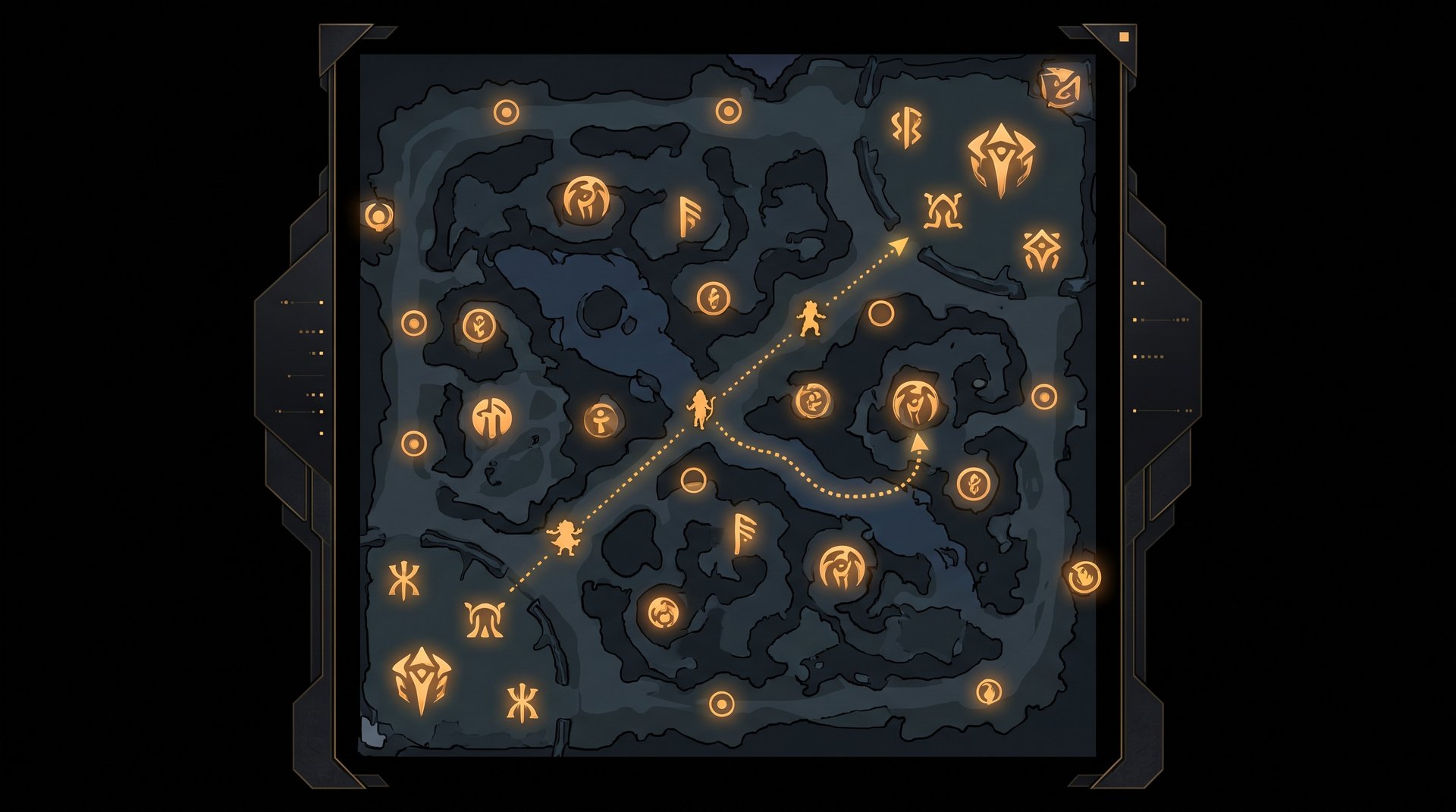
Which Heroes Should Jungle and When
Not every hero approaches jungling the same way. Understanding the four categories of jungle relationship helps you calibrate your expectations and recognize your opponents weaknesses when they make the wrong call about camp access.
Category A: Mandatory Junglers
These heroes are designed around the jungle or are most effective when they spend significant early time there. Enigma, Lycan, Lone Druid with the Siege Bear build, Chen with dominated creeps, and Ursa before acquiring substantial Fury Swipes stacks are the canonical examples. For these heroes, the jungle is not optional — it is the fastest path to their core item timings. Drafting them into a lineup that requires them to lane on the safe side is often a strategic mistake unless the draft has exceptional support coverage.
In organized play, mandatory junglers almost always have a support dedicated to stacking for them. The stacker generates significant income through the stacking bonus (see below), while the jungler clears rapidly and hits item timing 3-4 minutes ahead of a standard carry who stays in lane through the full early game.
Category B: Rotation Farmers
This is the largest category and includes most right-click carries: Anti-Mage, Wraith King, Juggernaut, Alchemist, Sven, Medusa, Gyrocopter, Phantom Lancer, and many others. These heroes lane in the early game, reach a point where jungle integration becomes efficient (usually level 4-6), and then bounce between lane and jungle for the rest of the game.
The target for rotation farmers is to be farming somewhere at all times. When the lane is pushed out, they are in the jungle. When the jungle camp is on cooldown, they are in the lane. The goal is zero dead time — no standing around, no walking without purpose, no waiting at the fountain when a camp 15 seconds away is about to respawn.
Category C: Opportunistic Dippers
Mid lane heroes in this category — Storm Spirit, Shadow Fiend, Queen of Pain, Templar Assassin, Ember Spirit — dip into jungle camps between lane waves as a gold-per-minute boost rather than a primary strategy. After pushing the wave toward the enemy tower, they hit the two nearest camps and return before the next wave crashes back.
The timing matters: push the wave at the 0:45-0:50 mark of any given minute, immediately move to the nearest camp, clear it by 1:00-1:05, and be back in position as the next wave arrives. Repeat every minute and you have effectively farmed an extra camp worth of gold on top of lane output without losing any meaningful trading or pressure.
Category D: Support Jungle Dipping
Supports in Dota 2 can and should take neutral camps opportunistically, but with strict rules. Pos 4 heroes who have roaming windows can clear a small camp that their carry would not reach in the next 90 seconds. Pos 5 heroes should not solo farm camps in the early game — the gold is better left for the carry or earned through the stacking bonus.
The support who takes camp gold that would otherwise reach their carry makes the team poorer. The support who stacks camps and receives the stacker bonus makes everyone richer. This is the fundamental distinction between support players who climb and those who do not.
Stacking — The Free Gold Multiplier
Stacking is the highest-leverage jungle mechanic available in Dota 2. It multiplies the value of a single camp by repeating the stack action, and it pays out a reward to the stacker even if they never kill a single creep themselves. It is one of the few actions in the game where two players both gain from a single decision.
How Stacking Works
Neutral creeps have a spawn-check that fires at the top of every minute. If a unit — any unit, including the creeps themselves — is standing inside the spawn box when the timer fires, new creeps cannot spawn and the timer resets to the next minute.
To stack a camp, you move the existing creeps outside their spawn box before the :00 mark. The window to do this is between :52 and :57 on the game clock — walk into the camp, aggro the creeps, and lead them out of the box. At :00, new creeps spawn in the now-empty box. At around :05-:10, the old creep group loses aggro and walks back. You now have two groups in one camp — a stacked camp worth nearly double the original bounty.
Repeat this process on subsequent minutes and you can have 3x, 4x, or even 5x the normal creeps waiting in one location. A triple-stacked large camp can be worth 280-400 gold when a carry with AoE clears it, making a single carry rotation deliver the equivalent of three full camp clears worth of gold in one stop.
The Stacker Bonus
Dota 2 rewards the player who stacked a camp when an ally clears it. The stacking player receives approximately 35% of the total gold and XP bounty from the stacked portion of the camp. This means that if you stack a large camp twice and your carry clears the whole thing for 280 gold, you receive around 70-80 gold without doing any of the actual killing.
Over the course of a full game, a pos 4 or pos 5 who consistently stacks 3-4 camps per game receives a significant passive income boost — while simultaneously accelerating the carry speed of farm. This dual benefit is why professional supports stack obsessively and why pub supports who ignore stacking are giving up free MMR every single game.
Which Camps to Stack
Prioritize large and ancient camps for stacking. The base bounty is higher, so the multiplicative effect of each additional stack generates more absolute gold. Small camps are worth stacking only when they are adjacent to a carry rotation path and would otherwise sit uncleared for multiple minutes.
The Radiant large camp to the left of the Radiant ancients and the Dire large camp near the river are the most commonly stacked in organized play because they are accessible for a pos 4 rotating between lane and river without crossing dangerous open ground. If you are not stacking at least one of these camps per minute in the early game, you are leaving significant gold on the map.
How Jungling Fits in the 7.41d Meta
Patch 7.41d carries forward a jungle-integrated meta that has been developing since the major map and neutral item rework cycle. Several factors have made the jungle more accessible and more rewarding for correctly-played carries and supports at all brackets.
The most important shift is that the level 4-5 rotation entry point has become standard for most carry heroes. In older patches, carries often stayed in lane through level 7 or later because lane XP was more contested and junglers needed a higher power level to clear safely. In 7.41d, with neutral items available from early on and camps scaling in value through the game, rotating earlier is correct for the majority of the hero pool.
A notable map change worth knowing: one of the hard camps positioned near the Tier 3 towers was reclassified as a medium camp in a previous patch update. This affects routing for heroes who previously relied on that camp as a high-value target in the mid-game. If your mental map still has a hard camp in that position, update it — the camp is now medium tier, clears faster, and delivers lower bounty.
The current meta also rewards heroes with moderate AoE damage over pure single-target right-clickers for camp clearing specifically, because AoE clears camps faster and handles stacked camps without requiring Radiance or Battle Fury. Heroes like Gyrocopter with Flak Cannon active, Sven with Warcry enabling attack speed, and Wraith King with Mortal Strike applying to nearby units are excellent at integrating efficient jungle farming into their standard patterns.
Role-by-Role Jungle Routing
Jungle routing is not one-size-fits-all. Each role has a different relationship with the jungle, a different timing for entry, and a different set of camps that are appropriate to take at different game stages.
Carry (Pos 1): The Rotation Ladder
The carry jungle relationship is a ladder that escalates as the game progresses. First 7 minutes: stay in lane and maximize CS, only taking the camp behind T1 if the wave is pushed out. Minute 7-15: begin integrating the two camps behind your T1 between waves as a consistent pattern. Minute 15 onward: freely jungle between objectives, Roshan windows, and teamfights, treating the jungle as an equivalent income source to the lane.
The carry is the primary consumer of all camps the pos 4 or pos 5 has stacked — this should be coordinated through pings, chat wheel, or voice. Nothing is more wasteful than a support stacking a large camp three times and then watching it sit uncleared while the carry farms the small camp instead. Communication about which camps are stacked and waiting is a simple habit that has significant gold impact.
Mid (Pos 2): The Push-and-Dip Pattern
Mid heroes have the best jungle access in the game because their lane naturally alternates between push phases and lane pressure phases. The standard mid pattern in 2026 is: push the wave toward the enemy tower at around :45 on each minute, rotate to the nearest camp on your side, clear the camp by :00, and be back in position as the next wave arrives.
Heroes like Storm Spirit, Shadow Fiend, Invoker, and Queen of Pain can execute this pattern every single minute once they reach level 4-5. Over 10 minutes of this pattern, that is 10 extra camp clears — an additional 700-1,100 gold on top of lane CS from the same time period. The mid who executes this consistently arrives at their first item timing 3-4 minutes faster than one who waits in lane passively.
Offlane (Pos 3): The Pull-and-Dip Cycle
The offlaner jungle access depends heavily on lane state. When the lane is contested, the offlaner cannot freely rotate to jungle without losing lane pressure and giving the enemy safe lane the chance to extend. However, there are two reliable windows even in difficult lanes.
The first is the pull window. Around :52-:55 on the first minute, the offlaner can pull the large or small camp behind the Tier 1 tower to deny lane creeps from the enemy and simultaneously bring camp creeps into a position where they can be cleared after the pull ends. This gives the offlaner farm without leaving the lane impact zone entirely.
The second is the post-lane window. After the enemy has taken the Tier 1 and the offlaner is working the triangle, jungle farming becomes the primary income source. The triangle (the three camps positioned between T1 and T2 on the safe side for the offlane) is the standard mid-to-late-game offlaner farming pattern, and it pairs well with aggressive Roshan attempts when the team has an advantage.
Soft Support (Pos 4): The Stacking Specialist
The pos 4 has the most important relationship with the jungle of any support role — as the stacker, not the farmer. The job in the first 15 minutes is to hit the stacking window (:52-:57) on every minute, pull when needed to disrupt the enemy safe lane, and roam for kills in the remaining time.
Farm from camps should only be taken by pos 4 in two situations: the camp has been sitting unstacked for over two minutes and the carry will not reach it before the next rotation, or you are critically gold-starved and the game requires additional items to function. In all other cases, the camp gold belongs to the carry.
Hard Support (Pos 5): Camp Tax Only
The pos 5 should treat jungle camps as emergency resources only. When you are alone on the map with no wards to place, no courier tasks, and no ally to assist, a small camp is an acceptable brief gold source. In all other situations, the jungle belongs to your carries and your stacker.
Where pos 5 heroes genuinely help with the jungle: by pulling at the right time to deny enemy XP from lane creeps, and by placing deep wards that reveal enemy jungling patterns and allow for counter-ganks. These actions support the jungle economy without taking from it.

When to Stay in Lane — Signs You Need to Stop Jungling
The jungle is a resource, not an escape hatch. Knowing when NOT to go to the jungle is equally important to knowing when to rotate there. These are the signals that tell you to hold your lane position.
Your Lane Is Still Producing Gold
If you are getting strong last hits and the enemy cannot zone you, the lane is producing more gold per minute than the jungle would. A well-farmed lane yields 150-200 gold per wave with no health cost. A jungle camp yields 70-135 gold with potential health cost from taking hits. If the lane is active, competitive, and productive — stay in it. You are already in the highest-value position available to you.
Your Hero Needs Levels More Than Gold
Some heroes have strong level-dependent power spikes that outweigh camp gold in the early game. Tidehunter wants level 6 before anything else changes meaningfully for the team. Puck becomes a different hero after level 7 when Phase Shift reaches its full duration and Illusory Orb is maxed. Bristleback with two points in Quill Spray deals radically more damage than Bristleback with one. For these heroes, leaving lane early means missing the exact level that enables their core win condition.
The Map Is Not Safe
If the enemy team has recently bought Smoke of Deceit, has a Pudge in mid-river, or has heroes that have disappeared from visible lanes, your jungle is not safe. Walking into a camp and getting collapsed on by two enemies is a net loss in gold, experience, and almost always results in a death. Check the minimap. If enemy positions are unknown, do not enter deep jungle without vision providing coverage of the approach paths.
Your Carry Needs Support Right Now
The most common support mistake is rotating to the jungle to stack or farm when the carry is about to lose the lane fight. An ally rotation saves the carry, punishes the enemy aggression, and preserves a CS lead that took 10 minutes to build. A stacked camp helps in five minutes. Your carry surviving helps right now. Prioritize the live situation when there is a fight to win or a death to prevent.
Items That Unlock Efficient Jungle Farming
Certain items dramatically accelerate jungle clearing speed and change when a hero can enter the jungle efficiently. If you are playing a rotation farmer, understanding these item timings helps you plan the early game around jungle integration as a first-priority goal.
Battle Fury: The classic carry jungling item for Anti-Mage and Sven. The cleave on melee attack clears multiple creeps simultaneously, turning a medium camp from a 15-second clear into a 6-second clear. Battle Fury makes the jungle so efficient for the right heroes that it is often worth delaying other items to get it as the first major purchase.
Radiance: For AoE-oriented carries like Medusa, Gyrocopter, and Spectre. The burning aura damages all nearby units passively, meaning stacked camps begin dying as you stand in them. A Radiance Medusa can clear a triple-stacked ancient camp while casting spells and gain 300 or more gold in a single stop of under 20 seconds.
Maelstrom and Mjollnir: Chain lightning procs on attack hit multiple targets simultaneously. Heroes like Alchemist, Wraith King, and Sven transition to efficient multi-target camp clearing much earlier when Maelstrom is in the build, as every third or fourth attack bounces through the entire camp group.
Hand of Midas: Converts one creep to gold and XP every 100 seconds. Primarily used by heroes who jungle intensively before transitioning to teamfight (Alchemist with greedy builds, some Luna builds). The item pays for itself in roughly 12-15 minutes of active use when the holder is consistently farming camps rather than sitting in lane.
Soul Ring: Not a direct damage item, but it enables mana-hungry casters to spam spells that clear camps more efficiently than auto-attacks. Heroes like Chaos Knight with Chaos Bolt, Phantom Lancer building stacks with Spirit Lance, and Drow Ranger with Gust plus Frost Arrows clear camps faster with ability use, and Soul Ring provides the mana to do so repeatedly without returning to base.
You do not need any of these items to begin jungling. Most heroes can clear small and medium camps with right-clicks alone from level 4 onward. But each of the above items lowers the effective jungle entry point by 1-2 levels and dramatically increases gold per minute from camp clearing once acquired. Plan your item build around these efficiency thresholds and your net worth graph will reflect the difference.
How Jungle Efficiency Translates to MMR Gains
The jungle impact on MMR is not theoretical — it is concrete and it compounds. Every camp clear you complete that your opponent ignores is net worth advantage that flows directly into item timing advantages. Two extra large camp clears per game equals roughly 200-270 extra gold. Over 30 games at your bracket, that is the difference between being first-item-complete and being two to three minutes behind on every major timing.
The carries who climb MMR fastest are rarely the ones with the highest mechanical ceiling. They are the ones with the best gold efficiency. They are in the jungle when others are watching fights from the sideline. They are hitting camps during the post-fight reset when others are standing at the fountain waiting for full HP. They are stacking the ancient camp at :53 while the opponent pos 4 is idling in the lane.
Developing genuine jungle awareness takes dozens of deliberate games of focused practice. If you want to understand the patterns faster, working with a coach from TeamSmurf coaching is one of the most efficient paths — a single session focused on your farm patterns and jungle integration will reveal gold leaks you never knew existed. For players who want to reach their target rank while the learning happens in parallel, our Dota 2 boosting services are handled by players who execute these patterns naturally at 6,000+ MMR. If you want to understand what the MMR boosting process looks like from the inside, reviewing your booster replay is a masterclass in jungle and map efficiency.
Stop Leaving Free Gold on the Map
Our 6,000+ MMR boosters clear every camp, hit every stack window, and farm 200-300 more gold per game than the average player at your bracket. Let them show you what optimal jungle integration looks like on your account.
Boost My MMR Now Book a Coaching Session