Wisdom Rune Control: The Free XP Most Teams Ignore

Every seven minutes, two pools of free experience appear on the Dota 2 map. No fight required. No setup needed. Just show up, stand still for three seconds, and walk away with XP that goes directly to two heroes at once.
In patch 7.41d, that XP starts at 200 for the first Wisdom Shrine and climbs by 300 with every cycle — meaning the second activation gives 500, the third gives 800, and by the fifth cycle at 35 minutes you are looking at 1,400 XP in a single pickup. Yet in the average ranked game below 5,000 MMR, both shrines go uncollected for multiple cycles because nobody assigned the job and nobody showed up.
This guide breaks down what the Wisdom Shrine actually does in the current patch, how the contest system changed in 7.41, which heroes are best positioned to control it, and exactly what your team gives up when you ignore it every game.
What You Will Learn
What Is the Wisdom Shrine?
The Wisdom Shrine started life in patch 7.33 as the Wisdom Rune — a classic ground pickup that worked like any other rune. A hero walked over it, grabbed it, and received a flat 280 XP. Simple, fast, and easy to ignore if your team was already busy fighting or farming.
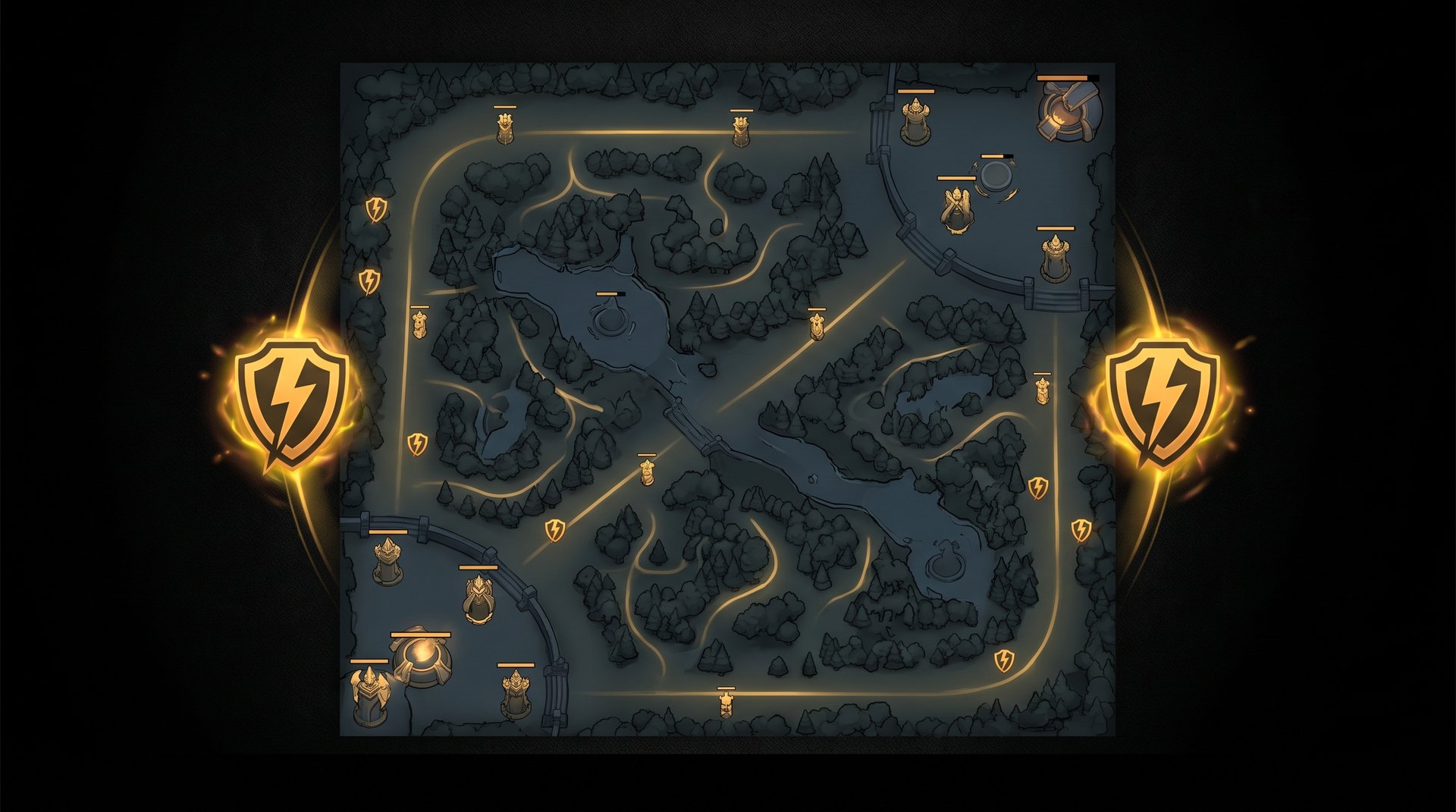
Patch 7.38, released in February 2025, replaced the rune mechanic with a permanent shrine structure. Instead of picking up a rune off the ground, heroes now stand within 300 units of the shrine for three seconds to absorb the XP it has accumulated. Two shrines exist on the current map — one on each side in the respective team’s offlane jungle, positioned between the Tier 1 and Tier 2 towers in the area where ancient neutral camps once stood.
The Wisdom Shrine replaced the old Tome of Knowledge, which was a shop item that granted one instant level-up per hero per match. The shrine system has no purchase cost, no hero restriction, and no single-use limit. It reactivates every seven minutes for the entire game, stacking charges if uncollected, making it a repeating source of free team-wide XP that persists indefinitely until someone collects it.
Players still commonly call these “Wisdom Runes” by habit. Whether you call them runes or shrines, the mechanism is now far more strategic than the original pickup: enemies can contest your collection, your side of the map is no longer guaranteed safe, and the XP values have changed significantly with each major patch since 7.38.
If you want to understand every mechanical edge that separates winning teams from losing ones, Dota 2 coaching from high-MMR players covers objective timing in depth — shrine control is one of the first habits coaches address with new clients.
Current Mechanics in Patch 7.41d
Spawn Locations
Two Wisdom Shrines exist on the Dota 2 map. The Radiant shrine sits in the Radiant offlane jungle, roughly between the Radiant Tier 1 and Tier 2 offlane towers. The Dire shrine mirrors this position on the other side of the map, in the Dire offlane jungle between their corresponding towers.
Since patch 7.40 repositioned the shrines to low ground and connected them via waterways to the river near each team’s Tier 1 tower, the terrain approach lines have shifted compared to their original placement. Practically, a support rotating off the lane at 6:30 can reach their own shrine in time for the 7:00 activation without teleporting — but only if they leave the lane early enough. Cutting it to 6:50 often means arriving seconds after the enemy has started their channel.
On the minimap, both shrine positions are marked with a distinct indicator that illuminates when the shrine has charged up and is ready to collect. Pressing Alt in-game highlights the shrine icons for any teammate who has lost track of the timer during a busy teamfight period.
Activation Cycle
The shrine charges for the first time at 7:00 into the game. After the first collection (or if left uncollected), it recharges on a strict 7-minute interval: 14:00, 21:00, 28:00, 35:00, 42:00, and so on for the entire game.
Critically, shrines do not despawn or reset. If nobody collects at 7:00, the shrine remains active and a second charge stacks on top when 14:00 arrives. A team that ignores their shrine for three consecutive cycles has built up three XP packets that any single hero can collect in one visit. This stacking behavior is both an opportunity — collect multiple charges in one rotation — and a risk, because your opponent can do the same if they notice the shrine is uncollected.
The Collection Mechanic
To collect from a Wisdom Shrine, a hero must stand within 300 units of the structure. A three-second channel begins automatically once a friendly hero enters range. After the three seconds complete, XP is distributed to two targets simultaneously:
- A random friendly hero currently within 300 units of the shrine (or the collecting hero if alone)
- The teammate with the lowest accumulated total experience at that moment, regardless of where they are on the map
This dual-target distribution is the core mechanical advantage. A single shrine collection does not only help the hero who showed up — it automatically top-ups the most starved hero on the team. A Position 5 support who has spent the early game losing the lane and warding gets pulled toward the rest of the team’s level curve automatically, every seven minutes, just because a teammate bothered to show up at the shrine.
The 7.41 Reversal Rule
Patch 7.41 made the contest system significantly more punishing. Before 7.41, an enemy hero entering the shrine collection area paused the three-second countdown. The collecting hero could hold their ground and wait for the enemy to leave before resuming.
Under the current 7.41d rules, the countdown actively reverses when an enemy is present in the area. If a hero has channeled for two of the required three seconds and an enemy walks into range, those two seconds unwind back toward zero. The collecting hero must either kill or force out the enemy before the countdown can advance again. This change transforms shrine control from a passive waiting game into an active skirmish objective — teams that arrive with enough backup to clear contesters win the collection; teams that arrive alone get reversed and delayed.
XP Values — The Numbers That Should Shock You
Patch 7.41 changed the Wisdom Shrine XP formula from a flat 280 per activation to a scaling model: 200 base experience for the first activation of the game, increasing by 300 for each subsequent activation within the same game.
| Activation | Game Time | XP per Collection | Team XP Added (2 heroes) | Cumulative Team XP |
|---|---|---|---|---|
| 1st | 7:00 | 200 | 400 | 400 |
| 2nd | 14:00 | 500 | 1,000 | 1,400 |
| 3rd | 21:00 | 800 | 1,600 | 3,000 |
| 4th | 28:00 | 1,100 | 2,200 | 5,200 |
| 5th | 35:00 | 1,400 | 2,800 | 8,000 |
| 6th | 42:00 | 1,700 | 3,400 | 11,400 |
| 7th | 49:00 | 2,000 | 4,000 | 15,400 |
| 8th | 56:00 | 2,300 | 4,600 | 20,000 |
The “Team XP Added” column reflects total experience injected into your team from one shrine collection — XP goes to both the collector and the lowest-XP teammate. Across a 35-minute game where you collect every cycle, that is over 8,000 XP added to two heroes from your own shrine alone.
A hero at Archon or Legend MMR typically gains one level roughly every 500 to 800 XP through the midgame. Collecting all five shrine cycles in a 35-minute game is equivalent to giving a support hero approximately four to five extra levels — for free, with zero kills, purely from rotating at the right time.
Now consider what happens when you miss one: missing the 28:00 shrine cycle (4th activation) means the opposing team potentially collects 1,100 XP for two of their heroes in a single visit. That single miss is the equivalent of two solo kills in net XP impact.
This is why the best Dota 2 boosting services consistently produce fast climbs — not because their players are mechanically superhuman, but because they treat every objective like the shrine as a non-negotiable checklist item that never gets skipped.
Why Most Teams Give This Away for Free
The short answer is that nobody assigned the job.
In high-skill games, shrine control is choreographed. The Position 4 or offlaner tracks the timer, builds a ward on the shrine approach path, and rotates at 6:30 to guarantee first collection. If the team plans to contest the enemy shrine, a communication goes out at minute 12 for the 14:00 cycle.
In average ranked games, the cycle looks like this: the timer hits 7:00, everyone is in the middle of a trade or farming a camp, the shrine glows for several minutes with no hero near it, and then the 14:00 activation stacks on top of the uncollected 7:00 charge. Eventually someone notices the minimap icon and teleports over — but by then the enemy may have already walked in and taken it.
The behavioral reason mirrors every other ignored objective in Dota: rotating away from farm or fights feels like losing ground in the moment. A support who leaves the lane at 6:30 might give up a last hit, miss a kill opportunity, or let the enemy creep wave push into their tower. The XP from the shrine is abstract in the moment — it does not appear as a kill feed notification, does not have an immediate visual impact on a hero, and does not feel like it changed anything.
The cumulative table above shows why that perception is wrong. By the third shrine cycle at 21:00, skipping all three collections means you have donated 3,000 team XP to your opponent, assuming they bothered to collect and you did not. That gap manifests as an offlaner who hits level 10 four minutes before your own offlaner, or a support who has their level 11 talent active while yours is still at level 9.
The fix is mechanical discipline. Add the shrine timer to your mental checklist the same way strong players track Roshan and Tormentor. If you are playing Position 4 or 5 and you do not show up at the shrine at 7:00, you are leaving the single cheapest team-wide XP in the entire game unclaimed.
Who Should Collect the Wisdom Shrine?
The shrine is designed so one hero collects and the XP automatically finds the most underleveled teammate. This means you want to send whoever can reach the shrine fastest and hold the position most safely — not whoever needs the XP most. The XP distribution handles itself.
Position 5 (Hard Support)
The Position 5 almost always handles the early shrine cycles. They are already at low XP compared to core heroes, which means they directly benefit even if they are also the lowest-XP hero on the team (in that edge case, the XP hits them and the second-lowest hero). At 6:30 they should disengage from the safe lane, place a ward on the shrine path, and stand in position for the 7:00 collection. Heroes like Crystal Maiden, Shadow Shaman, and Lich are physically durable enough to hold position for three seconds even if the enemy sends a single contest hero.
Position 4 (Soft Support)
The Position 4 has more items and mobility, making them the natural candidate for midgame shrine control after the first cycle. At 14:00 and 21:00, the XP values (500 and 800) are high enough that the Position 4 should be actively planning the route and not leaving it to the already-overworked Position 5. Heroes like Earth Spirit, Ember Spirit, and Rubick can reach the shrine, collect, and re-enter a fight within two minutes.
Position 3 (Offlaner)
The offlaner is physically closest to the enemy-side shrine — which in Dota 2’s lane setup is actually their own team’s shrine. An offlaner who loses the lane early often farms neutral camps near the shrine anyway. Adding shrine collection to their camp rotation adds essentially zero time cost and gives the XP to the teammate who needs it most.
Position 2 (Mid)
The mid hero is the best candidate for cross-map shrine contests. Boots of Travel, Blink Dagger, or strong innate mobility allows the mid to teleport to the enemy-side jungle and contest or steal at 14:00 or 21:00. This requires map coordination — someone else needs to cover the mid gap — but a successful shrine steal at 21:00 (800 XP to two heroes) while protecting your own shrine (another 800 XP) creates a 3,200-XP swing in a single cycle.

Hero Picks That Excel at Shrine Control
Not every hero rotates to the shrine equally. These categories have a meaningful edge in shrine-control scenarios.
High-Mobility Heroes
Nature’s Prophet, Puck, Rubick, and Storm Spirit all have global or near-global presence that allows them to appear at the shrine with minimal detour. Nature’s Prophet can Teleport to an empty jungle spot near the shrine, collect, and Teleport back to a different part of the map in under 10 seconds. Puck’s Phase Shift and Blink lets them disengage instantly if a contesting hero appears during the channel.
Invisible or Hard-to-Counter Heroes
Riki, Bounty Hunter, and Clinkz can approach the enemy shrine without revealing their intent. An enemy team that cannot see the approaching hero often fails to send a contest hero in time, letting the invisible hero complete the full three seconds uncontested. Bounty Hunter picking up the enemy 14:00 shrine while also placing a shard track adds gold to the XP advantage simultaneously.
Durable Solo Heroes
Beastmaster, Tidehunter, and Axe can sustain hits from one or two enemy heroes during the three-second channel long enough to complete collection. Heroes with strong self-heal, armor, or AOE threat make it expensive for enemies to contest without committing multiple heroes — which drags core resources away from farming to stop one shrine.
Heroes Whose Ultimates Align with Shrine Timers
Crystal Maiden, Lion, and Shadow Shaman all have game-changing ultimates that come online around level 6. The 7:00 shrine can accelerate their level 6 timing by one to two minutes in games where they have fallen behind in lane. Collecting the first shrine with one of these heroes can be the difference between having Black Hole or Freezing Field ready for the first Roshan attempt, or arriving to that fight one level short of the ult.
How to Contest the Enemy Shrine
Contesting the enemy shrine is higher risk than collecting your own, but the potential reward scales accordingly.
The enemy shrine sits in their offlane jungle, which is across the map from your own. Reaching it requires a rotation or a teleport, and arriving means operating without friendly tower cover. However, both shrines are on neutral ground with no literal territorial restriction — any hero from either team can collect from any shrine.
The 7.41 reversal rule makes contested collections more dynamic. If you are trying to steal the enemy shrine and they send a hero to reverse your countdown, you have two options: fight and kill the contesting hero before your countdown runs out, or back off and wait for a better window. Sending a single hero to steal is not enough at most game timings. You need either invisibility, overwhelming damage to eliminate the contester quickly, or a distraction elsewhere on the map that keeps all enemy heroes occupied.
The best windows for shrine contests:
- 14:00: Many teams are still grouped in lanes. A coordinated two-hero rotation to the enemy side at 13:00 often finds the shrine undefended. The 500 XP is high enough to justify the investment.
- 21:00: After first Roshan attempt windows open, teams sometimes drift away from the jungle. A mid hero on Boots of Travel checking the enemy shrine at 21:00 can grab 800 XP uncontested if the enemy team is deep in their base farming cores.
- Any time after a won teamfight: If you kill two or three enemy heroes, immediately send one surviving hero toward the enemy shrine. They will likely have no defensive presence and you can complete a three-second channel without being contested at all.
The risk is overcommitting. Sending three or four heroes to contest a shrine at 14:00 cedes map control for five minutes and can cost you a tier-one tower, an early Tormentor, or a Roshan. Keep shrine contests to a maximum of two heroes unless you have clear read that the enemy team is grouped on the opposite side of the map.
Understanding when to rotate and when to stay on the map is a core skill that separates Guardian and Crusader players from Ancient and Divine. If you want to accelerate that learning curve, look at whether Dota 2 boosting is safe as an option to experience higher-level games while you build your macro understanding.
Ward Placement for Shrine Vision
Shrine control is impossible without vision. A team that sees the enemy rotating toward their shrine at 6:30 has time to position defensively or counter-rotate. A support who walks into the shrine blind risks meeting a gank that was set up specifically to deny them the collection and pick up a kill in the process.
Key warding spots for shrine control:
- Shrine approach path: Place a ward covering the main route between the enemy’s offlane and your shrine approximately one minute before each collection timer. A ward placed at 6:00 for the 7:00 activation reveals any rotation and gives your hero time to disengage if they see two or more enemies approaching.
- Shrine perimeter: Placing a Sentry Ward directly on the shrine itself counters enemy Observer Wards that deny vision of whether the shrine is active. If you are flying blind on shrine status, you cannot track whether the enemy has already collected this cycle.
- Enemy shrine approach for contests: Before attempting a shrine steal on the enemy side, drop a ward behind their Tier 1 tower or on the high ground above the shrine. This covers your escape route and reveals backup heroes arriving too late to stop your channel but early enough to kill you on the retreat.
Observer Wards placed in the shrine zone pay dividends beyond shrine timers. They provide persistent vision of enemy jungle paths between the offlane and mid, rotations toward the Tormentor (which spawns in a nearby position), and hero movements that can reveal split-push intentions before they become a problem.
Mistakes That Cost You XP Every Game
Mistake 1 — Nobody Tracks the Timer
Most players track Roshan and Tormentor through habit and minimap icons. The shrine timer is less prominent. Build the habit by setting a manual reminder: drop an Observer Ward at 6:30 near the shrine, or use the in-game timer function to ping the team 30 seconds before each cycle. Missing one shrine cycle is a mistake. Missing every cycle for 40 minutes is a pattern that costs you games.
Mistake 2 — Rotating Too Late
The 7:00 shrine requires leaving the lane at 6:30. If you wait until the timer shows 7:00 to start moving, you will arrive after the enemy support has already started their three-second channel. A two-second head start on the channel, combined with the reversal rule, means any enemy hero who entered the shrine area at 6:58 can deny your collection indefinitely while you try to clear them.
Mistake 3 — Collecting Alone at Late-Game Timings
At 35:00, the shrine gives 1,400 XP. That is the kind of XP that tilts teamfight math — equivalent to almost two full levels in the late game. Walking to the shrine alone at minute 35 is walking into potential kill fodder. At late-game timings, treat the shrine like a Roshan attempt: go with enough support to fight, or use smoke to approach unseen, not as a solo errand between farm camps.
Mistake 4 — Ignoring Stacked Shrines
If neither team has collected at 7:00 and 14:00, the shrine holds two charges. The combined 700 XP (200 plus 500) is the largest free XP pickup available in the early game outside a hero kill. Stacked shrines are often discovered mid-rotation when a player notices the double glow on the minimap — immediately prioritizing collection over the next farm camp can reverse a level disadvantage that felt permanent.
Mistake 5 — Sending the Wrong Hero
Sending the Position 1 carry to collect the shrine at 14:00 is an opportunity cost that usually comes out negative. The carry loses two to three minutes of safe lane farming time to collect 500 XP that any other hero could have retrieved. Send the support, the offlaner, or the mid — not the hero whose primary job is accumulating farm to win the late game.
Mistake 6 — Not Converting Shrine XP into Action
The XP that goes to the lowest-level hero is automatic, but you can maximize its impact by being ready to exploit the level spike. If your Position 5 is three levels behind and will hit level 6 from a shrine collection, do not collect the shrine and then teleport home to the fountain. Use the new level immediately — push the lane, force an aggressive ward placement, or join a fight. The power window from a shrine-accelerated level spike lasts about two minutes before the enemy closes the gap. Use it.
Frequently Asked Questions
Climb Faster With Every Objective Covered
Shrine control is one piece of the macro puzzle. Our high-MMR players at TeamSmurf know every objective timer, every contest window, and every rotation that separates winning teams from losing ones. Whether you want to experience better-coordinated games directly or learn the habits from a coach, we have the right option for your goal.