

Why Is My Dota 2 Queue So Long? Queue Times by Rank, Role and Region

You hit “Find Match” and the counter ticks past two minutes, three, five. If your Dota 2 queue feels endless, you are not imagining it. Queue length is determined by three factors — your current rank, your selected role, and the server region you play on. This post breaks down each one so you know exactly what is happening and what to do about it.
In This Post
Queue Times by Rank: Why High MMR Players Wait Longest
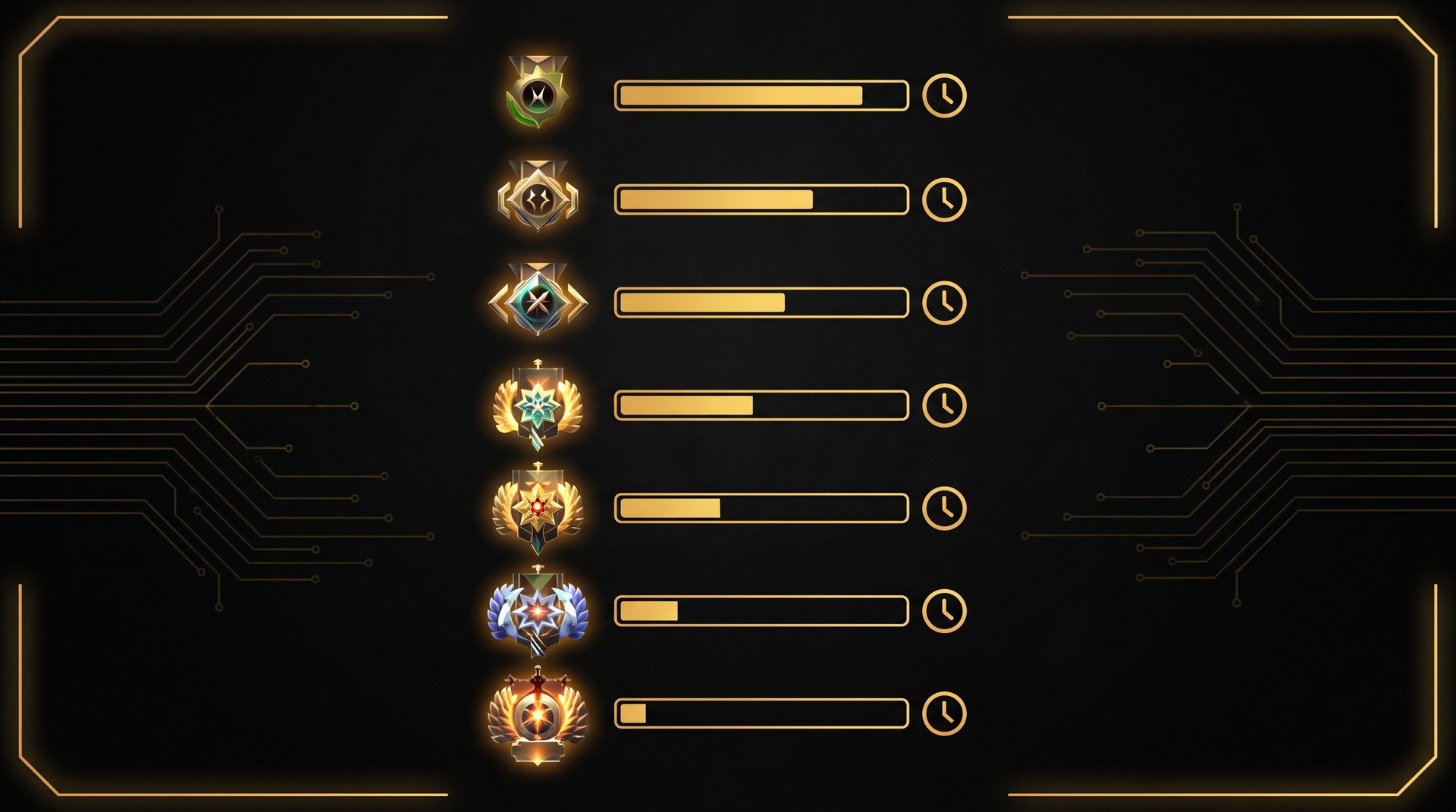
The player population in Dota 2 is not evenly spread across ranks. The vast majority of active players sit in the Guardian–Archon range, which means those brackets get the fastest queues. The higher you climb, the fewer players are in your matchmaking pool, and the longer you wait.
| Rank Tier | Average Queue Time | Notes |
|---|---|---|
| Herald / Guardian | 1-3 min | Large active pool, fast fills |
| Crusader / Archon | 1-4 min | Highest population bracket overall |
| Legend / Ancient | 3-7 min | Thins out above Ancient 2 |
| Divine | 7-15 min | Significantly smaller pool |
| Immortal (leaderboard) | 10-25 min | Global leaderboard players only; off-peak can be 30+ min |
These are approximate ranges based on community data from Dotabuff and OpenDota aggregate reports. Individual wait times vary with region and role. The takeaway: every medal tier above Ancient meaningfully increases your average queue time because fewer players are at your skill level.
If you are stuck in a low-population bracket and want to reach a more active rank, a professional MMR boosting service moves you into the bracket where queue times are shorter and games are more competitive. That is one reason players use Dota 2 MMR boosts — not just to climb the medal, but to escape the dead hours of thin matchmaking pools.
Queue Times by Role: Position 5 Fills First
Role queue in Dota 2 sorts players by selected position. The carry (pos 1) and mid (pos 2) slots are in high demand from players, which means more people compete for them and queues take longer. Support roles — especially hard support (pos 5) — are in shorter supply, so they fill almost immediately.
- Pos 5 (Hard Support): Usually 1-3 minutes at any rank — the fastest role in every bracket.
- Pos 4 (Soft Support): 2-5 minutes, still relatively quick.
- Pos 3 (Offlane): 3-6 minutes in most MMR ranges.
- Pos 2 (Mid): 4-8 minutes — consistently one of the slower fills.
- Pos 1 (Carry): 5-12 minutes at Legend and above — the most contested slot.
If you select carry and wonder why your queue is taking forever, the simple answer is that everyone else wants to carry too. Selecting support — even occasionally — is the single fastest way to cut your queue time in half without changing anything else.
Queue Times by Region: SEA and EU Have the Fastest Games
Server region determines the size of your active matchmaking pool. Southeast Asia (SEA) and Europe (EU) have the largest Dota 2 player bases, which means queues are shorter and matches pop faster at almost every hour of the day. North America (NA) and South America (SA) have smaller active populations, leading to noticeably longer waits — especially late at night local time.

- SEA (Singapore / Philippines): Highest player density globally — fastest queues, though skill variance is wide at lower MMRs.
- EU West / EU East: Second-largest pool, consistent queue speeds across the day.
- NA (US East / US West): Third in size, with a clear evening peak around 18:00-24:00 ET. Off-peak hours see noticeable queue stretching above Ancient.
- SA (Brazil / Peru): Smaller overall, most active in local evening hours.
Time of Day Makes a Bigger Difference Than You Think
The rank and region factors above are multiplied by when you play. Queuing during dead hours in your region can double or triple the times in the table above. For a full breakdown of which hours see the most active lobbies, see our guide on what time of day has the easiest Dota 2 matches, and for how weekdays compare to weekends, check weekend vs. weekday queue quality. Those posts cover the scheduling angle in detail; this one focuses on the rank, role and region variables that remain true regardless of when you log on.
How to Get Back into an Active Bracket
The most effective fix for long queues is being at a rank where the matchmaking pool is larger. If you are stuck in a thin bracket — Divine, Immortal, or a regional dead zone — a professional MMR boost does not just move your medal number. It moves you into a more active pool where games pop in under five minutes. You can review everything our service covers at the best Dota 2 boosting services page, or check whether Dota 2 boosting is safe before placing an order.
Frequently Asked Questions
Skip the Queue Dead Zones
Stuck waiting in a thin MMR bracket? TeamSmurf gets you to a rank with more active lobbies — faster queues, better teammates, and real competition. Dota 2-only service with full support throughout.



