


Soul Booster and Vitality Booster in Dota 2: Stats, What They Build Into, Who Buys Them

Soul Booster and Vitality Booster are two of Dota 2’s most frequently purchased mid-game stat items. Both come from the Secret Shop, both scale directly into powerful upgrades, and both appear in the inventories of high-MMR heroes across multiple roles. If you have ever seen a Pudge suddenly become impossible to burst down in the mid game, or a Storm Spirit start casting without restraint at the 25-minute mark, one of these two items was almost certainly involved.
This guide covers everything you need to know about both items in 2026: exact gold costs, the stat bonuses each provides, all four items that Soul Booster currently builds into, which hero types buy them and why, cost efficiency compared to alternative options, and recent patch changes that have made them slightly more accessible. Whether you are deciding whether to rush a Soul Booster on your Necrophos or just trying to understand why a Bristleback at 30 minutes feels unkillable, the answer is usually in these two items.
For a full overview of every Dota 2 item and where each one fits, start with our Dota 2 items hub. If your goal is to reach the MMR bracket where these purchases start appearing in the majority of your games, our MMR boosting guide explains the fastest paths to climb. This guide focuses on the mechanics, stats, and decision framework for Soul Booster and Vitality Booster specifically.
What Is in This Guide?
- Vitality Booster: Stats, Cost and Where to Buy
- Soul Booster: Full Stats and Component Breakdown
- How to Build Soul Booster (All Three Components)
- What Soul Booster Builds Into (Four Upgrade Paths)
- Which Heroes Buy Soul Booster and Vitality Booster
- Hero Type Breakdown: INT Casters, STR Tanks and Beyond
- Cost Efficiency: Is Soul Booster Worth 3,000 Gold?
- When to Buy Soul Booster vs. Going Straight to the Upgrade
- Recent Patch Changes (7.41 and Earlier)
- Frequently Asked Questions
Vitality Booster: Stats, Cost and Where to Buy
Vitality Booster is a basic item sold exclusively at the Secret Shop. It costs 1,000 gold and grants a flat +250 HP bonus. That is its entire function — no active ability, no bonus regen, no secondary effect. Just raw health.
At 1,000 gold for 250 HP, the Vitality Booster delivers 4 HP per gold spent. For comparison, a Bracer built for survivability costs around 515 gold and provides roughly 200 HP equivalent via attribute bonuses. Vitality Booster is the purest raw-HP item in the game at its price point, which is exactly why it exists — as a component stepping stone rather than a standalone purchase.
| Item | Cost | Bonus | Shop | Builds Into |
|---|---|---|---|---|
| Vitality Booster | 1,000 gold | +250 HP | Secret Shop | Soul Booster |
The Secret Shop requirement is the critical constraint. You cannot pick up a Vitality Booster from the base shop or the side-lane shops. You either need to make a trip to the Secret Shop yourself — located in the river, one per side of the map — or you need a courier to bring it to you. In the early game this is rarely a problem since most heroes who want Vitality Booster are buying it at the 15-minute mark or later. But if you are trying to build it into Soul Booster quickly, plan your trips accordingly — all three Soul Booster components come from the Secret Shop.
Vitality Booster on its own is almost never a final purchase. Its value comes entirely from the items it builds into. Buying a Vitality Booster and sitting on it as your main HP item is a poor use of gold unless you are temporarily surviving a timing window before completing the upgrade. Always have the full Soul Booster path in mind before you buy it.
Soul Booster: Full Stats and How Much It Costs
Soul Booster costs 3,000 gold in total and provides two simultaneous stat bonuses: +450 HP and +450 mana. No active. No passive proc. The item simply makes you bigger in both HP and mana bars in a single purchase, which is a combination that almost no other item in the game offers at this price.
The item has existed in Dota 2 since the earliest days of the game and has been refined repeatedly over the years. The current 3,000 gold cost is the result of a component cost reduction — Vitality Booster dropped from 1,100 to 1,000 gold and Energy Booster dropped from 900 to 800 gold, bringing the total down from 3,200 to 3,000 (source: Liquipedia Dota 2 Wiki, Soul Booster changelogs).
| Item | Total Cost | HP Bonus | Mana Bonus | Active |
|---|---|---|---|---|
| Soul Booster | 3,000 gold | +450 HP | +450 mana | None |
The dual-stat nature of Soul Booster is what makes it uniquely efficient. A hero who needs both HP and mana — which describes the majority of intelligence and universal heroes in the mid game — gets both resources in a single item slot. Compare that to buying Vitality Booster and Energy Booster separately: you fill two item slots for two partial bonuses, neither of which scales as cleanly into a useful upgrade. Soul Booster packages those same components plus a third into one slot that immediately becomes the foundation for four different top-tier items.
The item is listed in the shop interface but cannot be bought from the base shop — all three components come from the Secret Shop. This is one of the more confusing aspects of the item for newer players. You will see it browsing the shop, but you cannot purchase the components from base-shop vendors. Plan your mid-game routes around the Secret Shop if you are targeting a Soul Booster.
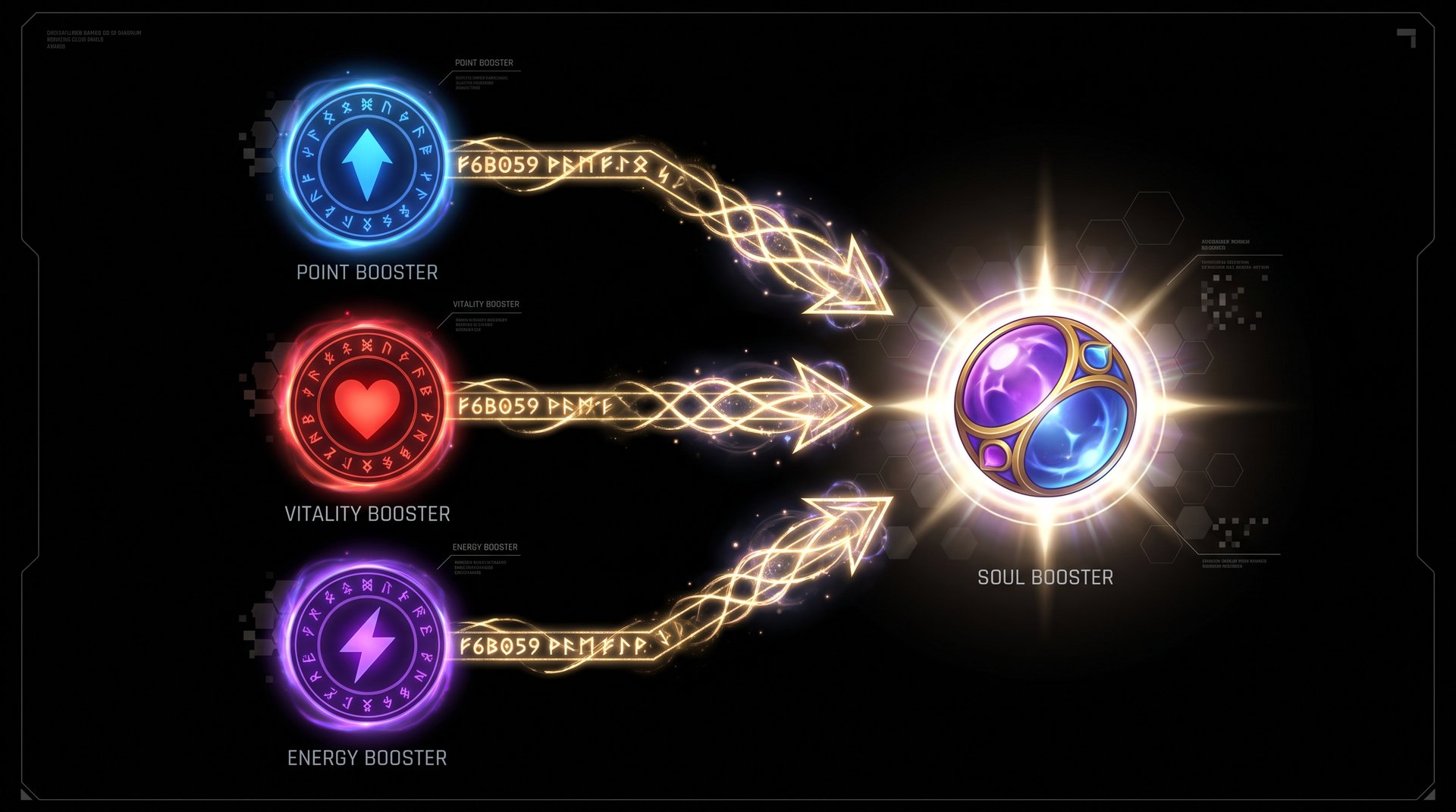
How to Build Soul Booster: All Three Components from the Secret Shop
Soul Booster is assembled entirely from Secret Shop items and requires three components. None of them is available at the base shop, and the item combines automatically once all three components are in your inventory — no recipe scroll is needed.
| Component | Cost | Primary Stat Bonus | Shop |
|---|---|---|---|
| Vitality Booster | 1,000 gold | +250 HP | Secret Shop |
| Energy Booster | 800 gold | +Mana | Secret Shop |
| Point Booster | 1,200 gold | +HP & +Mana | Secret Shop |
The recommended purchase order depends on your immediate needs in the game. If you are being nuked heavily and need to survive a specific power spike from the enemy, buy Vitality Booster first for the 250 HP buffer. If you are running out of mana mid-fight and your spells are the main damage source, consider Energy Booster first for the mana it grants. Point Booster, which contributes the largest gold amount to the recipe at 1,200 gold, is typically the last component you pick up because it is the most expensive single purchase of the three.
On most intelligence heroes, the buy order is Vitality Booster — Energy Booster — Point Booster, because the HP from Vitality Booster makes early fights more survivable before you complete the full item. On tanky strength heroes like Pudge, you often already have enough HP that Energy Booster first makes the most sense, since the extra mana directly enables more hooks or spells per fight.
The 3,000 gold total breaks down cleanly: 1,000 + 800 + 1,200 = 3,000. There is no recipe gold cost on top of the three components — the combination is free once you own all three pieces. This is different from many other items in the game that require a recipe purchase on top of their components, so the advertised 3,000 gold is your exact all-in cost.
What Does Soul Booster Build Into? Four Current Upgrade Paths
Soul Booster is not a final item. Every hero who buys it is planning to build it into something else. As of patch 7.41f (the current live patch), Soul Booster builds into four different top-tier items. Each serves a different hero profile, and choosing the right upgrade is the most important decision you make after completing the Soul Booster itself.
| Upgrade Item | Additional Cost | Key Bonus from Upgrade | Primary Users |
|---|---|---|---|
| Bloodstone | Staff of Wizardry + recipe | Active self-heal charges; spell lifesteal | Necrophos, Pugna, Storm Spirit |
| Octarine Core | Mystic Staff + recipe | Cooldown reduction; spell lifesteal | Rubick, Invoker, most INT cores |
| Eternal Shroud | Hood of Defiance components | Stacking magic barrier | Bristleback, Pudge, strength tanks |
| Crella’s Crozier | Ghost Scepter + 300g recipe | +6 All Attributes; ethereal active | Casters needing physical attack defense |
Bloodstone — The Classic INT Upgrade
Bloodstone is the most recognized upgrade path from Soul Booster and has been in the game almost as long as the item itself. You build it by combining Soul Booster with a Staff of Wizardry and a recipe. The result gives massive mana and HP bonuses on top of an active self-heal mechanic based on stored charges, which refill as nearby units die. See our full breakdown in the Bloodstone Dota 2 guide.
Bloodstone is favored by heroes who position themselves in the middle of fights and drain HP through spell usage. Necrophos in particular is one of the most common Bloodstone buyers in ranked play because the item lets the hero sustain through long teamfights while continuously casting Death Pulse. The charge-based heal system rewards aggressive play and punishes passivity, which aligns perfectly with how Necrophos wants to win games.
Octarine Core — Cooldown Reduction and Lifesteal for INT Heroes
Octarine Core is the go-to Soul Booster upgrade for heroes who want spell lifesteal and cooldown reduction over raw sustain charges. You complete it with a Mystic Staff and a recipe. The item provides a meaningful reduction to the cooldowns of all your abilities and items, which on heroes with strong repetitive spells — Storm Spirit, Rubick, Invoker, Lina — translates directly into more damage output over the course of a fight.
The spell lifesteal passive on Octarine Core is the secondary reason high-MMR players prefer it over Bloodstone on certain heroes. Heroes who deal sustained magical damage throughout a fight passively heal from every spell tick, which keeps them in fights without needing to use an active ability the way Bloodstone requires. Between Octarine Core and Bloodstone, the choice usually comes down to whether your hero benefits more from passive lifesteal and CDR (Octarine) or active burst healing with charge management (Bloodstone).
Eternal Shroud — The Tanky Defense Option
Eternal Shroud is the upgrade path that takes Soul Booster in a defensive direction. Rather than amplifying spell output, Eternal Shroud adds a stacking magic barrier that charges up passively as you take magical damage. This makes it exceptional on heroes who expect to absorb heavy magic nukes — Pudge against enemy Lina and Lion combos, Bristleback against teams stacked with nukers, strength supports who need to survive in the backline.
The passive charging mechanism of Eternal Shroud means that the barrier regenerates over time and after absorbing magic damage. This gives the item persistent value across multiple fights rather than a one-time active charge. Heroes who build it often find they can engage into spell-heavy enemies that would otherwise destroy them, which changes the threat profile they represent in a teamfight.
Crella’s Crozier — New in Patch 7.41
Crella’s Crozier is the newest addition to the Soul Booster upgrade pool, added in patch 7.41 (source: dota2.com/patches/7.41). It is built by combining Soul Booster with Ghost Scepter and a 300 gold recipe, for a total cost of 4,800 gold. The item provides +6 All Attributes, +450 HP, and +450 mana, plus the Ghost Form active from Ghost Scepter — which makes you ethereal, preventing physical attacks from hitting you while temporarily amplifying the magic damage you take.
Crella’s Crozier serves heroes who want the HP and mana bulk of Soul Booster alongside a defensive active against physical carries. This is the upgrade path for glass-cannon intelligence heroes who are being targeted by a right-clicker they cannot itemize away from any other way. The Ghost Form active gives a window to reposition, cast spells, or wait for teammates — which can be the difference between dying immediately and winning the fight.
Which Heroes Buy Soul Booster and Vitality Booster? (2026 Meta)
Soul Booster appears in the builds of a specific cluster of heroes — mostly those who need both HP and mana simultaneously and who have one of the four upgrade items as a clear power spike. Vitality Booster on its own tends to appear as a component purchase or occasionally as a temporary bulk pickup on strength heroes.

Hero Type Breakdown: INT Casters, STR Tanks and Beyond
The heroes who buy Soul Booster most consistently share a few characteristics: they have mana-hungry spell kits that require sustained casting through fights, they cannot afford to be bursted quickly at the start of a fight, and they have a clear upgrade path that turns Soul Booster into a top-tier end item. The following breakdown covers the major hero categories, starting with the most common buyers.
Intelligence Core Heroes (Most Common Soul Booster Buyers)
Storm Spirit is one of the most iconic Soul Booster heroes in the game. Storm Spirit’s Ball Lightning ability has an extremely high mana cost — using it continuously can deplete even a large mana pool in seconds. Soul Booster into Bloodstone or Octarine Core gives Storm Spirit the mana depth to chase and kill multiple targets in a single teamfight without going out of mana halfway through. The HP bonus also makes him harder to immediately delete in the split second before he uses Ball Lightning to escape.
Necrophos is the other hero most frequently cited alongside Soul Booster. His spells — Death Pulse, Ghost Shroud — all have meaningful mana costs that compound over a long fight. More importantly, Necrophos gains bonus HP regeneration from his passive, which scales with the total HP of nearby dying enemies. Soul Booster into Bloodstone gives him both the HP buffer to survive initial bursts and the mana depth to keep casting Death Pulse repeatedly, while Bloodstone’s charges provide bonus HP regen from the kills that his spells facilitate. This creates a powerful feedback loop that gets stronger as teamfights progress.
Pugna is a higher-skill pick that uses Soul Booster in a specific way. Life Drain — Pugna’s channeled lifesteal ultimate — restores mana as it deals damage when used on buildings or creeps. Soul Booster into Bloodstone gives Pugna the mana pool to cast Nether Blast repeatedly in the laning phase and transitions naturally into a Bloodstone that keeps the mana topped up mid fight. Pugna also benefits significantly from the HP bonus since the hero has among the lowest base HP in the game.
Tinker historically buys Soul Booster as a transition item before Bloodstone. Tinker’s Rearm resets all item cooldowns, meaning that every active item Tinker carries is usable every few seconds. Bloodstone’s charges replenish through unit deaths near Tinker, and with Rearm the active heal can theoretically be used repeatedly in a single fight. The HP from Soul Booster also makes Tinker less instantly killable in a meta where assassination tools are abundant.
Strength and Universal Heroes (Secondary Buyers)
Pudge is perhaps the most recognizable non-INT buyer of Soul Booster in pub games. Pudge’s passive ability, Flesh Heap, gives bonus strength per kill, but in the mid-to-late game before Flesh Heap has fully stacked, Pudge benefits enormously from the raw HP boost. The mana helps with consistent Rot usage and Dismember casting. Pudge typically builds Soul Booster into Eternal Shroud, which turns the HP base and the Soul Booster’s mana into a stacking magic barrier — critical against the nuker-heavy teams that Pudge is most vulnerable to.
Bristleback is a situational Soul Booster buyer, particularly against magic-heavy lineups. His passive damage reduction from rear hits is physical only; against a Lina, Lion, Storm Spirit lineup, Eternal Shroud via Soul Booster dramatically reduces the magic damage component that his passive cannot address. The HP from Soul Booster also contributes to the overall bulk that makes Bristleback a walking frontline tank.
It is worth noting that Vitality Booster alone occasionally appears as a standalone component hold on strength initiators or offlane heroes who need to survive through a dangerous enemy timing window before they have enough gold for the full Soul Booster. In this role, the 1,000 gold investment buys time — literally, by making the hero harder to kill for 3-4 minutes while the rest of the gold accumulates.
Heroes Who Skip Soul Booster
Not every INT hero wants Soul Booster. Heroes who get mana primarily through Arcane Boots (shared via Greaves), Dagger items that naturally extend mana via talents, or heroes who rarely run out of mana in a fight often skip Soul Booster entirely. Carry heroes who need physical damage items prioritize differently. Support heroes — unless they plan on a Bloodstone or Octarine Core in a high-farm support role — typically find the 3,000 gold cost too high to justify when compared to the immediate value of cheaper support items.
Cost Efficiency: Is Soul Booster Worth 3,000 Gold?
At 3,000 gold for +450 HP and +450 mana, Soul Booster needs to be evaluated against what those resources cost individually and what the 3,000 gold could otherwise buy.
Raw HP in Dota 2 costs approximately 4 gold per HP when bought through the most efficient items. At that rate, 450 HP alone would cost around 1,125 gold. Raw mana costs a similar amount per point across efficient mana items. At comparable efficiency, 450 mana would cost roughly 1,125 gold. Combined, the two stats would cost around 2,250 gold if purchased through the most efficient individual items — but you would consume two item slots and would not have a single upgrade path into anything useful.
Soul Booster’s premium — the extra 750 gold over the raw-efficiency floor — buys you three things: slot compression (one slot instead of two), the direct upgrade path to four powerful items, and the timing efficiency of a single purchase decision rather than managing two separate items. The upgrade path value is the most important of the three. Every hero that builds Soul Booster already has their next item planned. The 750 gold premium is paid toward Bloodstone, Octarine Core, Eternal Shroud, or Crella’s Crozier — not wasted.
In terms of MMR bracket, Soul Booster and its upgrades become more common as you move up the ladder. At Guardian and Crusader ranks, many games end before the 25-minute mark where these items typically appear. At Archon and Legend, Soul Booster shows up in a meaningful percentage of games depending on the hero pool. At Ancient and Divine, the item is a standard component of most INT core builds. If you are working toward higher bracket play, learning when and how to buy Soul Booster is part of the skill set that separates brackets. If you want professional guidance on climbing efficiently, our best Dota 2 boosting services page connects you with specialists who use these items at peak efficiency every game.
When to Buy Soul Booster vs. Going Straight to the Upgrade
The decision between building Soul Booster first or skipping straight to a Bloodstone or Octarine Core comes down to one question: how much HP do you need before you can function in the mid game?
If the answer is “a lot” — if you are dying in early fights because your HP pool is too small to survive the initial burst — then Soul Booster as an intermediate purchase is correct. The HP bonus makes you hard to delete, and the mana lets you keep casting. You complete the upgrade when the gold is there.
If the answer is “not much” — if you can sustain through fights with your current HP and the main limit is your damage output or cooldowns — then going straight for the upgrade with its own component path may be more efficient. Octarine Core’s direct path does not require Soul Booster; it requires Mystic Staff and other components. Some builds skip Soul Booster entirely and just build Octarine Core from its own dedicated components.
The timing window where Soul Booster is most valuable is roughly 20-28 minutes in most pub games. Before this window, the cost is too high relative to the immediate power it provides. After this window, completing the upgrade becomes urgent because Soul Booster as a standalone item starts to fall behind the power curve of items other heroes have finished by the 30-35 minute mark. The ideal scenario is Soul Booster completed around the 22-25 minute mark, followed by the upgrade before 30 minutes.
One practical consideration: all three components come from the Secret Shop, which means a coordinated courier run to collect them saves real time compared to visiting the Secret Shop yourself. High-MMR players frequently time their courier trips to pick up multiple Secret Shop items in a single run rather than staggering the purchases. If you are farming toward Soul Booster, plan one deliberate courier trip once you have the 3,000 gold ready rather than buying components one at a time.
Recent Patch Changes: Soul Booster in 7.41 and Earlier
Soul Booster has been relatively stable in recent patches, which is part of why it remains a reliable mid-game purchase across patch cycles. The most significant recent changes are:
- Component cost reduction (earlier patch cycle): Vitality Booster was reduced from 1,100 to 1,000 gold and Energy Booster from 900 to 800 gold, bringing Soul Booster’s total cost from 3,200 to 3,000 gold. This made the item about 6% more accessible without changing its stats (source: Liquipedia Dota 2 Wiki).
- Crella’s Crozier added (Patch 7.41, 2026): Soul Booster gained a new upgrade path — Crella’s Crozier — which combines Soul Booster with Ghost Scepter and a 300 gold recipe for a 4,800 gold total. This gave the item relevance on a new class of heroes who previously had no strong Soul Booster upgrade path (source: dota2.com/patches/7.41).
- Bloodstone upgrade path (longstanding): Bloodstone has remained the primary upgrade for INT casters building through Soul Booster for many patch cycles. Its charge replenishment mechanic has been adjusted in various patches — always verify the current charge cap and regen values in-game when building it.
The general trend for Soul Booster across patches has been toward greater accessibility via cost reductions and expanded upgrade options. The four current upgrade paths serve a wider range of hero archetypes than the item did historically. Understanding which upgrade applies to your current hero — and why — is more important than memorizing the exact gold cost, since that can shift between patches while the underlying hero needs remain constant.
If you want to verify the most current numbers for any patch version, the in-game shop tooltip is the authoritative source. All patch-specific numbers in this guide reflect patch 7.41f. If you are trying to climb efficiently and want to learn how high-level players apply patch knowledge in ranked games, understanding how Dota 2 boosting services work can give you a way to observe high-MMR decision-making firsthand.
Frequently Asked Questions
Ready to Climb to the MMR Where These Items Become Second Nature?
Understanding item timings and builds is one thing. Executing them under pressure in ranked games at a higher bracket is another. TeamSmurf connects you with high-MMR boosters and coaches who make these decisions automatically — letting you observe how top-tier players use items like Soul Booster and its upgrades in real ranked matches at your target MMR.



