


Bloodstone in Dota 2: Stats, Charges and Who Builds It

Bloodstone is one of Dota 2’s most recognizable power items — a ruby-red gem that turns casters into self-sustaining forces in teamfights. At 4,700 gold, it delivers a staggering stat package plus a passive aura that amplifies your team’s spell damage against every enemy in range.
If you came here looking for “charges” — the old respawn-timer system — that mechanic was removed several versions ago. The current Bloodstone is a completely different beast, built around spell lifesteal and a powerful active that converts you into a healing machine the moment a fight erupts. This guide covers everything about Bloodstone in patch 7.41f: exact stats, the Blood Pact active, the Spell Weakness Aura, the seven heroes who build it as a core item, and when buying it is the right call versus reaching for an alternative.
What’s in This Guide
Bloodstone Stats in Patch 7.41f
Bloodstone sits in the Base Shop under Magical (though it requires a Secret Shop component). Here are the complete stats for patch 7.41f, sourced from dotacoach.gg:
| Stat | Value | Notes |
|---|---|---|
| Total Cost | 4,700 gold | Base Shop + Secret Shop components |
| Health Bonus | +625 | From Soul Booster path |
| Mana Bonus | +450 | From Soul Booster path |
| Intelligence Bonus | +15 | From Veil of Discord path |
| Spell Lifesteal (Heroes) | +20% | Passive; stacks additively with other sources |
| Spell Lifesteal (Creeps) | +5% | Passive; reduced effectiveness vs creeps |
| Blood Pact Lifesteal | 60% | Active: increased lifesteal for 5 seconds |
| Blood Pact Cooldown | 35 seconds | No mana cost |
| Spell Weakness Aura | +10% spell damage taken | Enemies within 1200 radius |
Bloodstone Components and Gold Cost
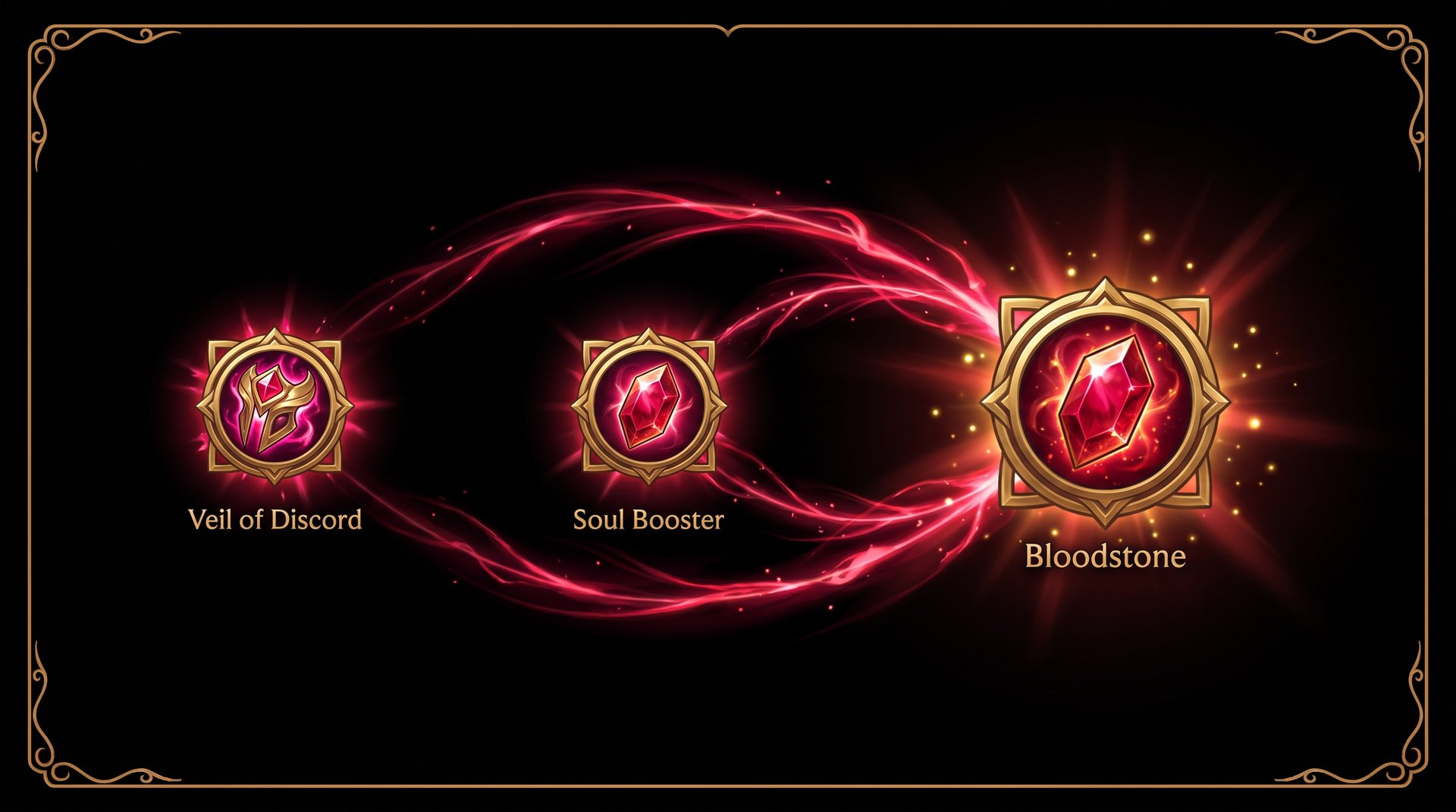
Bloodstone is crafted from two major components — one from the Base Shop and one requiring a trip to the Secret Shop — plus a recipe:
| Component | Cost | Where to Buy |
|---|---|---|
| Veil of Discord | 1,350 gold | Base Shop |
| Soul Booster | 3,200 gold | Requires Secret Shop (Point Booster) |
| Recipe | 150 gold | Base Shop |
| Bloodstone Total | 4,700 gold | — |
Soul Booster itself is assembled from three components: Energy Booster (900 gold), Vitality Booster (1,100 gold), and Point Booster (1,200 gold), bringing its total to 3,200 gold. Point Booster is the Secret Shop item — plan your courier trips accordingly. Veil of Discord can be bought entirely at the Base Shop, making it the natural first purchase on the path to Bloodstone.
The standard purchase order is:
- Rush Veil of Discord early — it already provides the Spell Weakness Aura and meaningful Intelligence stats
- Build toward Soul Booster components (Energy Booster provides mana pool, Vitality Booster gives HP)
- Complete the recipe to finish Bloodstone once you have both sub-items
This path keeps you useful in fights from the moment Veil comes online around the 12-16 minute mark, rather than waiting for the full 4,700 gold item to exist.
What Happened to Bloodstone Charges?
Many returning Dota 2 players — especially those who played the game a few years ago — search specifically for “bloodstone charges” because they remember an entirely different version of this item. That version no longer exists. Here’s what you’re remembering and why Valve removed it.
How the Old Charge System Worked
In earlier versions of Dota 2, Bloodstone was built on a completely different component path (Soul Booster, Perseverance, and a Recipe) and had an interesting death-interacting mechanic. The item accumulated “charges” — each hero kill or assist nearby the owner added a charge to the Bloodstone. These charges reduced your respawn timer when you died.
The risk-reward was compelling: a farmed carry could bank a large number of charges over the course of a game, effectively reducing their “death penalty” to almost nothing. But on death, all accumulated charges were lost, wiping out that advantage instantly. A well-timed fight that killed a charge-heavy Bloodstone carrier could deny them the stat advantage they had been building all game.
The item also provided strong health and mana regeneration in that era, making it especially popular on high-damage caster heroes who wanted to sustain in prolonged sieges and teamfights.
Why the Charges Were Removed
Valve overhauled Bloodstone because the charge system created gameplay that was difficult to interact with in a balanced way. A hero who had accumulated 15 or 20 charges was nearly unkillable in terms of comeback time, while also snowballing harder — getting kills fed more charges, which made them more durable, which made more kills easier to get. The feedback loop was problematic in a game that already rewards snowballing heavily.
The current Bloodstone strips out the respawn interaction entirely and replaces it with a purely offensive tool: sustained spell lifesteal that pays out during fights, not after deaths. This is a cleaner design philosophy — the item rewards staying alive and dealing damage, rather than dying repeatedly with a reduced penalty.
If you are climbing and want to understand how current items and mechanics translate into MMR, our MMR boosting guide covers how item timing and itemization choices affect your climb at every bracket.
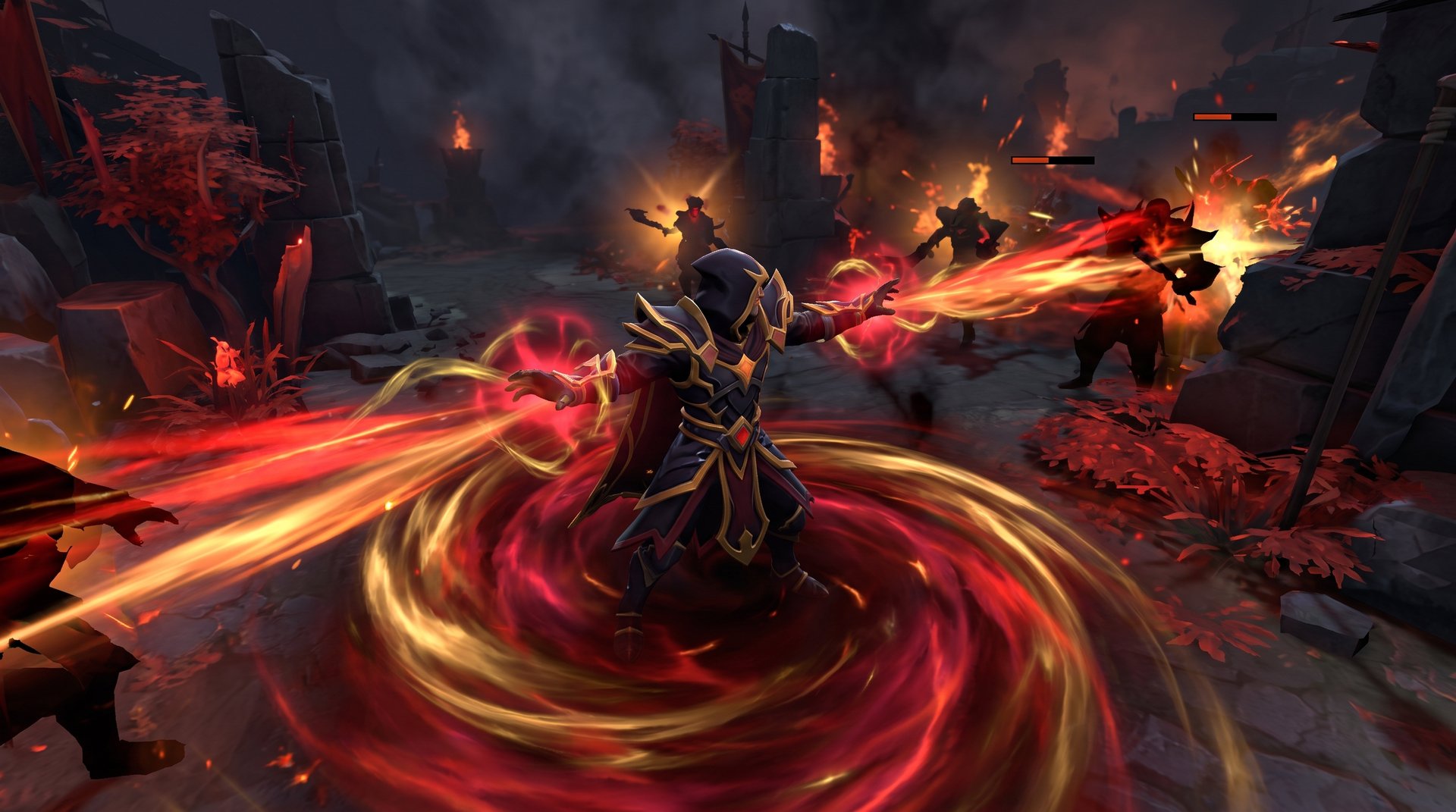
Bloodstone Active: Blood Pact
Blood Pact is the active ability attached to Bloodstone, and it is what separates a passive carry-healing item from an active combat tool. Here is how it works:
- Effect: Increases your Spell Lifesteal to 60% for 5 seconds
- Cooldown: 35 seconds
- Mana cost: None
The baseline passive already gives 20% spell lifesteal. Blood Pact triples that to 60% — meaning every 1,000 spell damage you deal heals you for 600 health. On a hero like Leshrac or Timbersaw who can pump out 3,000-5,000 magic damage in a teamfight window, activating Blood Pact turns every cast into a massive heal.
When to Activate Blood Pact
The 5-second duration and 35-second cooldown mean you want to activate Blood Pact at the exact moment you commit to a fight, not as a panic button. The optimal window is:
- You have confirmed multiple enemies in range of your spells
- You are about to go deep into the fight (not staying at max cast range)
- The enemies have already committed their disables and you are safe to cast freely for 5 seconds
Activating Blood Pact before using a single ability wastes the window. Activate it when you are already in the middle of your combo and plan to keep casting continuously. The no-mana-cost design means there is no reason to save it — use it every cooldown during teamfights.
Blood Pact and Channeling Interruption
One technical note: activating Blood Pact interrupts channeling abilities. If you are mid-channel on something like Timbersaw’s Whirling Death stack routine or any other channeled spell, the activation will cancel it. Sequence your activations accordingly — activate before channeling, not during.
Bloodstone Passive: Spell Weakness Aura
Separate from the spell lifesteal, Bloodstone carries a passive aura that makes it valuable for the entire team, not just the carrier:
- Effect: Enemies within 1,200 radius take 10% increased damage from all spells
- Radius: 1,200 (large)
Ten percent increased spell damage across an entire teamfight is a significant multiplier. When your team is stacking abilities and crowd control, every magic-damage hero on your squad benefits from this aura against targets in range.
The Critical Stacking Rule: Bloodstone vs Veil of Discord
This is the most important technical note about Bloodstone’s aura: Spell Weakness Aura does NOT stack with Veil of Discord’s Spell Weakness aura. Both items apply the same debuff type, so they do not combine for 20%. Only the stronger aura applies, which at equal values means no benefit from building both on separate heroes in the lineup.
The practical implication: once your Bloodstone carrier has the full item, there is zero value in a teammate also buying Veil of Discord. The auras share a source type and only one instance of the 10% debuff applies. This is relevant in draft analysis — if your lineup plans a Bloodstone core, skip Veil of Discord as a support item and spend that gold elsewhere.
Similarly, if you have been running Veil of Discord as a stepping stone to Bloodstone, completing the upgrade to Bloodstone does not lose you any aura power — it keeps the same 10% aura you already had from Veil, while adding the HP/mana/lifesteal on top.
Who Builds Bloodstone in 7.41f?
Bloodstone is not a general-purpose item. It rewards heroes that have: (1) high spell volume — multiple abilities that deal magic damage in rapid succession; (2) a natural build path through Veil of Discord; and (3) a tendency to be in the middle of fights rather than cast from range. The following heroes build it as a core item according to dotacoach.gg data for patch 7.41f:
Ember Spirit — The Primary Bloodstone Hero
Ember Spirit is the most natural Bloodstone carrier in the game. His Sleight of Fist and Flame Guard both deal sustained magic damage across many targets, meaning a 5-second Blood Pact window on a good position can heal him for 2,000+ health. His mobility with Activate Fire Remnant means he can dive deep, activate Blood Pact at the ideal moment, blast through the fight, and escape on the same cast. Bloodstone on Ember converts a hero who is normally glass-cannon into a tanky spell-machine that is genuinely difficult to kill mid-rotation.
Leshrac — The Walking Spellstorm
Leshrac deals enormous magic damage with Split Earth, Diabolic Edict, Lightning Storm, and Pulse Nova. He wants to stand in the center of a fight and output continuous damage, which is exactly the scenario where Bloodstone’s lifesteal shines. The HP pool from Bloodstone (625 health from Soul Booster) means Leshrac survives long enough to actually pump out his full damage rotation instead of getting burst before Pulse Nova ticks are complete. Leshrac is already one of the highest-output magic damage heroes — Bloodstone turns his tankiness from a weakness into a strength.
Timbersaw — Sustained Magic Nuker
Timbersaw outputs continuous magic damage through Whirling Death and Reactive Armor stacks while Chakram ticks. The problem with Timbersaw is he has to be physically close to enemies to deal damage — Bloodstone solves his survivability issue by converting all that close-quarters damage into health regeneration. A Timbersaw with Bloodstone active in a Chakram spin can recover 600-800 HP per second against multiple targets. He also builds naturally through Veil of Discord, making the upgrade path seamless.
Queen of Pain — Blink Detonation
Queen of Pain’s primary appeal for Bloodstone is that she generates magic damage fast through Shadow Strike, Scream of Pain, and Sonic Wave, and she tends to commit hard into fights with Blink. The lifesteal during a full rotation keeps her alive long enough to follow up after her initial burst. The 625 HP from Bloodstone also gives her a buffer against burst damage that would otherwise one-shot her before her lifesteal has time to matter. She is a situational Bloodstone buyer — she builds it when her team needs more magic damage amplification and she has the gold lead to buy it before minute 25.
Sand King — Epicenter Sustain
Sand King has Epicenter, which deals massive magic damage in pulses to everything in a large radius, and Caustic Finale, which adds to his spell damage output. The challenge is surviving long enough after Blink + Epicenter to see all the pulses land. Bloodstone lets Sand King stay alive during the full Epicenter channel and the subsequent fight, healing off every pulse tick. The 10% damage aura from Bloodstone also amplifies Epicenter’s pulse damage for teammates standing nearby, making it a team-contribution purchase beyond just Sand King’s own survivability.
Pudge — Rot + Lifesteal Combo
Pudge is a specific Bloodstone buyer — he builds it when he has Aghanim’s Scepter, because the Rot upgrade with Aghs deals significantly more magic damage, making the spell lifesteal payoff large enough to justify the cost. Without Aghs, Pudge’s magic damage output is lower and other survivability items take priority. With Aghs, a Bloodstone Pudge with Rot active in a fight is extremely difficult to kill because every Rot tick heals him back.
Viper — Corrosive Magic
Viper’s Poison Attack and Viper Strike both deal magic damage per tick, and his Nethertoxin scales hard with spell damage amplification. He buys Bloodstone when building a high-damage right-click-plus-spells hybrid build where the lifesteal from Nethertoxin ticks and Viper Strike compensates for the HP he takes trading in fights. The passive 10% Spell Weakness Aura from Bloodstone also lets Viper’s magic output feel heavier in close-range fights.
When Should You Buy Bloodstone?
Bloodstone is a mid-game to early-late-game item. It does not function as a first item on any hero — you need to have established yourself in the lane and be at a point where you can complete 4,700 gold without starving yourself of core fighting items.
The Veil Path: Start Early, Finish Late
Almost every Bloodstone buyer follows the Veil of Discord path. At 1,350 gold, Veil comes online in the early-to-mid laning phase and immediately provides the 10% Spell Weakness Aura, helping your team in early skirmishes. Buy Veil as your second item (after early fighting items like Phase Boots, Bottle, or Null Talisman), then gradually build toward Bloodstone by picking up the Soul Booster components. The full 4,700 gold item typically completes around the 20-25 minute mark on most of the heroes listed above.
When to Prioritize It
Buy Bloodstone when:
- You are the primary magic damage dealer on your team and fights are lasting long enough for spell lifesteal to matter
- Your team is winning and you have the gold lead to build it before 22 minutes (earlier completion = more snowball potential)
- The enemy team does not have heavy burst that would kill you before Blood Pact pays out
- You already have Veil of Discord and the upgrade is efficient given your current gold
When to Skip It
Bloodstone is the wrong call when:
- You are behind and need survivability that does not depend on dealing damage first (consider Linken’s Sphere, BKB, or Eul’s Scepter instead)
- The enemy team has two or more Black King Bars, meaning your magic damage and lifesteal both get nullified during their BKB windows
- The game is snowballing in your favor and you want to close rather than invest in a sustain item — buy damage and secure objectives instead
If you want help understanding how item timing decisions affect your rank climb, our guide to the best Dota 2 boosting services covers how professional coaches evaluate item paths for every bracket. For hands-on improvement with a high-MMR coach reviewing your item timing, check out Dota 2 coaching at TeamSmurf.
Bloodstone vs Alternative Items
Bloodstone competes with other sustain and damage-amplification items at the same price point. Here is a direct comparison of the key options for the heroes discussed above:
| Item | Cost | Primary Benefit | Best When… |
|---|---|---|---|
| Bloodstone | 4,700g | Spell lifesteal + aura + large HP/mana | High spell volume, winning and snowballing |
| Linken’s Sphere | 4,700g | HP regen, mana regen, spell block | Enemy team has single-target lockdown or silence |
| Shiva’s Guard | 4,850g | Armor, intelligence, AOE slow | Enemy is physical damage heavy, you want utility |
| Kaya and Sange | 4,200g | Spell amp, status resistance, HP | Budget option when you need spell amp without full commitment |
| Eul’s Scepter | 2,700g | Movement speed, mana, interrupt | Early timing item; you need the active disable or mana |
The key competitive matchup is Bloodstone versus Linken’s Sphere at the exact same cost (4,700 gold). Linken’s Sphere wins when the enemy has single-target crowd control that negates your ability to fight at all. Bloodstone wins when you can freely cast and need to sustain through the fight itself. If a Lion or Bane is on the enemy team and reliably singles you out, Linken’s is usually the better call and Bloodstone can come as a later item.
Common Mistakes Players Make With Bloodstone
Even after understanding what Bloodstone does, there are recurring mistakes that drain its value in real games:
1. Not Activating Blood Pact During Teamfights
This is the most common mistake, particularly in lower brackets. Players purchase Bloodstone for the passive lifesteal and passive aura, then forget it has an active entirely. Blood Pact triples your lifesteal for 5 seconds — on a 35-second cooldown with no mana cost, there is never a reason to not use it in every single teamfight. Make activating Blood Pact as automatic as casting your first spell.
2. Building It on Heroes Without Sustained Spell Volume
Bloodstone’s lifesteal only pays out when you are continuously casting spells that deal magic damage. A hero who casts one or two abilities per fight and then auto-attacks cannot use the lifesteal effectively. If your hero’s damage output primarily comes from right-clicks or physical damage items, Bloodstone is a poor choice regardless of how appealing the HP and mana stats look.
3. Assuming Both Veil and Bloodstone Auras Stack
As covered above, they do not. Buying Bloodstone when a teammate already has Veil of Discord — or vice versa — wastes the 10% aura value entirely. In coordinated games, communicate item builds early enough that only one hero in the lineup carries the Spell Weakness Aura at any given time.
4. Completing It Too Early Against Heavy Burst
Bloodstone’s lifesteal requires that you are alive and casting spells to function. Against enemy teams with heavy burst magic damage (Lion, Lina, Invoker), getting killed in 0.5 seconds before your spells land means Bloodstone does nothing. In those matchups, consider building a BKB or Eul’s Scepter before Bloodstone to ensure you can survive long enough for the lifesteal to activate.
5. Not Using the Courier to Grab Point Booster
Soul Booster requires Point Booster from the Secret Shop. Many players forget this and are stuck with Energy Booster + Vitality Booster without being able to complete Soul Booster. Always plan your courier run specifically to pick up Point Booster — it is an easy optimization that speeds up your Bloodstone timing by 1-3 minutes.
How to Get Maximum Value From Bloodstone
Once you have Bloodstone, these habits separate players who get full value from it:
- Activate Blood Pact on every fight, not just desperation moments. The cooldown resets quickly enough that you should never be entering a meaningful fight with it on cooldown.
- Position aggressively during Blood Pact’s 5-second window. Bloodstone rewards diving into the middle of a fight — backline casting negates most of the lifesteal by reducing your spell targets.
- Stack other spell lifesteal sources when viable. Ethereal Blade on Ember Spirit or additional lifesteal talents combine with Bloodstone’s base lifesteal additively, potentially pushing your effective healing even higher during Blood Pact.
- Use the aura to amplify teammates’ abilities. Your 1,200 radius aura is constantly active. When setting up a fight, position so that the key enemy targets are inside your aura before your teammates’ abilities land.
- Track the 35-second cooldown. After a big fight where you activated Blood Pact, note when it resets and plan your next engagement around having it available.
If you are looking to climb in Dota 2 while mastering itemization like Bloodstone timing, the is Dota 2 boosting safe guide explains how professional players structure their MMR gains around item-decision quality. For players who want to fast-track their rank, TeamSmurf’s MMR boost service pairs you with Immortal-rank players who demonstrate the exact fight timing and item activation habits discussed in this guide.
Climb Faster With Expert Dota 2 Help
Knowing item mechanics is only one part of climbing. TeamSmurf’s Immortal-rank coaches can review your item timing, fight decisions, and MMR efficiency in a live 1-on-1 session. Or get paired with a booster to climb while watching Bloodstone and other core items used correctly at your target MMR.
Book a Coaching Session View MMR Boost Options



