Outposts and Twin Gates: Rotation Tricks Most Players Miss

Outposts and Twin Gates are two of the most influential yet underused mechanics in Dota 2. Most players below Immortal treat outposts as optional objectives and Twin Gates as emergency escapes. That framing is costing them XP, vision, and rotations every single game.
This guide breaks down exactly when to contest outposts, when to let them go, and how to combine Twin Gate teleports into rotations that catch opponents off guard. The tricks here come from patterns visible at high MMR — and the reason most pub players miss them is not skill, it is awareness.
Table of Contents
- What Outposts Actually Do (And Why XP Is Secondary)
- Twin Gates — Fast Travel Most Players Barely Use
- Rotation Tricks Tied to Outpost Timing
- Twin Gate Rotations That Change Fights
- Role-Specific Outpost and Twin Gate Priorities
- The Biggest Mistakes Players Make
- How Better Map Control Translates to MMR
- Frequently Asked Questions
What Outposts Actually Do (And Why XP Is Secondary)
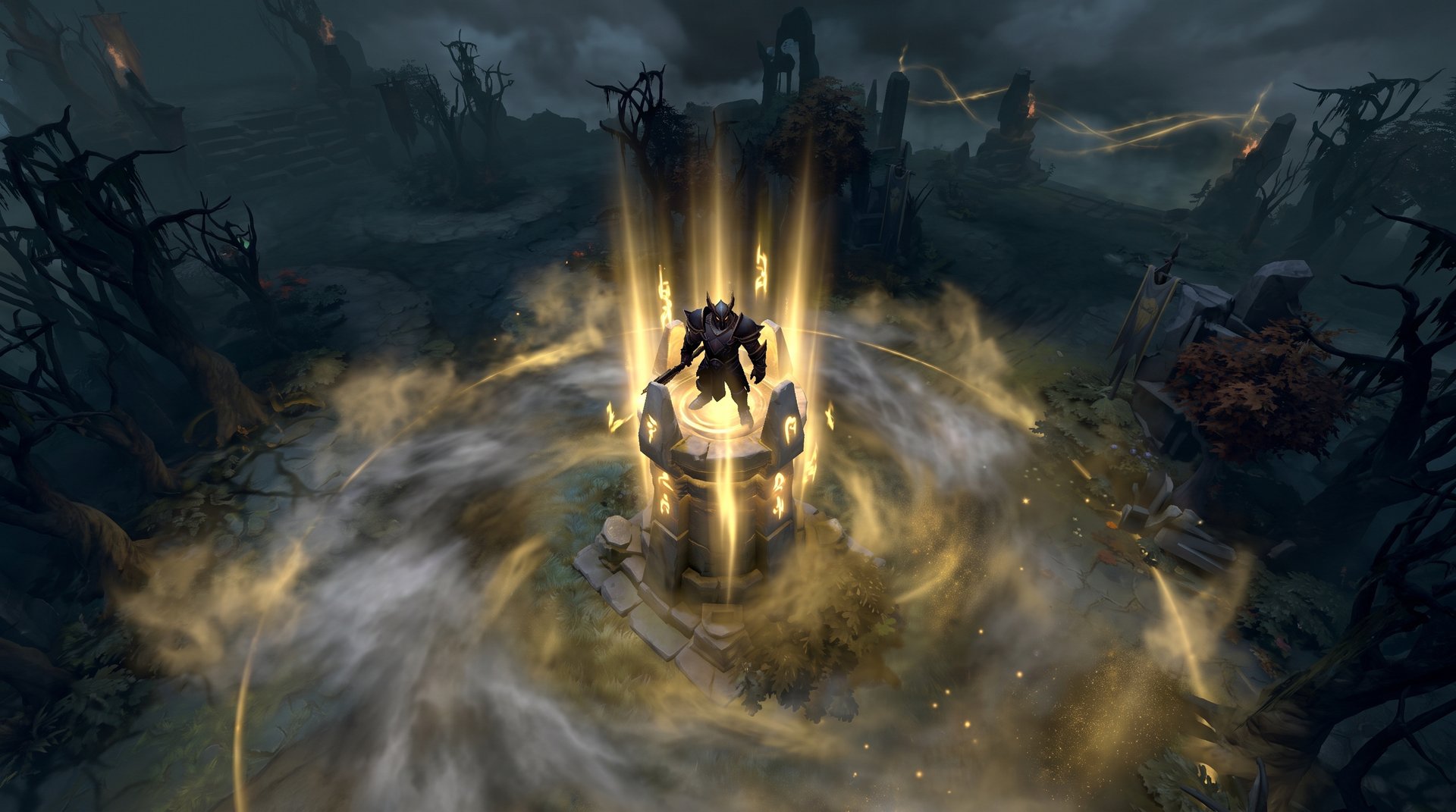
Every Dota 2 map has two outposts, one in the Radiant jungle and one in the Dire jungle, positioned near the river between the primary and secondary jungles. At 10 minutes, 20 minutes, and every 10 minutes after that, whichever team controls each outpost receives a flat XP bounty split across all five heroes. The current bounty scales with the game timer.
New players fixate on that XP number. Experienced players fixate on something else entirely: the vision an outpost provides. An outpost you control gives your team permanent flying vision over a sizable radius in the enemy jungle. That vision is active the entire time you hold it, not just when you capture it. It reveals neutral camps, enemy rotations, courier paths, and heroes attempting to set up smoke ganks through that part of the jungle.
The vision angle matters more than the XP at almost every stage of the game because it directly informs every other decision — whether to take Roshan, whether to contest a specific neutral camp, whether that smoke gank from the enemy mid is a real threat or a bluff.
Outpost XP Bounty — The Actual Numbers
At the 10-minute mark, the XP bounty for holding an outpost is roughly 60 XP per hero on your team, totaling 300 XP team-wide. That is equivalent to killing a tier-2 creep. It matters at the margin but it rarely determines fights on its own.
At the 20-minute mark the bounty increases, and by 30 minutes holding both outposts simultaneously can provide a meaningful XP gap if one team has maintained control the entire game. The compounding effect of outpost XP — contested again and again every 10 minutes — creates an XP differential that is hard to trace back to a single moment but very real in the game log.
How Outpost Vision Changes Your Rotations
The vision radius on a held outpost covers the secondary jungle entrance paths and the river crossing nearby. When your team holds the enemy outpost, you see heroes trying to cross through that zone. When you lose your own outpost, the enemy has a permanent ward in your jungle that no detection removes.
This is why the strongest rotation play available at 10 minutes is not always a gank — it is sending the right hero to secure your outpost before the enemy can flip it, while your team uses the window of guaranteed vision to do something else without fear of being caught.
Twin Gates — Fast Travel Most Players Barely Use
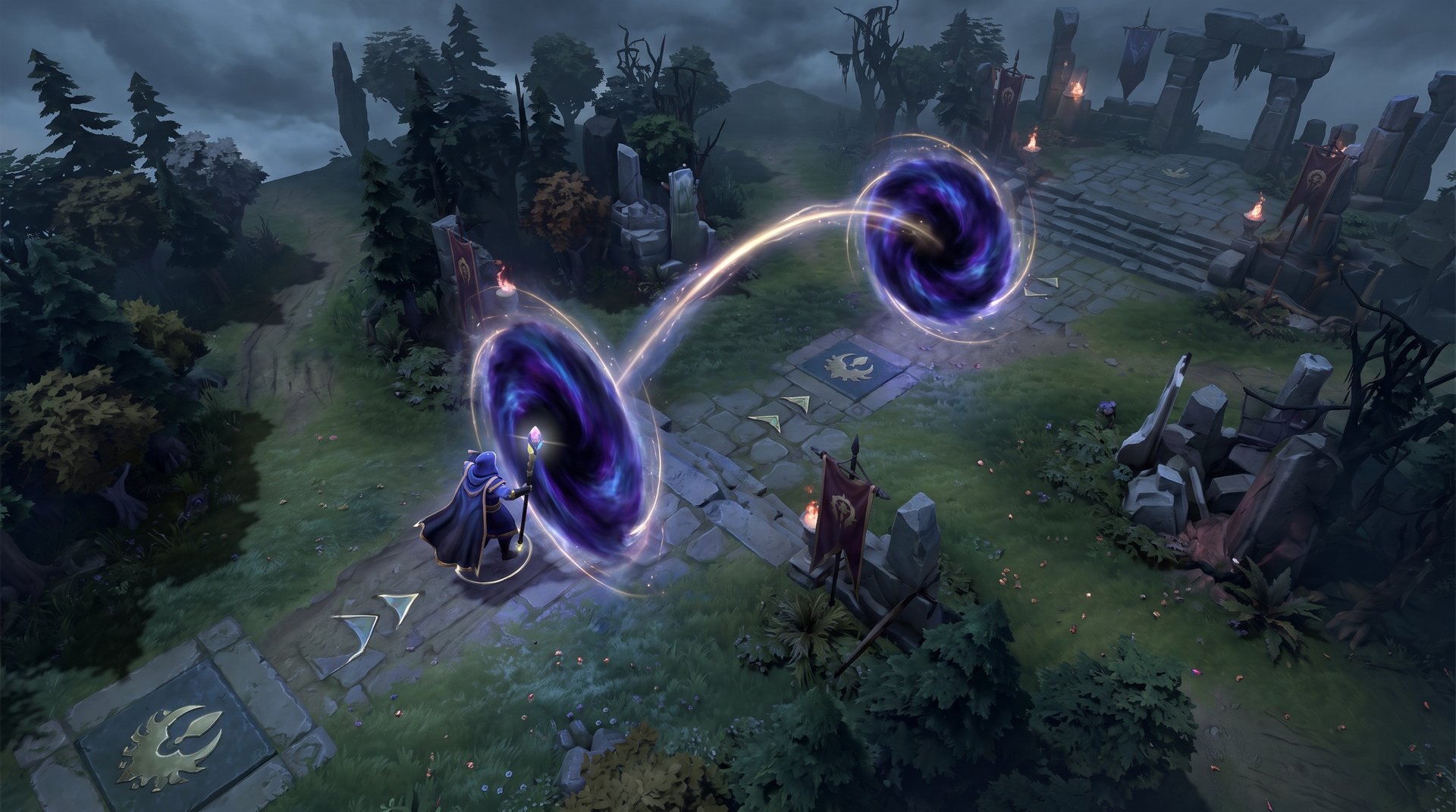
Twin Gates are the two connected teleport structures that sit in each team’s base behind the main barracks. They share a network: any allied hero can channel at either gate and teleport to the other gate instantly after a short cast time. There is no cost in gold or mana, though there is a cooldown per hero after each use.
What most players miss is that the Twin Gates are not primarily a retreat mechanism. They are a horizontal map traversal tool. Moving from one side of your base to the other side in full would take 15-20 seconds on foot. Using the Twin Gate does it in roughly 4 seconds including the channel. That gap compounds during extended mid-game fights where heroes are cycling between lanes, jungle, and Roshan.
How Twin Gates Work — The Mechanics Most Players Misunderstand
The gate channel is interruptible. If an enemy stuns or silences you during the cast, the channel breaks and the gate goes on cooldown for your hero anyway. This means Twin Gates used reactively during a chase are high-risk — you will often be interrupted and end up stranded.
Used proactively before a fight begins, Twin Gates are almost risk-free. The 4-second channel happens in a safe area of your base where enemies rarely have vision. When you time the departure correctly — finishing before the fight starts rather than reacting to it — you arrive fresh rather than panicked.
The cooldown resets independently per hero, which means five heroes on the same team can use Twin Gates five times in succession without waiting for a shared timer. Unlike Town Portal Scrolls, there is no limit on how many heroes can use the gates simultaneously.
The Hidden Cost — Why Most Players Teleport Wrong
The most common Twin Gate mistake is using the gate when the fight is already happening. You channel for 4 seconds, arrive at the destination base gate, then you still have to walk from the base to wherever the fight is. By the time you arrive, the fight is usually decided.
The correct mental model: Twin Gates bridge your two base exits. They do not bridge your base to the fight. You still need a Town Portal Scroll or a walk to cover the last stretch from the destination gate to the contested objective. Plan both legs of the rotation, not just one.
Rotation Tricks Tied to Outpost Timing
The most reliable rotation windows in the game cluster around predictable timers. Outpost bounties at 10, 20, and 30 minutes create a meta-clock that both teams play around whether they realize it or not. Understanding this clock lets you set up rotations that your opponents cannot easily counter because they are defending against objectives rather than against you personally.
The 10-Minute Outpost Flip Window
At exactly 10 minutes, every hero on both teams gains the option to detour to the nearest outpost and channel the capture for their team. The capture channel takes several seconds, and heroes can interrupt it by damaging you. The practical result is that the minute before and after 10 minutes is the most contested period of early-to-mid game on the Dota 2 map.
The trick that most players at Guardian through Ancient miss: the correct response to the enemy team sending a hero to capture your outpost is not always to send someone to contest it. Sometimes the right play is to counter-rotate somewhere else entirely while their hero is channeling and therefore temporarily off the map.
If the enemy pos-4 walks to your outpost at 9:45 and begins capturing at 10:00, you have a window of approximately 40-60 seconds where they are occupied and unable to provide support to their carry. If your team uses that window to dive the enemy pos-1 or take Tormentor, the outpost XP you gave up is more than compensated by the objective you took while they were distracted.
Contest or Concede — Reading the Fight Value
Not every outpost is worth fighting over. The correct calculation is: can your team win the fight that happens if you send someone to contest, and is winning that fight worth more than what you could be doing elsewhere?
At 10 minutes with even or favorable draft matchups, contesting your own outpost is almost always correct because you are likely to win the fight near your own jungle and deny the enemy vision. At 20 minutes when you are significantly behind in net worth, conceding the outpost and using the XP loss to TP-rotate somewhere the enemy is not expecting is often the better trade.
| Scenario | Recommended Decision | Reasoning |
|---|---|---|
| Ahead in net worth, fight near own outpost | Contest | Win the fight, deny vision, collect XP |
| Behind, enemy has numbers advantage nearby | Concede and rotate | Avoid bad fight, redirect pressure |
| Enemy carry channeling outpost alone | Contest and kill | Win fight 1v1 or with support, deny XP and vision |
| Both outposts contested simultaneously | Prioritize enemy outpost in your jungle | Deny their vision of your jungle over gaining vision of theirs |
| Enemy support taking your outpost, carry farming nearby | Send one hero to contest, keep team on carry | Split attention, force bad decision from enemy |
Using Glyph to Protect an Outpost Defiance
If your team is in a base defense scenario and the enemy controls your outpost, using Glyph just before the 10-minute timer (or 20-minute timer) forces the enemy to stay near your base longer than planned if they want to collect the bounty. Glyph stops all damage to your structures temporarily, which sometimes forces enemy heroes to wait it out near objectives instead of rotating to the outpost.
This is not a standard play, but against teams that are heavily objective-focused it creates a 25-30 second window where the enemy is bunched near your base instead of spreading across the map. A well-timed smoke into that window can catch 2-3 of them in a location where they expected to be safe.
Twin Gate Rotations That Change Fights
Combining Twin Gates with proactive rotation planning creates opportunities that opponents at lower MMR cannot read because they are not tracking the gate cooldowns or thinking about cross-map pressure.
The Twin Gate Bait Pattern
The setup: your team makes noise on one side of the map — a push on a tier-2 tower, a pick attempt, a Roshan approach. The enemy rotates heroes to respond. Two or three of your heroes who started that pressure then back off, walk to the nearest Twin Gate, use it to cross to the other base exit, and TP or walk toward the opposite side of the map where the enemy just vacated.
This pattern is particularly effective against teams with slow rotations or teams that are heavily committed to one fight. The total transit time using the gate is about 4 seconds of channel plus walking time to the new objective — compared to 10-15 seconds of walking from one side of the base to the other. Against an enemy that committed four heroes to the fake, two or three of your heroes arriving in their now-empty jungle is a free Roshan, a free barracks push, or a free outpost flip.
Staggered Arrival — Why Your Whole Team Does Not Need to TP Together
Mass teleport rotations are predictable. When five players TP to the same tower, every observer watching the minimap knows a fight is coming and where. Staggered arrival through a combination of TP scrolls and Twin Gate transits creates a messier, harder-to-read picture.
The pattern: one hero TPs first to initiate or threaten. While the enemy responds to that hero, two more heroes use Twin Gates to reach the opposite base exit and walk toward a second objective. The enemy is now committed to one fight while your team is developing two simultaneously. They must choose which one to ignore.
The Twin Gate here is not being used as a teleport to the fight — it is being used as a transit to a second objective the enemy cannot afford to lose. This is the use case most below-Immortal players never consider.
Tracking Enemy Twin Gate Usage
You cannot see the enemy use their Twin Gates directly, but you can infer it from the minimap. If a hero disappears near the enemy base and reappears on the opposite side within 5-6 seconds without a TP animation, they used the Twin Gate. This tells you their gate cooldown is now active for that hero for the next 45-60 seconds.
Teams that abuse Twin Gates in one direction become predictable after two or three uses. Watch for the pattern over the course of a game. If the enemy pos-4 consistently gates from the top base exit to the bottom exit to provide lane support, you can set up a gank along their predictable path from the gate to the lane on their next use.
Role-Specific Outpost and Twin Gate Priorities
Different roles interact with outposts and Twin Gates in different ways. Understanding what each role should prioritize around these mechanics removes confusion during the mid-game when multiple objectives compete for attention.
| Role | Outpost Priority | Twin Gate Best Use |
|---|---|---|
| Pos 1 (Hard Carry) | Low — focus on farm, let supports secure | Rarely use mid-game; save for late-game base defense |
| Pos 2 (Mid) | Medium — contest at 10 min if mid lane is won | Cross-map bait patterns after winning mid |
| Pos 3 (Offlaner) | High — primary outpost contester from offline position | Quick transit to support safelane fights |
| Pos 4 (Roaming Support) | High — rotate to capture before 10-minute timer | Fast repositioning between early gank and outpost capture |
| Pos 5 (Hard Support) | Very High — outpost control is a core support job | Use after warding to cross map without being seen |
Position 4 and 5 — Why Support Outpost Control Is the Highest-Value Play
At most MMR brackets below Divine, carries and mids are the heroes who contest outposts because they are the ones available on the map at 10 minutes. This is backwards. Carries contesting the outpost means they are not farming. Mids contesting the outpost means they are giving up lane presence.
The correct assignment — and the one that high-MMR supports do automatically — is for the pos-4 or pos-5 to plan their early rotation around arriving at the outpost just before 10 minutes, capturing it while the carry and mid continue doing their primary jobs, then rotating back to a useful position. A support who walks from the enemy side of the map to your outpost between minute 9 and minute 10 and secures 300 XP for the team while simultaneously placing a ward is doing more than any gank they could have attempted in that window.
Looking for ways to accelerate your climb by learning from high-MMR players who execute these rotations every game? The TeamSmurf coaching service pairs you with a coach who will watch your replays and show you exactly where your map control decisions are costing you MMR.
The Offlane and Outpost Geometry
The offlane position is naturally placed nearest the enemy outpost. This is not a coincidence — the offline hero has the shortest walk to contest or flip the enemy outpost at 10 minutes. A pos-3 who wins or survives their lane and reaches minute 10 with enough HP to contest should always be thinking about that outpost before thinking about the next tower.
The geometry also works defensively. Your own outpost as the offlaner is in the enemy jungle, near where enemy rotations develop. If you are losing the lane badly, the enemy pos-4 will use that outpost flip to set up a deeper dive on your tower. Knowing that, you can plan your retreat path around the outpost location rather than being surprised by the timing of the enemy attack.
The Biggest Mistakes Players Make With Outposts and Twin Gates
After reviewing hundreds of replays across Guardian through Ancient, the same errors appear repeatedly. Here are the ones with the highest impact on MMR outcomes.
Mistake 1 — Forgetting the Outpost Timer Entirely
The most common mistake is simply not tracking the 10, 20, and 30-minute timers. Players who do not have a mental or external timer running will miss the outpost window entirely because they are mid-fight or mid-farm and the timer ticks past. The fix is a simple habit: when your in-game clock hits X:45 (45 seconds before each 10-minute mark), register the upcoming outpost timer and decide in the next 30 seconds whether to route a hero toward it.
Mistake 2 — Using Twin Gates Reactively During a Chase
As discussed above, the gate channel gets interrupted by damage. Players who try to Twin Gate while being chased are doing two bad things: wasting 4 seconds they could spend running, and telegraphing that they are afraid. Use gates proactively, before pressure arrives, not as an emergency button when the enemy is already on top of you.
Mistake 3 — Sending the Wrong Hero to Contest
Sending your pos-1 to secure an outpost while the enemy’s pos-4 walks over is a terrible trade of resources. Your carry loses 45-60 seconds of farm time. The support loses 45-60 seconds of map presence. If a fight develops at the outpost, the carry risks death or the support is too far away to help. Send the lowest-farm-priority hero who can safely reach the outpost in time. In most cases, that is your pos-5.
Mistake 4 — Not Using Twin Gates for Vision
The gate itself acts as a vision source while heroes are inside it and immediately after exit. If you are trying to determine whether the enemy is near their bottom base exit before committing to a push, sending a tanky hero through the Twin Gate to briefly exit near that base point reveals the area. This is risky but occasionally the fastest way to get critical information before a big fight.
Mistake 5 — Treating Both Outposts as Equally Important
Your own outpost — the one the enemy wants to flip — is almost always more important to defend than the enemy outpost is to capture. Your own outpost, held, gives vision of your jungle to you and denies it from the enemy. The enemy outpost, captured by you, gives vision of their jungle to you. Both are valuable, but losing your own outpost is double-bad because it simultaneously removes your vision and gives the enemy yours.
How Better Map Control Translates to MMR
Outposts and Twin Gates are part of a broader map-control framework that separates consistent MMR climbers from players who plateau. The common thread in players who gain 500-1000 MMR quickly after their initial calibration is not mechanical improvement — it is improved decision-making around mid-game objectives and rotations.
When you start winning outpost contests consistently, three things happen: your team gets the XP bounties at each timer, you deny the enemy vision of your jungle at the most critical farming and rotation windows, and you develop a mental habit of thinking in objective timers rather than just reacting to what is happening on screen. That habit compounds across every game.
Players who understand how MMR climbs will recognize that map control mechanics like outpost and Twin Gate usage are exactly the kind of low-visibility, high-consistency edges that separate 3K from 4K and 4K from 5K players. The mechanical gap at those tiers is smaller than people think. The decision-making gap is large.
For players who want an accelerated path, one option is to use a high-MMR boosting service to watch how Immortal-level players handle these specific mechanics in live games on your account. Watching a booster play your account for 10-15 games specifically teaches you what the rotation decisions look like in real-time, which is different from reading about them. If that approach interests you, understanding the safety of Dota 2 boosting first is worth your time.
The Long-Term Habit That Compounds
The best way to internalize outpost and Twin Gate rotations is to add a single question to your decision loop every minute between 9:30 and 10:30 (and 19:30-20:30, 29:30-30:30): “Where is the support who should be contesting the outpost right now, and do I know what they should be doing next?”
If you are the support, that question answers itself — you should already be walking toward it. If you are the carry or mid, the question tells you whether your team is about to lose a free advantage you could have prevented with a single voice-line pinging the outpost timer.
Over 50 games of adding this single check, you will find your mid-game awareness improving not just around outposts but around all timed objectives — Tormentor, Wisdom Rune, Roshan — because you have trained yourself to think in timers rather than in reactions.
Frequently Asked Questions
Stop Missing These Rotation Windows
Outpost timing and Twin Gate rotations are exactly the kind of low-visibility edges that high-MMR players exploit every game. If you want to understand how these mechanics look in live games at Immortal level, our coaching team can review your replays and walk you through the specific decisions you are missing.
Get Coaching View Boosting Services