Dota 2 Meta Guide 2026: Best Heroes, Strategies & How to Climb Right Now

The Dota 2 meta in 2026 is one of the most dynamic and rewarding metas we’ve seen in years. Between the sweeping changes introduced in Patch 7.37 and the continuous micro-adjustments Valve has made throughout the competitive season, the hero pool, itemization landscape, and strategic macro-game have all shifted significantly. Whether you’re a returning player trying to get back into ranked, a grinder stuck at a plateau, or someone who simply wants to understand what’s strong right now, this guide is your definitive resource.
We’ll break down the best meta heroes for every role, examine the itemization trends shaping games, discuss the major strategic shifts defining 2026 Dota, and give you actionable tips to climb MMR starting today. If you want to fast-track your climb while the meta favors aggressive, high-tempo play, our Dota 2 MMR Boost service pairs you with boosters who know the current meta inside and out.
Table of Contents
2026 Meta Overview: What Changed and Why
Patch 7.37 — sometimes called the “Tempo Patch” by the community — fundamentally altered how Dota 2 games play out. The biggest systemic changes include:
- Reworked Tormentor mechanics: Tormentors now spawn earlier (minute 15 instead of 20) and drop a universal Aghanim’s Shard component that can be combined at the shop for 800 gold. This means teams can access Shard timings faster, rewarding early map control.
- Outpost experience rework: Outposts now provide a flat experience pulse every 5 minutes instead of scaling, making them valuable from the first capture and encouraging early rotations.
- Creep gold redistribution: Ranged creeps are worth slightly more gold, and siege creeps spawn one wave earlier. Pushing power is at a premium.
- New items: Three new items were introduced — Astral Conduit (a mid-tier intelligence item offering spell lifesteal and mana regen), Vanguard rework into Bastion Shield (with an active damage block component), and Windrunner’s Bow (a mid-game agility item that grants evasion and projectile speed).
- Roshan changes: Roshan’s health and damage now scale less aggressively per kill, making second and third Roshan attempts more accessible to teams that haven’t snowballed.
The combined effect of these changes is a meta that rewards tempo, teamfight coordination, and early objective-taking. Games are ending faster on average — the median game length in ranked has dropped from 38 minutes to about 34 minutes according to community-tracked data. Heroes that come online early, fight well in the midgame, and can push towers efficiently are dominating. Late-game hard carries that need 30+ minutes of farming are struggling unless their team creates the space for them.
Understanding this context is crucial before we dive into specific hero picks. The meta isn’t just about which heroes are numerically strong — it’s about which heroes fit the pace and objectives of the current game.
Best Carry Heroes (Position 1)
The carry role in 2026 demands a balance between farming speed and early-to-midgame fighting capability. Pure afk-farming carries like Anti-Mage and Spectre have fallen off significantly unless specifically enabled by the draft. The best carries right now can hit their first major item timing by 15-18 minutes and immediately contribute to fights and objectives.
S-Tier Carries
| Hero | Win Rate (Divine+) | Pick Rate | Key Strengths |
|---|---|---|---|
| Faceless Void | 54.2% | 18.7% | Chronosphere remains the best teamfight ultimate; new Bastion Shield synergizes with his frontline playstyle |
| Luna | 53.8% | 15.3% | Farms incredibly fast, pushes towers, Eclipse is devastating in midgame fights |
| Juggernaut | 53.1% | 22.1% | Always relevant; Blade Fury lets him fight early, Omnislash scales, Healing Ward enables pushes |
| Phantom Assassin | 52.9% | 19.8% | Dagger harass in lane is oppressive; BKB + Desolator timing around 18 min ends games |
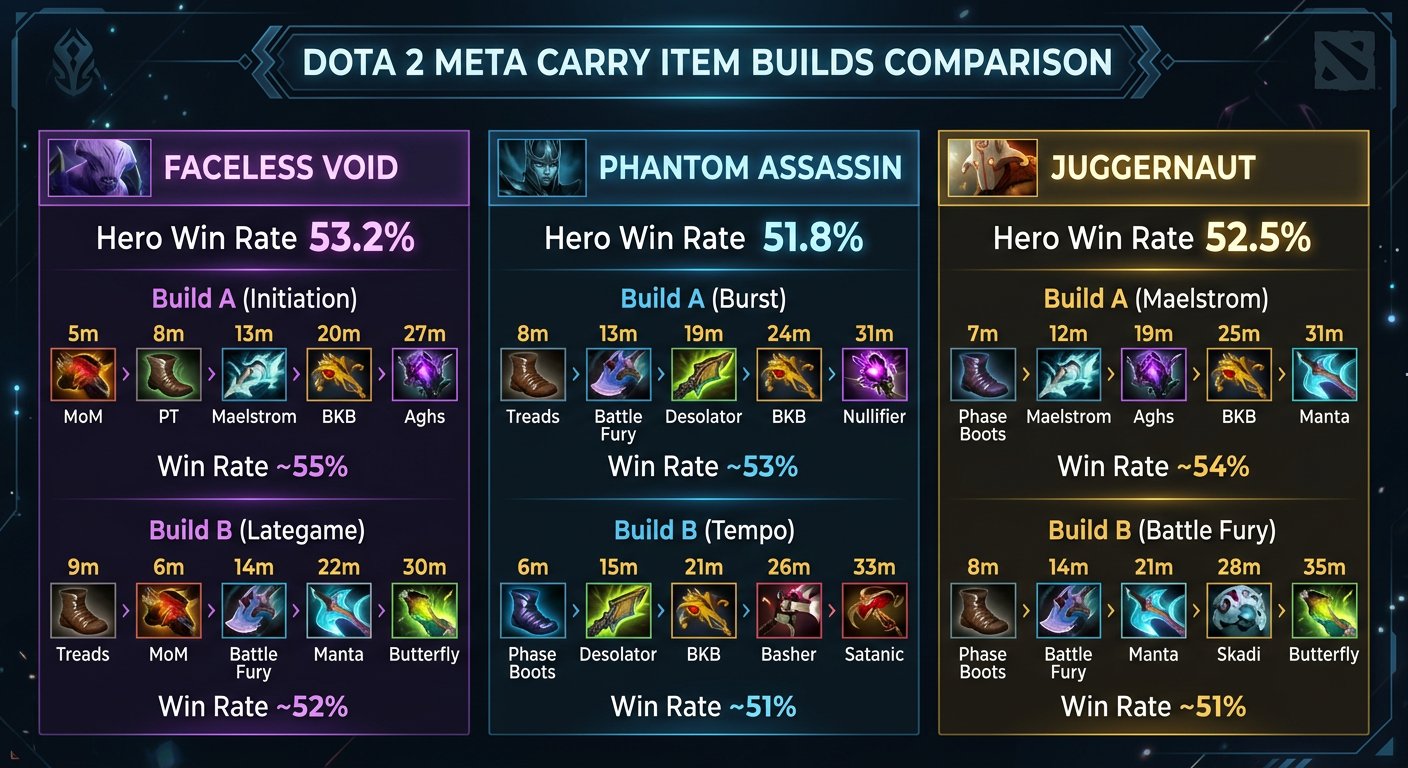
Faceless Void is arguably the single best carry in the current patch. The combination of Chronosphere with any area-of-effect damage dealer (Invoker, Lina, Witch Doctor) creates a teamfight combo that wins games outright. Void’s laning phase is average, but his ability to farm with Time Walk’s repositioning and his midgame power spike with Mask of Madness into Battle Fury (or the more aggressive Maelstrom build) makes him the go-to pick. The reworked Bastion Shield also pairs beautifully with Void, who wants to frontline inside Chrono without being burst down.
Luna has surged back into relevance thanks to the creep gold changes. Her Glaives clear waves and camps faster than almost any other carry, and the earlier siege creep spawn means her natural pushing power translates into faster tower gold. A Luna with Manta Style and Black King Bar at 20 minutes can solo push lanes and fight, making her a nightmare for teams that don’t punish her weak laning phase.
Juggernaut remains the evergreen safe pick. He’s never truly out of meta because his kit is so well-rounded. In the current tempo-focused meta, his ability to fight from level 6 onwards with Blade Fury and Omnislash, combined with his farming speed via Battle Fury, makes him a consistent climber. If you’re not sure what to pick, Juggernaut is rarely wrong.
Phantom Assassin thrives in the current meta’s emphasis on early kills and snowballing. Her Stifling Dagger harass makes her a dominant laner in many matchups, and her Desolator + BKB power spike is one of the most feared timings in the game. PA struggles against heavy armor and evasion counters, but in pubs, she’s a terror.
A-Tier Carries
Lifestealer, Wraith King, Ursa, and Slark round out the A-tier. Lifestealer excels against strength-heavy lineups with his percentage-based Feast damage. Wraith King is the ultimate pub stomper — his simplicity and two-life mechanic make him forgiving for less experienced players. Ursa dominates Roshan and wins almost any 1v1, making him strong in the current Roshan-centric meta. Slark is a niche but powerful pick against lineups that lack lockdown, as his Essence Shift snowball is even more devastating with the earlier Aghanim’s Shard access.
Falling Off: C-Tier Carries
Anti-Mage and Spectre are in rough spots. Anti-Mage needs too much time to come online, and the faster game pace means he often doesn’t reach his Battle Fury + Manta timing before the game is decided. Spectre suffers similarly — her Haunt is game-changing at 35+ minutes, but games rarely get there. If you’re playing these heroes, you need your team to understand the game plan, which is unreliable in solo queue.
For carry players looking to climb efficiently, focusing on Void, Luna, and Juggernaut gives you the highest ceiling with the lowest risk. If you want personalized advice on which carries suit your playstyle, our Dota 2 Coaching sessions include draft analysis and hero pool optimization.
Best Mid Heroes (Position 2)
The mid lane in 2026 is all about lane dominance into early rotations. The best mids win their lane, secure the first water rune, and immediately pressure side lanes. The Outpost experience changes mean that controlling the map early gives your team a significant experience lead, and mid heroes are the primary catalysts for that control.
S-Tier Mids
| Hero | Win Rate (Divine+) | Pick Rate | Key Strengths |
|---|---|---|---|
| Invoker | 54.7% | 16.2% | Unmatched versatility; both Quas-Wex and Quas-Exort are viable; incredible Chrono combo partner |
| Lina | 53.5% | 20.4% | Lane domination, wave clear, burst damage, tower push with Fiery Soul attack speed |
| Spirit Void | 53.2% | 14.1% | High skill ceiling but devastating in capable hands; remnant-based mobility controls map |
| Kez | 52.8% | 12.9% | Newest hero addition; blade combo mechanic rewards mechanical skill with burst and sustain |
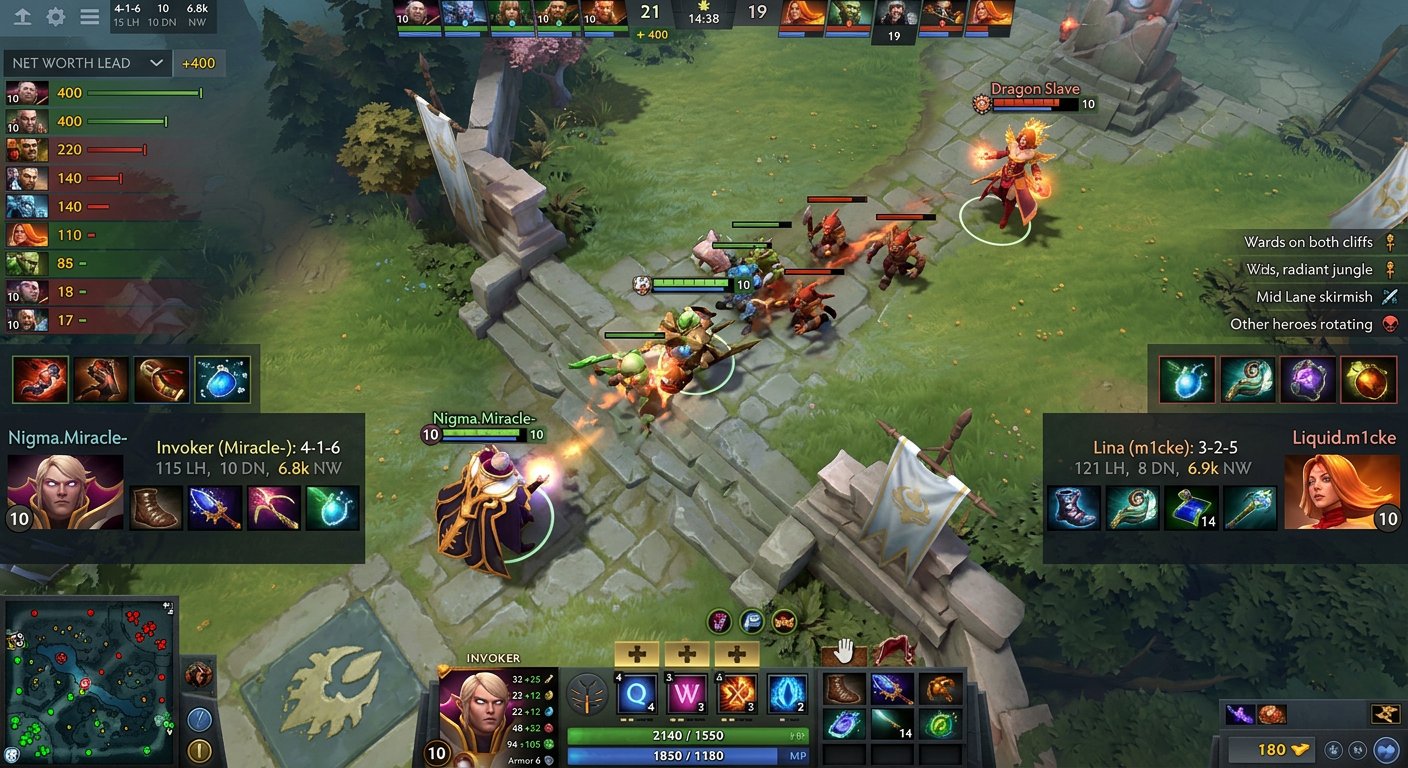
Invoker is experiencing a renaissance. Quas-Wex Invoker, in particular, synergizes perfectly with the tempo meta — EMP and Tornado provide enormous teamfight disruption from as early as level 7, and the hero’s ability to set up ganks with Cold Snap makes him a roaming terror after winning his lane. Quas-Exort remains strong for players who prefer a farming-into-combo-damage playstyle, particularly when paired with a Faceless Void or Magnus on the team. Invoker’s Aghanim’s Shard (now accessible earlier thanks to the Tormentor changes) adds Cataclysm, which is a game-winning ability in coordinated fights.
Lina is the most reliable mid in the patch. She wins almost every lane matchup thanks to her high base damage and Light Strike Array + Dragon Slave harass. Her Fiery Soul stacks give her insane attack speed, which translates into fast tower kills — perfectly aligned with the push-oriented meta. Lina’s Aghanim’s Scepter upgrade (Laguna Blade becomes pure damage that pierces BKB) is one of the most feared late-game abilities in Dota. She’s strong at every stage of the game, which is rare for a mid hero.
Void Spirit continues to be the go-to pick for mechanically skilled players. His remnant-based mobility allows him to control the map in ways few other heroes can, and his burst combo (Astral Step into Resonant Pulse into Dissimilate) can delete supports from full HP. The new Astral Conduit item gives him excellent spell lifesteal and mana sustain, making his midgame even more oppressive.
Kez, the newest hero addition from late 2025, has carved out a strong niche in mid. Her blade combo mechanic — chaining abilities in specific sequences for bonus effects — rewards players with strong execution. In the hands of a skilled player, Kez outputs extraordinary burst damage while sustaining through fights with her passive lifesteal component. She’s still being figured out by the community, which means she often flies under the radar in drafts.
Honorable Mentions
Puck, Storm Spirit, and Templar Assassin are all solid A-tier choices. Puck excels at initiation and catch with Dream Coil, Storm Spirit is a snowball monster once he hits Orchid Malevolence (which now builds from a better component path), and Templar Assassin melts towers and Roshan faster than almost any other mid. All three are viable climbers but require more specific game conditions to shine compared to the S-tier picks.
Best Offlane Heroes (Position 3)
Offlaners in 2026 are expected to be teamfight initiators, aura carriers, and frontline tanks. The reworked Bastion Shield has been a huge boon to many traditional offlane heroes, and the emphasis on early teamfighting means that heroes with strong level 6 power spikes are thriving.
S-Tier Offlaners
| Hero | Win Rate (Divine+) | Pick Rate | Key Strengths |
|---|---|---|---|
| Axe | 54.0% | 17.5% | Berserker’s Call is the best initiation in pubs; Bastion Shield makes him unkillable early |
| Beastmaster | 53.6% | 13.8% | Roar is BKB-piercing lockdown; hawk provides vision; boar pushes towers; complete package |
| Tidehunter | 53.3% | 14.2% | Ravage wins teamfights; Kraken Shell makes laning easy; Anchor Smash reduces carry damage |
| Mars | 52.7% | 16.0% | Arena of Blood controls space; Spear stun is reliable catch; God’s Rebuke farms and fights |
Axe is the quintessential offlaner, and he’s at his best right now. The Bastion Shield rework gives him an active damage block that stacks with his naturally high armor, making him nearly impossible to kill in lane. Berserker’s Call forces enemy carries to hit him (proccing Counter Helix) and is one of the few BKB-piercing disables in the game. Axe’s item build is straightforward — Blink Dagger into Blade Mail into BKB — and his game plan is simple: jump in, call, and let your team follow up. In pubs, where coordination on initiation is often lacking, having an Axe who presses the “go” button is invaluable.
Beastmaster is the premier offlaner in coordinated play and is increasingly popular in ranked. His hawk provides unmatched vision control, his boar’s slow is devastating in ganks, and Primal Roar goes through BKB — making it the ultimate answer to slippery carries. Beastmaster also pushes towers extremely fast with his summons and Inner Beast aura, aligning perfectly with the push meta. His Aghanim’s Scepter upgrade (which adds a second Roar charge) is one of the most impactful Scepter purchases in the game.
Tidehunter offers the most reliable teamfight initiation in Dota. Ravage’s massive AoE stun gives your team a window to wipe the enemy, and Tide’s tanky nature means he’s hard to kill before he gets it off. In lower MMR brackets especially, Tidehunter’s simplicity and impact make him an excellent choice for climbing. Blink + Refresher Orb for double Ravage is a game-ending combo that few teams can play around in pubs.
Mars rounds out the S-tier with his unique ability to control space. Arena of Blood creates a zone that enemies cannot enter or leave easily, and when combined with AoE damage (Invoker’s Tornado + EMP, Lina’s Light Strike Array), it becomes a death trap. Mars’s Spear stun is one of the most satisfying and impactful basic abilities in the game — impaling an enemy hero against a tree for 2.8 seconds of stun wins fights on its own.
A-Tier Offlaners
Underlord, Sand King, Centaur Warrunner, and Pangolier are all strong choices. Underlord’s Firestorm clears waves and pressures towers, and his Pit of Malice provides reliable root. Sand King’s Epicenter + Blink combo is a classic for good reason. Centaur’s Stampede is an incredible team-wide escape and engage tool. Pangolier’s Rolling Thunder is one of the most disruptive ultimates in teamfights.
Understanding how offlaners dictate the pace of the game is essential for climbing. If you’re struggling with the offlane role specifically, our Dota 2 Coaching service offers role-specific sessions where experienced players help you understand matchups, power spikes, and teamfight execution. For a deeper dive into all five roles and their responsibilities, check out our Dota 2 Roles Explained guide.
Best Soft Support Heroes (Position 4)
The position 4 role has become one of the most impactful roles in the 2026 meta. Soft supports are expected to roam aggressively in the early game, control vision, and set up kills for their cores. The earlier Tormentor and Outpost timings mean that position 4 heroes who can secure map control early are incredibly valuable.
S-Tier Soft Supports
| Hero | Win Rate (Divine+) | Pick Rate | Key Strengths |
|---|---|---|---|
| Earth Spirit | 55.1% | 11.2% | Unmatched roaming and ganking; silence, stun, slow, and save all in one kit |
| Tusk | 54.3% | 14.7% | Snowball saves allies and initiates; Tag Team is insane for early kills; great with any core |
| Mirana | 53.4% | 13.5% | Sacred Arrow stun is game-changing; Moonlight Shadow enables team plays; Leap provides mobility |
| Rubick | 52.6% | 12.8% | Spell Steal turns enemy ultimates against them; Telekinesis is reliable lift; Fade Bolt reduces damage |
Earth Spirit has the highest win rate among soft supports at high MMR for a reason — he can do everything. Rolling Boulder is a long-range stun that also serves as an escape. Magnetize deals persistent damage in teamfights. Geomagnetic Grip silences and pulls allies to safety. Boulder Smash provides a ranged stun. He’s the Swiss Army knife of supports, and in the hands of a skilled player, he single-handedly controls the tempo of the early game. His Aghanim’s Shard upgrade (Enchant Remnant, which turns allies or enemies into stone remnants) adds even more utility. The downside? He’s mechanically demanding, with one of the steepest learning curves in Dota.
Tusk is the king of aggressive early-game support play. His Snowball can save an ally from certain death or deliver your entire team into the enemy’s face. Tag Team slows enemies and amplifies physical damage, making it one of the best level 1 abilities in the game for early kills. Walrus Punch’s massive crit provides surprising burst damage throughout the game. Tusk pairs well with virtually any core hero, which makes him extremely flexible in drafts.
Mirana offers a unique combination of catch and team utility. A 5-second Sacred Arrow stun from max range is one of the most impactful single abilities in Dota, and Moonlight Shadow’s team-wide invisibility enables smoke-like ganks without requiring a Smoke of Deceit. Mirana also scales well with items, transitioning into a semi-core in the late game with Aghanim’s Scepter (Starstorm auto-cast).
Rubick is the ultimate high-skill-ceiling support. Stealing the right spell at the right time — an enemy Ravage, Black Hole, or Chronosphere — can single-handedly swing a teamfight. Rubick’s base kit of Telekinesis (a BKB-piercing lift) and Fade Bolt (which reduces enemy attack damage) is solid on its own, but Spell Steal elevates him into a game-breaking support against certain lineups.
Best Hard Support Heroes (Position 5)
Hard supports in 2026 are the unsung heroes of the meta. Their job is to win the carry’s lane, secure vision, and provide save or sustain for teamfights. The best position 5 heroes right now are those who can do all three without requiring significant gold investment.
S-Tier Hard Supports
| Hero | Win Rate (Divine+) | Pick Rate | Key Strengths |
|---|---|---|---|
| Witch Doctor | 54.5% | 16.3% | Maledict is the most punishing DOT in the game; Death Ward shreds in Chrono/Arena; Voodoo Restoration sustains |
| Warlock | 54.1% | 11.9% | Fatal Bonds amplifies team damage; Chaotic Offering is a huge teamfight ultimate; Shadow Word sustains |
| Dazzle | 53.7% | 13.2% | Shallow Grave is the best save in the game; Weave provides armor for teamfights; heals enable aggression |
| Crystal Maiden | 53.0% | 17.8% | Arcane Aura solves mana for entire team; Frostbite is reliable lockdown; Freezing Field is devastating with BKB |
Witch Doctor is dominating as a hard support thanks to his synergy with the meta’s dominant heroes. Maledict, his W ability, is one of the most underrated abilities in Dota — it amplifies damage dealt to a target over time, meaning that if your team bursts someone down while Maledict is active, the bonus damage ticks can kill them even through healing. Death Ward, his ultimate, deals massive physical damage in a channeled AoE, and it’s absolutely devastating when placed inside a Chronosphere or Arena of Blood where enemies can’t escape or interrupt it. At lower MMRs, Witch Doctor consistently boasts some of the highest win rates in the game.
Warlock has quietly become one of the best teamfight supports in the game. Fatal Bonds links enemy heroes so that damage dealt to one is partially dealt to all linked heroes — in a 5v5 teamfight, this effectively multiplies your team’s damage output. Chaotic Offering summons a massive golem that stuns on impact and serves as an additional frontline body. Shadow Word is a versatile heal/damage ability that wins lanes. Warlock excels in the current meta because he enables the teamfight-centric playstyle without needing much gold.
Dazzle is the ultimate save support. Shallow Grave prevents an ally from dying for 5 seconds, which is enough time for them to kill the enemies trying to focus them, use a healing item, or simply reposition. In the current aggressive meta where teams try to burst down priority targets, Shallow Grave is incredibly powerful. Dazzle’s Weave ultimate also provides scaling armor buff/debuff in an AoE, which is particularly relevant in teamfight-heavy games.
Itemization Trends in 2026
Itemization in 2026 Dota has been shaped by the new items and the tempo-focused meta. Here are the biggest trends:
1. Bastion Shield is Core on Almost Every Offlaner
The reworked Vanguard — now called Bastion Shield — provides passive damage block, bonus HP, and an active component that grants 100% damage block for 3 seconds on a 25-second cooldown. This active component has made it the single most cost-efficient survivability item in the early game. Offlaners like Axe, Tidehunter, and Mars are building it as their first major item, and even some tanky mid heroes (like Dragon Knight) are picking it up.
2. Astral Conduit Revived Spell Lifesteal Builds
Astral Conduit (2,800 gold) provides 15% spell lifesteal, 3.5 mana regeneration, and 15 intelligence. It builds from Kaya and a new component, and it’s become a core mid-game item for intelligence cores like Leshrac, Lina, and Zeus. The spell lifesteal sustain allows these heroes to stay on the map farming and fighting without returning to base, which is exactly what the tempo meta demands.
3. BKB is More Important Than Ever
With teamfights happening earlier and more frequently, Black King Bar’s importance has skyrocketed. In Divine+ ranked, BKB is purchased in over 78% of games by at least one core, and often by two. The current meta’s emphasis on magical burst damage and crowd control makes BKB the single most important item for carry and mid players. If you’re not buying BKB when you should, you’re probably losing games you shouldn’t.
4. Mekansm and Pipe Timings Win Games
Team-wide sustain items have become even more critical. Guardian Greaves (upgraded from Mekansm) on offlaners and Pipe of Insight against magic-heavy lineups are often the difference between winning and losing early teamfights. The best offlaners are hitting their Mek or Pipe timing by 15-18 minutes and immediately forcing fights around Tormentors and towers.
5. Windrunner’s Bow is a Sleeper OP Item
Windrunner’s Bow (3,200 gold) provides 25 agility, 15% evasion, and increased projectile speed for ranged heroes. It’s become a core pickup on ranged carries like Drow Ranger and Medusa, and it’s even seeing play on ranged mid heroes like Sniper. The evasion component makes it a cost-effective defensive option, and the projectile speed increase makes last-hitting and harassing noticeably smoother.
Quick Reference: Trending Items by Role
| Role | Core Items | Situational Staples |
|---|---|---|
| Carry (Pos 1) | BKB, Manta Style, Daedalus | Satanic, Butterfly, Bastion Shield |
| Mid (Pos 2) | BKB, Astral Conduit, Blink Dagger | Aghanim’s Scepter, Eul’s, Linken’s Sphere |
| Offlane (Pos 3) | Bastion Shield, Blink Dagger, BKB/Pipe | Crimson Guard, Lotus Orb, Aghanim’s |
| Soft Support (Pos 4) | Urn of Shadows, Force Staff, Glimmer Cape | Aether Lens, Aghanim’s Shard, Eul’s |
| Hard Support (Pos 5) | Arcane Boots, Glimmer Cape, Force Staff | Ghost Scepter, Aeon Disk, Solar Crest |
Key Strategic Shifts in 2026
Understanding the macro-strategic landscape is as important as knowing which heroes and items are strong. Here are the defining strategic shifts of the 2026 meta:
1. Early Tormentor Control is a Win Condition
With Tormentors now spawning at minute 15 and dropping a universal Aghanim’s Shard component, controlling the Tormentor area has become a primary objective. Teams that secure both Tormentor kills effectively give two heroes an early Shard, which can be game-changing. Draft heroes that can fight around Tormentors early — tanky frontliners, sustain supports, and heroes whose Shards are particularly impactful.
2. Deathball Strategies are Back
The combination of earlier siege creeps, Outpost experience, and Tormentor rewards has brought deathball (5-man push) strategies back in a big way. Teams are drafting early-fighting lineups with heroes like Chen, Beastmaster, Luna, and Leshrac, grouping up at 15-18 minutes, and bulldozing towers before the enemy carry comes online. If you’re on the receiving end of a deathball, your best bet is to split-push and trade objectives rather than trying to fight into it.
3. Vision Wars Have Intensified
With more early objectives to contest, vision control has become even more critical. The best support players are dewarding aggressively and placing wards around Tormentor and Roshan areas well before the objective spawns. Sentry wards on Tormentor high ground and observer wards covering the approach paths are now standard plays at high MMR.
4. Split-Pushing is a Counter-Strategy, Not a Primary Strategy
In previous patches, split-pushing was a viable primary strategy — pick a hero like Nature’s Prophet or Anti-Mage, avoid fights, and push side lanes. In the 2026 meta, this is generally a losing approach because the team that groups and takes objectives gains too many advantages (Tormentors, Outpost XP, Roshan). Split-pushing still works as a reaction to the enemy’s deathball — if they commit 5 heroes to one lane, you trade the opposite lane — but it’s not a game plan you should build your draft around.
5. Roshan Timing Has Shifted Earlier
Teams are taking their first Roshan attempt at 18-22 minutes now, down from 22-28 minutes in previous patches. The reduced Roshan scaling means that lineups with Roshan-friendly heroes (Ursa, Templar Assassin, Troll Warlord) can take it even without a massive gold lead. Aegis of the Immortal combined with an early Aghanim’s Shard from Tormentors creates an incredibly powerful timing push.
How to Climb MMR in the Current Meta
Knowing the meta is only half the battle — applying it to your ranked games requires discipline, consistency, and the right mindset. Here are our top tips for climbing MMR in the 2026 meta:
1. Limit Your Hero Pool to 3-5 Heroes
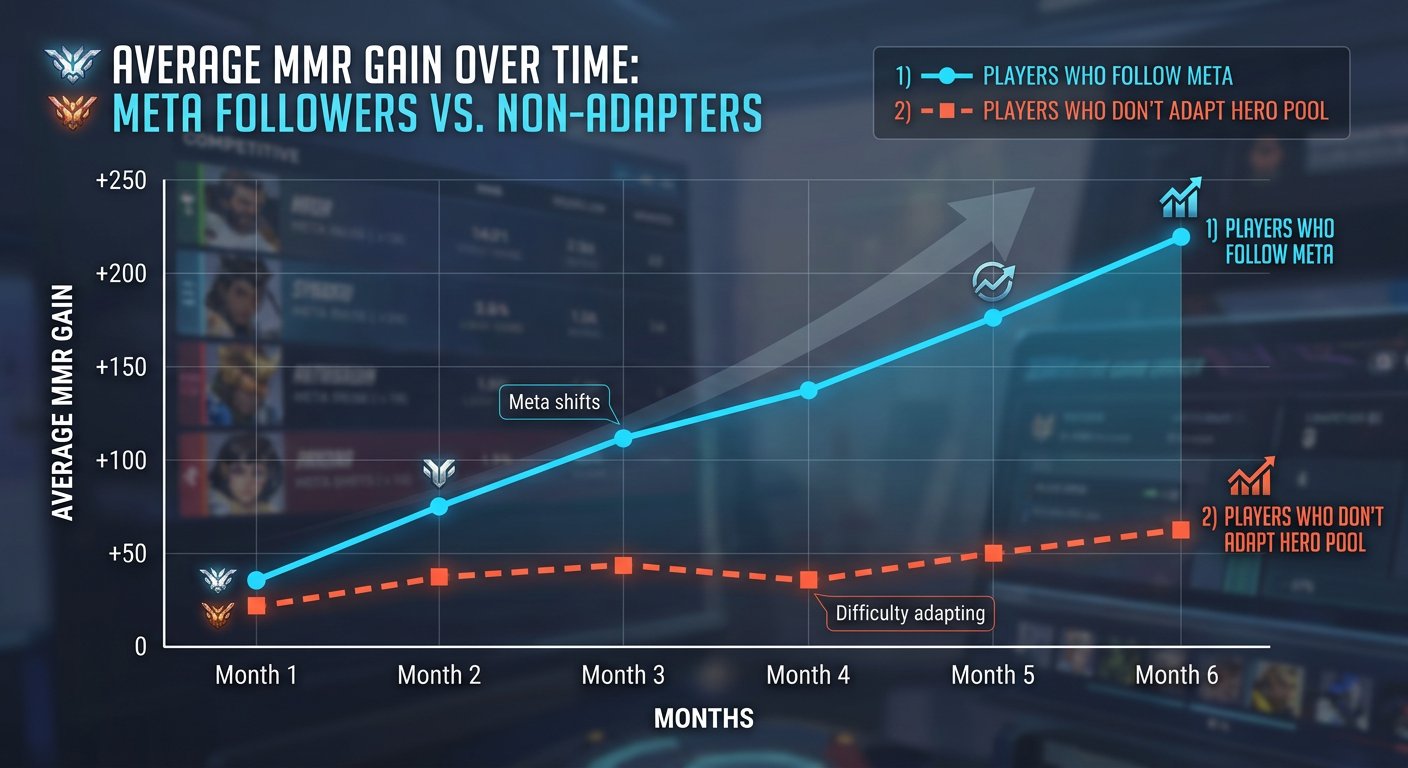
The biggest mistake pub players make is playing too many heroes. You don’t need to master every S-tier hero — you need to master 3-5 heroes that cover your role’s needs. Pick 2-3 comfort picks and 1-2 meta heroes, and rotate between them based on the draft. Hero mastery beats meta-chasing every single time.
2. Focus on Timings, Not KDA
Kills mean nothing if they don’t translate into objectives. The best way to climb in the current meta is to hit your item timings and immediately pressure the map. Got your BKB + Blink on Axe at 16 minutes? Push a tower. Got your Desolator on PA at 17 minutes? Kill the enemy mid and take Roshan. Always convert kills into objectives — towers, Tormentors, Roshan, or map control via wards.
3. Communicate with Your Team (Even in Solo Queue)
Use pings, chat wheel, and voice chat to coordinate. Call out your power spikes (“I have BKB, let’s fight”), identify targets (“Focus their carry in the fight”), and plan objectives (“Roshan in 1 minute, gather”). Even basic communication dramatically improves your win rate.
4. Play During Your Best Hours
This is an underrated tip. Your performance varies throughout the day based on fatigue, tilt, and focus. Identify when you play your best (many players peak in the early evening) and concentrate your ranked games during those hours. Save casual play, unranked, or practice for off-hours.
5. Review Your Replays (or Get Coaching)
Watching your replays with a critical eye is the fastest way to improve. Focus on your deaths — almost every death in Dota is avoidable, and identifying why you died (bad positioning, missing the map, fighting without key cooldowns) helps you avoid making the same mistake. If self-review feels unproductive, professional coaching from experienced players can accelerate your improvement dramatically.
6. Don’t Play on Tilt
If you lose two games in a row and feel frustrated, stop. Take a 15-30 minute break, eat something, watch a video, or do anything that resets your mental state. Playing on tilt leads to poor decision-making, toxic behavior, and losing streaks that can undo days of progress. The best climbers protect their mental health as fiercely as they protect their MMR.
7. Consider a Boost to Break Through Plateaus
Sometimes you’re stuck at an MMR bracket not because you belong there, but because the bracket has specific patterns (toxicity, inconsistent teammates, certain hero pools) that are hard to escape from. Our MMR Boosting service can help you break through these plateaus so you can start playing at the rank where you actually improve. We also offer calibration services for players starting fresh or recalibrating their accounts.
8. Keep Up with Patch Notes
Dota 2’s meta shifts with every patch. Subscribe to Dota 2 patch note trackers, follow community analysts on social media, and check sites like Dotabuff for real-time win rate data. Being one of the first players to identify a newly buffed hero or item can give you a significant edge in ranked.
Frequently Asked Questions
Ready to Improve Your Dota 2 Experience?
Team Smurf offers professional Dota 2 services — Immortal-rank boosters, maximum safety, competitive pricing, and 24/7 support.