

Dota 2 7.41f Support Smoke Guide

A Dota 2 7.41f support smoke is not a five-man walk into the enemy triangle. It is a 40-second information trade: you spend one Smoke of Deceit to force a reaction, remove a ward, take a fight on your terms, or make the other team give up the map. Most ranked smokes fail before the first spell lands because the team has no destination, no wave preparation, and no answer to the question: “What do we take if nobody is there?”
This guide is for position 4 and position 5 players who want repeatable calls, not highlight-reel guesses. The goal is to make your smokes produce a tower, Roshan control, a deep ward, or a clean reset even when the kill never happens.
Table of Contents
The Dota 2 7.41f Support Smoke Rule
The best support smoke call has an objective attached before you buy the smoke. Say “smoke top through their jungle, kill their farming core, then take the outer tower” rather than “smoke?” The first call tells your carry when to show, tells your offlaner which lane to shove, and tells both supports where the next Observer belongs. The second call makes four players stare at each other under fog until a wave crashes into their own tower.
At higher MMR, opponents read absences faster than they read minimaps. If your mid disappears, both supports vanish, and the offlaner has already cut the side wave, a competent core backs up before you cross the river. The trick is to make one visible action look normal while the smoke comes from a different direction. A support can show for one second to nuke a wave, then TP, group, and smoke from a lane the enemy believes is occupied.
Prepare the Map Before You Smoke
Smoke is a multiplier, not a replacement for map work. Start with lanes. You want at least one side lane moving away from your base, ideally two. A pushed wave makes the enemy show a hero to collect it; that hero is either your target or the clue that tells you where the target is not. If every lane is entering your half of the map, your smoke is usually an attempt to escape pressure, and that is when teams walk into a high-ground ward or a waiting counter-smoke.
Buy the right inventory before leaving base
Position 5 should leave with at least one Sentry when the route enters common vision areas. Position 4 often carries the extra Observer or the fight item. Do not make the courier deliver detection after your smoke breaks. If the enemy has Riki, Weaver, Nyx Assassin, Sand King, or any core that can turn a failed catch into a reset, detection belongs in the group before the move begins.
| Check | Why it matters | Support action |
|---|---|---|
| Side wave pushed | Creates a forced show or tower threat | Ask who is showing and who is joining |
| Enemy core last seen | Sets the likely farm pattern | Choose a route behind that pattern |
| Enemy wards likely | Prevents a smoke into a prepared fight | Bring Sentry and sweep one choke |
| Key spells ready | Stops a low-probability fight | Check ultimates and defensive saves |
| Objective available | Turns contact into real net worth | Call tower, Roshan, Tormentor, or ward line |
Check cooldowns in practical terms. If your team needs Ravage to walk uphill, do not smoke while it is down just because two supports are bored. Likewise, do not delay a clean pick because your carry wants one more small item when your team already has enough lockdown. The useful question is not “are all ultimates ready?” It is “what tool makes this route safe, and do we have it?”
Show one hero on purpose
A deliberate show is the part lower brackets skip. Your durable offlaner can pressure a visible lane while the other four wrap through the opposite jungle. Your mid can clear a wave, retreat into trees, then TP to the group. Your carry can farm a safe triangle camp while the supports and offlaner make a three-man smoke. The visible hero is bait only if they have a retreat path; feeding them to sell a smoke is not clever if the enemy gets a tower and backs away before you arrive.
Routes That Do Not Announce the Move
Route selection is about avoiding the enemy’s expected ward line, not simply using the shortest path. The shortest path from your safe lane to their triangle often crosses the most watched ramp in the game. A longer path through a dead lane or along a treeline can save the smoke and put you behind the target’s escape direction.
Triangle wrap
Use this when an enemy core has been showing in the triangle or when a support has just defended the adjacent lane. Do not walk through the obvious river entrance. Enter from the lane side after the wave has been pushed, or use a TP behind the lane and approach from the trees. Your first support should not reveal on a ward cliff. Let the front hero cross the likely vision line with a Sentry ready; the second support follows far enough back that a broken smoke does not instantly chain-feed both saves.
Mid-to-side-lane wrap
After a mid wave is cleared, most players expect the mid to rotate through the nearest river. Instead, take a portal, TP to the far lane, or move through your own jungle and arrive behind the lane. This route is strongest against greedy carries who farm one safe wave, then immediately slide into the nearest hard camp. If they show on the wave, do not rush the stun. Let them move into their predictable camp path, then close both exits.
Defensive counter-smoke
When your own triangle is under pressure, a defensive smoke should begin from high ground near your base or an unwarded tree line, not from the camp being invaded. You are looking for the enemy support who dropped vision or the core who separated after showing on the wave. If the smoke breaks at the first ramp, do not panic-cast into fog. Back up, deward, and force them to show again. A saved core and removed Observer are a perfectly good result.
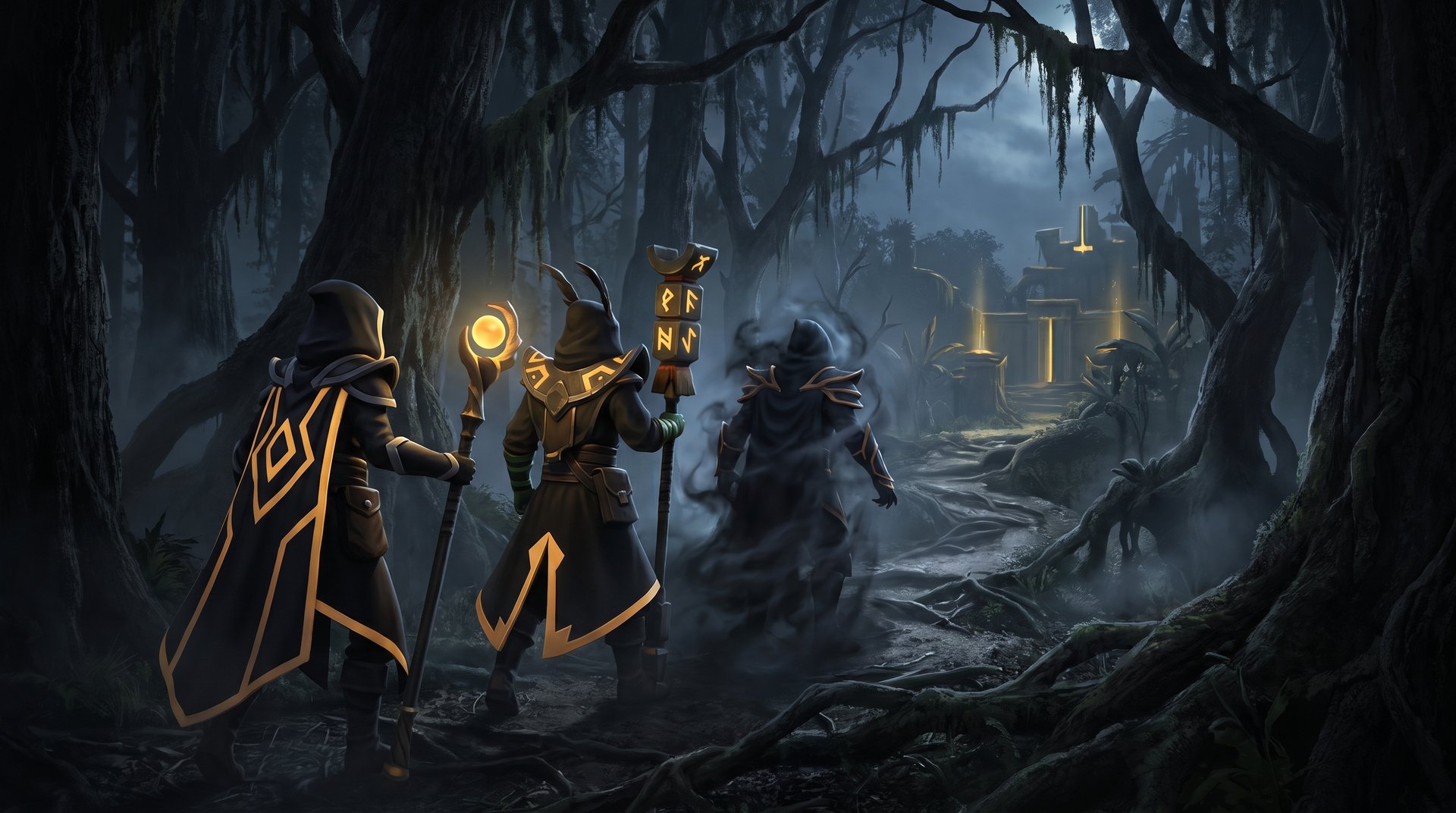
The Best Timing Windows for Support Smokes
There is no magic minute that makes every smoke good. The best windows happen when the map asks the enemy to split and your team has just gained a piece of information. In practice, that means power runes, newly pushed side waves, a fresh core item, a visible enemy TP, or an objective that becomes contestable after one pick.
After an enemy TP
A TP creates a short map imbalance. If the enemy offlaner TPs to defend bottom, their team is temporarily weaker around top-side farm and may have no immediate way to join. This is a better trigger than a random clock time because it is visible information. Ping the TP, count the heroes near you, and make the call before your team drifts back to farming.
When your first fight item arrives
Supports frequently underestimate their own item timing. A Force Staff that saves an initiator, a Glimmer Cape that breaks a targeted spell sequence, or a Blink Dagger on a stun support can change the expected fight completely. Call the smoke while the timing is fresh. Waiting three minutes turns a surprise item into something the enemy has already seen in a previous skirmish.
Before Roshan, not on top of Roshan
Do not smoke directly into the pit when the enemy knows you want Roshan. Smoke to remove the nearby ward line, catch the scout, or establish the high ground that controls the approach. Then start Roshan with vision advantage. A team that starts the objective first and thinks later gives the enemy an easy smoke target because all five models are committed to a small area.
What a Broken Smoke Actually Tells You
When Smoke of Deceit breaks, the nearest enemy hero is within the reveal radius. That is valuable information, but it is not an order to run straight ahead. The right response depends on whether you can identify the hero, whether your team is arranged to fight, and whether the enemy is near a choke point.
If the smoke breaks near a camp and you can see a core on the minimap elsewhere, you probably found a support. Kill them only if the path is clean or the support is carrying the defensive tools you need removed. If it breaks on a ramp where the enemy can have five heroes behind it, stop. Place the Sentry, remove the ward if possible, and reset. You have converted a risky move into vision control instead of donating a fight.
| Smoke result | Correct read | Best conversion |
|---|---|---|
| Breaks in open jungle | One or more heroes are close | Collapse only with a visible angle |
| Breaks on a ramp | High-ground vision may be present | Sentry, deward, back off or flank |
| Does not break | Route is clear, not necessarily empty map | Plant deep ward and take the next objective |
| Target escapes | Enemy spent TPs or revealed locations | Take tower, steal camps, or secure Roshan space |
Give Each Hero a Job in the Smoke
Five heroes moving together still need an order. The initiator is not always the front-most hero. Against a counter-initiation lineup, a tanky offlaner can show first while the real stun waits in trees. Against invisibility or save heroes, the detection carrier must survive long enough to reveal the target rather than leading into every spell.
- Position 5: carry Sentry, smoke, and at least one defensive answer. Stand close enough to save, not close enough to be the first stun target.
- Position 4: identify the catch angle. Your job is often to use mobility, trees, or fog to get the first disable without showing early.
- Offlaner: absorb the initial vision contact, but do not chase past the supports’ spell range.
- Mid: hold the burst or control that makes the target unable to reset. Do not reveal for a low-value support if the core is one screen away.
- Carry: join when the smoke converts into a fight or objective. Your presence matters most when it turns a pick into a tower, Roshan, or enemy jungle occupation.
For coaching players, this is one of the fastest MMR leaks to fix: review the replay at every failed smoke and label who was supposed to start, who had detection, and what the objective was. Most “bad team” smokes are simply unassigned jobs. A session with Dota 2 coaching can turn those replay notes into role-specific habits instead of another vague resolution to communicate more.
Convert the Smoke Before You Reset
A kill is only the opening. The moment a target dies, ask what changed: is their strongest defender dead, did they use a TP, is a lane now undefended, or can you occupy their farm for the next minute? Calling “back” automatically after every pick wastes the space your smoke bought.
When the target is a carry, take the nearest outer structure or steal the camp route they would use on respawn. When the target is a support, remove their wards, establish your own deep vision, and force their core to farm without information. When the smoke finds nobody, leave an Observer that watches the route you just cleared and exit through a different path. The ward turns a failed hunt into a future catch.

Three conversion calls worth memorizing
- “One dead, shove the nearest lane, then ward their jungle exit.” This is the default after a clean pick away from an immediate objective.
- “They TP’d to defend bottom, take top tower now.” Use the information from the reaction rather than chasing the original target.
- “No contact, leave ward, take our safe wave, reset through portal.” A disciplined no-contact smoke keeps your map stable.
If you want to skip the slow cycle of trial-and-error, TeamSmurf’s Dota 2-only specialists understand the current ranked tempo, while the MMR boosting guide explains the service options and process. Players who need a direct rank push can also review the Dota 2 MMR boost service. Always choose the route that fits your goal: coaching for skill transfer, or a managed boost when time is the limiting factor.
A Five-Question Replay Review
Use this after every smoke that felt bad. Do not judge it only by whether someone died. A good smoke can fail to get a kill and still remove a ward, force a defensive TP, reveal the enemy’s farming pattern, or secure the safe side of the map.
- Which lane did we push before grouping?
- What was our stated destination and conversion?
- Who carried detection and who was meant to start?
- Did the smoke break where we expected a ward or hero?
- What map space did we take before resetting?
Answering those five questions honestly will improve your next ten support games more than copying a pro-player ward screenshot with no context. The support role wins map control by making the enemy’s safe farm look unsafe. Smoke is simply the cleanest tool you have to make that threat real.
Read Farm Patterns Instead of Guessing
Good smoke calls are built from boring observations. Watch where the enemy carry appears after each wave. A player who clears the safe-lane wave and immediately farms the nearest two camps is telling you their next thirty seconds. A mid who cuts the mid wave then disappears toward one side is either taking a rune route, stacking a camp, or joining a support who has already moved there. You do not need perfect vision of all five players; you need one reliable pattern and a route that arrives behind it.
Support players can make this much easier for the team by speaking in probabilities. Instead of “they are top,” say “their carry showed bottom twenty seconds ago, top wave is coming in, and their nearest safe farm is the triangle.” That sentence gives your initiator an approach, gives your mid a target area, and leaves room to change course if new information appears. It is how strong pubs make decisive calls without pretending they have omniscient map vision.
Do not chase the wrong priority
A support kill can be correct when it removes the hero who saves the carry, carries defensive wards, or is about to deward your side of the map. But do not spend twenty seconds chasing a Crystal Maiden through trees while the enemy carry takes the wave that should have been your real pressure point. After the first contact, look at the minimap again. If a core appears on the far side, the smoke may have already done its job by splitting their formation. Take the structure, ward the exit, and make the next fight happen on your vision.
This is also why a support should avoid spending every smoke on the enemy’s safest player. If the enemy offlaner has a fast TP, a defensive support behind them, and no nearby objective, catching them often costs more time than it returns. Prefer targets who are farming away from saves, heroes whose death opens Roshan control, or supports whose wards are enabling the enemy’s invasion. Your team is not trying to win a scoreboard; it is trying to make the next two minutes of the map uncomfortable for the opponent.
Dota 2 7.41f Support Smoke FAQ
Turn Better Map Calls Into Better MMR
Better smokes come from repeatable map habits, not luck. Work with a Dota 2 specialist to identify the decision points costing you ranked games.
Book Dota 2 CoachingExplore MMR Boosting



