Account Buying Horror Stories: 5 Real Cases That Went Wrong

Every week, dozens of Dota 2 players lose money, accounts, and months of progress because they bought an account from a stranger on the internet. The promises look attractive — a high-MMR account, an Immortal badge, a fresh start above your natural rank. What actually happens is rarely anything close to what was advertised.
We collected five account-buying horror stories from real Dota 2 players. The names have been changed, but the outcomes are real, the amounts lost are real, and the lessons are genuinely painful. Before you hand money to an anonymous seller, read what happened to the people who did.
This is not a list of edge cases. These situations happen every single day in Dota 2 markets. Some of the people in these stories had done “research.” Some had asked in forums. One had used a marketplace with a refund policy that turned out to mean nothing. None of them got their money back.
What You Will Read
Case 1: The 48-Hour Ban
Marcus had been stuck in Archon for two years. He had tried coaching, watched hundreds of guides, and adjusted his hero pool multiple times. Nothing moved the needle more than a few hundred MMR before he slid back. When he found a seller on a popular Discord gaming marketplace offering an Ancient 5 account at 5,800 MMR for $280, he saw it as his escape hatch.
The seller had a transaction history. Dozens of completed sales, a few complaints that the seller had argued through, and a green “trusted” badge on the Discord marketplace. The credentials arrived within two hours of payment. Marcus logged in, saw the Dota 2 client load with the Ancient medallion on his profile, and felt relief for the first time in months.
The relief lasted less than two days.
On the morning of day two, Marcus opened Steam to find a message from Valve — not a VAC ban notice, but a communication ban paired with a behavior score that had collapsed from 8,400 to 4,800 overnight. He had played three games and said almost nothing in chat. The score drop made no sense unless Valve’s systems had already flagged the account during that overnight window.
By day three, his access to ranked mode was suspended pending review. Valve’s Overwatch system — which processes behavior data from the last 90 days of play on an account — had detected a dramatic performance shift. The account had been playing at a level consistent with an Ancient 4 to Ancient 5 player. Suddenly, in the same account’s history, someone was playing at mid-Archon caliber. Valve’s statistical systems treat this pattern as high-confidence evidence of account sharing, which violates the Steam Subscriber Agreement.
On day six, the account was permanently restricted from ranked play. On day nine, the full account received a permanent VAC-adjacent suspension. The seller had disappeared from the Discord marketplace, their profile deleted.
Marcus lost $280, two weeks of gameplay, and — perhaps most painfully — discovered that Valve’s detection systems are far more sophisticated than most players realize. They do not just look at whether an account is playing in an unusual location or at an unusual time. They build statistical models of a player’s performance across hundreds of data points and compare current sessions against that historical baseline. A sudden, large drop in performance accuracy is a red flag the system catches automatically.
Why Valve Detection Works This Way
Valve’s anti-cheat and anti-boosting systems analyze statistical consistency in addition to location and hardware data. An account playing at Ancient 5 level for months, then suddenly playing at Archon 2 level, triggers automatic review flags. The detection window is not instantaneous — it may take 24 to 72 hours — but it is nearly unavoidable when the skill gap is significant. The system is designed to catch this exact pattern.
The lesson from Marcus is not that Valve catches everything. It is that the system is good enough that a dramatic skill mismatch will almost always be flagged, and flagged accounts receive escalating restrictions until a permanent ban is applied. There is no appeal process that successfully reverses a ban when the statistical evidence of account sharing is clear and the skill gap between historical play and current play is large.
Marcus tried contacting Valve support three times over the following two weeks. Each response confirmed the ban was final and referenced the Steam Subscriber Agreement section prohibiting account transfers. He had no legal standing to argue that he had purchased the account, because the purchase itself was the violation.
Case 2: The Seller Came Back
Nina spent three weeks doing due diligence before she bought her account. She used a marketplace that advertised an escrow system, waited for the seller’s 30-day warranty period to seem credible, and paid $200 via PayPal — friends and family, because the seller said business payments would get the transaction flagged by the marketplace’s competitors, which made no sense in retrospect but sounded plausible at the time.
She received a Divine 2 account at 5,100 MMR. The account came with 4,000 hours of playtime, a cosmetic inventory worth roughly $60, and what appeared to be clean behavior history. She played for three weeks without incident. She was getting crushed in Divine lobbies — her natural rank was around Archon 3 — but she had expected a rough adjustment period.
On the night of day twenty-two, she tried to log in and found the password no longer worked.
The seller had linked the account to their original email address. Steam accounts can only be transferred by changing the linked email, which requires verification from the original email. If the seller never completed this step — if they gave Nina the account password without migrating the email ownership — the seller retained the ability to trigger a password reset at any time, using nothing more than access to the email account they already owned.
The account was recovered by the seller within three minutes of initiating the password reset. Nina had no recourse. The PayPal friends and family transfer offers zero buyer protection, by design — it is intended for sending money to people you know and trust, not for commercial transactions. The marketplace she had used had no actual escrow; the “escrow” branding was decorative. The seller’s 30-day warranty meant nothing without any enforcement mechanism capable of forcing the seller to return the account.
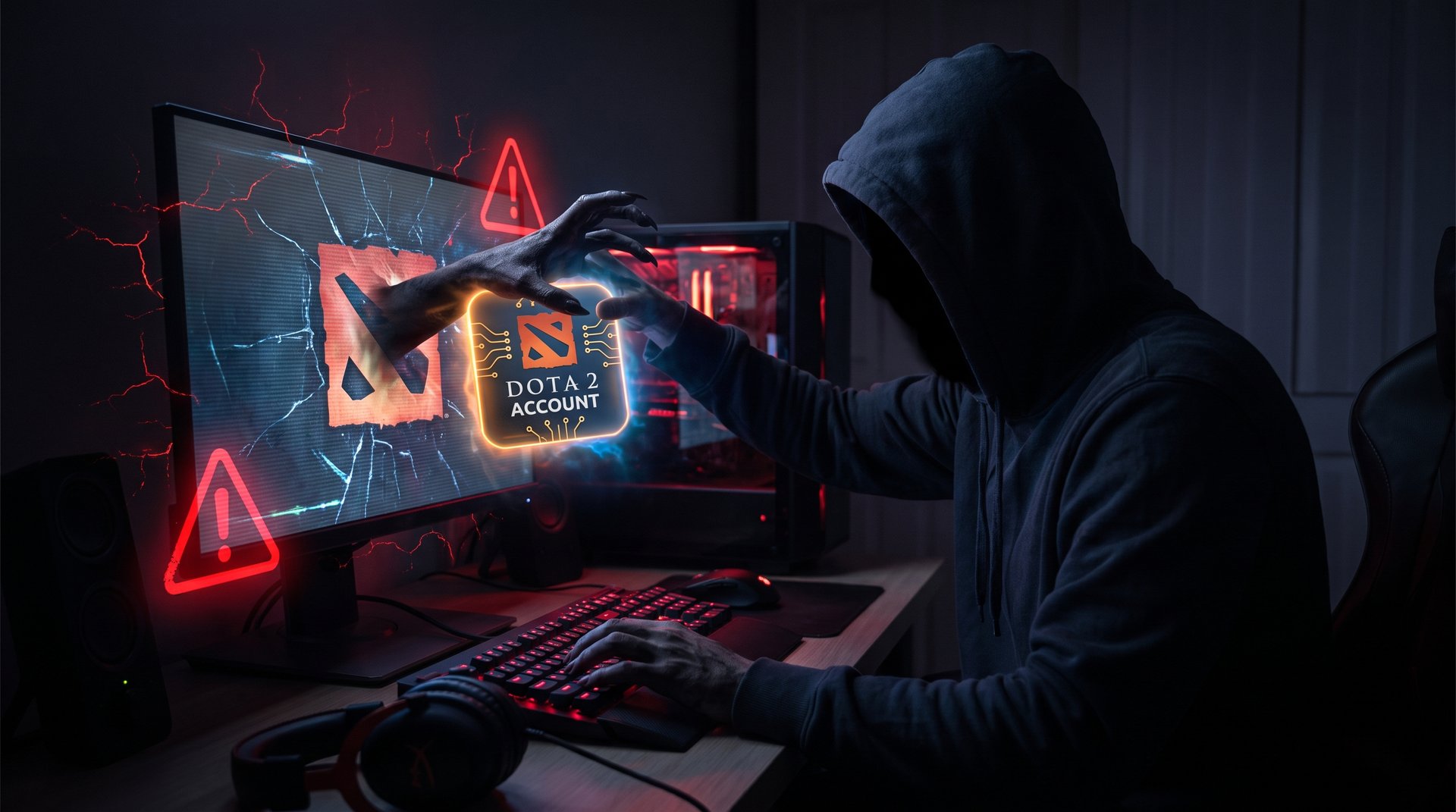
Nina contacted the marketplace support. They confirmed the seller had broken their terms of service and banned the seller’s account. They did not return her money. They did not have the ability to restore her access to the Dota 2 account. Their enforcement action against the seller was, from Nina’s perspective, completely useless.
This type of account recovery theft is one of the most common outcomes in unprotected account purchases. The account buyer gets possession of login credentials, but “possession” of a Steam account is legally and technically meaningless. Valve defines account ownership through the linked email address. If the seller does not transfer the account’s email ownership — and most do not, because retaining it gives them future leverage — the buyer is renting access, not purchasing it.
Nina did not get her $200 back. She did not get the cosmetic inventory. She did not even get to keep the three weeks of game history she had built on the account. The seller simply took it back, with full technical legitimacy from Valve’s perspective, because they still controlled the email that proved ownership.
The Email Ownership Trap
A Steam account is owned by whoever controls the linked email address. Buying account credentials without verifying that the original email has been changed to an address you control means you are giving money to someone who can take the account back at any moment. This step cannot be verified from a screenshot — only confirmed by actually triggering a password reset and seeing where the verification goes. Most sellers who omit this step do so deliberately.
Case 3: The MMR Mismatch Nightmare
Daniel was a Crusader 4 player. Not a poor player — he had put in 1,200 hours and genuinely understood the game — but he had plateaued. He had been watching Immortal-tier streamers and read about the concept of playing in higher-skill lobbies to accelerate improvement. He found a seller offering a 6,500 MMR Immortal account, reasoning that even if he could not compete at that level immediately, the experience of playing with and against elite players would accelerate his development faster than grinding his natural rank.
The account cost $420. He paid via cryptocurrency — the seller said it was for “privacy” — and received the credentials within an hour of payment confirmation.
What followed was one of the most miserable Dota 2 experiences any player has described in the communities we researched for this article. At 6,500 MMR, players assume every teammate is operating at near-professional level. They do not explain rotations. They do not ask if you understand the current meta draft. When you mis-position or miss a courier snipe window or fail to execute a timing that every 6,500 MMR player considers automatic, they do not adjust their expectations. They report you, they verbally abuse you in all-chat, and they abandon games.
Daniel’s behavior score on the purchased account dropped from 7,800 to 3,200 in eleven days. He was not playing badly in an absolute sense — he was playing at Crusader 4 level, which is genuinely skilled play for most of the Dota 2 playerbase. But at 6,500 MMR, the gap between his actual skill level and the lobby’s baseline expectations was catastrophic. Every game generated a wave of reports from frustrated teammates.
By week three, the account had been placed in low-priority queue with 20-minute average wait times. By week four, Valve’s statistical detection had flagged it for the same performance inconsistency described in Case 1. By the time Daniel accepted that the experiment had failed completely, the account’s MMR had collapsed from 6,500 to somewhere around 5,800 as teammates abandoned games he was ruining. The account was also under active Overwatch review.
He had paid $420 for three weeks of the worst Dota 2 experience of his life, followed by a permanently degraded account with a damaged behavior score, active Overwatch review, and an MMR that had been tanked by the accumulated abandons and poor performance in lobbies far above his skill ceiling.
The deeper irony Daniel described when discussing this experience: buying an account above your skill level does not expose you to higher-quality play in a way that accelerates learning. It exposes you to hostile teammates who have no patience for a player who cannot meet the lobby’s baseline expectations. The learning environment is actively worse than grinding your natural rank, because you spend every game managing social fallout rather than focusing on skill development. You learn fear, not Dota.
Daniel eventually went back to his original Crusader account. It took two months of focused play to recover the mental damage that the Immortal account experience had done to his confidence. The $420 was gone with nothing to show for it.
Case 4: The Scam Site Payment
Rachel found a website that appeared to sell verified Dota 2 accounts. The site had professional design, a live chat support button, a trust badge from a brand nobody could verify, and testimonials with profile pictures. The accounts were listed with detailed descriptions — hours played, hero win rates, rank history, cosmetic inventory value, and a 30-day replacement guarantee that sounded airtight.
She paid $340 for an Ancient 3 account at 5,200 MMR. The payment method was PayPal friends and family — she noticed the requirement and hesitated, but the site’s FAQ explained that “business payments create chargebacks from competitors who target honest sellers,” which made no sense on closer examination but was phrased with enough jargon to seem authoritative in the moment.
No credentials arrived. She waited two hours, then contacted the live chat. The live chat stopped responding after an initial “we are processing your order” message. She emailed the support address listed in the site’s footer. The email bounced immediately.
Forty-eight hours after her purchase, the site was offline. A Google cache of the domain showed it had been registered eleven days before she bought the account. The trust badge linked to a domain that had never been live. The testimonials were stock photos attached to AI-generated names. The entire operation had been designed to run for two or three weeks, collect payments from buyers using unprotected payment methods, and disappear before any complaint mechanism could engage.
Rachel lost $340 with no recourse of any kind. PayPal friends and family has no buyer protection by design. The site was gone. The email bounced. The domain registration was behind a privacy-shielded registrar. There was no individual to file a complaint against, no company to pursue through consumer protection channels, and no legal mechanism she could afford to engage for $340. She reported the domain to her national fraud authority. Nothing came of it.
This type of scam site is not rare. They operate in cycles — a new domain, a professional-looking template, a few hundred sales to buyers who cannot get their money back, then shutdown and relaunch under a new name. Some operate parallel sites under multiple domains simultaneously. The design template often reappears weeks later under a completely different brand identity.
The only protection against this type of scam is refusing to use any payment method that lacks buyer protection and recognizing that newly-registered domains selling high-value digital goods with guarantees they cannot enforce are structurally fraudulent by design. The 30-day guarantee Rachel read about had no mechanism behind it. A guarantee from an anonymous website with no legal address is a string of words, not a promise anyone will honor.
Case 5: The Pre-Flagged Account
Tom researched his purchase more carefully than any of the other buyers in this article. He used a marketplace with an actual escrow system — real escrow, where the payment was held by a neutral third party until Tom confirmed delivery and changed the linked email. He paid with a credit card that had buyer protection. He received the credentials, changed the linked email before releasing the escrow payment, and verified the account was clean by checking its match history and public behavior summary.
He had done, by the standards of the account-buying community, everything correctly.
What he could not know — what no buyer can know — was that the account had a history he could not see from the outside.
The account had been boosted eighteen months earlier, before its previous owner sold it the first time. At the time of that boost, Valve’s Overwatch system had processed several match reports from players who had been in those games but had not yet reached a definitive conviction. The evidence in the Overwatch queue was sufficient to flag the account but not yet sufficient to trigger immediate action. It sat in a pending state, invisible to anyone outside Valve’s systems, invisible even to the account holder.
It was also invisible to the person who had sold Tom the account. That seller had bought the account from someone else several months earlier and had no idea about the prior boost history. The Overwatch evidence had been sitting in the queue for over a year, slowly accumulating additional context as Valve’s systems periodically reprocessed older cases with updated models and additional data from subsequent gameplay sessions.
Tom played for two weeks without any unusual restriction. Then, in week three, the Overwatch conviction was finalized. The account received a six-month low-priority queue sentence, which is the standard Overwatch outcome for accounts with accumulated evidence of intentional game-ruining behavior or match manipulation from a prior period. From Valve’s perspective, the conviction was correct — the account had been boosted in a way that constituted match manipulation. From Tom’s perspective, he was receiving punishment for something that happened before he owned the account, done by someone he had never met, which he could not have discovered before the purchase.
The six-month low-priority sentence effectively made the account unplayable. He contacted Valve support twice. Support confirmed both times that Overwatch convictions are applied to accounts, not to individuals, and that there is no mechanism to reverse a conviction based on subsequent ownership change. The conviction existed. It applied. The fact that Tom had not committed the violation was irrelevant to the automated system that had finalized it.
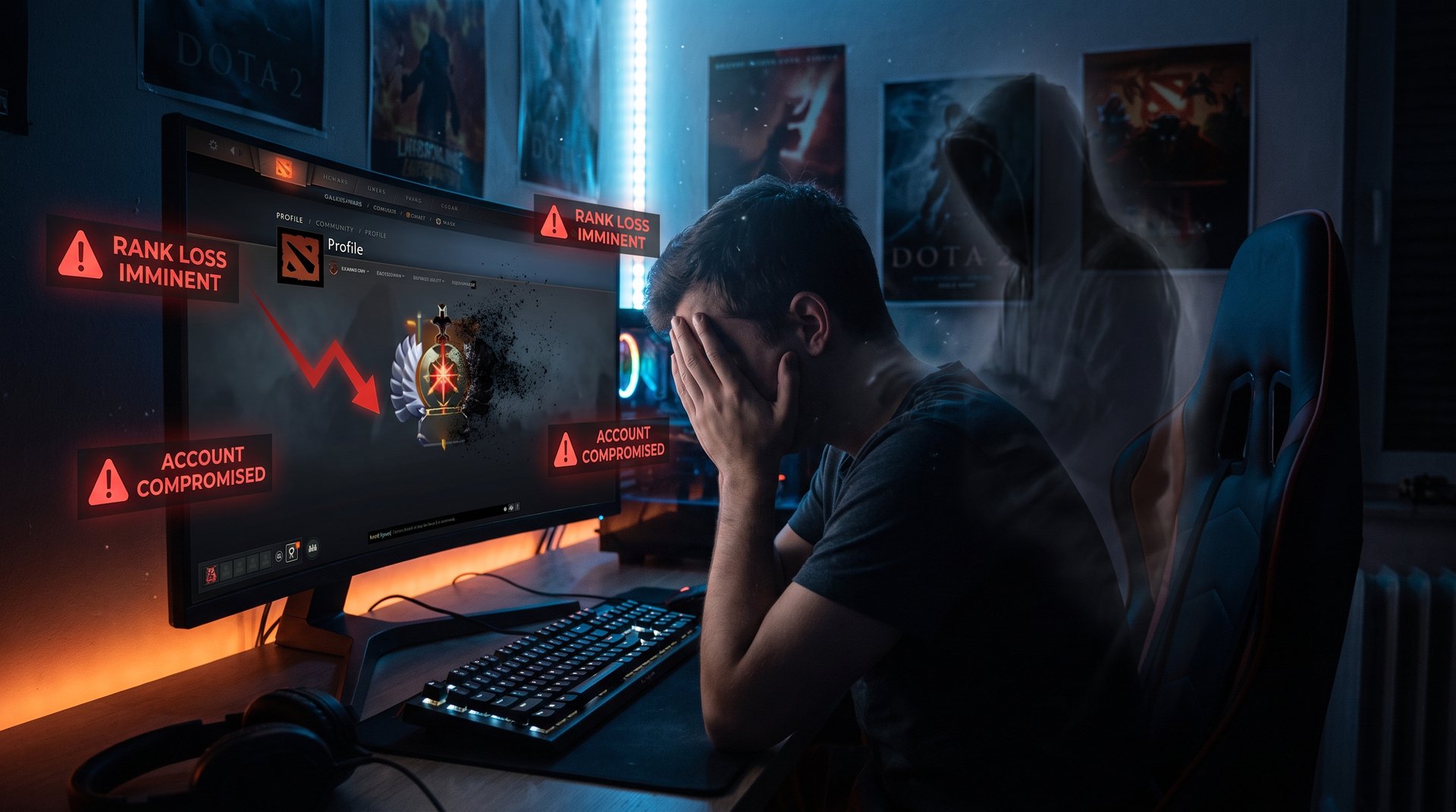
Tom had used proper escrow. He had changed the email. He had done everything right for the transaction mechanics. He had still bought a poisoned account and received six months of punishment for a history he could not access and that the seller had not disclosed because the seller genuinely did not know it existed. The account he bought was a time bomb that had been ticking for eighteen months before he ever created a Steam account.
Hidden Account History Is Unavoidable
Valve does not publish an account’s Overwatch history, pending reports, or internal risk flag status to the account holder. There is no way, from outside Valve’s systems, to determine whether an account has pending convictions, accumulated reports approaching a threshold, or internal detection flags from prior boost activity. The account you buy is a black box, and the punishment for its hidden history follows the account regardless of who currently holds the password.
What These 5 Cases Have in Common
The five stories above involve different buyers, different sellers, different payment methods, and different amounts lost. But they share a structure that explains why account buying produces bad outcomes so reliably.
| Case | Primary Risk | Amount Lost | Outcome | Reversible? |
|---|---|---|---|---|
| Marcus (48-hour ban) | Valve statistical detection | $280 | Permanent account ban | No |
| Nina (seller came back) | Email ownership not transferred | $200 | Account recovered by seller | No |
| Daniel (MMR mismatch) | Skill gap vs. lobby expectations | $420 | Account degraded, behavior score destroyed | No |
| Rachel (scam site) | Fraudulent seller operation | $340 | No account delivered | No |
| Tom (pre-flagged) | Hidden prior Overwatch history | Account cost + 6 months unplayable | LP sentence applied | No |
Notice the final column. Every outcome was permanent or near-permanent. Account bans issued for account sharing do not get lifted. Seller recovery is technically legitimate from Valve’s perspective. Behavior score damage from MMR mismatch takes months to repair even if the account itself survives. Scam payments are unrecoverable. Overwatch convictions follow the account regardless of ownership change.
The core problem is that account buying puts you in a position where almost every failure mode leads to an outcome you cannot reverse. You are betting several hundred dollars on the hope that none of these things happen — and the number of things that can go wrong is long, and several of them are invisible at the point of purchase.
Why Due Diligence Does Not Solve the Problem
Most buyers who share horror stories describe doing some version of due diligence. They checked seller feedback scores. They used escrow. They verified the account credentials before releasing payment. Tom did all of these things and still ended up with six months of low-priority queue. None of those steps protect against Valve’s detection systems, hidden account history, or the fundamental fact that Steam account ownership is defined by email access, not by payment or physical possession of credentials.
Due diligence in account buying reduces some risks — the Rachel scenario, for example, becomes much less likely if you refuse to use unprotected payment methods. But it cannot change the underlying structure of what you are purchasing. You are always buying an account whose full history you cannot see, in a transaction Valve will treat as a violation, for an activity (playing at a rank above your actual skill level) that Valve’s systems will detect.
The Safe Alternative: Boost Your Own Account
Every risk category described in this article is eliminated or dramatically reduced when you work with your own account. When a professional booster plays on your account to raise your MMR from Archon to Ancient, or from Legend to Immortal, you retain ownership of an account whose history you know, whose email you control, and whose rank increase reflects an activity Valve’s systems will flag differently than a sudden ownership change.
The nature of the risk changes fundamentally. If something goes wrong during a boosting engagement on your own account, you still own the account. Nobody can take it back. There is no hidden Overwatch history from a previous owner. The behavior score is your own history. You start from a baseline you understand and return to an account that belongs to you, not to a stranger on Discord who can change the password whenever they want.
Our guide to the best Dota 2 boosting services covers the options available to players who want to move their MMR without the horror stories above. If you want to understand the mechanics of how MMR movement actually works before making any decision, the MMR boosting guide explains the system in full. And if your primary concern is whether boosting your own account carries ban risk, the is Dota 2 boosting safe analysis goes through what Valve actually detects and what the realistic risk profile looks like when using a professional service that understands the detection environment.
The buyers in this article wanted a shortcut. The shortcuts cost them between $200 and $420 each, plus weeks of gameplay, plus in most cases the account itself. Investing that same money in a professional boosting engagement on your own account would have moved your MMR by 300 to 600 points, preserved your account, and given you a rank you could actually play at without triggering a wave of reports from teammates who expect performance you cannot deliver.
The math is not subtle. Account buying appears cheaper in the listing price and ends up dramatically more expensive in every case where something goes wrong. And something goes wrong far more often than the sellers advertising these accounts will ever admit, because their business model depends on buyers believing the risk is manageable. It is not. The five people in this article all thought the risk was manageable. None of them were right.
Frequently Asked Questions
Want a Higher Rank Without the Horror Stories?
TeamSmurf has been the Dota 2 specialist since 2014. Our professional boosters play on your account — not a stranger’s account with hidden history — so you keep ownership and reach your target rank safely. No bans. No recovery theft. No MMR collapse from lobbies you cannot compete in.