Courier Control: The 200-Gold Mistake Everyone Makes

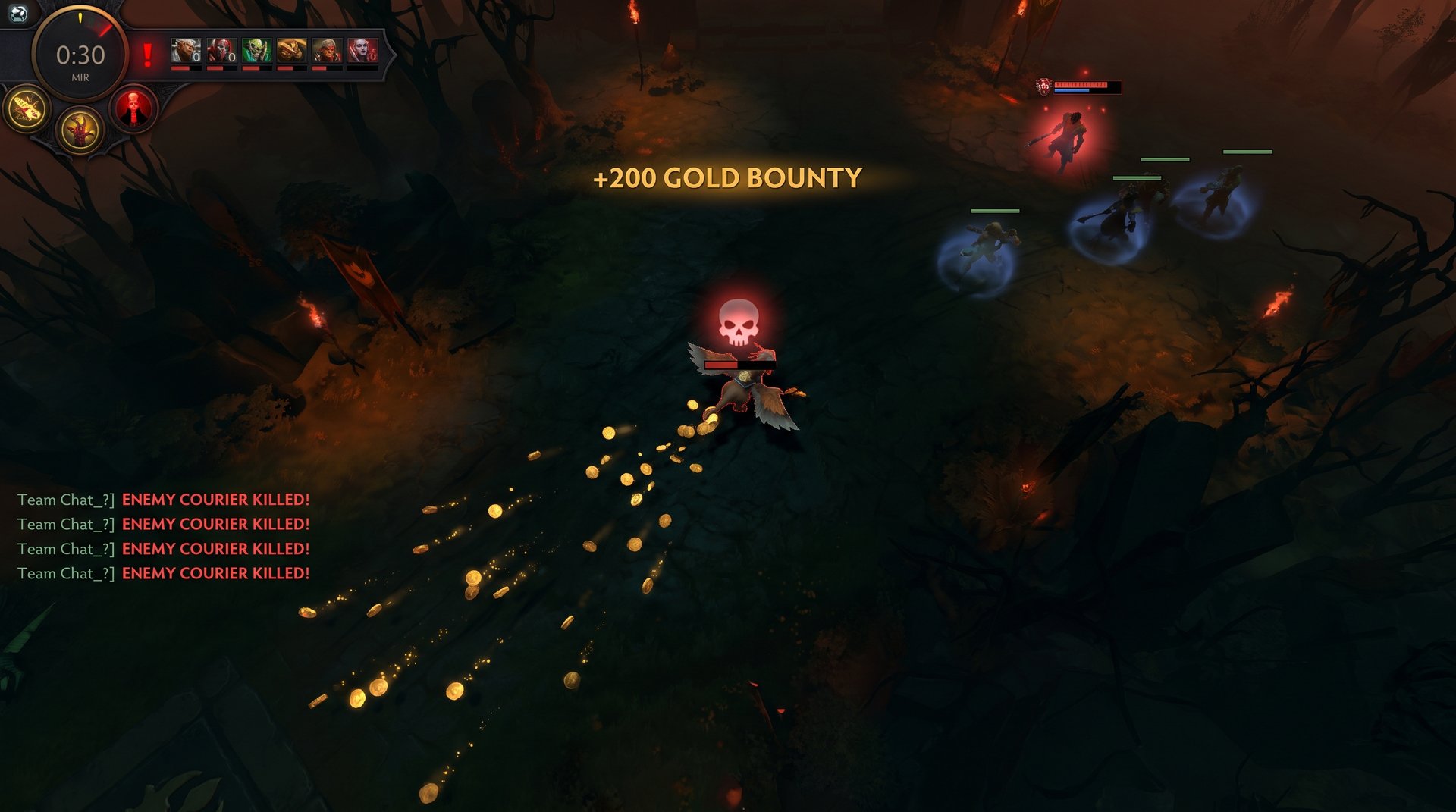
Your courier just died. Again. The enemy carries are dancing on its corpse while your mid laner types something unprintable in all-chat. Somewhere across the map, 200 gold is landing in enemy pockets — gold you handed them for free.
Courier deaths are one of the most preventable sources of gold loss in Dota 2, yet they happen in almost every pub game below Ancient rank. This guide breaks down exactly why couriers die, what it costs your team when they do, and the habits that eliminate the mistake entirely.
What You Will Learn
The 200-Gold Problem Nobody Talks About
Open up any Dota 2 match replay and watch the courier. In games below 4,000 MMR, you will see the same pattern over and over: courier flies out into the open at the worst possible moment, enemy hero intercepts it, courier dies, team loses composure. In games above 6,000 MMR, the courier almost never dies unless there is a calculated, team-coordinated dive to kill it.
The difference is not mechanical skill. It is awareness and habit. High-MMR players have simply internalized a set of courier rules that lower-bracket players have never consciously thought about. Once you understand those rules, applying them is straightforward.
The direct gold cost of a courier death is significant, but the true cost is even larger when you account for the ripple effects: the carry does not get their item on time, a teamfight happens without the completed item, the fight is lost, and an objective falls. One courier death can contribute to a chain of losses that ends a game. Framing it that way makes it obvious why top players treat courier safety as a serious priority.
How Courier Bounty Works in Dota 2
When an enemy hero kills your courier, your team pays a bounty. The killing hero receives a personal gold reward, and the remaining gold is split among the enemy team. The total bounty is designed to be significant enough that dedicated courier kills are a legitimate strategy — especially early in the game when the courier has no upgrades and is highly vulnerable.
Beyond the gold bounty, there are secondary losses that many players ignore:
- Items in transit are dropped at the death location — enemies can pick them up or stand on them to deny recovery
- The courier respawns with a cooldown — your team loses delivery capability for that window
- Your carry’s item timing is delayed by however long the respawn takes, plus travel time
- Enemy morale spikes — psychologically, killing a courier often causes the defending team to tilt slightly, which compounds mechanical errors
| Courier Level | Approximate Total Bounty | Key Risk Window |
|---|---|---|
| Base Courier (0 upgrades) | ~175-200 gold | Minutes 0-8 (before anyone has damage items) |
| Speed Upgrade | 200+ gold | Minutes 8-15 (junglers can chase) |
| Flying Courier | Scales with bounty runes | Any time courier path crosses enemy territory |
| Level 5+ Courier | Significantly reduced — courier gains tankiness | Reduced risk once leveled |
The early-game courier is the most vulnerable and the easiest to kill. An aggressive mid hero with a first-blood item can easily divert from their lane, intercept a low-level courier traveling through the river or enemy jungle, and collect a free 200 gold while setting the enemy support’s economy back. This is not a rare play — it is a staple of high-level pub midlaners.
The 7 Most Common Courier Mistakes
Mistake 1: Sending the Courier Through the River Mid-Game
The river is enemy territory from approximately minute 6 onward. Any hero with a gap closer or a fast attack speed can walk into the river, spot your courier, and kill it in seconds. Yet players continue to send couriers directly through the river to reach the mid lane — saving maybe 3 seconds of travel time while risking 200 gold.
The correct route takes the courier along the safe lane side of the river, using terrain to provide cover. It adds a few seconds but eliminates 90% of the interception risk. This single habit change is the most impactful courier adjustment you can make at lower ranks.
Mistake 2: Moving the Courier During Teamfights
When a teamfight breaks out, enemy heroes are clustered in one area, their abilities are in use, and nobody is watching your base. This seems like the perfect time to send the courier out. It is actually the worst time.
Post-fight, the winning team immediately turns its attention to follow-up objectives. If they won the fight near your base, at least one hero will be in position to intercept your courier mid-delivery. More importantly, your team’s attention is split between the fight and managing the courier, which means both are executed poorly.
Send the courier before the fight starts, or wait until after the fight resolves and the map is clear. Never split your attention between a courier run and an active engagement.
Mistake 3: Ignoring the Courier During Early Lane Aggression
Your courier respawns in base after it is bought. It just sits there, available, waiting. If the enemy team sends a hero to dive your base towers early, the courier is a free target. Many players never think to manually move the courier to a safe spot during an aggressive early push.
The fix is simple: when you see the enemy team pushing aggressively in the first 10 minutes, take two seconds to send the courier into the fountain or behind your tier-1 tower. It takes no skill and saves you from a completely free courier kill.
Mistake 4: Stacking Items in One Courier Trip
Supports love to be efficient. “I will save all four item deliveries and do one big run.” The problem: a courier loaded with four heroes’ items is delivering 1,000+ gold worth of items in a single trip. If that courier dies, the loss is catastrophic. Your team loses the items, the enemy gains the gold bounty, and four players are delayed simultaneously.
Prioritize high-value urgent items — the carry’s next core item or a support’s defensive item before a fight — and run other deliveries separately. Never load the courier with items from multiple heroes unless the map is completely clear and you are certain of a safe delivery window.
Mistake 5: Returning to Base with Items on the Courier
This one sounds absurd, but it happens constantly. A player puts items on the courier, the game gets busy, the courier returns to base instead of delivering, and the items sit in the courier’s inventory for minutes. Meanwhile the player wonders why they do not have their item yet.
Set a personal rule: if items are loaded on the courier, that courier does not return to base until delivery is complete. Check the courier’s inventory every time you open the shop.
Mistake 6: No One Is Managing the Courier
In pub games, everyone assumes someone else is managing the courier. Carries think the support is handling it. Supports think the offlaner asked for a delivery. Midlaners assume the courier knows where to go. The result is a courier sitting in base with items nobody picked up, or wandering in a dangerous direction because someone sent it and forgot.
Assign mental ownership of the courier. As a support, you are the courier manager in the early game. Communicate clearly when you are sending the courier, and confirm delivery before moving on to other tasks.
Mistake 7: Using the Active Ability at the Wrong Time
The courier’s active abilities — particularly the speed burst — are resources that reset on cooldown. Many players use the speed burst reactively when the courier is already in trouble, rather than proactively when approaching a dangerous zone. By the time you see the courier being chased, it is usually already too late. Use the speed burst before entering a contested area, not after the chase has started.
Courier Routing 101: Safe Paths by Lane
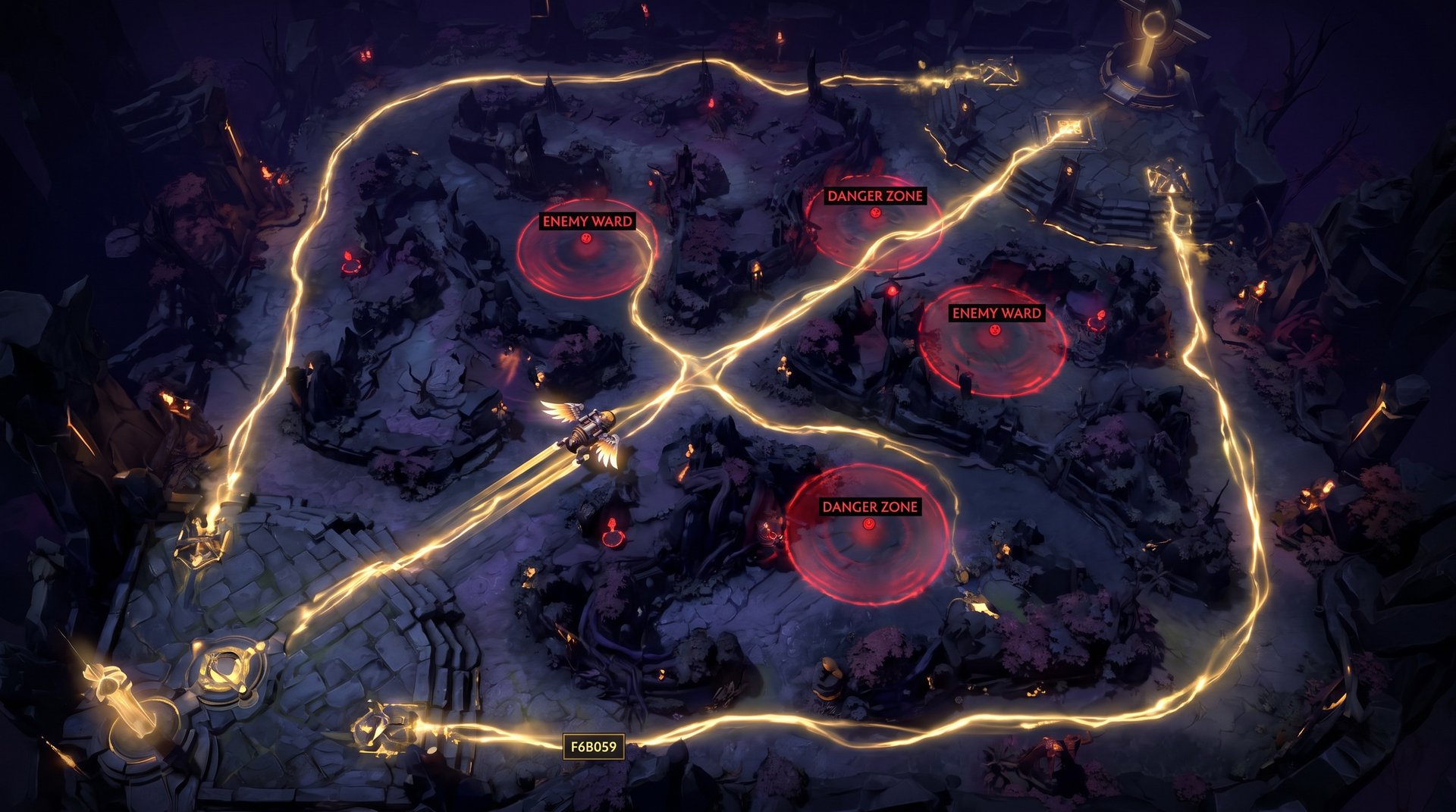
Different lanes require different courier routes. Understanding the geometry of each route and the risks at each point in the game is the foundation of courier control.
Safe Lane (Bottom Radiant / Top Dire)
The safe lane courier run is usually the simplest. The courier travels from base along the safe lane side of the map, staying near tier-1 and tier-2 tower cover. The main risk is enemy jungling heroes who set up between the second tower and the jungle camps. During the first 10 minutes, this route is nearly always safe. After the 15-minute mark, check the enemy positions before sending.
Offlane (Top Radiant / Bottom Dire)
The offlane courier run is the most dangerous route in the early game. The courier must cross or skirt the river, and the enemy safe lane supports are positioned to intercept. Best practice: send the courier to the offlaner during a window when the enemy supports are committed to harassing your offlaner, not watching the courier approach. Alternatively, send it via the long route through your own jungle — slower but significantly safer before minute 10.
Mid Lane
Mid courier runs are high-risk in the 6-15 minute window. The mid lane river is a combat zone, and any hero with a ranged attack can hit the courier as it crosses. Use the following rule: take the courier from base along the side of the tower closest to your safe lane, then cut to the midlaner only when they have vision of the immediate area and can confirm it is clear. Never fly directly across the river between the two mid towers during the early-mid game.
Item Delivery Timing: When to Send, When to Hold
Timing is everything with courier runs. The courier should never be in transit during these high-danger windows:
- First rune spawn (minute 0-2): Enemy heroes are moving to rune positions and commonly spot courier routes
- Smoke gank attempts (any time): If you see the enemy team clustering and smoking, hold the courier in base
- Post-teamfight cleanup: Wait for the fight to resolve and heroes to return to known positions before sending
- Rosh attempts: A Rosh attempt means the enemy team is grouped in the Rosh pit area — but one hero may have peeled off to courier-hunt while the others pressure
- Tower pushes: Enemy heroes pushing your towers will intercept any courier emerging from base
The safest windows to send the courier are when you have confirmed enemy positions on the minimap. If all five enemy heroes are visible in their own jungle or lanes, a courier run is relatively safe. If any hero is missing and no ward covers their likely route to your courier’s path, hold the delivery until you have more information.
| Game Phase | Main Delivery Risk | Best Delivery Window |
|---|---|---|
| Laning (0-12 min) | Aggressive supports and midlaner roaming | When enemy supports are visible in their lane |
| Early Mid (12-20 min) | Rotating heroes and ganking cores | When 4+ enemies are visible on minimap |
| Mid Game (20-35 min) | Coordinated courier dives | After a teamfight kills/commitments enemy heroes |
| Late Game (35+ min) | Lower risk — courier has leveled up | Most windows are safe with basic awareness |
Support vs Carry Courier Duties
One of the most common arguments in pub Dota is “who manages the courier?” The answer should be clear and consistent:
Support Responsibilities
Supports own the courier in the early game. This means purchasing it (usually done automatically now), upgrading it to flying when economically possible, and managing deliveries for the entire team through approximately minute 20. Support players should develop the habit of checking the courier’s inventory and position every time they glance at the minimap.
When a carry places an order from the shop, that is a signal for the support to queue the delivery unless the carry has already done it themselves. Proactive delivery removes one cognitive burden from the carry, who needs to focus on last-hitting and positioning.
Carry Responsibilities
Carries need to communicate when they need an item. Pinging the shop item or typing “courier when safe” gives the support the information they need to time the delivery well. Carries should also learn to retrieve their items from the courier’s inventory rather than waiting for the courier to be manually delivered — in many cases you can micro the courier to yourself faster than the support can react.
Most importantly, carries should never use the courier for non-urgent personal deliveries during a time when a support’s defensive items need to be delivered before an incoming fight. Coordinate courier usage, especially when multiple people are waiting on deliveries simultaneously.
Advanced Courier Micro Techniques
Once you have the basics down — safe routes, timing, role clarity — there are higher-level techniques that separate good courier management from exceptional courier management.
Sidestepping Intercept Attempts
When you see an enemy hero moving to intercept your courier, do not panic and just try to outrun them. Use the courier’s turning radius advantage. Click the courier to a position that forces the enemy to change direction, then re-route around them. A flying courier’s height advantage means ground-based heroes need to find the right spot to attack. Learn which heroes can intercept couriers mid-air and preemptively avoid those matchups.
Using Trees for Cover
The treeline is your friend. A courier traveling through dense forest is significantly harder to spot than one flying across an open river. Route deliveries along treelines whenever you can. The extra 4-5 seconds of travel time is always worth it compared to a 200-gold penalty.
Decoy Micro
In high-stakes situations — delivering a Aegis-level item during a volatile game state — consider sending the courier out and then holding it just inside a safe zone while you monitor enemy movement. Only commit to the full delivery when you are confident the path is clear. This “feint and wait” approach prevents the reflex mistake of just letting the courier auto-pilot into danger.
Staggering Multiple Deliveries
If four people need items delivered, do not send one massive courier trip. Break it into two or three runs, prioritizing the player most likely to be in a fight first. A support about to smoke-gank gets their item before the carry who is safely farming a jungle camp 2,000 gold from their next fight item.
Courier Retreating Mid-Run
If the situation changes mid-delivery — you see an enemy hero appear on the edge of the minimap near the courier’s path — it is almost always better to return the courier to base and wait than to try to force the delivery. The item sits in the courier, safe, until you can find a better window. The courier carries no bounty while alive in your own base.
Courier Control Expectations by Rank
Understanding what is expected at each rank helps you calibrate your standards. If you are playing below Archon, basic courier awareness alone can distinguish you from the average player.
| Rank Range | Common Courier Behavior | What to Improve |
|---|---|---|
| Herald – Guardian | Courier sent into danger constantly, no route awareness, support and carry fighting over control | Learn the 3 safe delivery routes for each lane, assign clear ownership |
| Crusader – Archon | Occasional safe routing, still river crossings in mid-game, items stacked on single delivery | Timing windows, never fly through mid river after minute 8 |
| Legend – Ancient | Good awareness but occasional complacency in long games, forgetting to deliver during fights | Advanced timing, pre-fight deliveries, decoy technique |
| Divine – Immortal | Courier treated as a strategic asset, dedicated courier kills are planned, counter-play is executed | Understanding when to sacrifice courier for a decoy, reading enemy courier-hunt patterns |
Most players in the Herald-Archon range will see immediate MMR gains from applying just the first two sections of this guide: understanding the bounty cost and avoiding river crossings. Those two habits alone eliminate the majority of avoidable courier deaths.
How Courier Mistakes Compound Into Lost MMR
Let us walk through a concrete scenario that illustrates exactly how one courier death can cost you a game.
Your carry is farming toward a 25-minute Butterfly. At minute 14, they have 3,200 gold. The support sends the courier with the carry’s Eaglesong — the main component worth 2,700 gold — along with their own Tranquil Boots. An enemy mid hero spots the courier crossing the river and kills it. Both items drop. The enemy carries them to their fountain. Total loss: 2,700 gold of Eaglesong, Tranquil Boots value, and 200 gold bounty to the enemy team.
Now the carry is 2,700 gold further from their Butterfly. That item gets delayed by 8-10 minutes. In that window, the enemy carry reaches their own timing spike first, takes a fight your carry is not equipped to win, kills two heroes, and takes Rosh. The game is effectively decided by a courier death at minute 14.
This is not a hypothetical. This scenario plays out in thousands of pub games every day. The fix — staggering deliveries, routing safely, checking enemy positions — takes approximately 30 seconds of additional awareness per 10 minutes of game time. It is the highest-return-on-investment habit you can build.
The Simple Checklist
Before every courier run, ask three questions: Where are all five enemies right now? Is there any hero missing from the minimap whose position could intercept this courier? Is there a safer route that adds less than 15 seconds to the delivery? Answer those three questions every time and your courier death rate drops by roughly 80%.
Courier Upgrades and Leveling
In the modern Dota 2 system, couriers gain levels as the game progresses. Early-game couriers are fragile — a single hero with moderate damage items can kill one in a few hits. Late-game couriers are significantly tankier and harder to kill without coordinated effort.
This means the danger window is primarily the first 20 minutes of the game. After that, a courier needs a coordinated dive to kill, which costs the enemy team resources and positioning. Paradoxically, many players relax their courier awareness in the early game when it is most important, and become hyper-vigilant in the late game when the threat is lower.
Upgrade your courier to flying as early as economically viable. The flying courier can take diagonal air routes that avoid ground-based choke points entirely, opening up delivery lines that are nearly impossible to intercept without a ranged hero in exactly the right position. For supports, courier upgrade priority should sit between utility items and core defensive items — it is a team-wide investment that pays dividends on every subsequent delivery.
If you want to accelerate your MMR growth while focusing on mechanics like courier control, professional Dota 2 boosting from TeamSmurf puts you in lobbies where these fundamentals are already applied correctly. Watching high-level games from inside your own account — with your own heroes and preferred roles — accelerates learning faster than any amount of solo practice at a bracket where courier deaths are routine.
Courier Control and the Broader Picture of Economy Management
Courier discipline is one piece of a larger economy discipline puzzle. The same mental habits that prevent courier deaths — tracking enemy positions, timing your actions to low-risk windows, thinking about gold flow at a team level rather than just your own last-hit count — apply to every aspect of Dota 2 economy management.
Players who internalize courier discipline tend to also develop better smoke-gank timing, better Rosh window identification, and better understanding of when to buy versus when to save. It is a leading indicator of broader strategic development.
If you are working with a Dota 2 coaching service, ask your coach to review your courier management in replays. It is one of the fastest habits to correct once identified, and the gains are immediate and consistent.
The MMR boosting guide on TeamSmurf covers many of the economic fundamentals that underlie strategic decision-making at higher ranks. Reading it alongside this guide gives you a complete picture of how gold flows through a game and where the highest-leverage interventions are.
For players focused on safety considerations around account health and game integrity, our guide on whether Dota 2 boosting is safe covers what responsible services do to protect your account during any kind of assisted play.
Stop Giving Away Free Gold
Courier mistakes are fixable habits — but breaking them takes playing in lobbies where good fundamentals are the standard. TeamSmurf’s boosters demonstrate correct courier awareness every game, and our coaching sessions can identify and fix your specific mistakes in one session.