

What Is Smurfing in Dota 2? Definition, Why It Happens and What Valve Does

Smurfing in Dota 2 means creating or using a secondary account to play at a far lower MMR bracket than your true skill level — intentionally exploiting matchmaking to crush opponents who have no business competing against you. It is one of the most complained-about problems in the game, and Valve has spent years building systems to stamp it out.
In this guide we break down exactly what smurfing is, why players do it, how Valve detects it in 2026, and what the real penalties look like when you get caught. We also cover what the smurf pool actually does and why escaping detection is harder than most players expect.
Table of Contents
What Is Smurfing — The Definition
A smurf account is any account whose MMR does not reflect the owner’s true skill level because the player deliberately underperformed during calibration, or created a fresh account to escape their earned rank. The smurf plays in lobbies that are 1,000 to 3,000+ MMR below where they actually belong.
The core problem is matchmaking integrity. Dota 2’s ranked system only works when every player in a lobby is roughly the same skill level. One smurf breaks the contract for nine other players — either trivializing the game for their team or making it completely unplayable for the other side. The result is a stomping match that teaches nothing and rewards nothing except the smurf’s ego.
Where the Term “Smurf” Comes From
The origin goes back to 1996. Two top Warcraft II players — Geoff “Shlonglor” Frazier and Greg “Warp” Boyko — got tired of opponents dodging them because of their known reputation. They made throwaway accounts named PapaSmurf and Smurfette to sneak into games undetected and stomped lower-ranked players while staying anonymous. The community started calling anyone who did the same a “smurf” and the name stuck across every competitive game that followed.
In Dota 2, calling someone a smurf is a direct accusation: you believe they are hiding their real skill level to bully players who cannot compete with them.
Why Players Smurf in Dota 2
The reasons players maintain secondary accounts are more varied than most people assume. Not every smurf is a predator out to ruin pub games — though many are.
Trying New Heroes Without Ranked Pressure
High-MMR players often use a smurf to practice an unfamiliar hero without punishing their main account’s bracket. A 6,000 MMR player learning a new support hero does not want to ruin a Divine lobby, so they play in Legend first. The intention is lower-stakes practice, but the result is still a stomp for the players on the receiving end.
Playing With Lower-MMR Friends
Dota 2’s party matchmaking restricts grouping between players more than 1,500 MMR apart. Smurfing at a friend’s bracket is a workaround. This is probably the most sympathetically motivated reason — but it still breaks matchmaking for nine other players in every lobby.
Escaping the Current Bracket
Some players believe the MMR system has placed them unfairly or that their bracket is full of throwers and bad teammates. A secondary account feels like a clean start. In reality it usually calibrates near the same MMR after enough games because Dota’s system is designed to find your true level regardless of how you start.
Farming Easy Wins
Stomping players who cannot respond to your skill level is psychologically satisfying in the short term. Some players use a smurf as a confidence reset after a losing streak on their main. It is the least defensible reason and the one that directly harms the most players.
Streaming and Content Creation
Content creators sometimes stream on a smurf to build highlight reels with exaggerated mechanical plays. Lower-skill opponents cannot counter high-level execution, which makes clips easier to produce. Valve has specifically targeted high-profile streamers caught doing this.
Types of Smurfs You Will Encounter
Not all smurfs behave the same way. Understanding what type is in your lobby helps you calibrate expectations and decide whether to report.
| Smurf Type | Bracket Targeted | Primary Motivation | Skill Gap |
|---|---|---|---|
| Practice Smurf | 1-2 brackets below main | Hero or role practice | Moderate |
| Friend Smurf | Friend’s exact bracket | Party play workaround | Moderate to High |
| Escape Smurf | 2-4 brackets below main | Fresh start / reset | Very High |
| Win-Farm Smurf | Herald to Guardian | Easy wins and confidence | Extreme |
| Booster Smurf | Client’s exact bracket | Paid commercial service | Extreme |
The booster smurf is the most destructive category. A booster is not playing for personal reasons — they are doing it repeatedly, professionally, and with the intent to raise a client’s MMR for payment. This overlaps directly with the Dota 2 boosting ecosystem and is treated significantly more harshly by Valve’s detection systems than a casual practice account.
How Valve Detects Smurfs in 2026
Valve does not rely on player reports alone. Its detection infrastructure runs constantly in the background and cross-references multiple behavioral signals simultaneously. Dota 2’s smurf detection in 2026 is substantially more aggressive than it was even two years ago.

Statistical Performance Outliers
The most obvious signal is a last-hit count, damage output, hero kill efficiency, or vision score that consistently sits two or three standard deviations above every other player in the lobby. A Guardian player averaging 110 CS at 10 minutes, zero deaths per game across five consecutive matches, with 50%+ kill participation is a red-flag cluster. Valve’s system aggregates these per-game stats against the account’s reported bracket and flags accounts whose numbers are implausible for their rating.
Calibration Behavior Analysis
Valve has added pattern detection that watches how a new account’s performance evolves during its first 25 placement games. Legitimate new players show gradual, inconsistent improvement as they learn the client and hero mechanics. A smurf shows the opposite pattern — high mechanical execution from game one with minimal variance. The system flags this divergence during or immediately after calibration.
The Smurf Pool
Once flagged, an account gets placed in Valve’s smurf pool for new accounts. This is a separate matchmaking queue that routes suspected smurfs against each other rather than against genuine new or low-skill players. The pool neutralizes the stomp effect while the system gathers more data to confirm or dismiss the flag. Many smurfs report suddenly facing obviously skilled opponents in what appears to be a low-MMR bracket — that is the smurf pool working as designed.
Phone Number and Account Linking
Dota 2 requires phone number verification for ranked play. Valve cross-references phone numbers and Steam account metadata. Multiple accounts sharing a verified phone number or registered to the same Steam billing details elevate the scrutiny level on all linked accounts. Secondary accounts created through Steam family sharing are automatically flagged for review from the moment ranked play begins.
Behavioral Fingerprinting
Hero pool preferences, mouse movement patterns, camera behavior, and micro-management habits are surprisingly consistent across a player’s accounts regardless of the bracket. Machine learning models trained on millions of games have learned to identify individual playstyle signatures. A player who always checks the same ward spots at the same game-time thresholds, or who always executes a specific combo timing with a particular hero, will exhibit those patterns on any account. This is one of the more advanced detection vectors and one that is very difficult to deliberately disguise.
Player Reports
The manual report system is the weakest individual signal but still contributes to the review queue. The smurf report button in 2026 does feed into Valve’s flagging system, but automated detection carries far more weight. A flood of reports accelerates review timelines but does not guarantee action on its own — Valve needs supporting statistical evidence before taking enforcement steps.
Penalties — Low Priority, Bans and Recalibration
What actually happens when Valve’s systems confirm a smurf account? In 2026 the answer is more severe than it used to be, and it escalates based on severity and repetition.
Low Priority Queue
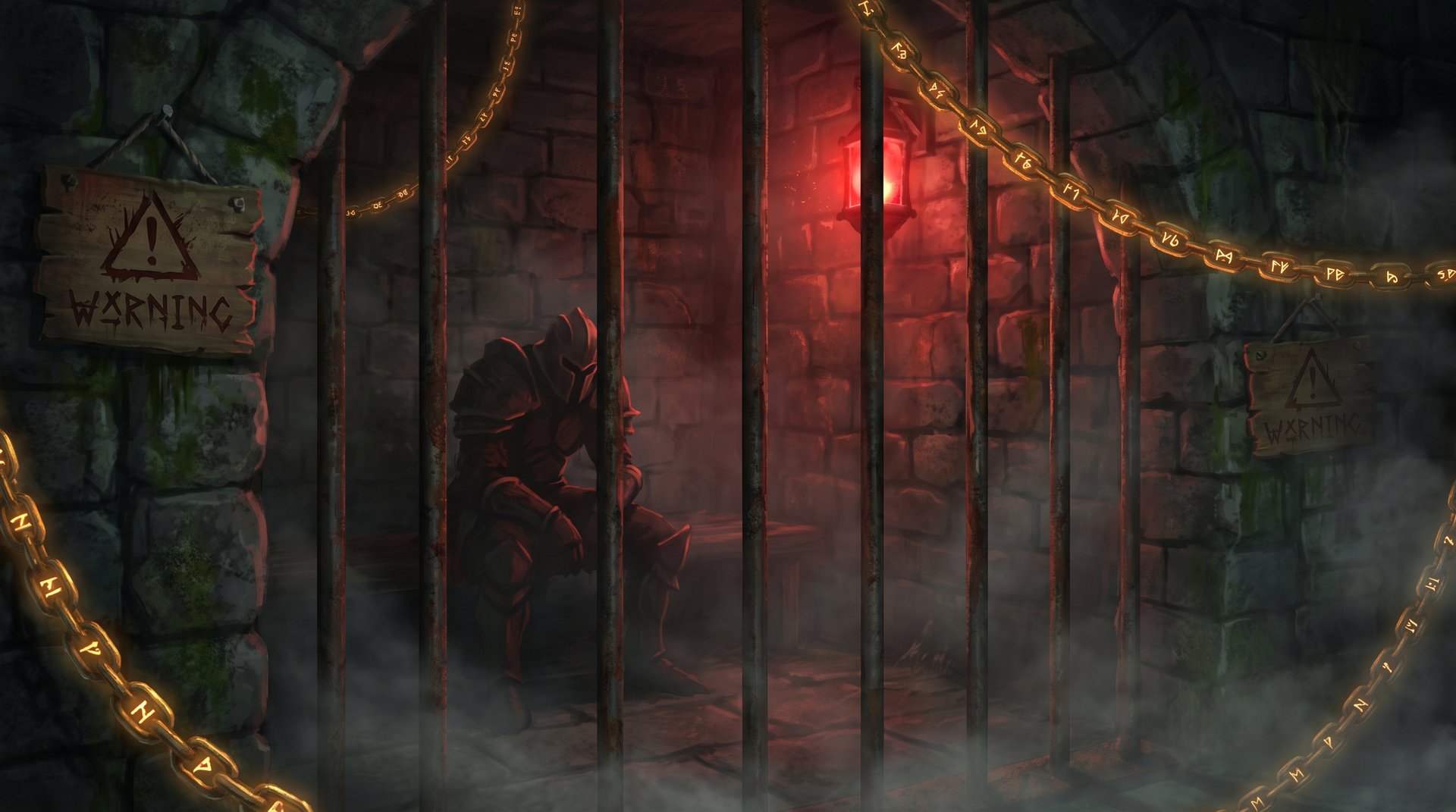
The first enforcement step is Low Priority. The account gets routed into a separate queue where matches use Ability Draft or other non-standard modes, teammates are often also serving LP sentences, and game results have no impact on ranked MMR. Getting out requires winning a set number of games — not just playing them. A smurf is skilled enough to grind out LP wins quickly, but it is still friction and time lost.
If you find yourself in LP as collateral from a teammate’s behavior or a false positive, our Dota 2 Low Priority removal service can clear it efficiently. For confirmed smurfs, LP is just the opening warning — not the full sentence.
Forced MMR Recalibration
Valve can forcibly reset a flagged account’s MMR and push it through a new calibration sequence. This is designed to land the account at its actual skill level quickly, eliminating the gap the smurf was exploiting. The recalibration uses Valve’s internal confidence data about the player’s real skill, so the new placement typically ends up much closer to the player’s main account bracket than the smurf ever reached voluntarily.
Account-Level Bans
Permanent bans are reserved for the most egregious cases — repeat offenders, identified boosters, and accounts tied to commercial boosting operations that Valve has investigated. Ban waves targeting organized boosting services have hit multiple accounts simultaneously. The bans extend to hardware identifiers and phone numbers where possible, making ban evasion meaningfully harder than in previous years.
The relationship between smurfing and boosting penalties is not equal. Our analysis of which violation Valve actually punishes more harshly covers the specific enforcement asymmetry and what it means for players on both sides of the line.
The Real Impact on Lower Bracket Players
Playing against a smurf in Herald or Guardian is frustrating in a specific way that ordinary bad games are not. A smurf does not just beat you — they make the game feel unlearnable. When one player has mechanically perfect execution at 3,000 MMR below their true level, the game looks like a tutorial running against you instead of a competition.
This is why smurfing correlates with retention loss in lower brackets. Players who encounter multiple stomp matches in their first 50 ranked games are significantly more likely to uninstall than players who lose closely contested games to fair opponents. An even skilled opponent at your level teaches you something, even in a loss. A smurf teaches you nothing except that sometimes the other team just wins before you can react.
Valve’s public statements about smurf detection cite this retention impact directly. The problem is not purely about fairness — it is about the long-term health of the playerbase, especially at the bottom of the bracket where most new players calibrate and form their first impression of ranked Dota 2.
Can You Avoid Smurfs?
Not entirely, but several practical habits reduce your exposure:
- Play during peak hours. Larger matchmaking pools give Valve’s systems more routing options. Off-peak low-MMR queues are the highest-risk environment for smurf encounters.
- Avoid mixed-bracket party queues. If your group has a 1,500+ MMR spread, someone in every lobby is likely mismatched — and it might not always be a smurf on the other team.
- Use the report system immediately. Reports are a secondary signal but they accumulate. Consistent flagging from multiple players in the same match speeds up the review queue.
- Do not tilt over unwinnable games. A smurf in your lobby is a lost game. Accept it, report, and move on. The energy you spend tilting costs you performance in the next genuinely competitive match.
Frequently Asked Questions
Stuck in Low Priority? Ready to Actually Climb?
Low Priority is one of the most demoralizing places in Dota 2 — even when you did not deserve to be there. If you need LP cleared fast so you can get back to ranked, our verified team handles it securely and quickly.
If you want to climb legitimately and understand exactly what is holding your MMR back, our coaching service pairs you with a high-bracket specialist who knows your bracket and how to break out of it.


