

What Happens at 13,000 MMR? Games at the Top, Described

13,000 MMR. That number sits near the very ceiling of what the Dota 2 ranking system can register for an active pub player. The gap between 13k and the baseline Immortal entry point of roughly 5,600 MMR is larger in practice than the gap between a complete beginner and an Archon. You are not in the same game anymore — not the same draft process, not the same movement patterns, not even the same emotional relationship with winning and losing.
This guide describes what actually happens in games at that level. What the draft looks like. How carries move on the map. How supports position and what they communicate. Which heroes dominate and why. If you have ever watched a streamer at this MMR and felt confused by what seemed like random decision-making, this breakdown will close the gap.
In This Guide
What 13,000 MMR Actually Means
Dota 2 uses a leaderboard system for the Immortal rank. Once you cross the threshold for Immortal — currently around 5,600 MMR — you receive a regional leaderboard position rather than a star tier. The leaderboard tracks the top 25,000 players per region. A player at 13,000 MMR in the Western European or Eastern European region sits roughly in the top 50 to 150 active accounts at any given time, depending on seasonal player counts.
To put that in perspective: Immortal itself represents approximately 1.91% of all ranked players. The top leaderboard spots represent a fraction of that fraction. When you queue at 13k MMR, your lobby will almost always contain current or former professional players, widely followed streamers, or players who are within one or two teams of being picked up by an organization.
The number alone does not tell you what the games feel like. But it tells you that every single player in your lobby is operating at a level that the vast majority of the Dota 2 player base — including most players who consider themselves dedicated — will never reach through solo grinding alone. The decisions you see in these lobbies are not luck. They are the output of tens of thousands of hours of training compressed into every two-second window.
Who Actually Plays at This Level
The leaderboard at 13,000 MMR and above is almost entirely composed of active professional players using their main accounts for ranked grinding, and a handful of exceptional pub-only players who have never signed with an organization but have managed to stay competitive at that tier over multiple seasons.
In the European region, the top of the leaderboard as of early 2026 featured a cluster of well-known names. Nightfall of Aurora topped the EU rankings at that time, recently having overtaken Nisha to claim the top spot in ranked matchmaking. Nisha of Team Liquid — a veteran with a TI 2024 victory on his record — is consistently in the top five and is known for grinding pubs whenever his schedule allows. Satanic of PARIVISION, who earned a third-place finish at The International 2025, is another regular face near the top. NothingToSay of Xtreme Gaming, despite representing a Chinese organization, grinds the European ranked servers and holds a consistent top-five leaderboard spot. Watson of Team Yandex has made one of the most notable comebacks in recent memory, dominating the EU ladder after a period of criticism. ATF of Team Falcons is another consistent presence, still appearing near the top despite a preference for unconventional item builds that confuse even experienced viewers.
The important point here is that reaching this level of play is not a casual pursuit. These are full-time professional players for whom ranked grinding is literally part of their job. When you see a 13,000 MMR game on a stream, every player in the lobby has put in comparable hours. There are no passengers at this MMR.
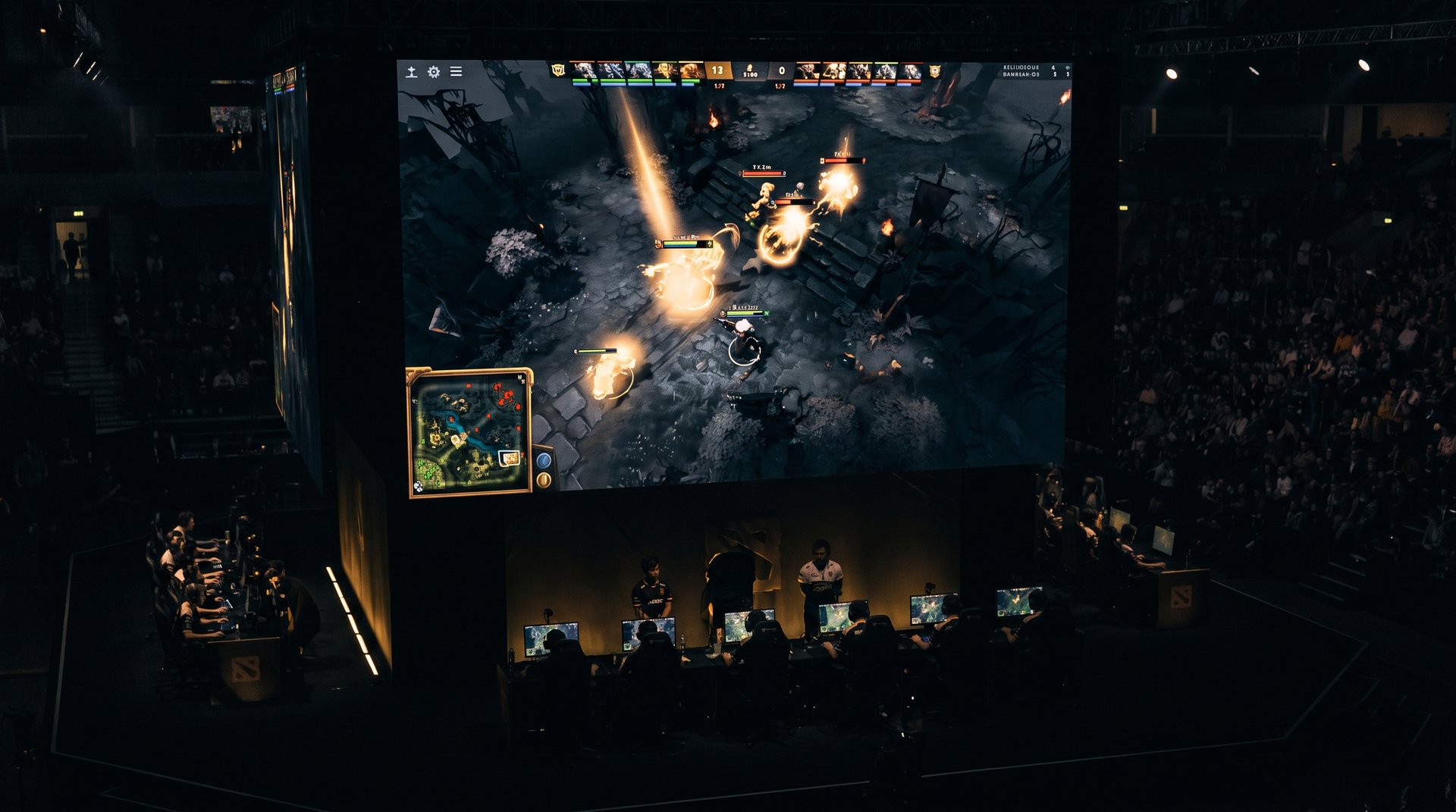
How Games Feel Different
The most immediately obvious difference in a 13k MMR game compared to a 6k or 8k game is the pace. Games at 13k do not have wasted time. The laning phase is contested from the first minute — trilane setups, rotations from the midlaner at minute two, pulls that deny three waves simultaneously while also cutting off the enemy carry’s bounty rune path. Every action from the opening thirty seconds is part of a plan.
By the six to eight minute mark, in most 13k games, the map is already shaped. One team has secured safelane priority and is threatening a tower. The other team is attempting to stabilize through jungle stacks or a proactive fight. The decisions that lower-MMR players make at minute fifteen — where to smoke, whether to contest the Roshan — have already been made at minute eight in a 13k lobby, because the information is already clear to every player on the map.
Vision is another major separator. Support players at 13k do not ward standard spots unless there is a specific tactical reason to do so. They ward to deny specific paths the enemy is about to use, based on reading the movements they already observed. When a 13k support places a sentry, it is because they watched their minimap and calculated that the enemy pos 4 is about to attempt a ward kill and will pass through that location. The ward is a trap, not a routine placement.
Mistake forgiveness is close to zero. A carry who takes a fight at 70% HP against a full-HP enemy team because they misjudged their positioning will die, and the swing from that death will often be game-deciding. At 13k, players know their own damage output, their enemy’s damage output, and the time cost of each fight almost exactly. They do not need to test the fight to know the outcome. They calculate it, and if the numbers do not work, they walk away or buy time through terrain and aggression.
Draft Complexity at 13k
The draft is where 13k MMR most visibly separates itself from every bracket below it. At 13k, the draft is not five players picking heroes they are comfortable with. It is a structured argument about which team’s game plan wins on the current map state, patch, and tempo assumptions.
Players at this level understand which heroes win the laning phase but lose the mid-game power spike window, and they draft around those timings with surgical precision. If one team first-phases a hard carry with a slow ramp-up, the opposing team will target that ramp-up with an aggressive tri-lane or an early Roshan setup designed to deny the carry’s first item timing. The first-phase pick becomes the entire map plan for both teams.
Counter-picks at 13k are also more nuanced than simple ability counters. Players will pick heroes that deny specific item paths. A hero that forces the enemy carry to buy Linken’s Sphere pushes back their core damage item by eight to ten minutes — and at 13k, eight minutes is an entire phase of the game. This kind of thinking is invisible to spectators who watch for ability interactions but miss the economic undercurrent.
MMR Bracket Comparison: How Gameplay Changes Across the Ladder
| Element | 3,000-5,000 MMR | 7,000-9,000 MMR | 11,000-13,000 MMR |
|---|---|---|---|
| Laning phase coordination | Mostly individual play, reactive support rotations | Planned rotations, some coordinated dives | Entire laning phase scripted from draft — every rotation pre-planned |
| Vision control | Wards placed in standard spots, minimal sentry usage | Wards placed reactively to enemy movements | Proactive vision that anticipates movements 30-60 seconds ahead |
| Draft thinking | Individual hero comfort picks, loose countering | Synergy-aware drafts, role-specific counters | Economic and timing counters, whole-game plans from pick 1 |
| Objective timing | Roshan taken when it is convenient | Roshan planned around buyback windows | Roshan timed to force unfavorable buyback math for the opponent |
| Mistake tolerance | High — one death rarely decides the game | Medium — coordinated teams punish hard | Very low — one positional error at the wrong moment is often fatal to the game |
| Hero pool depth | 2-5 heroes per player on average | 5-10 heroes, some role flexibility | 15+ heroes per player, full role and position flexibility |
| Communication style | Reactive callouts, often post-event | Forward callouts, some pre-fight setup | Information-dense anticipatory callouts — no filler communication |
Carry Gameplay at 13k
A 13k carry player does not simply farm. They farm with intent — choosing camps, timings, and item build paths that serve the team’s game plan rather than their own comfort. If the game plan calls for early pressure, the carry finds ways to accelerate their first significant item through stacking, creep aggression, and pulling decisions that keep their net worth ahead of the enemy safe-lane carry’s by the time the two-tower pressure window opens.
Positioning in fights is where the difference is most dramatic to watch. A 13k carry operates at the exact boundary of engagement distance — never too close to be bursted, never too far to deal damage. This distance adjusts dynamically based on enemy hero positions, which the carry tracks through minimap reading even while performing last-hit mechanics in the same second. It is true multitasking that only becomes possible through years of pattern recognition replacing active decision-making for routine tasks.
The item builds at 13k also diverge from the standard guides that most players follow. You will frequently see carries purchasing situational items — Blade Mail into a Phantom Assassin who has gone past her usual core build, or Silver Edge against a lineup with multiple passive amplifiers — because the 13k carry has identified specific items in the enemy’s build and adapted. This kind of real-time itemization happens faster than a lower-MMR player can even recognize the problem, let alone solve it.
If you want to reach the top tier of Dota 2 play, studying carry positioning in 13k VODs is one of the highest-return investments you can make. Not what they build — what distance they keep at every moment of every fight.
Mid and Offlane at 13k
The Midlane at This MMR
The midlane at 13k is a constant information war. Neither mid player plays purely for net worth. Both are playing to control the minimap state — understanding where the enemy supports are, whether a rotation is possible, and whether backing a few creeps to deny a pull makes more sense than staying in the lane to contest the last hit. The micro-decisions happen at a rate that is impossible to observe and analyze in real time without stopping the replay.
Rune control in the midlane at 13k is near-perfect. Players know within a five-second window where every rune will spawn and build their laning rhythm around those windows. A mid who loses a bounty rune in the first minute has already conceded a small advantage, and they adapt — either forcing an early rotation to recover through kill gold, or shifting their farming path to compensate through jungle access.
Aggression from the midlaner at 13k is also significantly more precise than at lower MMRs. When a 13k mid dives a tower at three minutes, it is not a gamble. They have calculated the wave state, the enemy’s ability timings, the support positions, and the tower aggro behavior. The dive that looks insane to a viewer is actually the safest play available to them given what they know. That is the core of what makes high-MMR play so disorienting to watch — what looks reckless is actually calculated.
Offlane at 13k
The offlane at 13k is one of the most cognitively demanding positions in the game at this level. The pos 3 player is expected to survive a disadvantaged laning phase while generating as much pressure as possible, understand the enemy carry’s farm patterns well enough to disrupt them efficiently, and transition into a team fight initiator or hero that enables the team’s late-game plan.
Players like ATF (Team Falcons) represent an archetype of offlane play at the highest level — unconventional builds and hero selections that confuse opponents precisely because they do not follow expected patterns. An offlaner at 13k who goes an unexpected item on an unexpected hero forces the enemy team to recalibrate mid-game, spending mental bandwidth on the problem rather than executing their own plan.
Support Play at 13k
Support play at 13k is where the widest gap between this bracket and the average Immortal player becomes visible. Most Immortal players understand support at a mechanical level — they know how to stack, when to rotate for a kill, and which items to build in the basic matchup matrix. But 13k support play operates at a different layer entirely.
At 13k, the pos 4 and pos 5 players manage vision as an aggressive weapon rather than a defensive tool. Dewarding is not a reactive measure — it is a timed action that creates a vision gap right before the team wants to use a smoke, ensuring that the enemy has no sight for the window when the rotation happens. The deward is placed three to five seconds before the smoke goes out, not whenever the support has a spare moment.
Save timing at 13k is also extraordinarily precise. A 13k pos 5 does not panic-cast their save ability when a teammate takes damage. They hold the ability until the moment the enemy commits their kill ability, then cancel it. Against a Lion or Lina, this means holding Force Staff until after Finger of Death or Light Strike Array animation — not before. The difference is game-deciding because a support who saves too early just delays the kill by two seconds and then their save is on cooldown for the second attempt.
The best support players at this MMR share an ability to be invisible when they do not want to be found and omnipresent when their team needs them. They do not die to farm their items. They find gold through pulling efficiency, kill participation, and stacking while maintaining full awareness of the enemy support’s position at all times.
Communication and Coordination
The communication in a 13k game is dense, fast, and almost entirely predictive rather than reactive. Players do not call “care” after an enemy has moved into position to kill them. They call the rotation before it happens, because they read the missing mid player and checked the last ward timing and concluded that a smoke rotation from the enemy is the logical next move.
The vocabulary is also compressed. Years of playing together in the same professional scene means that shorthand phrases communicate complex ideas instantly. “Force rosh” does not just mean “let us attempt to kill Roshan.” It means “we need to burn one or two enemy abilities getting vision of Roshan, then we go in immediately while they cannot contest with their abilities on cooldown, and we need the BKB carrier to be ready to commit now.” All of that in two words — because everyone in the lobby already understands the context.
Disagreements at 13k are also handled differently than in the average pub game. When a 13k player thinks the team is making a mistake, they call it once, clearly, and then execute the team’s decision rather than arguing or going off script. The cost of coordination loss outweighs being right about the specific decision in most cases, and 13k players understand this at an instinctive level.
Can You Ever Reach 13k?
The honest answer is that for the majority of dedicated Dota 2 players, 13,000 MMR is not a realistic goal for unassisted ranked grinding. The players who compete at this level have been playing at or near a professional level for years, receive dedicated training environments, and have access to scrimmage partners who are all operating at a similar tier. Grinding pubs alone from 5,000 MMR to 13,000 MMR is not how anyone gets there.
That does not mean progress is impossible. The gap between where you are now and the next major bracket — between 5k and 7k, between 7k and 9k — is absolutely closeable with focused effort. The key is understanding what the higher bracket actually demands before you try to climb into it. If you are playing at 5,000 MMR and making the vision errors of a 3,000 MMR player, no amount of mechanical practice will consistently move you up.
This is where coaching from players who have operated at the top of the ladder becomes genuinely valuable. Dota 2 coaching from high-MMR players gives you access to the thought processes described in this article in a form that you can actually apply to your own games. Not just “watch VODs and copy builds” — actual breakdown of why specific decisions get made and how your games need to look different to climb.
If your goal right now is to reach the next bracket rather than 13k specifically, working with a booster who plays in your games gives you a live demonstration of how high-MMR decision-making looks from the inside. You see the ward placements, the positioning, and the draft reads in real time, in your actual games, against your actual opponents. That context transfer is something no written guide can fully replicate.
Frequently Asked Questions
Want to Experience Higher-Level Dota 2 Play?
Whether you want to reach a specific rank to play with friends or you want coaching from players who have competed at the top of the ladder, TeamSmurf connects you with experienced high-MMR players who understand how the game works at every level.



