How to Master Vengeful Spirit in Dota 2: The Ultimate Guide for Every Rank (2026)

Vengeful Spirit is one of Dota 2’s most underrated heroes — a versatile support who can single-handedly win lanes, set up kills across the map, and swing teamfights with a single button press. With a consistent 52%+ winrate across all brackets and one of the most terrifying ultimates in the game, Venge rewards players who understand positioning, aggression timing, and the art of sacrificial play.
Whether you are a Herald support learning the fundamentals or a Divine player looking to weaponize Nether Swap at the highest level, this guide breaks down everything you need to dominate with Vengeful Spirit. We cover ability mechanics most players get wrong, rank-specific item builds that actually matter, pro-level swap plays, and the hidden interactions that separate a feeding position 5 from a game-winning playmaker. Let’s get into it.
Table of Contents
Why Vengeful Spirit Is the Ultimate Playmaker
Vengeful Spirit occupies a unique space in Dota 2. She is primarily played as a position 4 or 5 support, but her kit is so fundamentally strong that she has been viable as a carry, a mid, and an offlaner at various points in Dota’s history. In the current patch, she sits at a 52.3% winrate across all ranks on Dotabuff, with her winrate climbing even higher in Ancient and Divine brackets where players understand how to properly execute Nether Swap.
What makes Venge special is her simplicity on the surface paired with enormous depth underneath. Her abilities are straightforward — a stun, an armor reduction, a damage aura, and a position swap — but the decision-making around when, where, and on whom to use them separates the best Venge players from everyone else. She is not a hero you outplay mechanically. She is a hero you outplay strategically.
In the current meta, Vengeful Spirit thrives because of several factors. The pace of the game favors aggressive, fight-heavy drafts, and Venge excels at enabling early kills with Magic Missile into Wave of Terror. Her aura provides free damage to her carry that scales throughout the game. And Nether Swap remains one of the strongest save abilities in Dota 2 — or one of the most devastating initiation tools, depending on how you use it.
The hero’s flexibility in drafting is another massive advantage. You can pick Venge early without revealing your strategy. She works with nearly every carry, counters several popular heroes, and her Vengeance Aura illusion on death means even dying in a fight contributes value. Few heroes in Dota 2 can claim that dying is actually part of their gameplan.
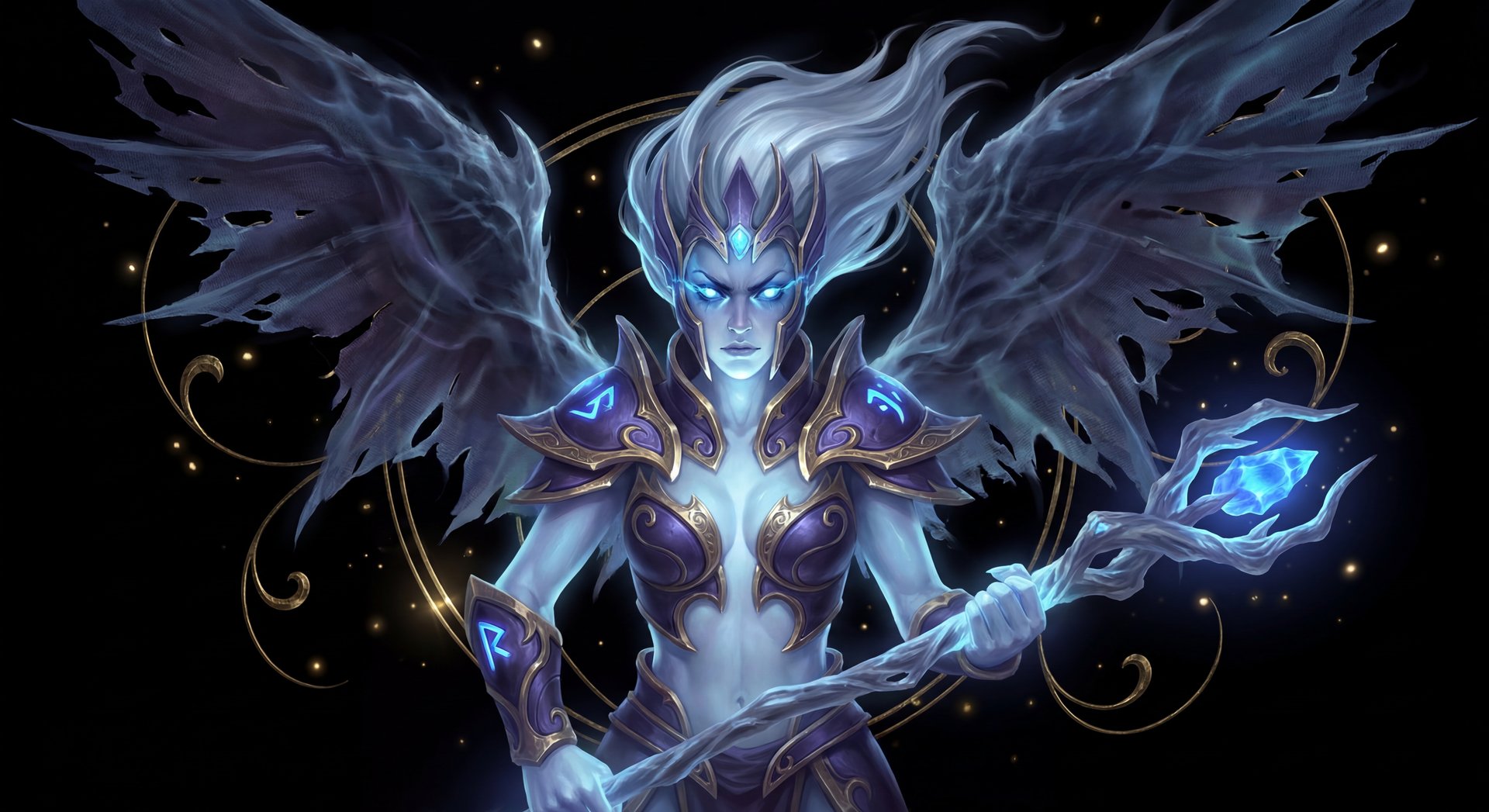
Abilities Deep Dive
Magic Missile (Q)
Magic Missile is a single-target stun that deals 100/175/250/325 magic damage with a 1.5-second stun duration at all levels. The projectile speed is 1350, which is moderate — fast enough to be reliable but slow enough that targets with quick reflexes can Manta or BKB before it lands at max range.
Hidden mechanics most players miss: Magic Missile’s cast point is 0.3 seconds, which is relatively slow for a stun. This means if you are chasing a hero at the edge of your cast range, you might be better off getting closer before casting to reduce the travel time. The total disable time (cast point + travel + stun) matters more than just the stun duration.
At level 1, Magic Missile deals only 100 damage for 110 mana — not great value. This is why most Venge players skip it at level 1 in favor of Wave of Terror or Vengeance Aura depending on the lane. The stun is worth taking at level 2 for kill setups, but maxing it first is almost always wrong unless you are playing mid Venge.
One crucial interaction: Magic Missile is disjointable. Heroes like Anti-Mage, Queen of Pain, and Phantom Assassin can blink to dodge it. Puck can Phase Shift it. This matters in the mid and late game when you are trying to stun priority targets. Against disjoint-heavy lineups, you often want to save your stun as a follow-up to another disable rather than leading with it.
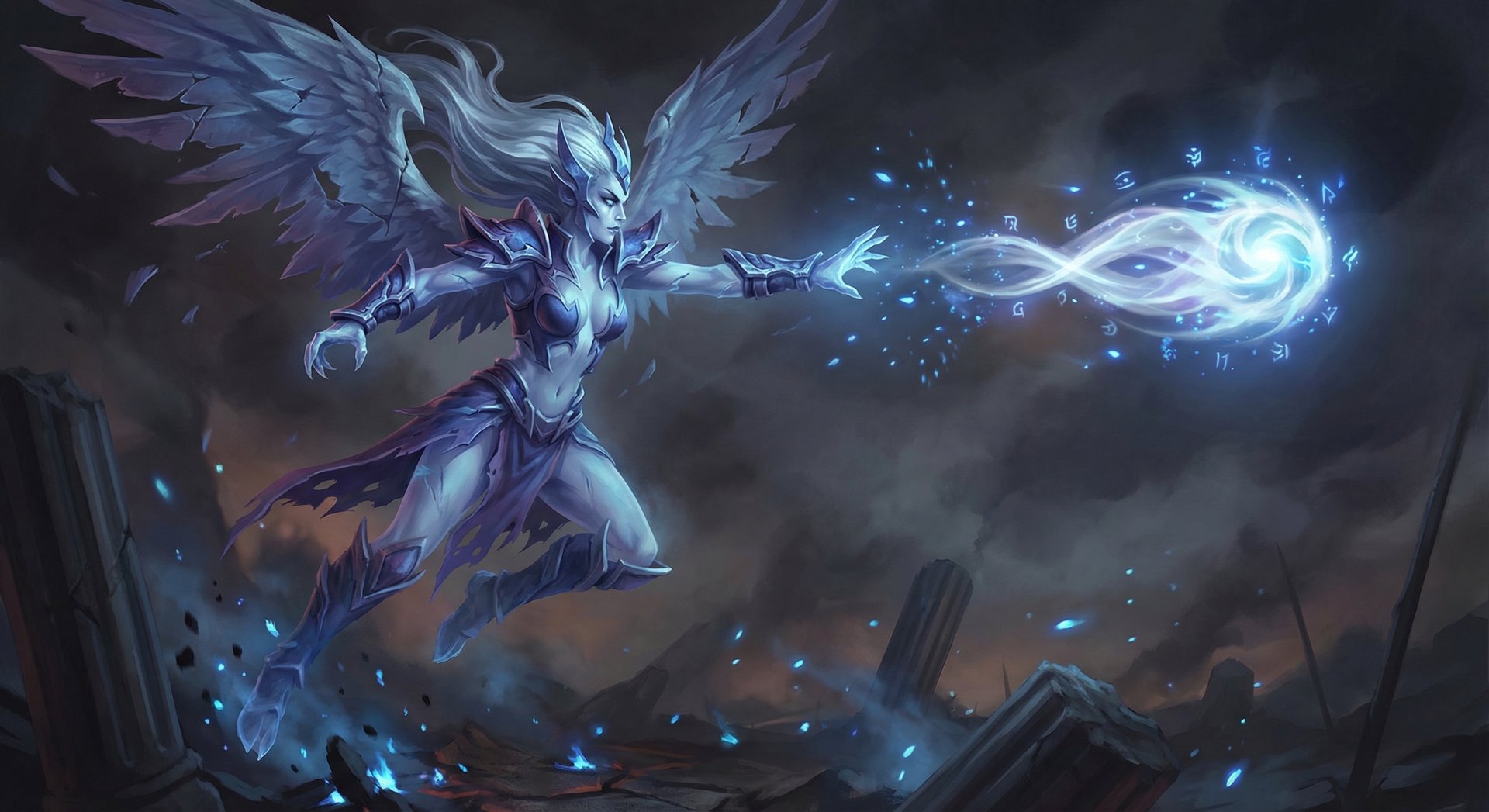
Wave of Terror (W)
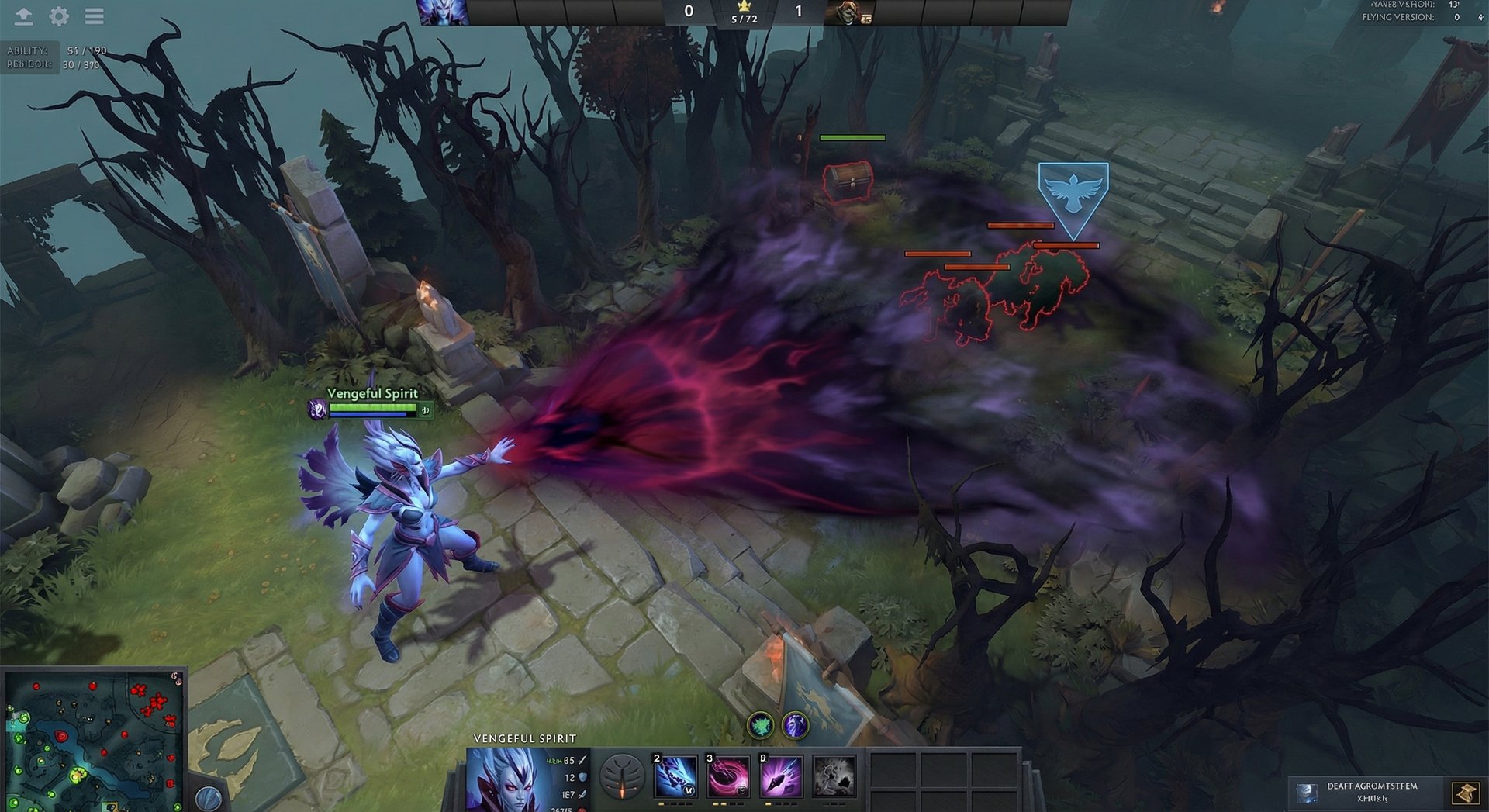
Wave of Terror sends a wave in a line that reduces enemy armor by 3/4/5/6 for 8 seconds and deals 45/70/95/120 damage. The wave also provides flying vision for 4 seconds along its path. The armor reduction applies to heroes, creeps, and buildings.
This is Venge’s bread-and-butter laning ability and the reason she wins so many lanes. At max level, -6 armor is devastating. On a hero with 8 base armor, that is roughly a 25% increase in physical damage taken. Combined with your carry’s right-clicks and Vengeance Aura, Wave of Terror turns trading hits from close to impossible for the enemy offlaner.
The vision component is massively underused. Wave of Terror provides flying vision, meaning it reveals high ground, trees, and Roshan pit. You should be spamming this into fog before your team walks uphill. It costs only 40 mana at all levels — one of the cheapest scouting tools in the game. In the mid game, you should be throwing Wave of Terror into every tree line, every Roshan check, and every smoke gank path.
Wave of Terror also gives vision of invisible units if they are hit. This makes it a budget detection tool against heroes like Riki, Bounty Hunter, or anyone with Shadow Blade. The reveal only lasts for the wave’s vision duration, but it can be enough to land a kill.
Vengeance Aura (E)
Vengeance Aura provides a bonus 8%/16%/24%/32% base damage to all nearby allied heroes (and Venge herself) within 1200 radius. When Vengeful Spirit dies, she creates a strong illusion of herself at the death location that lasts 7 seconds and deals 100% damage.
The aura math is where most players fail to appreciate this skill. On a carry with 200 base damage, 32% bonus equals +64 damage for free. That is more damage than most items provide, and it works on every hero in the aura radius. In a 5v5 teamfight, Vengeance Aura is effectively giving your team 320 bonus base damage if everyone is in range. No other support ability in the game comes close to that raw damage amplification.
The death illusion is stronger than most players realize. The illusion deals 100% of Venge’s damage, benefits from Vengeance Aura, and can use items. If you have a Vladmir’s Offering or an Assault Cuirass, the illusion provides those auras. This means dying as Venge in a teamfight is not always a loss — the illusion continues to contribute damage, auras, and even body-blocking for 7 seconds.
Skill the aura at level 1 if you are playing a passive lane where trading hits is the primary activity. The early +8% base damage on your carry makes a noticeable difference in last-hitting and trading.
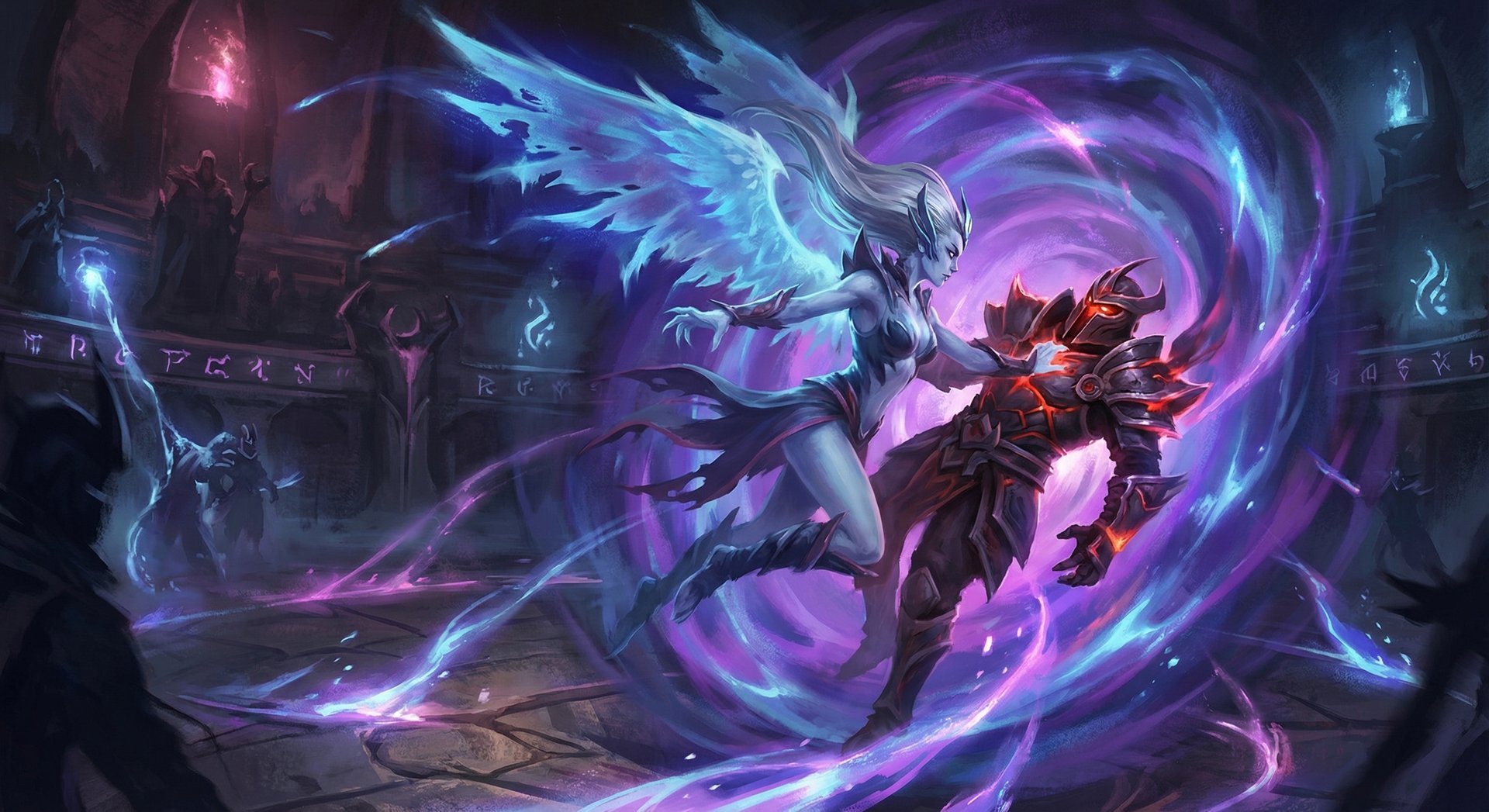
Nether Swap (R)
Nether Swap instantly swaps Vengeful Spirit’s position with a target hero (ally or enemy) within 700/950/1200 range. It has an Aghanim’s Scepter upgrade that reduces cooldown to 10 seconds and allows targeting allied creeps.
This is one of the most powerful abilities in Dota 2, and it is also one of the most misused. Nether Swap has two completely different use cases that define how you play Venge:
1. Offensive Swap: Swapping an enemy carry or midlaner into your team. This is the flashy play, the one that wins teamfights. You blink or walk behind the enemy team, swap their carry back into your lineup, and your team deletes them. The key is that the target must die instantly — if they survive, you have traded your position for theirs, and you are now in the enemy team’s face.
2. Defensive Swap: Saving your carry. When your position 1 gets caught by a Beastmaster Roar, a Batrider Lasso, or any other initiation, you swap them out and take their place. You die instead. Your carry lives. Your Vengeance illusion spawns. This is often the higher-value play, especially in the late game when your carry’s life is worth far more than yours.
With Aghanim’s Scepter, Nether Swap becomes a 10-second cooldown monster. You can swap an enemy in, die, respawn as an illusion, and potentially have Swap up again before the fight ends. Aghs is one of the most game-changing pickups on Venge, turning her from a one-swap hero into a constant repositioning threat.
Recommended Skill Build
| Level | 1 | 2 | 3 | 4 | 5 | 6 | 7 | 8 | 9 | 10 |
|---|---|---|---|---|---|---|---|---|---|---|
| Standard Support | W | Q | W | E | W | R | W | E | E | E |
| Aggressive Lane | Q | W | W | W | W | R | Q | Q | Q | E |
| Passive Lane | E | W | W | Q | W | R | W | E | E | E |
The standard build maxes Wave of Terror first for lane dominance, takes one point in stun at level 2, and builds aura from level 4 onward. If you are in a kill lane with a carry like Juggernaut or Ursa, take the stun at level 1 and max Wave second. In ultra-passive lanes where you just need to survive, the aura value at level 1 helps your carry farm.
Item Builds by Rank
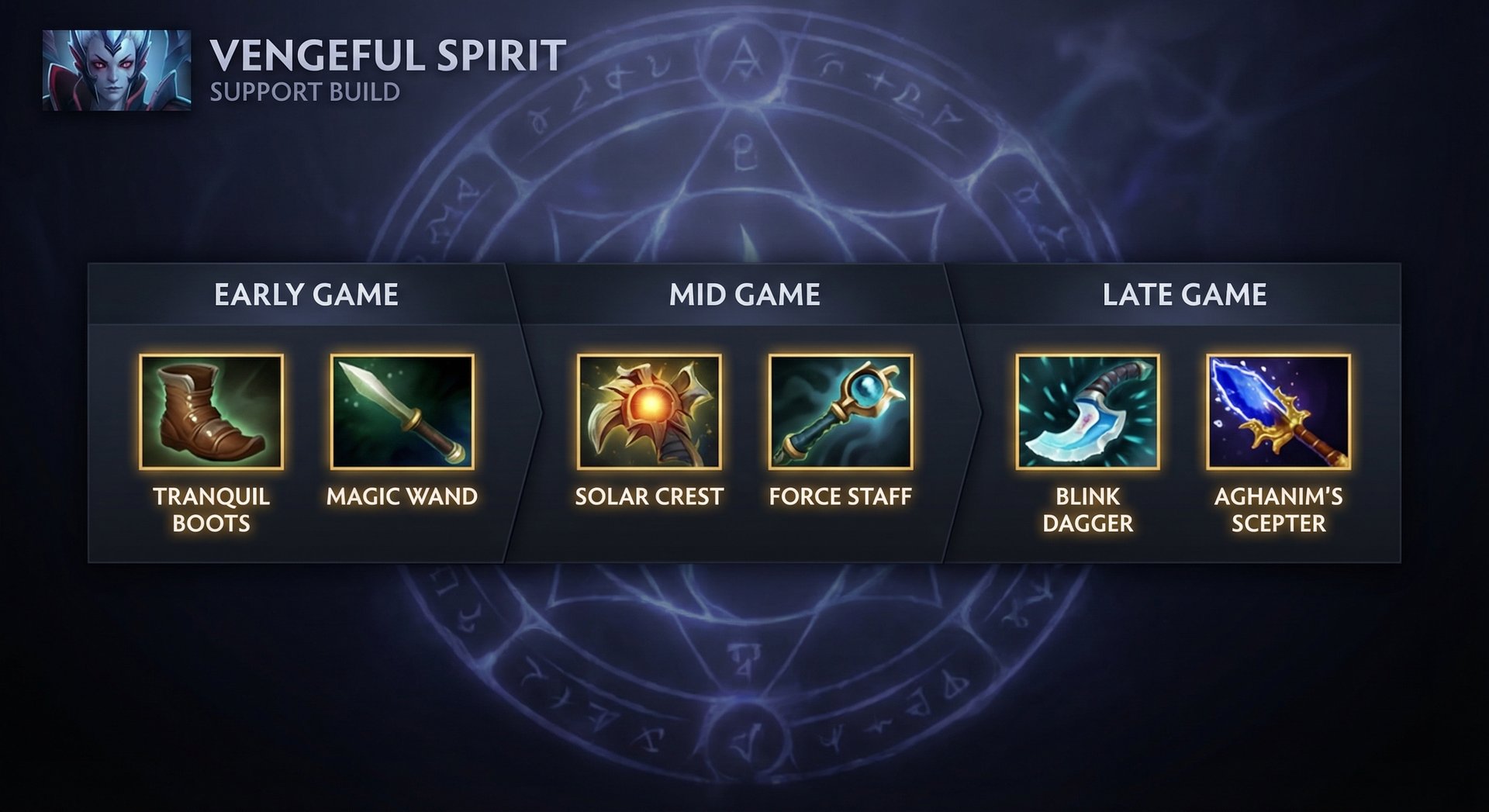
Vengeful Spirit’s item build varies dramatically based on rank because the way fights play out changes. In lower ranks, fights are chaotic and drawn out, meaning sustain items get more value. In higher ranks, fights are faster and positioning is sharper, making mobility and save items critical.
| Rank | Starting | Early Game | Core Items | Late Game |
|---|---|---|---|---|
| Herald – Crusader | Tango, Healing Salve, Blood Grenade, Observer Ward, Enchanted Mango | Magic Stick, Boots, Urn of Shadows | Arcane Boots, Medallion of Courage, Glimmer Cape | Spirit Vessel, Solar Crest, Force Staff |
| Archon – Legend | Tango, Healing Salve, Blood Grenade, Observer Ward, Wind Lace | Magic Wand, Tranquil Boots, Medallion of Courage | Solar Crest, Force Staff, Glimmer Cape | Aghanim’s Scepter, Aeon Disk, Lotus Orb |
| Ancient – Divine | Tango, Healing Salve, Blood Grenade, Sentry Ward, Wind Lace | Magic Wand, Tranquil Boots, Medallion of Courage | Solar Crest, Force Staff or Blink Dagger | Aghanim’s Scepter, Aeon Disk, Vladmir’s Offering |
| Immortal | Tango, Healing Salve, Blood Grenade, Sentry Ward, Clarity | Magic Wand, Tranquil Boots, Medallion of Courage | Force Staff or Blink Dagger, Solar Crest | Aghanim’s Scepter, Aeon Disk, Lotus Orb |
Why Items Differ by Rank
Herald to Crusader: Players at this rank need sustain because fights last forever. Arcane Boots keep your mana pool healthy since low-rank games involve constant skirmishing without fountain trips. Urn of Shadows is excellent because you will get charges from the constant fights. Glimmer Cape is the single best defensive item at this bracket because enemies rarely buy detection.
Archon to Legend: Players start understanding team composition and target priority. Tranquil Boots replace Arcane Boots because mana management improves and the movement speed matters for positioning. Solar Crest becomes core because you are now playing around your carry’s power spikes. Force Staff is essential for saving allies and enabling Swap plays.
Ancient to Divine: At this level, Blink Dagger starts replacing Force Staff as the primary mobility item. Blink allows instant offensive Swaps from fog — you blink behind the enemy, swap their carry, and your team follows up. Aghanim’s Scepter becomes a priority because fights are faster and the 10-second Swap cooldown lets you make multiple plays per teamfight.
Immortal: Immortal Venge players prioritize mobility and disruption. Blink is almost always purchased. Aghanim’s Scepter is the biggest power spike after Blink. Aeon Disk is a critical purchase against burst lineups because it ensures you survive long enough to get your Swap off. Lotus Orb is picked up against targeted disable-heavy lineups.
Situational Items Worth Knowing
- Vladmir’s Offering: If no one else builds it and your team is heavy on physical damage. The aura stacks with Vengeance Aura for massive team damage.
- Drum of Endurance: Excellent when your team wants to push early and group up around 15-20 minutes.
- Aether Lens: Extends Swap range significantly. Niche but powerful in certain games where long-range saves are critical.
- Wraith Pact: Strong when your team is ahead and wants to deathball. The damage reduction aura is oppressive in teamfights.
Laning Phase Masterclass
Vengeful Spirit is one of the strongest laning supports in Dota 2. Her combination of armor reduction, a reliable stun, and a damage aura makes her a terror in the safe lane. The goal during laning is simple: make the enemy offlaner’s life miserable while enabling your carry to farm freely.
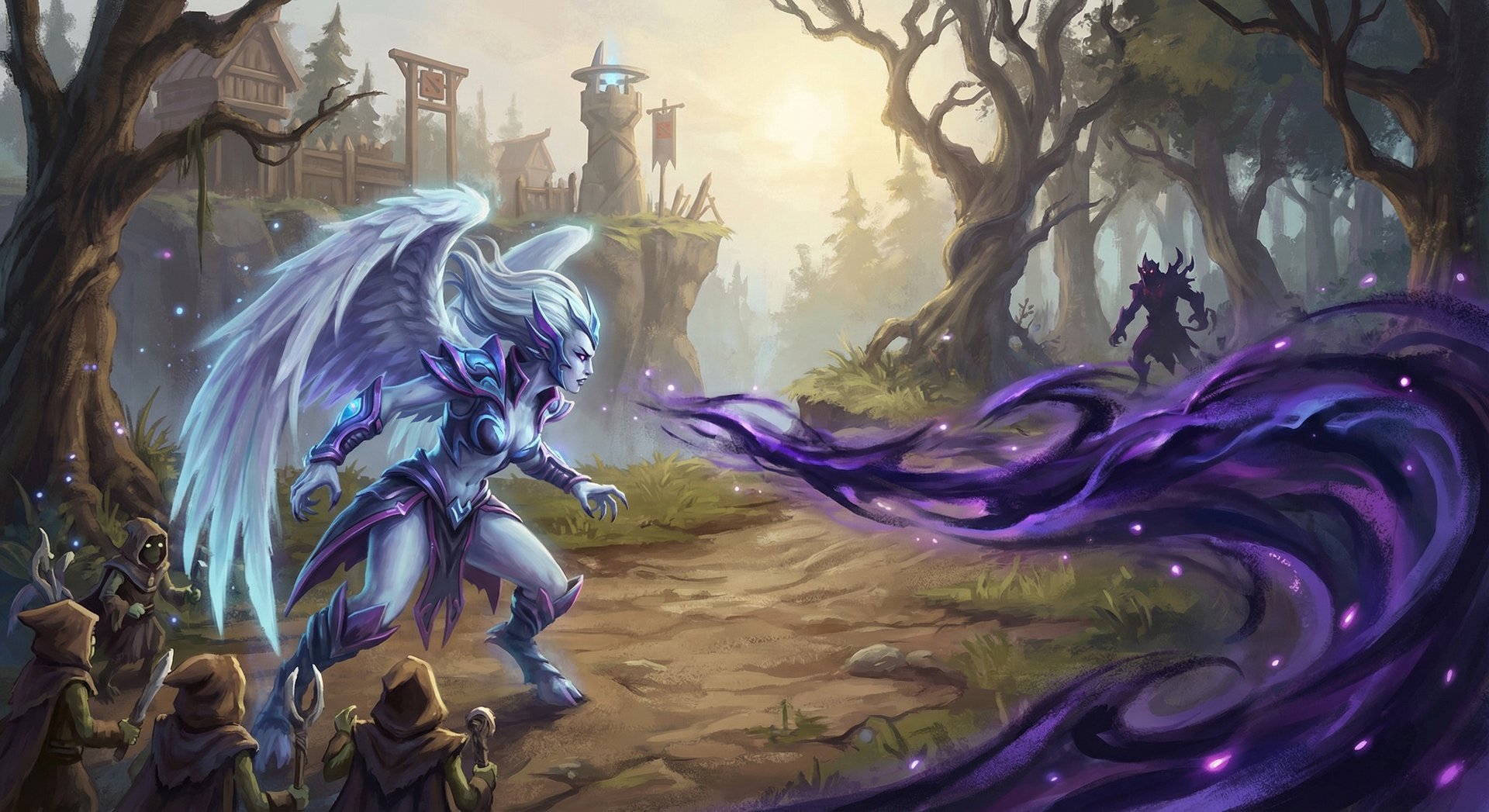
Level 1 Strategy
Your approach at level 1 depends entirely on the matchup. Against melee offlaners like Axe, Centaur, or Tidehunter, take Wave of Terror at level 1 and spam it every time they approach the creep wave. The armor reduction makes your right-clicks deal significantly more damage, and the 40-mana cost means you can cast it repeatedly without going dry.
Against ranged or aggressive dual lanes, consider taking Vengeance Aura instead. The extra base damage on your carry helps with last-hitting under pressure, and you can trade right-clicks more effectively with the aura active.
Only take Magic Missile at level 1 if you are going for a level-1 kill with a carry who has strong follow-up like Ursa (Fury Swipes + stun is first blood potential) or Juggernaut (Blade Fury + stun is lethal).
Trading and Harassment Patterns
The core trading pattern for Venge in lane is: Wave of Terror into right-click trades. Cast Wave through both the enemy hero and creep wave (hitting creeps gives your carry easier last hits). While the armor debuff is active (8 seconds), trade aggressively with right-clicks. Venge has 2.8 base armor and decent attack range (400), so she trades well early.
Position yourself between the enemy offlaner and the creep wave. This creates a zoning threat — if they want last hits, they have to walk past you and eat your harass. If they commit to trading, you have Wave of Terror’s armor reduction advantage.
Mana management is critical. Wave of Terror costs only 40 mana, but Magic Missile costs 110/120/130/140. You can easily burn through your entire mana pool with two Missile casts. Save Magic Missile for kill attempts or defensive saves, and use Wave of Terror for constant harassment.
Lane Partner Synergies
Venge pairs exceptionally well with carries who benefit from her armor reduction and can follow up on her stun:
- Juggernaut: Magic Missile into Blade Fury is almost guaranteed first blood. Juggernaut also loves the attack damage aura for last-hitting.
- Ursa: Stun + Wave of Terror + Fury Swipes is lethal at level 2. Ursa benefits enormously from the armor reduction.
- Drow Ranger: Venge aura stacks with Drow’s Marksmanship agility bonus. The armor reduction from Wave amplifies Drow’s already high physical damage.
- Phantom Assassin: PA’s crits combined with -6 armor from Wave of Terror in the mid game are devastating. Venge can also save PA from initiation with Swap.
- Luna: Vengeance Aura synergizes with Moon Glaives for insane team fight damage. Both heroes want to group and push early.
When to Rotate
Venge should consider leaving her lane and rotating mid or to the offlane when:
- Your carry is level 5-6 and can farm safely alone
- The enemy mid is overextending and killable with Magic Missile + Wave
- Your offlaner is struggling and needs help securing the lane
- You have boots and a smoke — Venge’s gank potential with stun + armor reduction is high
Do not rotate if your carry is still under threat. A dead carry because you left lane costs far more than a potential kill on the enemy mid.
Mid and Late Game Transitions
Vengeful Spirit transitions from a lane dominator into a teamfight playmaker as the game progresses. Your role shifts from harassing the offlaner to enabling your cores through saves, initiation, and aura positioning.
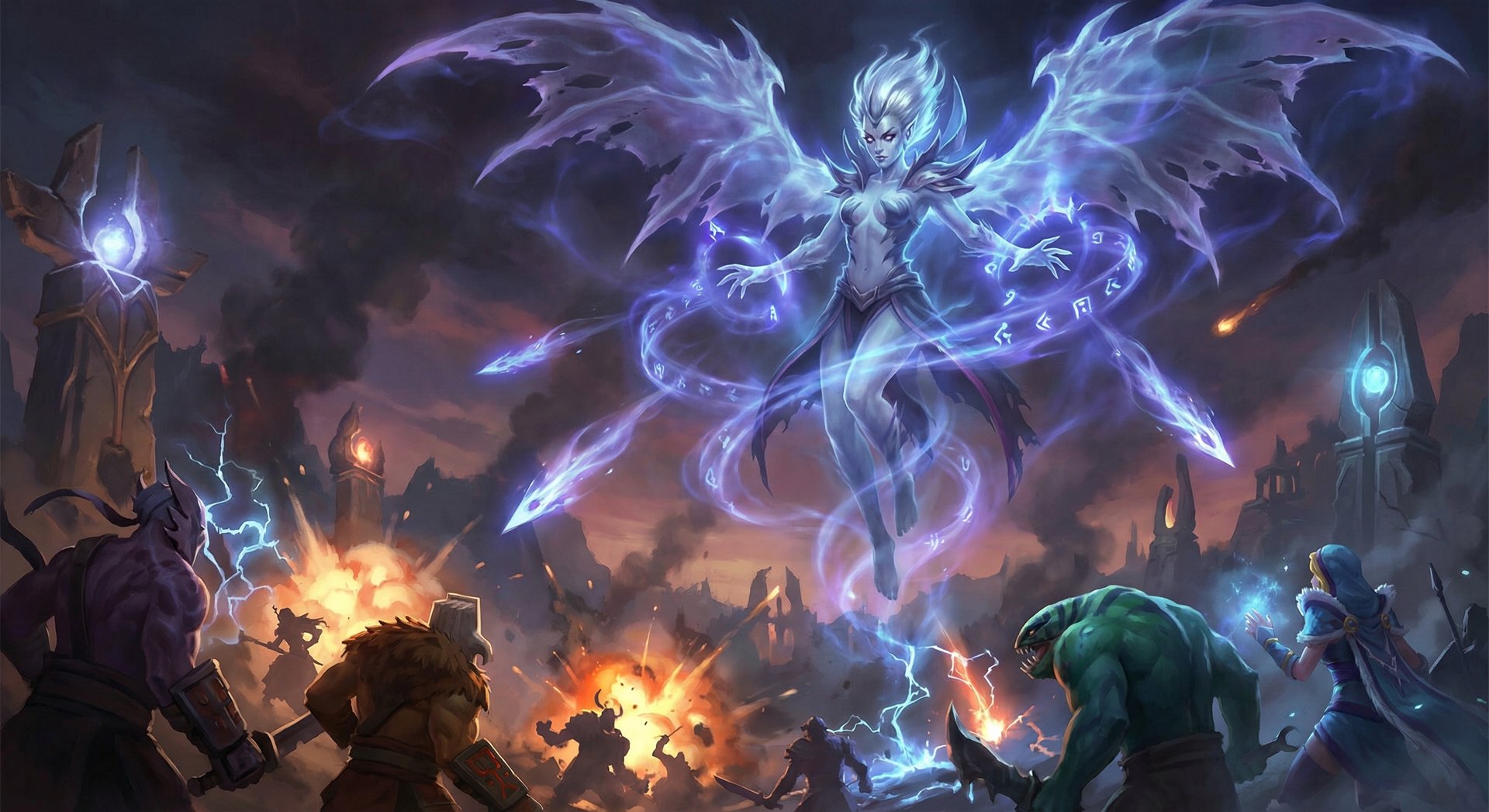
Timing Windows
Venge has two major power spikes that define her mid-game impact:
Level 6 (Nether Swap): The moment you hit 6, your threat level increases dramatically. You can now punish out-of-position enemies by swapping them into your team, or save allies from initiation. Coordinate with your team — tell them you have Swap and look for opportunities.
Force Staff / Blink Dagger: Once you complete your mobility item, your effective Swap range nearly doubles. With Blink, you can initiate from 1200 + 1200 range (Blink range + Swap range), catching heroes who thought they were safe. This is when Venge becomes truly terrifying.
Teamfight Positioning
Your positioning in teamfights depends on what your team needs:
If your team has a strong frontline and your carry is the win condition: Stay behind your carry. Your job is to Swap them out if they get initiated on. Stand at max Swap range (1200 at level 3) from your carry. Wave of Terror into the fight from the backline, and save your stun for the enemy’s diving heroes.
If your team needs initiation: Look for angles to Blink or walk behind the enemy team and Swap their carry back. The best Swap targets are heroes with channeling abilities (Enigma, Witch Doctor, Crystal Maiden) or heroes without escape (Sniper, Drow Ranger, Medusa). After the Swap, you will probably die — and that is fine. Your Vengeance illusion spawns, your aura persists, and the enemy carry is dead.
If neither team commits: Spam Wave of Terror into the enemy team. The armor reduction and vision are valuable even in standoffs. Look for a stun on anyone who steps too far forward. The worst thing you can do as Venge is waste Swap when the fight has not committed — hold it for the right moment.
When Venge Falls Off (And How to Stay Relevant)
Venge’s damage contribution drops significantly after 30 minutes. Your stun damage becomes trivial, and your right-clicks are irrelevant. However, your utility never falls off. Nether Swap is equally powerful at minute 10 and minute 60. Vengeance Aura scales with your carry’s base damage. Wave of Terror’s armor reduction is percentage-based and becomes more impactful as total damage increases.
To stay relevant late game, focus on:
- Ward vision: You should be the primary ward placer. Deep wards enable offensive Swap plays.
- Smoke ganks: Venge is one of the best smoke gank initiators because Swap is instant and unavoidable.
- Aura items: Items like Vladmir’s, Solar Crest, and Assault Cuirass amplify your team through auras, keeping your contribution high even when your personal damage is low.
- Roshan control: Wave of Terror’s armor reduction and vision are invaluable for Roshan fights and checks.
Counters: Heroes That Destroy Vengeful Spirit
Knowing your bad matchups is just as important as knowing your strengths. Here are the five heroes that give Venge the hardest time.
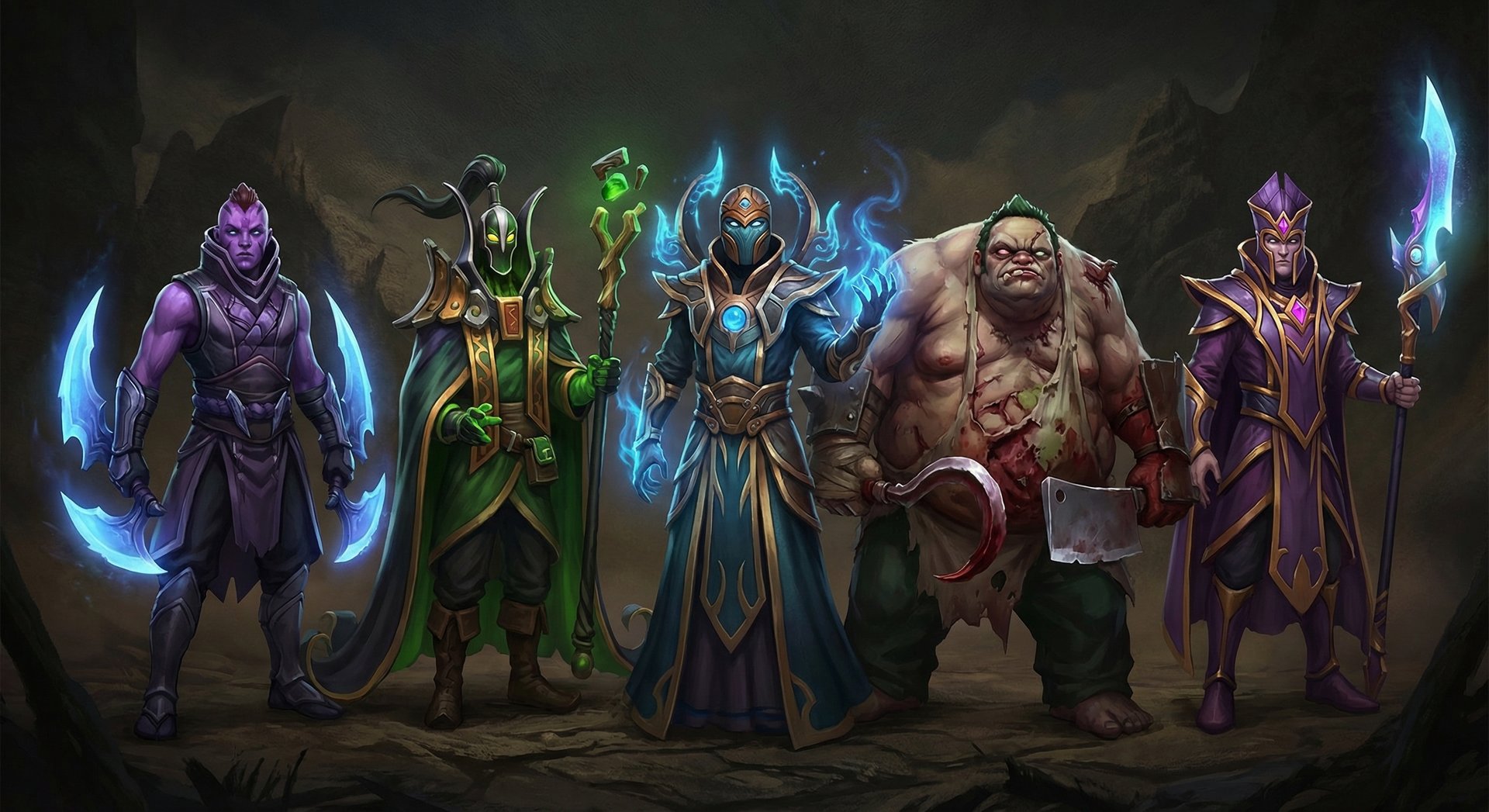
1. Anti-Mage
Anti-Mage is Venge’s worst nightmare. His Blink makes it nearly impossible to land Magic Missile reliably, and if you Swap him into your team, he simply Blinks back out. Mana Break drains your small mana pool in seconds if he gets on top of you. Against AM, your Swap becomes purely defensive — you cannot use it aggressively because he just escapes.
How to play around it: Focus on the early game before AM has Mana Void threat. Use Swap defensively to save allies from Mana Void combos. Buy Aeon Disk so he cannot delete you.
2. Rubick
A stolen Nether Swap is catastrophic. Rubick can turn your most powerful ability against you, swapping your carry into the enemy team. The threat of stolen Swap forces you to cast a different ability after Swapping, which is not always possible in the chaos of a fight.
How to play around it: Always cast Wave of Terror or Magic Missile immediately after using Swap so Rubick steals a less impactful ability. Communicate with your team about the Rubick threat.
3. Oracle
Oracle’s False Promise completely negates your burst kill setup. You Swap an enemy carry in, your team dumps damage on them, and Oracle just presses R and they survive. His Fate’s Edict also disarms allies, and Fortune’s End purges debuffs including your armor reduction.
How to play around it: Wait for Oracle to use False Promise on someone else before initiating. Focus Oracle first if possible — Swap him into your team instead of the carry.
4. Pudge
Pudge’s Dismember goes through BKB and holds you in place. If you try to Swap defensively, Pudge can Hook your carry back after the Swap. The matchup is awkward because Pudge wants to stand in the frontline, which is exactly where you need to be to Swap effectively.
How to play around it: Stay away from Pudge’s Hook range. If Pudge hooks your carry, Swap your carry out immediately before Dismember comes. Buy Force Staff to push allies out of Dismember.
5. Silencer
Global Silence shuts down Venge’s entire kit. You cannot Swap, you cannot stun, you cannot do anything. Silencer also steals intelligence, which reduces your already limited mana pool. Last Word forces you to either use your abilities at bad times or take extra damage and silence.
How to play around it: Rush Eul’s Scepter or have an ally buy Lotus Orb. Save BKB (if you somehow farmed one) for Global Silence. Play more conservatively when Global Silence is available.
Heroes Vengeful Spirit Destroys
Venge absolutely thrives against certain hero archetypes. Here are the matchups where picking Venge feels like cheating.
1. Sniper
Sniper relies on positioning at maximum range to stay safe. Nether Swap completely ignores range and pulls him directly into your team. Sniper has no escape, no save, and no way to deal with being repositioned. Once Venge has Blink, Sniper cannot play the game.
2. Medusa
Medusa hates being pulled out of position because she relies on standing her ground and tanking with Mana Shield. Swap pulls her away from her team, and Wave of Terror’s armor reduction cuts through her physical EHP. Medusa also farms slowly in the early game, which is when Venge is strongest.
3. Enigma
Black Hole is a channeling spell. If Enigma catches your team with Black Hole, you Swap him out — canceling the channel and saving your entire team. This single interaction makes Venge a hard counter to Enigma. Every Enigma player dreads seeing a Venge on the enemy team.
4. Crystal Maiden
Freezing Field is another channel that Swap interrupts instantly. CM is also extremely squishy, so a Swap into your team means instant death. In lane, Venge bullies CM with superior right-click damage and armor reduction.
5. Drow Ranger
Drow’s Marksmanship turns off when enemies are within 400 range. Nether Swap puts you right on top of Drow, disabling her strongest passive. Without Marksmanship, Drow is a squishy ranged creep. Swap her into your team and she melts.
How Pros Play Vengeful Spirit in the Current Patch
Vengeful Spirit sees consistent play in professional Dota 2, particularly as a position 4 support. In recent tournaments, Venge has been a recurring pick in situations where teams need a flexible support that can both enable their carry and counter key enemy heroes.
Pro players prioritize Blink Dagger over Force Staff in almost every game. The instant initiation range from Blink + Swap is too valuable to pass up. Most professional Venge players complete Boots + Wand + Medallion before rushing Blink, often finishing it around minute 18-22 depending on farm distribution.
In competitive play, Venge is valued for her ability to break Roshan quickly. Wave of Terror’s -6 armor at max level, combined with Vengeance Aura’s damage buff and Medallion/Solar Crest, allows teams to take Roshan significantly faster than without her. Several pro teams draft Venge specifically for early Roshan timings around 18-20 minutes.
The defensive Swap is used far more frequently in pro games than the offensive Swap. Professional carries know to play forward when Venge is behind them because they trust the Swap save. This allows cores to take aggressive positions they normally would not, knowing Venge has their back. Top support players like those on teams competing in DPC leagues treat Venge as an insurance policy for their carry.
A notable trend in competitive Dota is building Aghanim’s Scepter as a second major item after Blink. The 10-second Swap cooldown transforms teamfights, allowing Venge to make multiple repositioning plays. Some pro players even skip Solar Crest entirely to rush Aghs after Blink, treating the reduced cooldown as more impactful than the armor manipulation.
For more information on pro builds and match histories, check Vengeful Spirit on Liquipedia.
Rank-Specific Climbing Guide
The way you play Vengeful Spirit should change dramatically based on your rank. Here is what to focus on at each bracket to maximize your climb.
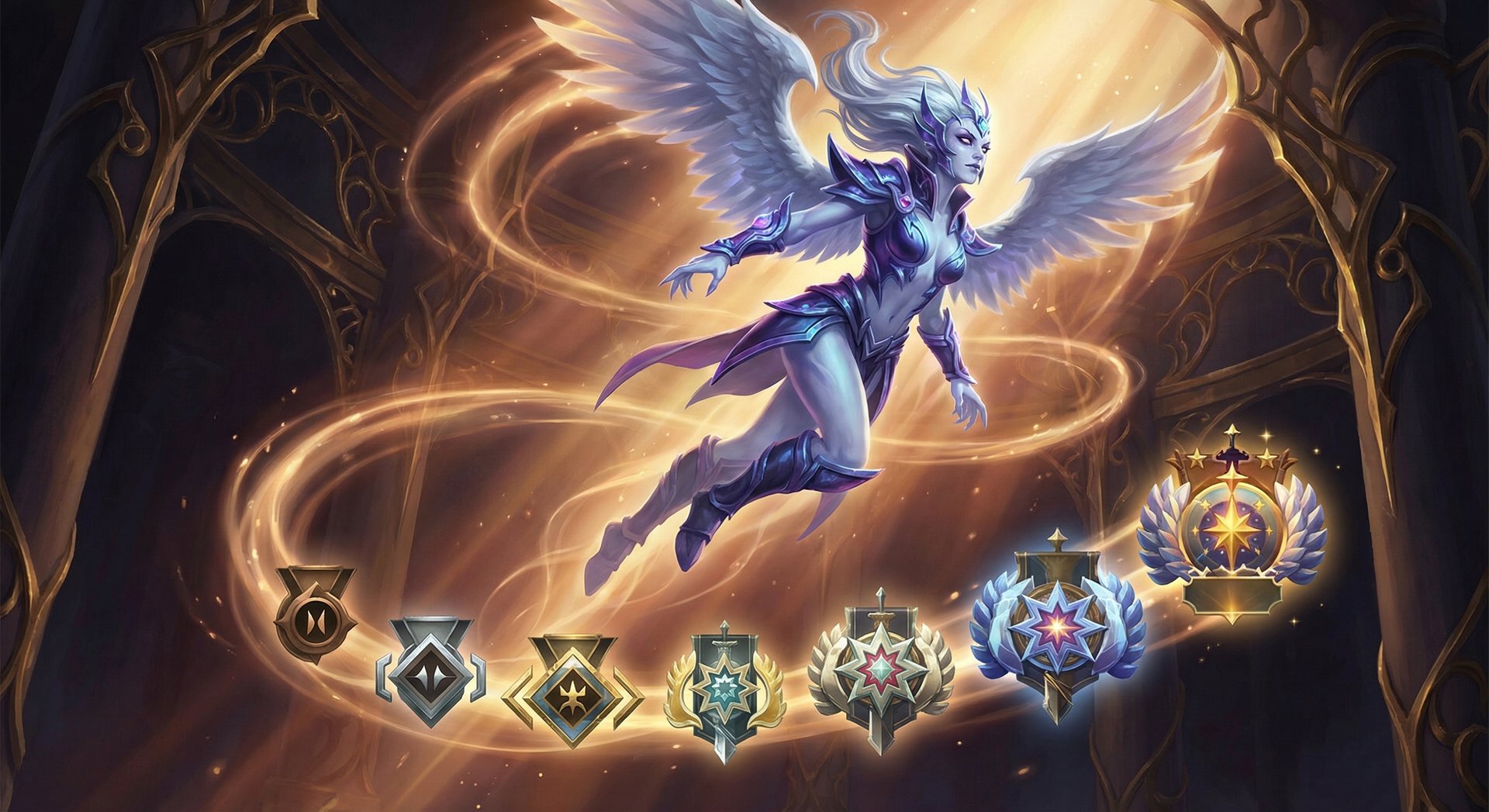
Herald to Guardian: Build the Foundation
At this bracket, focus on the absolute basics. Do not try flashy Swap plays. You will probably Swap the wrong person and die for nothing. Instead, focus on:
- Lane dominance: Spam Wave of Terror on the enemy offlaner. Just pressing W on cooldown is enough to win most Herald lanes.
- Buy wards. Seriously. The number one thing a Herald support can do is buy and place Observer Wards. Your map awareness will skyrocket.
- Save Swap for defense. When your carry gets jumped, Swap them out. Do not try offensive Swaps yet — your team will not follow up reliably.
- Do not die for no reason. Venge players at this bracket constantly walk into the enemy team trying to be heroes. Stay alive, provide aura, and use your abilities from safety.
If you can just stay alive, keep wards on the map, and spam Wave of Terror, you will climb out of Herald. Venge’s aura does the carry work for you — your carry gets free damage just by standing near you.
Crusader to Archon: Adding Game Sense
At this bracket, start thinking about timing. When does the enemy carry want to fight When does yours Use Venge’s abilities to create advantages at the right moments:
- Smoke ganks: Buy a smoke, grab your mid, and gank the enemy safe lane. Your stun + armor reduction is a guaranteed kill on most carries.
- Roshan awareness: Use Wave of Terror to check Rosh. Start communicating Rosh timings to your team.
- Offensive Swap experiments: Start trying offensive Swaps, but only when the target is isolated or your team is clearly ready. Tell your team in voice chat: “I’m going to Swap the Sniper, kill him.”
- Solar Crest timing: Learn to use Solar Crest actively. Cast it on your carry before they hit Rosh, or cast it on the enemy carry before your team jumps them.
Legend to Ancient: The Macro Leap
This is where Vengeful Spirit becomes a truly different hero. Your map movements define the game:
- Blink Dagger is mandatory. If you are not building Blink at this bracket, you are handicapping yourself. The initiation range is game-changing.
- Ward placement becomes strategic. You are no longer just placing wards for vision — you are placing them to enable Swap plays. A ward behind the enemy team’s high ground lets you see the positioning for a Blink + Swap initiation.
- Track enemy BKBs. Once enemy cores have BKB, your Swap becomes defensive. Before BKB, it is offensive. Time your aggression accordingly.
- Play around your carry’s power spikes. When your carry finishes their key item (Battlefury, Manta, etc.), group up and force fights with your Swap threat.
Divine to Immortal: What Separates the Top 1%
At the highest level, Vengeful Spirit is a chess piece, not just a hero. Every Swap is calculated based on multiple factors:
- Swap math: Before Swapping, calculate whether the trade is worth it. Your life for the enemy carry’s life is almost always worth it. Your life for the enemy support’s life is almost never worth it.
- Illusion micro: After you die, immediately control your Vengeance illusion. Use it to bodyblock escaping enemies, provide aura in the fight, or even bait abilities.
- Pre-positioning: In high-level games, Swap is as much about the threat as the actual cast. Your presence behind the enemy team forces them to play differently. Sometimes just being in Swap range is enough to win a fight without pressing R.
- Aeon Disk timing: Learn to hold Aeon Disk for the exact moment you need it. Pop Aeon Disk, Swap your carry out while invulnerable, die, and spawn as an illusion. This sequence is the peak of Venge play.
- Draft synergy understanding: At Immortal, you pick Venge for specific purposes. Need to counter an Enigma Need to enable a Drow strat Need a save for your Medusa The pick is surgical, not random.
Tips and Tricks
These are the mechanics and interactions that only experienced Venge players know about. Master these to elevate your play beyond what guides typically cover.
Animation Cancels and Casting Tricks
- Wave of Terror has zero cast point. This means you can cast it while moving without stopping. Use this to scout ahead of your team without losing movement speed. It is one of the few abilities in Dota that does not interrupt movement.
- Nether Swap has a 0.3 second cast point. This means there is a brief window where you can be stunned out of Swap. Against heroes with instant stuns (Earthshaker Aftershock, Rubick Telekinesis), make sure you are out of their range before Swapping.
- Magic Missile can be shift-queued after Swap. Swap an enemy in, then immediately stun them. This gives your team an extra 1.5 seconds of disable to burst the target down.
Hidden Interactions
- Swap breaks Linken’s Sphere — but Linken’s blocks it entirely. If the enemy has Linken’s, you need to pop it first with Wave of Terror (which does not proc Linken’s) or Magic Missile (which does). Use Magic Missile to break Linken’s, then Swap.
- Swap moves you to the EXACT position of the target, and vice versa. This means if you Swap someone who is in trees, you end up in trees. Use this to trap heroes in treelines or to escape into tree cover.
- Vengeance illusion benefits from aura items. If you have Vladmir’s Offering, your illusion provides the Vlad’s aura. If you have Assault Cuirass, your illusion provides the AC aura. This makes aura items even more valuable on Venge than other heroes.
- Wave of Terror reveals invisible units if they are in the path. It does not provide true sight, but it gives flying vision that can reveal shimmer. Use it to scout for smoke ganks.
Common Mistakes to Avoid
- Swapping without follow-up. The number one Venge mistake. You Swap an enemy into your team, but nobody is ready to kill them. They turn around and kill you instead. Always ping and communicate before offensive Swaps.
- Using Swap too early in fights. Wait until the fight commits. If you Swap at the start, you die immediately and your team loses your aura and stun for the rest of the fight. Let the frontlines engage first, then look for the critical Swap.
- Neglecting Wave of Terror scouting. Many Venge players only use Wave for the armor reduction. The vision is equally important. Spam it into fog, uphill, into Roshan pit — it costs 40 mana and could save your team from an ambush.
- Dying with Swap available. If you die and you had Swap off cooldown, you made a mistake. Either Swap yourself out or Swap your carry to safety. Dying with Swap up means you wasted your most impactful ability.
- Buying greedy items. Aghanim’s Scepter is amazing, but not if you die before casting Swap because you skipped Force Staff or Glimmer Cape. Build utility first, luxury second.
Frequently Asked Questions
In the current meta, Venge is slightly better as a position 4. She needs farm for Blink Dagger or Force Staff to be effective, which is easier to get from the pos 4 role. As a position 5, she works fine in lanes but struggles to get her core items on time. That said, she is viable in both roles — if your team needs a pos 5 and you are good at Venge, pick her.
Max Wave of Terror first in almost all games. The armor reduction scales better per level, the mana cost is flat at 40 (compared to Missile’s increasing cost), and the vision utility is invaluable. Only max Missile first if you are playing a kill-heavy lane where the extra stun damage secures kills you would otherwise miss.
Build Aghanim’s Scepter as your second or third major item, typically after your mobility item (Blink or Force Staff) and a team utility item (Solar Crest or Glimmer Cape). Rushing Aghs without mobility means you cannot position for Swaps effectively. The exception is if your team is far ahead and the 10-second Swap cooldown will end fights quickly.
Yes. Nether Swap pierces spell immunity entirely. This is one of Venge’s greatest strengths — even if the enemy carry pops BKB, you can still Swap them into your team. This makes Venge a premier counter to BKB-reliant carries like Sven, Juggernaut, and Lifestealer.
Carry Venge is niche but can work in certain situations. The Vengeance Aura damage buff, combined with items like Desolator and Assault Cuirass, gives her solid right-click output. However, she lacks farming speed compared to meta carries and has no built-in survivability. Play it in unranked or as a surprise pick, but it is not consistent enough for serious climbing.
Focus on three things: spam Wave of Terror in lane, keep wards on the map, and save Swap for defensive plays. Low-rank games are chaotic, so flashy offensive Swaps are unreliable. Stay near your carry, provide aura damage, and Swap them out when they get caught. This alone will win you more games than trying to make pro-level initiation plays.
Anti-Mage is generally considered the hardest counter. His Blink lets him escape after being Swapped, Mana Break drains your limited mana pool, and Mana Void punishes your low mana state. Rubick is also extremely dangerous because a stolen Nether Swap is catastrophic for your team. Against either hero, focus on defensive play and wait for their key abilities to be on cooldown before acting.
Dominate with Vengeful Spirit
Want to climb MMR faster with Vengeful Spirit Our Immortal-rank coaches will teach you the Swap timings, ward placements, and positioning tricks that separate good Venge players from great ones. Or skip the grind entirely with our boosting service.