

Topson LGD TI 2026 Guide: Draft Impact After TaiLung Ban

Topson joining LGD days before The International 2026 is the kind of story that changes how serious Dota players look at a whole side of the bracket. It is not just a hype move, and it is not just nostalgia bait. LGD lost TaiLung right before the biggest tournament of the year, and instead of plugging the hole with a safe tier-two mid, they pulled in a two-time TI winner whose entire career has been built on breaking standard draft logic.
That matters because TI 2026 starts on August 13 with a Swiss-format group stage, runs through August 16, and then moves to the main event in Shanghai from August 20-23. Valve’s official event update also confirmed that fantasy locks, predictions, and supporter-bundle decisions are all live now. So this is not a slow-burn offseason roster move. This is a last-second structural change that lands right as fantasy mids need to be chosen and right as teams have almost no time left to hide draft priorities.
This guide is the clean angle after the cannibalization check because TeamSmurf already covered the earlier LGD optimism piece around TaiLung. The question now is different: what does LGD actually become with Topson on 7.41e? If you care about TI predictions, fantasy value, pub-trend spillover, or just whether this team became more dangerous or more volatile overnight, this is the breakdown that matters.
If you are still catching up on the whole event, start with our TI 2026 viewing guide. If you want the patch context behind this move, our 7.41e TI meta guide is the right companion read.
Table of Contents
What Happened With Topson and LGD
The short version is simple. Multiple esports outlets reported over the last 24 hours that Topias “Topson” Taavitsainen has joined LGD for TI 2026 after Santiago “TaiLung” Aguero Gustavo was removed from the lineup following a competitive-integrity issue. The exact sanction language varies by outlet, but the immediate reality is consistent across all of them: TaiLung is out, Topson is in, and the swap happened right before groups.
That is already huge on name value alone. Topson is not some washed veteran being rolled out for a ceremonial run. He is a two-time TI winner, one of the most system-warping mids of the modern era, and a player whose best versions were always built around making enemy map reads feel wrong. Even when his teams looked messy, his lane patterns and hero choices forced opponents to spend bans and early rotations in uncomfortable places.
Now place that into TI 2026’s timing. Valve’s official event post says the first Swiss matches begin at 10am CST on Thursday, August 13 for predictions lock, while the group stage itself runs August 13-16. Each team plays best-of-three series against opponents with the same overall record. A fourth series win qualifies; a fourth loss eliminates. That format is brutal for teams trying to survive a messy integration period, but it is also perfect for a roster that can steal early prep edges in short windows.
That is why this story matters more than a normal roster headline. It is not “can Topson still play?” Of course he can still play. The real question is whether he can make LGD sharper faster than the short practice window exposes new weaknesses.
| Key Fact | Specific Detail | Why It Matters |
|---|---|---|
| Roster swap timing | Topson joins less than a week before TI group stage | Very little time for polished teamplay, but also very little time for opponents to prep exact answers |
| Event format | Swiss group stage from Aug 13-16, then main event Aug 20-23 | Fast adaptation matters more than long regular-season synergy |
| Patch context | 7.41e released July 30 alongside Summer Scrub and TI features | Everyone is still optimizing details, so individual read quality is extra valuable |
| Fantasy rules | Mid lane is drafted as a solo slot in the new TI fantasy format | A player like Topson can move one whole fantasy slot by himself |
Why This Matters More Than Normal Roster News
Emergency roster changes usually hurt teams because Dota is a language game at the highest level. Lane calls, smoke timing, ward protection, how far a support can greed behind a pushing core — all of those things depend on habits built over months. A new mid does not just bring a new hero pool. He changes the speed of the whole map.
But Topson is not a normal emergency sub. He is one of the few mids in Dota history who can improve a team’s threat level before he fully improves its polish. That sounds backwards until you remember how teams prep for TI. Most elite prep is about narrowing the draft tree. You figure out which lane matchups are acceptable, which flexes are fake, which side-lane pairings are stable, and which minute-10 shapes a team repeats.
Topson blows holes in that process because he increases the number of weird but still playable game states. He has always been strongest when he can turn a draft from “this hero should rotate at minute six” into “we actually do not know whether he is going to farm one more wave, trade tower HP, or drag two supports across the map.” That alone has value in a Swiss format where every best-of-three can swing momentum fast.
There is another layer here too. Valve’s new TI update bundled supporter bundles, fantasy, and predictions into one launch moment. That means the public conversation has shifted from broad season-long power rankings to last-mile questions: who is actually in form, which mids are worth drafting, and who becomes more dangerous when everyone knows the patch but not everyone’s replacement plan. Topson-to-LGD sits directly at the center of that shift.
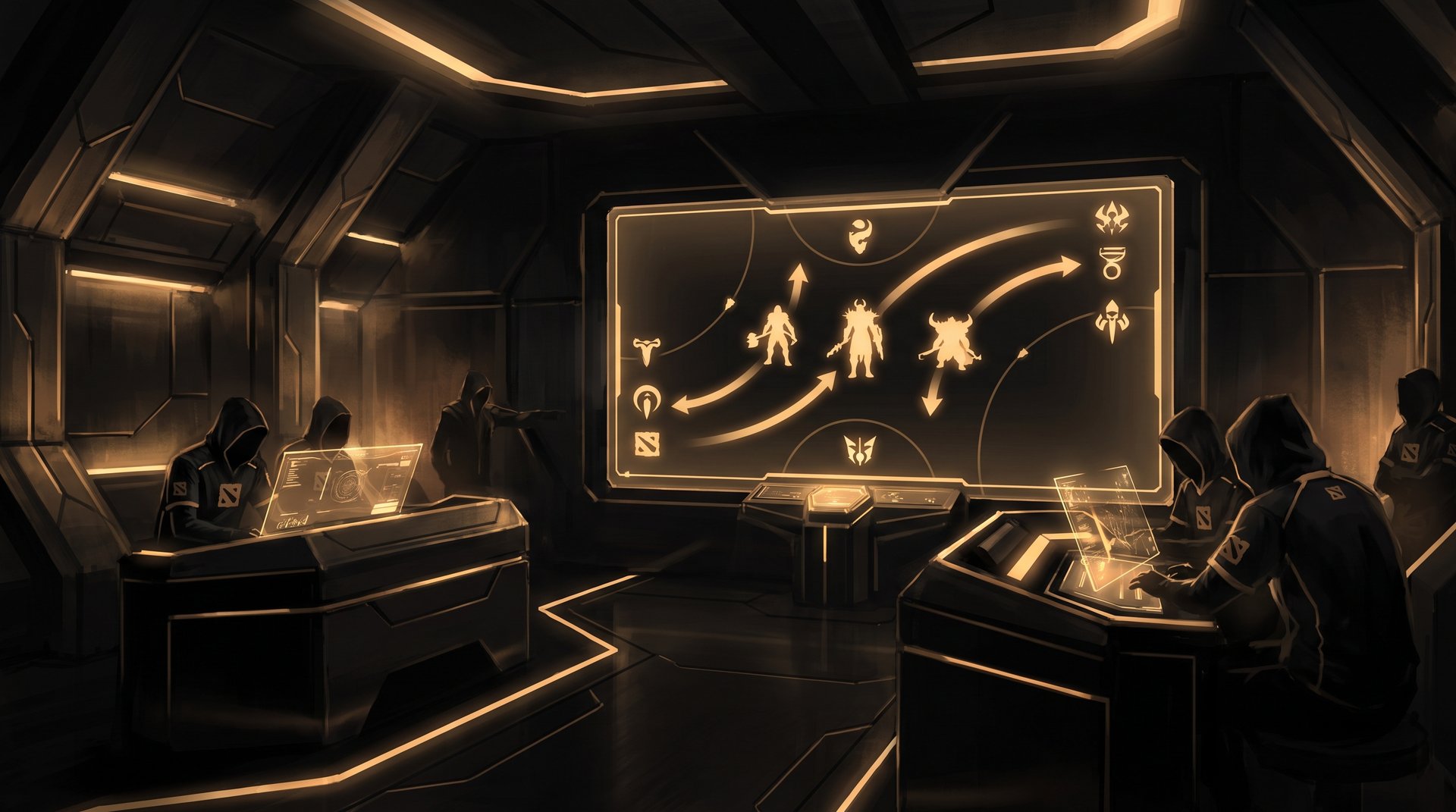
Draft Impact on Patch 7.41e
The cleanest way to judge this move is through patch 7.41e, not through old TI highlight reels. Valve shipped 7.41e on July 30 and then turned on TI features in the same general competitive window. That means every team arrived in Shanghai with the same core pressure points: efficient mids that can secure lane without demanding too many support rotations, side lanes that can translate level six into map access, and support duos that do not die when the game turns scrappy around runes and twin-gate movements.
Topson usually changes drafts in three ways on a patch like this.
- He reopens off-meta mids that other teams stopped respecting. Even if he does not pick them every series, the threat matters in bans.
- He lets supports leave mid earlier. A self-sufficient mid creates extra freedom for greedy four-position patterns and stronger side-lane cover.
- He encourages tempo through weird lane states instead of textbook execution. That can be gold against cleaner, more rigid teams.
On 7.41e, that matters because the safest TI mids are not always the ones with the biggest solo-carry fantasy ceilings. They are the ones who let your whole draft breathe. If LGD had to swap into a standard control-mage-only player, they would become easier to pin down. With Topson, they become harder to ban against because your prep has to account for both conventional meta mids and his own comfort weirdness.
That does not mean LGD should instantly become a clown-draft team. In fact, the best version of this roster move is probably the opposite. Topson does not need ten bizarre heroes to create pressure. He needs four or five credible mid options that can bend lane expectations, force awkward support positioning, and create enough uncertainty for LGD’s side lanes to play simpler Dota.
| Draft Layer | Before the Swap | After Topson |
|---|---|---|
| Mid ban pressure | Mostly aimed at removing the standard best picks | More bans get taxed by comfort and curveball possibilities |
| Support freedom | Mid stability depends more on fixed scripts | Supports can sometimes cheat harder toward side lanes or rune fights |
| Series adaptation | Predictable between games if early plan fails | Game 2 and Game 3 drafts can pivot harder without looking desperate |
| Enemy prep quality | Opponents can build narrower answers | Opponents need broader answers in less time |
For pub players, this is the part you should not miss. A player like Topson is strongest when he punishes over-scripted reactions. That is true in TI and in ranked. If the enemy support always rotates at the same timing, if the enemy mid always pushes one extra wave before moving, or if a safelane always assumes help is coming at six minutes, the weird player gets value just by changing cadence. That is the real transferable lesson from this move.
Where LGD Gets Better Right Away
The best argument for LGD after this move is not “Topson is a legend.” That is fan talk. The real argument is that he solves three practical problems in a hurry.
1. LGD becomes less prep-friendly
TI favorites are easiest to beat when you can reduce them to three clean lanes and two expected smoke timings. Topson makes that harder. Even if his mechanics are merely good instead of peak prime, the information pressure he creates is still elite. Opponents have to waste real draft energy asking whether they are banning for current patch value or for player-specific disruption.
2. Their mid slot gains more comeback routes
A conventional stand-in often makes a team more stable but less dangerous from behind. Topson’s best Dota has always included ugly-game value. If the first ten minutes are imperfect, he can still create game-winning map stress by cutting waves, forcing side reactions, and turning one defensive smoke into a favorable trade. In TI Swiss, that matters because every game in a best-of-three does not need to look clean. It only needs to end with the better scoreline.
3. Their fantasy profile gets sharper
Valve’s official TI feature post confirmed that the new fantasy system drafts both supports from one team, the safelaner and offlaner from one team, and then one solo mid. That solo-mid design makes replacement news much more important than it looks. Topson does not just change LGD’s whole team value. He changes one high-leverage fantasy slot directly. If you believe LGD can stay alive long enough for his game count to matter, he becomes one of the most polarizing mid choices on the board.
Where LGD Could Still Break Down
If you are only reading the upside, you are missing half the Dota. This move also comes with obvious risk, and some of it is brutal.
1. Mid and supports might not share the same map grammar yet
Topson’s style works best when his supports understand which “bad-looking” map states are actually good. That takes reps. If a position four leaves half a second too early, or if a five reacts to pressure like he is protecting a normal mid instead of a chaos generator, LGD can turn clever pressure into free deaths. This is the classic emergency-sub problem: same idea, different timing.
2. Swiss punishes one bad read quickly
Valve’s format is harsh. A fourth win gets you through, but a fourth loss sends you home. By the end of Saturday, three teams qualify and three get eliminated. Then Sunday’s elimination round decides the remaining five main-event teams. There is no long league stage where you can experiment for two days and recover later. If LGD misreads one hero tier or overforces a Topson-specific pocket pick too early, the format can punish it immediately.
3. Opponents now have a very clear focus point
Before this change, people talked about LGD as a dangerous team with upside. After this change, every discussion begins with the mid slot. That can help because it creates respect, but it also concentrates counter-prep. Teams now know exactly where the surprise is supposed to come from. Good staffs will attack that by either drafting for lane indifference or by picking side lanes that punish greedy mid resources.
4. Narrative inflation is real
Fans overrate legendary names every TI. A famous replacement instantly gets priced like a solved success story. But emergency stand-ins usually create a wider range of outcomes, not a guaranteed upgrade. Topson absolutely raises LGD’s chance of taking a big series they “shouldn’t” win. He also raises their chance of dropping a game because the whole roster still sees the map differently in a key fight.
| LGD Outcome | What It Looks Like | Probability Read |
|---|---|---|
| Best-case spike | Topson immediately warps bans, LGD steal prep edges, side lanes look freer, team reaches main event | Very real because Swiss rewards surprise value |
| Median path | Some brilliant games, some awkward support timings, enough volatility to stay competitive but not dominant | Most likely |
| Worst-case collapse | Draft ideas are good, execution is late, enemy teams punish coordination gaps, LGD fall into elimination danger fast | Still live because practice time is tiny |
Fantasy and Prediction Impact
This is where the story turns from interesting to actionable. If you are filling out TI predictions or fantasy today, Topson changes your choices in at least four ways.
Do not treat LGD like the old LGD post anymore
TeamSmurf’s earlier TaiLung LGD guide was built around a different version of the team. The whole point of today’s news is that your old assumptions are partially dead. If your predictions still assume the same lane profile, same mid hero comfort, and same series pacing, you are anchoring to the wrong roster.
Topson becomes a high-variance mid fantasy pick
Valve’s official update confirmed fantasy mids are drafted as one solo slot. That means you do not need to buy into all of LGD to bet on Topson. In fantasy terms, that is powerful. He is not the safest choice because integration risk is real, but he is exactly the kind of pick that can separate you from chalk lineups if he gets enough games and enough draft freedom.
LGD prediction paths should split by risk tolerance
If you are playing safe, you should probably move LGD upward a little but not all the way into “solved contender” territory. If you are trying to beat a smart pool, the sharper move is to give them more upset equity without assuming clean consistency. In other words: raise their chance to beat strong teams, but do not automatically raise their chance to be stable across every Swiss round.
Supporter-bundle logic changes too
Even though this article is not a supporter-bundle guide — TeamSmurf already has recent TI rewards coverage for that — this move still affects how fans spend. Valve’s official TI launch post said supporter bundles now include custom sprays, health-bar badge, team emoticons, chat wheel lines, and a new Gold-tier global effigy that lasts through the end of September. A roster shock like this makes LGD one of the teams people are suddenly more likely to back emotionally, not because the bundle changed, but because the story did.
What Pub Players Should Copy From This Story
You do not need to be at TI to get value from this. There are three ranked lessons here that matter for anyone trying to climb on 7.41e.
1. Draft discomfort is real MMR
Most pub players think draft value only means counterpicks. That is low-rank thinking. The deeper value is making opponents uncertain about rotation timing, lane priorities, and which resource they must protect first. Topson has built a career out of that. In your own games, that can be as simple as picking a mid that does not need babysitting, then using that freedom to unlock your four-position earlier.
2. Tempo is not speed — it is forcing bad responses
Plenty of mids play fast. Fewer mids force the other side to make the wrong fast response. The difference matters. If the enemy rotates two heroes to protect a rune and you trade it for safe farm plus a support teleport plus tower chip, you already won that moment. That is the kind of edge high-MMR players understand instinctively and lower brackets miss completely.
3. Pocket picks only matter when the team shape around them is clear
One of the biggest pub mistakes is copying a weird pro hero without copying the map logic behind it. Topson can pick unusual mids because the rest of the team knows what that does to support pathing, wave priority, and objective timing. If you want to climb, do not just spam odd heroes. Learn when the weird pick creates a cleaner map for your side. If you cannot explain that, it is not a pocket pick. It is just trolling with better branding.
If your actual goal is MMR instead of theory, the faster route is usually not brute-force copying TI drafts. It is fixing the bracket-specific mistakes that make you lose stable games. Our MMR boosting guide, safety breakdown, and best Dota 2 boosting services review are better starting points if you want practical rank movement instead of spectator analysis.
Final Verdict on LGD’s Ceiling
So where do we land? LGD are more dangerous today than they were yesterday, but they are not more stable. That is the cleanest honest summary.
Topson improves the team’s upside immediately because he expands draft pressure, creates a harder prep problem, and fits the exact kind of solo-mid fantasy slot Valve just turned into a high-leverage decision point. He also arrives on a patch window where teams still value interpretation more than pure long-term comfort, which helps him.
At the same time, this is still a last-minute replacement right before one of the least forgiving TI group-stage structures Valve has used in years. Swiss rewards teams that can spike a matchup quickly, but it does not forgive slow communication. That is why I would move LGD up as a “nobody wants to draw them” team before I move them up as a “safe semifinal lock” team.
In plain language: if you want a sharp contrarian read, Topson makes LGD live for a real run. If you want a conservative bracket, treat them like a volatility team with elite upset equity. Both views can be right at the same time.
Need MMR Gains, Not Just TI Theory?
Watching how elite mids bend a patch is useful. Actually climbing still comes down to cleaner decisions, sharper hero pools, and fewer bracket mistakes. If you want help translating theory into rank, TeamSmurf’s Dota 2-only coaching and boost services are built for exactly that.
Get MMR Boost Book Coaching Fix Low Priority



