Dota 2 Patch 7.41e Guide: TI Meta Winners and Losers

Patch 7.41e dropped July 31, 2026. It came bundled with the Summer Scrub 2026, a partial Immortal MMR reset, the TI 2026 Compendium, and a message from Valve that is hard to misread: this is the patch The International 2026 is being played on.
TI15 starts August 13 in Shanghai. Sixteen teams. One patch window for every pro to solve. And right now, while the dust settles from the Immortal compression, pub queues are sitting on one of the most fluid metas of the year. That is either a problem or an opportunity depending on how prepared you are.
This guide covers every major nerf, every item change, the heroes you should be queuing right now, and exactly what the MMR reset means for your climb. No fluff — just the patch breakdown a 7K player would give you if you asked nicely.
Table of Contents
The Immortal MMR Reset Explained
The 7.41e update included what Valve officially described as “Immortal Rank players have had their MMR adjusted.” In practice, this functions as a ladder-wide compression, not a full reset. Your MMR went down — everyone in Immortal had their bracket compressed toward a lower baseline. If you were sitting at 6,500 MMR, you woke up lower. If you were camping at 8,000+, you woke up a lot lower.
Why does this matter? Because the first two weeks after any Immortal compression are the most exploitable period on the ranked ladder all year. Legitimately high-MMR players get matched with a larger range of skill levels as the compression flushes out. If you know the patch well right now and most of your opponents do not, you are printing MMR — full stop.
This is the exact scenario where a coaching session pays for itself in the fastest way possible. One deep session on the 7.41e priority picks, and you enter the recalibration window with a real edge over players still building the same items from last week.
Below Immortal, nothing changed directly. But the meta did — and understanding why Snapfire is weaker, why physical damage cores are rising, and which supports got better relative to others is what separates players who climb from players who wonder why they are stuck.
What 7.41e Is Actually Fixing
Valve message with this patch is consistent across every change: they are removing free value. Free high-ground defense. Free lane control. Free building pressure. Free ranged carry safety. Free support impact from heroes that were doing three jobs with two hands.
Patch 7.41d already took a pass at some of these problems. Lone Druid got hit again in 7.41e because the first round of nerfs was not enough. Snapfire was doing everything — lane damage, save, long-range teamfight, flex potential — and Valve finally addressed every part of it. Drow was providing free waveclear and high-ground punishment that made draft conditions too easy to enforce.
The secondary effect of this cleanup patch is that physical damage melee cores are relatively stronger. When ranged carries lose safety items and range safety nerfs, the math shifts in favor of heroes who can close gap and do raw damage. Watch the Juggernaut and Wraith King numbers over the next two weeks — they will be telling.
According to Dota2ProTracker data from 24,500 matches analyzed in the early patch window, Radiant is sitting at a 53.5% win rate in 7.41e. That is unusually high and likely reflects the post-compression chaos more than a genuine map imbalance, but it is worth noting if you have map preferences.
Major Hero Nerfs Broken Down
Snapfire
This is the biggest nerf of the patch. Snapfire was first-phased at a 34% contest rate despite the hit — she is still the most contested hero according to Dota2ProTracker data — which tells you just how dominant she was before 7.41e touched her.
What changed:
- Scatterblast no longer gains initial blast width from AoE bonuses
- Firesnap Cookie impact damage reduced at every level
- Mortimer Kisses direct damage nerfed
- Point-blank damage bonus dropped from 30% to 25%
- Talent: Kisses burn DPS reduced
- Talent: Old Cookie cooldown reduction talent removed entirely
- Level 25 talent: extra Kisses dropped from +8 to +6
What this actually means for pubs: Snapfire flex value is gone. You cannot pick her in a pos 4 and then slide her into mid or offlane without a plan anymore. You also cannot casually rely on Mortimer Kisses to do your teamfight damage for you. She will still be picked at high levels — her kit is fundamentally insane — but the era of her winning lanes, saving cores, scaling into teamfights, and controlling drafts all by herself is over.
Drow Ranger
What changed:
- Multishot mana cost increased
- Multishot arrow range formula made worse
- Multishot base damage bonus reduced: 100/120/140/160% down to 80/100/120/140%
- Hurricane Pike buff duration: 6s reduced to 5s (item change affecting Drow most)
Drow was the most reliable “pick her and protect her and win” carry in the previous meta. The Multishot nerf hits her in two places: the damage you do inside a fight is lower, and the range at which you can safely contest high ground is shorter. Combined with Hurricane Pike losing a second of buff window, the safety net she provides to a passive defensive draft is meaningfully smaller.
She is still playable. But you need an actual plan around her now — not just a ward line and some space. Her window to end games is narrower, and the item nerfs punish the exact setup that made her feel safe to pilot at every rank.
Lone Druid
What changed:
- Spirit Bear base armor reduced by 1
- Demolish bonus building damage: 30% down to 20%
The Demolish nerf is the one that matters. Lone Druid was oppressive in pub games not because of his teamfight presence but because a single lost skirmish could mean you lost two tier towers and barracks before anyone could respond. Reducing building damage from 30% to 20% is a 33% cut to the thing that made him terrifying. Timings are longer now. You get more margin to respond before your base is erased.
He received a nerf in 7.41d too — and still needed another round. That tells you how extreme the problem was. He will be picked at TI15 but with much more caution around when to commit the bear versus when to fight normally.
Hoodwink
What changed:
- Mistwood Wayfarer redirect chance scaling made worse
- Sharpshooter mana cost increased
- Hunter Boomerang cooldown increased: 18s up to 20s
Hoodwink mana cost nerf on Sharpshooter matters more than the cooldown. In pro play and high-MMR pubs, supports do not have infinite mana. If Hoodwink wants to spam Boomerang, fight early, shove lanes, and still threaten an ultimate, she now needs to manage resources. That is a real constraint on her ability to be everywhere at once.
Despite these nerfs, early Dota2ProTracker data shows Hoodwink at a 40.6% contest rate in professional-level data. She is not disappearing. But she now requires more intentional resource management rather than just pressing buttons freely.
Clockwerk
What changed:
- Power Cogs: mana burn on enemies reduced
- Power Cogs: travel distance lowered at early levels
- Power Cogs: vision reduced significantly
- Power Cogs: no longer blocks neutral creep camps
The camp-blocking removal is the biggest change for pub Clockwerk players. Blocking camps with Power Cogs was one of the subtle support tools that high-level players used to punish enemy support economy without spending anything. It forced pulls, killed stacks, and denied gold — all for free. That lever is gone now.
Hookshot is still Hookshot. Clock will be picked as an initiator. But the “I quietly ruin your lane economy while also threatening Hookshot” version of the hero is weaker. He is a one-trick initiator now, which is still valuable — just less free.
Shadow Fiend
What changed:
- Base intelligence: reduced from 18 to 16
- Shadowraze stack duration: reduced from 7s to 6s
- Level 25 Shadowraze talent nerfed
The base intelligence nerf hits Shadow Fiend early mana pool, making his laning phase slightly more resource-dependent. The Shadowraze stack duration reduction is the real mid-game nerf — maintaining maximum stacks in a real fight was already skill-dependent, and one second less window makes it meaningfully harder to execute his burst combo cleanly. If you were building support SF or the Presence flex build, both paths got worse.
Item Changes That Reshape Builds
| Item | Change in 7.41e | Who It Hurts Most |
|---|---|---|
| Berserk | Slow resistance: 15% ranged / 30% melee (was 30% all heroes) | Ranged carries using Berserk as a kite-breaker |
| Hurricane Pike | Buff duration down from 6s to 5s | Drow Ranger, passive ranged carry safety builds |
| Mask of Madness | Worse stat returns for ranged heroes | Ranged attack-speed stack builds |
| Butterfly | -5 Agility, +5 flat damage | Agility carry heroes relying on Butterfly stat bonuses |
The pattern here is obvious: ranged carry items received a coordinated nerf package. Berserk losing half its slow resistance for ranged heroes, Hurricane Pike losing a safety second, Mask of Madness getting worse on ranged — this is Valve saying that safe ranged carries had too much passive durability built into their standard item paths.
The Butterfly change is interesting. It lost 5 agility — meaning less armor, less attack speed, and less damage from agility scaling for agility heroes — but gained 5 flat damage. The swap slightly favors universal heroes and strength cores who want the evasion without needing agility stats. Agility carry mains lose more than they gain here.
There was also a targeted hit on Zeus support builds that were running Divine Rapier stacking strategies. That specific cheese build is effectively dead. If your team was drafting around it, find a new plan before TI prep ends.
Who Got Buffed — Physical Carries Win
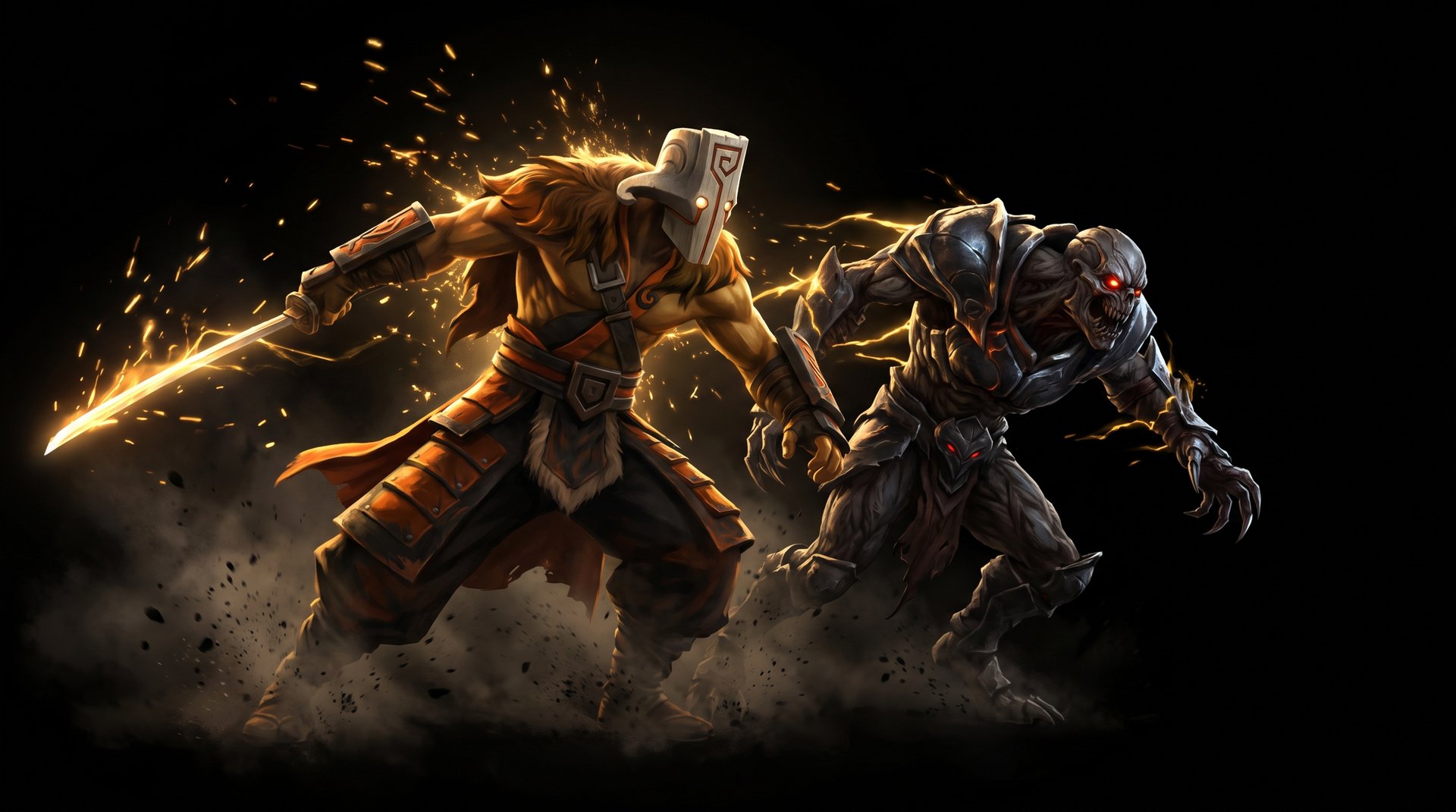
Juggernaut and Lina both received direct damage buffs in 7.41e. With ranged carry items nerfed and the heroes that provided free defensive value brought down, physical melee carry heroes — and heroes with consistent damage output — are in a much better spot.
Beyond the direct buffs, several heroes won by context rather than by being touched at all:
- Wraith King — Innate abilities untouched, physical damage output reliable, benefits from the general agility item nerfs hitting competitors. Wraith King and Lifestealer are among the top-tier picks leveraging Innate abilities in the current meta according to carry tier analysis from playerauctions.com.
- Lifestealer — Same story. Feast scales with physical damage; the ranged carry nerfs do not affect him. He thrives whenever games extend into sustained right-click fights.
- Faceless Void — Maintained a 15.9% pick rate at Legend rank and above heading into 7.41e. Chronosphere is Chronosphere. The item nerfs do not touch his core build meaningfully.
- Spectre — Sitting at 55.5% win rate at higher brackets in 7.41d according to immortalboost.com carry tier data. Nothing in 7.41e directly targets her scaling. With ranged carry alternatives weakened, her patient ultra-late-game strategy becomes more appealing.
- Lina — Got direct damage buffs. Already strong as a mid flex pick and roaming support, the buffs push her further into contested territory. Expect her at TI.
- Juggernaut — Direct damage buffs plus an item landscape where his core items are untouched. If you want a safe ranked pick right now that fits into almost any lineup, Juggernaut is the answer. His ability to play pos 1 or pos 2, pressure early, fight mid-game, and scale with BKB timing makes him ideal in the current volatile pub environment.
Best Heroes by Role Right Now
| Role | Top Pick | Why It Works in 7.41e | Backup Pick |
|---|---|---|---|
| Safe Lane Carry | Juggernaut | Direct damage buffs, BKB timing untouched, fits any draft | Wraith King |
| Safe Lane Carry | Lifestealer | Physical carry wins by context — ranged carry items nerfed | Spectre |
| Midlane | Lina | Direct damage buffs, flexible between mid and roaming pos 4 | Dragon Knight |
| Midlane | Puck | Untouched in 7.41e, strong initiative plus reliable escape | Void Spirit |
| Offlane | Centaur Warrunner | Melee brawler thrives as physical carry archetype rises | Mars |
| Pos 4 Support | Tusk | Clockwerk weaker, roaming melee supports with initiation fill the gap | Earth Spirit |
| Pos 5 Support | Lion | Snapfire nerfed hard, traditional burst supports fill the gap | Witch Doctor |
A few notes on reading this table: these are pub-optimized picks for the recalibration window right now, not TI15 draft theory. Pro play will look different because coordinated teams can still make Hoodwink and Snapfire work — they just need more intention. In your ranked queue from Archon through Immortal, the heroes above win more games than the ones that got nerfed.
If you want to know which MMR boost strategy makes the most sense in the current window, the answer is simple: pick from the physical carry column, play toward 25–30 minute fight timings, and let your opponents struggle with their pre-patch builds.
How to Climb in the 7.41e Meta
The 7.41e window gives you two specific advantages you need to use right now:
1. The Recalibration Chaos Advantage
The Immortal compression means that for the next 10–14 days, the bracket is sorting itself out. That means variance goes up. MMR-per-game potential goes up. If you are an Ancient or Divine player, this is your moment to push into Immortal — the MMR floor of Immortal lobby quality has dropped temporarily.
The most effective strategy right now: queue Juggernaut or Lifestealer, play for a 25-minute timing, and avoid draft gambles. When opponents are still figuring out what the new patch does, consistent execution beats creative approaches every time.
2. The Nerfed Meta Knowledge Gap
Most players at Guardian through Crusader brackets will still be building Drow and Snapfire with pre-patch habits for at least another week. This is free MMR. You know Snapfire point-blank bonus is down from 30% to 25%. You know Hurricane Pike gives one fewer second of safety window. Play into those weaknesses with confidence — a Clockwerk who Hookshots a Drow during Hurricane Pike activation now has one extra second of follow-up window because Pike expired sooner.
3. Support Item Priority Has Shifted
With Clockwerk Power Cogs no longer blocking camps, the early-game support income dynamic has changed. Pulls are slightly less punishable at the early levels. Build your support game around maximizing pull stacks rather than blocking them — and take advantage of opponents who still expect camp control from the spot where Clock used to put Cogs.
If you want to shortcut the learning curve, a single session with an Immortal-rank coach who knows this patch in depth will get you there faster than 20 trial-and-error queues. The TeamSmurf coaching service specializes in exactly this — patch-specific hero pools and meta-adaptive strategy for ranked climb.
| Rank Bracket | Priority Goal in 7.41e | Best Strategy |
|---|---|---|
| Herald — Guardian | Play stable heroes, avoid overcomplicating builds | Wraith King carry, Lion pos 5 — clean simple kits |
| Crusader — Archon | Exploit meta knowledge gap vs pre-patch habits | Juggernaut or Lifestealer, play for early Roshan timing |
| Legend — Ancient | Consistent execution over creative drafts | Lina mid, force physical damage teamfight by 25 minutes |
| Divine — Immortal | Post-compression recalibration window | Queue heavy, strong carry picks, no greedy late-game drafts |
If the ranked grind feels like too much of a time investment right now — especially with TI hype making queues longer and more tilted — the alternative is letting a high-MMR player handle the Dota 2 MMR boost while the meta is still in flux. Our boosters know 7.41e inside and out and are actively exploiting the recalibration window on client accounts right now.
What This Means for TI 2026
TI15 runs August 13–24, 2026 in Shanghai. Sixteen teams. Prize pool still building from the Compendium. This is the patch they play on — Valve confirmed it by releasing 7.41e while explicitly referencing the approach of The International.
What should you expect from the pro meta at TI15?
Snapfire will still be drafted. A 34% contest rate does not disappear overnight even after nerfs. Pro teams have had a week to solve the post-nerf version. She will appear — just as a more intentional pick rather than a first-phase reflex.
Hoodwink will be everywhere. 40.6% pro contest rate entering the tournament window. Her kit is too well-rounded to drop out of the meta; the mana nerf just means teams need to be smarter about when they use Sharpshooter relative to their mana pool.
Physical damage carries will feature heavily in the carry pool. The coordinated ranged carry item nerfs push the meta toward melee core timings. Expect Juggernaut, Lifestealer, Wraith King, and potentially Troll Warlord in the TI15 carry rotation.
Lone Druid is high risk in a competitive draft. The Demolish nerf changes timing-sensitive rat strategies. Teams that used to trust LD to end games after a lost fight now have to hold their bear back longer before it can do enough building damage. High-skill teams that execute perfectly will still bring him — but the margin for error is smaller than it was last patch.
Lina and Juggernaut buffed into a TI patch is a signal. When Valve buffs heroes directly before The International, those heroes tend to be in the mix. Both are strong enough and versatile enough to appear across multiple draft contexts. Do not be surprised if Juggernaut becomes the most-contested carry of TI15.
Want to watch TI15 with a real understanding of every pick and ban? Our analysis is updated with each patch — check the TeamSmurf guide hub for meta breakdowns throughout the tournament.
Climb Faster in the 7.41e Meta
The post-compression window is closing. Our Immortal-rank boosters know every nerfed hero, every contextual winner, and exactly which ranked strategies are printing MMR right now in Patch 7.41e.
Get Your MMR Boost Book a Coaching Session