


Ranked All Pick Rules 2026: Ban Nominations, Random Bonus, Repick and Strategy Time

Ranked All Pick is the only ranked mode in Dota 2, yet most players have never looked up its exact rules. They know roughly what happens — bans, picks, some gold if you random — but the actual mechanics are fuzzy. How does the ban vote resolve? How much gold does randoming give? What does repick cost? What happens if you run out of time?
This page answers all of it. Every number below was verified against current patch 7.41f rules and the live in-game client. If patch 7.42 changes any of these mechanics, we will update this post the same day the patch lands.
Contents
The Full Ranked All Pick Draft Sequence
Before we go phase by phase, here is the complete sequence so you can see how every piece fits together. Bookmark this table — it answers “what phase am I in right now?” every time you are in a draft.
| Phase | Duration | What Happens | What You Can Do |
|---|---|---|---|
| Match found / Accept | 30 seconds | All 10 players must accept the match | Click Accept or the match is cancelled |
| Ban Nominations | 30 seconds | All 10 players simultaneously nominate one hero each to ban | Click any available hero to nominate it; see others’ nominations in real time |
| Ban Resolution | Instant | System calculates which nominated heroes are banned based on nomination counts | Watch the banned heroes lock in |
| Pick Phase | 30 seconds per turn | Players pick heroes; each pick is visible to the enemy team as soon as it is confirmed | Select and lock in your hero; use Random button for bonus gold |
| Pre-Game Preparation | ~60-90 seconds | Map loads, fountain area available; no draft actions remain | Buy starting items, read the minimap, plan your lane |
Notice there is no formal “Strategy Time” phase in RAP the way Captain’s Mode has one. We cover this in detail in the Strategy Time section below.
The Ban Nomination Phase: How Bans Actually Resolve
This is the most misunderstood part of Ranked All Pick. Players often think bans work the same as in Captain’s Mode — a fixed number of heroes removed in a set order. They do not. RAP uses a nomination-and-probability system that is fundamentally different.
The Nomination Mechanics
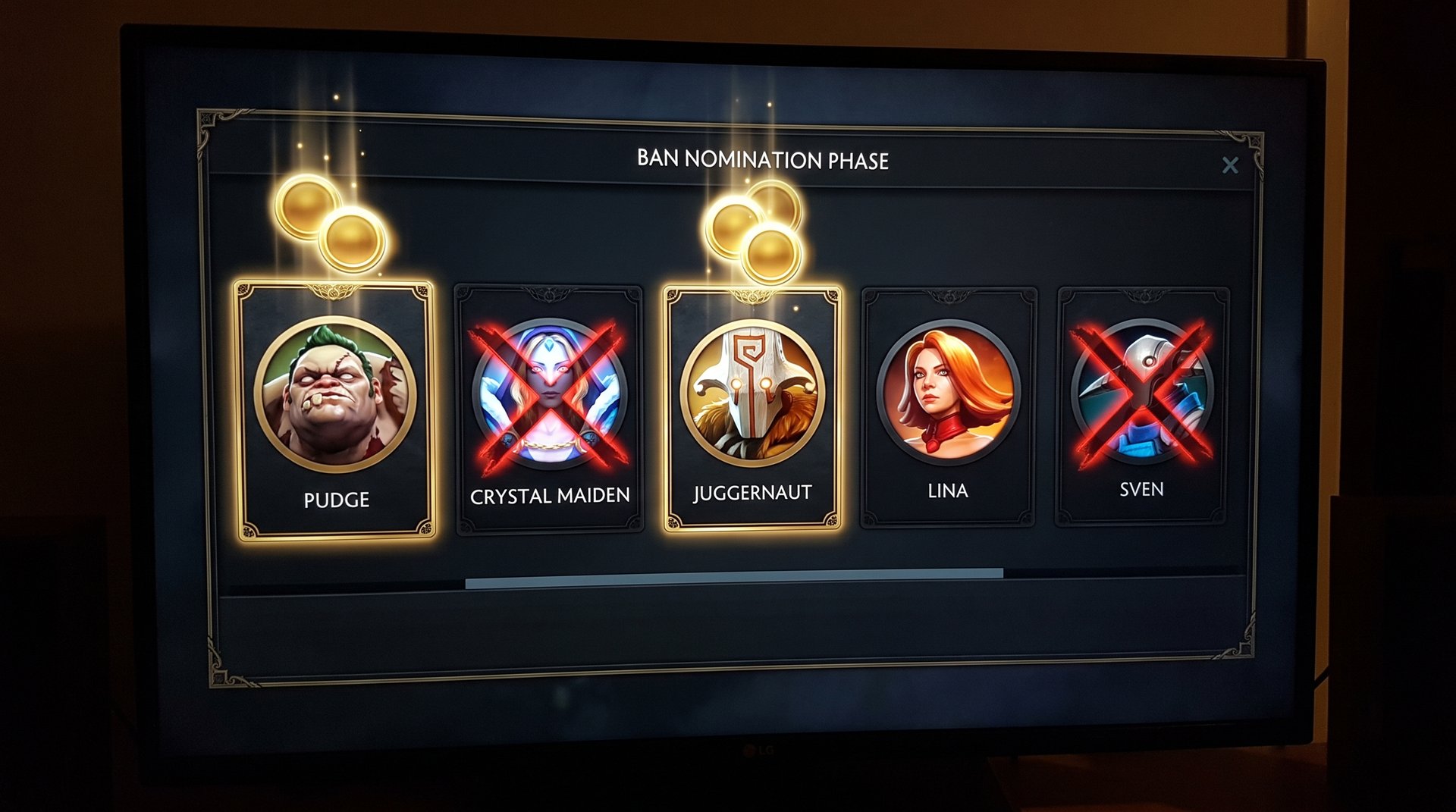
When the ban phase begins, all 10 players see the hero selection grid and a 30-second countdown. Every player can nominate exactly one hero. You tap the hero you want banned; your nomination is visible to all 10 players in real time as a small icon under that hero’s portrait. The other nine players can see your nomination and adjust theirs accordingly.
Key rules during the nomination phase:
- You can change your nomination before the timer hits zero — your last selection before time expires is the one that counts.
- You do not have to nominate. If you ignore the phase entirely, the system may auto-nominate on your behalf (typically the hero with the most recent activity or a system-chosen hero). In practice, always nominate intentionally.
- Both teams’ nominations are visible to everyone. There is no hidden information in this phase.
- Heroes that are already banned in a previous round (in rematch or lobby scenarios) are not available to nominate.
How the 30-Second Timer Works
The 30-second nomination window starts the moment the draft screen loads. There is no extra time for disconnected players — the phase advances regardless. If you are tabbed out or on a slow loading screen, you may miss the chance to nominate your preferred ban. Make a habit of being ready at the draft screen the moment the match is accepted.
One commonly asked question: what if you fail to nominate in time? The game may auto-nominate a hero for you based on your recent games or a random selection. This auto-nomination still counts toward the probability calculation, but you have no control over which hero it targets. Do not rely on auto-nomination.
How Ban Probability Stacks: The Math
Here is the mechanic that separates players who understand RAP from those who do not. Each unique nominated hero rolls a 50% chance of being banned. That 50% applies per nomination — and if multiple players nominate the same hero, those rolls stack multiplicatively.
The formula: Ban probability = 1 – (0.5 ^ number of nominations)
| Number of Nominations | Ban Probability | Chance the Hero Survives |
|---|---|---|
| 1 nomination | 50% | 50% — coin flip |
| 2 nominations | 75% | 25% |
| 3 nominations | 87.5% | 12.5% |
| 4 nominations | 93.75% | 6.25% |
| 5 nominations | 96.88% | 3.12% |
With 10 players in the lobby, up to 10 nominations can be distributed. If all 10 players somehow nominated the same hero, the probability of that hero being banned approaches 100% (technically 99.9%). In practice you will never get all 10 players to coordinate, but even 3-4 nominations from your own team plus a few from the enemy side can virtually guarantee a ban.
Strategic Implications of the Probability System
Understanding the stacking math changes how you approach nominations. A single nomination on a hero is a coin flip — if banning that hero truly matters to your draft, you want your teammates to pile on the same target. This is why high-MMR teams coordinate in voice chat before the ban phase starts: they collectively guarantee a key hero is removed rather than scattering nominations across five different heroes for five 50% coin flips.
What does the enemy team’s nominee list tell you? If you see 3 of their players nominate the same hero, that hero is probably being added to guarantee its removal — it is almost certainly something that wrecks their strategy or is a hard carry/support they fear you will play. This read can actually inform your pick phase: if the enemy is desperately trying to ban Phantom Lancer, maybe you should lock it in fast before the bans resolve.
For a full strategy breakdown of how to use bans to build winning drafts, see the Dota 2 Draft Strategy Guide. That guide covers pick order, counters, and lineup archetypes. This page is focused on the mechanical rules, not strategy.
For data on which heroes actually get banned most at your rank, check The Most Banned Heroes at Every Rank 2026 — that post pulls community data to show you which heroes consistently attract the most nominations across the skill brackets.
The Pick Phase: Timer, Order, and Mechanics
After the ban phase resolves, the draft moves immediately to picking. There is no buffer. Bans lock in, and your pick timer starts.
Pick Timer: 30 Seconds
Each player has 30 seconds to select and lock in their hero. In standard Ranked All Pick, the pick phase is not strictly alternating one at a time as in Captain’s Mode — instead, all players on both teams pick within overlapping windows. You can see enemy picks as they are confirmed, which is why support players traditionally pick early (establishing utility) and carry players wait to counter-pick.
The clock counts down in the upper-right area of the draft screen. When it reaches zero and you have not locked in a hero, see the Time Expiry section below.
Visible Picks and Pick Order
Once you lock in a hero in RAP, it becomes visible to both teams immediately. This means:
- Picking early exposes your hero to counter-picks from the enemy team.
- Picking late lets you respond to what the enemy has already locked in.
- If your teammates all wait until the last second, your team may end up with mismatched roles or no counter-pick leverage.
The convention at most skill levels: Position 5 support picks first (they are flexible and give the team information about your strategy), then Position 4, then Position 3 (offlaner), then Position 2 (mid), with the Position 1 carry picking last to maximize counter-pick value. This is not a rule enforced by the game — it is community convention that most players follow.
Swapping Heroes After Picking
Once you lock in a hero in RAP, you cannot swap it with a teammate the way you can in some other modes. The hero swap feature is not available in Ranked All Pick. You are committed to whatever you pick. If you lock in the wrong hero by accident, your options are limited — the game will not undo it.
The Random Button: Bonus Gold and Rules
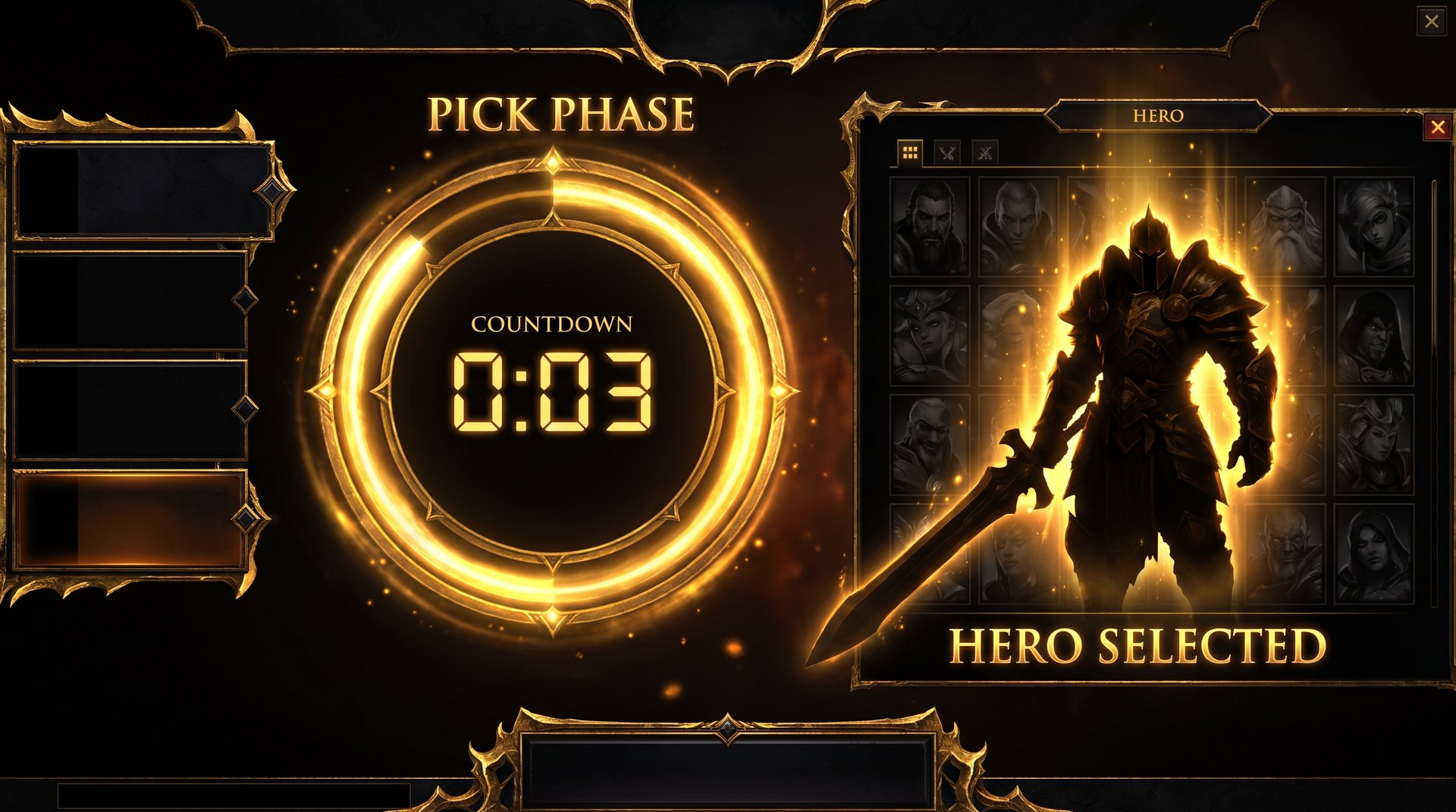
Every player in RAP has a “Random” button in the draft screen. Clicking it does two things: it immediately assigns you a random available (not banned, not already-picked) hero, and it awards you a bonus gold at the start of the game.
Random Bonus Gold Amount
Randoming in Ranked All Pick grants you 250 bonus starting gold, verified for patch 7.41f. This is on top of your normal starting gold (625 gold). Total starting gold if you random: 875 gold, which lets you buy a significantly upgraded starting kit compared to your lane opponents.
| Starting Method | Starting Gold | What You Can Buy |
|---|---|---|
| Normal pick | 625 gold | Standard starting items (Tango, Salve, Branches, etc.) |
| Random (press Random button) | 875 gold | Upgraded start: add a Quelling Blade, extra Branches, or a Magic Stick charge-builder earlier |
| Time expiry (auto-random) | 625 gold | No bonus — random without pressing the button gives no gold |
When the Random Button Is Available
The Random button is available as soon as your pick window opens. You can click it at any point during your 30-second pick window. However, once you have used Random for the match, the button is no longer available to you for that game — it is a one-time option per player per match.
The random bonus does NOT apply if the game auto-assigns you a hero because your timer ran out. You only receive the 250 gold if you actively click the Random button yourself.
Is Randoming Worth It?
The 250 gold advantage is real and meaningful. On heroes that can use the extra gold efficiently — supports who can rush a Magic Wand faster, carries who get an extra set of Branches — the random bonus translates to roughly 1-2 minutes of extra farm equivalent. At lower skill levels, the gold advantage sometimes outweighs the disadvantage of an unknown hero pool assignment. At higher MMR, most players only random if they are comfortable on a wide hero pool or if they have a specific hero in mind that they are willing to accept.
The main risk: you might get a hero that does not fit your team’s needs at all. If your team already has three cores and you random into a fourth core hero, that 250 gold does not compensate for a dysfunctional lineup.
Repick Rules: What It Costs and When It Is Available
After you press the Random button and receive a hero, you have the option to repick — that is, pay to get a different random hero instead of the one assigned.
Repick Cost
Repick costs 100 gold, deducted from your starting gold. If you randomed (and thus started with 875 gold), a repick brings you to 775 gold before the game starts. You receive a new random hero — not a free choice of hero, but another random assignment from the available hero pool.
Repick Availability and Limits
- Repick is only available if you used the Random button during the draft. You cannot repick a hero you manually selected.
- You can only repick once per game. After using repick, the option disappears regardless of the result.
- Repick must be used during the draft phase, before the game fully loads into the laning phase. Once the loading screen completes and heroes appear on the map, repick is no longer possible.
- Your repick result is another random hero from the available pool. You cannot target a specific hero and you cannot repick the repick.
What Happens When Your Pick Timer Runs Out
If your 30-second pick window expires without you selecting a hero, the game handles it as follows:
Auto-Random Assignment
The system automatically assigns you a random available hero. This is functionally identical to pressing the Random button, with one critical difference: you receive no bonus gold. Your starting gold stays at the standard 625 gold even though you are playing a hero you did not choose.
Does the Game Cancel?
No. A single player timing out does not cancel the match. The game proceeds with the auto-assigned hero. In very rare cases where connectivity problems cause multiple players on the same team to fail to pick, the game may pause or abandon — but this is a disconnection scenario, not a normal draft timeout.
Behavior Score Implications
Repeatedly abandoning the draft (closing the client during the pick phase or repeatedly ignoring nominations) can affect your behavior score and potentially lead to low-priority queue. Timing out on a pick occasionally happens and is treated as an accident by the system; systematic draft avoidance is treated differently.
Strategy Time in RAP: Does It Exist?
This is a common question and the answer is important to understand. Ranked All Pick does not have a formal “Strategy Time” phase the way Captain’s Mode does.
Strategy Time in Captain’s Mode vs RAP
In Captain’s Mode (the competitive tournament format), there is a dedicated 30-second “Strategy Time” phase before the draft begins. During this phase, teams can communicate and plan without the ban/pick timer running. It is a defined game phase with its own label in the client.
RAP does not have this phase. The moment you accept the match, you move straight to the hero selection lobby, and the ban nomination timer starts almost immediately.
| Feature | Ranked All Pick | Captain’s Mode |
|---|---|---|
| Pre-draft Strategy Time | No formal phase | 30 seconds (before bans) |
| Ban system | Nomination + probability | Captains ban directly (100% certainty) |
| Pick visibility | Picks visible when locked | Picks visible when locked |
| Pick order | Community convention, not enforced | Strict alternating order enforced |
| Random button | Available, +250 gold | Not available |
| Hero swap between teammates | Not available | Not available in ranked |
The Loading Screen as Preparation Time
After all 10 heroes are locked in, the game loads the map. This loading period (typically 60-90 seconds depending on all players’ hardware) functions as informal strategy time. Your team can use the in-game chat or external voice communication to discuss lane assignments, item builds, and early objectives before creeps spawn. This is when you should lock in your lane plan if you have not already done so in the draft.
Some teams also consider the “pre-game” period — the 30 seconds or so after the map loads but before creeps spawn at 0:00 — as strategy time. You can roam to the fountain shop, check the minimap, and coordinate with teammates about courier management and ward placement. This period is short but valuable.
How RAP Drafts Feel Different at Each Rank
The mechanical rules are the same at every MMR. What changes is how players use those mechanics. Understanding this helps you calibrate your expectations and adapt your approach as you climb MMR.
| Rank Range | Ban Nominations | Pick Order | Random Usage |
|---|---|---|---|
| Herald / Guardian (0-1,800 MMR) | Mostly random targets, little coordination; hero preferences over team needs | First come, first served; multiple players may instalock carry | Common; players enjoy the variety and the bonus gold |
| Crusader / Archon (1,800-3,500 MMR) | Players start banning known strong heroes but rarely coordinate across the team | Some convention of carry picking last; not consistently followed | Still common, particularly for players with wide hero pools |
| Legend / Ancient (3,500-5,000 MMR) | Targeted bans against known pub-stomp heroes; some chat coordination | Rough role-based pick order; carry often waits for enemy picks | Less common; players prefer specific counter-pick options |
| Divine / Immortal (5,000+ MMR) | Highly coordinated; 3+ nominations on one hero is common from a well-coordinated party | Strict convention; supports announce picks before locking to avoid overlap | Rare; reserved for players with deep pools or deliberate bonus-gold strategies |
One practical takeaway: in lower brackets, understanding these mechanics better than your opponents is already an edge. If you coordinate your ban nominations in a party of two or three, you can near-guarantee the removal of the one hero that wrecks your intended strategy. Most solo queue players at those ranks are scattering nominations randomly.
If you want to skip the grind and understand what high-MMR drafting actually looks like from the inside, Dota 2 boosting services can place you in games above your current bracket so you can observe coordinated drafts first-hand. It is also worth knowing that Dota 2 boosting is safe when done through a reputable provider that uses VPN protection and does not access your account without your knowledge.
RAP vs Captain’s Mode: The Full Comparison
Many players only know RAP. If you ever play in an organized 5v5 or watch pro Dota, you will encounter Captain’s Mode. Here is how the rule sets differ at a glance.
| Rule | Ranked All Pick | Captain’s Mode (pro format) |
|---|---|---|
| Who bans | All 10 players nominate simultaneously | One Captain per team bans alternately |
| Ban certainty | Probabilistic (50% per nomination, stacking) | 100% — every ban click removes the hero |
| Total bans | Variable (depends on nominations and rolls) | Fixed at 12 (7 in some limited formats) |
| Pick order | Informal convention; clock is per-player | Strictly enforced: 2-2-2 alternating order |
| Random button | Yes — +250 gold bonus | No |
| Repick | Yes — 100 gold after randoming | No |
| Strategy Time | No (loading screen only) | Yes — 30 seconds before bans |
| Hero swap | No | Available in tournament drafts (organizer setting) |
The key structural difference: in CM, the outcome of each ban is deterministic and fully controlled by the captain. In RAP, every ban is a roll of dice — coordinated voting increases the odds but never reaches certainty (technically). This is why high-level RAP drafts sometimes see a “safe” hero survive despite heavy nomination, while CM offers complete drafting certainty that professional play demands.
Common RAP Draft Mistakes (and the Rule Behind Each One)
These are the most frequent misunderstandings about RAP rules that cost players MMR:
Mistake 1: Assuming Your Ban Nomination Definitely Bans the Hero
One nomination = 50% chance. If you need a specific hero banned, you need teammates to stack the nomination. See the probability table above. Coordinating in team chat before the draft costs nothing and dramatically increases your ban reliability.
Mistake 2: Waiting Too Long to Nominate
The 30-second window is short. Players who spend 20 seconds scanning the hero grid often end up with 10 seconds to think. Have your target in mind before the screen loads — ideally decided during the match-accept waiting period.
Mistake 3: Clicking Random and Not Repicking When It Hurts the Team
The 250 gold bonus is attractive, but if you random into a hero that guarantees your team has no lane setup (for example, all four teammates have already picked core heroes and you random into yet another carry), repicking for 100 gold is the correct play. The 150 gold net loss is less damage than a broken draft.
Mistake 4: Timing Out and Expecting the Same Benefits as Random
Auto-random from a timer expiry gives no gold bonus. If you realize you want to random, press the button. Do not wait for the timer.
Mistake 5: Expecting Strategy Time Before Picks
There is no formal pre-draft pause in RAP. Use the match-accept lobby and the loading screen for strategy discussion, not a phase that does not exist in this game mode.
Frequently Asked Questions
Climb Faster With a Better Draft
Understanding the rules is the first step. Turning that knowledge into consistent MMR gains is the second. TeamSmurf’s Immortal-rank boosters play Ranked All Pick hundreds of times a week — they know exactly which heroes to ban, when to random, and how to build drafts that win games before the first creep dies.
Boost My MMR Get Draft Coaching



