Orb Walking and Animation Canceling: Free Lane Wins

Orb walking and animation canceling are two of the most underrated mechanical skills in Dota 2. Every ranged carry uses them — most just do it badly. When you do them right, you deal more damage, take less in return, and control lane equilibrium without burning a single mana point. This guide breaks down exactly how both mechanics work, which heroes benefit most, and how to drill them until they are automatic.
Neither skill requires reflex speed. They require understanding two specific windows in your hero’s attack animation. Once you know where those windows are, you stop guessing and start executing. The difference between a Herald carry and an Ancient carry often comes down to whether they cancel backswings.
What You Will Learn
How Attack Animations Actually Work
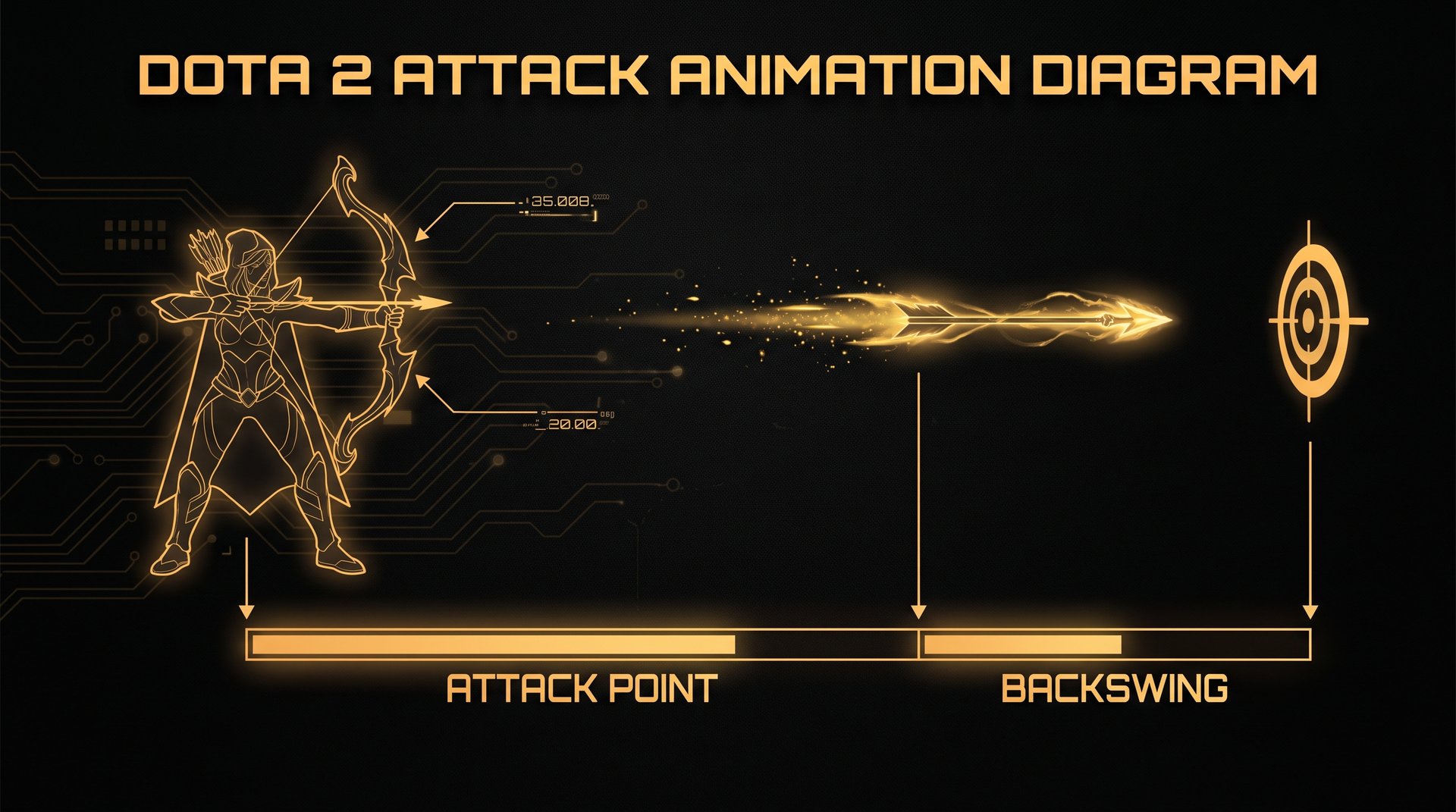
Every hero in Dota 2 has an attack animation divided into two distinct phases. Understanding this division is the mechanical foundation of both orb walking and animation canceling. Without knowing where the phases begin and end, you are just button-mashing and hoping the timing works out.
Phase 1: The Attack Point (Front-Swing)
The attack point is the exact moment your hero releases the projectile (for ranged heroes) or deals contact damage (for melee). Before this point, nothing has happened — the hero is winding up. The instant the attack point passes, the damage or projectile is committed. You cannot undo it after this frame. Even if you move away, the projectile still travels and the damage still lands.
Phase 2: The Backswing
After the attack point, the hero completes a follow-through or recovery animation called the backswing. During the backswing, your hero is doing nothing mechanically useful. No damage is dealt. No projectile is traveling. Nothing relevant to gameplay is happening. It is dead time wrapped in visual presentation.
The backswing exists because animations look strange without recovery frames. From a gameplay standpoint, it is pure overhead. Any movement command issued during the backswing cancels it immediately, letting you reposition before your next attack cycle begins.
Each hero’s attack point and backswing duration are fixed values built into the game engine. You cannot change them with items or standard abilities. What varies between heroes is how long each phase lasts — and those differences are substantial. Sniper’s backswing is one of the longest in the game. Juggernaut’s is extremely short. That gap in backswing duration explains much of why ranged carry matchups feel asymmetric even at similar MMR levels.
What Animation Canceling Is
Animation canceling means issuing a stop or move command immediately after your attack point to skip the backswing. The projectile still fires. The damage still deals. But your hero begins repositioning slightly earlier, and your next attack cycle starts slightly sooner because you are not frozen in backswing.
For a hero with a 0.5-second backswing, canceling every attack shaves half a second per attack cycle off your movement downtime. Over a 10-minute laning phase with hundreds of attacks, that amounts to meaningful extra mobility, more harassment reps, and superior position relative to your opponent — all from a simple, repeatable input.
The keystroke pattern is consistent across all heroes:
- Issue an attack command on the enemy (A + left-click on target).
- Watch for the moment the projectile leaves your hero’s weapon or your hero’s arm completes the forward motion.
- Immediately press S (stop) or right-click empty ground to issue a move command.
- Repeat this sequence for every attack.
The stop command (S key) is often faster in practice than clicking ground because it requires no mouse movement — you simply tap the key. Many Immortal players assign S as a dedicated stop keybind and use it exclusively for backswing cancels. Right-clicking a specific ground point gives you directional control over where you move, which is more useful when you need to dodge incoming skillshots during the cancel window.
What Orb Walking Is
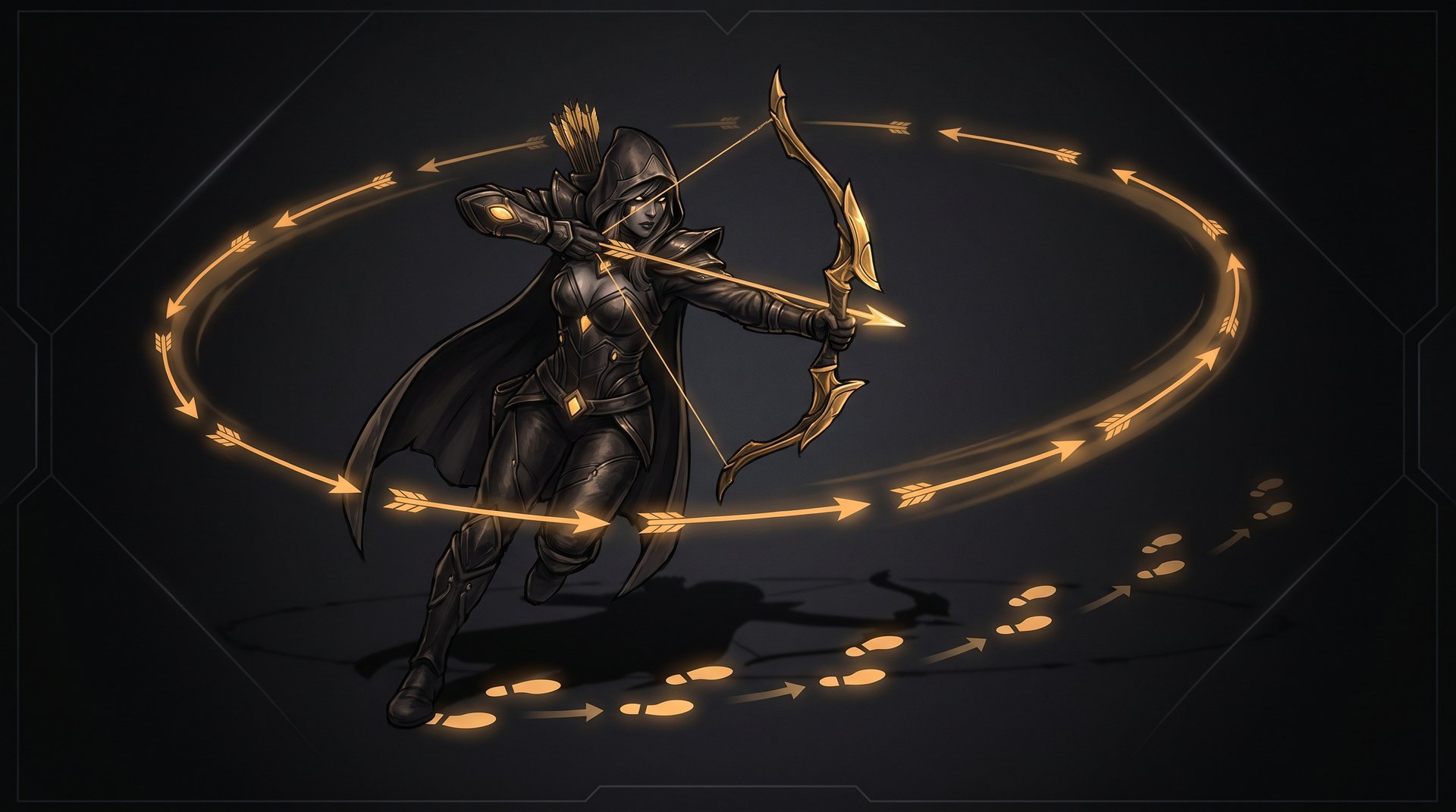
Orb walking combines animation canceling with deliberate repositioning. Instead of canceling the backswing and staying in place, you cancel it and immediately move — backward to create distance, forward to close gaps, or laterally to avoid enemy skillshots. The result is a hero who maintains constant attack output while never standing still long enough for opponents to trade effectively.
The name “orb walking” comes from Warcraft III, where certain attack modifiers were called orbs and required specific mechanics to walk between their activation frames. In Dota 2 the term persists even though the mechanic is really just “attacking while maximizing movement efficiency between hits.”
What Orb Walking Looks Like in Lane
Consider a skilled Drow Ranger against a Wraith King in the safe lane. Without orb walking, both heroes attack from fixed positions and trade hits. With orb walking, the exchange looks different:
- Drow attacks the Wraith King — arrow leaves her bow at the attack point.
- Immediately, Drow moves backward one to two steps toward her tower.
- The Wraith King, trying to close range, walks forward — but Drow has created distance and already attacks again before the Wraith King arrives.
- Drow repeats this pattern, maintaining 600-700 range while the Wraith King (with 150 melee range) never gets a clean return attack without using Sprint or a gap-closer.
A player not orb walking would stand still through the backswing, let the full animation complete, then attack again from the same position. The Wraith King simply walks into auto-attack range and trades hits symmetrically. The Drow who orb walks controls the fight through mechanical discipline, using no abilities at all.
Why Orb Walking Converts Into MMR
Lane dominance compounds. A carry who consistently wins the harassment trade before level 6 enters the mid-game with better items, more health, and a lane opponent who is already behind on gold and XP. That head-start determines which side of a 20-minute power spike wins the first fight — and first fights usually decide which base falls.
This is why MMR climbing for carries is so tied to laning mechanics. Teamfight skill matters less when your opponent never reaches teamfight strength.
Heroes That Benefit Most From Orb Walking
Not all heroes gain equally from these mechanics. Long attack range, short attack point, and long backswing create the widest efficiency gap between a player who animation-cancels and one who does not. The table below ranks common picks by how impactful orb walking is for their kit.
| Hero | Attack Range | Backswing Length | Orb Walk Tier | Primary Application |
|---|---|---|---|---|
| Sniper | 550 (700 with talent) | Very Long | S-Tier | Keep melee heroes permanently at range — backswing cancel is mandatory |
| Clinkz | 630 | Very Long | S-Tier | Perma-harass support heroes; escape return attacks with movement |
| Drow Ranger | 625 | Long | S-Tier | Zone entire melee cores off the wave from level 1 |
| Windranger | 600 | Long | A-Tier | Keep enemies outside Powershot range while sustaining harassment |
| Viper | 575 | Medium | A-Tier | Stack poison debuffs then reposition before enemy retaliates |
| Huskar | 400 | Long | A-Tier | Cancel backswing on Burning Spears activations to stay mobile |
| Luna | 330 | Medium | B-Tier | Short range limits the kite window; cancel still helps vs melee |
| Gyrocopter | 365 | Short | B-Tier | Short range and backswing mean limited kite angle; still worth doing |
Sniper and Clinkz are the clearest examples where orb walking is not an advanced technique — it is the minimum standard of play. A Clinkz with a very long backswing who stands still between attacks gives every support hero a free window to respond. Sniper’s backswing, one of the longest in the game, means enemies can walk 200 units toward him between attacks if he does not cancel. At Immortal level, both heroes are played with constant backswing cancels as the baseline.
How to Orb Walk Step by Step
The mechanical sequence for orb walking is consistent across all heroes. The only variable is timing — faster for heroes with short backswings, more relaxed for heroes with long ones. If you can see the projectile leave your hero’s weapon, you have enough visual feedback to learn any hero’s attack point.
Step 1: Use A+Click, Not Right-Click
Press A (attack) then left-click on the target instead of right-clicking them. Right-clicking makes your hero auto-follow and auto-attack, which causes unwanted chasing when the enemy moves. A + left-click issues one attack command then holds position, giving you full control over when you reissue the command. This is the first habit to build before working on timing.
Step 2: Watch for the Attack Point
For ranged heroes, the attack point is the frame when the projectile visually leaves the weapon. Drow: arrow leaves the bow. Sniper: muzzle flash appears at the rifle barrel. Clinkz: fire arrow launches from the Burning Barrage effect. Watch your hero’s animation carefully. You will overshoot (move before the attack fires) at first — that is expected and teaches you to slow your input slightly.
Step 3: Issue the Cancel Command
Immediately after the attack point, press S or right-click an empty ground location. If you are kiting backward, right-click behind your hero in the retreat direction. If you are dodging lateral, right-click to the side. The direction matters for repositioning — pick it before you press S so you can move purposefully rather than just standing still after the cancel.
Step 4: Reissue the Attack
After moving, reissue the attack command (A + click) for the next rep. Your hero attacks again if in range, or walks a step to close and attacks. The goal is to keep the enemy at the edge of your attack range — close enough to hit them, far enough that returning attacks require them to sacrifice positioning to land.
Canceling Spell Backswings
The same principle that applies to attack animations applies to ability casts. Most spells have a backswing animation after the ability effect triggers — the hero holds a pose or completes a follow-through. Canceling those backswings is often just as impactful as canceling attack backswings, particularly for supports and casters who use abilities constantly in fights.
Lion’s Finger of Death
Lion has a visually long backswing on Finger of Death. The ability fires the instant cast completes, but Lion then holds the Finger-pointing pose for a noticeable duration. In every teamfight, press S or move-click the instant Finger visually releases. That 0.3-0.4 seconds of extra mobility can be the difference between safely retreating and getting caught by a follow-up Ravage.
Shadow Fiend’s Shadowraze
Shadowraze has a meaningful backswing that many SF players leave uncanceled. At high MMR, SF players cancel the backswing on every individual Raze — especially important during triple-raze combos where the stacking happens over three rapid casts. Canceling each backswing tightens the combo window and keeps SF mobile throughout the sequence.
Invoker’s Invoke and Quas-Wex-Exort Casts
Invoke has a minimal backswing, but Invoker’s high cast volume means even small gains compound. More importantly, Invoker’s actual damage spells (Ice Wall, Chaos Meteor, Sun Strike) all have meaningful backswings. Canceling each one maintains positioning during complex combos. The habit of pressing S after every cast pays off most on Invoker simply because he casts so frequently.
The Universal Rule
After any ability cast, check if your hero is standing still doing nothing useful. If yes, issue a stop or move command. The vast majority of abilities benefit from this. The exceptions are channeled spells (Mystic Flare, Black Hole, Freezing Field — you cannot cancel those channels) and abilities with intentionally instantaneous backswings where the gain is negligible.
Lane Applications: Real Scenarios
Knowing the mechanics is half the equation. Applying them in a real lane, against an opponent who is also moving, attacking, and using abilities, requires pattern recognition on top of raw execution. These are the three most common lane scenarios where orb walking wins free resources.
Scenario 1: Ranged Carry vs. Melee Carry
This is the optimal orb walking scenario. You have 400+ more range than your opponent. Your opponent has to walk into your attack zone to retaliate.
Execute: attack once from maximum range, immediately step backward one to two hero lengths, attack again. Your opponent either eats every hit passively (they fall behind on HP) or chases you aggressively (which pulls them away from the creep wave, costing last hits and XP). Either outcome benefits your ranked game performance.
The counterplay experienced opponents use: positioning behind their creep wave so your attack angle forces you to aggro the wave if you want to hit them. Your answer is to adjust the direction of each attack so you approach their exposed flank rather than their front-facing position behind creeps.
Scenario 2: Ranged vs. Ranged (Mirror)
When both heroes can harass at range, the player with better animation cancel discipline wins. Sniper vs. Clinkz, for example, is a pure mechanical contest — both have exceptional range and significant backswing. The one who cancels every backswing takes fewer return hits, requires fewer healing regen resources, and stacks a lead before the 5-minute mark that compounds into a first-item timing advantage.
Scenario 3: Harassing Without Pushing the Wave
This is where orb walking separates good carries from great ones. The problem: attacking the enemy hero auto-attacks nearby creeps, pushing the wave toward the enemy tower and losing the lane equilibrium you need for safe farming.
The orb walk solution: attack the enemy hero once, then use the cancel movement to reposition away from the creep wave rather than toward it. By moving laterally or backward during the backswing, your hero naturally avoids clicking on creeps in the following attack cycle. This requires deliberate mouse positioning — you need to click the enemy hero specifically, not near the wave — but with practice it becomes standard operating procedure.
Scenario 4: Dodging Skillshots in Lane
The movement window created by backswing canceling gives you an extra repositioning tick that a stationary attacker does not have. When you see a Pudge winding up Hook or a Snapfire preparing Mortimer Kisses, you have your cancel movement already queued and can redirect it into a dodge. Your opponent who did not cancel is standing still through their backswing — a static target for every skillshot in the game.
Common Mistakes and How to Fix Them
Orb walking has a short list of consistent failure modes. Every player who learns this mechanic runs into the same three or four issues in the same order. Here is what they are and how to correct each one.
Mistake 1: Moving Before the Attack Point
You move too early, the projectile never fires, and the attack cycle resets to zero. This is the most common beginner error and happens because players try to move as fast as possible and overshoot the attack point.
Fix: slow down your input. There is no penalty for moving 0.1 seconds after the attack point — the backswing is long enough that you still cancel most of it. There is a full penalty for moving even one frame before the attack point. Give yourself margin on the late side while learning, then tighten gradually over sessions.
Mistake 2: Over-Kiting (Moving Too Far)
Moving 200-300 units away from the enemy per cancel feels aggressive but costs you attack output. Walking back into range takes more time than you saved on backswing. The net DPS goes down.
Fix: keep each repositioning movement to 80-120 units. Think of it as a shuffle, not a sprint. The point is not to create large distance — it is to maintain optimal range while never standing still. Small, constant movement beats large, periodic movement.
Mistake 3: Right-Clicking the Enemy Hero to Attack
Right-clicking makes your hero auto-follow the target. If the target walks toward you, your hero stops moving to prepare an attack from your current position — which may now be inside their auto-attack range. You lose the range advantage you were trying to maintain.
Fix: use A + left-click for every attack command. It takes one day of conscious effort to switch this habit, and it permanently improves your carry laning from that point forward.
Mistake 4: Not Applying the Cancel to Spell Casts
Players who master attack backswing cancels often forget to extend the habit to abilities. Every Finger of Death, every Shadowraze, every support nuke has a backswing. Leaving them uncanceled means frozen positioning during the most dangerous moments in teamfights.
Fix: adopt the rule “press S after every action, attack or cast.” Make it reflexive rather than deliberate. After a few weeks, you will find yourself canceling backswings on abilities you did not even know had meaningful backswings.
Mistake 5: Practicing Against Static Targets Only
Demo mode dummies stand still. Ranked opponents do not. The muscle memory that works against a stationary target breaks down when the enemy hero moves erratically, dashes with a blink, or changes direction constantly.
Fix: practice the basic motion in Demo Mode to internalize the attack point timing, then immediately take it into real ranked games. Real opponents are the actual training environment. Accept a higher error rate initially — it sharpens faster than staying in practice mode.
Practice Drills in Demo Mode
Demo mode is the fastest path to internalizing the mechanics before they need to work under pressure. These drills take 15-20 minutes and build the muscle memory for 90% of lane situations. Do them on the carry you intend to play next session.
Drill 1: Find Your Hero’s Attack Point
- Open Demo Mode with your chosen carry hero.
- Target the practice dummy with A + left-click.
- Watch the attack animation in full. Identify the exact frame the projectile leaves the weapon.
- Now attack again and press S precisely at that frame. Confirm: the dummy takes damage AND your hero stops before the backswing completes.
- Repeat 20 times in a row with zero early inputs (no attacks that fail to fire).
This drill is complete when you can feel the attack point timing without watching intently for it — when the cancel becomes anticipation rather than reaction.
Drill 2: Moving Target Chase
- Use the Demo Mode panel to make an enemy hero patrol back and forth.
- Orb walk toward the target: attack, cancel, close 80 units, attack again.
- Count attacks over 30 seconds. Compare to the same exercise without canceling (just right-clicking the target).
- With proper canceling, you should land 10-15% more attacks at the same effective chase pace because you close distance during the backswing instead of waiting for it to finish.
Drill 3: Backward Kite Against an Aggressive Target
- Set the enemy hero to chase you in Demo Mode.
- Orb walk backward: attack, cancel, step away from target, attack again.
- Time how many attacks you land before the enemy closes 200 units of distance.
- Without canceling: 2-4 attacks. With canceling: 5-8 attacks. The difference is the backswing time converted to movement.
Drill 4: Spell Backswing Cancel
- Cast your hero’s primary nuke or support ability.
- Press S or move-click immediately after the ability visually releases.
- Repeat 20 times on cooldown.
- The goal: the cancel input is reflex, not a deliberate second action. You should be doing it before you consciously register “backswing finished.”
These drills apply directly to ranked climbing because animation cancel consistency is one of the clearest mechanical separators between bracket levels. Herald and Crusader players almost universally leave full backswings uncanceled. Ancient and Immortal players cancel them automatically. If you execute these drills daily for one week, the mechanic crosses from skill to habit.
The Connection Between Animation Cancel and Last Hitting
There is a subtle but important link between these mechanics and last hit rate. Denying and last hitting both require precise attack point timing — you need to land the killing blow within a specific HP window, which requires knowing exactly when your hero’s damage registers. The same timing awareness that makes you better at animation canceling makes you better at denying because you understand the exact frame your attack lands.
Players who practice animation cancel timing often report improved deny rates as a secondary benefit without specifically working on denies. The cause is identical: both skills require knowing your hero’s attack point frame.
Orb Effects vs. Orb Walking: One Clarification
In Dota 2 discussions, “orb” sometimes refers to attack modifier abilities — Drow’s Frost Arrows, Viper’s Poison Attack, Clinkz’s Burning Barrage, and similar effects. These are attack modifiers that add effects to each auto-attack. They are not the same as orb walking technique.
The terms share historical roots from Warcraft III but describe different things. Orb walking is a movement technique available to every hero. Orb effects are ability-based attack modifiers specific to certain heroes. You apply orb walking technique regardless of whether your hero has an orb effect ability. The backswing cancel works identically with or without an attack modifier active.
When Orb Walking Is Less Useful
Orb walking is powerful but not universal. There are situations where it adds mechanical overhead without proportional gain:
- Melee heroes with very short backswings: Heroes like Juggernaut or Phantom Assassin have near-instant backswings. The gain from canceling is negligible — a few hundredths of a second. Focus this skill investment elsewhere for those heroes.
- During channeled abilities: Black Hole, Ravage, Freezing Field, and other channeled abilities cannot be canceled mid-channel. Orb walking is irrelevant while you are locked into a channel.
- Under tower pressure: When you are taking heavy tower hits and creep aggro, priority shifts to survival and last hitting. Orb walking becomes relevant again once the lane stabilizes.
- When you need a precise targeted ability: If you are about to land a crucial Hex or Finger at maximum range on a moving target, slow down and focus on the ability. Orb walking in that moment adds cognitive load that may cause you to miss the cast window entirely.
For ranged carries in a stable lane against melee opponents, orb walking is almost always the correct default. The exceptions above are narrow and situational.
Frequently Asked Questions
Accelerate Your Climb With Immortal Coaching
Orb walking and animation cancel are foundation skills that compound with everything else you do on carry. A TeamSmurf Immortal coach will watch your replays, pinpoint exactly where your backswing cancels are costing you laning efficiency, and give you a targeted drill sequence for your specific hero pool. Most players see measurable lane improvement within 3-5 coached sessions.