Inside the Life of a Professional Dota 2 Booster

Most people who buy a boost think of it as a transaction — money in, rank out. But on the other side of every order is a real professional who treats Dota 2 as a full-time job. They play dozens of games per week on accounts that aren’t theirs, manage multiple concurrent orders, maintain near-perfect winrates, and operate under pressure that most pub players never experience.
This article goes inside that world. What does a professional Dota 2 booster actually do during a typical day? What qualifications separate a booster from a regular high-MMR player? How do they handle the mental load, the earnings, and the risks? We’ve drawn on direct experience running TeamSmurf’s boosting operation to give you the most accurate and honest picture available.
Whether you’re curious about the industry, considering ordering a boost, or just want to understand who’s behind the service, this is the complete inside view.
What’s Inside
What It Actually Takes to Qualify as a Professional Booster
The barrier to entry for professional Dota 2 boosting is much higher than most players assume. Owning a high MMR account doesn’t automatically make someone a booster. Services like TeamSmurf apply a specific set of requirements before bringing anyone on, and most applicants don’t pass.
MMR Floor
The minimum MMR threshold at serious services sits at roughly 6,000 — deep in the Immortal bracket. At that level, a player is already in the top 1-2% of the global playerbase. But MMR alone isn’t enough. The booster must be able to consistently win games at ranks well below their natural ceiling, often 3,000 to 4,000 MMR lower than their peak. That requires a different skillset than climbing your own account.
Consistency Requirement
High-MMR pub players can afford to have bad games and streak-hunt. A professional booster cannot. Services track booster winrates per order, and a booster who drops below a 70-75% winrate on active orders gets flagged immediately. Some top boosters maintain winrates above 85% across hundreds of games in a single bracket — something that requires deliberate, disciplined play, not just raw mechanical skill.
Communication and Reliability
Boosters must communicate order status to the service in real time, respond to schedule changes when clients request pauses, and handle rare situations (like a client’s account getting flagged for a behavior score review) professionally. A booster who goes silent mid-order or starts playing erratically is a liability — the best ones treat it like any client-facing service job.
The Vetting Process
Most professional services require applicants to submit their main account profile for review, complete a trial run on test accounts at specified MMR targets, and pass a consistency check over at least 10-15 games before receiving their first real order. At TeamSmurf, this process is rigorous enough that the majority of applicants — even Immortal-ranked players — don’t make the cut on the first attempt.
A Typical Day for a Professional Booster
There’s no standard 9-to-5 for most professional boosters, but the structure of a working day is more disciplined than outsiders expect. Here’s what a typical day looks like for a full-time booster handling three to four active orders simultaneously.
| Time Block | Activity | Notes |
|---|---|---|
| Morning (8-10 AM) | Order review and login | Check pending orders, client status, current MMR gaps |
| Morning session (10 AM – 1 PM) | First game block | 3-6 games depending on average game length in target bracket |
| Midday break (1-2 PM) | Update order status | Report progress to service, note any account issues |
| Afternoon session (2-5 PM) | Second game block | High-volume orders get priority here; also handles most client requests |
| Evening (5-7 PM) | Wrap, admin, patch review | Check patch notes, review hero pool adjustments |
| Evening session (7-10 PM) | Third game block (optional) | Used for backlogged orders or when a client needs same-day progress |
Not every day has three game blocks. Part-time boosters — the majority — typically run one or two sessions. Full-time professionals who take on higher volumes run longer days, especially during peak season (calibration periods, post-TI meta shifts, major patch drops).
Order Juggling
Managing multiple orders simultaneously is one of the most demanding parts of the job. Each order has a different target rank, account region, hero pool restrictions (some clients request specific heroes or want certain heroes avoided), and communication cadence. A booster handling four orders at once needs to track four different MMR gaps, remember which heroes are banned on which account, and switch mental gears between games in different brackets — sometimes within the same hour.
How Many Games Do Boosters Play Per Day?
The raw game count depends on the target bracket. Games in Herald and Guardian run shorter on average than games at Archon and Legend, where team coordination begins to create longer macro phases. Divine and Immortal games can run 40-50 minutes routinely.
A booster working a full day on Herald-to-Crusader orders might complete 12-15 games. The same booster working a Legend-to-Ancient order might complete 6-9 games. Across a typical five-day work week, full-time boosters at TeamSmurf average between 40 and 65 games — comparable to what a weekend warrior plays in a full month.
That volume has real implications for skill maintenance. Boosters who play this much often find that their hero mechanics become extremely sharp on their pool heroes, while heroes they don’t touch during boosting work can atrophy. Most set aside time each week to play their main account in their natural bracket just to stay grounded in high-MMR decision-making.
The Hero Pool — Why Boosters Are Specialists, Not Generalists
One of the most common misconceptions about professional boosters is that they play everything. In reality, top boosters are narrow specialists. A booster who claims to be equally effective on 50 heroes is almost certainly overstating their capability — or underperforming on most of them.
Why Specialization Works
In lower brackets, hero mastery translates to reliable MMR gains because the skill gap between a high-MMR player and the opponents is so wide that mechanical execution alone wins games. Carry specialists who’ve played 2,000+ hours on Anti-Mage or Juggernaut will consistently destroy lane opponents and farm faster than anyone in a 2,000-3,000 MMR lobby. The hero does predictable things; the booster executes them at a level the opponents simply can’t match.
Typical Booster Hero Pools
Most boosters maintain a pool of 5-8 heroes they’re willing to take on orders. Within that pool, they typically have 2-3 “primary” heroes where their winrate is exceptional, and 3-5 “backup” heroes for situations where the primary gets banned or doesn’t fit the draft.
Carry boosters tend to gravitate toward high-impact scaling heroes: Anti-Mage, Spectre, Phantom Assassin, Juggernaut, and Faceless Void are perennial favorites because their item power spikes are decisive and they don’t require team setup to win. Mid boosters often run Storm Spirit, Queen of Pain, or Lina — heroes with strong kill threat at all stages. Support boosters rely on heroes with strong lane presence and consistent utility: Lion, Crystal Maiden, Witch Doctor, and Lich remain popular picks.
Patch Adaptation
Every major patch forces boosters to reassess their pool. A hero nerfed below the viability threshold can cost a booster winrate on active orders. Professionals track patch notes closely — not just for their heroes but for counter-trends in the meta that might change what they face in each game. Some boosters report spending 3-4 hours reviewing a major patch update before accepting new orders post-patch.
The Mental Load of Professional Boosting
The psychological demands of professional boosting are rarely discussed but are among the most significant factors determining whether someone can sustain the work long-term.
Playing Under Pressure to Win Every Game
Recreational players accept variance. Lost a game? Try again. For a booster, every loss has a direct cost — it extends the order timeline, risks client satisfaction, and affects performance metrics that determine future order volume. The psychological weight of needing to win consistently is fundamentally different from pub gaming. Boosters who struggle with tilt management typically don’t last in the profession, regardless of mechanical skill.
The Account Responsibility Factor
Playing on someone else’s account introduces a distinct form of pressure. The booster isn’t just risking their own rank — they’re responsible for a client’s account that may represent months of grinding. A botched order, an unnecessary report, or a behavior score drop can damage something the client cares deeply about. Professional boosters develop a particular form of disciplined play that prioritizes account safety: they avoid toxic behavior even when opponents are provoking it, they don’t rage-build suboptimal items, and they stay calm in games that appear lost to avoid unnecessary behavior score hits.
Teammate Dynamics on Client Accounts
This is one of the most frequently underappreciated challenges. When a booster logs into a client’s account, their teammates don’t know they’re playing with someone at 6,000+ MMR. The lobby functions at the same level as any other 2,000 MMR game. That means unreliable rotations, poor draft decisions from teammates, and communication that doesn’t match what a high-MMR player would expect. Boosters must win despite their team rather than with them — a completely different mindset than coordinated high-rank play.
Managing Burnout
Playing 10-15 games per day across multiple accounts, in brackets that don’t challenge the booster mechanically, can lead to mental fatigue faster than playing on a main account. Many professional boosters set hard limits on daily game counts and take mandatory rest days between heavy sessions. Without this discipline, performance metrics start to slip — and a booster with declining winrates is costing themselves and their clients.
The Setup — What Professional Boosters Use
You don’t need a $5,000 rig to boost effectively, but you do need reliable hardware and infrastructure. The bottleneck in Dota 2 boosting isn’t raw GPU power — it’s consistent connection and low-latency input.
Hardware Baseline
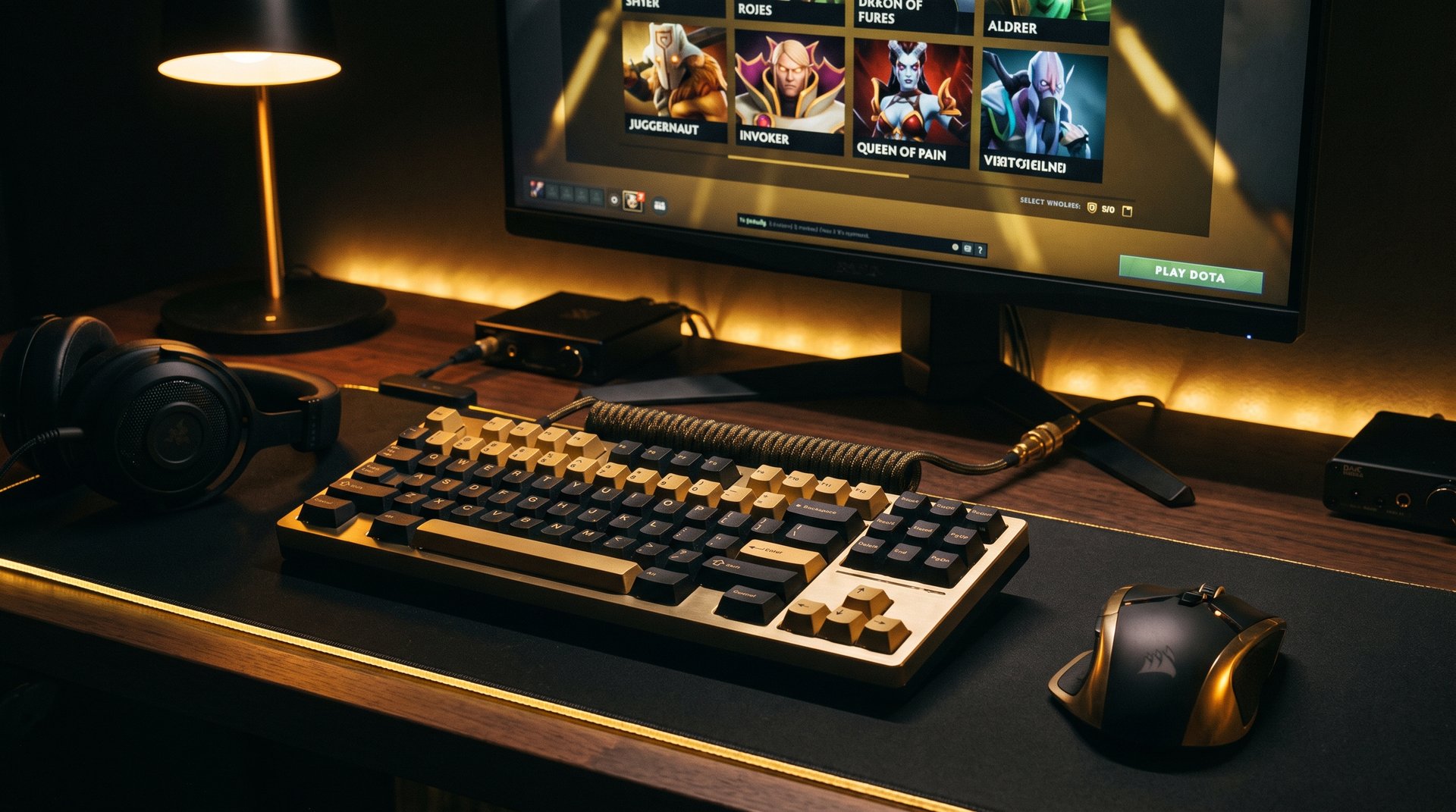
A mid-range gaming PC from 2023 or newer handles Dota 2 comfortably. Boosters typically target 144+ FPS at reduced settings to minimize input lag. A high-refresh-rate monitor (144Hz minimum, 240Hz preferred) is nearly universal among professionals — frame timing at lower MMR doesn’t change, but the booster’s reaction speed advantage should be maximized. Mechanical keyboards and high-DPI mice with adjustable sensitivity are standard.
VPN Usage
Many clients request that boosters use a VPN to match the approximate region of the account, reducing the chance that Steam’s login detection flags unusual geography. As explained in our guide on boosting safety practices, professional services use pre-agreed location protocols and avoid creating login anomalies that could trigger Steam’s automated review systems. Most professionals keep a VPN subscription active at all times.
Order Management
Professional boosters at services like TeamSmurf access order details through the service’s internal dashboard — current MMR, target MMR, requested heroes, client restrictions, and order priority. This keeps all account credentials and communication centralized rather than scattered across chat apps.
Earnings — What Professional Boosters Make in 2026
Earnings in professional Dota 2 boosting vary significantly by volume, region, speed tier, and the service’s payout structure. Without overstating specific figures that change with market conditions, the general landscape looks like this:
Per-Order vs. Percentage Models
Most services pay boosters a percentage of the order value, typically in the 50-70% range depending on the booster’s tier and the service’s pricing structure. A booster who completes higher-volume orders or maintains consistently high client satisfaction ratings often negotiates toward the upper end of that range. Some services use a flat per-game rate instead, which can work out comparably for short bracket gaps but tends to undercompensate for long, difficult orders.
Part-Time vs. Full-Time Reality
Part-time boosters — those handling 1-2 orders at a time for a few hours per day — treat this as supplemental income. Earnings in this model depend heavily on bracket and order frequency but represent a meaningful side income for players who are already Immortal-ranked and would be playing Dota 2 regardless.
Full-time boosters operating across multiple orders simultaneously can earn substantially more, but they also carry more risk: market slowdowns (like post-TI lulls), client refund disputes, and the time investment required to maintain performance metrics all affect net earnings. The full-time model works best for players in regions where the conversion rate between boosting earnings (typically quoted in USD) and local cost of living creates a favorable margin.
Peak vs. Off-Season Variation
Demand for boosting services spikes during calibration seasons (early in each ranked season reset), immediately after major patch releases when meta uncertainty increases, and during peak gaming hours in each region. Boosters who are available and active during these peaks earn significantly more than those who operate on fixed schedules. Savvy professionals track the demand calendar and increase their available capacity accordingly.
The Risks Every Professional Booster Manages
Professional boosting is not a risk-free occupation. Understanding those risks — and how professionals mitigate them — is important context for anyone evaluating the industry.
Valve’s Detection Systems
Valve uses behavioral analysis, not just login geography, to flag account sharing. Unusual hero choices, playstyle inconsistencies, and sudden winrate spikes in a bracket can all contribute to a pattern that Valve’s systems flag for manual review. Professional boosters manage this by playing heroes the client is already associated with when possible, maintaining realistic hero diversity, and avoiding behavior that creates a glaring statistical anomaly. The risk is real — accounts can be shadowbanned or receive MMR adjustments post-review — but professional services have processes specifically designed to minimize this risk.
Client Account Issues
Occasionally a client’s account has underlying issues — pending bans, previous boosting flags, or behavior score thresholds that trigger Low Priority mid-order. Boosters can inherit a messy situation and spend extra time managing it. Clear pre-order account screening reduces this risk significantly.
Physical and Mental Burnout
The most common reason professional boosters leave the industry is burnout, not detection. Playing 10+ games per day of high-focus Dota 2 — in brackets that don’t provide the stimulation of your natural rank — is mentally exhausting in a specific way that’s hard to describe until you’ve experienced it. Professionals who last in the field treat rest and game limits as non-negotiable, not optional.
What Clients Get Wrong About Their Booster
Clients who order a Dota 2 MMR boost sometimes arrive with assumptions that don’t match how professional boosters actually operate. Clearing these up leads to better orders and more realistic expectations on both sides.
“They’re Probably Just Winging It”
This is the most common misunderstanding. Professional boosters are not casually playing through your account hoping things work out. They’re applying their skill deliberately, with awareness of your account’s context, your requested constraints, and the efficiency implications of every game. When a booster takes a seemingly conservative approach in a close game instead of forcing a fight, that’s often a calculated decision to protect account safety, not timidity.
“My Account Should Jump Rank Instantly”
Matchmaking places accounts based on their existing MMR. A booster who is 4,000 MMR above the bracket they’re working in still faces opposing teams in that bracket — meaning some games are closer than expected, and variance exists. A 75-80% winrate across an order, which is considered excellent professional performance, still means losing 1 in every 4-5 games. Clients who see a loss on their account during an active order sometimes interpret this as the booster not trying. In reality, it’s normal variance within a high-performance winrate.
“I Can Watch Every Game and Monitor”
Some clients watch their live match stats through third-party tools during an active boost. This is generally not a problem, but clients who send messages every 30 minutes asking for updates during a session create friction that can distract the booster from the work. Good communication means scheduled updates at logical checkpoints — not real-time play-by-play.
Is Professional Boosting Worth It as a Career Path?
For the right person, professional boosting offers a genuinely viable income stream with a high degree of schedule flexibility. For the wrong person, it’s a fast path to burning out on a game they love.
The right profile for a sustainable boosting career: a player who is naturally Immortal-ranked, has strong emotional regulation, genuinely enjoys finding creative ways to win in unfamiliar situations, and treats the administrative side of the work with the same seriousness as the gameplay. Players who fit this profile and work with a professional service like TeamSmurf often stay in the industry for years.
Players who enter boosting because they’re high-rank and assume the income will be easy tend to discover quickly that the consistency requirement is harder than their own MMR climb was. Grinding your account upward is self-directed. Delivering consistent results on someone else’s account, to a timeline, is a different discipline entirely.
Ready to Work With Professional Boosters?
Every booster on TeamSmurf is vetted, tracked, and held to the performance standards described in this article. We don’t list unvetted freelancers — we manage a team of professionals who take your account seriously.