How to Read Dotabuff Like a Coach (Without Getting Misled)

Dotabuff is the most powerful free tool in every Dota 2 player’s arsenal — and also the most misread. Thousands of players log in after a loss streak, look at their winrate number, feel bad, and close the tab without extracting anything useful. A coaching session with an Immortal player looks completely different: they use Dotabuff to find the exact three or four patterns that are costing you games, and they can do it in under ten minutes.
This guide teaches you to read your Dotabuff the way an expert coach reads it — not for validation or punishment, but for surgical diagnosis. You will learn which metrics actually predict improvement, which ones lie to you, and how to build a repeatable review process that surfaces actionable insights every single week.
If you have ever looked at Dotabuff and thought “I do not know what I’m supposed to learn here,” this guide fixes that completely.
Table of Contents
Why Most Players Read Dotabuff Wrong
The first mistake players make with Dotabuff is treating it as a report card rather than a diagnostic tool. A report card gives you a grade and you feel good or bad. A diagnostic tool tells you what is broken and how to fix it. The difference is not philosophical — it completely changes which numbers you look at and how you interpret them.
The second mistake is drawing conclusions from sample sizes that are statistically meaningless. A 40% winrate on a hero over 5 games tells you almost nothing. The same winrate over 50 games tells you something significant. Players routinely abandon heroes after 3-game losing streaks and pick up new ones based on 2-game win streaks, creating a constantly rotating pool that never allows them to actually learn anything. Dotabuff surfaces this pattern clearly if you know where to look.
The third mistake is ignoring context. A 60% winrate on Pudge at 1500 MMR is not impressive — Pudge has extremely high winrates in low-MMR brackets because opponents cannot punish his weaknesses. The same winrate on Phantom Assassin in Legend bracket is more meaningful. Metrics have to be read with bracket context to mean anything.
The Coaching Frame
When a Team Smurf Immortal coach opens your Dotabuff, the first question is not “what is your winrate” The first question is “what patterns are appearing repeatedly across your worst performances” They are looking for clusters of losses that share common variables: same hero, same opponent type, same timing, same kind of game state. Finding a cluster is finding a fixable problem. Scattered losses across diverse variables suggest variance rather than systematic errors.
The Metrics That Actually Matter
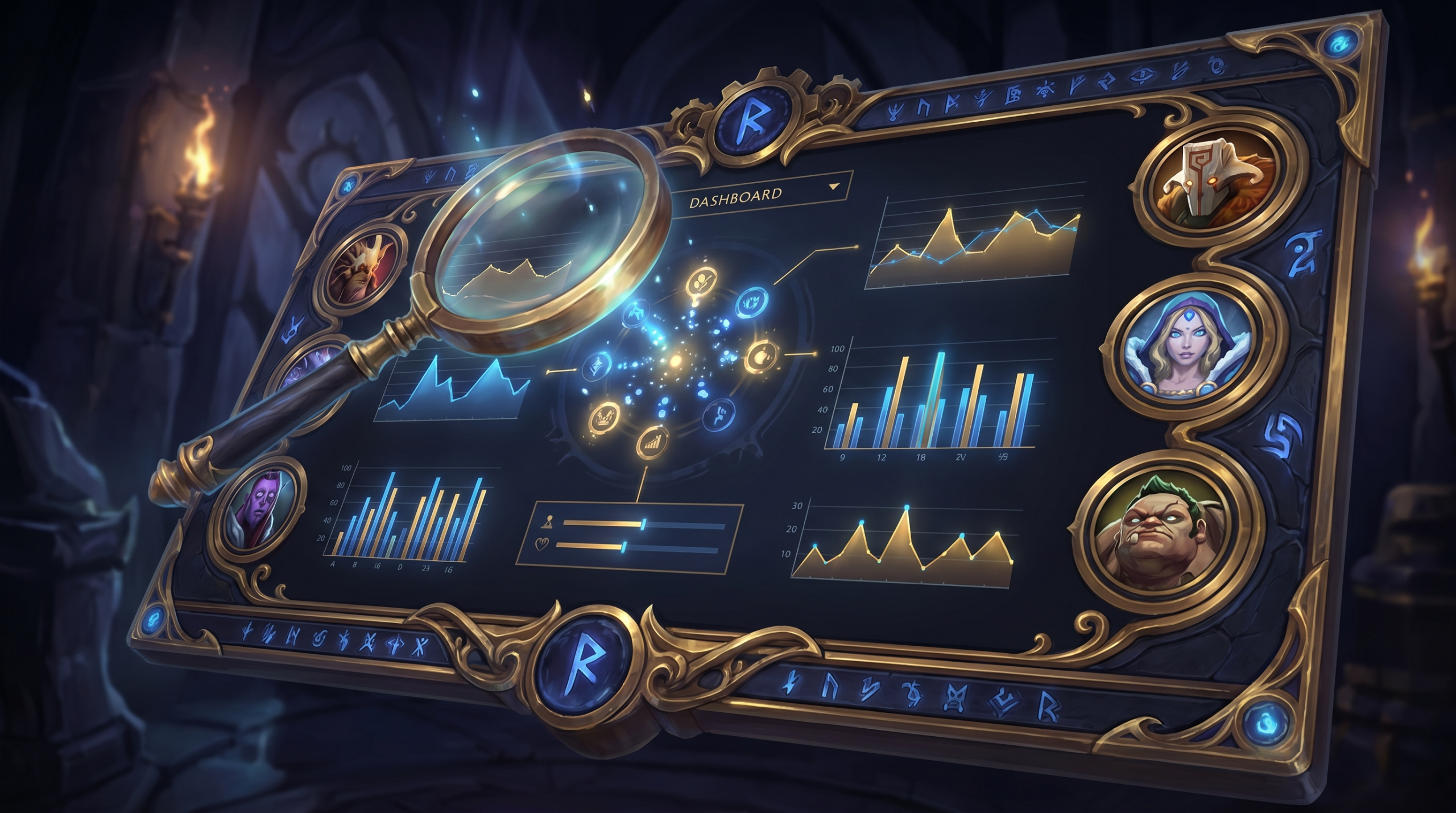
Dotabuff displays dozens of statistics. Most of them are noise. Here are the five metrics that have the highest diagnostic signal for players trying to improve their rank.
1. Last Hit Accuracy at 10 Minutes
Dotabuff’s match detail page shows your CS at various timestamps. The benchmark a coach uses is 60 CS at 10 minutes for a core role in a calm laning phase, scaling to 80+ for an aggressive farming lane. If you are consistently hitting 35-45 last hits at 10 minutes, that is not variance — that is a systemic laning deficiency. It shows up in your Dotabuff across dozens of games as consistent underperformance, and it is one of the most directly improvable single metrics in the game. Last hitting practice in demo mode translates almost immediately to ranked performance.
2. Net Worth at 15 Minutes vs Average
This is harder to track manually but highly valuable. The match breakdown shows net worth curves. If you are consistently below your team’s average net worth at 15 minutes on a core hero, your farm prioritisation or lane survival is broken. If you are above average, you are already doing the fundamentals correctly and the losses are coming from elsewhere. This contextualises whether your laning problem is absolute (bad farming) or relative (dying too much and giving up gold).
3. Death Timing Distribution
Look at when your deaths are occurring across matches. Deaths before minute 10 in your laning phase indicate laning survival problems — poor positioning, overextension, or misread opponent cooldowns. Deaths between minute 10 and 20 suggest poor transition decisions — not recognising when to retreat or rotating into fights where you should not be. Deaths after minute 25 suggest poor teamfight positioning or smoke diving at bad timings. A single pattern type appearing across dozens of matches is where you should focus your study.
4. Game Duration vs Winrate Correlation
Filter your matches by game length on Dotabuff. Most players have a very different winrate in games that end before 30 minutes versus games that go 45-60 minutes. If you win short games and lose long ones, your early game is strong but your late-game decision-making or itemisation is poor. If you lose short games but win long ones, you are surviving deficits but failing to convert early advantages. Each scenario has completely different corrective actions.
5. Recent Form (Last 20 Games)
The most actionable timeframe on Dotabuff is your last 20 games, not your overall statistics. Overall stats include games from months or years ago when you were playing at a different skill level with different mechanics. The last 20 games represent who you are right now. Always filter to recent performance when doing a self-diagnostic session.
| Metric | Where to Find It | Good Benchmark | Red Flag |
|---|---|---|---|
| CS at 10 min | Match detail page | 60+ (core roles) | Under 40 consistently |
| Net worth at 15 min | Net worth graph | At or above team avg | Consistently bottom of team |
| Deaths before min 10 | Match timeline | 0-1 per game avg | 2+ deaths pre-10 consistently |
| Winrate by game length | Profile stats filter | Balanced across durations | Below 40% in one duration range |
| Last 20 game winrate | Recent matches | 50%+ for stable bracket | Under 40% on key heroes |
Reading Winrate Without Getting Burned
Winrate is the most visible number on Dotabuff and the most prone to misinterpretation. Here are the three ways it will mislead you if you read it without context.
The Sample Size Problem
Statistical significance in Dota 2 winrates requires approximately 100 games on a hero before the number stabilises. Below 30 games, the winrate is dominated by variance rather than skill signal. A 70% winrate on Invoker over 10 games means you got lucky. A 58% winrate over 120 games means you genuinely perform well on that hero. Before drawing any conclusion from a winrate, check the game count. If it is under 30, bracket the conclusion with extreme caution.
The MMR Bracket Shift
If you earned 500 MMR over the past six months, your recent winrates are being measured at a higher bracket than your historical ones. A 55% overall winrate might be composed of 65% at your old bracket and 45% at your current bracket. The aggregate hides the performance cliff. Always filter by recent games and recent MMR range to get an honest picture of where you are now, not where you used to be.
The Role Mismatch
Many players play multiple roles depending on draft availability. Their Dotabuff winrate on a carry hero might be 65% — but if 80% of those games were played in the offlane rather than the carry position, the winrate is measuring their offlane performance on a hero typically played as a carry. Role context is not tracked automatically on Dotabuff. You have to manually check match details to understand what role you actually filled in the games contributing to each hero’s winrate.
Analysing Your Hero Pool Like a Coach
A coach does not look at your hero pool and immediately tell you to learn more heroes or drop ones with low winrate. They look at the structure of your pool — its role coverage, its patch currency, and whether the heroes you are winning on are ones you are playing enough to actually develop.
The Two-Tier Pool Check
Coaches think about hero pools in two tiers. Tier 1 is your mastery pool: 2-3 heroes you have 50+ games on in recent patches and consistently outperform with. These heroes should be your go-to picks in ranked because your performance ceiling on them is genuinely higher than on anything else. Tier 2 is your flexibility pool: 3-5 heroes you can pilot competently but have not mastered, used to avoid being counter-drafted or to fill roles Tier 1 does not cover.
Most players have the opposite problem: they have 3-4 heroes with 20 games each and call it a “pool,” without genuinely mastering any of them. The Dotabuff signal here is a hero list where your top 10 heroes all have between 15-35 games with 45-55% winrates. That is a pool of mediocrity. A mastery pool looks like 2-3 heroes with 50-150+ games at 55-65% winrate, plus several at lower game counts with less certain winrates.
Patch Currency Check
After every significant patch, coaches check whether your primary heroes are still viable in the current meta. A hero that had 60% winrate in the 7.40 meta might have dropped to 48% in 7.41c due to nerfs. Dotabuff’s hero pages show winrate over time, which lets you identify whether a drop in your winrate correlates with a patch date. If your winrate tanked at the same time your hero got nerfed, the solution is not to practise more on that hero — it is to temporarily pivot to a better meta option.
Role Coverage Analysis
Open your top 10 most-played heroes and categorise each by role. If 8 of your top 10 are Position 1 carries, you have a problem — when those heroes are banned or picked by opponents, you will be playing out of comfort zone. A healthy pool covers at least two positions with mastery-level heroes. This gives you the flexibility to fill the team’s needs without being forced onto an unfamiliar hero in a ranked game.
Timeline and Performance Graphs
Dotabuff’s timeline view is one of its most underused features. The gold and experience graphs per match tell a story that the final scoreboard cannot — and that story is often where the real lesson lives.
Reading the Gold Graph
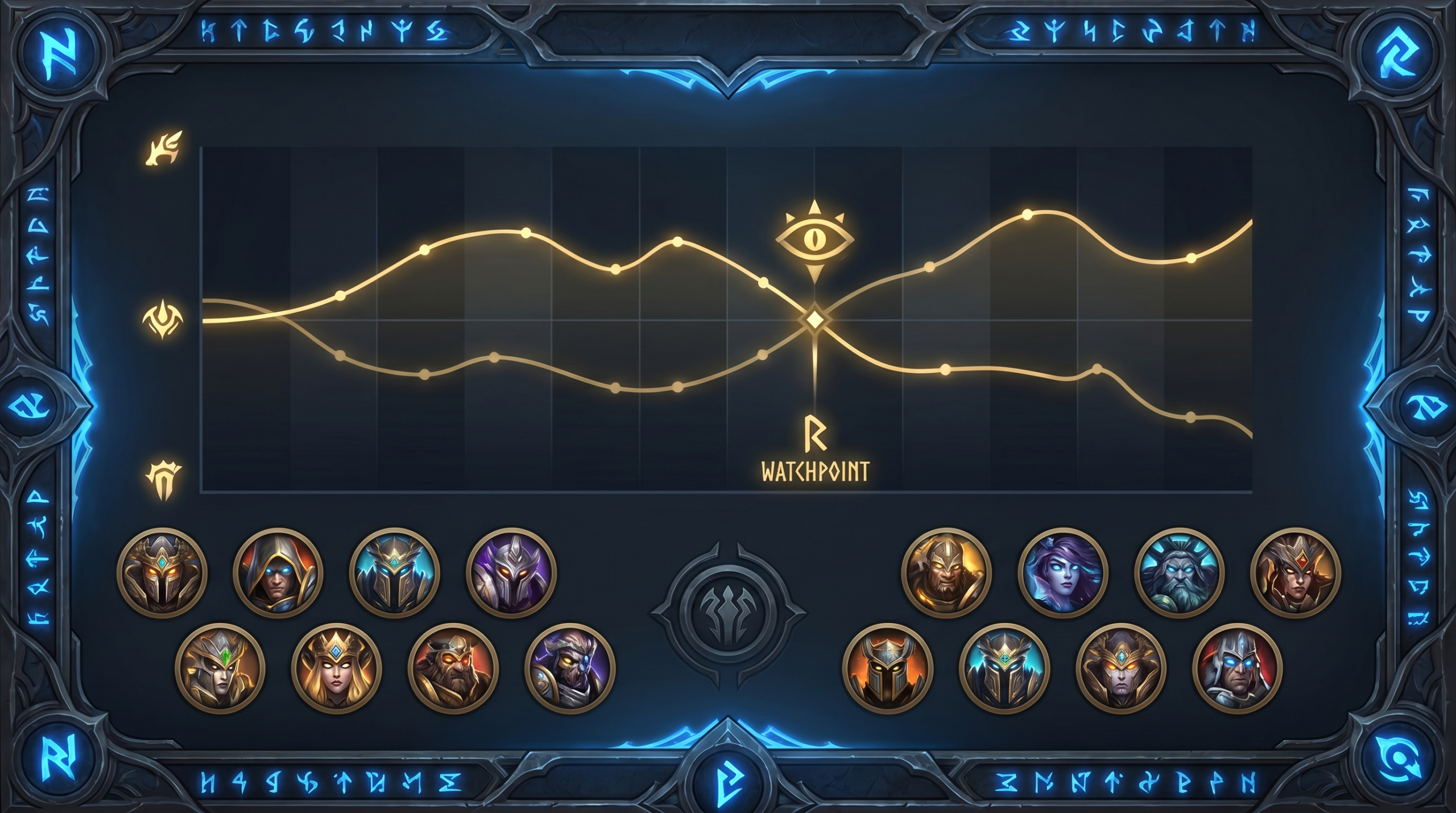
Open any recent loss on your Dotabuff and expand the gold graph. Look for the exact minute where your team’s net worth curve crossed below the enemy’s. In most cases, this crossover point corresponds to a specific event: a teamfight loss, a Roshan contest that went wrong, or a series of pickoffs in the transition phase. The crossover minute is where you should begin reviewing the match replay — not randomly, not from the beginning, but at the exact moment the game shifted.
If your gold graph shows you personally dropping below pace at a consistent game minute across multiple losses (say, you are always falling behind between minute 12 and 17), that is a transition pattern problem. You are winning your lane and then losing the transition to midgame. That is a completely different fix than a laning problem, and Dotabuff’s graphs make it visible in seconds.
Experience Differential Analysis
The experience graph is particularly useful for support players. Supports should not be farming experience — but they should be present for fights that generate large experience bursts. If a support’s experience line flatlines during a period where the enemy’s support lines spike, it means the opposing supports were in winning teamfights and yours were not. That absence correlates with map position errors — being on the wrong side of the map when a critical fight happens.
Kill Feed Timeline
The kill feed timeline at the bottom of the match detail page shows every kill in the game in chronological order. Coaches scan this in under 60 seconds looking for patterns in your deaths. If your name appears three times in the timeline between minutes 8-12, the laning phase is where the game was decided. If your name first appears at minute 22, you survived your lane but something in the mid-game cost you. This quick scan replaces the need to watch the entire replay for most diagnostic purposes.
Drilling Into Individual Matches
After identifying a pattern in aggregate data, the next step is drilling into individual matches that exemplify that pattern. Dotabuff makes this easy because you can filter by hero, role, win/loss, and game length simultaneously.
The Three-Match Sample
When investigating a pattern, coaches pull three representative matches: your worst loss, your median loss, and your best win in the same scenario. Comparing these three gives you the full range of what is happening and what is possible. If all three losses share a common variable that the win does not, that variable is almost certainly the cause rather than a coincidence.
What to Look for in a Loss
Open a loss that exemplifies your identified pattern. Check five specific things in order. First, your item build at the 20-minute mark — is it on track with the plan you intended Second, your position at the moment of your first death. Third, the scoreboard at the 15-minute mark — were you ahead, even, or behind at that point Fourth, the draft — did the enemy have a specific counter to your hero that you drafted into anyway Fifth, your support’s position during your first death — were they nearby or across the map
Most losses have one dominant variable that, if changed, would have produced a different outcome. The discipline of looking for that one variable rather than listing everything that went wrong is what separates coaching from complaint.
The Win Review (Often Skipped)
Players review losses but almost never review wins. This is a missed opportunity. When you win a game playing your best-performing hero, reviewing what went right helps you internalise the decision-making patterns that produced the win. You want to code those patterns into muscle memory, not just stumble into them. A 15-minute win review after your cleanest recent victory is often more valuable than reviewing your worst loss.
Building a Weekly Review System
Dotabuff is only as useful as the consistency of your engagement with it. A sporadic review done in moments of tilt produces emotional reactions, not insights. A structured weekly review done when you are calm and focused produces the patterns and action items that actually move your MMR.
The 20-Minute Weekly Session
Set a consistent day and time each week for your Dotabuff review. Twenty minutes is enough. Use the first five minutes to look at your aggregate stats for the week: winrate, most-played heroes, average performance metrics. Use the next ten minutes to drill into your worst-performing hero or your worst single game. Use the final five minutes to write one actionable adjustment for the coming week — not a list of 10 things to fix, but exactly one.
The single-adjustment focus is counterintuitive but powerful. Trying to fix five things simultaneously means you will not fix any of them well. Fixing one thing per week means after eight weeks, you have genuinely corrected eight real problems. That is how MMR climbs in Dota 2 — not by suddenly becoming a different player, but by systematically removing one costly habit at a time.
Tracking Your Adjustment
Once you set your weekly adjustment, track it explicitly in the following week. If your adjustment is “do not fight before minute 10 unless I have a clear advantage,” review your next 10 games to see how many times you violated that rule and what happened when you did. Dotabuff’s match details make this tracking straightforward. You are creating a feedback loop between observation, adjustment, and measurement — the same loop that coaches create for players in professional environments.
| Week | Identified Pattern | Adjustment | Outcome |
|---|---|---|---|
| Week 1 | Dying before min 10 on carry | Always check minimap before advancing past T1 | Deaths pre-10 reduced by 40% |
| Week 2 | Losing late-game teamfights | Buy BKB before entering fights over 25 min | Late-game winrate improved 8% |
| Week 3 | Losing on hero X when counter-drafted | Switch to hero Y when hero X is countered | Hero flexibility improved draft success rate |
When to Combine Dotabuff Review with Coaching
Self-review with Dotabuff is valuable up to a point. The limitation is that you cannot see what you do not know. There are decision-making errors that are invisible to you because you lack the reference frame to recognise them. This is where a coaching session from an Immortal player adds unique value — they see your Dotabuff and immediately recognise patterns you have been blind to. Team Smurf’s coaching service pairs you with an Immortal coach who will walk through your Dotabuff live and identify your top one or two fixable problems in a single session. Combine monthly coaching sessions with your weekly self-review for the maximum improvement rate.
Dotabuff Pro Features Worth Considering
Dotabuff’s free tier covers everything in this guide. The paid Pro tier adds a few additional tools that are genuinely useful: hero matchup data that shows your winrate by specific opponent hero, which is valuable for identifying counter-draft vulnerabilities; and advanced filtering that lets you isolate specific game conditions. Neither is essential for basic self-coaching, but both add signal if you are doing systematic weekly reviews.
Ready to Skip the Grind
Team Smurf’s Immortal boosters handle your MMR so you can focus on the fun parts of Dota 2. Or pair your Dotabuff review with one of our coaching sessions to get expert eyes on your specific patterns.
Get Your Boost Now Talk to Our Team