Esports World Cup 2026 Dota 2 Preview and Schedule

Esports World Cup 2026 Dota 2 starts on July 7, and this is the first real pre-event checkpoint where the field actually feels complete. The official event page now has the full schedule window, the 24-team lineup is out in the wild, and the group stage is loaded with enough dangerous openers that you cannot just skim the favorites and pretend you understand the bracket.
The lazy read is “Team Spirit are defending champions, Team Falcons and Team Liquid are always contenders, and China will be scary again.” That is not wrong, but it is way too surface level. The real story is how the four groups are shaped, which 7.41d heroes are still carrying over from recent pro play, and which teams are walking in with cleaner structures than their raw names suggest.
This post is built for players who actually watch drafts, lane setups, and map flow. We are breaking down the full group stage, the teams you should respect, the trap teams casual viewers will overrate, and the current 7.41d data that matters if you want to steal pub MMR while everybody else is busy tweeting tier lists.
If you missed the latest client-side context, start with our Dark Carnival July 1 update breakdown and our role queue change analysis. If you are trying to convert tournament reads into your own climb, our Tournament Meta to Pub Meta guide is still one of the cleanest starting points on the site.
Table of Contents
- Why This Is The Right EWC Preview Window
- Dates, Prize Pool, Format, And Stakes
- Full Groups And Opening Storylines
- Favorites, Sleepers, And Trap Reads
- What 7.41d Actually Rewards Right Now
- Hero Watchlist For EWC And Pubs
- Replay IDs And Matches Worth Checking
- What Ranked Players Should Steal
- When TeamSmurf Services Make Sense
- FAQ
Why This Is The Right EWC Preview Window
The most searchable Dota 2 topic in the last 24-48 hours is not another tiny Dark Carnival quality-of-life change. It is the fact that Esports World Cup 2026 Dota 2 is about to start. The official event page has the competition live with a July 7 through July 19 window, and recent updates pushed more attention toward the teams, the schedule, and the talent lineup. That is exactly the moment when people stop searching broad tournament branding and start searching groups, favorites, opening matches, and patch reads.
This is also the cleanest non-duplicate angle for TeamSmurf. The site already covered the May story when the event moved to Paris. Repeating that now would be dead content. A current preview built around the actual field, current 7.41d hero data, and immediate group-stage questions is the better play for both readers and search.
And honestly, if you are a real grinder, this timing matters because the last two days before a big event are when the fake takes peak. Everybody starts quoting old reputation. Nobody checks which heroes are still actually winning at scale, which teams landed in the worst round robin group, or which supports are turning lane priority into free tower damage. That is where you can still get edge.
Dates, Prize Pool, Format, And Stakes
According to the official Esports World Cup Dota 2 page, the tournament runs from July 7 to July 19, 2026. The headline numbers are simple:
- 24 teams
- $2,000,000 prize pool
- Team Spirit as title defenders
- Four six-team groups in the opening phase
What makes EWC interesting this year is not just prize money. It is where it lands in the season. We are close enough to TI that every serious team wants clean reps, but still far enough out that you see experimental drafting and role flexes instead of full information lockdown. For viewers, that is good. For players trying to learn, it is even better.
You also have a format that should punish shallow hero pools and fake stability. A team can survive one bad draft in a slower playoff structure. In a dense group format, especially one stacked with six-team pods, a sloppy support duo or one-dimensional safe lane starts getting exposed fast.
| Event detail | Current status | Why it matters |
|---|---|---|
| Dates | July 7 – July 19, 2026 | Immediate search interest and no time for fake form narratives to age out |
| Field size | 24 teams | Enough depth that one soft group read can wreck your bracket expectations |
| Prize pool | $2,000,000 | Big enough that nobody treats this like a warm-up cup |
| Defending champion | Team Spirit | They enter with real pressure, not just fan hype |
| Patch environment | 7.41d | Stable enough for pattern reads, still fresh enough for edges in drafting |
Full Groups And Opening Storylines
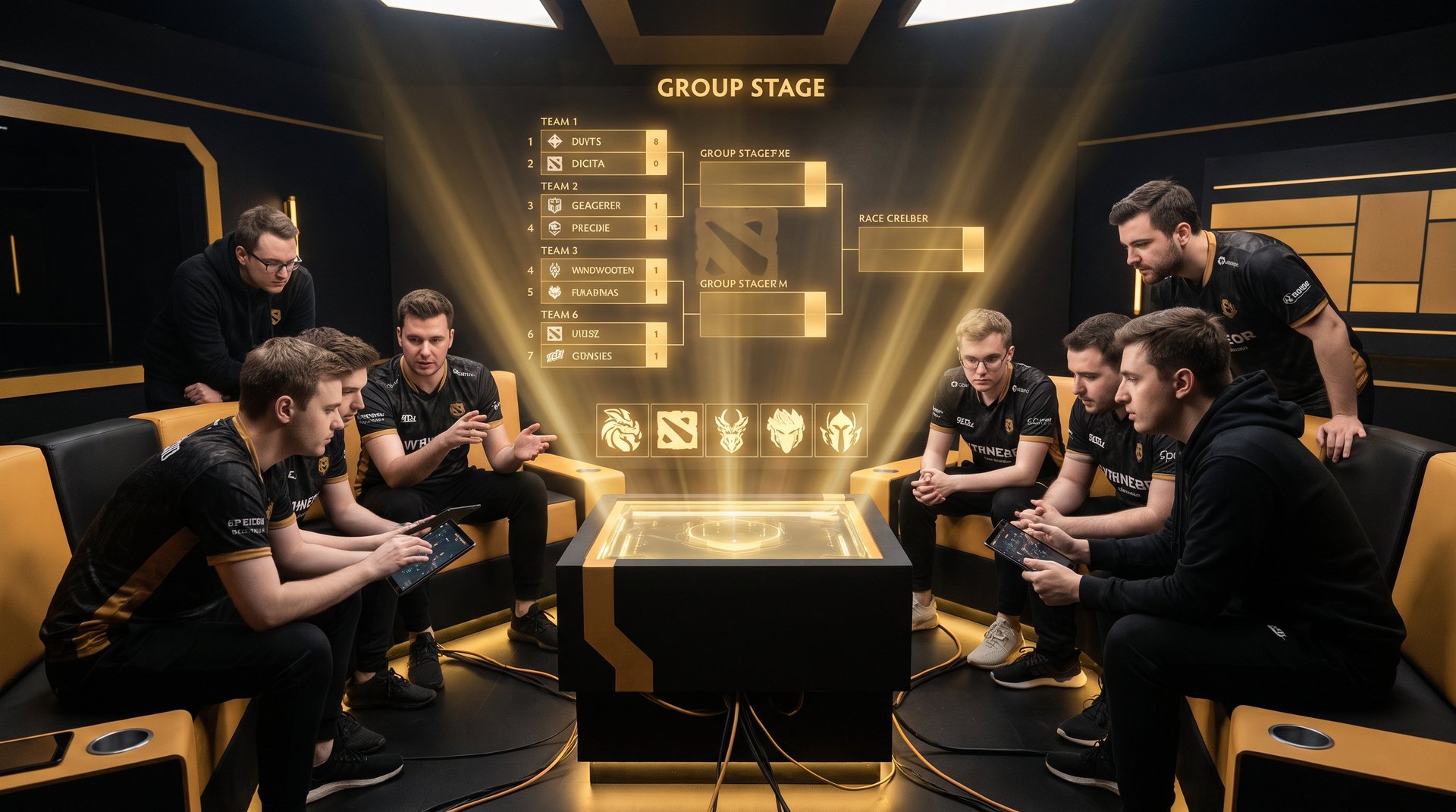
Using the current official schedule blocks, the 24 teams split into four groups of six. This is the first thing most previews get wrong because they talk in broad power rankings instead of looking at the actual friction points inside each group.
| Group | Teams | Immediate read |
|---|---|---|
| Group A | Team Falcons, BB Team, Poor Rangers, GamerLegion, Rune Eaters, Xtreme Gaming | Probably the nastiest “no free lane” group in the event if Xtreme show up clean |
| Group B | Team Liquid, PTime, L1 TEAM, Nigma Galaxy, Level Up, Aurora Gaming | Looks top-heavy, but Aurora and Nigma can make this group very annoying |
| Group C | Team Spirit, MOUZ, REKONIX, Vici Gaming, Team Nemesis, PVISION | Spirit are the headliner, but Vici and PVISION make this way less free than casual viewers think |
| Group D | Team Yandex, OG Esports, LGD Gaming, Virtus.Pro, Inner Circle x Insanity, 1W | Pure chaos group and maybe the most fun one if you like draft adaptation |
Group A: The most punishing fundamentals group
Team Falcons, BB Team, and Xtreme Gaming in the same pod means offlane tempo and support execution are going to decide a lot more than flashy late-game highlight clips. Group A looks like the group where bad first 10 minutes get punished hardest. If Rune Eaters or Poor Rangers get bullied out of lane structure early, the better macro teams here will not give them clean reset windows.
The reason I like Xtreme as a real threat in this group is simple: high-level Chinese teams are usually better at turning one tower advantage into a full map squeeze than casual Western audiences give them credit for. If your first instinct is “Falcons will just outfight everybody,” that can be true, but only if they get their jump timings first.
Group B: Better than it looks
Most people will just write “Liquid top, Aurora second, maybe Nigma spike a series.” That is lazy. Group B is sneaky because it has teams with very different failure modes. Team Liquid can make it look clean if they control rune and wisdom timings through support pace. Aurora Gaming are dangerous when they get to play decisive midgame Dota instead of getting dragged into random 45-minute pub fiestas. Nigma Galaxy are still the classic “if they draft to tempo and do not get cute, they can beat names bigger than theirs” team.
Also, this is a group where one shaky opening day can distort the entire table because the talent gap from the top seed to the fourth-place fight is smaller than people think. Do not be shocked if this one produces the most scoreboard noise early.
Group C: Spirit headline, but Vici matter
Yes, Team Spirit are the defending champions and should be treated like it. But Group C is not just a coronation tour. Vici Gaming and PVISION both matter here because this group has enough structure to punish lazy assumptions. If Spirit get their usual comfort on information control and clean counter-initiation, they should top out. If they experiment too much, the middle of this group has teeth.
The underrated point here is that Vici-type teams are often much better in group-stage formats than in single big spotlight series. Why? Because disciplined teams feast on weaker macro over multiple opponents. They do not need to be the best team in the tournament to quietly stack wins.
Group D: This is the group I would actually watch first
Team Yandex, OG Esports, LGD Gaming, Virtus.Pro, Inner Circle x Insanity, and 1W is the most “one draft mistake and everything gets weird” group in the bracket. Team Yandex come in with real buzz because recent results pushed their stock up hard. LGD still have the brand weight that makes people overreact to every draft. OG always attract more attention than their actual day-to-day consistency deserves. Virtus.Pro and 1W both have enough punch to ruin somebody’s clean script.
If you like Dota as a pure strategic game, Group D should be gold. There is enough ego, enough volatility, and enough stylistic mismatch here that you are likely to get at least one day where the standings make everybody look stupid.
Favorites, Sleepers, And Trap Reads
You do not need a fake ten-team tier list. You need honest buckets.
Tier 1 favorites Real Title Threats
Team Spirit, Team Falcons, and Team Liquid are the cleanest headline favorites. Spirit have the defending champion tag and the lowest burden of proof. Falcons still look like one of the highest-ceiling tempo teams in the event when their lanes are not griefed. Liquid stay dangerous because they usually understand how to build games from support movement and objective order rather than pure hero comfort.
Xtreme Gaming also belong in the real-contender conversation. People keep treating them like a secondary mention, but Chinese macro teams in stable patch environments are exactly the kind of roster that can make a long event miserable for everybody else.
Best sleeper: Team Yandex
Team Yandex are the easiest “smart pick” sleeper because the name value still lags behind the actual fear factor. Recent results are the reason they keep coming up in serious conversations, and their biggest strength is that they do not need perfect conditions to make the map ugly for you. Teams that can win even when the first two waves do not go exactly to script are always dangerous in these events.
Best upset candidate: Aurora Gaming
Aurora are exactly the kind of team people underrate because they do not live at the center of every Reddit thread. But if the game lets them play quickly around early objective flow, they are a real problem. They are not the safest champion pick. They are a very real “make somebody else drop a game they should not drop” pick.
The public trap: overrating brand, underrating structure
Every event has one obvious viewer mistake: treating jerseys like win conditions. That is how people get trapped by teams with historic brand power but messy current execution. OG, Nigma, and even VP can be dangerous, but they should be judged by lane setup, support clarity, and draft economy first, not by logo nostalgia.
High-MMR players usually make better tournament reads because they ask uglier questions. Does this team actually defend its own triangle well? Does the position five know when to leave lane? Are they drafting one save too few? Do they have a real Roshan structure or are they just hoping their carry gets six-slotted? Those questions matter way more than social media heat.
What 7.41d Actually Rewards Right Now
The worst way to talk about 7.41d is broad patch-note theater. The better way is to look at which heroes have both scale and conversion. Scale means high pick volume or sustained pro presence. Conversion means they turn that presence into actual win rate, bans, or draft pressure.
Using live public data from OpenDota hero stats, a few patterns jump out immediately:
- Snapfire is the cleanest bridge hero between pro and pub value: 632,223 public picks, 52.93% public win rate, plus 67 pro picks and 131 pro bans.
- Axe is still premium tempo for real players: 662,367 public picks, 52.67% win rate, 61 pro picks, 104 pro bans.
- Treant Protector has the highest current pro presence in the data set at 45 picks and 187 bans, which tells you captains still hate dealing with the hero even when public win rate looks ordinary.
- Clockwerk sits at 69 picks and 151 bans in pro data, which is another big clue that contact-first supports are still heavily respected.
- Drow Ranger remains a serious draft lever with 59 pro picks and 141 bans, while still holding a healthy 51.67% public win rate.
That gives you the shape of the patch: contact supports, lane-stable tempo cores, and lineups that can hit early objectives without sacrificing late-game insurance. This is not a patch where you should expect teams to blindly draft pure greed and pray the enemy throws at 38 minutes.
The pub side confirms it too. Wraith King is sitting at 444,433 public picks with a 54.99% win rate. Spectre has 386,356 picks with a 54.48% win rate. Vengeful Spirit is at 470,165 picks with a 53.76% win rate. Those are not meme samples. Those are large-volume heroes telling you that stable teamfight structure still pays.
| Hero | Public picks | Public win rate | Pro pick/ban | Why EWC teams care |
|---|---|---|---|---|
| Snapfire | 632,223 | 52.93% | 67 / 131 | Lanes well, fights well, scales without needing perfect draft help |
| Axe | 662,367 | 52.67% | 61 / 104 | Still one of the best punishers of bad spacing and weak side-lane respect |
| Drow Ranger | 571,228 | 51.67% | 59 / 141 | Demands clean front line and tower control, rewards structured teams |
| Treant Protector | 134,030 | 50.22% | 45 / 187 | Insane pro respect because vision denial and disengage still win games |
| Clockwerk | 153,442 | 48.65% | 69 / 151 | Pub win rate hides how good the hero is when teams actually play on information |
| Vengeful Spirit | 470,165 | 53.76% | 20 / 10 | One of the best ranked conversion heroes if pro trends trickle down slowly |
Hero Watchlist For EWC And Pubs
If you only want five names to track during the first stage, make it these.
1. Snapfire
Snapfire is the most honest patch hero in the pool because she does everything well enough to matter in bad and good games. She fixes weak lanes, adds long-range fight impact, and does not become useless if the game stalls. In tournament Dota, that makes her comfort and flex value enormous. In ranked, it means she is still one of the safest support or utility picks if you care about actual MMR instead of montage clips.
2. Axe
Axe staying above 52.6% at over 660k public picks is not a small thing. That means the hero is not just a pro idea. He is smashing real ladders too. The reason is simple: pubs still hate controlled initiation. Most players either do not track Blink timing well enough or do not respect where the offlaner disappears after minute 11. Axe farms that ignorance.
3. Treant Protector
Treant’s public numbers look normal, but his 187 bans in pro data tell the real story. Pros do not ban heroes because they are cute. They ban them because lane sustain, vision games, and disengage tools make drafts harder to solve. If you see Treant surviving first phase too often at EWC, pay attention.
4. Drow Ranger
Drow always exposes whether a team understands front-to-back structure or not. That is why she stays relevant when the patch gives organized teams room to play around range advantage, objective pressure, and disciplined positioning. If a group-stage team cannot protect Drow windows, that is a bigger indictment of the team than of the hero.
5. Vengeful Spirit
Venge is the classic “pros are not spamming it enough for pubs to notice how free it is.” A 53.76% public win rate over 470k picks is ridiculous value. She fixes random draft mistakes, offers one of the cleanest reset tools in chaos fights, and lets weaker teams steal cleaner engagements than they deserve. If you are grinding while watching EWC, Venge is one of the easiest heroes to copy immediately.
Replay IDs And Matches Worth Checking
If you want fresh public 7.41d games to study before EWC starts, recent Road to ENC 2026 regional qualifier matches are still useful because they are current-patch, serious-enough games with identifiable patterns. A few replay IDs worth opening right now:
| Match ID | Date (UTC) | Match | Score | Why watch it |
|---|---|---|---|---|
| 8876894624 | 2026-07-01 | Cuba vs Canada | 16-45 | Clean example of one side snowballing map control after lane edge |
| 8876607269 | 2026-07-01 | Team France vs Great Britain | 27-46 | Useful for support pacing and how fights break when spacing collapses |
| 8876483597 | 2026-07-01 | Serbia vs Greece | 42-45 | Messier game, but good if you want comeback and teamfight sequencing study |
| 8876860926 | 2026-07-01 | Canada vs Cuba | 8-30 | Fast kill map where conversion matters more than fancy late-game reads |
These are not EWC matches, obviously. The point is that they are current public pro-level replays on the same patch environment. If you care about learning before the main event begins, opening fresh IDs is always better than rewatching month-old patch states.
What Ranked Players Should Steal From EWC This Week
Most people watch tournaments like entertainment. If you want MMR, watch them like a thief.
1. Steal opening support routes, not just hero picks
Everybody copies the carry hero. Almost nobody copies the first five minutes that made the carry playable. That is why average players end up on “meta” heroes with trash results. Watch where supports place first ward, when they contest lotus or rune space, and when they leave lane. That is the actual value.
2. Track who converts first catapult into damage
One of the cleanest differences between real structure and pub sludge is what teams do with the first catapult. Good teams do not just shove the wave and walk away. They force spell usage, chip tower, or drag enemy rotations. In your pubs, copying that one habit will win more games than memorizing a ten-hero tier list.
3. Pay attention to how teams protect ranged carries
Drow games are especially useful here. Look at who is playing in front, who is saving cooldowns for jump denial, and how vision gets layered around choke points. If you are an Archon or Legend player who dies on high ground every other game, this is free coaching material.
4. Notice which teams simplify
Some teams win because they outdraft. Others win because they remove decision load. They pick heroes that make target priority obvious, teamfights easier, and Roshan windows cleaner. That principle is gold in pubs too. If your bracket is chaotic, simpler is often stronger.
If you want help applying that to your own account, TeamSmurf has the clean service ladder depending on your problem:
- MMR Boost if you want rank movement now
- Coaching if your mechanics are fine but your reads are bad
- Calibration Service if you are entering placements and do not want to waste them
- Low Priority Removal if your account is stuck in punishment queue and eating your time
And if you want more ranked-specific reads around current play, our TI 2026 closed qualifier winners breakdown and Dotabuff like a coach guide pair well with this preview.
When TeamSmurf Services Make Sense Around Big Events
Big events always create the same cycle. Players watch one good support map, one Axe game, one Drow draft, then queue ten games trying to force everything at once. Three days later they are down MMR and blaming teammates.
If you want the honest version:
- Use coaching if you understand the game but cannot translate what you watch into your own first 15 minutes.
- Use boosting if you know exactly where your rank should be and you do not want to spend 40 dirty pub hours proving it.
- Use calibration help if you are on a fresh or placement-sensitive stretch and do not want experimentation to cost you.
The value is not just the rank badge. It is skipping the worst part of the ladder cycle: copying pro ideas badly, tilting, then spending a week undoing your own mistakes.
Want To Climb While EWC 2026 Is On?
Use the event like free scouting, then let TeamSmurf help you turn those reads into real MMR. Whether you want rank gain, calibration help, or a coaching reset, we have the right path.