


Dota 2 Profile Level and Trophies Explained: How Profile XP Works and What It Unlocks

Your Dota 2 profile level is a permanent record of everything you have accomplished in the game — every match played, every feat completed, every event trophy earned. It is not your MMR, and it has nothing to do with how skilled you are. It is a measure of time invested and milestones hit.
This guide explains exactly how profile XP works, what trophy points do, which levels unlock something meaningful, and what separates a Dota Plus profile from a standard one. If you are trying to unlock ranked matchmaking or just want to understand what that badge number actually means, this covers it all.
In This Guide
- What Is Your Dota 2 Profile Level?
- How Trophy Points Work
- Types of Trophies That Earn Points
- Level Thresholds and What They Unlock
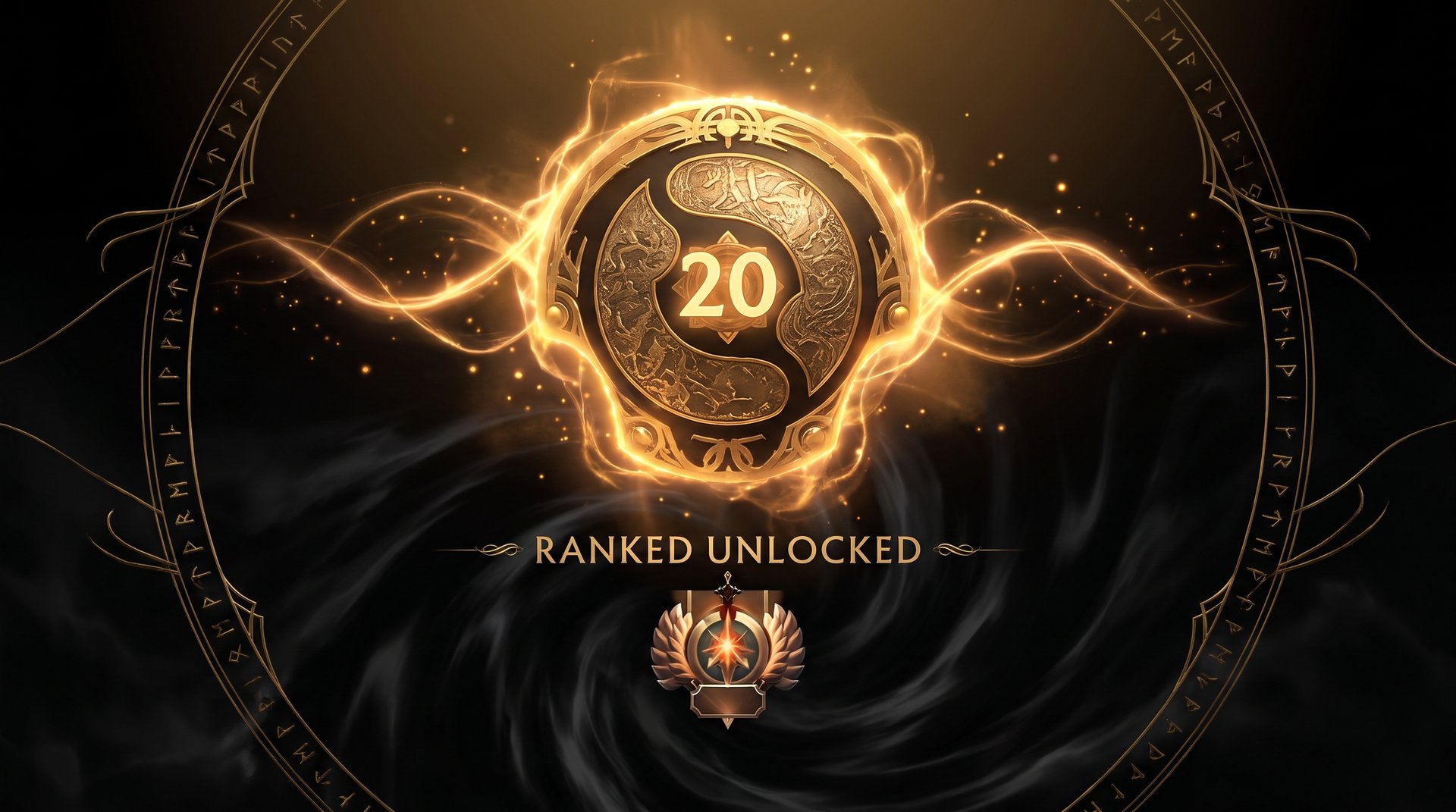
- Unlocking Ranked: The Level 20 Requirement
- Profile Icons and Badges (Levels 1 to 100+)
- Profile Showcase: What You Can Display
- Dota Plus and Your Profile
- How to Earn Trophy Points Faster
- Frequently Asked Questions
What Is Your Dota 2 Profile Level?
Your Dota 2 profile level is displayed as a badge on your public profile page. It tells anyone who visits your profile roughly how long you have been playing and how many in-game accomplishments you have collected over your career.
The system was introduced as part of the Dota Reborn update and replaced the older experience-based account leveling method. Under the current system, profile level is entirely driven by trophy points, not by match experience points. Playing matches still contributes — but through a dedicated trophy called the Experience Trophy, not through a raw XP counter.
A key thing to understand: your profile level has no direct impact on your matchmaking rating or which heroes you can access. It is a cosmetic and social indicator. The one functional gate it controls is access to ranked matchmaking, which requires reaching level 20 (covered in detail below).
How Trophy Points Work
The fundamental rule of profile leveling is simple: 100 trophy points = 1 Dota Level. There is no XP bar with variable thresholds — the conversion rate is flat and consistent from level 1 all the way past level 100.
Trophy points are awarded by collecting trophies. Trophies come in different tiers (bronze, silver, gold, platinum in most cases), and higher tiers award more trophy points. Most trophies have fixed point values, but the Experience Trophy is the exception — it has no cap and keeps awarding points indefinitely as you play more games.
You can view your current trophy collection and the points each trophy has contributed by navigating to your profile in the Dota 2 client and selecting the Trophies tab. Each trophy entry shows both what it required and how many points it awarded.
The Math Is Transparent
If you have accumulated 2,500 trophy points total, your profile level is 25. If you have 10,000 trophy points, your level is 100. The trophy tab gives you a running total so you can always calculate where you stand and how far you are from the next milestone level.
This transparency is one of the things that makes the Dota profile level system more satisfying than many equivalent systems in other games. You can look at your trophy list and immediately understand exactly what earned you each level increment.
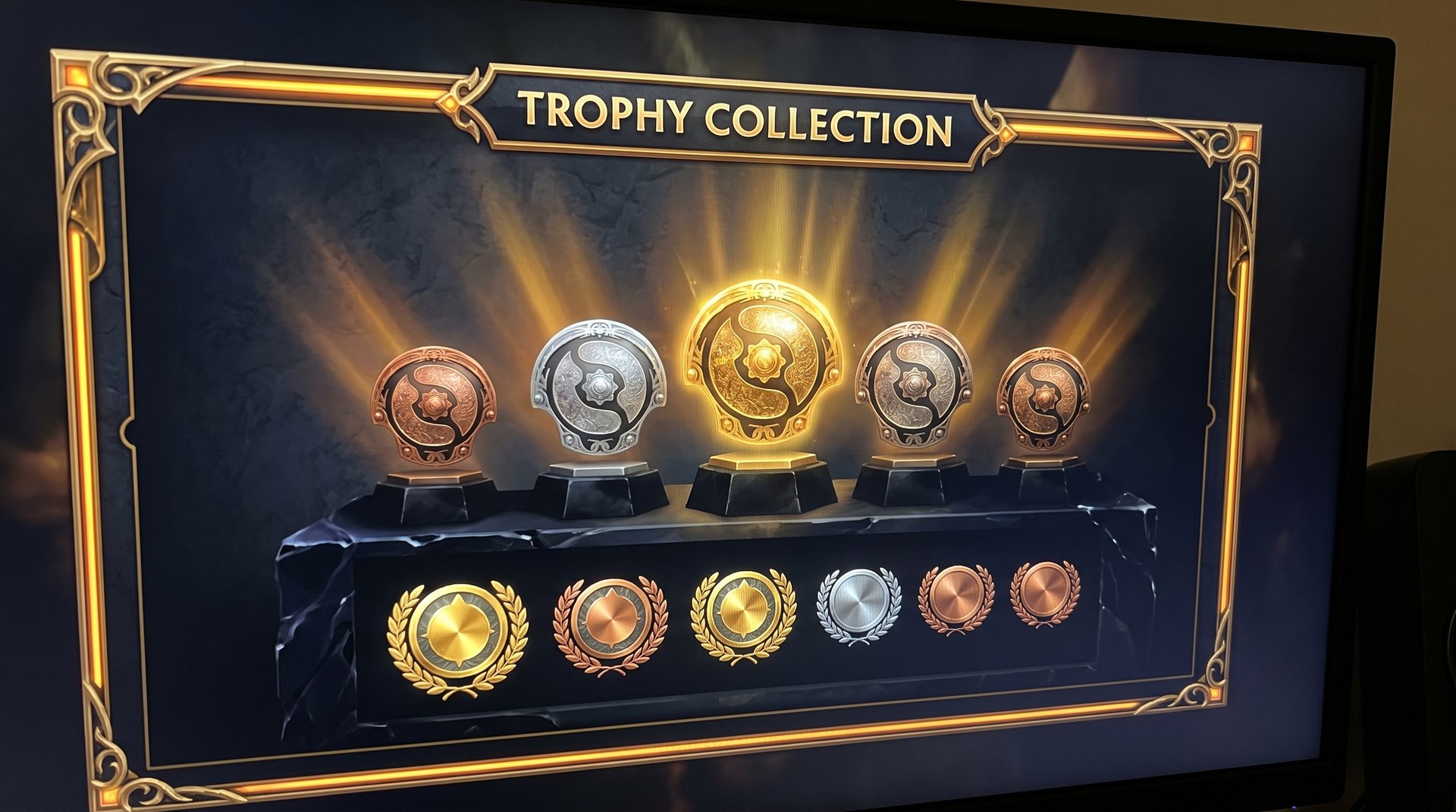
Types of Trophies That Earn Points
Trophies fall into several broad categories. Understanding which categories apply to you helps you plan where your next points will come from.
The Experience Trophy
This is the most important trophy for regular players. The Experience Trophy is awarded for playing matches — any matches, in any mode. Every game you complete moves this trophy toward its next tier, and each tier awards additional trophy points.
Critically, the Experience Trophy has no upper limit. Unlike most trophies that cap out at a final tier, the Experience Trophy keeps leveling up indefinitely. For players with thousands of hours in Dota, this becomes their primary source of ongoing profile levels even after they have completed every other available trophy.
The point gain per Experience Trophy level scales — early levels require fewer games to complete, while later tiers require significantly more. The net effect is that new players see relatively fast profile level gains early on, and the pace gradually normalizes as the Experience Trophy reaches higher tiers.
Feat Trophies
Feat trophies are earned by accomplishing specific in-game milestones. These cover a wide range of actions:
- Total kills, denies, and last hits across your career
- Total gold and experience earned in your lifetime
- First blood awarded over your match history
- Tower and barracks destructions
- Roshan kills across all your games
- Ward placements and observer and sentry usage stats
- Courier kills and hero-specific achievements
Most feat trophies have bronze, silver, gold, and sometimes higher tiers. You progress through them naturally as you accumulate the relevant stats. Some players are surprised to find they have already earned several feat trophies at the silver or gold level without ever actively trying.
Event Trophies
Seasonal events — such as the Dark Carnival, Frostivus, and Diretide — release exclusive trophies that are only obtainable during that event window. These trophies typically award a set number of points and cannot be earned after the event ends.
Event trophies are one reason veteran players often have noticeably higher profile levels than newer players with similar total match counts. Players who have participated in multiple years of events have accumulated substantial trophy points from sources that are simply no longer available.
Battle Points and the Battle Veteran Trophy
Players who earned Battle Points during older Battle Pass seasons received a commemorative Battle Veteran Trophy. The trophy awarded points based on their final Battle Point Level at the time of the relevant Battle Pass. This trophy is a historical record — it awarded points to accounts that had them, and cannot be earned by new players retroactively.
Achievement Trophies
Various in-game achievements unlock trophies over time. These include reaching specific milestones with a particular hero, participating in certain game modes, and other game-defined accomplishments. The list expands when Valve adds new content and new event types.
Level Thresholds and What They Unlock
The table below summarizes the progression tiers, approximate trophy points required, and what unlocks at each major milestone. Note that profile icons change at every individual level — the table highlights only the milestones with functional or cosmetic significance beyond a new icon.
| Level Range | Trophy Points Required | Key Unlock or Change |
|---|---|---|
| Level 1 | 0 to 99 pts | Account created; profile visible with starter icon |
| Level 5 | 400+ pts | Access to public chat rooms unlocked |
| Levels 1 to 19 | 0 to 1,900 pts | Unranked matchmaking only; new profile icon each level |
| Level 20 | 1,900+ pts | Ranked matchmaking unlocked (phone number also required) |
| Levels 21 to 99 | 2,000 to 9,900 pts | New profile icon each level; growing badge complexity |
| Level 100 | 9,900+ pts | Profile frame upgrades; icons restart new 100-cycle |
| Level 101+ | 10,000+ pts | Second icon cycle on upgraded frame background |
| Level 200 | 19,900+ pts | Second frame upgrade; icons cycle again |
| Level 300+ | 29,900+ pts | Rare high-level frames showing multi-year dedication |
The specific icon art for each level is displayed in the Dota client trophy and profile interface. Each of the 100 icons in the first cycle represents a unique design element. After level 100, those same icons repeat but with a new frame border indicating which cycle you are on. Players at level 200+ are clearly identified as long-time veterans by the distinct border around their profile badge.
Unlocking Ranked: The Level 20 Requirement
The most practically significant threshold in the profile level system is level 20, which is the gate for ranked matchmaking. This requirement was introduced to reduce smurfing and to ensure new players develop some baseline familiarity with the game before entering the competitive MMR system.
At the point where level 20 becomes relevant, a player has typically played somewhere between 50 and 150 unranked games depending on how actively they have earned trophies from other sources. The Experience Trophy alone can carry a dedicated player to level 20 faster than casual players expect.
What Level 20 Actually Represents
Level 20 represents approximately 1,900 total trophy points. For a player who only plays matches and earns nothing from events or feat trophies, reaching this threshold through the Experience Trophy alone requires a meaningful number of games — enough to understand the basic mechanics of Dota 2 before being placed in the ranked pool.
Players who participate in seasonal events, complete achievement trophies, and accumulate feat trophy tiers will reach level 20 faster than someone who purely plays games and ignores the trophy system.
The Phone Number Requirement
Since a separate update, ranked access also requires a unique phone number registered on your Steam account. This requirement works alongside the level 20 gate — you need both. One phone number can only be linked to one Steam account for ranked purposes, which is part of Valve’s anti-smurf framework.
If you are new and trying to reach ranked as efficiently as possible, the level 20 gate is the longer requirement for most players. The phone number step takes about two minutes once you have it available.
Looking to climb ranked once you get in? Read our complete MMR boosting guide or learn about whether Dota 2 boosting is safe for context on the ranked landscape.
Profile Icons and Badges (Levels 1 to 100+)
One of the most visible effects of profile leveling is the badge that appears on your profile page. This badge changes at every single level, not just at major milestones. There are 100 distinct badge designs in the base progression cycle.
The 100-Icon Cycle
Levels 1 through 100 each have a unique badge icon. The icons are designed with increasing visual complexity and detail as the numbers grow. Lower-level icons are relatively simple, while the icons approaching level 100 are more elaborate. The design language uses Dota’s visual style — heroes, items, and cosmetic elements from the game’s art library appear in various badge designs.
When you reach level 100, your profile earns a new frame — a decorative border that wraps the badge. From level 101, the icon sequence restarts at the first design, but the frame makes it visually clear you are on your second cycle. Players can identify how many full cycles someone has completed at a glance by counting the frame upgrades.
Choosing Your Displayed Icon
By default, your profile displays your current level’s icon. Some players have asked whether they can display an earlier icon they preferred — as of current Dota 2, the profile badge reflects your current level and the standard system does not let you choose an earlier icon from your own progression. The badge is your current level, displayed as-is.
You can, however, customize many other aspects of your profile through your profile settings page, including which items, heroes, and other accomplishments appear prominently.
High-Level Badges as Social Signals
In competitive matches and the Dota community, profile level sometimes functions as a rough proxy for total game experience. A level 300+ player has clearly been in the game for years. A level 20 player might be a veteran who came back after years away, but they might also genuinely be new. Most experienced players treat profile level as a weak signal — interesting context, but not a basis for judgment.
Profile Showcase: What You Can Display
Beyond the level badge, your Dota 2 profile has a showcase section where you can highlight specific aspects of your account. The profile showcase was updated in later patches to give more control over what appears prominently when others view your page.
Showcase Items
You can choose to display various elements in your profile showcase:
- Hero levels: Featuring heroes where you have accumulated the most games shows your specialization at a glance. Players who have pushed a hero past level 25 in the hero leveling system often display that.
- Trophies: Specific trophies can be pinned to your showcase, particularly event-exclusive ones that signal you were active during specific seasons.
- Match history highlights: Recent standout performances in terms of KDA, farm, or other stats can appear in the showcase area.
- Arcana and prestige items: High-value cosmetics signal investment in the game’s cosmetic ecosystem.
The showcase is visible to anyone who views your profile, including teammates during the loading screen in some cases. Veteran players sometimes use it to signal their main heroes and play style before a game begins.
Profile Privacy Settings
You have the option to control how much of your profile is publicly visible. If you want to limit what opponents can see before a match, Dota 2 lets you restrict profile visibility. Our detailed guide on how to hide your Dota 2 rank and manage privacy settings covers all the options available to you.
Restricting your profile does not affect your MMR or how you are matched. It only affects what others can see when they look you up. To update your profile display and privacy preferences, visit the edit profile page.
Dota Plus and Your Profile
Dota Plus is Valve’s subscription service for Dota 2. It does not grant additional profile levels — your level is purely determined by trophy points regardless of whether you subscribe. However, Dota Plus adds several features that relate to your in-game experience and profile analytics.
What Dota Plus Actually Adds
Dota Plus subscribers get access to:
- Hero progression system: A separate in-game rank for individual heroes (distinct from profile level) that unlocks exclusive hero chatwheel lines as you play games on that hero.
- Shards currency: Earned through matches and used to purchase hero and courier cosmetics in the Dota Plus shop. Shards are a real unlock mechanism, separate from your profile level.
- Plus Assistant: Real-time analytics during matches — item suggestions, ability build guidance, lane setup recommendations, and post-game performance breakdowns.
- Hero-specific global rank: A ranking that shows where you stand among all Plus subscribers on a given hero, based on performance metrics across your match history on that hero.
- Prediction Charms: Allow you to bet on match outcomes during watched games for cosmetic rewards.
Dota Plus Does Not Gate Profile Levels
Being a Dota Plus subscriber does not make you level up faster. Trophy points are earned through the same system for all players. Plus gives you more things to do with your account and more data about your performance, but your profile level badge will climb at the same rate as a non-Plus player with the same trophy point accumulation.
Some event passes and special bundles have historically given bonus trophies or trophy point bonuses as part of their purchase — but those are event-specific mechanics, not a permanent Dota Plus perk.
How to Earn Trophy Points Faster
If you want to reach level 20 for ranked access as efficiently as possible, or if you just want to see your badge climb, there are a few practical approaches worth knowing.
Play Regularly
The Experience Trophy is your permanent, uncapped source of trophy points. Consistent play moves it through tiers consistently. Turbo mode counts toward the Experience Trophy — the matches are shorter, which means more games per hour even if the per-game contribution is proportionally adjusted.
Participate in Every Event
Seasonal events are time-limited trophy point opportunities. Missing a major seasonal event means missing those points permanently. The Dark Carnival, Frostivus, Diretide, and similar events all come with exclusive trophies that award points upon completion of event tasks. Active players during event seasons visibly accelerate their profile level during those windows.
Check Your Feat Trophy Progress
Open your trophy tab and look at which feat trophies are close to their next tier. Milestones like total last hits, total gold earned, or total wards placed might be one or two sessions away from ticking over to the next tier and awarding a chunk of points. Feat trophies are passive — they complete as you play normally — but knowing you are close to one can be motivating.
Complete Achievement Unlocks
Some trophies require specific actions you might not take in a typical session. Things like playing a certain hero for the first time, completing a game in a mode you have not tried, or hitting a specific in-game milestone for the first time. These are usually one-time awards that newer players can still knock out relatively easily.
The Role of Boosting in the Ranked Picture
Some services offer to level up Dota 2 accounts. TeamSmurf does not offer this specific service, but we do offer MMR boosting for players who want to improve their competitive standing after they have already unlocked ranked. If your goal is specifically to unlock ranked as a new player, the most sustainable approach is to play unranked games while learning the game — you will hit level 20 naturally while developing the mechanics you need to succeed in ranked.
For a breakdown of all legitimate ways to climb once you are in ranked, see our best Dota 2 boosting services overview.
Common Misconceptions About Dota 2 Profile Level
A few persistent misunderstandings come up regularly around the profile level system. It is worth clearing them up explicitly.
Profile Level Does Not Affect Matchmaking Quality Beyond Level 20
Once you have hit level 20 and unlocked ranked, your profile level has zero impact on where Dota 2 places you in matchmaking. The MMR system is entirely separate. A level 250 player with a 2,000 MMR will face other 2,000 MMR players, not be bumped into higher-skill lobbies because of their profile level.
Higher Profile Level Does Not Mean Better at Dota
Profile level measures time invested across all modes, not skill. A player who has played 5,000 casual Turbo games will have a high profile level and potentially a middling MMR. A returning veteran who came back after years away may have a low profile level on a new account while being highly skilled. The two metrics are independent.
Restarting After Level 100 Is Not a Reset
When the icon cycle restarts at level 101, your profile level number does not go back to 1. The badge number continues to increment (101, 102, and so on). What changes is the visual appearance of the icon — it cycles back through the same 100 designs with the new frame indicating the second cycle. Your total trophy points and level number continue their forward progression.
You Cannot Lose Profile Levels
Unlike MMR, profile level is permanent and can only go up. Trophy points are never deducted. Account restrictions can affect your access to features, but they do not retroactively remove profile level from the account.
Frequently Asked Questions
Ready to Climb in Ranked?
Once you have unlocked ranked at level 20, the real challenge begins — climbing MMR. TeamSmurf specializes in Dota 2 improvement services for players who want results.



