


Dota 2 Consumables Explained: Tango, Salve, Clarity, Faerie Fire, Dust, Smoke and Wards (Costs + When)

Every Dota 2 player — from a first-game Herald to a hardened Ancient — burns through consumables every single match. Tango, Healing Salve, Clarity, Faerie Fire, Dust of Appearance, Smoke of Deceit, Observer Wards, Sentry Wards: these items cost a combined few hundred gold but their impact on the lane phase and mid-game is enormous. Buy the wrong one, use it at the wrong moment, or forget to buy it entirely, and you lose trades, miss ganks, and hand the enemy free farm.
This guide covers every core consumable in Dota 2 — what it costs, exactly what it does, when to buy it, who needs it most, and the practical tips that separate players who waste these items from players who squeeze every drop of value from them. If you want a broader look at the full item shop, check out our Dota 2 items hub as your next read.
All gold costs are sourced from Liquipedia (current patch, August 2026). Values can shift between major patches — we will flag any item where costs have historically been volatile.
What is in this guide?
Quick Reference: All Consumable Costs at a Glance
Here is every consumable covered in this guide in one table. Costs are gold per purchase unless noted otherwise. Use this as your cheat sheet before queuing.
| Item | Cost | What it does | Best for | Cancel? |
|---|---|---|---|---|
| Tango | 90 gold | 115 HP over 16 sec (from a tree); shares 70 HP to allies | All roles, laning phase | No |
| Healing Salve | 100 gold | 400 HP over 8 sec | Tanky heroes, burst heals after trades | Yes — damage cancels it |
| Clarity | 60 gold | 100 mana over 30 sec | Mana-hungry supports | Yes — damage cancels it |
| Faerie Fire | 65 gold | +3 attack damage passive; 75 HP instant on use | Carries, last-hit timing | No (instant) |
| Dust of Appearance | 80 gold | 1050 AoE reveal, 10% slow, 12 sec | Anti-invis (Riki, Clinkz, etc.) | No |
| Smoke of Deceit | 50 gold | Invisibility + 15% move speed, 35 sec | Ganking, escaping, rosh attempts | Yes — breaks near heroes/towers |
| Observer Ward | 0 gold (free) | Ground-level True Vision in 1600 AoE, 7 min | All supports, must-buy every game | Dispel by enemy sentry/detection |
| Sentry Ward | 50 gold | True Sight in 950 AoE, 4 min | Dewarding, anti-invis zones | Dispel by enemy sentry/detection |
A support player spending 90 + 60 + 50 + 0 = 200 gold on a Tango, Clarity, Observer Ward set arrives to the laning phase with full healing and map vision without crippling their item progression. A core spending 90 + 65 = 155 gold on a Tango plus Faerie Fire gets regeneration and a small damage boost that pays off in last-hit contests.
Tango — 90 Gold
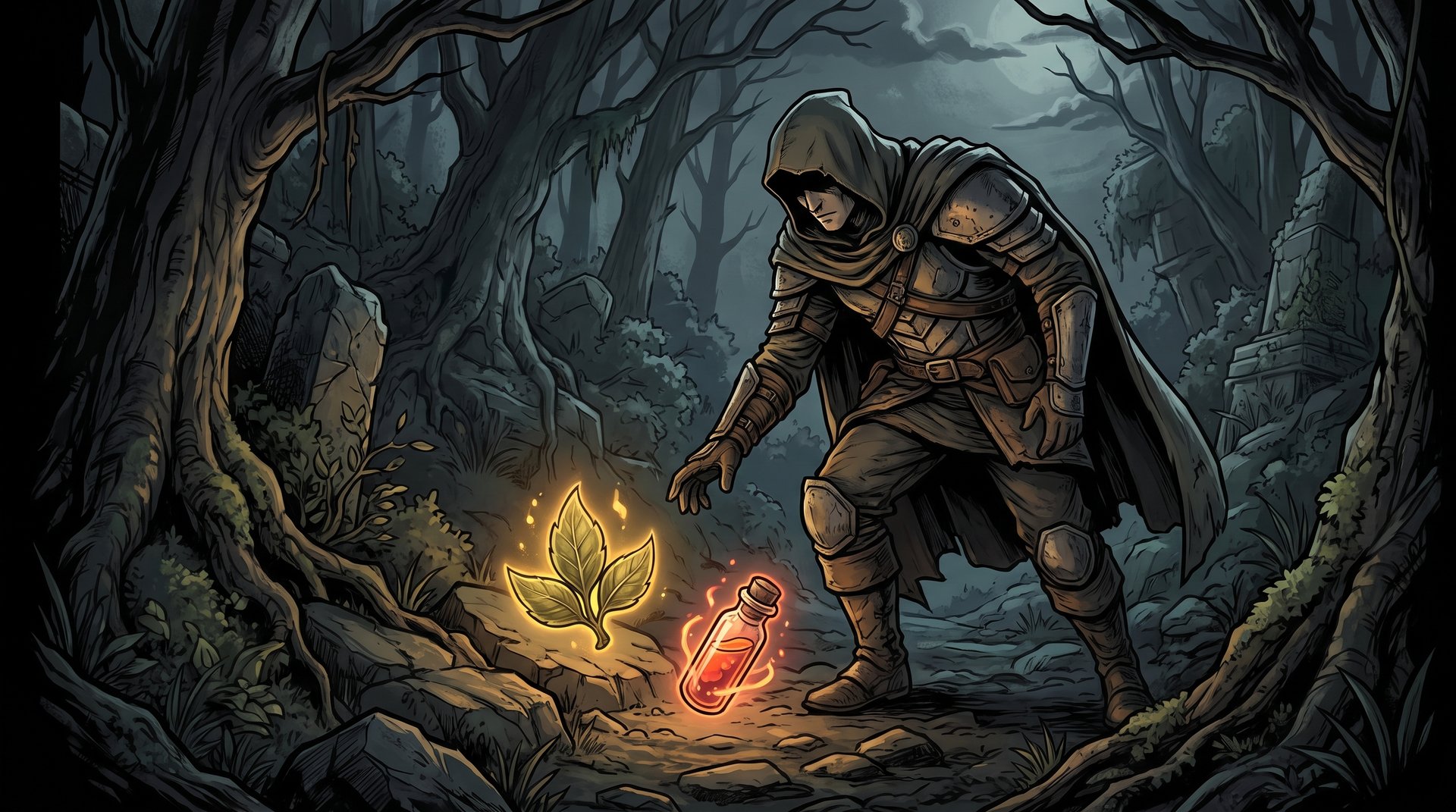
Tango is the most universal consumable in Dota 2. It costs 90 gold, gives you 3 charges on purchase, and each charge lets your hero consume a tree to restore 115 HP over 16 seconds. Because the heal is gradual, your hero keeps moving and farming while it ticks — you do not need to stand still or wait like you do with Healing Salve.
Key mechanics
- Sharing: You can give a single Tango charge to an allied hero. A shared Tango restores 70 HP over 10 seconds — less than the full charge, but enough to keep a support alive after a bad trade.
- Trees matter: You need a tree nearby to use it. Deep jungles and open areas have fewer trees, so Tango is more reliable in the side lanes and the natural tree clusters.
- Not cancellable: Unlike Salve and Clarity, the Tango regen ticks even if you take damage. This makes it the safer early choice in contested lanes.
- Iron Branch synergy: Planting an Iron Branch creates a temporary tree. You can Tango that tree for 200% HP regeneration — 230 HP from one charge. This is a standard value play in the competitive scene and should become a habit at any rank.
When to buy Tango
Buy at least one Tango on every hero every game. Supports should buy 2 on the opening trip and share charges with their carry. Cores should buy 1-2 depending on how aggressive the lane matchup looks. Tango is not replaced by Healing Salve — it complements it. The two items do different jobs: Tango is your slow-burn, stay-in-lane regen; Salve is your burst recovery after a big hit.
Who buys Tango
Every hero buys Tango. There is no role or hero type that skips it. If your hero has no passive regeneration and cannot jungle early, Tango is mandatory. Even heroes that go Bottle in the mid lane typically open with a Tango or two before their Bottle arrives.
Healing Salve — 100 Gold
Healing Salve costs 100 gold and restores a massive 400 HP over 8 seconds — that is one of the highest regeneration values of any early item in the game. The trade-off is severe: any damage taken during those 8 seconds immediately cancels the effect and wastes the charge.
Key mechanics
- 400 HP in 8 seconds equals roughly 50 HP per second. At level 1, that can take a hero from near-death to half-health in one use — huge trading value if you are safe.
- Damage cancels it: A single auto-attack, a projectile landing, a damage-over-time tick — any of these ends the Salve prematurely. You only get the HP that ticked before the hit landed.
- Can be used on allies: You can cast Healing Salve on a nearby ally, same as Tango sharing. The ally gets the full 400 HP recovery subject to the same damage-cancel rule.
When to use Healing Salve
Healing Salve is most effective when you have a safe window — between waves, when you have just backed up under tower, or when an enemy has just retreated to their own base. Do not pop a Salve in an active fight, mid-chase, or while standing near a hero who can land a single hit on you. The safest use of a Salve is in fountain range or inside a retreating position where the enemy cannot follow up.
Who buys Healing Salve
Healing Salve is stronger on heroes who can create safe windows — tanky oflaners who push the wave and back off under tower, supports playing reactive lanes, or cores that take big burst hits and need fast recovery before the next wave. Heroes that constantly take chip damage throughout the lane get less value from Salve than from Tango.
Clarity Potion — 60 Gold
Clarity costs 60 gold and restores 100 mana over 30 seconds. Like Healing Salve, any damage taken cancels the effect immediately. At 60 gold it is one of the cheapest items in the shop and an essential pickup for any support hero with meaningful spells.
Key mechanics
- 30-second channel: The regen duration is much longer than Salve or Tango — 30 full seconds. This means even more opportunities for damage to cancel it mid-tick. Use Clarity when you know you will have 15-30 safe seconds.
- Cancels on damage: Same rule as Salve. One hit cancels the mana restore for that remaining duration.
- Stacks: You can carry multiple Clarity charges. Supports with high mana costs — Lion, Shadow Shaman, Crystal Maiden, Skywrath Mage — often buy 2-3 Clarities on their starting trip.
When to buy Clarity
Buy Clarity if your hero has important spells that cost 60+ mana and you plan to cast them in the lane phase. A support with no mana cannot trade with spells, stun enemies, or set up kills for the carry. Running out of mana in lane is effectively the same as going invisible — you stop having an impact. One or two Clarities at the start pay for themselves the moment they let you land a stun or slow that the enemy would have otherwise walked away from.
You do NOT need Clarity on heroes that regenerate mana naturally (like Wraith King with no early-game spells) or on cores that will buy a Bottle before needing mana restoration. Read your hero’s mana costs at level 1-3 and decide whether Clarity is mandatory, optional, or skippable.
Who buys Clarity
Position 4 and position 5 supports are the primary buyers. Mana-intensive supports (Crystal Maiden, Shadow Demon, Pugna, Kotl) frequently need 2 Clarities to function through the first 10 minutes. Mid heroes that go Bottle skip Clarity. Hard carries (pos 1) rarely need Clarity at all unless their opening spells are mana-heavy — like Morphling or Silencer.
Faerie Fire — 65 Gold
Faerie Fire is a small but smart item. At 65 gold it costs less than a Tango but offers a passive +3 attack damage alongside an active that instantly restores 75 HP on use. It is consumed when activated, meaning the passive disappears but you get an immediate health restore.
Key mechanics
- +3 attack damage (passive): This small damage buff adds up over many last hits in the early game. Three extra damage is worth roughly 20-30 gold in effective last-hit value over a full lane phase.
- 75 HP instant heal (active): Unlike Tango and Salve, the heal is instantaneous. It cannot be cancelled by damage. This makes it uniquely valuable for avoiding a killing blow — use it in the last half-second before a death to save yourself.
- One use: The item is consumed on activation. You get either the long-term passive value or the burst heal, not both forever — choose when to pop it.
When to buy Faerie Fire
Faerie Fire is best on position 1 carry heroes who contest last hits heavily and occasionally need an emergency heal in the lane. The combination of damage bonus and emergency healing is very efficient for the gold cost. Some players open with 1-2 Faerie Fires instead of a second Tango if the lane is expected to be aggressive, since the instant heal is harder for the enemy to counter than a Salve or Tango.
Who buys Faerie Fire
Primarily position 1 carries and mid heroes that fight for last hits. Supports rarely buy Faerie Fire because they need the budget for wards and Clarity. Strength heroes with low base attack damage get excellent value from the +3 attack damage. Heroes building Dragon Lance, Wraith Band, or other stat-stacking items sometimes incorporate multiple Faerie Fires as stat components before converting to bigger items.
Dust of Appearance — 80 Gold
Dust of Appearance is your primary tool for revealing invisible enemies without a ward. At 80 gold per charge, it creates a 1050-unit AoE that reveals all invisible units for 12 seconds and applies a 10% movement slow to them. You can carry 2 charges of Dust at once.
Key mechanics
- 1050 AoE radius: Large enough to catch invisible heroes mid-dodge. The AoE is centered on your hero when activated — you need to be relatively close to the invisible target.
- 10% movement slow: This slow keeps invisible targets from simply running away after being revealed. Combined with a stun or root, dust creates a lockdown scenario where the invisible hero cannot escape.
- 12-second reveal: Long enough for your team to rotate and kill the target if you communicate. Communicate through the in-game ping system when you pop Dust so teammates know a fight is about to open.
- Does not reveal wards: Dust reveals invisible UNITS only. It does not detect Observer or Sentry Wards. Use Sentry Wards for that purpose.
When to buy Dust
Buy Dust when the enemy team has one or more heroes that rely on permanent or sustained invisibility: Riki, Clinkz, Bounty Hunter, Nyx Assassin (Spiked Carapace + Impale combo), Invoker (Ghost Walk), and similar. In ranked play you should always check enemy picks for invisible heroes at the draft phase and buy Dust proactively rather than reactively after the first gank.
Dust is not a substitute for Sentry Wards in high-traffic areas. It is better as a mobile detection tool for heroes that roam invisibly. Against heroes like Bounty Hunter who blink-and-invis frequently, carry 2 charges of Dust at all times once they are a threat.
Who buys Dust
Supports and oflaners are the typical Dust carriers since they rotate around the map more than carries. Cores should carry Dust if the enemy invis hero is directly targeting them. Against a Riki mid-to-late game that is assassinating your carry, your carry should buy their own Dust or a Gem of True Seeing for permanent detection.
Smoke of Deceit — 50 Gold
Smoke of Deceit is the cheapest meaningful consumable in Dota 2 at 50 gold. Using it gives your hero (and all nearby allied heroes) invisibility and a 15% movement speed bonus for 35 seconds. The effect breaks when you come within 1025 units of an enemy hero or 400 units of an enemy tower.
Key mechanics
- Team smoke: Activating Smoke applies the buff to all nearby allies within 1000 range. This is the primary use case — smoking an entire team for a coordinated gank, Roshan attempt, or split-push ambush.
- 1025-unit hero detection break: The buff ends when you get close to an enemy hero. This means the enemy does not see you coming until you are almost on top of them — no warning until the last moment.
- Tower detection at 400 units: Smoke breaks near enemy towers. You cannot Smoke directly past a tier-1 tower to dive an unsuspecting enemy — the tower proximity will reveal you before the hero does.
- Invisibility vs. True Sight: Smoke does not bypass True Sight. Gem of True Seeing, Sentry Wards, and similar detection abilities will reveal a smoked hero. This is an important weakness against detection-heavy defenses.
When to buy Smoke
The best Smoke setups are before Roshan (so you can approach without being spotted on the minimap), before ganking an overextended enemy carry, and before a decisive team fight where you want to pick your engagement point. Smoke is one of the highest-impact 50 gold items in the game when used by coordinated teams.
For a deep dive into timing your Smokes by rank bracket and what signals to look for before activating, read our Dota 2 support Smoke guide — it covers every stage of the game with specific callout timings.
Who buys Smoke
The position 4 or 5 support typically buys Smoke and is responsible for calling when to use it. In high MMR play, good supports carry 1-2 Smokes at a time throughout the mid-game. Smoke should be repurchased after every use — at 50 gold each, a team that uses 4-5 Smokes per game has spent 200-250 gold in total for potentially game-winning ganks, Roshan kills, and vision plays.
Observer Wards and Sentry Wards
Wards are the vision backbone of Dota 2. Observer Wards are free — they cost 0 gold since Valve removed the purchase cost to lower the barrier for newer players learning the support role. Sentry Wards cost 50 gold per charge and provide True Sight in a 950-unit radius, revealing invisible units and enemy wards.
Observer Wards
- Cost: 0 gold
- Duration: 7 minutes
- Vision range: 1600 units (ground-level vision)
- Purchase limit: 2 charges maximum at one time; replenishes automatically
Observer Wards provide standard ground-level vision. They do not provide True Sight and cannot reveal invisible units or enemy wards — they just tell you what is physically visible from their placement point. The key skill with Observer Wards is placement. A ward placed in a low-traffic area gives you information about enemy rotations. A ward placed behind enemy tier-1 towers tells you whether their cores are farming or pushing. High-ground and cliff wards give vision over terrain that your heroes cannot normally see.
Sentry Wards
- Cost: 50 gold (2 charges per purchase)
- Duration: 4 minutes
- True Sight range: 950 units
Sentry Wards reveal invisible units AND enemy Observer Wards within their range. Dewarding — using Sentry Wards to destroy enemy Observer Wards — is a crucial support skill that denies the enemy team information, which is just as valuable as giving your team information. The 950-unit True Sight range is smaller than Observer Ward vision, so positioning them to cover the exact ward spots that the enemy likely placed is a skill in itself.
When to buy wards
Observer Wards should be bought every time they come off cooldown. Because they are free, there is zero reason not to buy and place them constantly. Sentry Wards should be bought proactively — before an important Roshan attempt, to deward a rune spot before a key bounty rune, and whenever you suspect the enemy has a ward in a high-value location that is feeding them information about your movements.
For placement guides, common ward spots by game stage, and advanced counter-warding setups, read our dedicated Dota 2 warding guide.
Who buys wards
Position 5 is the primary ward buyer, with position 4 sharing the burden. In games where your position 5 support is underleveled and losing gold badly, the position 4 should pick up the slack and buy wards proactively. Wards are the single highest-impact purchase available to any support player — a well-placed Observer Ward before a fight gives your team the engagement advantage that determines who wins.
Consumable Budget by Role
Understanding how much of your starting gold to allocate to consumables versus stats items is one of the first strategic decisions you make each game. Here is a breakdown by role position.
| Role | Typical opening consumable spend | Priority items | What to skip |
|---|---|---|---|
| Position 1 (Hard Carry) | 100-200 gold | 2x Tango + Faerie Fire | Dust, Smoke (support job) |
| Position 2 (Mid) | 90-180 gold | Tango + Clarity or Faerie Fire | Observer Ward (supports buy) |
| Position 3 (Offlaner) | 150-250 gold | 2x Tango + Healing Salve | Clarity (usually has mana regen or bottle) |
| Position 4 (Soft Support) | 200-350 gold | Tango + Clarity + Observer Ward + Smoke | Faerie Fire (low damage benefit) |
| Position 5 (Hard Support) | 250-400 gold | 2x Tango + 2x Clarity + 2x Observer Ward + Sentry | Healing Salve (damage cancels it in fights) |
The numbers above are starting-trip estimates. Through the early game, supports should continuously cycle back to buy more Clarities, Smokes, and Wards as they earn gold. A support who hoards their first 1000 gold waiting for a “real item” while running dry on mana and wards is sabotaging their team’s map control.
If you are finding it hard to climb despite playing support and maintaining good ward coverage, consider that vision is just one piece of the puzzle. Coaches at TeamSmurf’s Dota 2 coaching service regularly identify support fundamentals — itemization timing, smoke calling, and ward placement — as areas where even Archon and Legend players have consistent blind spots.
Advanced Tips and Common Mistakes
Even players who understand what consumables do often misuse them in practice. These are the most common mistakes and the fixes for each.
Common mistake 1: Using Healing Salve in active lanes
Popping a Healing Salve while an enemy hero is on screen is almost always a waste. The first harassment hit cancels the 8-second channel and you get 8-16 HP of regen instead of 400 HP. Use Salve only when there is zero chance of taking damage for the next 8 seconds. If you are not confident about that window, use a Tango charge instead.
Common mistake 2: Not sharing Tango with your carry
Position 5 players often hoard their Tango charges “just in case” and watch their carry die in lane with no regen. Give one Tango to your carry immediately at the start of every lane. The cost to you (one charge = roughly 30 gold of value) is far smaller than the benefit of keeping your carry healthy and farming.
Common mistake 3: Forgetting to buy Smoke before Roshan
A team that Roshans without a Smoke telegraphs their location on the minimap. Enemy heroes or a ward near the pit will call out the attempt and the enemy team rotates to contest. One or two Smokes for a Roshan is 50-100 gold for a potential game-winning advantage — always buy it.
Common mistake 4: Using Dust reactively instead of proactively
If you are buying Dust after the invisible hero already killed you, you are already behind. Identify invis heroes during the draft and buy Dust before they start ganking. Carry 2 charges from the 10-minute mark onward if the enemy has a high-impact invisible hero.
Common mistake 5: Skipping Sentry Wards because Observer Wards are free
Observer Wards being free does not reduce the importance of Sentry Wards. An uncontested enemy ward near the river or Roshan pit is giving the enemy team information for 7 minutes. One 50-gold Sentry charge destroys that ward and saves your team from multiple bad engagements. Deward consistently — it is one of the highest-return plays in the support role.
The Iron Branch + Tango combo
This is worth repeating because many players at lower brackets never learn it. Planting an Iron Branch (right-click on an Iron Branch to plant a tree) gives you a Tango-able tree. A regular Tango on a real tree gives 115 HP. A Tango on a planted Iron Branch tree gives 230 HP — double value. The Iron Branch costs 50 gold anyway as a starting stat item. You are getting double healing for free if you plant it before using your Tango.
This technique is used by every professional player and coach in the game. Applying fundamentals like this one consistently is what separates players who climb MMR from those who plateau. If you want to accelerate your mechanical improvement and consumable efficiency, our Dota 2 boosting services give you experienced players to learn from directly in your own games.
Consumables in the mid-to-late game
Consumables do not disappear in importance as the game progresses. Smoke calls remain relevant all game. Dust becomes critical mid-game against invis carries. Sentry Wards around Roshan and key objectives define who controls the late game. The biggest mistake late-game supports make is treating consumables as a “laning phase budget item” and stopping purchases after the first 10 minutes.
Is playing Dota 2 at a higher level something you are working toward? If smarter itemization, better positioning, and correct consumable usage are areas you want to develop faster, check whether Dota 2 boosting is the right tool for your situation — we break down the honest pros, cons, and safety considerations on that page.
Frequently Asked Questions
Improve Your Dota 2 Game Faster
Understanding consumables is the foundation. Applying it under pressure — in contested lanes, chaotic team fights, and high-stakes ranked games — is what actually moves your MMR. TeamSmurf’s Dota 2-only coaching staff helps you build the habits that compound: correct consumable usage, vision control, and laning fundamentals that hold up at every bracket.



