Carry Farming Patterns: Triangle vs Lane Priority by Game State

Carry farming efficiency is one of the most underappreciated skill differentials between brackets in Dota 2. The gap between a 600 GPM carry and an 800 GPM carry at the same skill bracket is almost never mechanical — it is almost always a farming pattern decision. Which creeps to prioritize, when to leave lane for jungle, when to prioritize lane creeps over stacked ancients, and how to read game state to shift between triangle farming and lane-priority farming are decisions that directly determine your item timing.
This guide covers the two primary carry farming patterns — triangle farming and lane-priority farming — when to use each based on game state, how to transition between them, and the specific decision signals that tell you which pattern is correct at any given moment in the game.
Table of Contents
- Defining Triangle Farming and Lane-Priority Farming
- When Triangle Farming Is the Correct Pattern
- When Lane-Priority Farming Is the Correct Pattern
- Game-State Signals That Tell You Which Pattern to Use
- Transitioning Between Patterns Mid-Game
- Hero-Specific Farming Pattern Preferences
- Stack Integration: Making Both Patterns More Efficient
- Item Timing as the Real Objective
- Common Farming Pattern Mistakes by Bracket
- Frequently Asked Questions
Defining Triangle Farming and Lane-Priority Farming
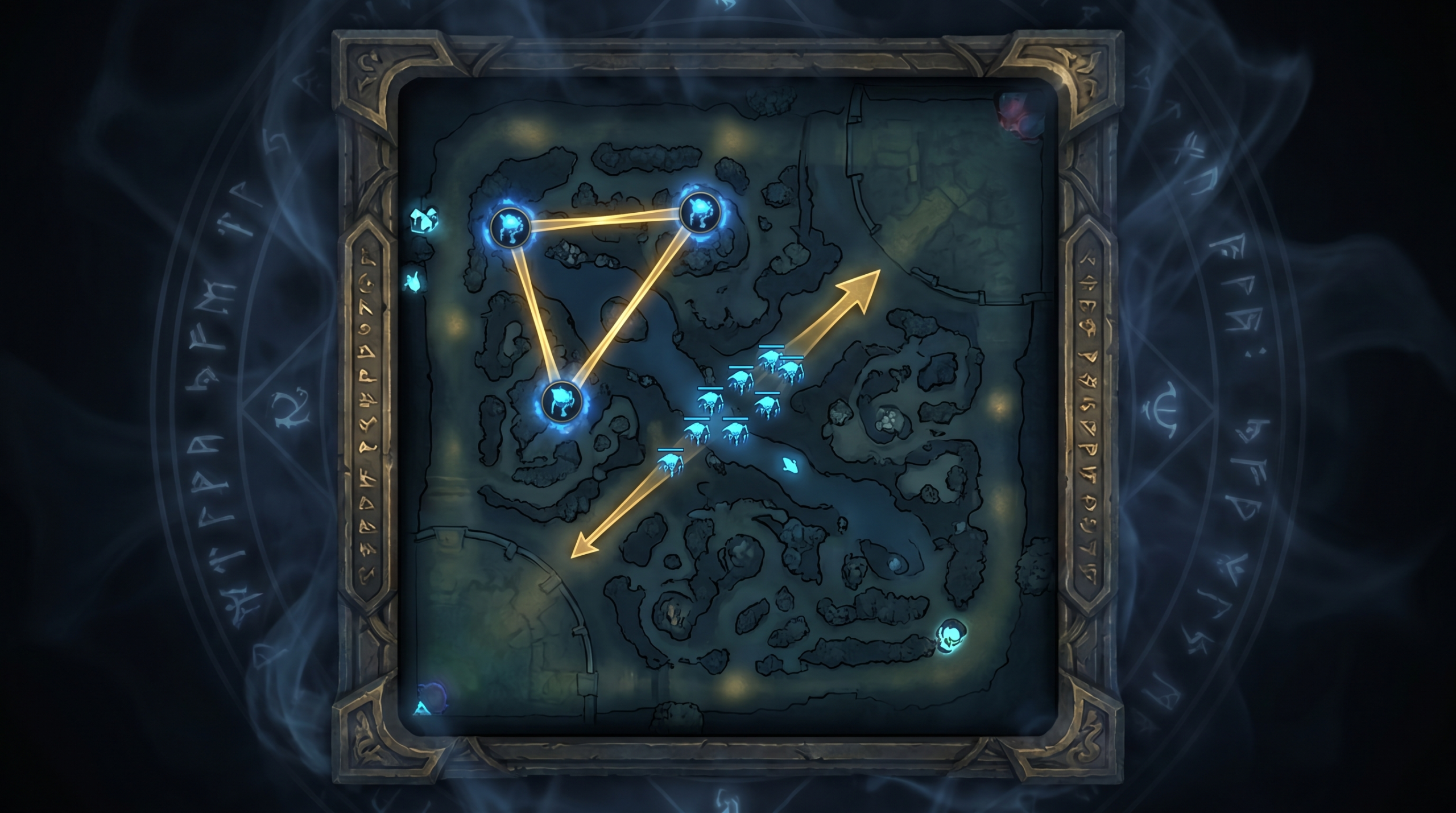
Triangle farming refers to a farming circuit that connects three or more jungle camps in a loop, allowing a carry to clear one camp and move to the next while the previous camp respawns. The “triangle” specifically refers to the three medium camps in the safe-lane jungle (Radiant side: two medium camps and the ancient camp form the classic triangle; Dire side has a comparable configuration). A well-executed triangle farm cycle produces 700-900 GPM on strong farming heroes because every second of the carry’s time is allocated to active creep kills with no dead time between camps.
Lane-priority farming refers to a pattern where the carry prioritizes the lane creep wave over jungle camps. The carry pushes the wave out, secures last hits, and either dives to the next wave (lane continuation) or takes the wave-adjacent jungle camp before the next wave arrives. This pattern is gold-efficient when lane creep bounty is high relative to jungle creep bounty (early game, or when the carry is strong enough to push waves quickly), but requires consistent lane presence and is vulnerable to roaming kills.
The two patterns are not mutually exclusive — most experienced carries blend them based on game state. The question is which pattern to default to in the absence of strong signals, and which pattern to switch to when specific game-state conditions change.
When Triangle Farming Is the Correct Pattern
When your lane is pushed out (tower at risk)
If the opposing mid or offlane hero is creating a push threat on your safe lane tier-1 tower, farming your lane creep wave means farming under threat. The risk-reward is unfavorable: you gain 30-40 gold per creep wave but expose yourself to a gank or a tower loss. Triangle farming removes you from the danger zone entirely. Your tower takes damage — this is an acceptable trade for your personal safety and farm continuity.
When your carry needs AoE farming capability
Heroes with AoE damage (Sven’s Great Cleave, Luna’s Glaives, Anti-Mage’s Mana Break with Battlefury, Medusa’s Split Shot) farm jungle camps faster than lane waves because jungle camps are clustered. A Sven with Battlefury clears a medium camp with 2-3 hits. The same Sven clearing a lane wave takes 6-8 hits because of varied creep HP and respawn stagger. For AoE-heavy carries, triangle farming produces higher GPM than lane farming after Battlefury timing.
When the enemy team has aggressive rotators
Bloodseeker, Bounty Hunter, Spirit Breaker, and Night Stalker are rotation heroes whose roaming efficiency is dramatically higher when targets are in predictable lane positions. A carry farming the lane is in a predictable position every 30 seconds (when the wave arrives). A carry farming the triangle is unpredictable — the route varies, vision coverage varies, and the enemy cannot set up a kill without active scouting. Against heavy rotation lineups, the triangle’s unpredictability has defensive value beyond the pure GPM calculation.
When your supports are not available to ward your lane
Lane farming without vision in the enemy jungle approach paths is high risk. If your position 4 and 5 are busy in another lane or have died, and your lane is not warded, farming the lane is farming blind. The triangle route, with its proximity to your own jungle and tower, keeps you near safety even without comprehensive ward coverage.
When Lane-Priority Farming Is the Correct Pattern
When your team needs the lane pushed
Lane-priority farming has a tower-pressure byproduct that triangle farming does not. Every wave you clear pushes creeps toward the enemy tower. If your team is trying to pressure the tier-1 tower — either because a Roshan attempt is planned and you need the enemy team defending their base, or because a split-push strategy is in play — your lane creep efficiency directly contributes to the strategic objective.
When you are behind on farm and need catch-up gold
Lane creep waves have higher average gold value per minute than jungle camps in the early and mid game. A full creep wave (3 melee, 3 ranged, 1 siege every 7 waves) provides 200-250 gold fully last-hit. A medium jungle camp provides 100-160 gold and takes 15-20 seconds to clear. For a carry who has fallen behind on farm and needs to close a gold deficit, lane waves provide higher gold density per minute than pure triangle farming in the first 20 minutes.
When your lane is safe and the enemy carry is jungling
If the enemy carry has retreated to their jungle and is not contesting the lane, your lane is free real estate. Taking free lane gold is always correct — there is no risk premium on uncontested creep waves. The error many carries make is defaulting to triangle farming out of habit even when the lane is uncontested. Read the minimap: if no enemy heroes are near your lane and your supports have vision on the approach paths, take the lane wave.
When the lane bounty is elevated (big wave building)
If a wave has been building for 60+ seconds without being cleared (both carries were absent from lane), the accumulated lane wave contains 400-600 gold in uncleared creeps. Catching this “big wave” is worth leaving a jungle camp mid-cycle. The gold density of a large lane accumulation exceeds any single jungle camp by a significant margin.
Game-State Signals That Tell You Which Pattern to Use
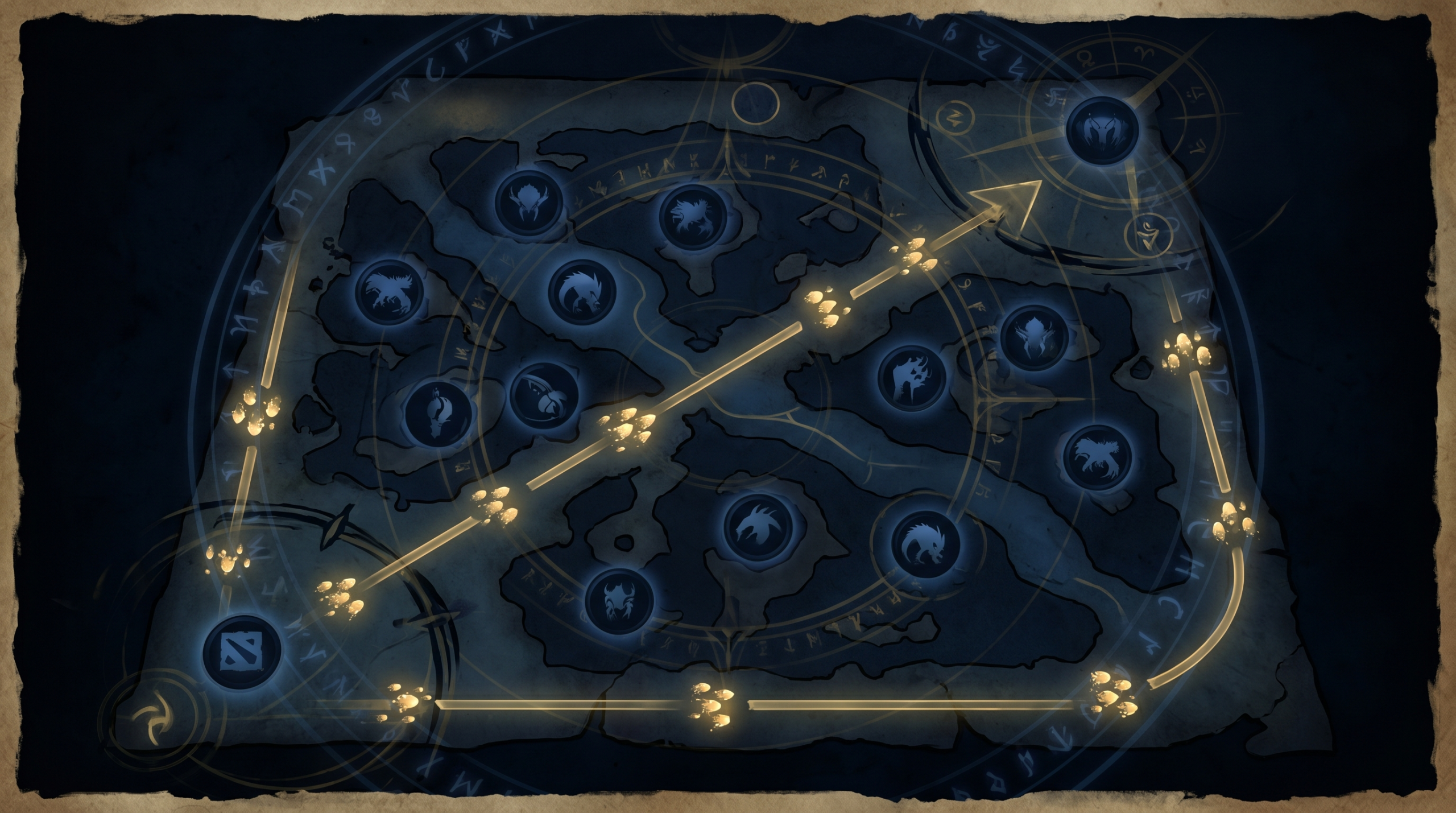
The following signals are observable in real time during the game and should trigger pattern shifts:
| Signal | Correct Pattern Shift | Reason |
|---|---|---|
| Enemy mid missing (no vision) | Shift to triangle | Rotation risk in lane |
| Support buys Smoke (rotation incoming) | Stay in lane near tower | Coordinated push opportunity |
| Your tower HP below 60% | Lane-priority for push relief | Losing tower cuts off triangle access |
| Enemy carry visible in their jungle | Lane-priority (free lane) | No kill risk, free gold |
| You hit Battlefury/Manta timing | Triangle (AoE farm efficiency spike) | AoE makes jungle faster than lane |
| Bounty Hunter enemy (has track) | Rotate triangle pattern variation | Avoid predictable route |
| Night Stalker daytime | Either (low risk window) | Night Stalker neutered at day |
| Night Stalker nighttime + missing | Triangle near tower / base | Night Stalker charge range is global |
Transitioning Between Patterns Mid-Game
The most efficient carries do not lock into one pattern for an entire game. They make micro-adjustments every 2-3 minutes based on the current game state. The transition points occur at predictable moments.
Minute 8-12 transition (first item completion)
After completing your first farming item (Midas, Battlefury timing, or Phase-Helm for Axe-adjacent carries), evaluate which pattern your first item enables. Midas extends time in the triangle (it can be used on neutral creeps). Battlefury upgrades triangle efficiency. A carry who completes a non-farming first item (like BKB or Manta) should prioritize lane waves to recover GPM before transitioning to hybrid farming.
Minute 18-22 transition (laning phase to mid-game)
This is the period when enemy teams execute their first major tempo plays (Blink Dagger timings, level 11-13 power spikes). During this window, triangle farming has a defensive value: you are not in a predictable lane position when the enemy is looking for fights. Evaluate the enemy’s itemization — if the Earthshaker just finished Blink, go to triangle until the first fight resolves one way or the other.
Minute 25-30 transition (farming hero power spike)
After your second major item, most farming carries have achieved their power spike and can fight. The correct transition at this point is from pure farming to split-push pressure: push a lane wave to tier 2, back off if the enemy responds, farm the adjacent jungle while the wave resets, repeat. This pattern forces the enemy team to choose between responding to you or getting objectives elsewhere.
Hero-Specific Farming Pattern Preferences
Anti-Mage
Triangle-primary until Battlefury (minute 14-17 depending on lane success). Lane-priority for the minute or two before Battlefury to finish the item with wave gold. Triangle-dominant from Battlefury onwards. Manta Style adds another triangle efficiency jump. Anti-Mage’s early-game weakness to ganks makes triangle preferred even before Battlefury if the lane is contested.
Spectre
Lane-priority early (Spectre’s early game is weak and she needs to maximize safe farm). Triangle after Radiance (minute 20-25) to let the Radiance burn aura clear camps passively. Post-Radiance, Spectre can farm two camps simultaneously because the aura damage kills creeps she is not directly hitting. This passive AoE is unique and makes triangle farming highly efficient for Spectre specifically.
Juggernaut
Lane-priority dominant throughout the game. Juggernaut’s farming efficiency is tied to Blade Fury (clear one camp quickly, move to lane wave, repeat). He lacks sustained AoE for triangle efficiency. Juggernaut should almost always be in or adjacent to the lane, using Blade Fury on camps that are within one Omnislash-worth of the lane wave position.
Phantom Lancer
Triangle-primary after Diffusal Blade. PL’s illusion mechanic allows him to clear camps with illusions while the real PL moves to the next camp. At full illusion count with Diffusal, PL can have three camps being farmed simultaneously with proper micro. This is one of the most efficient triangle farming patterns in the game but requires practice to execute correctly.
Stack Integration: Making Both Patterns More Efficient
Stack integration — having your supports stack jungle camps for your carry to farm — multiplies the efficiency of both patterns. A stacked ancient camp worth 600-900 gold base becomes worth 1,200-1,800 gold after a double stack. For the carry, this means integrating the stacked camp into their farming circuit as a high-value node.
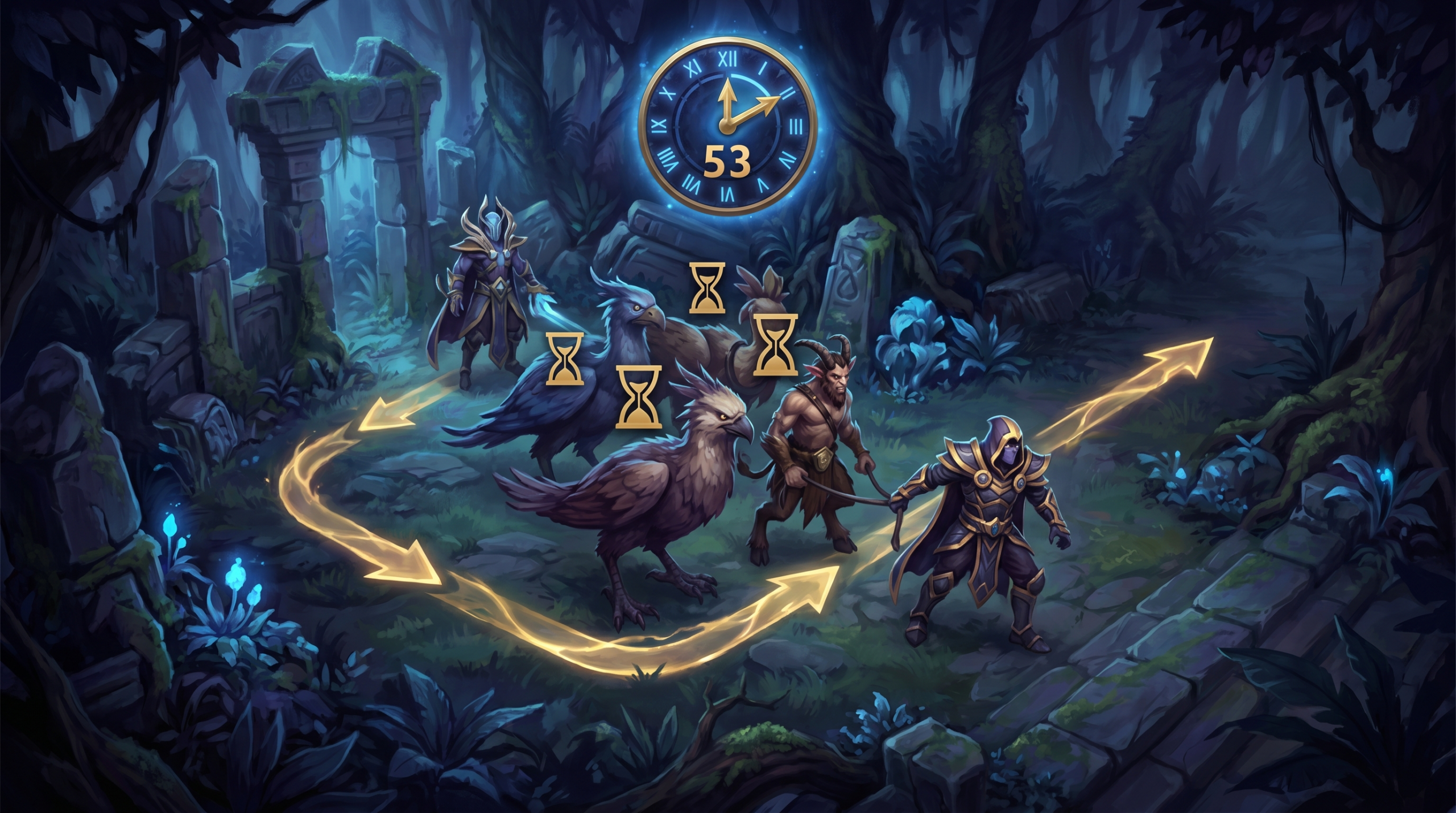
Communication with your position 4 about which camps to stack is part of farming efficiency. The standard request: “stack ancients at :53 seconds and medium camp at :53 seconds every minute from minute 8.” A support who stacks two camps per minute produces 1,000-2,000 additional carry gold by minute 20 — equivalent to 1-2 extra farm minutes from the carry’s perspective.
For players looking to accelerate their farm timing without grinding 200 games, a Dota 2 MMR boost with experienced supports who understand stacking protocols is one option. For skill development, coaching focused on farming patterns produces permanent improvement in GPM that no boost can substitute.
Item Timing as the Real Objective
GPM is a useful proxy, but the actual goal of carry farming is item timing — the specific minute at which you complete key items that allow you to fight, push, or transition into the mid-game power role. Understanding why item timing matters more than raw GPM changes how you think about farming decisions in the moment.
Why item timing beats GPM as a goal
Two carries can both average 700 GPM but have very different item timings. A carry who farms efficiently in the first 15 minutes and then participates in fights (collecting kill gold, assist gold, and bounty gold) may complete items faster than a carry who farms at 700 GPM but avoids all fights. Kill and assist gold in teamfights can add 400-800 gold in a single fight — equivalent to 1-2 minutes of pure farming. GPM does not capture this because GPM flattens fight gold and farm gold into the same metric.
The practical implication: if your team is winning a fight nearby and your Battlefury is 400 gold away, joining the fight (collecting kill gold + potential aegis) and then buying the item is faster than farming an extra 3 minutes to collect 400 farm gold. GPM-optimized thinking says “stay farming” — item-timing thinking says “join the fight, get the item, come back stronger.”
Benchmark item timings by hero
| Hero | First Power Item | Strong Timing | Average Timing | Late / Behind |
|---|---|---|---|---|
| Anti-Mage | Battlefury | Before 17:00 | 17:00-20:00 | After 21:00 |
| Juggernaut | Maelstrom or BF | Before 16:00 | 16:00-19:00 | After 20:00 |
| Spectre | Radiance | Before 20:00 | 20:00-24:00 | After 25:00 |
| Phantom Lancer | Diffusal Blade | Before 16:00 | 16:00-19:00 | After 21:00 |
| Medusa | Manta Style | Before 20:00 | 20:00-24:00 | After 26:00 |
| Terrorblade | Manta Style | Before 16:00 | 16:00-19:00 | After 21:00 |
When your item timing falls in the “late / behind” column, it is a signal to review your farming pattern choice for that game. Were you farming the wrong camps? Were you joining fights too early? Were you spending time in parts of the map with poor creep density? One review of a game where item timing was 4+ minutes late almost always reveals 2-3 correctable pattern decisions.
Common Farming Pattern Mistakes by Bracket
Each bracket has predictable farming errors that coaches and experienced players consistently identify. Knowing which mistakes are common at your bracket allows you to audit your own play for the most likely issues.
Herald / Guardian bracket mistakes
The primary mistake at this bracket is not farming at all — spending time walking between locations without clearing creeps, watching fights from a distance, or standing near towers waiting for something to happen. The fix is mechanical: always have a creep or camp to walk toward. If you have no target, identify the nearest camp or lane wave and move to it. Dead time (no creep contact for 30+ seconds) is the biggest GPM killer at this bracket.
Crusader / Archon bracket mistakes
At this bracket, players have learned to farm but default to one pattern regardless of game state. They jungle-default (always farming triangle even when the lane is free) or lane-default (always in lane even when rotation threats are present). The fix is minimap awareness: check the minimap every 20-30 seconds and ask “is my lane safe?” and “is the enemy carry in lane?” These two questions drive the correct pattern choice 80% of the time.
Legend / Ancient bracket mistakes
At this bracket, the primary mistake is abandoning farm to spectate fights. Legend and Ancient carries frequently run toward fights that their team is handling without them, losing 300-500 gold of farm to observe rather than participate. If your team has the numbers advantage and the fight is not critical (not Roshan, not barracks, not a base fight), keep farming and let the fight resolve. Spectating costs you real gold. The fight outcome is the same with or without your spectation.
Divine / Immortal bracket mistakes
At the highest brackets, farming pattern mistakes are subtle — micro-inefficiencies in camp routing (taking 5 extra seconds to reach a camp because of a non-optimal path), missing a stacked camp because of imprecise timing, or failing to transition from farming to split-push pressure at the correct window. These mistakes are detectable only through careful replay review and are the reason coaching remains valuable even at high MMR — self-analysis at this level requires detailed attention to timing that is hard to track in real time.
Ready to Skip the Grind?
Team Smurf’s Immortal carries execute perfect farming patterns every game. Let them handle your MMR.
Get Your Boost Now Talk to Our Team