BetBoom vs PARIVISION: EWC 2026 Grand Final Preview

BetBoom Team vs PARIVISION is the EWC 2026 Dota 2 grand final, and that sentence tells you how violent the last two days in Paris have been. Team Spirit are out. Falcons are out. Vici Gaming’s miracle run stopped in semis. Team Yandex looked like a champion for half the tournament, then got punched out by the one team that has looked structurally cleaner than everyone else from day one.
This is the playoff version of a real final, not the bracket version where one side got a free road. BetBoom reached Sunday by flattening Nigma Galaxy and then making Vici Gaming look ordinary. PARIVISION got there the harder way. They blew out Rune Eaters, survived a 65-minute counterpunch from Team Yandex, then closed the decider with the kind of offlane-to-mid snowball that makes high-MMR players nod and everyone else just say “they outclassed them.”
The clean data layer matters here. BetBoom vs Vici used match IDs 8902107148 and 8902173969. PARIVISION vs Team Yandex used 8902338515, 8902431810, and 8902610619. BetBoom’s series score was 56-11 across two games. PARIVISION’s series score was 89-44 across three. Those are not cosmetic numbers. They tell you both finalists are getting to their wins through pressure, not stall tactics.
What makes this grand final worth studying is the patch layer. On 7.41d, everybody already knows the first-order heroes. The real edge now is support architecture, lane compression, second-entry fights, and how you turn information into objective windows. BetBoom and PARIVISION are doing that better than everyone else still standing. If you are trying to climb ranked, there is a lot to steal here. If you are tired of “knowing the right ideas” but still getting stuck in the same medal, there is also a pretty obvious reason players end up using Dota 2 MMR boost, coaching, or calibration help instead of raw grind.
Table of Contents
Fast Facts and Match IDs
If you want the fast recap before the deeper read, here is the bracket state that matters on Sunday morning in Dubai. Every number below is usable. You can plug these match IDs into OpenDota, check drafts, check item order, and verify whether the surface-level takes about these series actually hold up.
| Series | Result | Match IDs | Combined Kill Score | Biggest Story |
|---|---|---|---|---|
| BetBoom Team vs Vici Gaming | BetBoom 2-0 | 8902107148, 8902173969 | 56-11 | BetBoom did not just win. They suffocated Vici. |
| PARIVISION vs Team Yandex | PARIVISION 2-1 | 8902338515, 8902431810, 8902610619 | 89-44 | PARIVISION won two stomps and survived one 65-minute grind. |
| Vici Gaming vs Team Falcons | Vici 2-0 | 8900508749, 8900623530 | 62-45 | Xm’s Lina into Slark pivot broke the reigning TI champs. |
| Team Yandex vs Team Spirit | Yandex 2-0 | 8899028080, 8899120700 | 58-47 | Spirit never got their normal map control back. |
The grand final itself is a best-of-five for $750,000 and 1,000 Club Points. That sounds like boilerplate event copy until you remember what sits behind it: this is the last Tier 1 form check before TI 2026. Nobody serious is treating this as a side event. Whatever happens on Sunday becomes the loudest public read on who actually owns the patch heading into Shanghai.
How the Bracket Flipped
The last three TeamSmurf trending posts already mapped the road into this point. We covered the playoff picture, the survival-stage upsets that set the bracket, then the two quarterfinal shocks where Team Yandex eliminated Team Spirit and Vici Gaming swept Falcons. That matters because Sunday’s final is not a random reset. It is the product of a bracket where the “safe favorites” kept getting punished for assuming they would have more control than they actually did.
Team Spirit’s exit told us one thing: if your support shape is slower and your map gets split too early, Team Yandex can drag you into bad angles even when the raw talent gap feels close to even. Falcons getting 2-0’d by Vici told us something slightly different: on 7.41d, a team with better information layering can make a stronger brand-name roster look one move late on every objective.
But the semifinal day was harsher than the quarterfinal day. BetBoom did not give Vici the kind of playable chaos they had against 1w or Falcons. PARIVISION did not let Team Yandex convert one long comeback map into full series momentum. So the big bracket lesson is not just that favorites lost. It is that the two finalists are the teams that best absorbed the upset-heavy environment without losing their own structure.
That is a big difference. Upsets happen. Patch ownership is rarer. If a team can win a short map, survive a long one, and still enter Sunday without looking mentally scattered, that is the team you pay attention to before TI.
BetBoom vs Vici Breakdown: This Was a Pressure Wash
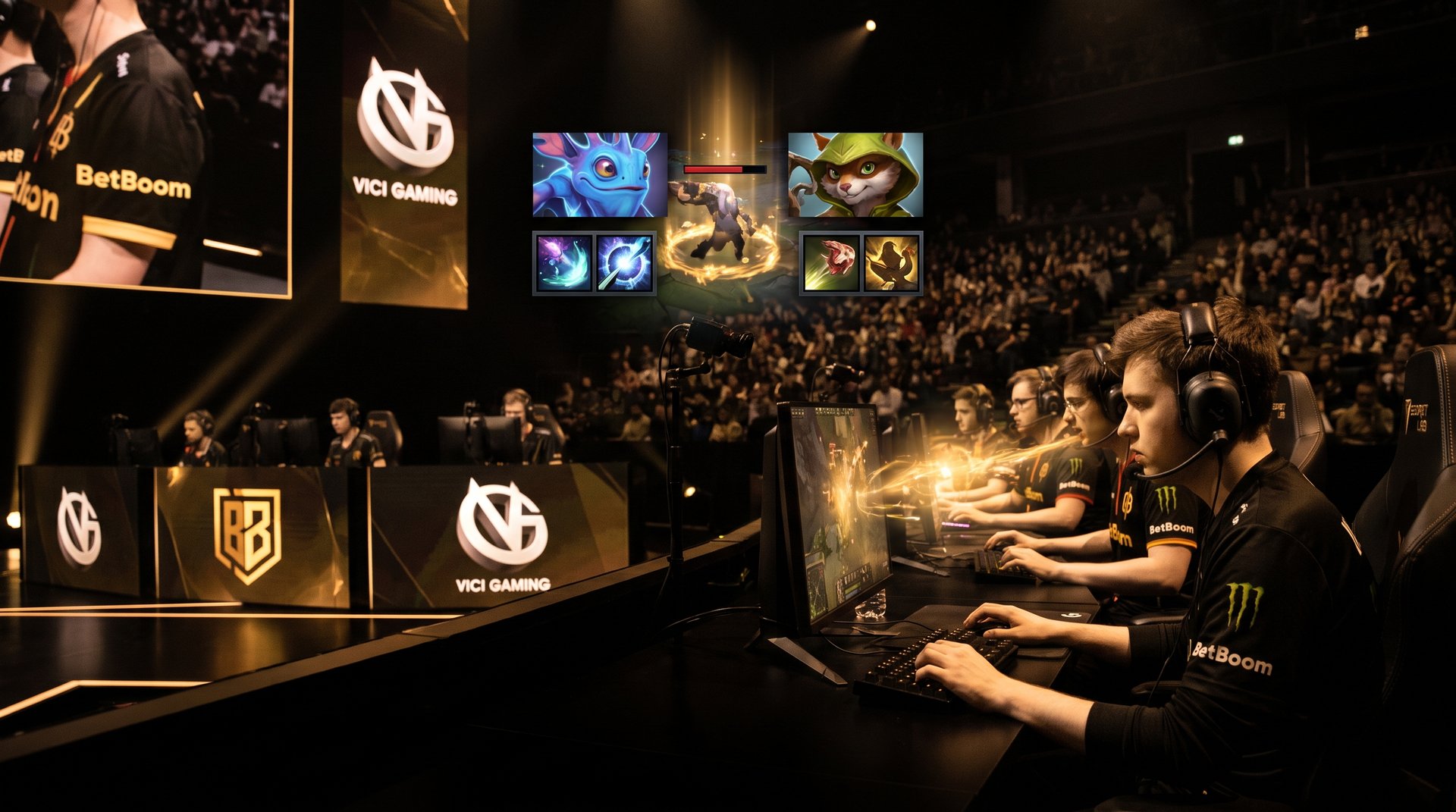
BetBoom’s semifinal was the cleaner series on paper. The match IDs were 8902107148 and 8902173969. The scorelines were ugly: 30-3 in 30:25 and 26-8 in 44:44. Combined, BetBoom killed Vici 56 times and only died 11. That is not a normal semifinal. That is what happens when one team shows up with a better read on every part of the map.
The opener was the kind of game that makes coaches pause the replay every three minutes because everything is teachable. Save-‘s Hoodwink finished 9/0/15. gpk~’s Puck went 7/0/18. MieRo’s Slardar posted 8/0/12. When three players in a playoff semifinal can end deathless or near-deathless while also setting the tempo, the series is already telling you what went wrong for the other side: Vici never owned first contact.
This is where lower-bracket analysis gets lazy. People see the 30-3 and say “stomp, next.” That hides the actual lesson. BetBoom’s draft created pressure through frontloaded support catch, clean initiation, and easy follow-up damage. Hoodwink was not valuable because Bushwack is flashy. Hoodwink was valuable because Vici’s cores kept being forced to reveal one screen too far forward, which gave BetBoom free trees, free vision lines, and free targets.
Game two changed the hero names but not the logic. BetBoom moved to Windranger, Ember Spirit, Largo, Shadow Shaman, and Undying. Vici answered with Terrorblade, Storm Spirit, Night Stalker, Keeper of the Light, and Hoodwink. On paper, Vici’s lineup can absolutely win a long midgame if Terrorblade gets uninterrupted map access and Storm can chain pickoffs. In reality, BetBoom never gave them the map.
| Game | BetBoom Standout | Line | What It Actually Meant |
|---|---|---|---|
| Game 1 | Save- Hoodwink | 9/0/15 | Vici never had safe map access for side-farm or Roshan approach. |
| Game 1 | gpk~ Puck | 7/0/18 | Every overstep became a Dream Coil tax. |
| Game 2 | Kiritych Windranger | 11/2/11 | Shiro’s Terrorblade never got comfortable Sunder timing. |
| Game 2 | Save- Shadow Shaman | 0/0/15 | BetBoom’s support game stayed completely intact for 75 straight minutes of series time. |
The strongest thing BetBoom showed was not the kill score. It was their discipline after small mistakes. In game two, there was a brief moment where Vici found enough space for Terrorblade to grab the top net worth slot and punish a sloppy rune-side fight. A lot of teams panic there and take a second bad fight. BetBoom just reset, reclaimed Roshan, and went right back to controlling the only parts of the map that mattered.
That is a huge tournament signal. BetBoom used to be the team people described as “crazy skilled, sometimes messy.” What they looked like against Vici was the opposite. They looked like a team that knows exactly when not to overplay. That matters more in a best-of-five than any single lane matchup ever will.
PARIVISION vs Team Yandex Breakdown: Two Stomps Around One Grinder
PARIVISION’s road into the final was more useful for ranked players because it showed three different game states in one series. They opened with a stomp, lost a long brawl, then ended with an even harder stomp. The match IDs were 8902338515, 8902431810, and 8902610619. The durations were 31:09, 65:47, and 37:46.
Game one was the cleanest read on why PARIVISION have been terrifying all tournament. Satanic’s Tiny ended 10/2/9. No[o]ne’s Ember Spirit finished 6/1/14. Noticed’s Underlord went 6/1/12. 9Class and Dukalis gave them Dark Willow plus Hoodwink, which meant the entire draft could start, re-start, and punish retreat. Team Yandex never got to their timing. Their Templar Assassin and Slardar were supposed to drag the map into physical burst windows. Instead, they got crushed before the map stabilized.
Game two is the one people will remember because it lasted long enough to create fake narratives. Yes, Team Yandex came back. Yes, Watson’s Shadow Fiend and CHIRA_JUNIOR’s Monkey King took over enough fights to force a decider. But if you only look at the final result, you miss the important part: PARIVISION still won the lanes again. They had Yandex on the back foot early, then let a stronger chokepoint teamfight draft drag the game into its preferred hour mark.
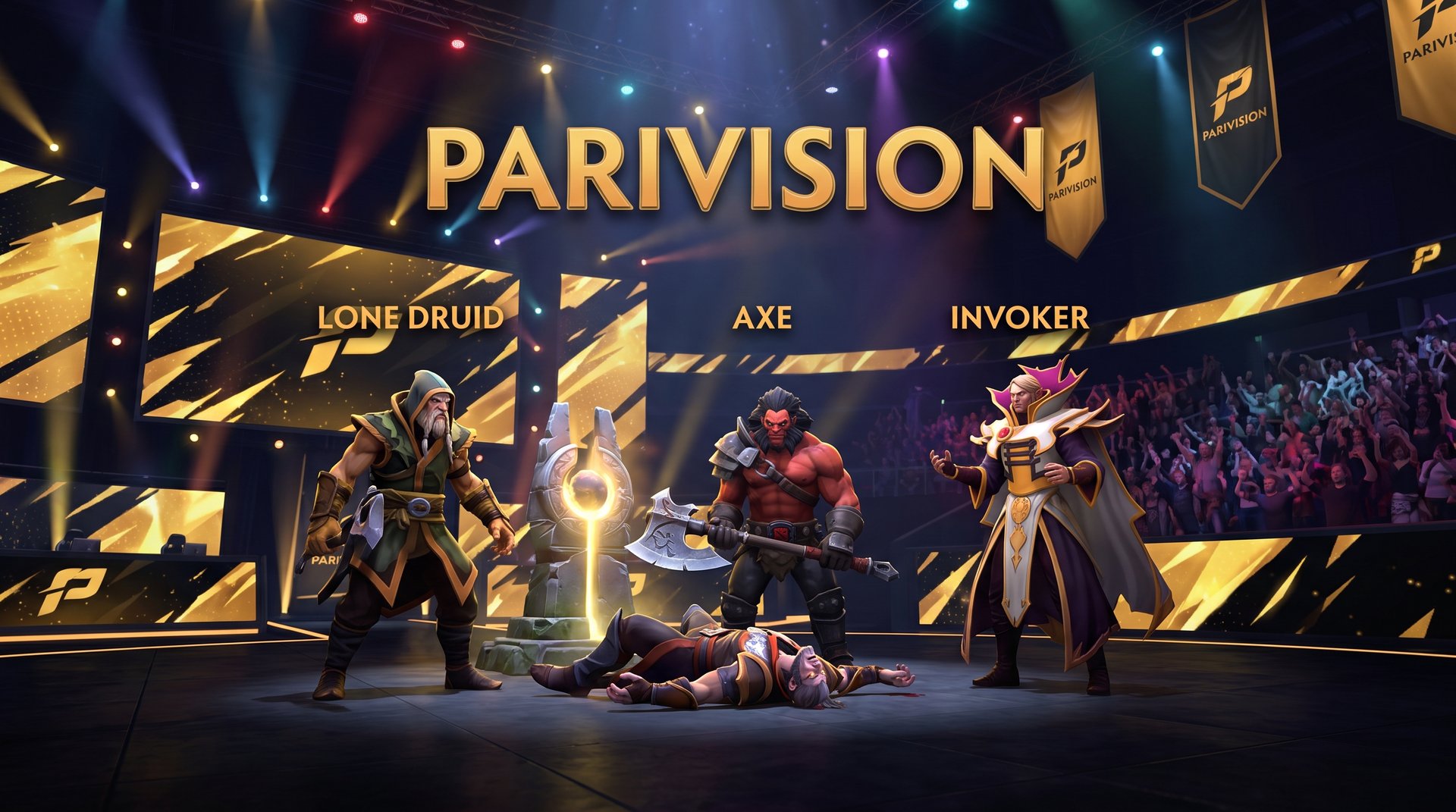
That is why game three mattered so much. Good teams lose a long map and start second-guessing themselves. Great teams go right back to the original pressure point. PARIVISION did exactly that. Satanic swapped onto Lone Druid, No[o]ne grabbed Invoker, Noticed took Axe, and the support pair moved to Windranger plus Winter Wyvern. The result was a 36-7 kill score and a decider that felt over before Yandex’s lineup could breathe.
| Map | Result | Key Core Lines | What Decided It |
|---|---|---|---|
| Game 1 | PARIVISION win 28-9 | Tiny 10/2/9, Ember 6/1/14, Underlord 6/1/12 | Yandex never reached the physical damage timing they drafted for. |
| Game 2 | Yandex win 28-25 | Ember 12/4/8 in loss, Shadow Fiend 7/5/11, Monkey King 12/6/11 | Chokepoint fights finally favored Yandex after minute 40. |
| Game 3 | PARIVISION win 36-7 | Axe 12/2/14, Invoker 10/2/16, Lone Druid 9/0/6 | Noticed blew the lane open and the rest of the map collapsed behind him. |
The part casual readers miss is how often Noticed is the hinge. On paper, everyone talks about Satanic or No[o]ne because they are the obvious headliners. In practice, Noticed keeps solving the first structural problem of the game. Sometimes that means Underlord turning the lane into a no-fun zone. Sometimes it means Beastmaster or Axe creating vision and catch windows that make the mid hero look freer than he really is. Sometimes it is just the fact that he reaches his first real timing without giving the enemy carry a stable lane to farm into.
That is why PARIVISION feel so suffocating when they are winning. Their offlane is not just “doing okay.” It is usually the thing that tells the rest of the draft how fast it is allowed to move. Once that happens, 9Class and Dukalis are not supporting from behind. They are supporting from information advantage.
What the Grand Final Is Really About
So what is Sunday actually testing? Not “which team has more stars.” Both teams have stars. Not “which team can cheese a draft.” Neither side needs cheese. This final is really about whose version of controlled pressure is harder to disrupt in a long series.
BetBoom’s identity right now is cleaner support survival and less wasted motion. Save- has been unreal. gpk~ looks disciplined instead of hyperactive. Kiritych is not just farming well, he is picking his fights like a player who finally trusts the structure around him. When BetBoom are ahead, they are not bleeding deaths for style points. They are making you take terrible information checks.
PARIVISION’s identity is lane-to-map continuity. They do not need the game to break in some weird way to get ahead. They usually manufacture a better map by minute 10, then let their supports and offlane make every objective approach miserable. Their cores are individually brilliant, but the reason they look so smooth is that the team keeps handing them advantageous states.
If I had to reduce the final to one sentence, it would be this: BetBoom want your supports to die first. PARIVISION want your map to die first. Those are not the same thing. BetBoom are a little more direct. PARIVISION are a little more suffocating. That tension is why this should be a much better series than the semifinal day was.
The obvious draft storylines to watch:
- Can BetBoom keep Save- on a hero that starts fights without dying for free? Hoodwink and Shadow Shaman both looked disgusting.
- Can PARIVISION keep Noticed on a lane-dictating offlaner? If his first ten minutes are good, their whole map tends to sharpen.
- Does No[o]ne get repeated Ember Spirit looks, or does BetBoom force him onto a different pacing hero?
- Can Kiritych farm under pressure without giving Satanic a cleaner lane than he got in semis?
- Who controls Roshan vision better once the first pair of outer towers fall? That could decide two maps by itself.
My read? PARIVISION have looked like the most complete team in Paris since the group stage, but BetBoom’s semifinal was the sharpest single series of the playoffs. If BetBoom can keep the support game intact and stop PARIVISION from getting free offlane tempo, this goes long. If PARIVISION get their normal lane-to-map flow, they are still the more convincing title favorite.
7.41d Meta Signals From the Final Four
The easy patch take is “Ember good, Hoodwink good, Lone Druid good.” That is true and also too shallow to help you climb. The better lesson from the final four is that 7.41d is rewarding coherent shells more than isolated hero strength. The best teams are pairing map information with carry flexibility, not just first-phasing whatever hero has the prettiest public win rate.
Look at the shapes that kept winning:
- BetBoom: catch support plus durable engage plus mid hero that punishes oversteps.
- PARIVISION: offlaner that bends the lane, mobile or scaling mid, support pair that can punish both fog and retreat.
- Vici in their wins: weird-looking core picks made playable by better information and cleaner objective structure.
- Yandex in their best moments: heavy teamfight drafts that punish narrow chokepoints and overextensions.
The common thread is not one hero. It is the fact that these teams understand what their lineup is allowed to ask of the map. That is what a lot of pub players miss. They draft five individually reasonable heroes, then wonder why the game feels disjointed. High-MMR Dota is not just about whether each hero is meta. It is about whether those heroes can all spend the same kind of gold at the same kind of timing and fight over the same kind of territory.
That is also why ranked players keep overcopying weird pro picks. Slark mid worked for Vici because the draft around it created information superiority. Lone Druid looks impossible in pro hands because the map is already being shaped for his tower pressure. Ember Spirit looks broken when the side lanes are not collapsing around him. The hero is not the whole answer. The shell is.
What the best teams are doing right now
They are drafting lineups where supports do more than “save” or “stun.” The supports create better map information, which lets the cores spend their timings faster and with less risk.
What pub players keep copying badly
They copy the visible hero pick and ignore the invisible structure around it. That is how you end up with a cool draft screenshot and a terrible minute-18 map.
Hero Trend Table
Using the current OpenDota pro snapshot, these are the heroes around the grand final conversation that actually tell us something useful. The point is not to memorize the table. The point is to understand what type of job each hero is solving inside a winning draft.
| Hero | Current Pro Record | Why It Matters Here | Pub Trap |
|---|---|---|---|
| Ember Spirit | 7 wins in 11 pro picks | Still one of the cleanest tempo mids when the side lanes give him room. | Looks worse if your supports lose the vision war. |
| Hoodwink | 11 wins in 19 pro picks | Perfect for punishing oversteps and making fog feel dangerous. | Bad players spam spells without respecting tree angles. |
| Lone Druid | 6 wins in 8 pro picks | Objective pressure is still premium when the map opens cleanly. | Terrible if your team cannot create tower windows. |
| Dark Seer | 6 wins in 8 pro picks | Lane geometry, resets, and fight distortion are still elite. | Lower brackets reduce him to one combo hero and miss the lane value. |
| Lina | 8 wins in 11 pro picks | Still a reliable bridge from lane dominance into scalable damage. | Dies fast if the frontline and support spacing are sloppy. |
| Undying | 6 wins in 9 pro picks | One of the best punishment supports when teams want to brawl early. | Falls off hard if you never connect the first Tombstone window to an objective. |
| Slardar | 5 wins in 7 pro picks | Still a high-value way to turn vision into pickoff pressure. | Feels fake if the team behind it cannot chain stuns. |
| Invoker | 4 wins in 7 pro picks | Strong when the lineup already has setup and wants layered midgame reach. | Looks useless in pubs when nobody slows the game down for spell usage. |
What Pub Players Should Actually Copy
This is the section that matters if you are watching EWC and asking whether any of this should change your ranked habits this week. The answer is yes, but not in the lazy “copy the hero” way.
1. Stop pretending all support deaths are equal
BetBoom’s semifinal is the best example. Their supports were alive long enough to spend real value every fight. That sounds obvious, but it is where countless 3k to 6k games get lost. If your support dies before placing vision, saving an ally, or forcing a defensive reaction, the fight is usually already misplayed even if your carry still has buyback.
2. Learn what your offlane is supposed to do to the map
Noticed keeps showing why offlane impact is not just “I tanked some spells.” Underlord, Beastmaster, Axe, Dark Seer — these heroes change where the enemy is allowed to stand. If you want to climb as offlane, stop measuring yourself only by KDA. Measure whether the enemy carry had a normal lane and whether the next two objectives felt easy for your team.
3. Ranked players overchase after winning the first fight
Vici showed the power of re-entry against Falcons. BetBoom showed the power of reset discipline against Vici. PARIVISION showed the power of not losing faith in your lane-to-map formula after one bad hour-long game. In pubs, the first clean fight is often wasted because everybody sprints into fog looking for highlight clips. Hit the tower. Take the outpost. Ward the triangle. Then chase if the game still asks for it.
4. Copy draft logic, not just draft screenshots
Slark mid, Puck, Lone Druid, Ember, Hoodwink, Shadow Shaman — none of these picks exist in a vacuum. Ask why the hero was playable. Was there a vision advantage? Better wave shove? Easier Roshan? Cleaner second-wave stun chain? If you cannot answer that question, you probably should not force the pick in your next solo queue game.
5. If you know the ideas but still cannot translate them into MMR, that is normal
A lot of players understand Dota intellectually and still stay stuck because execution, habits, and account conditions are different problems. That is why some players are better off with coaching. Others just want the medal fixed fast with MMR boosting. Others are starting from a bad reset and need calibration help or even low priority removal before any strategic advice matters.
When to Grind and When to Skip the Grind
If the EWC playoffs gave you one honest feeling, it is probably this: pro Dota looks clean because five good players are solving the same map problem together. Ranked rarely feels like that. Sometimes the right move is to study harder and sharpen your own decisions. Sometimes the right move is to stop pretending another hundred games will magically fix the same bottleneck.
If you are close to climbing and just need a better patch read, stay in grind mode. Start with our recent breakdowns on the best 7.41d heroes before EWC, the Nigma playoff read on Lorenof’s Storm Spirit, and the evolving EWC bracket picture. Those posts connect directly to what the finalists are doing now.
If you keep understanding the game and still getting nowhere, be honest about what problem you actually have. If it is decision-making, get coached. If it is time, use a boost. If it is a damaged account environment, fix that first. Team Smurf is built for that exact gap between “I know what good Dota looks like” and “I can convert that into rank fast enough to matter.”
Use the Finals Read or Skip the Grind
If BetBoom and PARIVISION made your own ranked games feel painfully disorganized, you have two options: grind the lessons correctly or let Team Smurf handle the hard part. Get a faster climb, a cleaner calibration, or a coaching session that fixes the real leak.
Get MMR Boost Book CoachingFAQ
Sources: GosuGamers on BetBoom vs Vici, GosuGamers on PARIVISION vs Team Yandex, Sportskeeda bracket recap, Hawk Live schedule and standings, OpenDota match 8902107148, OpenDota match 8902173969, OpenDota match 8902338515, OpenDota match 8902431810, OpenDota match 8902610619.