How to Master Grimstroke in Dota 2: The Ultimate Guide for Every Rank (2026)

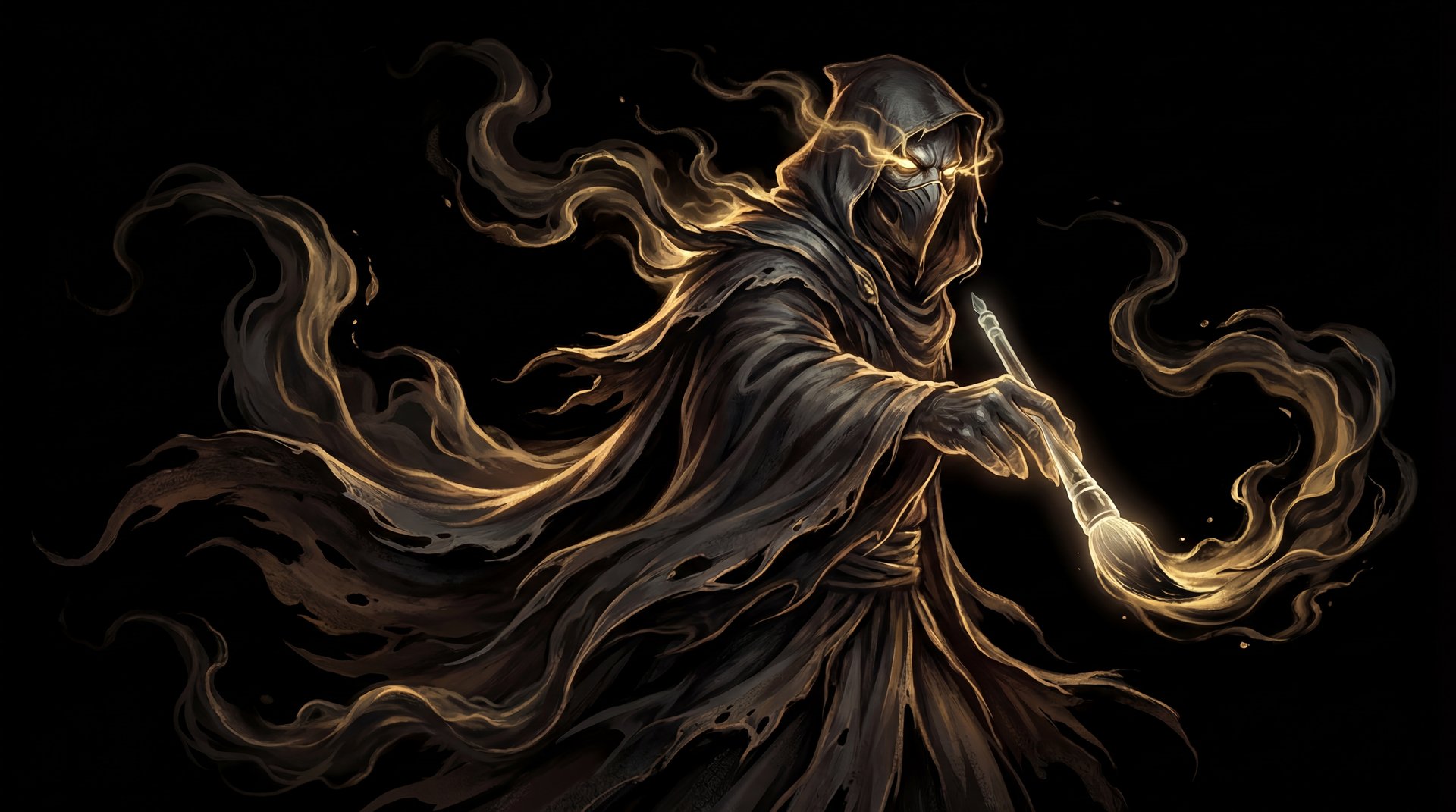
Grimstroke is one of the most underrated supports in Dota 2 — a hero who can single-handedly win team fights with devastating AoE damage, crippling silences, and an ultimate that turns every single-target spell into a two-for-one nightmare. Released in 2018, this ink-wielding phantom painter has evolved from a niche pick into a legitimate threat across every bracket in patch 7.40c.
Whether you are a Herald player looking to understand his kit or a Divine support main trying to squeeze every ounce of value from Soulbind, this guide covers everything. We are talking hidden ability interactions, rank-specific item builds, pro player strategies, and the kind of micro-tips that separate a good Grimstroke from a game-winning one. By the end, you will know exactly how to draft him, lane with him, and dominate team fights from minute one to minute fifty.
Table of Contents
Why Grimstroke Is Dota’s Most Underrated Support
Grimstroke occupies a unique design space in Dota 2. He is classified as a ranged intelligence hero with roles spanning Disabler, Nuker, Support, and Escape, but his true identity is that of a spell-amplification engine. No other support in the game can force two enemy heroes to share the same targeted spell — and that single mechanic changes the math on every team fight.
In patch 7.40c, Grimstroke sits at approximately a 50% winrate across all brackets with a modest but consistent pick rate. He is not a flavor-of-the-month hero that gets nerfed into oblivion every patch. Instead, he is a stable, reliable pick whose ceiling scales directly with your game knowledge. The better you understand his interactions, the more devastating he becomes.
What makes Grimstroke special is his versatility. He can be played as a position 4 or position 5 support, and in some games even as a mid laner. His laning presence is exceptional thanks to Stroke of Fate’s wave-clear and poke damage. His team fight contribution scales with his team’s draft — pair him with heroes like Lion, Lina, or Doom, and suddenly every pickoff becomes a double kill.
Pros
- Soulbind turns single-target spells into 2-for-1 value
- Excellent laning with high base damage and Stroke of Fate poke
- Ink Swell provides both offense and defense in one spell
- Strong wave-clear for a support hero
- Phantom’s Embrace silences through BKB if already latched
- Scales well into late game with Aghanim’s upgrades
Cons
- Squishy with no natural survivability outside Ink Swell
- Phantom’s Embrace easily killed by right-clicks
- Relies heavily on team coordination for Soulbind value
- Mana-hungry in early game without items
- Positioning-dependent — one bad step and you are dead
- Falls off if team lacks single-target burst spells
Abilities Deep Dive
Grimstroke’s kit is deceptively complex. Every ability has hidden interactions and timing nuances that separate low-MMR Grimstroke players from high-MMR ones. Let us break down each spell and the mechanics that matter.
Stroke of Fate (Q)
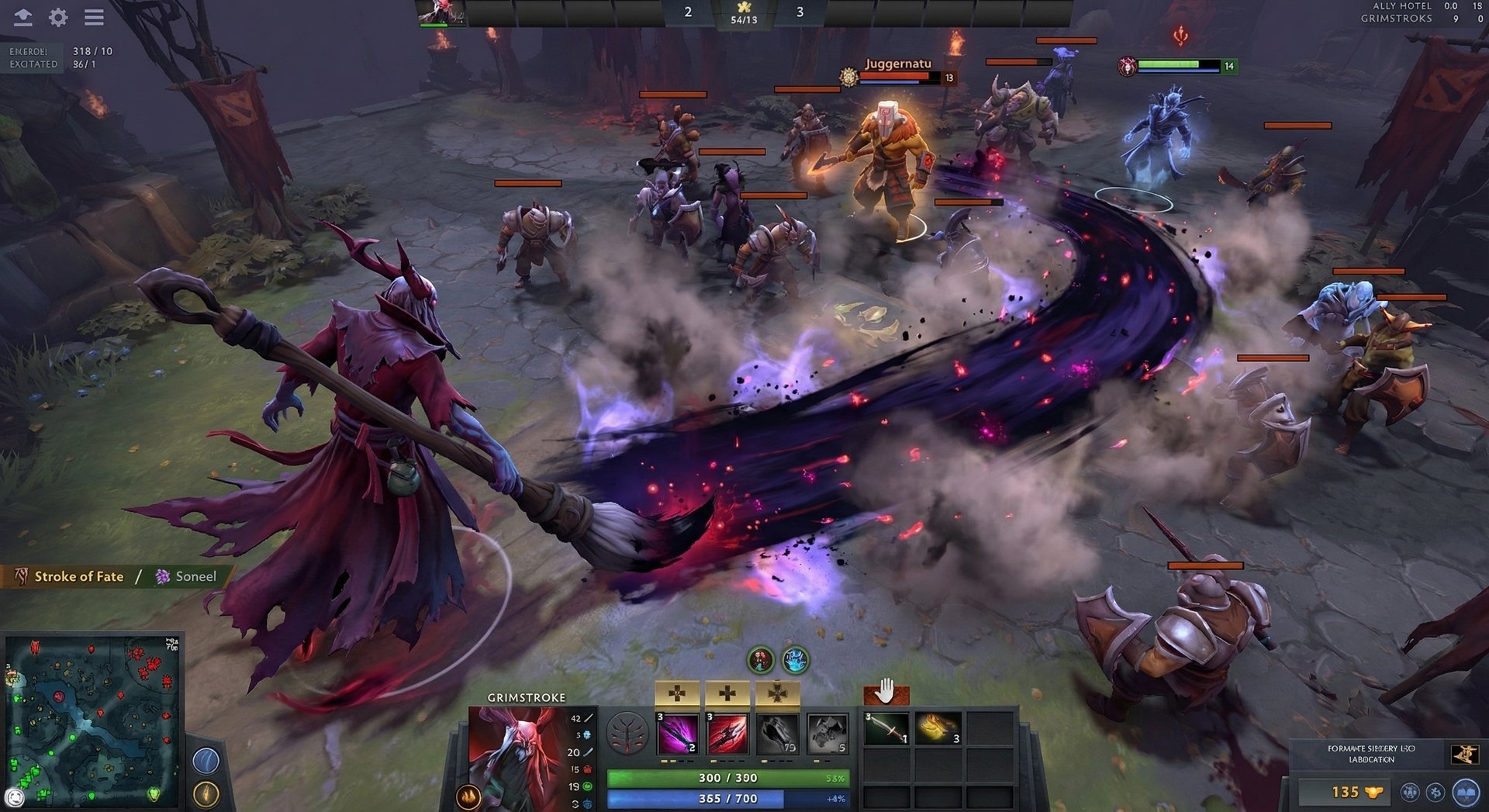
Grimstroke paints a broad stroke of ink across the battlefield, damaging all enemies it passes through. The critical mechanic here is that damage increases for each enemy unit hit. Every creep, summon, or hero the stroke passes through adds bonus damage to all subsequent targets.
At max level, Stroke of Fate deals 200 base damage plus 60 bonus damage per unit hit. In a creep wave of 4 melee and 1 ranged creep, that is an additional 300 bonus damage to any hero standing behind the wave. This means positioning the stroke to hit the creep wave first before striking the enemy hero is essential for maximizing damage output.
Hidden mechanics to know:
- Cast range is 1400 with a 3000 travel distance — this outranges most spells in the game during laning
- The stroke provides vision along its path, making it useful for scouting trees, Roshan pit, and high ground
- It slows enemies hit by 80% for 1.4 seconds at max level, which is enormous for setting up kills
- The damage increase works on illusions and summons — heroes like Phantom Lancer, Naga Siren, and Nature’s Prophet make Stroke of Fate absurdly strong
- You can cast it while moving, which is huge for chasing or retreating
Phantom’s Embrace (W)
Grimstroke sends a phantom to latch onto an enemy hero, dealing damage over time and silencing the target if the phantom completes its full duration. The phantom can be killed by attacking it — it takes a set number of hero right-click attacks to destroy.
This ability is where Grimstroke’s skill ceiling really shows. Key mechanics:
- The phantom takes 3/3/4/4 hero attacks to destroy at levels 1/2/3/4. This means at level 1, even melee carries can kill it quickly, but at higher levels it becomes much harder to remove
- If the phantom completes its latch duration, it silences for 3.75 seconds and the ability’s cooldown is refreshed
- The silence pierces spell immunity if the phantom was already attached before BKB — this is a critical interaction many players do not know
- Phantom’s Embrace goes through Linken’s Sphere — it is not blocked
- The phantom gives vision of the target while attached, preventing jukes into trees or fog
- Heroes with low attack speed or who rely on spells (like Storm Spirit or Puck) struggle massively against this ability

Ink Swell (E)
Grimstroke shrouds an allied hero (or himself) in ink, granting bonus movement speed and immunity to attacks for the duration. When the ink expires, it stuns and damages all nearby enemies. The stun duration scales with how long enemies were in the ink’s radius.
Ink Swell is one of the most versatile spells in the game. It functions as:
- An initiation tool — cast it on a melee initiator (Spirit Breaker, Slardar, Mars) who runs into the enemy team for a guaranteed AoE stun
- A defensive save — the attack immunity protects allies from right-click damage for up to 3 seconds
- A self-cast escape — when you are being chased, Ink Swell yourself for the speed boost and stun on anyone following too closely
- A farming tool — in emergencies, Ink Swell can clear creep waves when combined with Stroke of Fate
The hidden power of Ink Swell is the attack immunity. This is not a damage block or evasion — it is full immunity to attack damage. Against right-click heavy lineups (Troll Warlord, Phantom Assassin, Ursa), a well-timed Ink Swell on your carry can buy 3 seconds of complete safety while also threatening a massive stun.
Soulbind (R) — Ultimate
Grimstroke’s ultimate is the reason you pick this hero. Soulbind links two enemy heroes together for up to 6/7/8 seconds. While linked, any targeted spell cast on one hero is also cast on the other. The linked heroes cannot move more than 600 units apart, effectively leashing them together.
This is not just a “double damage” button — Soulbind fundamentally changes how fights play out:
- Lion’s Finger of Death hits both targets for full damage — that is potentially 1,800+ magic damage on two heroes
- Doom’s Doom silences and damages both heroes — arguably the most devastating combo in the game
- Lina’s Laguna Blade melts two heroes simultaneously, especially with Aghanim’s Scepter pure damage
- Orchid Malevolence / Bloodthorn silences both targets and amplifies damage on both
- Dagon nukes both — a Dagon 5 deals 800 damage to two heroes
Critical Soulbind interactions:
- The secondary target receives a copy of the spell, not a redirect — both targets take full effect
- BKB does NOT break Soulbind if cast after being linked — the link persists through spell immunity
- However, BKB prevents new spells from being copied onto the spell-immune target
- Soulbind is blocked by Linken’s Sphere on the primary target
- The leash effect prevents movement abilities like Blink, Force Staff, and most mobility spells
- If one linked hero dies, the link is not broken — you can still cast spells on the corpse’s location and they copy to the surviving hero (though this is a niche interaction)
Item Builds by Rank Bracket
Grimstroke’s item builds shift significantly based on your rank bracket. Lower-rank games require more self-sufficient items because coordination is unreliable, while higher-rank games reward utility and team-oriented purchases. Here is a comprehensive breakdown.
| Rank | Starting | Early Game | Core Items | Late Game |
|---|---|---|---|---|
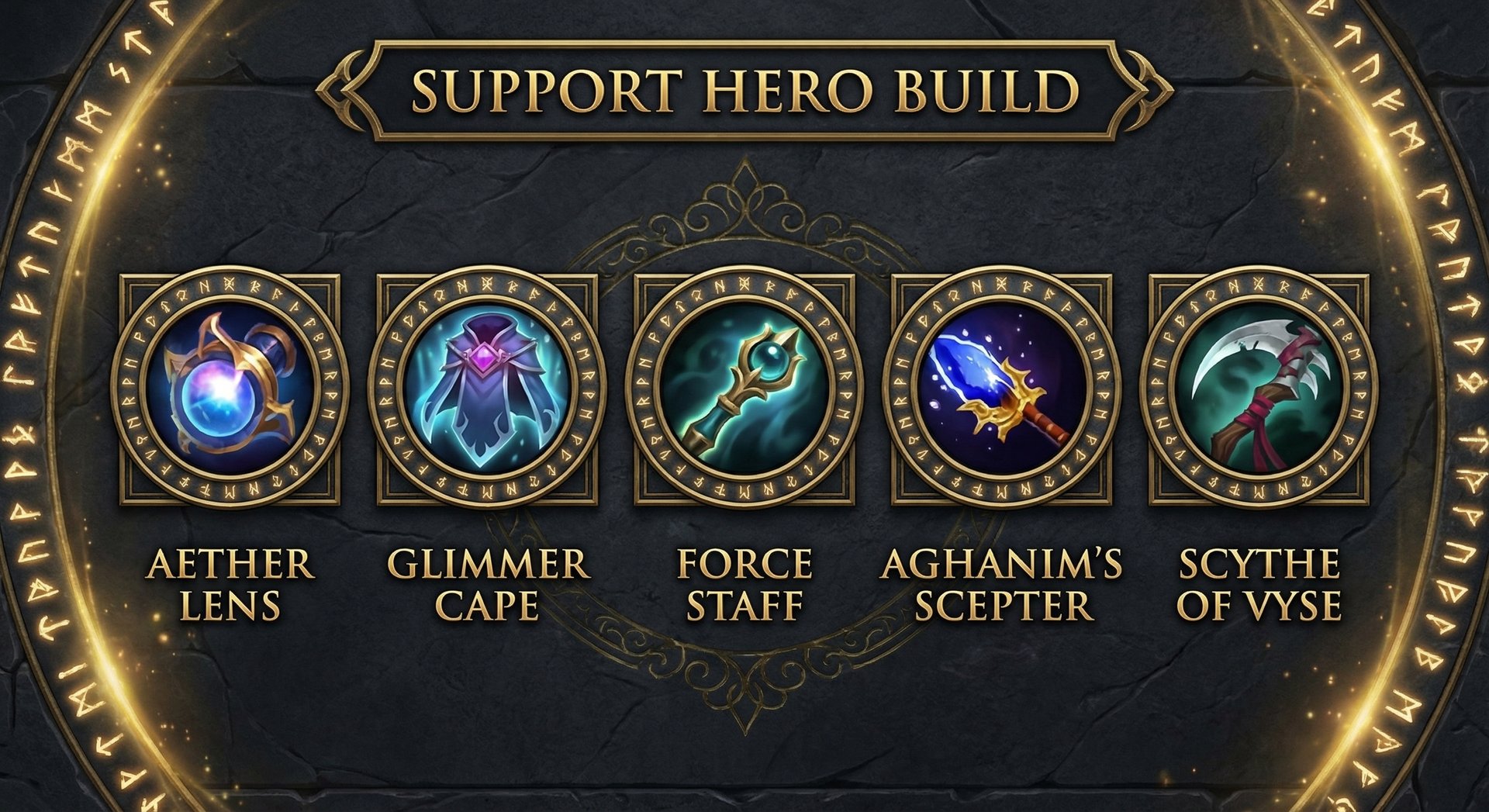
| Herald – Crusader | Tango, Clarity x2, Blood Grenade, Observer Ward | Arcane Boots, Magic Wand, Wind Lace | Aether Lens, Glimmer Cape, Force Staff | Aghanim’s Scepter, Ghost Scepter, Eul’s Scepter |
| Archon – Legend | Tango, Clarity x2, Sentry Ward, Blood Grenade | Arcane Boots, Magic Wand, Urn of Shadows | Aether Lens, Glimmer Cape, Force Staff | Aghanim’s Shard, Solar Crest, Scythe of Vyse |
| Ancient – Divine | Tango, Clarity x2, Sentry Ward, Observer Ward | Tranquil Boots, Magic Wand, Urn of Shadows | Aether Lens, Glimmer Cape, Aghanim’s Shard | Aghanim’s Scepter, Octarine Core, Refresher Orb |
| Immortal | Tango, Clarity x2, Sentry x2, Observer Ward | Tranquil Boots, Magic Wand, Urn of Shadows | Aether Lens, Force Staff, Aghanim’s Shard | Scythe of Vyse, Refresher Orb, Octarine Core |
Why Items Differ by Rank
Herald-Crusader players should prioritize Arcane Boots because mana management at this bracket is poor. You will run out of mana constantly without them. Glimmer Cape is your best defensive option because enemies rarely carry detection, making you nearly unkillable during team fights. Aghanim’s Scepter is a luxury goal because it makes your ultimate pierce spell immunity.
Archon-Legend players start transitioning toward Urn of Shadows because kills happen more frequently, and Spirit Vessel later in the game counters strength heroes and healers. Solar Crest is exceptionally strong because you can buff your carry during Soulbind combos, making them virtually unkillable while you demolish two enemy heroes.
Ancient-Divine players favor Tranquil Boots over Arcane Boots. At this level, you understand mana management better and value the movement speed for positioning. The Aghanim’s Shard becomes core because it upgrades Ink Swell to provide a stronger dispel. Octarine Core and Refresher Orb are game-ending purchases — double Soulbind in a fight is almost always a won team fight.
Immortal players often rush Aether Lens aggressively. The extra cast range on Soulbind is the difference between catching two heroes and whiffing entirely. Force Staff takes priority over Glimmer Cape because Immortal players carry detection. Scythe of Vyse is the ultimate late-game purchase — Hex one Soulbound target and both heroes are hexed.
Aghanim’s Scepter vs. Aghanim’s Shard
Aghanim’s Scepter makes Soulbind pierce spell immunity and increases its duration. This is a game-changer against BKB-reliant cores like Lifestealer, Juggernaut, and Ursa. If the enemy team has 3+ BKB carriers, Scepter is mandatory.
Aghanim’s Shard upgrades Ink Swell to apply a strong dispel when cast, removing debuffs from allies. This is incredibly powerful against lineups with silences, roots, or slows. If your carry is getting chain-disabled, Shard provides immense save potential.
The general rule: Shard first if your team needs defensive utility, Scepter first if your team needs offensive power.
Laning Phase Masterclass
Grimstroke is one of the strongest laning supports in Dota 2, primarily played in the safe lane (position 5) or offlane (position 4). His 625 attack range and high base damage make last-hitting and harassing straightforward, and Stroke of Fate is one of the best level 1 spells in the game.
Level 1-3 Strategy
Start with Stroke of Fate at level 1. Position yourself so you can hit the enemy offlaner through the creep wave, maximizing damage from the creep bonus. At this stage, a single Stroke of Fate through 3-4 creeps deals roughly 260-320 damage to the hero behind them — that is a significant chunk of HP at level 1.
At level 2, take Phantom’s Embrace. This gives you kill threat when combined with your lane partner. If your carry has any form of stun or slow, the combo is: Stroke of Fate to slow, Phantom’s Embrace to force them to right-click the phantom instead of running, and your carry follows up with damage.
At level 3, you have a choice. A second point in Stroke of Fate increases your poke damage significantly. A point in Ink Swell gives you defensive capability. In kill lanes, take Ink Swell. In passive lanes, take Stroke of Fate.
Skill Build Priority
The standard skill build is: Q-W-Q-E-Q-R-Q-W-W-W-R-E-E-E-R. Max Stroke of Fate first for damage and wave-clear, then Phantom’s Embrace for the silence and cooldown reset, then Ink Swell last. Take Soulbind at 6, 12, and 18.
Alternative builds exist for specific situations:
- E max second (Ink Swell) — when your lane partner is a melee initiator like Mars, Slardar, or Spirit Breaker. The stun duration and attack immunity scale with levels.
- W max first — against heroes who rely heavily on spells and cannot easily kill the phantom (Storm Spirit, Puck, Invoker mid). The silence uptime becomes oppressive.

Lane Partner Synergies
Grimstroke pairs exceptionally well with specific heroes in lane:
- Juggernaut — Ink Swell on Juggernaut during Blade Fury creates an unkillable spinning stun bomb. The attack immunity from Ink Swell stacks with Blade Fury’s magic immunity, making him completely invulnerable.
- Ursa — Ink Swell on Ursa gives him the gap close he needs. Once stunned, Ursa’s Overpower shreds through anyone. Soulbind later in the game means double Enrage, which is terrifying.
- Mars — Cast Ink Swell on Mars as he God’s Rebukes or Spears in. The guaranteed stun in Arena of Blood is devastating.
- Slardar — Sprint into Ink Swell stun into Slardar Crush is a near-guaranteed kill combo from level 3.
- Lifestealer — Ink Swell on Lifestealer during Rage provides attack immunity on top of spell immunity. He becomes literally untouchable.
Dealing with Hard Lanes
If the lane is going badly, Grimstroke has options. Stroke of Fate lets you push the wave from a safe distance, securing ranged creep gold for your carry. You can also stack camps while using Stroke of Fate to clear them later. If you are zoned completely, rotate mid — Grimstroke’s gank potential at level 3-4 with Ink Swell and Stroke of Fate is excellent.
Mid and Late Game Transitions
Grimstroke’s mid-game power spike begins at level 6 with Soulbind. This is when you shift from a laning support to a team fight monster. Your job changes from “win the lane” to “find two heroes standing close together and punish them.”
Timing Windows
Grimstroke has three major power spikes:
- Level 6 (Soulbind) — Your first major timing. Look for ganks and skirmishes where you can link two heroes. Even without a combo partner, the leash effect prevents escapes.
- Aether Lens completion (15-20 min) — The extended cast range on Soulbind changes your positioning in fights. You can initiate from fog without risking your life.
- Aghanim’s Scepter/Shard (25-35 min) — This is your peak. Scepter makes Soulbind pierce BKB, making you relevant against even the most farmed carries. Shard gives you a strong dispel for allies.
Team Fight Positioning
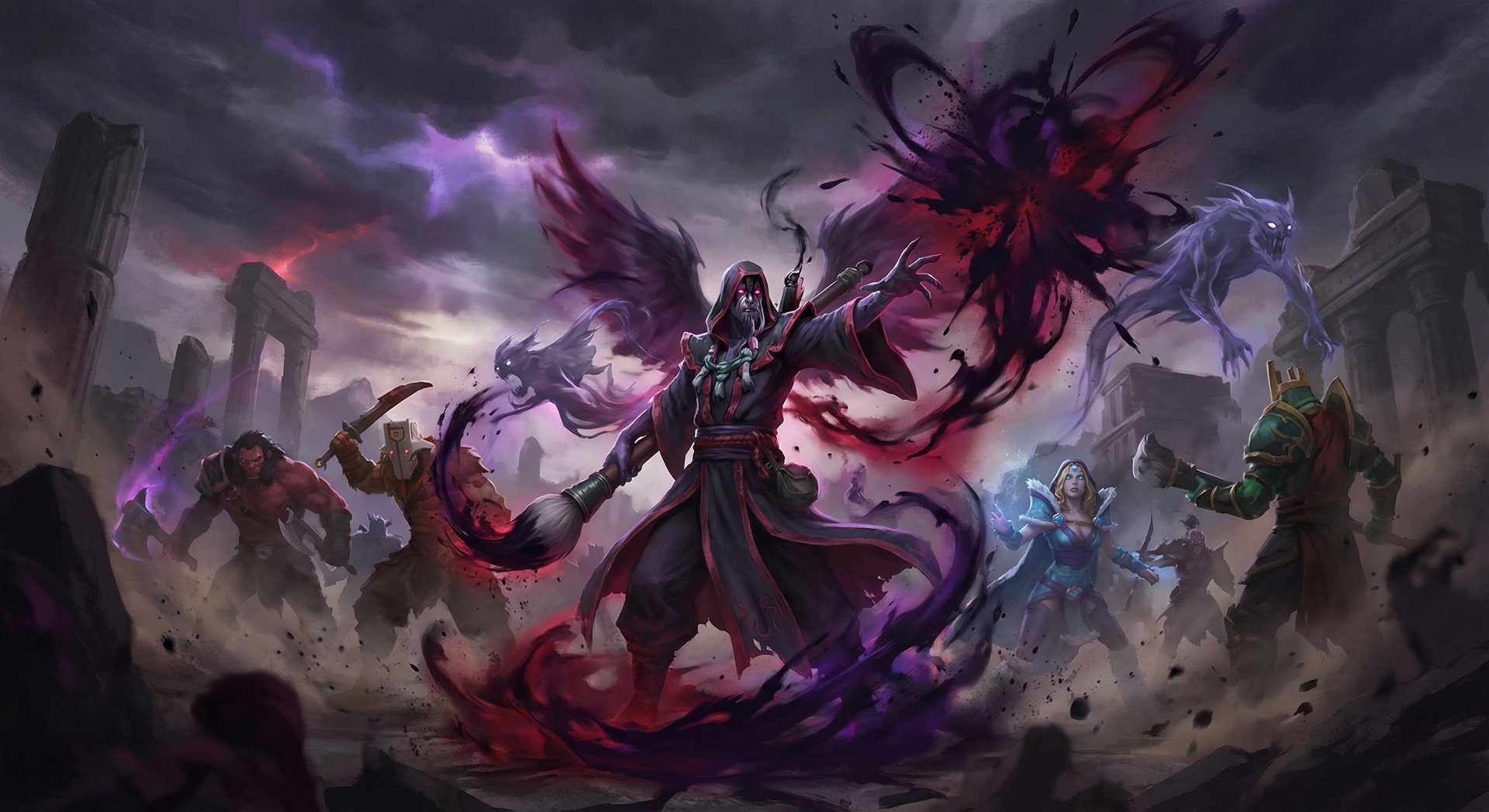
In team fights, Grimstroke should never be in the front line. Your optimal position is 1200-1500 units behind your frontliners, looking for Soulbind opportunities. The ideal sequence is:
- Pre-fight: Stay in fog or behind trees with Observer Ward vision
- Initiation: Cast Ink Swell on your initiator as they go in
- Follow-up: Soulbind two priority targets the moment the fight begins
- Damage: Stroke of Fate through the clustered fight for maximum damage
- Silence: Phantom’s Embrace on the most dangerous spell-caster
- Reposition: Use Force Staff or Glimmer Cape to survive counter-initiation
Target priority for Soulbind: Always link the enemy’s highest-value target with an adjacent hero. Linking two supports is wasteful. The dream scenario is linking their carry with their mid, forcing your team’s single-target burst to delete two cores simultaneously.
When Grimstroke Falls Off
Grimstroke does not truly “fall off” because Soulbind’s value scales with your team’s spell damage. However, his personal damage becomes less relevant after 35 minutes. At this point, you are primarily a utility hero — your value comes from Soulbind combos, Ink Swell saves, and Phantom’s Embrace silences rather than raw damage.
To stay relevant late:
- Focus on Scythe of Vyse — double Hex via Soulbind is the strongest disable combination in late-game Dota
- Refresher Orb allows you to Soulbind, combo, then Soulbind again in the same fight — 4 heroes affected
- Always carry detection — your job is to enable kills, and invisible heroes deny that
Counters: Heroes That Destroy Grimstroke
Even the best Grimstroke player can struggle against these five heroes. Understanding why they counter you is the first step to playing around them.
1. Oracle
Oracle is Grimstroke’s hardest counter. Fortune’s End dispels Phantom’s Embrace and Ink Swell. False Promise saves allies from Soulbind burst combos. Fate’s Edict provides 100% magic resistance, nullifying your damage. Oracle also has Purifying Flames for harass that outpaces your healing. In lane, Oracle makes Phantom’s Embrace useless by instantly purging it.
How to play around Oracle: Bait Fortune’s End before committing Phantom’s Embrace. Target the hero Oracle is NOT protecting with Soulbind. Force Oracle to use cooldowns defensively by threatening from multiple angles.
2. Abaddon
Aphotic Shield dispels Phantom’s Embrace and Ink Swell from allies. Borrowed Time automatically triggers when Abaddon drops below threshold, making him nearly impossible to kill during Soulbind combos. His purge capability means Phantom’s Embrace will almost never complete its silence if Abaddon is paying attention.
How to play around Abaddon: Wait for Aphotic Shield to be on cooldown before using Phantom’s Embrace. Focus Soulbind on heroes far from Abaddon. Consider Aghanim’s Scepter to pierce Borrowed Time’s spell immunity.
3. Legion Commander
Press the Attack dispels Phantom’s Embrace and provides attack speed to kill it faster. Duel isolates one of the Soulbound targets, wasting half the ultimate’s value. Moment of Courage gives Legion enough sustain to survive your combo. She also naturally builds BKB, reducing your impact further.
4. Phantom Lancer
While Stroke of Fate is excellent against illusions, Phantom Lancer’s Doppelganger dispels Soulbind entirely. The army of illusions makes it nearly impossible to identify and target the real PL with Soulbind. Grimstroke’s single-target focus clashes with PL’s swarm playstyle.
5. Slark
Dark Pact dispels Phantom’s Embrace, Ink Swell debuff, and Soulbind. Slark’s ability to purge nearly every one of Grimstroke’s spells makes him a nightmare matchup. Shadow Dance’s passive also makes Slark untargetable, preventing Soulbind from landing. If Slark gets on top of you, your low HP pool means a quick death.
How to play around Slark: Wait for Dark Pact to finish before casting. Soulbind has a brief delay that can catch Slark between purge windows. Coordinate with your team to burst him during Soulbind before he can react.

Heroes Grimstroke Destroys
Grimstroke has several matchups where his kit directly counters the enemy hero’s gameplan. These are the picks you want to see on the enemy team.
1. Huskar
Huskar relies on single-target aggression and low HP thresholds. Soulbind forces two heroes to stay close, and Huskar’s Inner Fire does nothing against Grimstroke’s kit. Phantom’s Embrace silences Huskar’s Life Break and Burning Spear toggles. Most importantly, Soulbind prevents Huskar from diving solo — he drags his linked ally into danger.
2. Storm Spirit
Storm’s entire gameplan revolves around zipping in and out of fights. Soulbind’s leash prevents Ball Lightning escapes. Phantom’s Embrace is devastating because Storm has low attack speed and relies on spells to survive — the silence is often lethal. Storm cannot easily kill the phantom without wasting precious mana on attacks.
3. Drow Ranger
Drow has no dispel, no mobility, and no way to break Soulbind. She is also typically positioned near another hero in fights, making Soulbind easy to land. Ink Swell completely negates Drow’s right-click damage for its duration. Phantom’s Embrace silences Marksmanship and Multishot, removing Drow’s primary damage source.
4. Sniper
Sniper is immobile and squishy — exactly the type of hero Grimstroke punishes. Soulbind catches Sniper in the backline and leashes him to whoever is standing nearby. Stroke of Fate’s range exceeds even Sniper’s attack range at max level. A single Soulbind combo with any burst hero deletes Sniper from the fight.
5. Shadow Fiend
Shadow Fiend is another immobile, position-dependent hero that Grimstroke dismantles. Soulbind prevents SF from finding good Requiem of Souls positions. Phantom’s Embrace silences Raze combos. And Ink Swell on an initiator diving SF guarantees the stun, forcing SF to fight or die. SF’s fragile HP pool means Soulbind combos almost always result in a kill.
How Pros Play Grimstroke in the Current Patch
In the professional scene, Grimstroke has seen consistent play as a position 4 support in patch 7.40c. Pro players value him for his laning dominance and team fight amplification, particularly in drafts built around single-target burst damage.
Draft Context
Pro teams typically draft Grimstroke as a second or third pick, pairing him with heroes like Lion, Lina, Doom, or Necrophos. The ideal pro draft includes at least two heroes with powerful single-target spells to maximize Soulbind value. Teams like Team Spirit, Tundra Esports, and Gaimin Gladiators have all featured Grimstroke in recent tournament play.
Pro Player Builds
Immortal and pro players consistently rush Arcane Boots into Aether Lens, often completing Lens by 12-14 minutes. The build then diverges based on game state:
- Offensive games: Aether Lens into Aghanim’s Shard into Blink Dagger. The Blink allows for aggressive Soulbind initiations from fog.
- Defensive games: Aether Lens into Glimmer Cape into Force Staff. Standard save build when your cores are being targeted.
- Snowball games: Aether Lens into Aghanim’s Scepter rush. When ahead, Scepter accelerates the lead by making Soulbind pierce BKB, ending games before the enemy can recover.
Pro Positioning Patterns
Watch any pro Grimstroke replay and you will notice they never show on the map before a fight starts. They position in tree lines, behind ward spots, and use Stroke of Fate’s range to contribute without revealing their location. The Soulbind initiation comes from fog, giving enemies zero time to react.
Another pro pattern is using Ink Swell as bait. Cast it on yourself, walk toward the enemy as if initiating, then turn back. The enemy either runs (losing position) or stays (eating the stun). This is particularly effective in the mid-game when Ink Swell’s stun is strong enough to set up kills.
Rank-Specific Climbing Guide
Grimstroke plays differently at every rank bracket. Here is exactly what to focus on at each stage of the MMR ladder.
Herald to Guardian: Foundation Basics
At this bracket, focus on three things only:
- Hit Stroke of Fate through creeps. Most Herald Grimstroke players cast Q directly at the hero, missing the creep damage bonus. Always position to hit creeps first.
- Do not waste Soulbind. Save it for fights where your team is ready to follow up. Casting Soulbind on two enemy heroes while your carry is farming the jungle is a wasted ultimate.
- Buy Observer Wards. Vision wins games at this bracket. Place wards on offensive high ground when pushing, defensive wards when behind.
The biggest mistake Herald Grimstroke players make is playing him like a core. You are a support. Your job is to enable kills, not get them. Focus on assisting your carry with Ink Swell and setting up ganks with Stroke of Fate’s slow.
Crusader to Archon: Adding Game Sense
At this bracket, start incorporating:
- Phantom’s Embrace timing. Stop casting it randomly. Wait until the enemy has used their right-click burst or escape before sending the phantom. A well-timed silence wins fights.
- Ink Swell target selection. Casting Ink Swell on yourself is a waste in most situations. Identify which teammate benefits most — typically the one who needs to close distance.
- Map awareness for Soulbind. Start recognizing when two heroes are standing close together. Check minimap constantly for 2-hero clusters near your team.
- Stack and pull. Use Stroke of Fate to help with stacking multiple camps. The spell’s long range makes it easy to aggro two camps simultaneously.

Legend to Ancient: The Macro Leap
This is where Grimstroke play gets sophisticated:
- Soulbind target priority. Stop linking random heroes. Always link the enemy’s highest-impact hero with an adjacent target. Linking their carry with their support is better than linking two supports.
- Smoke ganks with Soulbind. Lead smoke ganks in the mid game. Your Soulbind into Stroke of Fate slow guarantees kills on almost any hero.
- Item timing optimization. You should complete Aether Lens by 14-16 minutes consistently. If you are getting it at 20+ minutes, you are dying too much or not finding gold.
- Counter-initiation. Sometimes the best Soulbind is defensive. Link two enemies who dive your backline, then Ink Swell your carry and watch the enemies die.
Divine to Immortal: What Separates the Top 1%
At the highest level, Grimstroke mastery requires:
- Pre-casting Ink Swell before vision. If you know the enemy is about to jump your carry, Ink Swell them BEFORE the initiation. The 0.5s cast time can mean the difference between saving your carry and losing them.
- Soulbind geometry. Understand exactly how the 600-unit leash works. You can manipulate enemy positioning by linking a hero who is retreating with a hero who is advancing — they pull each other, creating chaos.
- Phantom’s Embrace reset farming. In between fights, use Phantom’s Embrace on jungle creeps. If the phantom completes (creeps cannot attack it efficiently), the cooldown resets, giving you a fresh charge for the next fight.
- Refresher timing. With Refresher Orb, you can double Soulbind in a fight. The first Soulbind links two heroes, your team combos them, then you immediately Soulbind two MORE heroes. This is how you win 5v5 team fights single-handedly.
- Fog abuse. Cast Stroke of Fate from fog to scout without revealing yourself. The vision it provides is invaluable for Soulbind setups.
Tips and Tricks
These are the micro-optimizations that experienced Grimstroke players use to squeeze maximum value from every spell.
Animation Cancels and Cast Tricks
- Stroke of Fate while moving: Unlike most spells, you can cast Stroke of Fate without stopping. Use this to maintain chase distance while dealing damage.
- Phantom’s Embrace during Soulbind: Cast Phantom’s Embrace on one Soulbound target and it affects both. That is a potential double silence for the price of one spell.
- Ink Swell + TP cancel: If an ally is teleporting and about to be interrupted, cast Ink Swell on them. The attack immunity prevents right-click cancels, and if enemies stand near the TP, they get stunned.
- Self-cast Ink Swell with Force Staff: Ink Swell yourself, then Force Staff into the enemy team. The speed boost from Ink Swell plus the Force push gets you into stun range reliably.
Hidden Interactions
- Soulbind + Ethereal Blade: Ethereal Blade one target, and both Soulbound heroes become ethereal. This amplifies all magic damage on both while preventing right-clicks. Follow up with Dagon or allied nukes for devastating combo damage.
- Soulbind + Rod of Atos: The root applies to both targets, locking down two heroes for your team to burst. This is cheaper than Scythe of Vyse and available earlier.
- Ink Swell on illusions: You can cast Ink Swell on allied illusions. A Manta Style illusion with Ink Swell running at enemies is a legitimate bait that either forces a retreat or delivers a stun.
- Phantom’s Embrace vision: Use the phantom’s vision to deward. If you suspect an Observer Ward on high ground, send Phantom’s Embrace at a nearby enemy creep and the phantom grants uphill vision.
Common Mistakes to Avoid
- Using Soulbind first in combos: Soulbind has a brief cast animation. If you announce it too early, enemies scatter. Instead, initiate with Ink Swell stun or Stroke of Fate slow, THEN Soulbind while they are crowd-controlled.
- Casting Phantom’s Embrace on high-attack-speed heroes: Sending the phantom at a Troll Warlord, Windranger with Focus Fire, or Monkey King is a waste. They kill it instantly.
- Ignoring the creep wave bonus on Stroke of Fate: Direct hero hits deal far less damage than hitting through creeps first. Always angle your Q through units.
- Overvaluing kills over saves: Sometimes Ink Swell on your dying carry saves the game more than Ink Swell on an initiator gets a kill. Evaluate fight state before committing.
- Standing too close in fights: You have 1400+ cast range on most spells. There is zero reason to be within 800 units of any enemy hero. If you are dying in fights, you are standing too close.

Frequently Asked Questions
Grimstroke works in both roles, but position 4 is generally preferred in higher brackets. As a pos 4, you get more gold for core items like Aether Lens and Aghanim’s Shard, and you have more freedom to roam for ganks. Position 5 Grimstroke works well in lower brackets where the laning stage matters more and your carry needs protection.
Yes. Targeted item actives like Dagon, Orchid Malevolence, Scythe of Vyse, Ethereal Blade, and Rod of Atos all copy to the second Soulbound target. This is why items like Hex are so powerful on Grimstroke’s team — a single Scythe of Vyse hexes two enemy heroes.
Soulbind can be dispelled by strong dispels (like Slark’s Dark Pact or Legion Commander’s Press the Attack). It is also blocked by Linken’s Sphere on the primary target. However, BKB does NOT dispel an existing Soulbind link — it only prevents new spell copies from being applied to the spell-immune target.
Lion is widely considered the best combo partner. Finger of Death hitting two heroes is devastating at all stages of the game. Doom (double Doom), Lina (double Laguna Blade), and Necrophos (double Reaper’s Scythe) are close seconds. Any hero with a powerful single-target ultimate synergizes well.
Take Phantom’s Embrace at level 2 in most games. It gives you kill threat in lane. Only take Ink Swell at level 2 if your lane partner is a melee hero who needs to gap-close (like Ursa or Slardar) and you expect to fight at level 2.
Rush Aghanim’s Scepter if the enemy has multiple BKB carriers. Scepter makes Soulbind pierce spell immunity, which is game-changing. Without Scepter, your best option is to wait out BKB durations before committing Soulbind, or use Soulbind on heroes who have not yet activated BKB to force them to pop it early.
Grimstroke mid is situationally viable in lower brackets but not recommended above Ancient. His wave-clear with Stroke of Fate is good, and he can dominate certain mid matchups (especially against melee mids). However, he lacks the farming speed of traditional mids and does not scale with items as well as heroes like Lina or Storm Spirit. If you want to play Grimstroke as a core, consider coaching to learn the specific matchups and timings.
Master Grimstroke with Immortal Coaching
Our Immortal-rank coaches have thousands of Grimstroke games and can teach you the Soulbind combos, positioning tricks, and draft strategies that separate good players from great ones. Whether you need help climbing out of Archon or pushing into top 1000 Immortal, we have got you covered.