How to Master Bounty Hunter in Dota 2: The Ultimate Guide for Every Rank (2026)

Few heroes in Dota 2 embody the spirit of chaos and greed quite like Bounty Hunter. This sneaky tracker has been a staple pick in both pubs and professional matches for years, and for good reason — he turns every kill into a payday for his entire team. Whether you are playing him as a roaming position 4, an aggressive offlaner, or even a mid-lane cheese pick, Bounty Hunter’s ability to swing the gold economy in your favor makes him one of the most impactful heroes in the game.
In this comprehensive guide, we break down everything you need to know about mastering Bounty Hunter in the current patch. From ability mechanics that even veteran players overlook, to rank-specific item builds, laning strategies, and the exact techniques that Immortal-rank coaches teach their students — this guide covers it all. By the time you finish reading, you will understand exactly how to dominate your bracket and climb MMR with one of Dota 2’s most rewarding heroes.
Table of Contents
Why Bounty Hunter Is the Ultimate Economy Disruptor
Bounty Hunter occupies a unique niche in Dota 2 — he is the only hero whose primary function is to manipulate the entire team’s gold income. While other heroes fight for kills and objectives, Bounty Hunter turns every engagement into a financial windfall through Track, his iconic ultimate ability. A single tracked kill can swing hundreds of bonus gold to every ally in range, and over the course of a 40-minute game, that advantage compounds into thousands of gold that your team would never have earned otherwise.
In the current meta, Bounty Hunter maintains a solid 51-52% winrate across all brackets according to Dotabuff, with his pick rate spiking significantly in Divine and Immortal games where players understand how to leverage his economy advantage. He is most commonly played as a position 4 soft support, though offlane Bounty Hunter has seen a resurgence in recent patches thanks to Jinada’s scaling and item build flexibility.
What makes Bounty Hunter special is not raw damage or flashy team fight presence — it is his ability to be everywhere at once. Shadow Walk lets him roam the map unseen, scouting enemy movements, sniping couriers, stealing bounty runes, and setting up ganks. A good Bounty Hunter player creates a sense of paranoia in the enemy team. They never know where you are, and every time they show on the map, they risk giving your team a massive gold injection.

Abilities Deep Dive
Shuriken Toss (Q)
Bounty Hunter’s Shuriken Toss is a targeted nuke that deals 150/225/300/375 magic damage and mini-stuns the target for 0.1 seconds. At first glance it seems straightforward, but this ability has several hidden mechanics that separate good Bounty Hunter players from great ones.
The most important interaction is the Track bounce mechanic. When you throw a Shuriken at a target and there are other Tracked heroes nearby, the Shuriken will bounce to each Tracked hero within a 1200 radius, dealing full damage to each one. This means in a team fight where you have 3-4 enemies Tracked, a single Shuriken can deal over 1,500 total magic damage. The mini-stun on each bounce also interrupts channeling abilities and Town Portal Scrolls, making it one of the best interrupt tools in the game for its low cooldown.
Hidden mechanic: The Shuriken always bounces to the closest Tracked unit first. You can manipulate bounce order by positioning yourself closer to priority targets. If you need to cancel a specific enemy’s TP, throw the Shuriken at a different Tracked hero who is closer, and it will bounce to the TP target. This also means you can use creeps with Track-like debuffs as bounce intermediaries in some edge cases.
The 0.1-second mini-stun is deceptively powerful. It cancels Blade Fury, Sand Storm, Death Ward, Fiend’s Grip, and any other channeled ability. At 8-second cooldown with max level, you can interrupt multiple channels in a single fight.

Jinada (W)
Jinada is what makes Bounty Hunter a legitimate threat in lane and throughout the game. This passive ability grants a critical strike of 150%/180%/210%/240% on a cooldown of 9/7/5/3 seconds, and each Jinada hit steals gold from the target — 12/20/28/36 gold stolen on hit. That gold is taken directly from the enemy hero and given to you, making every Jinada strike a double-edged economic weapon.
The gold steal mechanic is often underestimated. At max level, every 3 seconds you are stealing 36 gold from an enemy and gaining 36 gold yourself — a 72 gold swing per hit. In a laning phase where you land 10 Jinada hits over two minutes, that is a 720 gold swing before factoring in the critical damage itself. Against melee carries who need every gold piece for their item timings, this is devastating.
Critical interaction with items: Jinada’s crit multiplier stacks multiplicatively with damage-boosting items. This is why Desolator is such a popular pickup — the -7 armor from Desolator combined with a 240% crit creates burst damage that can delete squishy supports in a single hit from invisibility. With a Desolator at 25 minutes, a Jinada hit from Shadow Walk can deal 500+ physical damage before reductions.
Shadow Walk (E)
Shadow Walk is Bounty Hunter’s bread and butter — a self-cast invisibility that lasts 20/25/30/35 seconds with a fade time of 1/0.75/0.5/0.25 seconds. The cooldown is 15 seconds at all levels, which means at max level you have effectively permanent invisibility with only a brief window of visibility between casts.
The bonus damage on breaking invisibility is 30/60/90/120 and is applied as a separate damage instance. This means it is not amplified by Jinada’s crit, but it does benefit from armor reduction. The damage is dealt as physical damage, so it is reduced by armor but not magic resistance. This bonus damage combined with Jinada creates the classic Bounty Hunter burst combo: Shadow Walk into Jinada hit for massive opener damage.
Fade time manipulation: The 0.25-second fade time at max level is fast enough that you can attack a hero, immediately re-cast Shadow Walk, and fade before most heroes can react with a stun. This “hit and fade” technique is the core of Bounty Hunter’s harassment pattern in lane. Walk up, Jinada hit, immediately Shadow Walk, walk away. The enemy takes a huge chunk of damage and loses gold, while you disappear before they can retaliate.
Track (R) — Ultimate
Track is the ability that defines Bounty Hunter’s entire identity. When cast on an enemy hero, it provides true sight of that hero for 30 seconds, grants bonus movement speed to Bounty Hunter and nearby allies (16%/20%/24%), and when the Tracked hero is killed, everyone on your team who is within a 1200 radius of the kill gets bonus gold — 130/225/320 per ally.
The numbers here are staggering when you run the math. If you Track a hero and 4 allies are nearby when they die, that is 520/900/1280 bonus gold distributed to your team from a single kill at levels 1/2/3. Over the course of a game, a Bounty Hunter who lands 15-20 Track kills can generate 15,000 to 25,000 bonus gold for their team. That is the equivalent of an entire hero’s net worth being injected as pure bonus income.
The cooldown is only 4 seconds at all levels with a 900/1050/1200 cast range, and it costs just 65 mana. This means in a team fight you should be Tracking every enemy hero before the fight even starts. There is no reason not to — the mana cost is negligible and the cooldown is shorter than most abilities in the game.
Track also provides true sight, which means it reveals invisible heroes and heroes in the Fog of War. This makes it an incredible scouting tool against heroes like Riki, Clinkz, and Weaver. Even if you cannot kill them, simply having Track vision on their position gives your team enormous information advantage.

Skill Build Order
The optimal skill build depends on your role, but for the standard position 4 roaming build:
| Level | Ability | Reasoning |
|---|---|---|
| 1 | Shadow Walk | Essential for level 1 scouting and rune control |
| 2 | Jinada | Start harassing and stealing gold in lane |
| 3 | Jinada | Increase crit damage and gold steal |
| 4 | Shuriken Toss | Secures kills with ranged nuke + mini-stun |
| 5 | Jinada | 3-second cooldown for maximum harassment |
| 6 | Track | Always take ultimate at 6 |
| 7 | Jinada | Max Jinada first for economy disruption |
| 8-10 | Shadow Walk | Reduce fade time and increase duration |
| 11 | Track | Level 2 Track for 225 bonus gold per ally |
| 12-14 | Shuriken Toss | Scale nuke damage for mid game fights |
For offlane Bounty Hunter, you might consider maxing Shuriken first in matchups where you cannot trade hits effectively (against ranged heroes or strong dual lanes). The 375 magic damage nuke gives you kill threat with any setup stun from your support.
Item Builds by Rank Bracket
Bounty Hunter’s item build varies dramatically by rank, mostly because lower-ranked players tend to focus on damage items while higher-ranked players prioritize utility and team-enabling items. Understanding why the build changes is more important than memorizing any single item progression.

| Rank | Starting | Early Game | Core Items | Late Game |
|---|---|---|---|---|
| Herald – Crusader | Orb of Venom, Tango, Clarity | Phase Boots, Urn of Shadows | Desolator, Drum of Endurance | BKB, Nullifier |
| Archon – Legend | Orb of Venom, Wind Lace, Tango | Phase Boots, Urn of Shadows, Magic Wand | Solar Crest, Spirit Vessel | Lotus Orb, Pipe of Insight |
| Ancient – Divine | Wind Lace, Orb of Venom, Sentry Ward | Arcane Boots, Urn, Magic Wand | Guardian Greaves, Solar Crest | Aghanim’s Scepter, Lotus Orb |
| Immortal | Wind Lace, Sentry, Observer, Tango | Arcane Boots, Urn, Infused Raindrops | Guardian Greaves, Pipe/Solar Crest | Aghanim’s Scepter, Hex |
Why Builds Differ by Rank
In Herald through Crusader, games tend to go longer and fights are chaotic. Damage items like Desolator let you contribute to kills directly rather than relying on team coordination. Your teammates may not capitalize on Track gold as efficiently, so being able to solo kill supports makes up for the lack of coordination.
At Archon through Legend, players start grouping more effectively, so utility items like Solar Crest and Spirit Vessel amplify your team’s ability to take fights. Solar Crest on your carry before a fight essentially gives them a free Desolator and evasion, which is far more impactful than building damage on yourself.
In Ancient and above, Bounty Hunter is played almost exclusively as a utility support. Guardian Greaves provide sustain for your team during sustained pushes and remove silences — critical against popular heroes like Orchid-builders. Aghanim’s Scepter upgrades Shuriken Toss to apply the current level of Jinada to each target it bounces to, effectively giving you AoE Jinada crits in a team fight with multiple Tracked targets.
The Immortal build philosophy is simple: you are a walking Track bot who makes your team rich while providing aura items and saves. Your damage comes from enabling your cores, not from hitting heroes yourself. A Bounty Hunter with Guardian Greaves, Pipe, and Solar Crest at 30 minutes provides more team fight impact than one with Desolator and Daedalus.
Laning Phase Masterclass
Bounty Hunter’s laning phase is where games are won or lost. Unlike most supports who babysit their carry, Bounty Hunter’s job is to create chaos across the map from minute one. Your laning phase has three main objectives: steal gold with Jinada, scout the enemy, and secure bounty runes.

The First 2 Minutes
Start by scouting the enemy with Shadow Walk. At 0:00, go invisible and check the enemy’s starting items, lane assignments, and jungle wards. Relay this information to your team — knowing the enemy mid has two Faerie Fires instead of a Null Talisman changes your mid laner’s entire approach.
Contest the first bounty runes aggressively. Bounty Hunter is one of the best rune contesters in the game because of invisibility. Position yourself near a bounty rune at -0:02, and right-click the rune the instant it spawns. Even if the enemy sees you, you get the rune before they can react. Each bounty rune denied is gold taken from the enemy team and given to yours.
Jinada Harassment Pattern
The core laning pattern is devastatingly simple:
- Shadow Walk into the enemy lane
- Walk up behind the enemy carry or support
- Wait for Jinada to come off cooldown (watch the icon glow)
- Right-click the target — Jinada procs automatically
- Immediately cast Shadow Walk again
- Walk away while fading
This pattern steals 36 gold from the enemy and deals significant damage, with almost zero risk to yourself. Repeat every time Jinada is ready. After 3-4 hits, most enemy laners are at half health and 100+ gold behind where they should be.
Courier Sniping
Courier kills are the highest-value play you can make in the first 10 minutes. When you see an enemy courier delivering items, intercept it. One courier kill gives your team 175 gold (25 to each hero) and delays the enemy’s item delivery by 3 minutes of courier respawn time. At 3-4 minutes into the game, delaying a mid laner’s Bottle by 3 minutes can single-handedly win the mid lane for your team.
Position yourself along common courier routes — the paths between the base and the mid or safe lane. Invisible Bounty Hunter sitting on the enemy’s high ground is practically undetectable without Sentry Wards, and many players do not invest in detection early.
Lane Partner Synergies
Bounty Hunter works best with lane partners who have reliable crowd control. Heroes like Tusk (Snowball + Walrus Punch), Clockwerk (Battery Assault lockdown), or even Bane (Nightmare setup into Brain Sap) pair well because they can hold an enemy in place while you chain Jinada hits and Shuriken Toss. In the offlane, pair with aggressive laners like Pangolier or Mars who can set up kills that you finish with Shuriken bounce.
Mid and Late Game Transitions
Bounty Hunter’s mid game is where he truly shines. Once you hit level 6 and have Track online, your entire approach to the game changes. You transition from a lane harasser into a full-time roaming gold generator.

Timing Windows
Bounty Hunter’s strongest power spike is levels 6-15, roughly the 10-25 minute window. During this time, enemy supports are squishy enough for you to solo kill with Jinada + Shuriken, and Track gold generation is at its most impactful relative to everyone’s net worth. A 225 bonus gold Track kill at 15 minutes is massive; the same kill at 45 minutes is nice but less game-changing.
Your goal during this window is to accumulate as many Track kills as possible. Do not farm jungle camps. Do not sit in lane hitting creeps. Your job is to find enemies, Track them, and either kill them yourself or set up kills for your team. Every minute you spend farming is a minute wasted — your farming tool IS Track gold.
Team Fight Positioning
In team fights, Bounty Hunter should never be the first one in. Your job is to:
- Track every enemy hero before the fight starts (4-second cooldown, do this from fog or Shadow Walk)
- Wait for initiation from your team’s frontliner
- Identify priority targets — enemy supports or low-HP heroes you can burst
- Break invisibility with Jinada on the priority target
- Throw Shuriken to bounce between Tracked heroes
- Re-Shadow Walk and reposition for the next Jinada
The common mistake is diving into 5 heroes like an Axe. You are not a frontliner. You are an assassin. Get in, deal burst damage, get out, re-engage when abilities are off cooldown. If a team fight goes well, Track gold from multiple kills can swing 2,000+ gold to your entire team in a single engagement.
Staying Relevant Late Game
Bounty Hunter falls off in raw combat power after 35 minutes, but his economy impact never diminishes. In the late game, focus on:
- Providing Track vision on key targets (enemy carry, enemy initiator)
- Scouting Roshan attempts — Shadow Walk lets you check the pit safely
- Canceling channels with Shuriken bounce (Black Hole, Fiend’s Grip, Death Ward)
- Carrying utility items like Hex, Nullifier, or Lotus Orb for your team
- Split pushing with Track movement speed to pressure towers
If the game goes ultra-late, consider picking up Aghanim’s Scepter. The upgraded Shuriken bounces apply Jinada to each Tracked target it hits, effectively turning one Shuriken into a team-wide Jinada crit. In a 5v5 team fight with 4 Tracked enemies, that is 4 Jinada crits for the price of one cast.
Counters: Heroes That Destroy Bounty Hunter
Bounty Hunter has very clear weaknesses, and understanding them is essential for both playing him and playing against him. His biggest vulnerability is his reliance on invisibility — any hero that can reveal invisible units directly counters his core gameplay.
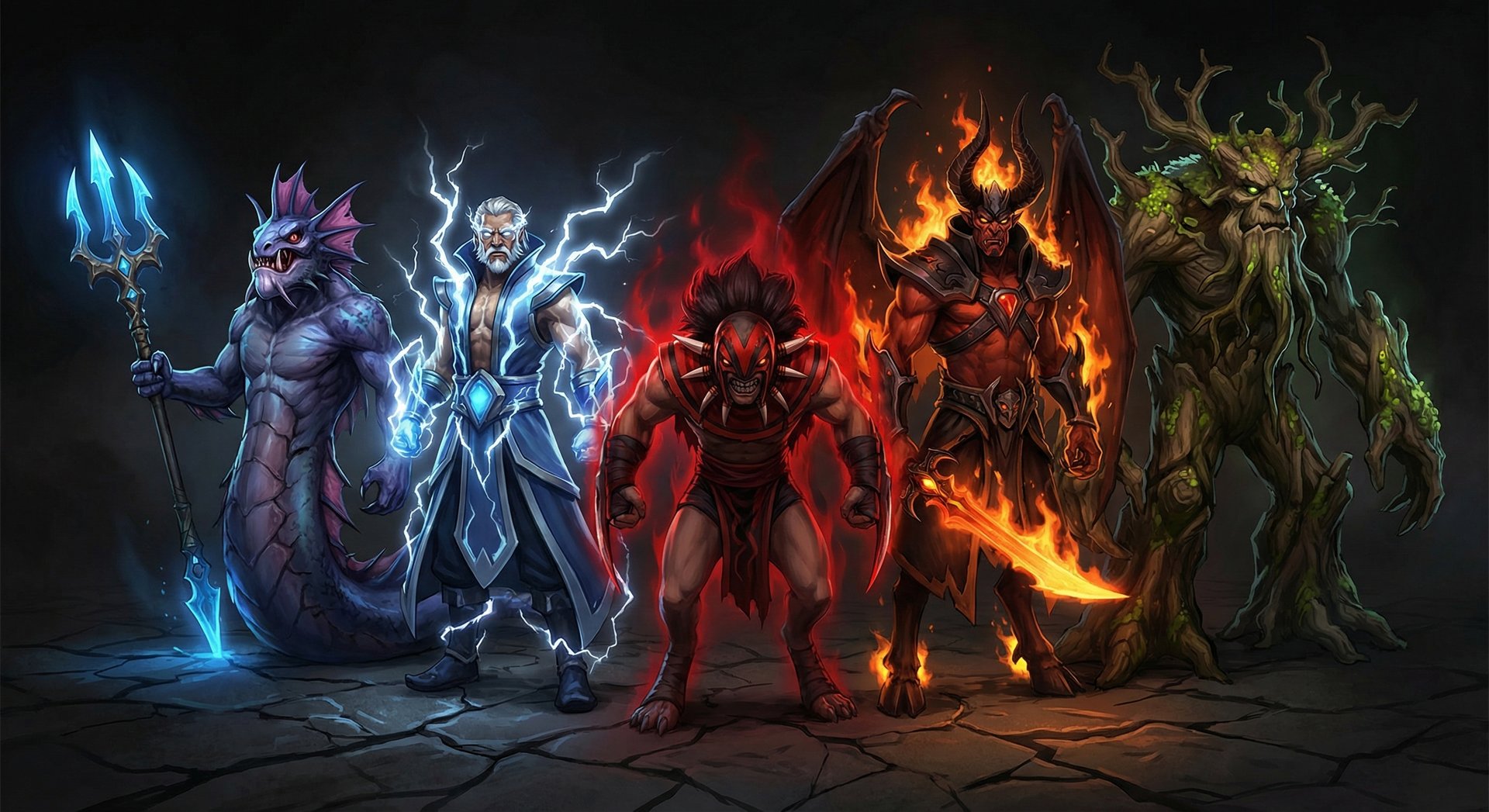
1. Slardar — The Hard Counter
Slardar is Bounty Hunter’s worst nightmare. Corrosive Haze provides permanent true sight on the target for 18 seconds, completely negating Shadow Walk. Slardar also reduces your armor by a massive amount, making your already mediocre HP pool evaporate. Sprint gives Slardar the speed to chase you down, and Bash means you cannot even man-fight him. If the enemy picks Slardar, consider asking your team to ban or counter-pick. Win rate drops below 44% in this matchup.
2. Zeus — Global Reveal
Zeus counters Bounty Hunter through Lightning Bolt’s true sight and Thundergod’s Wrath. Every time Zeus presses R, your position is revealed globally. Even his passive, Heavenly Jump, provides vision in an area. Zeus does not need to be near you to ruin your plans — he can reveal you from across the map, killing any gank setup before it begins.
3. Bloodseeker — Thirst Vision
Bloodseeker’s Thirst provides vision of any enemy hero below a health threshold, and this vision pierces invisibility. If you take any damage before going invisible — even from a creep hit — Bloodseeker sees exactly where you are. Rupture also devastates Bounty Hunter because your entire kit revolves around moving around the map.
4. Doom — Ultimate Shutdown
Doom’s ultimate disables all of your abilities for its duration. A Doomed Bounty Hunter cannot Track, cannot Shadow Walk, and cannot use Shuriken. You become a melee creep with 600 HP. Doom also breaks passives, disabling Jinada entirely. The hero effectively removes you from the game for 16 seconds.
5. Treant Protector — Living Armor and Nature’s Guise Detection
Treant Protector’s Eyes in the Forest creates permanent vision zones around trees. If he plants enough, he has vision covering key areas where Bounty Hunter likes to roam. Living Armor also negates your Jinada poke damage in lane, making your harassment pattern significantly less effective. The global protection undoes your harass from anywhere on the map.
How to Play Around Counters
Against reveal heroes, adjust your playstyle. Do not rely on Shadow Walk for safety — use it for speed and positioning instead. Buy a BKB to prevent Slardar ult and Zeus bolt. Play more like a traditional support who happens to have Track, rather than an invisible assassin. Focus on deep warding and information gathering rather than solo pickoffs.
Heroes Bounty Hunter Destroys
Bounty Hunter excels against heroes who are squishy, immobile, or reliant on channeled abilities. Here are his five best matchups:
1. Crystal Maiden
Crystal Maiden is the quintessential free kill for Bounty Hunter. She has 280 movement speed (one of the slowest in the game), minimal HP, and no escape. One Jinada hit takes 30% of her health bar, and a full combo (Shadow Walk break + Jinada + Shuriken) kills her outright at most points in the game. Her ultimate, Freezing Field, is a channeled ability that Shuriken cancels instantly.
2. Sniper
Sniper relies on range and positioning to stay safe, but Bounty Hunter bypasses all of that with invisibility. Shadow Walk lets you walk right up to Sniper, and his lack of escape means once you are on top of him, he is dead. Assassinate’s cast animation is also long enough for you to Shadow Walk and dodge it if you time it correctly.
3. Witch Doctor
Death Ward is one of the strongest channeled ultimates in the game, and Shuriken Toss cancels it from 700 range. Witch Doctor is also extremely squishy with no mobility, making him an easy target for Jinada ganks. Track on Witch Doctor forces him to play defensively, which reduces his team fight contribution significantly.
4. Drow Ranger
Drow Ranger’s Marksmanship is disabled when an enemy hero is within 400 range, and Bounty Hunter’s entire kit is about getting close. Breaking Shadow Walk on Drow removes her bonus agility, instantly cutting her damage by 50% or more. She has no reliable escape, and her Gust push-back is easy to play around by approaching from angles she does not expect.
5. Techies
Track provides true sight, revealing Proximity Mines and Remote Mines within its vision radius when cast on Techies. Bounty Hunter’s roaming nature also means you naturally scout areas where Techies places mines. Your team’s vision advantage against Techies is invaluable in preventing mine kills on your allies.
How Pros Play Bounty Hunter in the Current Patch
In professional Dota 2, Bounty Hunter is predominantly picked as a position 4 soft support in drafts that prioritize tempo and aggression. Teams like Team Spirit, Tundra Esports, and Gaimin Gladiators have all featured Bounty Hunter in their recent tournament runs, primarily using him to accelerate their cores’ item timings through Track gold.
One notable trend in pro play is the emphasis on early Guardian Greaves. Pro position 4 Bounty Hunters typically rush Arcane Boots into Mekansm, completing Guardian Greaves by 18-22 minutes. The reasoning is simple: Track gold accelerates your own farm so much that you can afford an item that normally takes supports 25-30 minutes. Guardian Greaves also provide an aura that benefits your whole team during the mid-game push timings.
Collapse from Team Spirit has been a standout Bounty Hunter player, demonstrating how the hero can completely dismantle opponent economy in high-level matches. His approach involves aggressive courier sniping (often getting 2-3 courier kills before 10 minutes), constant bounty rune steals, and precise Track usage during fights. In tournament matches, his Bounty Hunter games average 25,000+ bonus gold generated for the team.
Another pro technique worth noting is the Track-before-smoke play. Before your team smokes, Track an enemy from long range. Even though they cannot see you in Smoke, the Track provides vision of the target, letting your team know their exact position during the smoke gank. This eliminates the guesswork from smoke ganks and dramatically increases success rates.
Pro players also utilize Bounty Hunter as a Roshan scout. Shadow Walk into the Rosh pit while the enemy attempts Roshan, Track their cores for vision, and relay cooldown/HP information to your team for a perfectly-timed contest. The information alone from this play has won countless professional games.
Rank-Specific Climbing Guide

Herald to Guardian — Foundation Basics
At this bracket, focus on two things: staying alive and landing Track before fights. Herald players often forget to cast Track entirely, missing out on thousands of bonus gold. Make it a habit to Track every enemy hero you see, even if you are not planning to fight them. The movement speed alone helps your team chase or escape.
Build damage items at this bracket (Desolator, Phase Boots). Your teammates will not coordinate well, so you need to be able to secure kills yourself. Focus on picking off solo enemy heroes who are farming alone in jungle or pushing lanes without vision. These free kills with Track generate enormous gold advantages.
Avoid complex plays. Do not try courier sniping or deep scouting yet. Master the basics: Shadow Walk into lane, Jinada hit, Shuriken to finish, Track before every kill. If you do just these things consistently, you will climb out of Herald within a few weeks.
Crusader to Archon — Adding Game Sense
Now you need to start reading the map. Learn to identify which lanes need help and rotate to create kills rather than sitting in one lane. At this bracket, players start buying detection, so you cannot rely on Shadow Walk for safety as much. Buy your own Sentries to deward enemy vision.
Start transitioning to utility builds (Solar Crest, Spirit Vessel) instead of pure damage. Your cores are good enough at this bracket to capitalize on Track gold and Solar Crest armor reduction. Focus on enabling them rather than trying to carry the game yourself.
Learn to stack bounty rune timings. Every 3 minutes (3:00, 6:00, 9:00), both bounty runes spawn. Use Shadow Walk to contest both when possible — your invisibility makes it nearly impossible for enemies to prevent you from grabbing at least one.
Legend to Ancient — The Macro Leap
This is where game sense separates climbers from stagnators. At Legend and above, you need to:
- Track enemy rotations and ping your team before ganks happen
- Courier snipe consistently (aim for 1-2 per game minimum)
- Control enemy jungle with deep wards placed during Shadow Walk scouts
- Time your Guardian Greaves to coincide with your team’s power spike (usually around 20-25 minutes)
- Communicate Track gold totals to your team so they understand the advantage you are generating
Start picking Bounty Hunter based on draft context rather than defaulting to him. He is best against squishy lineups with limited detection (no Zeus, no Slardar). Avoid picking him into heavy-reveal drafts or against tanky frontline compositions where Track kills are hard to secure.
Divine to Immortal — What Separates the Top 1%
At Divine and Immortal, Bounty Hunter is played with surgical precision. Every minute of the game has a purpose:
- Minutes 0-2: Scout enemy items, wards, and lane assignments. Relay all information.
- Minutes 2-5: Contest every bounty rune. Attempt courier snipes on mid-lane courier.
- Minutes 5-10: Rotate between lanes, applying Jinada pressure and setting up kills with Track.
- Minutes 10-20: Group with team for objectives. Track every fight. Build towards Guardian Greaves.
- Minutes 20-35: Play as utility support. Provide Track vision, carry aura items, scout Roshan.
- Minutes 35+: Focus on Hex/Nullifier for catch. Track vision becomes critical for late-game engagements.
Immortal Bounty Hunter players also use Track timing as a fight clock. Because Track lasts 30 seconds and has a 4-second cooldown, you can maintain permanent Track on all 5 enemies if you start applying it early enough. The movement speed bonus alone can determine whether your team catches or gets caught.
If climbing feels too slow, consider working with a Dota 2 coach who can review your replays and identify specific areas where your Bounty Hunter play can improve. Sometimes a few coaching sessions are worth more than hundreds of solo queue games.
Tips and Tricks

Animation Cancels and Hidden Mechanics
- Jinada + Shadow Walk instant fade: After landing a Jinada hit, immediately queue Shadow Walk and a move command. The fade time begins during your backswing animation, making you effectively invisible before the enemy can react. This is the single most important mechanic to master.
- Shuriken Toss during Shadow Walk fade: You can cast Shuriken Toss during your fade time without canceling Shadow Walk. This lets you throw a Shuriken and go invisible in the same moment, which is extremely disorienting for enemies.
- Track has no cast animation: Track can be cast without stopping your movement. You can Track an enemy while running alongside them without breaking stride, which is important for maintaining positioning during chases.
- Shuriken bounce priority: The bounce always goes to the nearest Tracked unit. You can manipulate this by choosing your initial Shuriken target wisely to ensure it bounces in the order you want.
Common Mistakes to Avoid
- Farming jungle camps: Every minute you spend farming is a minute wasted. Your gold income comes from Track kills and bounty runes, not from hitting creeps. If you have downtime, scout enemy movements or place deep wards.
- Not buying detection: Even though you are a support, you should carry Dust of Appearance against enemy invis heroes. Sentries in key locations also help your team. Do not expect your position 5 to do all the warding.
- Going in first during team fights: Bounty Hunter is squishy. If you dive in before your team commits, you die instantly and your team loses Track gold for the rest of the fight. Wait for your frontliner to engage, then pick your targets.
- Skipping Track in fights: Some players get excited and immediately attack without Tracking first. Always Track before hitting. The bonus gold from Track is worth more than the 0.5 seconds it takes to cast it.
- Not contesting bounty runes: Bounty runes spawn every 3 minutes and Bounty Hunter is the best hero in the game at securing them. Missing bounty runes is like missing Track kills — free gold left on the table.
Advanced Techniques Only High-MMR Players Know
- Shadow Walk TP: Cast Shadow Walk, then immediately start teleporting to a tower. You fade during the TP channel, arriving at the destination invisible. This is perfect for surprise ganks on heroes pushing towers.
- Double Jinada with Aghanim’s: With Aghanim’s Scepter, Shuriken bounce applies Jinada to Tracked targets. If your Jinada is off cooldown, you can hit one hero with Jinada, then Shuriken bounce to apply Jinada to other Tracked heroes — effectively getting two or more Jinada procs in rapid succession.
- Track vision for ward placement: Track an enemy support and watch where they walk. They will often path through their own ward spots, revealing where they have vision. Use this information to deward without needing Sentry coverage.
- Smoke + Track combo: Track an enemy before your team smokes. Track’s true sight vision lets you see the target through Smoke, ensuring you walk directly to them for a guaranteed gank.
Frequently Asked Questions
In the current meta, position 4 is the optimal role for Bounty Hunter. As a pos 4, you have the freedom to roam without being tied to a lane, which maximizes your Track gold generation and courier sniping potential. Position 3 Bounty Hunter can work in specific matchups against melee safe lane carries where Jinada harassment dominates the lane, but you sacrifice your team’s need for a frontline offlaner.
A well-played Bounty Hunter generates approximately 8,000-15,000 bonus gold per game for the team at Archon-Legend brackets, and 15,000-25,000 at Divine-Immortal level. The difference comes from Immortal players landing Track on more heroes before fights and securing more kills during the crucial mid-game window where Track gold has the highest impact.
Below Archon, Desolator is fine because you need to secure kills yourself. Above Archon, utility items (Solar Crest, Guardian Greaves, Pipe) are almost always better. The gold you generate through Track means your cores get their items faster — amplifying THEIR damage is more efficient than building damage on a support hero. Solar Crest on your carry essentially gives them a Desolator worth of armor reduction plus evasion for free.
Do not rely on invisibility for survival — treat it as a movement speed buff instead. When enemies invest heavily in detection, they are spending gold on consumables instead of items, which is actually helping your economy war. Buy your own Sentries to deward their vision. Play around your team more, using Shadow Walk for positioning rather than solo plays. A Bounty Hunter who forces 500+ gold in detection spending per game is already doing their job.
Talent choices vary by game, but general guidelines: at level 10, take the Jinada or Track talent depending on whether you need damage or utility. At level 15, the Shuriken damage talent is generally superior for team fights with multiple Tracked targets. At level 20, choose based on game state — the Track gold talent snowballs harder, while the Shadow Walk talent provides better survivability. At level 25, the Shuriken bounce range talent is almost always correct for maximum team fight impact.
Bounty Hunter is an excellent MMR climbing hero at all ranks, but especially below Ancient. Low-rank players rarely buy detection, making Shadow Walk almost unfair. They also do not understand the gold advantage Track creates, so they do not prioritize shutting you down. Focus on getting Track kills and contesting bounty runes, and you will generate a massive gold lead for your team. If you want to accelerate your climb even further, check out our MMR boost service for guaranteed results.
Avoid Bounty Hunter when the enemy has 2+ natural detection heroes (Zeus, Slardar, Bloodseeker), when your team lacks a frontline initiator (BH cannot fill that role), or when the enemy draft is extremely tanky with heroes like Bristleback, Centaur, and Tidehunter — Track kills are hard to secure against lineups that do not die quickly. Also avoid him when your team already has another roaming support, as double-roam leaves lanes exposed.
Ready to Dominate with Bounty Hunter
Track your way to higher MMR with expert coaching from Immortal-rank players who specialize in Bounty Hunter strategy, or let our professional boosters climb for you.