


Best Intelligence Heroes in Dota 2 (2026) by Role

Intelligence heroes form the backbone of every Dota 2 team. They supply the spells that lock down enemies, burst down targets, and keep carries alive across 40-minute games. Pick the right INT hero for your role and you control the tempo of the match. Pick the wrong one and you spend the game running from Anti-Mage.
This guide breaks down the best intelligence heroes in Dota 2 in 2026 by role — mid lane and support — with clear notes on why each hero works, what skill level they suit, and how they fit into different drafts. Whether you play mid, position 4, or position 5, there is an INT hero here that can carry you to your next medal.
Contents
What Are Intelligence Heroes in Dota 2?
Intelligence heroes in Dota 2 are heroes whose primary attribute is intelligence. Each point of INT adds 12 mana and 1.5 mana regeneration per second to the hero’s base stats, which is why INT heroes can cast spells repeatedly where other attribute heroes would run dry. Many INT heroes also have abilities that scale directly off their intelligence total, making them stronger as the game goes on and they acquire INT-boosting items.
Dota 2 currently has over 60 INT heroes spanning every role in the game. The majority play mid lane or support because both positions rely more on spells than on raw physical attacks. A few INT heroes — like Silencer and Lina — can flex into carry roles at higher MMR, but the majority are most effective as spellcasters in the mid or support slots.
For a deeper breakdown of how INT interacts with hero stats and level-up gains, check out the Dota 2 hero attributes explained guide and the attribute scaling table that shows how much INT each hero gains per level.
INT heroes are also part of a broader attribute conversation. If you want to compare them to physical dealers, see our sibling guides covering the best strength heroes in Dota 2 and the best agility heroes in Dota 2. For a complete hero index organized by role and attribute, visit the Dota 2 heroes hub.
Best INT Heroes for Mid Lane
Mid lane INT heroes thrive because the solo lane gives them uncontested farm and space to reach key item timings. The best mid INT heroes in 2026 share one quality: they punish opponents who do not respect their threat range. Here are the five strongest picks.
1. Invoker — The Versatile Spellcrafter
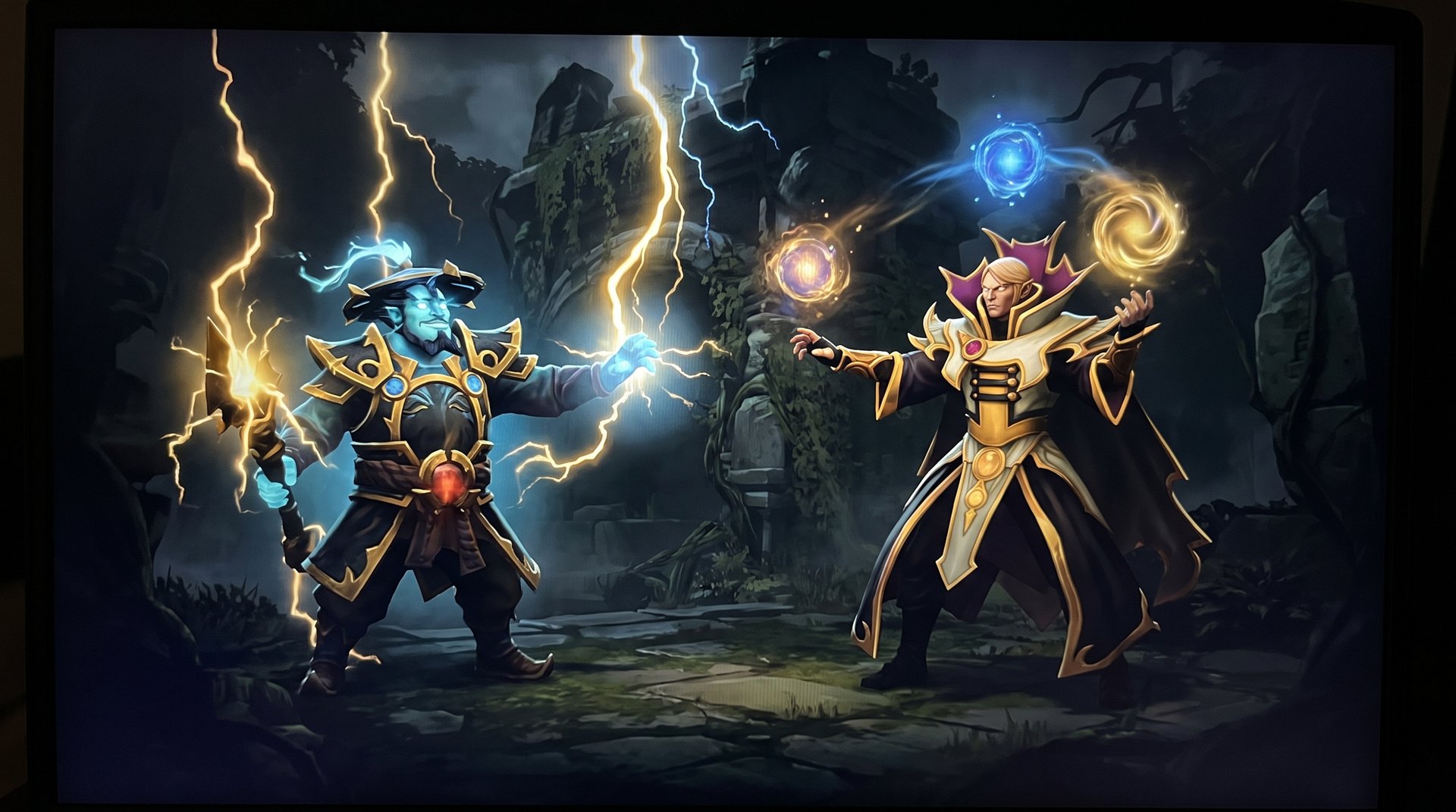
Invoker is the most played mid hero in high-MMR pubs and a fixture in professional Dota 2. He has access to ten unique spells through a combination of three orbs — Quas (red), Wex (green), and Exort (yellow) — which means he can match the utility requirements of almost any draft. Against physical lineups he runs a Sunstrike and Forge Spirit setup to poke safely from distance. Against mobile heroes he builds Wex-heavy for EMP and Tornado to drain mana and set up kills.
What makes Invoker particularly valuable in 2026 is his Aghanim’s Shard upgrade, which gives Deafening Blast a much lower cooldown. Paired with a Octarine Core to reduce spell cooldowns further, an experienced Invoker player is essentially playing a different hero from the one your opponent drafted against.
Why he works: His base intelligence is among the highest in the game and every additional INT point tightens his spell rotations. He punishes drafts that lack magic resistance and uses Cataclysm to impact teamfights from beyond engagement range.
Best against: Low-mobility lineups, heroes with large mana pools (Sunstrike damage scales), passive defenses like Bristleback that cannot dodge Deafening Blast.
Skill requirement: High. Invoker demands 1,000+ hours of practice before the spell combinations become instinctive. At Herald and Guardian he often feeds more than he contributes. At Archon and above, practiced players use him to devastating effect.
2. Storm Spirit — The Gap-Closing Assassin
Storm Spirit is one of the most fun and most punishing INT heroes in Dota 2. His ultimate, Ball Lightning, converts mana directly into mobility, letting him close gaps, dodge skill shots, and reposition during teamfights at a speed that confuses most opponents. A Storm Spirit who reaches his Bloodstone and Kaya timing is almost impossible to kill without hard disables because his mana bar is essentially a second health bar.
Storm is effective at all skill levels but genuinely peaks at Archon and Legend where opponents lack the coordination to focus him down with instant disables. At high MMR he is countered by silence items and coordinated stuns. At lower MMR those coordinated responses rarely exist, making him a strong ladder hero for players who can manage mana consumption.
Why he works: Static Remnant provides zone control and combo setup. Overload gives him auto-attack burst between spells. The mana-to-mobility conversion on Ball Lightning means buying intelligence items is both offensive and defensive investment.
Best against: Melee heroes without reliable disables, scattered teamfight lineups that cannot focus him down.
Skill requirement: Medium-high. The orb movement direction, Remnant placement, and knowing when to cut the Ball Lightning early takes time to learn but is far more accessible than Invoker.
3. Puck — The Slippery Controller
Puck has been a mid lane staple for years because her combination of mobility and crowd control is nearly unmatched at the 10-20 minute mark. Phase Shift lets her dodge any projectile or debuff with perfect timing, which at lower MMRs essentially makes her unkillable in the hands of a player who understands the mechanic. Dream Coil in teamfights keeps multiple heroes in place while her team follows up, and Illusory Orb provides instant blink-range gap-close or escape at no mana cost relative to a Flash Blink Dagger.
The 2026 Puck build typically runs Blink Dagger into Kaya and Sange for the status resistance, then Aether Lens to increase Dream Coil range. Orchid Malevolence remains a viable choice against single-target mana-dependent opponents who cannot afford silence.
Why she works: Phase Shift rewards mechanical skill investment. Ethereal Jaunt and Illusory Orb together give Puck three repositioning options in a single fight, making her nearly impossible to lock down without pre-placed disables. For detailed builds and counters, see the full Puck guide.
Best against: Lineups heavy on slow channeled abilities, heroes reliant on single big ultimates.
Skill requirement: Medium. Phase Shift timing is the main mechanical hurdle. Everything else is positioning and Dream Coil placement.
4. Outworld Destroyer — The Mana Drain Specialist
Outworld Destroyer is the mid hero who punishes intelligence-heavy enemy lineups hardest. Arcane Orb deals bonus pure damage scaled to OD’s own INT, which in the mid game — when OD has an Aghanim’s Scepter and several INT items — can delete supports in a single orb strike. Sanity’s Eclipse at level 6 steals INT from every enemy hero in the area, temporarily turning the enemy team’s casting capability against them and dealing burst damage proportional to the mana difference between OD and each target.
OD is especially punishing against lineups that stack INT heroes (Crystal Maiden, Ancient Apparition, Shadow Shaman) because he steals more INT from each source. He struggles against physical damage that bypasses his Astral Imprisonment window and heroes that do not rely on mana at all.
Why he works: Infinite pure damage scaling off INT means that farming INT items is both an offensive and survivability investment. Astral Imprisonment removes a hero from the fight for up to 4 seconds — used offensively it isolates a carry, used defensively it saves a teammate.
Best against: INT-heavy enemy drafts, teams without gap-close that cannot reach OD through range advantage.
Skill requirement: Medium. His kit is straightforward but timing Astral Imprisonment correctly — saving versus setting up kills — requires game sense more than mechanical skill.
5. Tinker — The Map-Presence Machine
Tinker is the INT mid hero who most dramatically changes how the entire map plays out once he reaches his Boots of Travel timing. March of the Machines combined with Boots of Travel buybacks lets Tinker clear waves across the entire map, denying enemy farm while building his own item lead. In 2026 the standard Tinker build runs Scythe of Vyse, Dagon, and Aghanim’s Shard, using his rearm to reset the cooldowns of every item he carries.
Tinker requires a team that can play around his absence from teamfights during his farming phases. He excels in lineups with other strong teamfight heroes who do not need Tinker in every engagement. He is weaker in lineups that need their mid to join fights at the 15-minute mark.
Why he works: Rearm is one of the only abilities in Dota 2 that resets all item cooldowns, creating a compounding tempo advantage that accelerates item acquisition faster than any other mid hero.
Best against: Slow, farm-dependent lineups that cannot apply early pressure to deny his farming window.
Skill requirement: High. Managing Tinker’s pathing, denying wave timings, knowing when to join fights versus continuing to farm — these require significant game sense to execute correctly.
Best INT Heroes for Support
Support INT heroes are the glue of a Dota 2 team. They provide disables, healing, or vision control that keeps carries alive and teamfights winnable. The best support INT heroes in 2026 are those who can operate on limited farm because supports rarely get priority on resources. Here are the five strongest picks for position 4 and position 5.
1. Lion — The Kill Setup King
Lion has been one of the top INT supports in Dota 2 since the game launched and in 2026 he remains a pub-stomp force at every rank below Divine. Earth Spike provides a 1.12-second stun with a narrow targeting requirement — just point it in a line. Hex turns any hero into a disabled chicken for 3.5 seconds at max level. Mana Drain removes enemy mana across the laning stage. Finger of Death deals up to 900+ pure damage in a single click at max level.
Lion is the support you pick when you want to guarantee kill contributions. His two hard disables chain for nearly 5 seconds of total lockdown, longer than any buyback animation, which means a caught enemy hero is almost always dead regardless of whether teammates follow up.
Why he works: His spell combo requires no items beyond Aether Lens to function. He can contribute to kills at level 2, which is earlier than most supports. Finger of Death scales into late game with Aghanim’s Scepter turning it into an AoE nuke.
Best against: Lineups without Blink Daggers or Linken’s Sphere, heroes who rely on channeled abilities.
Skill requirement: Low to medium. Earth Spike is a linear skill shot that requires aiming. Everything else is point-and-click. New players can contribute with Lion within a few games.
2. Shadow Shaman — The Tower-Destroying Support
Shadow Shaman fills a unique role among INT supports: he is one of the few heroes who can end a game by himself through Serpent Wards. His lane phase is defined by Shackles — a 3.6-second channeled disable at max level that forces an opponent to stand still while an ally attacks them. Ether Shock provides cheap AoE damage for trading in lane. Mass Serpent Wards, placed in or near an enemy high ground, shreds Barracks in seconds while enemies scramble to clear them.
Shadow Shaman is a stronger pick in the current meta because of how much tower damage he enables through Blink Dagger into Serpent Wards combinations. Teams that learn to coordinate his ult with a smoke gank on high ground end games 15-20 minutes faster than teams who ignore this timing.
Why he works: His disable duration at max level is among the longest in the game. Serpent Wards are permanent structures that provide ongoing damage and zone control. He is one of the most efficient towers-per-gold heroes in Dota 2.
Best against: Heroes with no interrupt abilities, lineups lacking AoE to clear wards quickly.
Skill requirement: Low to medium. Shackles requires staying close to the target during channeling, making positioning important. Ward placement timing is the main skill expression point.
3. Crystal Maiden — The Mana Fountain
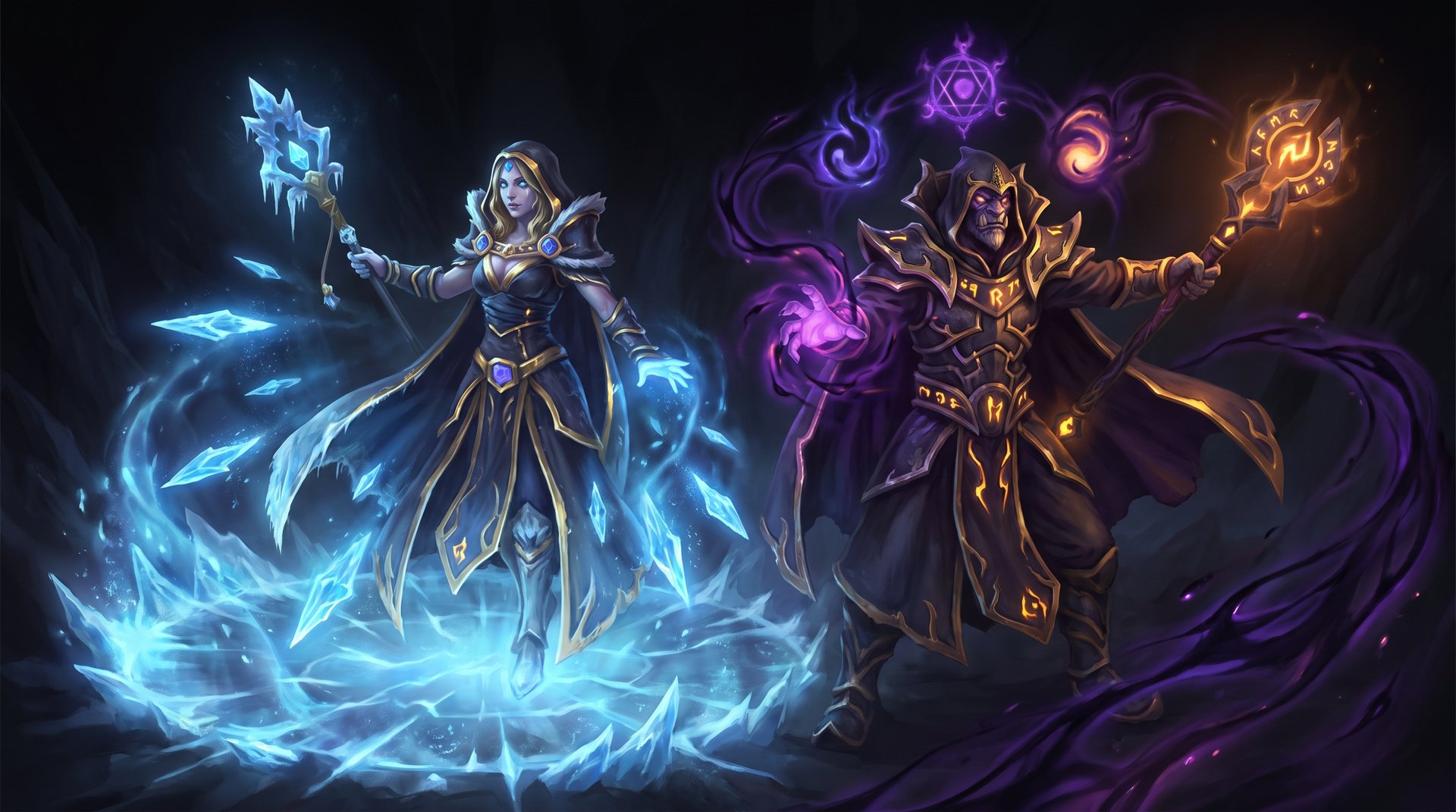
Crystal Maiden is the gold-standard beginner INT support and remains effective at all MMR brackets in 2026. Arcane Aura provides free mana regeneration to every allied hero on the map, which single-handedly enables farming patterns and aggressive laning from heroes who would otherwise run out of mana constantly. Frostbite is a channeled disable that deals damage and roots the target for up to 3 seconds at max level. Crystal Nova slows an AoE area and reduces enemy attack speed. Freezing Field, her ultimate, deals massive AoE damage per second in a radius around Crystal Maiden for 10 full seconds.
The main challenge with Crystal Maiden is her extremely low movement speed and zero innate escape options. She requires defensive positioning and a Glimmer Cape or Force Staff to survive being targeted. With those items she becomes a teamfight presence that most teams cannot simply ignore.
Why she works: Arcane Aura has a global range, meaning the map-wide mana impact exists regardless of her in-game position. Freezing Field in a tight teamfight — even for 3-4 seconds before she is killed — deals enough damage to turn a losing fight into a won teamfight.
Best against: Heroes reliant on mana (Arcane Aura indirectly denies the mana advantage of burning them down), slow-moving teams who cannot exit the Freezing Field radius. For ability breakdown and full builds, see the Crystal Maiden guide.
Skill requirement: Low. The skill floor is among the lowest of all INT supports. Players new to support can pick Crystal Maiden and contribute immediately through the passive Arcane Aura alone.
4. Ancient Apparition — The Healing Shutdown
Ancient Apparition is the INT support specifically designed to counter healing-heavy and physical-resistance lineups. Ice Blast marks a target with Cold Feet and applies Chilling Touch to nearby allies. The signature ability, Ice Blast — activated globally — applies a debuff that prevents all healing and regeneration while dealing ongoing damage. Any hero at or below 10% health when hit by the debuff instantly shatters. This ability alone shuts down Warlock’s Chaotic Offering, Dazzle’s Shallow Grave, Lich’s Chain Frost healing reduction synergies, and any Pipe of Insight or Hood regeneration.
Ancient Apparition’s value is entirely matchup-dependent. Against a team with no healing, he is the weakest INT support. Against a Huskar, Axe, or heavy-heal lineup, he is the highest-priority pick.
Why he works: Ice Blast has a global cast range, meaning AA can stand safely behind the entire team while applying the debuff. Cold Feet provides a delayed stun that forces enemies to move or die. Chilling Touch converts AA into a credible physical damage dealer in the early game.
Best against: Lineups with persistent healing (Dazzle, Omniknight, Warlock), tank heroes who rely on regeneration to survive extended fights.
Skill requirement: Medium. Cold Feet timing — keeping the target inside the radius — takes practice. Ice Blast global aim requires understanding of enemy positioning and flight time.
5. Jakiro — The Slow and Burn Specialist
Jakiro is an underrated INT support who punishes teams with multiple close-together heroes, a pattern that appears in almost every pub at every rank. Dual Breath creates a large cone of fire and ice that slows both movement and attack speed. Ice Path stuns any hero in a line for up to 2.7 seconds at max level. Liquid Fire burns the attack speed of buildings and heroes. Macropyre, his ultimate, drops a burning river on the ground that deals continuous damage in a massive line area, punishing Rosh attempts and high-ground sieges.
Jakiro’s main selling point is that his abilities require almost no setup. Ice Path is a linear stun but it has a wide enough AoE that aiming is forgiving. His lane presence through Dual Breath is strong at level 1, making him a strong lane-bully with most carry partners.
Why he works: His ultimate Macropyre is one of the most effective area-denial tools in Dota 2, lasting 14 seconds and covering a massive stretch of the map. Teams that walk into it without Blink Daggers or mobility items take enormous damage.
Best against: Melee lineups who have to enter his spell range, teams attempting long Rosh fights, grouped push lineups.
Skill requirement: Low. Almost every Jakiro ability is either point-and-click or easy to land in grouped teamfights. New support players can contribute immediately.
Best INT Heroes by Skill Level
Your current MMR bracket matters when choosing which INT hero to invest in. A hero with a high skill ceiling may cost you games in Herald while returning strong results at Archon. Here are the top picks broken down by skill band.
Best INT Heroes for Beginners (Herald to Guardian)
At the lowest MMR brackets, game sense and mechanical execution are both developing. Pick INT heroes who contribute by simply being present and pressing their most impactful ability.
- Crystal Maiden (Pos 5): Arcane Aura helps your team regardless of how well you execute. Freezing Field contributes to teamfights even at low accuracy. She teaches support positioning without demanding fast execution.
- Lion (Pos 4/5): Two point-and-click disables and a massive nuke. Your job is to chain Spike into Hex into Finger. Herald opponents cannot respond to this chain because they are still learning to use the hotkeys. You will get kills by accident with Lion at this bracket.
- Jakiro (Pos 4/5): Wide hitboxes on all abilities mean every ability lands even with imprecise aim. Dual Breath is free slow on the entire lane. He is hard to feed because his spell range is long.
Best INT Heroes for Intermediate Players (Archon to Legend)
At Archon and Legend, basic spell combos are expected and games are often decided by who outplays in the 20-30 minute window. Pick INT heroes who can create and close out kills consistently.
- Storm Spirit (Mid): You understand mana management well enough to run Ball Lightning rotations without going OOM. Opponents at this bracket cannot punish your aggressive repositioning reliably.
- Shadow Shaman (Pos 4/5): Shackles into Serpent Wards during a smoke gank ends games at this bracket faster than any other support ability. Teams here do not clear wards efficiently, giving you free objective damage.
- Outworld Destroyer (Mid): Opponents at Archon-Legend are aware of his threat but often fail to draft around him correctly. A fast Aghanim’s Scepter turns his INT-scaling into a pure damage output most teams cannot itemize against on the fly.
Best INT Heroes for Advanced Players (Ancient and Above)
At Ancient MMR and above, opponents read drafts correctly and play around known power spikes. The INT heroes that survive at this level have either mechanically demanding ceilings or strong counter-draft utility.
- Invoker (Mid): His ten-spell toolkit lets him match any meta shift. High-MMR players leverage the Quas-Exort and Quas-Wex splits to solve different enemy lineups from the same hero slot.
- Puck (Mid): Phase Shift rewards mechanical precision with safety. At Ancient+ you begin to understand the exact windows where Phase Shift completely negates ultimates and skill shots.
- Ancient Apparition (Pos 4/5): At high MMR the meta value of Ice Blast rises because enemies stack healing-heavy itemization more reliably. Advanced players understand when the pick is a 100-point swing in draft equity.
How to Play INT Heroes Effectively
Understanding the hero is only part of the equation. How you itemize and position INT heroes determines whether your stats look great and you still lose, or whether you are converting every spell cast into net MMR gains.
Itemization Priorities for INT Mid Heroes
The core rule: buy INT items that also provide spell amplification. Purchasing raw intelligence on its own is efficient only if the hero scales off INT (Invoker, OD, Silencer). For most INT mids, the priority is:
- Null Talisman x2 or Power Treads: Cheap early INT and stats. Treads can be switched to INT for regen, AGI for faster attack, or STR for survivability, making them versatile for mana-hungry mids.
- Kaya or Kaya and Sange: Spell amplification and mana loss reduction on a single mid-game item that combines with Octarine Core or Bloodstone. Almost every INT mid wants one of these two items.
- Linken’s Sphere or Eul’s Scepter: Defensive options. Linken’s blocks one targeted disable per cooldown. Eul’s provides setup on a 23-second cooldown, strong movement speed, and bonus INT.
- Bloodstone or Octarine Core: Mid-to-late-game spell lifesteal and cooldown reduction, respectively. Bloodstone suits aggressive mids who take fights. Octarine suits teamfight mids who need consistent spell availability.
Itemization Priorities for INT Support Heroes
Supports buy fewer items because they spend gold on consumables, wards, and team items. The priority for INT supports is:
- Arcane Boots: Restores mana to all nearby allies and provides INT. The default starting item for almost every INT support before a later upgrade into Aether Lens or Guardian Greaves.
- Glimmer Cape or Force Staff: Survival items. Glimmer saves you from being instantly killed when targeted; Force Staff creates physical space between you and an aggressor. Buy one in the first 15 minutes or you will feed.
- Aether Lens: Increases cast range on all abilities and items by 200 range, dramatically improving safety and spell contribution. A top-tier item on Lion, Jakiro, Ancient Apparition, and every support with long-range abilities.
- Aghanim’s Scepter (situational): Transforms certain INT supports completely. AA’s Aghs extends Ice Blast range and adds Blizzard. Lion’s Aghs turns Finger of Death into a global AoE nuke. Worth pursuing when ahead.
Positioning as an INT Hero
The most common mistake on INT heroes is standing in melee range during teamfights. All the damage and disable output in the world means nothing if you are dead in the opening three seconds of every fight. The baseline rules are:
- Stay at maximum cast range. Extend that range with Aether Lens. Position behind your carry or offlaner, never in front.
- Use BKB-piercing abilities into the fight, then retreat. Abilities that pierce Black King Bar — Lion’s Earth Spike, Shadow Shaman’s Ether Shock — are safe to use even into BKB. Save Hex and Finger for after the carry uses their BKB.
- Smoke ganks to rotate efficiently. INT supports with high-impact disables — Lion, Shadow Shaman — are better spent rotating with Smoke of Deceit to create kills than warding the river and waiting for fights to come to them. Use our MMR boost guide for the rotation and timing theory behind when this is effective.
INT Hero Summary Table
The table below gives a quick-reference overview of the top INT heroes covered in this guide. Roles are the primary positions, difficulty reflects the skill ceiling relative to other INT heroes, and impact indicates how much a skilled player moves the game outcome from that slot.
| Hero | Role | Difficulty | Peak Impact | Best Bracket |
|---|---|---|---|---|
| Invoker | Mid | Very High | Overwhelming | Archon+ |
| Storm Spirit | Mid | High | Very High | All brackets |
| Puck | Mid | Medium | Very High | Archon+ |
| Outworld Destroyer | Mid | Medium | High | Archon-Immortal |
| Tinker | Mid | Very High | Game-warping | Legend+ |
| Lion | Pos 4/5 | Low | Very High | All brackets |
| Shadow Shaman | Pos 4/5 | Low | High | All brackets |
| Crystal Maiden | Pos 5 | Very Low | High | Herald-Legend |
| Ancient Apparition | Pos 4/5 | Medium | Match-dependent | Archon+ |
| Jakiro | Pos 4/5 | Low | Medium | All brackets |
If you want to climb faster with INT heroes, our best Dota 2 boosting services breakdown covers every option for accelerating your rank. Alternatively, a coaching session with an Immortal-ranked player directly addresses the mechanical gaps that keep INT mids from reaching their potential — see the Dota 2 coaching service for session options. If you prefer to climb independently, the is Dota 2 boosting safe guide addresses the most common questions about MMR services so you can make an informed decision.
Ready to Climb Faster With INT Heroes?
Our Immortal-ranked coaches have climbed on every INT hero in this list. A single session identifies the exact positioning and spell-timing gaps holding you back at your current bracket. TeamSmurf is the Dota 2-only service — no generic MOBA advice, just targeted Dota 2 expertise.



