


Dota 2 Experience Table 2026: XP per Level, Level 30 and How Long It Takes

To reach level 30 in Dota 2, a hero needs 56,500 total XP — the sum of 29 level-up thresholds that start at 230 XP (level 1 to 2) and end at 5,500 XP (level 29 to 30). Level 10 requires 5,500 cumulative XP, level 20 needs 21,000 XP, and level 25 needs 34,000 XP. Because XP requirements scale sharply from level 26 onwards (3,500 to 5,500 XP per level), most ranked games end before any hero reaches level 30. The complete table below shows every number from level 1 to 30, the XP gap per level, and approximate game-time milestones based on typical carry performance.
Contents
Full Dota 2 XP Table: Level 1 to 30 (Patch 7.41f)
The table below is sourced from the Dota 2 wiki (Patch 7.41f, September 2026). There is no single mathematical formula for these thresholds — Valve sets each value individually to create specific in-game timing windows. XP requirements increase gradually through levels 1 to 25, then jump steeply from level 26 to 30. The “XP to next level” column shows how much XP you need to advance from that level to the next one.
Approximate game-time values assume a solo carry in a standard ranked match earning roughly 350 to 550 XP per minute during the early and mid game. Support heroes typically reach each level 2 to 4 minutes later. Heroes in a losing lane or sharing XP with a second hero may lag 4 to 8 minutes behind these estimates.
| Level | Cumulative XP Required | XP to Next Level | Approx. Game Time (Carry) | Notes |
|---|---|---|---|---|
| 1 | 0 | 230 | 0:00 | Game start |
| 2 | 230 | 300 | ~1:00 | |
| 3 | 530 | 400 | ~2:00 | |
| 4 | 930 | 520 | ~3:30 | |
| 5 | 1,450 | 650 | ~5:30 | |
| 6 | 2,100 | 700 | ~7:30 | Ultimate unlocked (most heroes) |
| 7 | 2,800 | 800 | ~9:00 | |
| 8 | 3,600 | 900 | ~10:30 | |
| 9 | 4,500 | 1,000 | ~12:00 | |
| 10 | 5,500 | 1,100 | ~13:30 | Talent Tree — tier 1 pick |
| 11 | 6,600 | 1,200 | ~15:00 | |
| 12 | 7,800 | 1,300 | ~17:00 | |
| 13 | 9,100 | 1,400 | ~19:00 | |
| 14 | 10,500 | 1,500 | ~21:00 | |
| 15 | 12,000 | 1,600 | ~23:00 | Talent Tree — tier 2 pick |
| 16 | 13,600 | 1,700 | ~25:30 | |
| 17 | 15,300 | 1,800 | ~28:00 | |
| 18 | 17,100 | 1,900 | ~30:30 | |
| 19 | 19,000 | 2,000 | ~33:00 | |
| 20 | 21,000 | 2,200 | ~36:00 | Talent Tree — tier 3 pick |
| 21 | 23,200 | 2,400 | ~40:00 | |
| 22 | 25,600 | 2,600 | ~44:00 | |
| 23 | 28,200 | 2,800 | ~48:00 | |
| 24 | 31,000 | 3,000 | ~53:00 | |
| 25 | 34,000 | 3,500 | ~57:00 | Talent Tree — tier 4 pick (final) |
| 26 | 37,500 | 4,000 | ~62:00 | Rare in most ranked games |
| 27 | 41,500 | 4,500 | ~68:00 | |
| 28 | 46,000 | 5,000 | ~74:00 | |
| 29 | 51,000 | 5,500 | ~81:00 | |
| 30 | 56,500 | Max | ~88:00+ | Max level — all abilities and talents maxed |
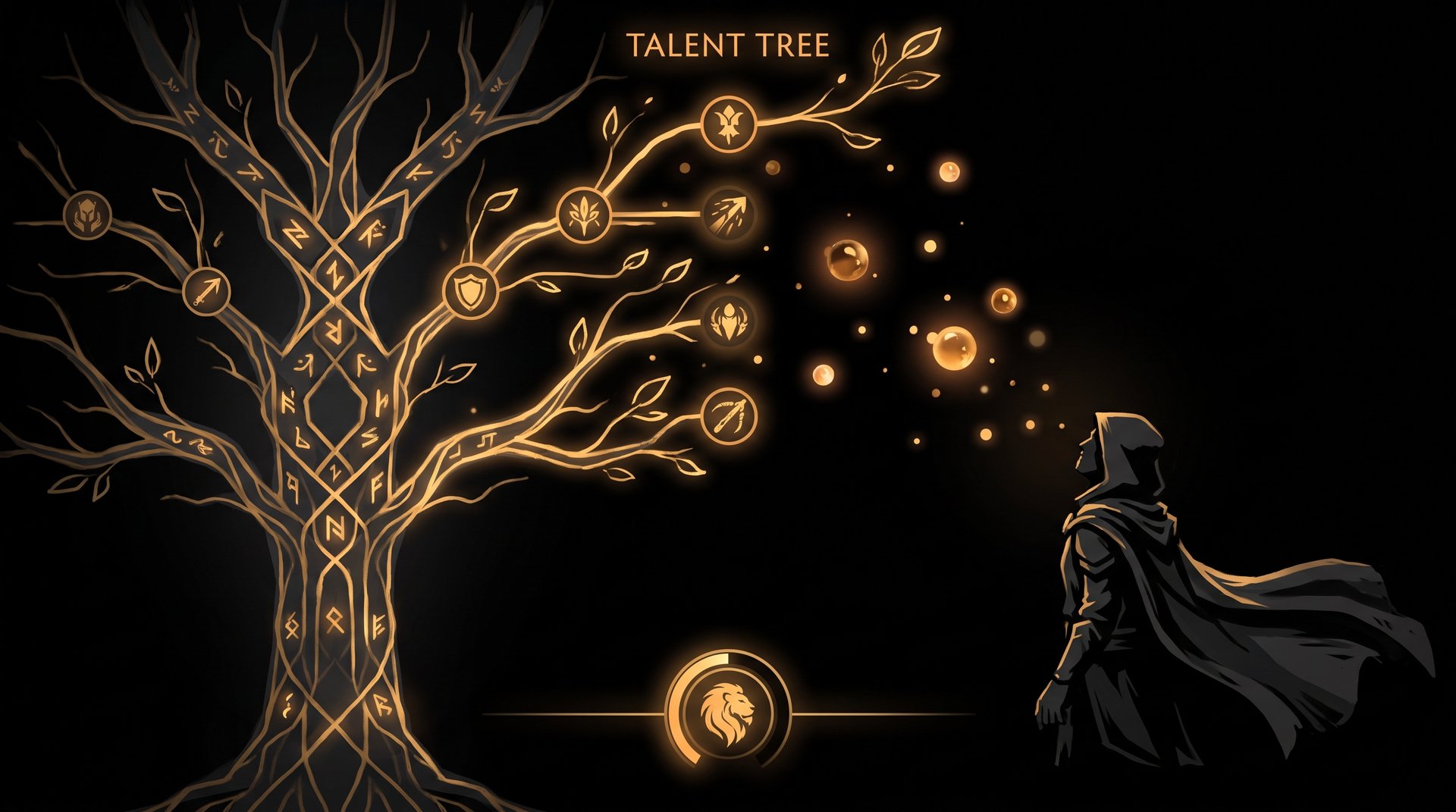
How Long Does It Take to Reach Level 30?
Reaching level 30 requires 56,500 total XP and takes approximately 80 to 100+ minutes in an actual match — a timeframe most Dota 2 games never reach. Community match data shows the average ranked game ends between 35 and 45 minutes, which typically corresponds to levels 19 to 22 for the most-farmed hero on the winning team.
Early Game: Levels 1 to 11 (0 to 15 minutes)
The first 10 levels come quickly. XP gaps rise from 230 to 1,100 XP per step, but dense lane creep XP during this window keeps the pace fast. A carry in a winning safe lane hits level 6 around the 7 to 8 minute mark and level 10 — the first talent pick — around 13 to 14 minutes. Supports in a trilane or roaming role often trail 3 to 5 levels at this stage, and heroes sharing a lane may lag an additional 2 to 3 levels behind due to split XP.
The most impactful decision in this phase is lane assignment: a carry in a 1v1 lane receives 100% of all nearby creep deaths, while a stacked lane cuts that in half. This is why the meta consistently favors sending the core carry to a solo lane — the XP efficiency alone pays dividends at every talent tier.
Mid Game: Levels 12 to 20 (16 to 36 minutes)
This is where most ranked games are decided. XP gaps climb from 1,200 to 2,000 XP per level, and heroes begin to feel the steeper requirements. Level 15 (second talent, around 23 minutes) and level 20 (third talent, around 36 minutes) are the critical power-spike checkpoints that teams draft and position around.
A hero who hits level 20 while the enemy team is still level 16 to 17 has a substantial advantage in any teamfight. To understand how gold and XP interact during this phase and how the economy affects timing decisions, see our Dota 2 economy guide.
Late Game: Levels 21 to 25 (37 to 57 minutes)
Levels 21 to 25 demand 2,200 to 3,000 XP each. The gap from level 20 to level 25 is 13,000 XP — more than the total XP needed to reach level 20 from level 1. The fourth and final talent at level 25 is typically the most powerful upgrade in any hero’s tree. Games that reach the 50 to 60 minute mark with both teams approaching level 25 are often decided by a single decisive fight where one team completes their level-25 talent first.
Ultra-Late Game: Levels 26 to 30 (60 to 90+ minutes)
These are the rarest levels in ranked play. The XP wall from level 25 to level 30 is 22,500 XP, and each individual level requires 3,500 to 5,500 XP. In a 90-minute game — representing less than 1% of typical ranked matches — a well-farmed carry might reach level 29. Level 30 is genuinely rare outside of very long Immortal bracket games. These levels provide only raw stat scaling — no additional talents are available past level 25.
Want to push your levels and MMR faster in the bracket where these late-game windows open up? See our MMR boosting guide for a full breakdown of options.
XP Scaling Explained: Why Later Levels Take Longer
Dota 2 uses a hand-set XP table with no underlying formula. The Dota 2 wiki confirms: “There is no specific formula for this requirement, but rather just set values for each individual level.” Valve deliberately chose each threshold to produce specific in-game timing windows tied to the talent tree and ability upgrade cadence.
Phase 1: Levels 2 to 10
XP gaps increase by roughly 100 to 130 XP per level (from 230 to 1,000). This tight early progression means the first 10 levels arrive predictably within the first 14 minutes for most heroes in healthy lanes. Valve calibrated these values so that level 6 — the ultimate — does not arrive before 5 to 6 minutes, which would be oppressive in a standard lane. The first talent at level 10 typically fires around the 13 to 14 minute mark, which aligns with the first major objective fights (Outpost, Roshan, mid tower).
Phase 2: Levels 11 to 25
Gaps continue rising by roughly 100 XP per level up through level 20, then increase by 200 XP increments from level 21 to 25. By level 25, each level requires 3,000 XP. This phase deliberately spaces the four talent tiers approximately 10 to 14 minutes apart in a normal-paced game, ensuring each talent tier is a meaningful event that occurs in a distinct game phase. A carry who gets a kill advantage and rushes to level 15 or 20 before the standard timing is rewarded with an early power spike that can snowball the match.
Phase 3: Levels 26 to 30
Requirements jump to 3,500, 4,000, 4,500, 5,000, and 5,500 XP respectively. These steep walls serve a clear gameplay purpose: they prevent an already-dominant hero from reaching max level too quickly, giving trailing teams a survival window to find late-game buybacks and base defense solutions. Without this scaling, a fed carry in a 60-minute game would hit level 30 around minute 70 — with these walls, that hero realistically approaches level 30 only after 80 to 90 minutes of consistent play.
XP Sources and How to Speed Up Leveling
XP comes from multiple in-game sources. Controlling each one is one of the cleanest ways to build a level advantage over the course of a game.
Lane Creep XP
Lane creeps are the primary XP source in the early and mid game. When a creep dies, all allied heroes within 1,300 units receive a share of the XP — split evenly among all heroes present. Melee creeps grant 62 XP, ranged creeps grant 76 XP, and siege creeps (every 7th wave) grant 100 XP. A solo carry in a 1v1 lane receives 100% of that value; a hero sharing the lane with a second core splits it 50/50. This split mechanic is why solo lane assignments are so heavily prioritized in the current meta.
Neutral Creep XP
Neutral creep camps provide XP when cleared. Small camps grant approximately 60 to 100 XP, medium camps 120 to 180 XP, and large camps and ancients 200 to 400 XP per camp clear. Stacking a camp (pulling additional creeps into it before the minute mark) creates an oversized camp that yields proportionally more XP and gold when cleared — one of the highest-value support plays available in the early game.
Hero Kills
A hero kill grants XP to all allied heroes within 1,300 units, based on the dead hero’s level. A level-5 hero kill grants roughly 280 XP; a level-20 hero can grant over 800 XP to nearby allies. In the late game, killing the enemy carry can essentially hand a nearby core hero a half-level of XP from a single fight. This scales the value of positioning your heroes near kills in teamfights.
Wisdom Runes — The Free XP Most Teams Leave Behind
Wisdom Runes spawn on the river at 7-minute intervals. At the 7-minute mark the bonus is modest; at 21 or 28 minutes the rune can represent 700 to 1,400 XP — nearly a full level in the mid game. Two or three collected Wisdom Runes over the course of a game can mean a 1 to 1.5 level advantage by the 25 to 30 minute mark while costing you nothing but a short detour. For a full breakdown of how to contest and deny Wisdom Runes, see our guide on wisdom rune control.
Outpost Captures
Capturing an Outpost rewards the capturing team with a flat XP bonus that scales with the game clock. Early outpost captures grant modest bonuses; a mid-game outpost at 20 minutes can reward 400 to 800 XP to nearby heroes — a meaningful swing for teams that contest them rather than surrendering free objectives. In many brackets, Outpost control is almost entirely ignored below Archon, creating a significant free XP leak.
XP Leveling Tips by Role
- Carry (Pos 1): Stay in lane, hit every last hit, and move to jungle between waves once basic items are secured. Avoid fights you are not required to attend until your level-10 talent is active.
- Mid (Pos 2): The mid lane is a 1v1 XP goldmine. Target level 6 by 7 to 8 minutes. Wisdom Rune control is especially important from mid — the river is directly adjacent to your lane. Pick up every rune that is safely reachable.
- Offlane (Pos 3): Survival equals XP. A 0-3 lane where you absorb creep proximity XP and stay alive beats dying repeatedly and falling 4 levels behind. Rotate to easy neutral camps once the laning phase opens up.
- Supports (Pos 4/5): Stack large neutral camps and pull them to deny enemy lane XP while providing your carry a fat XP and gold dump. Pick up all safely reachable Wisdom Runes in the early minutes — their XP belongs to you far more than it belongs to the enemy carry who is already getting full lane XP.
Need Immortal-level coaching on XP optimization for your specific hero pool? Our Dota 2 coaching service pairs you with coaches who break down your replays and identify exactly where you are losing levels each game.
Key Level Milestones and Why They Matter
Not all levels are equal. Certain thresholds define the tempo and power curve of a match more than others. Here is what each key milestone means in practice.
Level 6: The Ultimate Unlock
Most Dota 2 heroes unlock their ultimate ability at level 6. This is the first major power spike and signals the beginning of active ganking and objective play. Reaching level 6 first in your lane creates a window where you can trade or dive; the enemy cannot match your full ability kit. It requires 2,100 cumulative XP — roughly 7 to 8 minutes in a standard lane.
Level 10: First Talent Pick
At 5,500 cumulative XP, every hero chooses the first of four talent upgrades. Talents are uniquely defined per hero and substantially alter stats or ability behavior. Hitting level 10 before the enemy in a fight can mean the difference between winning and losing the first Roshan or T2 tower siege. The 13 to 14 minute window is when teams should be paying attention to where both sides are on the XP table.
Level 15 and Level 20: The Mid-Game Pivots
Level 15 (12,000 total XP, ~23 minutes) and level 20 (21,000 total XP, ~36 minutes) are the two talent tiers most ranked games revolve around. A hero with an active level-15 talent fighting an enemy at level 13 has a noticeable stat advantage. The level-20 talent is often the most dramatic: global silence, Spell Lifesteal, maximum ability range, or a reset mechanic. Drafts and team compositions are built around timing these spikes to land in favorable fight windows.
Level 25: The Full Talent Tree
Level 25 (34,000 total XP) completes the talent tree. The level-25 talent is typically the strongest on every hero — often transformative: an additional ability, a massive stat swing, or a cooldown reset. Games that survive to the 50 to 60 minute mark with teams approaching level 25 are often decided by the single fight where one team’s carry completes their tree first. Understanding this timing is a core piece of high-level game sense.
How XP Works in a Team Setting
XP is not purely individual. Understanding team XP dynamics helps you make better decisions about when to group up, when to split farm, and how fights affect the level table.
Proximity XP Split
When a creep or hero dies, all allied heroes within 1,300 units receive XP — split evenly among all present. One hero nearby: 100%. Two heroes: 50% each. Three heroes: 33% each. There is no bonus for the killing blow. This is why stacking two cores in the same lane in the early game is almost always a mistake: you halve both heroes’ XP and neither reaches their talent tiers on schedule.
Hero Kill XP Distribution
Hero kills reward all allied heroes in range regardless of who deals the kill blow. The formula scales with the dead hero’s level. Three allied heroes within range of a level-20 kill each receive approximately 270 to 300 XP. There is no individual-kill bonus — the full XP value goes to the team, not just the killer. This incentivizes grouped teamfights in the late game where the XP from each kill benefits the entire team equally.
Comeback XP
Dota 2 applies a comeback multiplier that increases the XP value of a kill when the dead hero has a significant level advantage over the enemy. A level-25 hero killed by a level-20 opponent grants substantially more XP than a level-25 hero killing a level-25 opponent. This mechanic is intentional — it prevents completely snowballed games from becoming unwinnable and gives behind teams a path back through kills on fed heroes.
High-MMR players track the XP table mentally throughout a match. Knowing which enemy is about to hit a talent tier and rotating to force a fight before that spike lands is a skill sharpened by thousands of hours of replay review. The best Dota 2 services help you climb while you develop that awareness, and our guide on whether Dota 2 boosting is safe covers everything you should know before making that call.
Struggling to Convert Your Level Advantage Into Wins?
Our Immortal-rank coaches watch your replays and pinpoint exactly where you lose XP, miss talent timings, and fail to convert leads. Custom action plans built for your hero pool — no generic advice.


