

Best Global-Presence Heroes: Map-Wide Ultimates and Teleport Picks

The best global-presence heroes in Dota 2 are the ones that make every enemy player think twice before splitting up — because a hero with a map-wide ultimate or instant teleport can punish any isolated position in seconds. Whether you are playing Spectre and shadowing every teamfight across the map, firing a Zeus Thundergod’s Wrath from a safe fountain distance, or teleporting your entire team to a critical fight with Underlord, global presence is one of the highest-value tools available in ranked pubs.
This guide ranks and breaks down every major global-presence hero in the current patch (7.41f) — covering true global ultimates, team teleport abilities, and heroes whose rotation speed via Boots of Travel creates map-wide threat. If you want to know how cross-map kills actually work in pubs, which globals are overtuned right now, and how to build your MMR grind around them, read on.
Note: this guide focuses on global presence and cross-map threat. If you want heroes that apply map pressure by pushing lanes from a distance, check out our best split-push heroes guide — the goals are related but the hero kits and decision trees are completely different.
Table of Contents
What Is Global Presence in Dota 2?
Global presence means your hero can influence the game anywhere on the map without physically walking there. There are three distinct forms of it in patch 7.41f:
- True global ultimates — the hero’s ability affects every enemy (or every location) simultaneously, regardless of distance. Examples: Spectre’s Haunt, Zeus’s Thundergod’s Wrath, Silencer’s Global Silence.
- Global mobility — the hero (or the hero plus teammates) can teleport anywhere on the map instantly. Examples: IO’s Relocate, Underlord’s Dark Rift, Nature’s Prophet’s Teleportation.
- Global precision tools — targeted abilities that work from unlimited range but require vision or direction. Examples: Invoker’s Sun Strike, Tinker’s Boots of Travel rotations.
The common thread is map-wide threat. A team with a global-presence hero forces every opponent to always have buyback gold, always keep their inventory stocked for defense, and always play closer together than they would like — which reduces their efficiency at farming and splitting. Understanding this passive pressure is key to extracting value from these picks at every bracket.
Global presence differs from split push in a critical way: split-push heroes like Broodmother or Nature’s Prophet in push mode apply pressure BY BEING IN A LANE. Global-presence heroes apply pressure by being anywhere — or nowhere visible at all. A Spectre farming a camp on the radiant safe side is still threatening the dire ancients. That passive threat is uniquely hard to play against.
Tier 1: True Global Ultimates
These heroes have an ultimate that literally affects every enemy or every position on the map simultaneously. In 7.41f, four heroes sit in this category for ranked pubs.
Spectre — The Map-Wide Nightmare
Spectre remains one of the most psychologically oppressive carries in Dota 2, almost entirely because of Haunt. At level 6, every enemy hero on the map gets a spectral illusion standing next to them — and Spectre can Reality (instantly teleport to any illusion) mid-Haunt. This means the moment Haunt activates, every opponent must either group up or accept that Spectre might materialize on top of them within seconds.
In 7.41f, Spectre benefits from the continued strength of Radiance builds, which deal damage through Haunt illusions and synergize with Spectral Dagger’s path-applying mechanic. The hero peaks between the 30-40 minute mark when Haunt CD is low enough to chain into fights. What makes her exceptional for climbing MMR in pubs specifically is that enemies rarely coordinate properly against Haunt — they over-commit to their split positions and get picked off one by one.
Global rating: 10/10. Haunt is the gold standard for global ultimates. No other carry has a true teleport-to-anywhere ultimate that also creates five simultaneous illusions as a scouting tool.
For detailed itemization and laning, see the Spectre hero guide.
Zeus — The Global Kill Threat
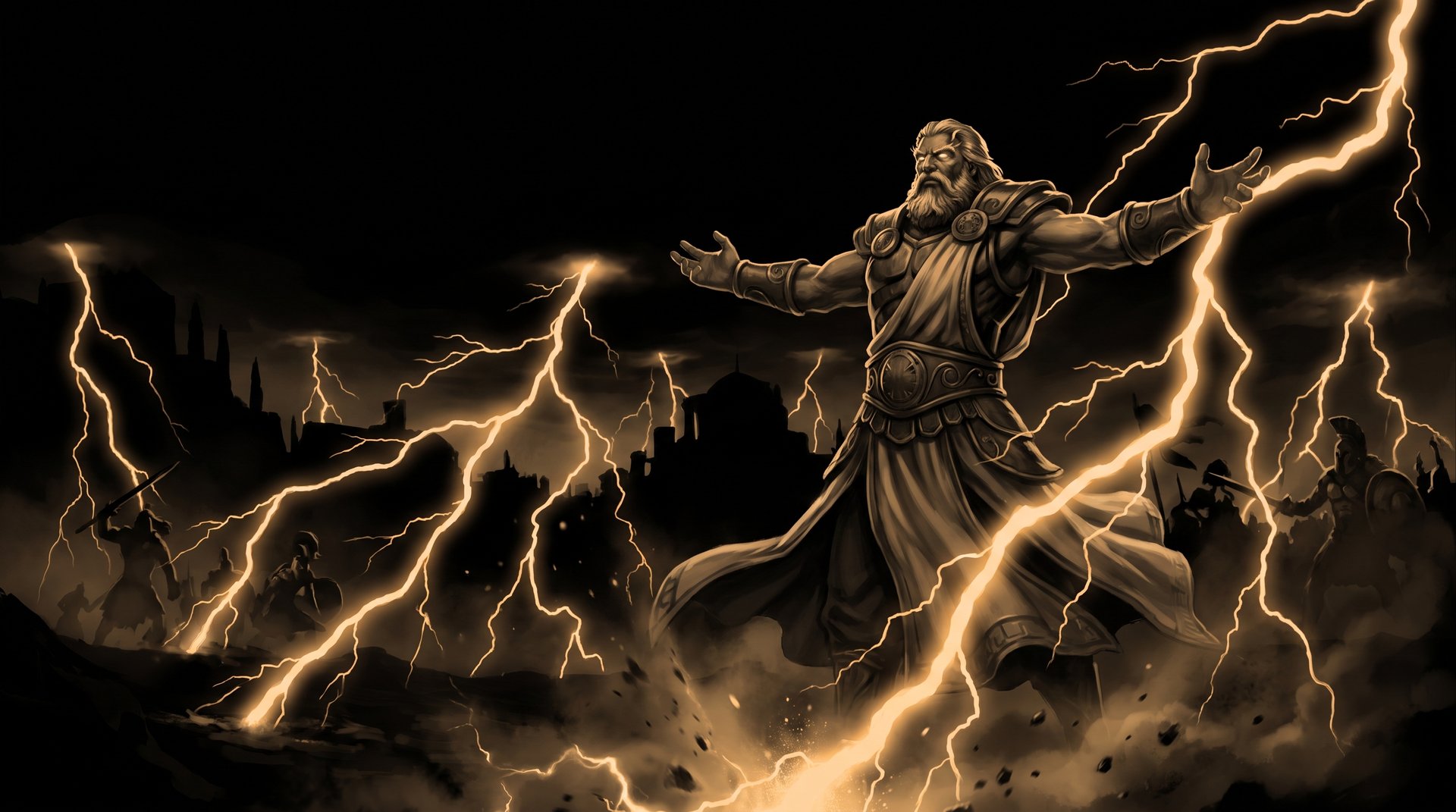
Thundergod’s Wrath hits every enemy hero on the map for roughly 340 damage at level 25 (with talents). But that raw number undersells the ability. What Thundergod’s Wrath actually does is reveal every enemy on the map for 5 seconds — which means it is simultaneously a global damage spell, a global detection tool, and a global scouting ability. In one press of R, you know exactly where all five enemies are.
In 7.41f, Zeus has grown into a mid or even pos-4 pick with his Shard, which now gives him a Zeus Storm passive that makes farming much faster. The global threat from Thundergod’s Wrath pairs extremely well with any teamfight setup hero — your team initiates, the fight breaks out, and Zeus fires globally for finishing blow damage on anyone trying to run. The hero does not need vision on the target to deal damage; Thundergod’s Wrath will find enemies under fog.
Global rating: 9/10. The reveal component is as valuable as the damage at high MMR. Zeus is the easiest global hero to play in terms of execution — just press R when enemies are low and wins happen.
Zeus’s build often includes Aghanim’s Scepter, which upgrades Thundergod’s Wrath to deal 50% extra damage to enemies that are affected by Heavenly Jump’s debuff. This creates a global combo potential that high-MMR players exploit with supports that have long-lasting lockdown.
Silencer — The Teamfight Disruptor from Anywhere
Global Silence is the most fight-warping of all the global ultimates because it does not deal damage — it prevents the entire enemy team from casting spells for up to 5.5 seconds (level 25 talent). No Blink Daggers activating. No buybacks. No Euls Scepter saves. No Disruption. Every initiation ability, escape tool, and defensive item is offline for over five seconds.
In 7.41f, Silencer is played primarily as a pos-4 or pos-5 support with his own scaling through Last Word (gaining Intelligence on kills) and Arcane Curse, which makes enemies take escalating damage for casting spells. The Global Silence synergizes with any physical damage carry — Silencer presses R, five enemies cannot move with mobility items, and the carry deletes them in sequence.
Global rating: 9/10. The counterplay is limited. Linken’s Sphere blocks Last Word but not Global Silence itself. Black King Bar is the main answer, which means Silencer’s value is highest before enemies can afford two items.
If you are climbing from Archon to Ancient, Silencer has one of the highest win-rate floors of any global-presence hero because pub enemies consistently fail to coordinate a response to Global Silence within its 5-second window.
Nature’s Prophet — Global Everything
Nature’s Prophet is the only hero in Dota 2 with BOTH a global ultimate (Wrath of Nature) and a unique global-mobility ability as a non-ultimate (Teleportation). This dual global kit means NP is uniquely threatening: he can show up anywhere via Teleportation (which is on a 20-second cooldown at level 4), AND his ultimate deals bouncing damage to every enemy on the map based on how many units it bounces through first.
Wrath of Nature in 7.41f deals 190 damage per bounce at max level, multiplied by however many creeps and heroes it has already hit. A fully farmed NP firing Wrath of Nature during a teamfight with 10+ units present can delete entire health bars globally. The bonus permanent damage on the last unit hit also adds up over a game that lasts 50+ minutes.
Global rating: 9/10 for mobility, 7/10 for ult damage. NP’s Teleportation is faster and more flexible than Boots of Travel — it works before minute 0 and has no channel time when Aghanim’s Scepter is purchased. The hero’s global presence is relentless because there is no downtime.
For the split-push angle of NP’s kit, see our split-push heroes guide. This guide focuses on his map-wide ultimate and teleport ability specifically — the two tools that create global threat even when NP is not farming a lane.
Tier 2: Team Global Mobility
These heroes do not have map-wide-damage ultimates but can teleport entire teams globally, which is often more valuable in high-coordination games.
IO (Wisp) — The Ultimate Carry Delivery Service
Relocate is the ability that defines IO’s role as one of the most impactful supports ever designed for Dota 2. At max level, Relocate sends IO and a tethered ally to any location on the map instantly — and if IO’s tether is still active after 12 seconds, both IO and the ally teleport back to where they originally were. This creates the possibility of a zero-investment global gank: teleport a carry to the enemy fountain, kill their supports, teleport back before buyback is needed.
In 7.41f, IO is primarily played as a pos-5 support that pairs with a tanky pos-1 carry. The hero’s Tether provides both a speed boost and HP regeneration to the tethered ally, and Overcharge gives temporary attack speed and damage reduction. The global component comes online at level 6 and immediately changes how the enemy team must position — a carry with IO in the lane can appear anywhere on the map from minute 8 onward.
Global mobility rating: 9/10. The limitation is coordination — IO-carry global ganks require communication that is often missing in solo queue. This is one of those heroes where a coordinated duo (either with a party or a very strong understanding) extracts ten times more value than a solo-queue IO.
Underlord — Team Relocation at the Worst Possible Time
Dark Rift is Underlord’s ultimate and it is uniquely powerful: Underlord channels for 3 seconds (2 seconds with Aghanim’s Scepter) and then opens a portal that any allied hero, including heroes in the fountain, can walk through and teleport to any allied unit anywhere on the map. The channel can be placed on a specific creep deep in enemy territory, effectively teleporting your entire team behind enemy lines.
In 7.41f, Underlord is primarily a pos-3 offlaner who provides aura damage (Atrophy) and area control (Firestorm). His global ultimate is best used defensively — when one lane is about to lose a set of barracks, you can Dark Rift your team to the endangered base in 2 seconds while the enemy team is scattered. Offensively, channeling Dark Rift on a ward deep in the enemy jungle brings your team to a position enemies did not expect.
Global mobility rating: 8/10. The 3-second channel is the core limitation — it can be interrupted by any disable. Underlord needs peel (Black Hole, Global Silence, anything) to channel safely in contested situations.
Tier 3: Global Precision Tools
These heroes do not have a single ability that affects the whole map simultaneously, but they use global-range targeted tools to create cross-map kill pressure and rotation advantage.
Invoker — Sun Strike: The Global Sniper
Sun Strike is not an ultimate — it is a level-1 Exort ability — but it functions as one of the most influential global tools in Dota 2 because of its 3-second delay and unlimited range. An Invoker with vision on a low-health enemy running to the fountain can Sun Strike for the kill regardless of distance. In team fights, Sun Strike arrives 3 seconds after cast, which means experienced Invokers predict where enemies will be, not where they are.
In 7.41f, Invoker remains a high-difficulty mid-lane pick with a ceiling that rewards mechanical skill. Sun Strike’s global presence peaks in the mid-game when enemies are low and retreating but still far from the fountain — a bracket where most opponents do not account for Sun Strike range. The ability deals 450 pure damage to a 175-radius area (1 target takes full, 2+ split it), which means it scales best as a single-target finisher.
Global precision rating: 8/10. Requires vision. Is limited to a small area. But the kills it generates at distance force enemies to stay grouped and carry Town Portal Scrolls — which slows farming efficiency.
Tinker — The Fastest Rotator in the Game
Tinker does not have a traditional global ultimate, but his Rearm ability combined with Boots of Travel creates a unique global-presence mechanic: Tinker can teleport anywhere on the map, fight, Rearm to reset all his cooldowns AND his Boots of Travel, then immediately teleport somewhere else. In practice, a farmed Tinker can visit three different lanes in 30 seconds while spending very little time in each.
In 7.41f, Tinker’s Rearm was adjusted in previous patches and the hero sits at a moderate win rate, but in the hands of a player who practices the TP-Rearm loop specifically, the rotation speed is genuinely unmatched. The hero requires Laser, March of the Machines (for farming), and Rearm active management — not a beginner pick, but one with clear global-presence upside.
Global rotation rating: 7/10. The weakness is that Tinker is extremely item-dependent and falls apart if denied farm in the early mid-game. Boots of Travel also costs 2,500 gold, which delays his global phase compared to heroes like NP who start globally mobile at level 4.
Keeper of the Light — Spirit Form Global Illuminate
In Spirit Form (KotL’s ultimate), Illuminate becomes global-range and can be fired from anywhere. A KotL in Spirit Form sitting safely in the fountain can channel an Illuminate and fire it from a ward across the entire map. This is not a movement-based global but it is a vision-and-area-denial global that few players at lower brackets fully understand or respect.
In 7.41f, KotL is primarily a pos-4 or pos-5 with strong laning phase harassment through Illuminate, and his Spirit Form global adds a late-game teamfight dimension. When enemies cluster behind their barracks, a global Illuminate from safety is worth more than walking into range.
Global precision rating: 6/10. Requires Spirit Form uptime and a dedicated ally to place vision at the target location. More situationally global than consistently so.
Full Global Presence Tier Table (7.41f)
| Hero | Global Type | Ability | Range Limit | Pub MMR Tier |
|---|---|---|---|---|
| Spectre | True Global Ult | Haunt | None — truly global | S |
| Zeus | True Global Ult | Thundergod’s Wrath | None + reveals | S |
| Silencer | True Global Ult | Global Silence | None — all heroes | S |
| Nature’s Prophet | Global Ult + Mobility | Wrath of Nature + TP | None for both | A+ |
| IO | Team Global Mobility | Relocate | None — any location | A |
| Underlord | Team Global Mobility | Dark Rift | Any allied unit | A |
| Invoker | Global Precision | Sun Strike | None — needs vision | B+ |
| Tinker | Global Rotation | BoT + Rearm | Any allied building | B |
| Keeper of the Light | Global Precision | Spirit Form Illuminate | None in Spirit Form | B |
Global Presence vs. Split Push: What’s the Difference?
Global-presence heroes and split-push heroes are often mentioned in the same breath, but they create pressure in fundamentally different ways. Understanding the difference is critical for drafting and for knowing which strategy a team can execute without voice communication.
Split push heroes (Broodmother, Nature’s Prophet in push mode, Lone Druid) create pressure by being in a side lane, pushing towers, and forcing enemies to respond to a physical threat. The goal is to draw 1-2 heroes to the side, then have your team fight 4v3 or 5v4 on the other side of the map.
Global-presence heroes create pressure by threatening any location at any time. A Spectre does not need to be in a lane to apply pressure — the threat of Haunt means enemies cannot comfortably farm solo, engage on your team, or rotate away from their carry.
The key strategic difference: split push requires tempo and map vision to execute correctly (you need to know where defenders are). Global presence requires zero vision to threaten — Spectre Haunt materializes on any enemy regardless of whether Spectre has seen them recently. This makes global ultimates more consistent in the chaos of low-MMR pub games.
Read our full breakdown of split-push strategy in the best split-push heroes guide — it covers which heroes to pick when map splitting beats teamfighting, which is a related but distinct skill set.
Global Presence vs. Teamfight Ultimates: How They Interact
Global ultimates and teamfight ultimates are often compared, but they serve different strategic purposes. Teamfight ultimates (Black Hole, Reverse Polarity, Ravage) require your team to be physically present in the same location as enemies. Global ultimates bypass that requirement entirely.
The most effective compositions in 7.41f often combine both: a hero with a global ultimate (Zeus, Spectre) that can force fights from anywhere, backed by a traditional teamfight ultimate (Tidehunter, Enigma) that wins the fight once it starts. The global hero creates the situation; the teamfight hero closes it.
Zeus + Black Hole is a classic example. Black Hole clusters enemies. Zeus presses Thundergod’s Wrath from the fountain for 300+ damage on a fully clustered group that cannot Blink out. Zero communication required after the initial draft decision.
For the full ranking of teamfight ultimates in the current patch, see our companion guide: best teamfight ultimates ranked 2026.
How to Draft Around Global Heroes
When you have a global-presence hero on your team, the draft should amplify their threat, not dilute it. Here are the principles that work in pub contexts:
Pair Globals with Initiation
Global-damage ultimates deal their full value when enemies are grouped. Pick an initiator (Axe, Tidehunter, Earthshaker) whose job is to cluster enemies, then fire the global ultimate into the clustered group. Zeus after a Black Hole. Silencer’s Global Silence after Ravage locks everyone in place.
Pick Heroes That Benefit From the Global Silence Window
If you have Silencer, your other four heroes should have physical-damage-heavy attacks that do not require spells — or heroes whose burst damage window aligns with the 5-second silence. Arc Warden (Tempest Double), Sniper (Assassinate), or Luna (Eclipse) all fit this pattern because they deal massive damage in that window even without spells.
Use Global Mobility as the Fifth Man
IO and Underlord global abilities are most powerful when your team is already in a 4-hero skirmish. Instead of teleporting all five together (which takes coordination), use Dark Rift or Relocate to bring a farming carry or a tower-pushing hero into an already-winning fight to close it out faster than the enemy can respond with buybacks.
Draft Counter-Engage Against Double Global
If the enemy has both Spectre and Zeus (a pick that was viable in 7.41e and remains playable in 7.41f), your best counter-draft is heroes that can end the game before Spectre hits her Haunt-Radiance power spike. Anti-Mage, Alchemist, or any hard-pushing lineup that can take rax before minute 30 bypasses both globals because the game ends before they matter.
How to Play Against Teams with Global Heroes
Knowing the counters to global-presence heroes saves MMR just as much as knowing how to play them. Here are the practical adjustments that work in ranked pubs:
Against Spectre
- End early. Spectre’s Haunt is her entire power fantasy. Before level 18-20 with a core item set (Radiance + Diffusal), Spectre is a weak laner. A deathball lineup that takes rax before minute 30 never lets Haunt become relevant.
- Do not group when Haunt is coming. When Spectre’s Haunt hits, DO NOT group your five heroes together — spread out so illusions are farther from Reality range and the single real Spectre has to commit to one target.
- BKB blocks Spectral Dagger on the path application. A BKB-heavy lineup removes Spectre’s primary physical damage tool once fights start.
Against Zeus
- BKB before teamfights. Black King Bar makes you immune to Zeus’s Arc Lightning, Lightning Bolt, and critically, Thundergod’s Wrath. A Zeus without BKB targets is nearly useless in fights after minute 25.
- Pipe of Insight on a support dramatically reduces the healing Thundergod’s Wrath counters — and Pipe’s 400 magic damage barrier reduces Zeus’s full kit output in one teamfight.
- Do not stay low while retreating. Thundergod’s Wrath kills retreating heroes. If you are below ~35% health after a fight, either fountain immediately or buy a Clarity and stay in place for creep cover until you are above kill range.
Against Global Silence
- Do not fight without BKB. Silencer’s Global Silence is completely blocked by Black King Bar. A BKB-carrying core hero nullifies the primary value of the pick. Build BKB first in any lineup that does not want to be silenced at critical moments.
- Manta Style removes Arcane Curse and Last Word debuffs instantly. Farming carries with Manta reduce Silencer’s passive damage component.
Against IO Global Ganks
- Ward aggressively around IO’s likely channel positions. IO Relocate requires both heroes to be in the same spot. If you have vision on the IO-carry pair, you can anticipate and position defensively.
- Chain stun upon arrival. IO + carry appear at the destination with a 0.5-second animation. Any stun on arrival (Hex, Blademail, Eul’s into a slow) disrupts the gank before the carry can act.
Climbing MMR with Global Heroes: What Actually Works
Global-presence heroes reward a specific mental model: thinking about the whole map instead of just your lane. Here is the framework that converts global heroes into consistent MMR gains:
Farm With the Threat Always Active
With Spectre, Zeus, or Silencer, your job from minute 10-25 is to farm efficiently while your ultimate is on cooldown — then use it the moment a fight breaks out, even if you cannot physically join. Thundergod’s Wrath for a double kill cross-map while Zeus is farming a camp is free MMR. Most players at Archon-Legend bracket forget their global ability is ready and pop it 10 seconds after the fight is already decided.
Know the Detection Windows for Sun Strike
Invoker players who climb fastest are the ones who use Sun Strike not just to kill, but to delay enemies from healing under the fountain. A Sun Strike that makes an enemy fountain-dance delays their return to lane by 5-6 seconds — over a 40-minute game, those seconds add up to meaningful farm denial.
Time Dark Rift to Your Enemy’s Buyback
Underlord players in higher brackets use Dark Rift defensively right after a lost teamfight while the enemy is still committing to highground. Your dead teammate buys back, walks into the base, enters the portal, and teleports to a position the enemy does not know about — turning a lost fight into a counter-engagement.
If you are struggling to convert your global-presence hero games into consistent MMR gains, consider working through the decision trees with an Immortal-level coach at TeamSmurf Dota 2 coaching. A few sessions on when to use your global ability specifically — versus when to wait — is one of the highest-ROI coaching focuses available for carries and supports that have globals.
Alternatively, if you want to start in a higher bracket where global heroes have more impact (enemies do not ignore Spectre Haunt at Ancient+), check out TeamSmurf MMR boosting to see whether a calibration or rank boost to your target bracket makes sense before investing in a hero-specific coaching run. Reaching the right MMR level is sometimes the prerequisite for global heroes to function as intended — lower-bracket enemies often misplay against globals in ways that create bad habits.
Frequently Asked Questions
Want to Play Global Heroes at the Right MMR Bracket?
Global-presence heroes scale dramatically with bracket. Spectre’s Haunt, Zeus’s Thundergod’s Wrath, and Silencer’s Global Silence have three times the impact at Ancient+ because enemies play more spread-out and make fewer grouped mistakes. If you are stuck in a bracket where global heroes feel weak, the issue might be the matchmaking environment, not your execution.
TeamSmurf specializes in Dota 2 MMR boosting, calibration, and expert coaching. We help players reach the MMR tier where their hero pool — including global picks — performs as intended.
View MMR Boosting Prices Book a Coaching Session


