Dotabuff vs Stratz vs Dota2ProTracker: Best Tool for Climbing

Three tabs, three stat sites, and you still do not know why you lost that last game. Sound familiar?
Dotabuff, Stratz, and Dota2ProTracker each solve a different problem — and most players are using the wrong one for what they actually need. This guide breaks down every major feature, compares them head-to-head in a table, and tells you exactly which tool (or combination) will actually move your MMR in 2026.
What’s in this guide
What Each Tool Actually Does
Before comparing these platforms, you need to understand that they are solving three different problems. Lumping them together as “stat sites” misses what makes each one useful.
Dotabuff is a historical database. It records everything that happened in your games and lets you filter, sort, and compare that data. Think of it as your career stats card — match history, hero winrates, peer ranking. It answers the question: “What is my record on this hero, and how does it compare to similar players?”
Stratz is an in-game event analyzer. It goes deeper into the timeline of each match: who controlled the map, where wards were placed, which team fights swung the gold lead, and what your performance looks like relative to your allies. It answers the question: “Why did I lose that game?”
Dota2ProTracker is a meta intelligence feed. It does not care about your games at all. It watches the highest-MMR players on the Dota 2 leaderboard and reports what heroes they pick, what items they build, and which strategies they are running in pub games right now. It answers the question: “What is actually strong in the current patch?”
None of these three replaces the others. The smart move is knowing which one to open first for the question you are trying to answer — and building a habit around using them in the right order.
Dotabuff — The Stats Foundation Every Dota 2 Player Needs
Dotabuff launched in 2012 and has been the default Dota 2 stats reference ever since. If someone in your Discord sends a profile link or a match page, it is almost always a Dotabuff link. The database covers hundreds of millions of matches, the interface is clean, and the free tier covers most of what a player below Immortal actually needs to know.
Core free features
- Full match history — every game with public data enabled, searchable and filterable by hero, role, lobby type, and patch window
- Hero winrate breakdown — your win/loss record with each hero alongside GPM, XPM, KDA, and average performance score
- Site-wide meta stats — pick rates, ban rates, and winrates updated daily, broken down by rank bracket from Herald to Immortal
- Player search — look up any public profile and browse their hero pool, recent games, and stat trends
- Match detail pages — gold graph, net worth at end of game, item timings, scoreboard breakdown, and laner matchup outcomes
Dotabuff Plus — the premium upgrade
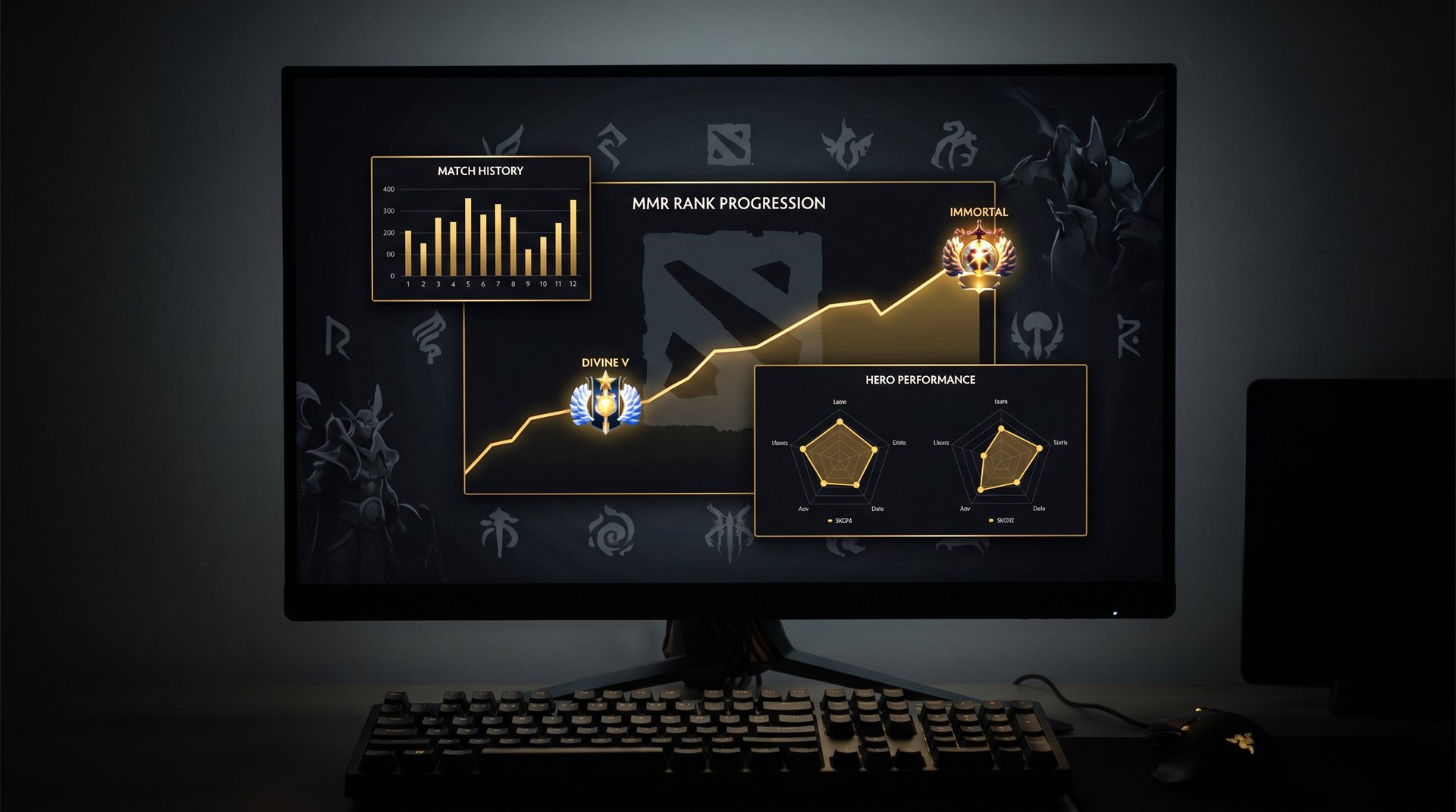
Dotabuff Plus adds features that are genuinely useful for climbing rather than just informative. The standout is Peer Review, which compares your in-game stats to other players of similar rank who play the same hero in the same patch. It converts the abstract question “am I playing this hero correctly?” into a concrete number — you can see whether your GPM, last hits per minute, hero damage output, and vision score are above or below average for your bracket.
The extended history graphs let you track your average KDA, GPM, and winrate over time by hero, giving you a clear picture of whether your performance is improving or plateauing. Without Plus, you only see recent rolling averages. With Plus, you can map a month or a patch cycle and spot trends.
Plus also removes the result display delay and adds expanded hero comparison tools. For a player seriously committed to climbing, it is worth considering — but the free tier alone is sufficient for most of what this guide recommends.
What Dotabuff is best for
- Identifying heroes in your pool with a low winrate across enough games to be statistically meaningful (20+ games minimum)
- Checking meta winrates by your specific bracket before deciding what to add to your hero pool
- Sharing match or profile links with friends, coaches, or bootcamp partners for discussion
- Quickly looking up a player in your lobby to know their hero pool and recent form before the game starts
- Tracking your performance trend across a month or patch cycle
Where Dotabuff falls short
Dotabuff does not tell you what happened inside the game in a useful way for coaching yourself. A match page shows you the scoreboard and gold graph, but it does not break down your ward coverage, flag which team fights you died in unnecessarily, or compare your laning outcome to a baseline expectation for that matchup and rank. For those deeper questions, you need Stratz.
Stratz — The Deep Analysis Tool for Players Who Want to Know Why
Stratz is where Dotabuff’s scope ends and something more surgical begins. If Dotabuff tells you WHAT happened (you won 54% of your Sven games this patch), Stratz tells you WHY (you were below average on last hits at the 10-minute mark in 70% of your losses, which correlated with being behind on your core item timing before every significant fight).
Stratz has had direct API integration with Valve that gives it access to more granular in-game event data than most third-party platforms. This is why its ward maps, fight breakdowns, and stat benchmarks are more detailed than anything Dotabuff shows. If you are working with a coach, Stratz is the platform coaches use for post-game review because the shareable match links and data exports make it efficient to discuss specific moments.
Features that set Stratz apart
Ward placement maps. Stratz records the exact position of every observer and sentry ward placed in your games and renders them as a heatmap on the minimap. You can compare where you tend to ward versus where high-MMR players of your role place wards. This is one of the most concrete and actionable features in Dota 2 analytics because ward placement is a skill most players never consciously review or work on.
Timeline view. Every match has a minute-by-minute event log covering kills, buybacks, Roshan, building destruction, and net worth swings. You can scroll through the game timeline and pinpoint exactly when the gold lead shifted and what specific event triggered it — a fight, a pick, a Rosh trade, or a push sequence.
Draft analysis. Stratz scores how well your team’s draft matched up against the opponent’s, including synergy ratings and potential counter-pick flags. For players who want to improve their decision-making in the pick phase, this gives concrete context about whether your draft was set up to win before the game even started.
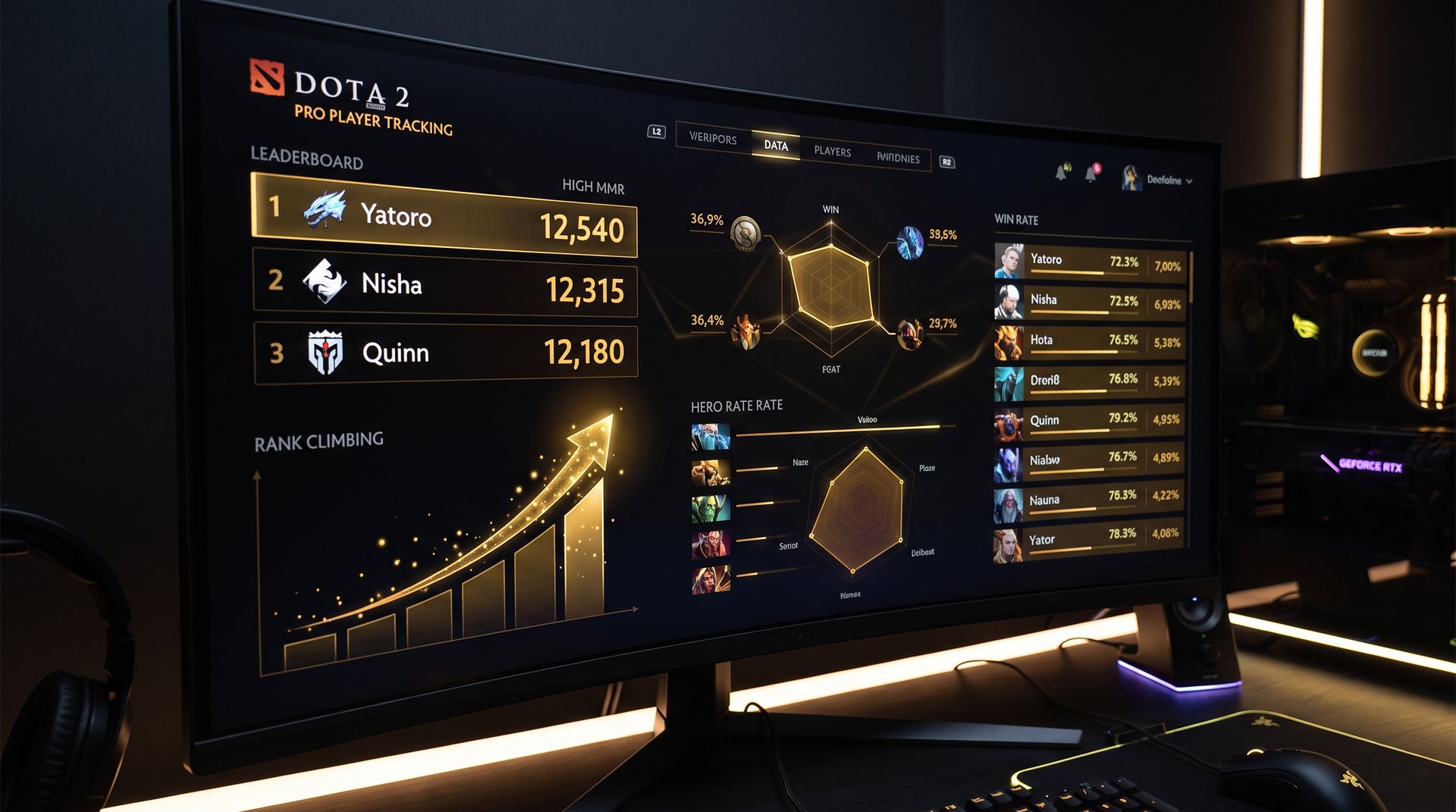
Performance benchmarking. Stratz compares your in-game stats to all players at your rank who played the same hero in the same patch window. You can see whether your last hits at 10 minutes, your tower damage contribution, or your healing numbers were strong or weak relative to a true peer group — not the entire playerbase, but players playing the same hero at the same level right now.
Team fight breakdown. Each significant fight in the game is identified and broken out with a damage-dealt and damage-received summary, showing who was focused first, who survived, and which abilities landed or missed. This is the fastest way to identify whether you are dying to poor positioning, poor target selection, or simply getting outplayed in a situation you could not avoid.
What Stratz is best for
- Post-game review of a loss — finding the specific moment and decision that cost the game
- Ward placement improvement for support and offlane players
- Working with a Dota 2 coach who needs detailed match data and shareable timeline links
- Understanding your draft position, pick priority, and counter-draft exposure in ranked
- Benchmarking your laning stats against a real peer group at your rank
Where Stratz falls short
Stratz is powerful but it assumes you know what you are looking at. A Herald player who opens a Stratz match page and sees a ward heatmap with fight breakdowns may not know how to translate that data into a concrete habit change. Dotabuff is more accessible for players who are new to stat review. Stratz rewards the player who already has specific questions and is using the data to find answers. If you do not yet know what question to ask, start with Dotabuff and come back to Stratz once you have a pattern to investigate.
Dota2ProTracker — Reading the Meta at Its Source
Dota2ProTracker operates on a completely different premise from the other two. It does not track your games. Instead, it monitors pub matches played by professional players and top-ranked Immortal players, and surfaces what they are actually picking and building.
The core insight is that the Dota 2 pro scene does not only show up at tournaments. Every week, the players who compete at the highest level are queuing ranked games and experimenting with builds, positions, and hero combinations. Dota2ProTracker captures those games and makes the data searchable and browsable. It is a live window into the patch meta before that meta has been fully documented by guides, tier lists, or patch analysis content.
What you can find on Dota2ProTracker
Current hero trends at the top of the leaderboard. You can see which heroes the highest-MMR players are picking most frequently right now. This is often a leading indicator of what will dominate the meta in coming weeks, before those trends have been widely adopted at lower brackets.
Pro player hero builds and item progressions. You can click on any tracked professional player and see their recent hero pool, item progression for specific heroes, skill build choices, and lane position preferences. This is more informative than a Dotabuff meta page because you are seeing decisions made by a specific player with intentional game knowledge rather than aggregate data that mixes every skill level.
Position-specific item builds from real high-MMR games. When a new patch drops and conventional wisdom about what to build is still catching up, Dota2ProTracker is often the fastest source of what is actually working — you can see top players testing new builds in real time, two to three weeks before the wider community figures out the same thing.
Hero matchup and pick rate data from the Immortal bracket. Winrates and picks at the leaderboard level reflect the game’s balance more accurately than site-wide data that includes games from all brackets. Some heroes dominate at low MMR due to simplicity and some heroes require high execution to show their real winrate — Immortal-level data filters for both.
Where Dota2ProTracker falls short
Dota2ProTracker has no personal game review features. There is no profile lookup for most players, no winrate history for your account, and no post-game analysis tools. You use it for research and planning before games, not for reviewing what happened after them.
It is also worth noting that what works at 9,000+ MMR does not always translate directly to a 3,000 MMR ranked game. The difference in hero execution, team coordination, and draft coherence means some pro-meta picks can backfire in average-bracket matches where the hero’s power spikes require specific setup that your team cannot reliably provide. Use the information as a guide for what is strong, not as a script to copy without adapting to your bracket.
Dotabuff vs Stratz vs Dota2ProTracker — Full Feature Comparison
| Feature | Dotabuff | Stratz | Dota2ProTracker |
|---|---|---|---|
| Personal match history | Yes (free) | Yes (free) | No |
| Hero winrate tracking | Yes | Yes | No (pros only) |
| Ward placement maps | No | Yes (free) | No |
| Team fight breakdown | Basic | Detailed | No |
| Meta stats by rank bracket | Yes | Yes | Immortal / pro only |
| Pro player pub tracking | Partial | Partial | Core focus |
| Draft analysis | Basic | Detailed scoring | No |
| Stat benchmarking vs peers | Plus tier only | Free | No |
| Item build tracking | Yes | Yes | Pro builds only |
| Timeline / event replay | Basic graph | Full timeline | No |
| API quality for developers | Limited | Strong | No public API |
| Best use case | Hero pool & history | Post-game review | Meta scouting |
Which Tool Should You Use at Each Rank Bracket?
The right tool depends on where you are in your Dota 2 journey. At different rank brackets, different types of information are most actionable — and different tools deliver the best return on the time you spend reviewing data.
Herald to Crusader (0 — 2,500 MMR)
Start with Dotabuff. At this bracket, the most effective thing you can do is narrow your hero pool to two or three heroes and grind games on them until you understand their power spikes and win conditions. Dotabuff tells you your hero winrate and helps you identify which heroes you have a losing record on after 20 or more games — those are candidates for benching, at least until your fundamentals catch up.
Do not spend time on ward heatmaps or pro meta tracking at this stage. The gap between your current play and the ceiling of your bracket is almost entirely about execution fundamentals: last hitting, not dying unnecessarily, and knowing your hero well enough to recognize the moments you can fight. Dotabuff free is all you need here.
Archon to Legend (2,500 — 4,000 MMR)
This is where Stratz becomes genuinely useful. At Archon and Legend, you are past the stage where raw execution is the only variable. Game sense, positioning, and draft awareness start mattering more — and Stratz’s post-game tools are built to surface exactly those kinds of mistakes.
After a loss, open the Stratz match page and look at two things: your ward coverage in the first 20 minutes, and the fight breakdown for the engagement where your team lost the most ground. If you died more than twice in fights where you were outleveled, positioning is the problem. If your ward coverage was sparse around key objectives, you were playing without information. Both are fixable with deliberate practice once you can see them clearly.
You can also start checking Dota2ProTracker when a significant patch drops, to see what the high-MMR players are gravitating toward. At Legend, you have enough game sense to contextualize that meta data without blindly copying builds that require leaderboard-level execution.
Ancient to Divine (4,000 — 6,500 MMR)
At this bracket, all three tools are useful and you should be rotating through them regularly as part of a structured improvement habit.
The specific Stratz feature that becomes most important at Ancient and Divine is draft analysis. At this level, picking into a hard counter with no plan to mitigate it is a consistent source of avoidable losses. Stratz’s counter-pick data and draft scoring builds a mental model of which hero matchups should change your decision-making at the pick screen.
Dotabuff Plus’s Peer Review becomes a high-value tool here. If your last hit count at 10 minutes is below the peer average for Ancient players on your signature hero, you have a concrete, measurable gap to close. If your hero damage output is below average despite winning, your team is winning around you rather than with you — a sign to look at your build or positioning.
Immortal (6,500+ MMR)
At Immortal, Stratz and Dota2ProTracker become your primary tools. You are past the stage where aggregate Dotabuff winrate data is the most useful input — the meta at the leaderboard level moves faster and in different directions than site-wide data captures, and your opponents are adjusted to standard trends.
Dota2ProTracker becomes genuinely important here because you are playing against and alongside leaderboard-adjacent players, and knowing what they are spamming this week is real competitive information rather than general meta awareness. Stratz’s timeline view and fight breakdowns are detailed enough at this level to pinpoint micro-decisions — who to prioritize in a fight, whether to trade Rosh or push high ground — that separate 7,000 MMR from 8,000 MMR.
The Smart Player Workflow — Using All Three in 10 Minutes
The most efficient approach to stat tools is a consistent post-game review habit that takes under 10 minutes. Here is what that workflow looks like in practice:
- Open Stratz first (5 minutes). Find the match page for the game you just played. Look at the gold graph for the inflection point — when did your team fall behind, and what happened right before it? Check the fight breakdown for the fight where momentum shifted. Were you alive? If not, was your positioning the cause? Look at your ward coverage for the game versus where you needed vision on the map.
- Open Dotabuff second (3 minutes). Check your hero stats for the current patch window. Is your winrate on this hero trending up or flat? Compare your GPM and KDA to your last 10 games on that hero to see whether tonight was an outlier or part of a declining pattern.
- Open Dota2ProTracker once per patch (2 minutes). When a patch drops, spend a few minutes looking at what the top players are gravitating toward. Note two or three heroes that are appearing frequently and check whether any of them fit your role or playstyle. Do not abandon your hero pool for every patch cycle, but stay informed about what is strong before queuing for a session.
When Stat Tools Are Not Enough
All three of these platforms share one fundamental limitation: they show you what happened, but they cannot tell you what to do about it in real time. A ward heatmap shows that your coverage was poor; it does not teach you the underlying principles of vision control and how to apply them under pressure in a live game. A Dotabuff winrate graph shows that you are losing more this patch; it does not diagnose which specific habit is driving the decline.
This is the gap where structured coaching fills in. A high-MMR player reviewing your Stratz data can immediately identify patterns that take months to self-diagnose because they know what those patterns look like from experience. The combination of good analytics tools and external coaching feedback compresses the time it takes to climb — you are addressing the right problem instead of grinding games on a wrong hypothesis about what your weakness is.
If you have been running a consistent stat review habit for a month and your rank has not moved, that is a signal that the problem requires live feedback, not more data. A session with an experienced Dota 2 coach can identify blindspots that post-game data simply cannot surface because they happen in the moment of decision-making, not in the numbers that come after it.
For players who want to close rank gaps more quickly while building long-term fundamentals, explore the best Dota 2 boosting services to understand your options. If you want to understand how the process works from start to finish, our MMR boosting guide covers the full picture. And if you have questions about risk, read our breakdown of whether Dota 2 boosting is safe before making any decisions.
The Verdict — Dotabuff vs Stratz vs Dota2ProTracker
There is no single winner here because these tools are not competing to do the same thing. Each one is the best option in its category.
Dotabuff wins for hero pool management, accessible historical stats, and shareable match links. It is the reference standard for a reason and the right starting point for players new to stat review.
Stratz wins for in-depth post-game review. If you want to understand why you are losing a specific type of game, Stratz has the data. Its ward maps, fight breakdowns, and peer benchmarking are the most concrete, actionable tools available for free.
Dota2ProTracker wins for meta intelligence. Nothing else gives you a cleaner view of what the highest-level pub players are actually running in the current patch. It is the fastest way to stay ahead of the meta curve before it reaches your bracket.
The smart move is to use all three — Stratz for post-game review, Dotabuff for hero pool pattern tracking, and Dota2ProTracker for weekly meta awareness. Players who build that habit and stick to it consistently climb. Players who open stat sites without a structured process and clear questions tend to stay at the same bracket regardless of how much data they consume.
Frequently Asked Questions
Ready to Climb Faster?
Stat tools give you data, but sometimes the fastest path to higher MMR is working directly with a high-MMR player who can pinpoint what is holding you back. TeamSmurf offers Dota 2-only coaching from experienced players who have seen every bracket’s common mistakes.
Get Dota 2 Coaching Explore MMR Boosting