

TI 2026 Elimination Round Guide

TI 2026 just hit the part of the Swiss stage where every draft mistake starts costing entire tournament lives. At the time of writing, TEAM VISION, Team Liquid, and Nigma Galaxy have already punched through to the playoffs, Team Falcons just qualified by sweeping Vici Gaming 2-0, and the rest of the bracket is being decided by the kind of elimination best-of-threes that expose fake comfort picks fast.
This is not another broad day-one recap. This guide is about the live elimination round itself: who is safe, who is dead, what Falcons showed in the first qualifying series, which heroes are actually driving the tournament, and what ranked players should steal from the highest-pressure matches of the event. If you only care about the practical angle, the short version is simple: frontline plus flexible support initiation is still king, Earth Spirit is absurd, and teams that cannot contest second Roshan cleanly are getting squeezed out of TI.
The raw standings, match records, and hero statistics in this article come from the live TI 2026 group-stage page on Liquipedia, plus the completed Falcons vs Vici Gaming match page for the first elimination-round result. For pub players, that matters more than generic “X hero is strong” filler because the tournament is now large enough to show repeatable patterns instead of one-off cheese.
If you want the event-reward side of the tournament, read our TI 2026 Compendium Guide. If you want the patch backdrop behind these drafts, our 7.41e TI meta guide is the companion piece. This article is the pressure-stage version: who advances, why, and what it means for climbing right now.
Table of Contents
Live TI 2026 Snapshot
The top line is clear: TEAM VISION finished the Swiss stage at 4-0, Team Liquid finished 4-1, and Nigma Galaxy also finished 4-1. Those three are already through. The rest of the playoff-field fight is now concentrated inside the 3-2 versus 2-3 elimination round, where five series decide who keeps playing and who flies home.
That structure matters because Swiss brackets create fake reads early. A team can look good when it only has to solve one draft type. Elimination rounds strip that away. You need enough flexibility to survive side selection changes, enough lane stability to avoid falling behind before minute ten, and enough late-game discipline to close without punting Aegis. This is why the live TI pressure games are usually more useful for pub players than the opening-day highlights.
We already have one completed proof point. Team Falcons beat Vici Gaming 2-0 on August 16 and qualified to playoffs. The other live and upcoming pairings at the time of publication were Aurora Gaming vs BoomBoys, Team Spirit vs Team Resilience, Iron Wing vs GamerLegion, and LGD Gaming vs Team Yandex. Those are not random pairings. The 3-2 teams selected their 2-3 opponents in seed order, which tells you something about how the surviving teams actually read the bracket.
| Status | Team | Match Record | Game Record | What It Means |
|---|---|---|---|---|
| Qualified | TEAM VISION | 4-0 | 8-2 | Best Swiss team so far, no elimination round needed |
| Qualified | Team Liquid | 4-1 | 9-5 | Already in playoffs after a brutal round-five win over Aurora |
| Qualified | Nigma Galaxy | 4-1 | 8-2 | Safely through after beating Team Spirit 2-0 in round five |
| Qualified | Team Falcons | 3-2 then won | 10-7 overall | Beat Vici Gaming 2-0 in the first elimination-round series |
| Still alive | Aurora Gaming | 3-2 | 7-5 | Selected BoomBoys and entered a live do-or-die series |
| Still alive | Team Spirit | 3-2 | 6-5 | Chose Team Resilience after falling short in round five |
| Still alive | Iron Wing | 3-2 | 8-6 | Chose GamerLegion as seed two among the 3-2 teams |
| Still alive | LGD Gaming | 3-2 | 7-6 | Got Team Yandex as the final unselected opponent |
The important high-MMR read is that the 3-2 teams did not just pick weaker logos. They picked structural matchups. Spirit wanted Team Resilience because Resilience has won games with tempo but still leaks map discipline in longer reset fights. Aurora chose BoomBoys because BoomBoys can absolutely scrap, but they can also overcommit into second-wave disengage. Iron Wing chose GamerLegion for similar reasons: strong moments, weaker full-map control. That tells you how pros currently value stable macro over raw lane punch.
Final Swiss Standings That Matter
The Swiss stage ended with a clean split between direct qualifiers, elimination-round survivors, and true collapses. TEAM VISION, Liquid, and Nigma never needed one last life. Team Falcons recovered just in time. Teams like Xtreme Gaming and OG ran out of fixes before the format ran out of patience. That is why TI Swiss is ruthless: if your third and fourth drafts are still unsolved, the tournament catches up to you fast.
Below is the full standings block that actually shaped the elimination round. Notice how deceptive some game scores are. Team Spirit at 6-5 looks close to safe, but that record hides a round-five 0-2 loss to Nigma. Team Yandex at 7-7 looks healthier than a 2-3 team usually does, which is exactly why the LGD pairing is dangerous. Vici, meanwhile, entered elimination at 4-8 in games and immediately got punished by a better-structured Falcons lineup.
| Seed | Team | Matches | Games | Pressure Read |
|---|---|---|---|---|
| 1 | TEAM VISION | 4-0 | 8-2 | Most complete team through Swiss, no panic series needed |
| 2 | Team Liquid | 4-1 | 9-5 | Messier than VISION, but still playoff-quality under stress |
| 3 | Nigma Galaxy | 4-1 | 8-2 | Best late-Swiss surge of the field after beating Spirit 2-0 |
| 4 | Team Spirit | 3-2 | 6-5 | Still dangerous, but no longer untouchable |
| 5 | Iron Wing | 3-2 | 8-6 | High ceiling, slightly shaky when forced into repeated resets |
| 6 | Team Falcons | 3-2 | 8-7 | Recovered in time and already converted the extra life |
| 7 | Aurora Gaming | 3-2 | 7-5 | Strong teamfight team, but not free from pace issues |
| 8 | LGD Gaming | 3-2 | 7-6 | Volatile but alive, especially with Topson stretching draft shape |
| 9 | BoomBoys | 2-3 | 5-7 | Can still outfight people, but too many unstable late games |
| 10 | Vici Gaming | 2-3 | 4-8 | Already eliminated by Falcons |
| 11 | Team Yandex | 2-3 | 7-7 | Still scary if they get the early pace they want |
| 12 | Team Resilience | 2-3 | 7-6 | Live dog because they scrap better than their seed suggests |
| 13 | GamerLegion | 2-3 | 6-6 | Balanced record, but has looked vulnerable versus stable macro teams |
The failed teams tell their own story. Xtreme Gaming finished 1-4 with a 3-8 game score. OG finished 1-4 with a brutal 2-9 game score. HULIGANI were the only team to end 0-4. Those are not minor stumbles. Those are signs that in 7.41e tournament Dota, your carry idea cannot be the whole plan anymore. If you do not have repeatable support impact and reliable objective conversion, the format punishes you faster than old round-robin TI group stages used to.
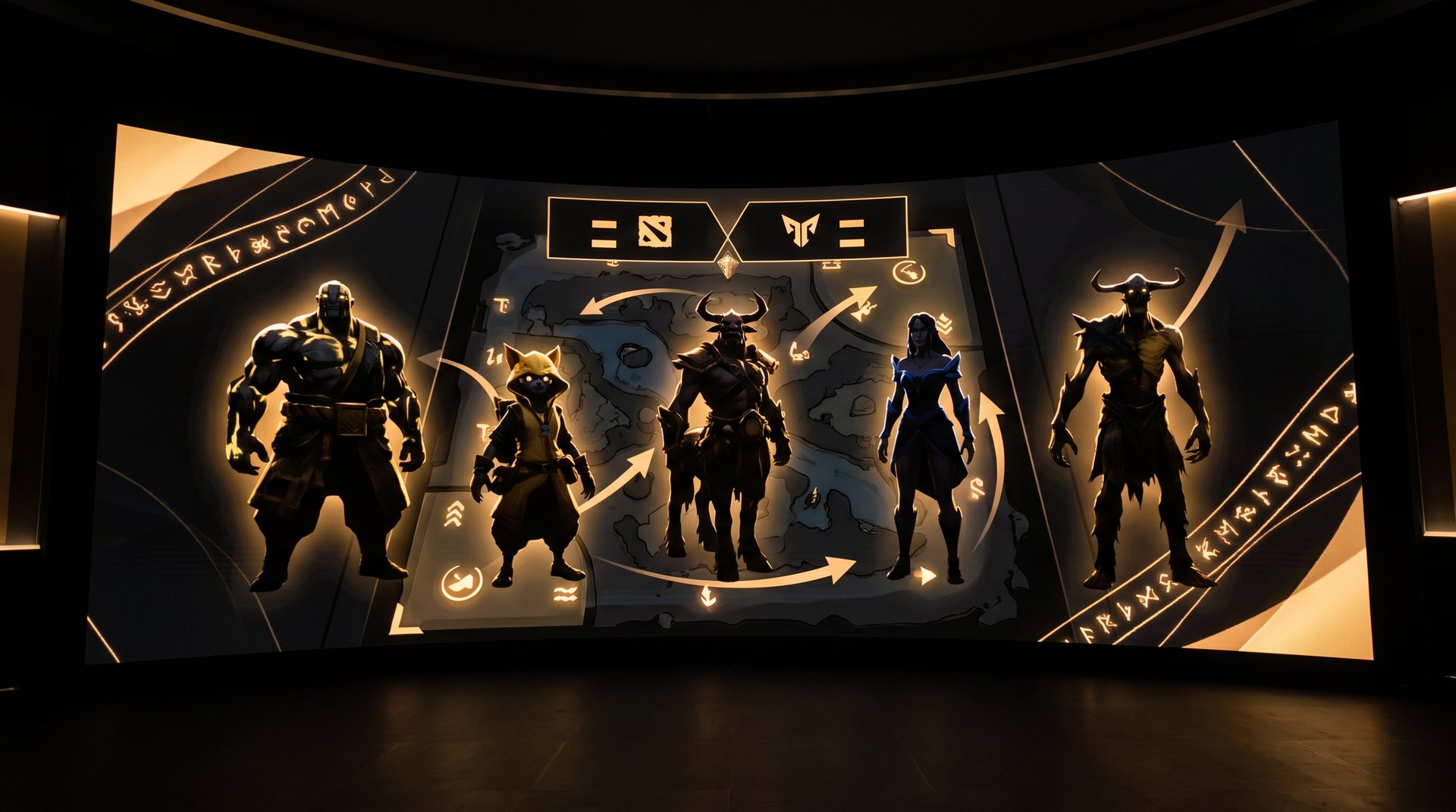
How Falcons Qualified Over Vici
Falcons did not qualify by reinventing the patch. They qualified by drafting cleaner, closing better, and making Vici play from the wrong side of the map in both games. The series result was 2-0 on August 16, and the two match IDs tied to the series were 8947983249 and 8948040486. If you only review one elimination series from this phase, make it this one, because it shows how a top team stabilizes under pressure without pretending the patch suddenly changed overnight.
Game 1 lasted 40:46. Falcons won from the dire side, finished 31-6 in kills, and ended with 118.9k gold to Vici’s 86.1k. Skiter’s Clinkz ended 7/0/8 with 770 GPM. Malr1ne’s Snapfire posted 9/2/12. ATF’s Pangolier added 6/1/13 and 28.7k damage. That is the entire point of a pressure draft in this patch: one hero to start, one core that can anchor second and third fights, one carry that cashes the map once enemy vision breaks. Falcons had all three.
Game 2 lasted 42:50 and was even more instructive. Falcons won from radiant, again finished 31 kills, and again looked structurally ahead. This time the core trio was skiter on Sven, Malr1ne on Sand King, and ATF on Necrophos. That sounds greedy on paper until you watch how the draft actually functions. Sand King gives reach. Necrophos gives siege-fight punishment and sustain pressure. Sven gives the clean Roshan and building finish that some of the more stylish TI drafts are missing right now.
Vici’s losses also told us something important. In game 1, shiro’s Windranger went 1/5/4 while Xm’s Storm Spirit never got real map ownership. In game 2, shiro shifted to Shadow Fiend and still could not force the tempo back. Vici were not just losing lanes. They were losing the midgame tug of war around who gets to show first on the map after wave clear. Once Falcons owned that layer, the series got away from Vici for good.
| Game | Duration | Falcons Core Trio | Key Numbers | High-MMR Takeaway |
|---|---|---|---|---|
| Game 1 | 40:46 | Clinkz, Snapfire, Pangolier | 31-6 kills, 118.9k to 86.1k gold | Explosive tempo plus stable teamfight beats Vici’s scattered scaling |
| Game 2 | 42:50 | Sven, Sand King, Necrophos | 31-11 kills, 133.9k to 101.3k gold | Frontline layering and Roshan control closed the series cleanly |
| Series note | 2-0 | Falcons selected Vici as seed 3 | First elimination-round qualification secured | Bracket selection itself showed Falcons preferred Vici’s shape |
The pub lesson is obvious if you play above 6k. Do not copy the exact hero names first. Copy the job distribution. Falcons drafted one reliable source of initiation, one bruising frontliner that punishes overcommitment, and one damage core that cashes the area once control is established. That structure is why the draft worked. You can translate the same logic into your own ranked pool with far less risk than blindly spamming “whatever won at TI” in a bad lineup.
Every Remaining Elimination Series
This is the live playoff funnel: Aurora Gaming selected BoomBoys, Team Spirit selected Team Resilience, Iron Wing selected GamerLegion, and LGD Gaming were left with Team Yandex. None of these pairings are random. They all reflect comfort with certain pace profiles and discomfort with others.
| Series | Seed Logic | Immediate Storyline | What Wins It |
|---|---|---|---|
| Aurora vs BoomBoys | Aurora seed 4 selected BoomBoys | At publication time, Aurora were already up 1-0 live | Can BoomBoys survive Aurora’s second-wave teamfights? |
| Team Spirit vs Team Resilience | Spirit seed 1 selected Resilience | Spirit trying to reset after a 0-2 loss to Nigma | Whether Resilience can stop Spirit’s late-game comfort cores |
| Iron Wing vs GamerLegion | Iron Wing seed 2 selected GamerLegion | Iron Wing trusting their ceiling more than GL’s structure | Who controls lanes without overexposing side supports |
| LGD vs Team Yandex | Final unselected pairing | Most dangerous “leftover” series in the bracket | Whether LGD can survive Yandex’s early-pressure identity |
Aurora Gaming vs BoomBoys
Aurora choosing BoomBoys makes perfect sense if you have watched how both teams handle chaos. BoomBoys are still dangerous because they can scrap, but their problem has been converting advantage into a clean finish when the map goes elastic. Aurora are better built for those elastic games. They are comfortable playing one fight, resetting with a save or displacement spell, and winning the next fight on spell-cooldown timing.
The reason this matters in 7.41e is that the support pool rewards those chains. Hoodwink, Mirana, and Earth Spirit are not just “good heroes.” They are heroes that let the winning team keep the map uncomfortable for the loser after the first lost tower. Aurora have looked more natural in those sequences than BoomBoys have. If BoomBoys are going to flip the series, they need a cleaner lane-to-Roshan bridge than they showed in some of their earlier Swiss losses.
Team Spirit vs Team Resilience
Spirit picking Team Resilience was a respect pick and a confidence pick at the same time. They clearly preferred Resilience over some of the other 2-3 teams, which suggests they think they can drag the series into the type of game they still trust most: patient scaling, high-ground discipline, and fewer early disasters than their opponent can create. But the danger is obvious too. Spirit just got swept by Nigma in round five. You do not get to pretend the cracks are gone because the bracket reset.
Resilience, meanwhile, are the classic dangerous low-seed TI team. Their 2-3 record undersells the fact that they are still 7-6 in games and have shown enough punch to punish sloppy lane setups. If Spirit come in too passive, Resilience can absolutely create a game-state where Spirit are forced to defend instead of dictate. If Spirit get their preferred late-game shape, though, they should still be favorites. The key is whether the first fifteen minutes are stable enough to reach that point.
Iron Wing vs GamerLegion
Iron Wing choosing GamerLegion is one of those pairings that looks safer on paper than it may feel in game. Iron Wing have higher ceiling moments. Their record shows that. But GamerLegion at 6-6 in games are not a soft out. They have enough structure to punish greed, and enough willingness to fight that you cannot just auto-pilot your way to a 2-0. This series is likely to hinge on whether Iron Wing can keep their best players active without handing away solo deaths on the far side of the map.
From a ranked perspective, this is the series to watch if you want to learn how strong teams manage “good greed” versus “bad greed.” The difference is usually one ward, one smoke, and one extra hero showing on a wave too early. If Iron Wing play clean, their ceiling should carry them through. If they get cute, GL are fully capable of dragging them into the dirt.
LGD Gaming vs Team Yandex
This is the sharpest series left because Team Yandex are a 2-3 team in name only. Their game record is 7-7, and they are still one of the most dangerous early-pressure teams in the field. LGD, on the other hand, are living inside one of the strangest TI arcs in the event: enough volatility to scare anyone, enough talent to upset almost anyone, and a draft identity that can warp fast depending on how much space Topson gets to stretch the map.
If LGD survive, it will be because they break Yandex’s early rhythm and force them into second- and third-Roshan decisions. If Yandex survive, it will probably be because LGD give them one free lane too many and end up taking fights without triangle control. That is why this series is the best pure viewer series left even if Spirit carry the bigger name value.
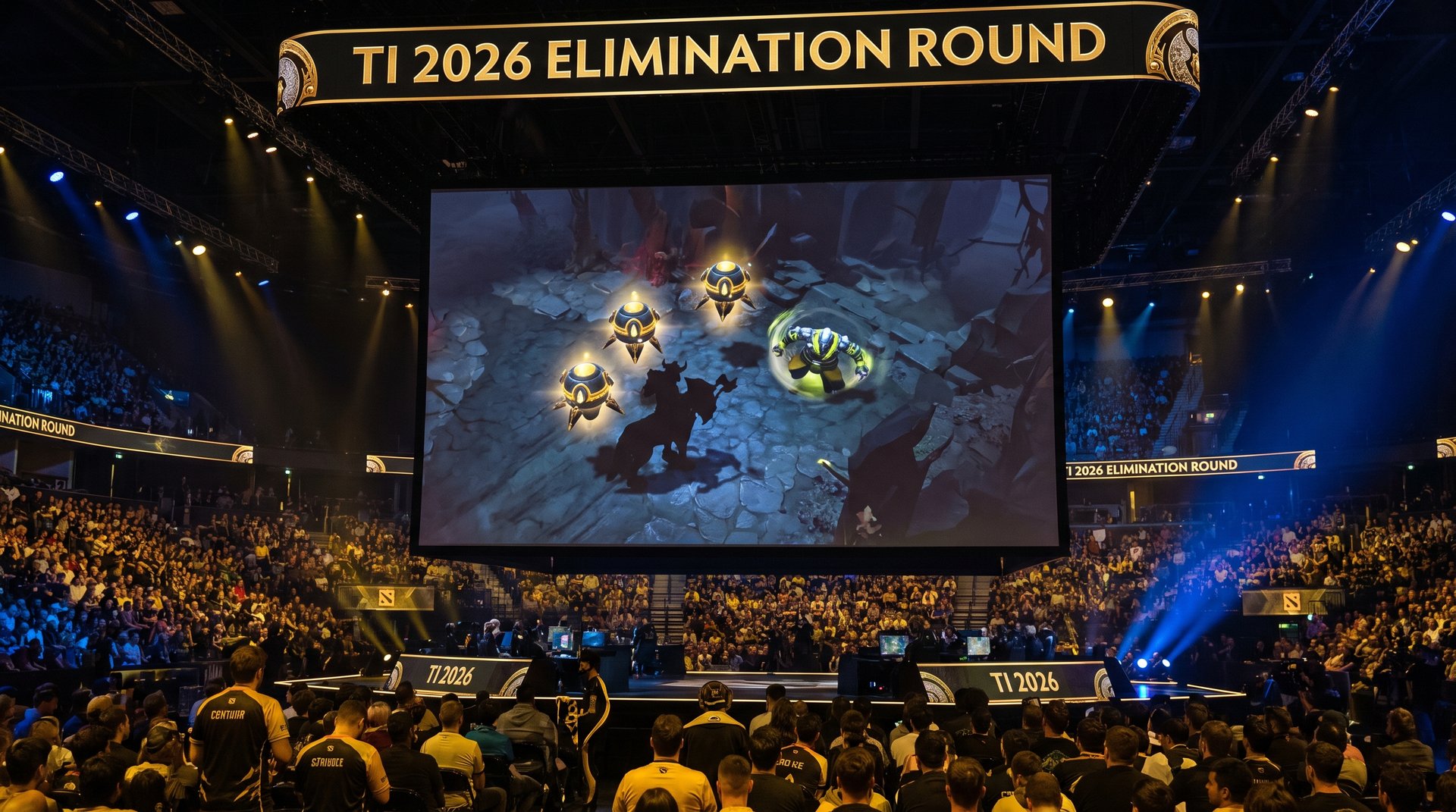
Hero Statistics Shaping TI 2026
The tournament hero table is already loud enough to trust. Earth Spirit, Hoodwink, Mirana, Centaur Warrunner, and Undying are not fringe reads anymore. They are the heroes repeatedly surviving side swaps, high-pressure bans, and elimination-game scrutiny. That is exactly the filter you want when translating tournament data into ranked advice.
| Hero | Picks | Wins | Losses | Win Rate | Pick + Ban Rate |
|---|---|---|---|---|---|
| Hoodwink | 52 | 22 | 30 | 42.31% | 88% |
| Mirana | 46 | 23 | 23 | 50.00% | 62% |
| Centaur Warrunner | 37 | 19 | 18 | 51.35% | 78% |
| Earth Spirit | 35 | 23 | 12 | 65.71% | 92% |
| Undying | 32 | 16 | 16 | 50.00% | 70% |
Earth Spirit is the cleanest signal. Thirty-five picks with a 65.71% win rate and a 92% pick-plus-ban rate is not noise. It means teams respect the hero in both directions. He solves too many problems at once: lane skirmishing, midgame catch, vision punishment, and late-game buyback pressure because his control keeps mattering even when raw damage falls off. If you are a support player who can actually execute Earth Spirit, he is the highest-value hero in this entire section.
Centaur is the more stable offlane translation. He is less flashy, but he fits what this elimination phase rewards: lane survivability, clean initiation, aura or utility flexibility, and a lineup shape that gives your backline more room to play. Mirana stays relevant because the hero patches over so many draft sins. Hoodwink remains massively contested even with a modest pure win rate because her scouting, poke, and follow-up are still elite in coordinated Dota. Undying is the reminder that lane security still buys everything else.
Best Pub Lessons to Abuse Now
If you want the fastest ranked translation from TI 2026, stop chasing novelty and start copying responsibility splits. The winning drafts are telling you to value reliable start, durable second wave, and easy Roshan conversion. That is why Earth Spirit, Centaur, and tempo-flex mids keep showing up in the most meaningful games.
1. Earth Spirit Is the Best Support Hero to Learn Right Now
Not because he is magically free MMR on his own, but because he gives you agency in every phase. In high-MMR pubs, the support who can fix bad map states is worth more than the one who only amplifies already-winning lanes. Earth Spirit fixes bad map states. He starts fights, saves wasted smokes by finding a target, and punishes greedy triangle movement better than almost any hero in the pool. If your mechanics are there, he is a premium Dota 2 coaching study hero right now.
2. Offlane Frontliners Are Beating Cute Utility Offlaners
Centaur and Necrophos working in pressure matches is not an accident. Teams want an offlaner that can stand on a wave, threaten to start, and still matter after BKB windows shift. In pubs, especially Divine and low Immortal, your draft gets more stable the second your offlaner can show first without instantly dying. If your current pool is all finesse and no anchor, your games are harder than they need to be.
3. Second Roshan Is Deciding More Games Than First Roshan
Everyone obsesses over the first Aegis. The better read from these elimination games is what happens after the first Aegis is spent. Strong teams are not just taking Roshan. They are using the first objective to arrange the lanes and ward lines that decide the second one. In pubs, that usually means one thing: after you take first Rosh, do not randomly split three ways. Push the dangerous lane first, keep your support cooldowns together, and guard the areas that make second Rosh free later.
4. Supports Need to Offer More Than One Button
Mirana, Hoodwink, Earth Spirit, and even Treant in the right shell all offer multi-layer value. They can scout, reset, punish, or catch. That is why single-purpose supports feel more fragile in this TI phase. If your support hero only looks good when your lanes already won, you are drafting uphill in solo queue.
5. If You Cannot Grind the Meta Window Yourself, Use the Window
TI phases always create short periods where the ladder copies tournament priorities before most players fully understand them. That is one of the best moments to climb if you have time and a stable hero pool. If you do not have the time, that same window is exactly where a Dota 2 MMR boost becomes more efficient, because the boosters already know which picks and map patterns are converting on the live patch. If your goal is simply to stop bleeding games while the bracket meta spills into ranked, do not ignore the timing advantage.
Players Carrying the Pressure Games
The elimination round always turns player reads into hard evidence. Falcons just got a clean qualifier because skiter, Malr1ne, and ATF each covered a different responsibility without overlap. That sounds simple, but it is exactly what many losing teams have failed to do. Too many lineups still have two cores trying to solve the same problem while nobody solves the actual map problem.
Skiter’s two games against Vici are the perfect example. Game 1 Clinkz at 7/0/8 and 770 GPM was not random stat-padding. It was what happens when the rest of your lineup creates safe zones for a punishing carry to consume. Game 2 Sven at the same 770 GPM number was the harder lesson: if your carry gets to hit uncontested timings while your Sand King and Necrophos control the fight shape, the enemy draft has to be massively better to compensate.
Outside Falcons, the player pressure list is obvious. Yatoro still changes every Team Spirit series by himself the second the game gets long. Lorenof has already shoved Nigma into the real contender tier by carrying through one of the hardest round-five spots in the event. Topson remains the wild card in the LGD series because no other live elimination player can stretch a midlane read sideways the way he can. If you are looking for pure film study, those are the names worth reviewing.
What This Means for Your MMR Climb
The ranked takeaway from TI 2026 elimination day is not “copy pro Dota exactly.” It is “understand what pros value when they only get one life left.” Right now that list is short: lane stability, support agency, offlane reliability, real Roshan plans, and carries that clean up instead of demanding every resource just to function.
For most players below Immortal, the fastest climb angle is to narrow your pool instead of widening it. Pick one support initiator, one stable offlaner, and one carry that can hit buildings after a won fight. Then spam the heroes that actually fit that description in your own bracket. If you spread across too many cute meta options, you are borrowing pro drafts without borrowing pro execution. That almost never ends well.
The other practical read is psychological. Elimination-round Dota strips panic from the good teams and reveals panic in the shaky ones. Your pub climb works the same way. If your lineup wins one fight and then throws three heroes chasing into enemy jungle without lanes fixed, you are doing Vici things, not Falcons things. The correction is simple and boring: shove the wave, take the tower, reset vision, then re-enter. That one discipline change wins more MMR than most players want to admit.
If you are stuck, the answer is usually not more random games. It is a sharper system. Review one elimination-round series, copy the fight timing and map discipline, then run that structure in your next ranked block. Or skip the learning curve entirely and let TeamSmurf handle the hardest stretch with our MMR boosting guide, safety breakdown, and live-patch coaching routes.
FAQ
Use the TI Meta Before Everyone Else Does
The players climbing fastest after a live TI bracket shift are the ones who copy the structure early, not the ones who wait a week for Reddit to simplify it badly. If you want help applying the same pressure-stage ideas to your own games, TeamSmurf can handle the grind or coach the exact fixes.
Get MMR Boost Book Coaching See Service Guide



