TI 2026 Bubble Watch: Falcons, XG, and OG

TI 2026 bubble watch got serious fast. After three Swiss rounds, Team Spirit and TEAM VISION sat at 3-0, OG and HULIGANI had already slid to 0-3, and several direct-invite names that were supposed to feel stable — Team Falcons, Xtreme Gaming, and Team Yandex most of all — were suddenly one bad series away from spending the rest of the event playing with a knife at their throat.
This is the part casual viewers usually read wrong. A Swiss event is not just about who is undefeated. It is about who is still structurally healthy. A team can sit at 2-1 and still look dangerous because its lanes are stable and its teamfight shape makes sense. Another team can sit at 1-2 and feel almost dead already because every win condition depends on a perfect carry game or one player massively overperforming. That second type is where the real TI stress lives.
What follows is a freeze-frame of the tournament state as reflected by official Valve format notes and the Aug. 15 Liquipedia standings snapshot: who is actually under pressure, why the direct invites are not getting the free ride people expected, what the early hero stats are really saying, and what high-MMR pub players should steal from this immediately. If you only want one quick takeaway, here it is: the teams surviving TI 2026 so far are the ones with clean frontline structure, flexible support pairs, and cores that hit second-item fight timings without griefing map shape.
That lesson matters in pro Dota and in ranked. If your own climb feels shaky, the same fixes apply: cleaner draft identity, less fake greed, and better map conversion after every won fight. That is exactly why our Dota 2 coaching and MMR boosting guide keep hammering structure over highlight-reel nonsense.
Table of Contents
Swiss Snapshot After Three Rounds
The standings split into four real classes. Two teams are already in control, six more are in a healthy 2-1 band, six are stuck in the 1-2 danger pocket, and two are already 0-3 with zero room left. That matters because TI 2026 is using a Swiss group stage where a fourth series win qualifies you directly and a fourth loss eliminates you, with five Sunday elimination matches deciding the rest of the main-event field.
In other words, 3-0 looks great, but the interesting part of the bracket is the middle. Teams sitting at 2-1 are one clean performance from almost locking themselves into the next phase. Teams at 1-2 are not technically dead, but they are one sloppy draft, one greedy smoke, or one failed Roshan setup away from turning their tournament into a panic sprint.
| Tier | Teams | Match record | Game record |
|---|---|---|---|
| Leaders | TEAM VISION, Team Spirit | 3-0 | 6-2, 6-1 |
| Healthy | Iron Wing, Nigma Galaxy, BoomBoys, Team Liquid, Vici Gaming, Aurora Gaming | 2-1 | 5-3, 4-2, 4-3, 5-3, 4-4, 4-3 |
| Danger | Team Falcons, LGD Gaming, Team Resilience, Xtreme Gaming, GamerLegion, Team Yandex | 1-2 | 5-6, 4-6, 5-5, 3-5, 4-5, 5-5 |
| Emergency | OG, HULIGANI | 0-3 | 1-7, 2-7 |
The raw record alone already tells a story people were not expecting. Qualifier teams are not just surviving — they are dictating pressure. TEAM VISION and Team Spirit are the only two clean 3-0 teams in the snapshot. Meanwhile, three invited teams — Falcons, Xtreme, and Yandex — are sitting in the 1-2 trench where one more bad series wrecks the whole mood.
Why the Bubble Matters More Than the 3-0 Teams
It is easy to spend the whole day talking about the unbeaten teams because 3-0 looks clean on a graphic. But from a serious drafting and gameplay perspective, the bubble zone is where the best information lives. Unbeaten teams can still be hiding weak points because they have not been forced into desperation decisions yet. Bubble teams do not get that luxury.
At 1-2, your whole tournament starts narrowing. You draft safer. You respect comfort heroes more. Your captain stops experimenting with weird fourth-pick greed because there is no margin for it. Supports play less for style and more for lane insurance. Carries stop pretending they can skip BKB windows forever. You start learning what a team actually trusts when the bluffing ends.
That is exactly why this stage matters to ranked players, too. When pubs get stressful, most low- and mid-MMR players become less disciplined. TI bubble teams do the opposite. They simplify their map, shrink the number of moving parts, and make sure their lineup can still play Dota after one lane goes bad. That is a 7K habit. It is also a climb habit.
Valve’s own TI 2026 event notes reinforced the stakes. The official group-stage explanation made it clear that all sixteen teams play best-of-three series against the same-record pool, three teams lock spots by the end of Saturday, three teams are gone by then, and the remaining ten have to survive Sunday elimination matches just to reach the arena. That is why 1-2 is not a cosmetic record. It is a structural problem.
Which Direct Invites Are Under Real Pressure
The direct invites were supposed to enter this event as the prepared class. Officially, Valve’s May invite list named Aurora Gaming, BoomBoys, Team Falcons, Team Liquid, Tundra’s slot, Xtreme Gaming, and Team Yandex as the teams that had earned the right to skip the qualifier bloodbath. By the Aug. 15 standings snapshot, only one of those invite-class teams felt fully calm: Team Liquid at 2-1 with a 5-3 game score and a profile that still looked fundamentally healthy.
The rest of the invite field split into three very different stories.
| Invite team | Current state | What the record hides |
|---|---|---|
| Team Liquid | 2-1, 5-3 | Still the cleanest macro team in the invite class. Not perfect, but stable. |
| Aurora Gaming | 2-1, 4-3 | Healthy on paper, but not clear yet. They already absorbed a 0-2 hit from Spirit before recovering. |
| BoomBoys | 2-1, 4-3 | Record is good, but the 0-2 loss to TEAM VISION exposed how hard they can get choked when the map closes. |
| Team Falcons | 1-2, 5-6 | Still dangerous, but no longer protected by reputation. Their record says pressure, not comfort. |
| Xtreme Gaming | 1-2, 3-5 | Too little room for a supposed favorite. The game score is worse than the match record looks. |
| Team Yandex | 1-2, 5-5 | Every series feels contested, which is respectable, but they are still in the danger bracket. |
Team Falcons are the biggest name on this list, so they carry the loudest pressure. A 1-2 record with a 5-6 game score does not mean they are washed. It means they are mortal, and Swiss does not care about your aura. What matters right now is that they are no longer playing from the front. For a team that wants to feel like an Aegis threat, that is an ugly place to stand.
Xtreme Gaming may be in an even stranger spot. They are not just 1-2. They are 3-5 in games, which is a worse signal because it suggests they are not consistently turning their good patches of Dota into full series control. This matters more than fans admit. Teams with shaky game-score profiles usually need a carry hero to overperform or a midgame throw from the opponent. That is not a stable way to live through Swiss.
Team Yandex are the classic fake-comfort 1-2 team. The 5-5 game score makes them look more stable than XG, and in some ways they are. They are not getting blown off the server. But TI does not pay points for looking competitive. You still need to convert enough of those long, messy games into actual series wins.
Aurora are the invite team I trust most outside Liquid. They are only 2-1, so I am not crowning them. But their 2-1 over Team Yandex matters because it showed they can still recover after getting hit. In that series, the winner’s Game 1 on the match page showed Team Yandex posting 33 kills to Aurora’s 21 in a 42:08 opener, but Aurora still took the series 2-1 overall. That kind of rebound matters in Swiss. It means the draft shell does not collapse after one bad map.
BoomBoys are the weird one. Their record is solid, but the 0-2 loss to TEAM VISION is exactly the kind of result that makes me cautious. Game 1 of that series ended in 36:54 with TEAM VISION up 31-10 in kills, 110.7K to 79.4K in gold, nine towers to three, and a double-Roshan edge. That is not a fluke number line. That is a map-control beating. So yes, the 2-1 record is good. No, it does not erase the stress test they failed.
Qualifier Teams Punching Above Their Seed
The story of this snapshot is not just which invite teams are wobbling. It is which qualifier teams are making that wobble happen. TEAM VISION and Team Spirit being 3-0 is already the headline. But the deeper point is that several qualifier teams are winning in ways that look repeatable, not cheesy.
TEAM VISION have the cleanest “we belong here” case so far. Their 3-0 record comes with a 6-2 game score, which is the exact profile you want from a team that is not just sneaking through. Against BoomBoys, they did not need miracle cheese. They got a monster Templar Assassin performance from Satanic, a map-stamping Earth Spirit from No[o]ne-, and the kind of straightforward Centaur plus support shell that is ideal in a Swiss event. When your offlaner can front, your supports can reset, and your carry does not need 45 minutes to matter, life gets simple fast.
Team Spirit are equally impressive for a different reason. Their 6-1 game score says they are not just winning series. They are staying out of bad game states entirely. That matters because the early TI field has already shown how punishing messy maps can get. If Spirit are avoiding those map states in the first place, that is a bigger compliment than any one flashy kill score.
Nigma Galaxy are another team I would rather discuss through structure than through narrative. Their 2-1 record and 4-2 game score do not scream “future champion,” but they scream “hard out.” Their 2-0 over LGD Gaming is the best example. In Game 1, the match page showed Nigma winning in 50:12 while out-golding LGD 156.6K to 140.1K, taking 11 towers to four, five barracks to none, and three Roshans to one. Yuma’s Lone Druid posted 824 GPM, while lorenof’s Nature’s Prophet exploded to 1100 GPM and 65.7K damage. That is not random chaos. That is a lineup hitting objective windows over and over until the map breaks.
Team Resilience deserve mention because they are the opposite kind of qualifier story. They are not cruising. They are battered. But they are alive because they found one real punch: a 2-0 over OG that kept them from sinking with the 0-3 teams. In Game 1 of that series, Team Resilience won in 54:36 with a 45-23 kill edge, 163.9K to 127.0K in gold, 10 towers to four, and four barracks to none. Echo’s Invoker dropped 67.1K damage, Erika’s Tiny added 51.9K, and OG never really got the fight geometry they wanted. If you are looking for proof that a qualifier team can still ruin a brand-name roster by being more coherent, there it is.
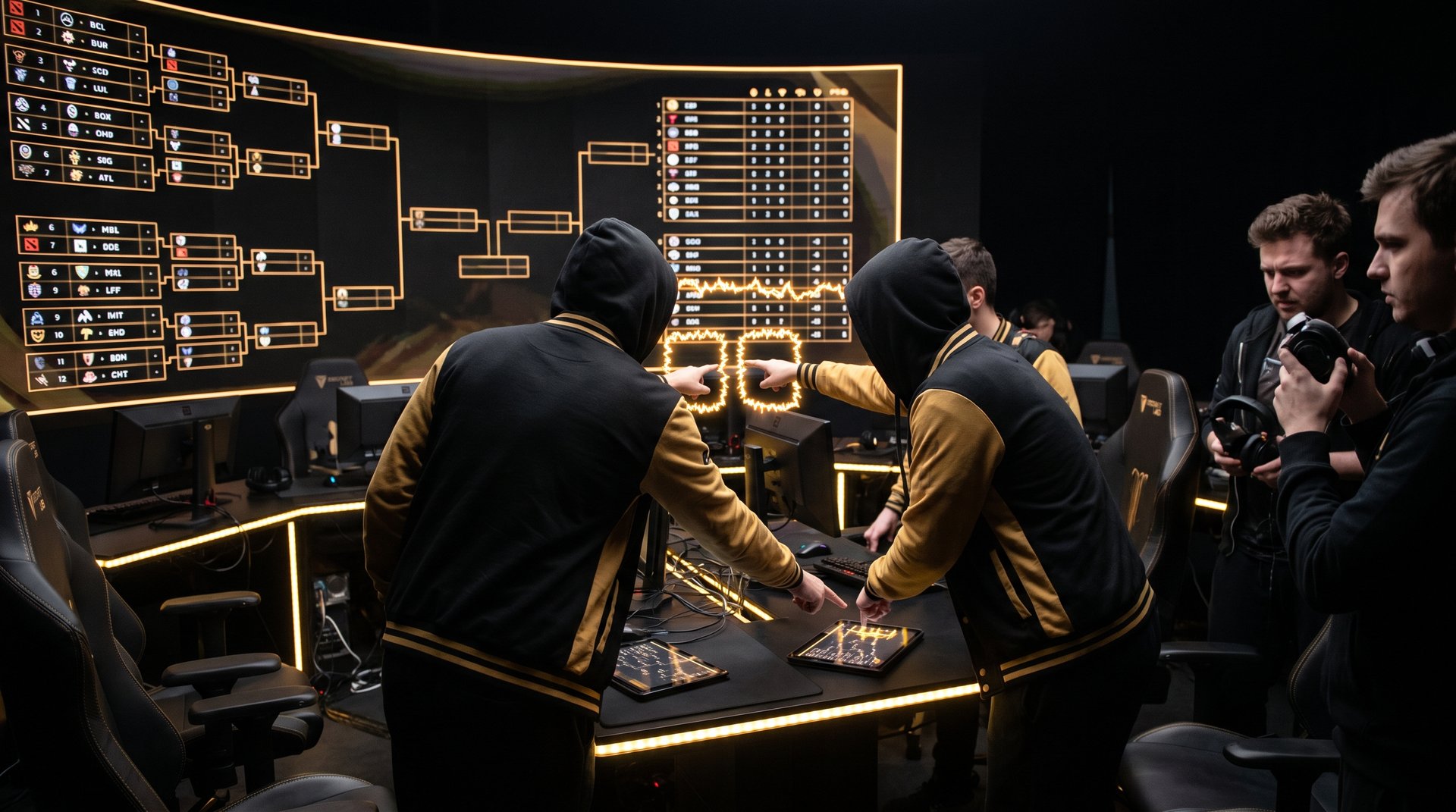
And then there is OG — the other side of that result. 0-3 with a 1-7 game score is not “one bounce away.” That is the profile of a team that keeps entering games without enough structural answers. You can lose to better teams at TI. You cannot keep bleeding the map this hard and still pretend it is variance.
Hero Stats That Actually Matter
The early Liquipedia hero table gives one of the best sanity checks you can ask for because it shows both popularity and actual conversion. A lot of pub players watch TI, see a hero with huge pick presence, and treat that like proof the hero is broken. The first three rounds say something more nuanced.
| Hero | Picks | Win rate | Why it matters |
|---|---|---|---|
| Hoodwink | 33 | 45.45% | Huge support priority, but not an auto-win. Teams value setup, scouting, and lane pressure more than pure conversion. |
| Mirana | 32 | 46.88% | Still premium for tempo and flexible support pairing, but the record says she needs the right shell. |
| Centaur Warrunner | 26 | 57.69% | The cleanest offlane signal in the sample. Real frontline, easy fights, and low draft risk. |
| Earth Spirit | 23 | 52.17% | Flex value plus real midgame tempo. Strong when your team actually knows how to chain around him. |
| Undying | 22 | 50.00% | Exactly what he looks like: a lane stabilizer and brawl tool, not a miracle solution. |
The most important line in that whole table is not even a hero. It is the side split: Radiant won 36 of the first 67 games, a 53.73% win rate. That is not insane, but it is real enough that teams should care about how they draft their first Roshan and outer-tower sequences. When the map is slightly friendlier for one side, you feel it most through objective access and how easy it is to take the first safe triangle reset after a won fight.
Centaur is the cleanest hero read in the sample. A 57.69% win rate on 26 picks is exactly the sort of number that matters because it combines high usage with actual conversion. That usually means the hero is solving multiple problems at once: lane survival, jump timing, frontlining, and forcing bad target priority from the other side. In plain English, he makes the game easier to play.
Hoodwink and Mirana tell the opposite story. Their pick counts are enormous, but the win rates are sub-47%. That does not mean they are bad. It means teams are prioritizing them for toolkit reasons — lane damage, setup, vision, repositioning — even when those heroes are not individually carrying the game. This is the exact kind of nuance pubs miss. A hero can be first-phase good without being brainless free MMR.
Earth Spirit is the hero I would watch most closely if you care about the next week of high-level pubs. The 52.17% win rate does not jump off the screen until you remember he is doing it while being flexed across different fight structures. When a hero stays above 50% in a high-skill tournament sample while carrying that much decision load, it usually means the good teams trust him to connect the whole draft.
What Pub Players Should Copy Right Now
The best use of TI is not copying every hero pick. It is copying the decision framework. Here are the five early-tournament habits that translate directly into ranked.
- Frontline first, greed second. Centaur’s numbers are the proof. If your draft has no real first body, every fight becomes mechanically harder than it needs to be.
- Support pairs matter more than solo support “comfort.” Hoodwink and Mirana are not winning because they are flashy. They are being picked because teams want stun chains, vision, and setup overlap. Think in pairs, not solo hero ego.
- Second-item fight timing wins Swiss more than five-slot theorycraft. Teams like TEAM VISION are punishing lineups that need too much time. In pubs, that means stop building as if the game is guaranteed to reach 45 minutes.
- Map conversion is a skill. Nigma’s LGD series is a perfect example. Once they got control, they turned it into towers, barracks, and Roshan instead of padding kills. Ranked players throw games because they treat a won fight like a scoreboard event instead of a map event.
- Do not mistake “close” for “healthy.” Team Yandex at 1-2 with a 5-5 game record are competitive, but they are still in danger. In your own ranked climb, a bunch of 55-minute coin-flips is not proof your system is working. It usually means your lineup is too hard to execute.
From a pure climbing perspective, the best early TI abuse hero in this sample is still Centaur Warrunner. He gives you exactly what most solo-queue drafts are missing: an actual first jump, easy lane presence, and a way to make your teammates’ bad positioning less terminal. Earth Spirit is higher ceiling but much more demanding. Hoodwink is still excellent if your mechanics are already sharp. Mirana is fine, but only if you understand why she is there and you are not just chasing the myth of “pro hero equals free win.”
If you want the safer route, pair those reads with a disciplined climb plan instead of a blind patch binge. Read our Dota 2 boosting safety guide if you are considering outside help, and if you just want to skip the variance window entirely, the fastest path is still the direct one through TeamSmurf’s Dota 2 MMR boost.
Bubble Rankings: Safest to Shakiest
Here is the short version if you only care about who feels actually stable going into the next Swiss step.
- Team Liquid — 2-1, but still the healthiest invite team. Their structure travels.
- Aurora Gaming — Not flawless, but their rebound quality is better than most of the field.
- Nigma Galaxy — 2-1 with a real objective-taking profile. Harder out than their seed suggests.
- BoomBoys — Good record, but the TEAM VISION loss keeps them below the truly calm teams.
- Team Falcons — Too much talent to dismiss, too much pressure to call safe.
- Team Yandex — Competitive in games, still one bad series from panic mode.
- Xtreme Gaming — The weakest-looking 1-2 invite team because the game-score profile is ugly.
- Team Resilience — Alive because of the OG win, but still living one series at a time.
- LGD Gaming — The 2-0 Nigma loss hurt more than the record alone suggests.
- OG — 0-3, 1-7. No spin left. Everything now is emergency Dota.
If I had to bet on which 1-2 team still has the cleanest route back to relevance, it is Falcons simply because their ceiling is still obvious. If I had to pick the 1-2 team that feels most likely to disappoint fans relative to brand weight, it is XG. And if I had to call the most important “do not overlook them” squad in the whole sample, it is TEAM VISION. They are not just farming a soft run. They are making invited teams play their kind of game.
FAQ
Use the TI Read Before Everyone Else Does
The fastest climbers are not the ones who copy every pro hero blindly. They are the ones who understand why the winning drafts are winning, then abuse the cleanest version of that in pubs. If you want help applying the TI 2026 lessons to your own bracket, TeamSmurf can do it with you — or for you.
Get MMR Boost Book Coaching Read the Guide