Best Dota 2 YouTube Channels and Streamers for Learning in 2026

The fastest way to improve at Dota 2 isn’t grinding games–it’s studying the game. And in 2026, the best teachers aren’t in classrooms; they’re on YouTube and Twitch. The Dota 2 content creator ecosystem has never been richer, with channels ranging from deep educational analysis to entertaining gameplay commentary that teaches you without you even realizing it. But with hundreds of channels creating Dota 2 content, finding the ones actually worth your time can be overwhelming.
In this guide, we review 15+ of the best Dota 2 YouTube channels and streamers for learning in 2026. We’ve categorized them by content type–pure educational, entertainment-educational hybrid, and pro player streams–so you can find exactly what matches your learning style and skill level. Whether you’re a Herald looking to understand the basics or an Ancient player trying to break into Immortal, there’s a creator here for you.
Of course, watching content is just one piece of the improvement puzzle. For hands-on, personalized guidance, our Dota 2 Coaching service pairs you with Immortal-rank players who can address your specific weaknesses in real time.
Table of Contents
- How to Learn Effectively from Dota 2 Content
- Best Educational YouTube Channels
- Best Entertainment-Educational Channels
- Best Pro Player Streams for Learning
- Best Channels for Specific Roles
- Best Channels by Skill Level
- Comparison Table: All Channels at a Glance
- How to Build a Learning Routine
- FAQ
How to Learn Effectively from Dota 2 Content
Before we dive into the channels, let’s establish how to actually learn from watching Dota 2 content. Passive watching–putting on a video while you eat dinner–provides some benefit, but active watching is exponentially more effective.
Active Watching Techniques
- Pause and predict: When the player makes a decision (item purchase, rotation, fight engagement), pause and predict what they’re about to do before seeing the result. This trains your decision-making.
- Take notes: Keep a notepad (digital or physical) next to you. Write down insights: “TA should rush Roshan after Deso before 18 min.” These notes become your personal study guide.
- Apply one lesson per session: After watching, queue a game and focus on applying ONE specific thing you learned. Don’t try to implement everything at once–it’s overwhelming and you’ll default to old habits.
- Re-watch at different skill levels: A video you watched at 2K MMR will teach you different things when you re-watch it at 4K MMR. Your understanding deepens as you improve.
- Watch at 1.5-2x speed: Most educational content can be consumed faster without losing meaning. Save time, learn more.
Best Educational YouTube Channels
1. BSJ (BananaSlamJamma)
Channel: BSJ Dota
Content type: In-depth educational analysis, replay reviews, coaching sessions
Skill level target: Legend to Immortal
Upload frequency: 2-4 videos per week
BSJ is widely considered the gold standard of Dota 2 educational content. A former professional player and consistent top-500 Immortal, BSJ’s content goes deep into the “why” behind decisions, not just the “what.” His coaching videos are particularly valuable–he reviews subscriber replays and breaks down exactly what the player should have done differently at each decision point.
Best content:
- “Fundamentals” series covering laning, farming patterns, and fight decision-making
- Replay analysis of high-MMR games with commentary on every key decision
- Patch analysis videos explaining how meta shifts affect hero viability
- Coaching sessions where he reviews viewer replays in real time
Why watch: BSJ doesn’t just tell you what to do–he explains the reasoning behind every decision. This teaches you to think about Dota 2 systematically rather than memorizing specific plays. If you want to understand the game at a conceptual level, BSJ is essential viewing.
Limitation: His content can be dense and assumes a baseline understanding of Dota 2 mechanics. Complete beginners might find it overwhelming. Start with his beginner-labeled content if you’re below Legend.
2. Purge (PurgeGamers)
Channel: PurgeGamers
Content type: Beginner-friendly tutorials, patch analyses, “Purge teaches” series
Skill level target: New players to Ancient
Upload frequency: Variable (less consistent in 2026 but archive is massive)
Purge has been creating Dota 2 educational content since the original Dota. His legendary “Welcome to Dota, You Suck” guide has introduced more people to the game than perhaps any other resource. While his upload frequency has slowed in recent years, his back catalog remains the single best educational resource for new and intermediate players.
Best content:
- “Learn Dota” series–a structured curriculum from absolute basics to intermediate concepts
- “Day[9] Learns Dota” series–a unique collaboration where Purge teaches a StarCraft pro to play Dota 2, covering fundamentals in an accessible way
- Patch analysis videos that explain every change and its implications
- Hero guides that cover not just skill builds but decision-making throughout the game
Why watch: Purge’s teaching style is methodical, patient, and thorough. He never assumes you know something–he explains everything from first principles. If you’re new to Dota 2 or feel like you have fundamental knowledge gaps, Purge’s content fills them.
Limitation: Some content is dated (Dota 2 changes significantly between patches), so focus on his more recent videos or his timeless “how to think about Dota” content rather than specific hero/item guides from years ago.
3. Gameleap
Channel: GameLeap Dota 2 Pro Guides
Content type: Hero guides, meta analysis, tip compilations
Skill level target: Crusader to Divine
Upload frequency: Daily or near-daily
Gameleap operates as a content team rather than a single creator, producing a high volume of guides and analysis videos. Their content tends to be more concise and focused–“5 Tips to Win More as Support” or “This Hero is BROKEN in 7.XX”–making it easy to find specific information quickly.
Best content:
- Patch meta tier lists showing the strongest heroes after updates
- “Broken hero” videos highlighting overpowered picks for climbing
- Role-specific guides (carry, mid, offlane, support)
- Item guides explaining when to build specific items
Why watch: If you want quick, actionable tips you can apply immediately, Gameleap delivers. Their content is well-produced, concise, and focused on practical advice rather than theory.
Limitation: Some content can feel clickbaity (“THIS HERO HAS 90% WIN RATE”), and the advice is sometimes oversimplified for the sake of accessibility. Use Gameleap as a starting point, then go to BSJ or Purge for deeper understanding.
4. ZQuixotix
Channel: ZQuixotix
Content type: Support-focused educational content
Skill level target: Herald to Ancient
Upload frequency: 1-3 videos per week
ZQuixotix fills a crucial niche: support-specific education. While most content creators focus on core roles (carries and mids get the views), ZQuixotix provides detailed guidance on playing position 4 and 5 effectively. His content covers warding, pulling, stacking, rotations, itemization, and all the nuances that make a good support player.
Best content:
- Hero-specific support guides with lane and mid-game strategy
- Warding tutorials (complementing our own warding guide)
- “How to climb as support” series addressing the myth that supports can’t carry games
- Economy guides for supports (how to get your items while prioritizing wards and team items)
Why watch: If you play support, this is essential content. Most general Dota 2 education is carry/mid-centric, leaving support players to figure things out themselves. ZQuixotix fills that gap expertly.
5. Speed / Speeed
Channel: Speeed
Content type: High-level gameplay analysis, offlane-focused content
Skill level target: Legend to Immortal
Upload frequency: 1-2 videos per week
Speeed provides focused content on the offlane role and general high-MMR gameplay analysis. His content is particularly valuable for understanding tempo, timing windows, and the offlaner’s unique responsibilities in team coordination.
Best content:
- Offlane hero guides with detailed laning and teamfight guidance
- Tempo and timing analysis showing when to push advantages
- Pro match analysis focusing on offlane decision-making
6. DotaCinema
Channel: DotaCinema
Content type: Hero spotlights, fails/highlights compilations, educational content
Skill level target: All levels
Upload frequency: Variable
DotaCinema is one of the oldest Dota 2 YouTube channels, known for their hero spotlights and community content compilations. While they’ve shifted content focus over the years, their hero spotlights remain a solid introduction to individual heroes, and their compilation videos are entertaining while teaching you about hero interactions and unusual mechanics.
Best content:
- Hero spotlight videos covering abilities, builds, and playstyle
- “Fails of the Week” — entertaining but teaches you what NOT to do
- Symphony of Skills — impressive plays that showcase advanced mechanics
Why watch: DotaCinema is the best “gateway” channel. If you’re trying to get a friend into Dota 2, their content is entertaining and educational without being overwhelming. For experienced players, it’s lighter viewing that still provides occasional insights.
Best Entertainment-Educational Channels
These channels prioritize entertainment but still teach you a lot about Dota 2 through gameplay, commentary, and analysis.
7. Jenkins
Channel: Jenkins
Content type: Entertaining analysis, hot takes, meta discussion, comedy
Skill level target: All levels
Upload frequency: 3-5 videos per week
Jenkins has established himself as one of Dota 2’s most entertaining content creators while maintaining genuine educational value. A former professional player, Jenkins combines deep game knowledge with humor, storytelling, and engaging presentation. His videos are the kind you watch for fun and walk away having learned something.
Best content:
- “Dota 2 but…” series — creative challenges that explore game mechanics in unusual ways
- Meta analysis and tier list videos with personality
- Pro scene coverage and tournament analysis
- Story-driven videos about Dota 2 history and community
Why watch: Jenkins makes you WANT to watch Dota 2 content. If pure educational videos feel like homework, Jenkins is the teacher who makes learning fun. You’ll absorb game knowledge through osmosis while being entertained.
Limitation: His content is more “learn by watching” than “structured education.” Don’t expect step-by-step guides, but do expect to understand the game better after binge-watching his content.
8. Rizpol
Channel: Rizpol
Content type: Entertaining gameplay, hero showcases, build experiments
Skill level target: Casual to intermediate
Upload frequency: 3-5 videos per week
Rizpol creates fast-paced, entertaining Dota 2 content focused on hero showcases and unusual builds. His videos are short, punchy, and packed with gameplay that shows what heroes are capable of when played well.
Best content:
- Hero build showcases demonstrating powerful item combinations
- “This hero is insane” gameplay videos showing snowball potential
- Patch highlights showing what’s changed and what’s strong
Why watch: Quick, easily digestible content that keeps you updated on what’s strong in the current meta. Good for maintaining game knowledge even when you don’t have time for 30-minute educational deep dives.
9. SirActionSlacks
Channel: SirActionSlacks
Content type: Comedy, Dota 2 lore, community events, entertainment
Skill level target: All levels (entertainment-first)
Upload frequency: Variable
Slacks is a Dota 2 community icon. While his content isn’t primarily educational in the traditional sense, his deep knowledge of Dota 2 lore, his community involvement, and his genuine enthusiasm for the game make his content uniquely valuable for maintaining your passion for Dota 2–which is, in its own way, essential for long-term improvement.
Best content:
- Dota 2 lore videos that bring the game’s story to life
- Community event coverage and Midas Mode content
- Omniknight gameplay (Slacks is famous for his unconventional Omniknight play)
Why watch: When you’re burned out from studying and grinding, Slacks reminds you why you love Dota 2 in the first place. Entertainment value is through the roof.
10. Dota Alchemy (Retired but Archive Available)
Content type: Theory-focused educational content
Skill level target: Legend to Immortal
Status: No longer uploading, but library is available
Dota Alchemy produced some of the most theory-heavy Dota 2 educational content ever created. Their videos on concepts like “tempo,” “timing windows,” “win conditions,” and “game planning” remain relevant regardless of the current patch because they teach you how to think about Dota 2 rather than what to do in specific situations.
Best content:
- “Game Planning” series — how to identify and execute your team’s win condition
- “Tempo” series — understanding the pace of Dota 2 and when to accelerate or slow down
- Conceptual videos about space creation, farming efficiency, and objective prioritization
Why watch: If you’ve hit a plateau and feel like you “know” Dota 2 but can’t climb, Dota Alchemy’s conceptual content might be the unlock. These videos teach you a higher level of strategic thinking.
Best Pro Player Streams for Learning
Watching professional players stream is like attending a masterclass. You see real-time decision-making at the highest level of play. Here are the best pro streams for learning in 2026.
11. Gorgc
Platform: Twitch (Gorgc), YouTube (Gorgc Dota)
Role: Carry/Core
Skill level: Top 100 Immortal
Why educational: Gorgc thinks out loud constantly during his stream, explaining his decision-making process in real time. He discusses itemization, farming patterns, fight timing, and lane matchups as they happen, making his stream one of the most educational high-level streams available.
Learning focus:
- Carry farming patterns and efficiency
- When to join fights vs. continue farming
- Item decision-making in real time
- Handling tilting situations and maintaining focus
12. Qojqva
Platform: Twitch
Role: Mid/Core
Skill level: Professional / High Immortal
Why educational: Qojqva is one of the most mechanically skilled European players and streams regularly with commentary. His mid lane play demonstrates advanced concepts like creep aggro manipulation, rune control, and lane pressure that are difficult to learn from guides alone.
Learning focus:
- Mid lane mechanics and matchup knowledge
- Aggressive mid playstyles and when to commit to kills
- Hero pool development for mid players
13. Zai
Platform: Twitch
Role: Offlane/Support (flex)
Skill level: Professional / Top Immortal
Why educational: Zai is widely considered one of the most talented Dota 2 players of all time. His stream showcases exceptional game sense, creative plays, and versatile hero usage. While he doesn’t always explain his decisions verbally, watching his movements and decisions teaches advanced positioning and map awareness.
Learning focus:
- Offlane and support versatility
- Advanced positioning in teamfights
- Creative hero and item choices
14. GH
Platform: Twitch
Role: Position 4 Support
Skill level: Professional / Top Immortal
Why educational: GH is one of the best position 4 players in the world. His stream is essential viewing for support players who want to understand rotations, timing, and how a world-class support influences the game from the earliest minutes.
Learning focus:
- Position 4 rotations and game impact
- Smoke timing and gank execution
- Hero pool for position 4
15. Cr1t
Platform: Twitch
Role: Position 4/5 Support
Skill level: Professional / Top Immortal
Why educational: Cr1t is another top-tier support player whose stream provides insight into high-level support play. His communication with teammates (when party queuing) demonstrates how professional supports coordinate with cores.
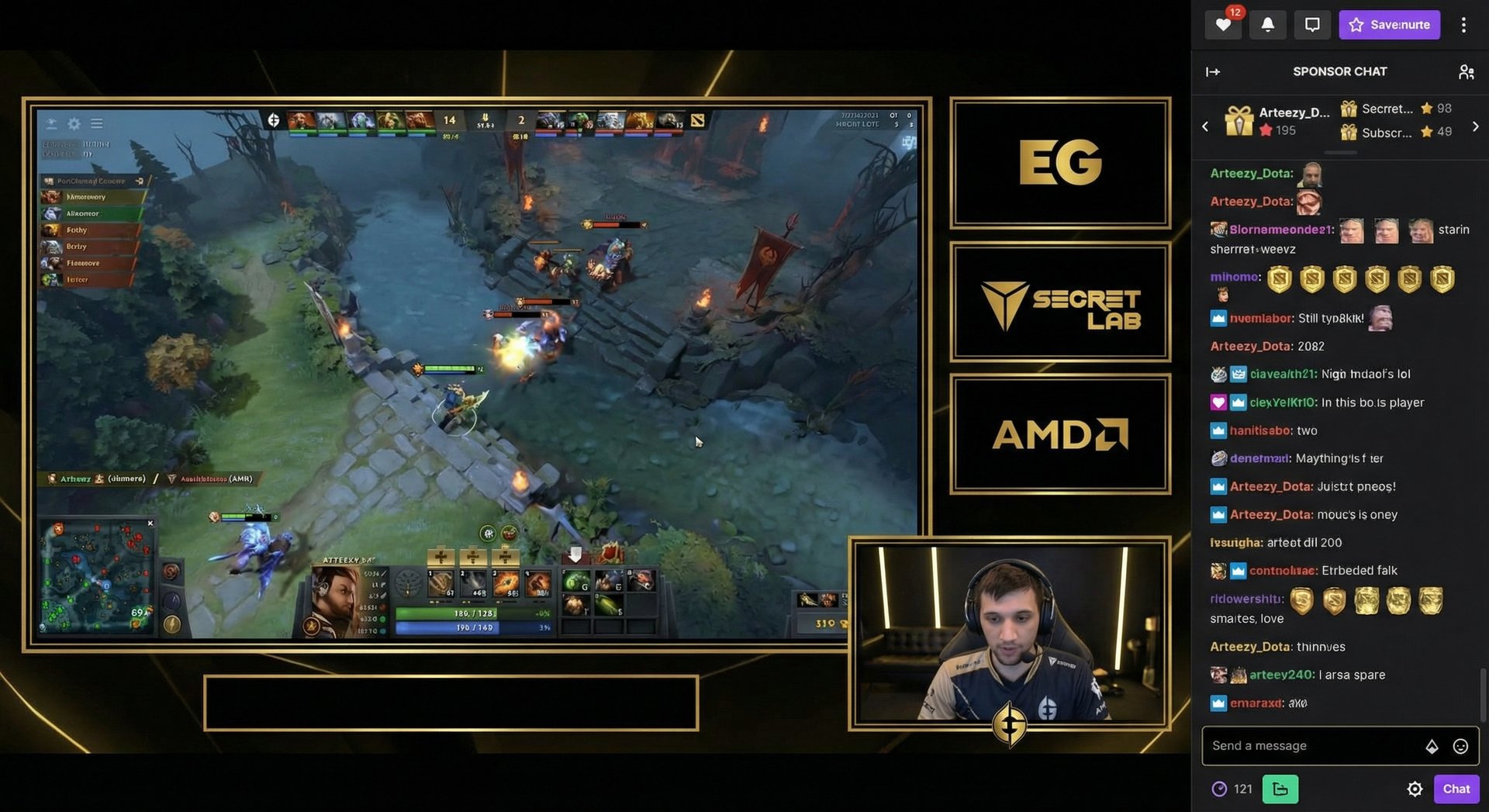
16. Arteezy (RTZ)
Platform: Twitch
Role: Carry
Skill level: Professional / Top Immortal
Why educational: RTZ’s stream attracts massive viewership, and while he’s not the most vocal explainer, his carry play is textbook. Watching how he farms, when he shows for fights, and how he positions in teamfights teaches carry fundamentals at the highest level.
Learning focus:
- Carry farming efficiency (RTZ is famous for his GPM)
- Late-game carry decision-making
- When to farm vs. fight as position 1
17. N0tail / Ceb (OG Content)
Platform: Various (YouTube, Twitch)
Role: Various (N0tail: support, Ceb: offlane)
Why educational: While their streaming is less consistent, content from OG’s legendary players provides insight into the mental game, team dynamics, and what it takes to compete at the highest level. Their content often focuses on mindset and teamwork–aspects that regular educational content tends to overlook.
Best Channels for Specific Roles
If you play a specific role and want targeted content, here’s a quick reference:
| Role | Primary Channel | Secondary Channels | Focus |
|---|---|---|---|
| Position 1 (Carry) | BSJ, Gorgc | Arteezy stream, Gameleap | Farming patterns, fight timing, item builds |
| Position 2 (Mid) | Qojqva stream | BSJ, Gameleap | Lane mechanics, matchups, tempo |
| Position 3 (Offlane) | Speeed | Zai stream, BSJ, Ceb | Lane pressure, team coordination, initiation |
| Position 4 (Soft Support) | GH stream | ZQuixotix, Cr1t stream | Rotations, ganking, tempo support |
| Position 5 (Hard Support) | ZQuixotix | Purge, Cr1t stream | Warding, pulling, lane support, economy |
Best Channels by Skill Level
| Your Skill Level | Best Channels to Watch | What to Focus On |
|---|---|---|
| New Player / Herald | Purge, DotaCinema hero spotlights | Basic mechanics, hero abilities, game flow |
| Guardian-Crusader | Purge, Gameleap, ZQuixotix | Last hitting, laning, warding basics, hero roles |
| Archon-Legend | BSJ, Gameleap, Jenkins | Farming efficiency, map awareness, objective focus |
| Ancient-Divine | BSJ, Dota Alchemy (archive), Pro streams | Game planning, timing windows, advanced mechanics |
| Immortal | Pro player streams, BSJ advanced content | Meta adaptation, team coordination, micro-optimizations |
If you’re unsure what bracket-specific skills you should be developing, our MMR Boost page includes descriptions of what separates each rank, and our Coaching service provides personalized skill assessments.
Comparison Table: All Channels at a Glance
| Channel | Platform | Type | Skill Target | Role Focus | Upload Freq. | Strengths |
|---|---|---|---|---|---|---|
| BSJ | YouTube/Twitch | Educational | Legend-Immortal | All (carry-focused) | 2-4/week | Deep analysis, coaching |
| Purge | YouTube | Educational | New-Ancient | All | Variable | Beginner-friendly, thorough |
| Gameleap | YouTube | Educational | Crusader-Divine | All | Daily | Quick tips, meta updates |
| ZQuixotix | YouTube | Educational | Herald-Ancient | Support | 1-3/week | Support-specific depth |
| Speeed | YouTube | Educational | Legend-Immortal | Offlane | 1-2/week | Offlane mastery |
| DotaCinema | YouTube | Edu-Entertainment | All | All | Variable | Hero spotlights, accessibility |
| Jenkins | YouTube | Edu-Entertainment | All | All | 3-5/week | Engaging, meta knowledge |
| Rizpol | YouTube | Entertainment | Casual-Intermediate | Core | 3-5/week | Quick, entertaining |
| Slacks | YouTube/Twitch | Entertainment | All | N/A | Variable | Community, humor, lore |
| Dota Alchemy | YouTube (archive) | Educational | Legend-Immortal | All | Inactive | Theory, game planning |
| Gorgc | Twitch/YouTube | Stream | Ancient-Immortal | Carry | Daily streams | Thinks out loud, carry mastery |
| Qojqva | Twitch | Stream | Divine-Immortal | Mid | Regular streams | Mid mechanics, aggression |
| Zai | Twitch | Stream | Divine-Immortal | Offlane/Flex | Regular streams | Game sense, creativity |
| GH | Twitch | Stream | Divine-Immortal | Pos 4 | Regular streams | Support rotations |
| Arteezy | Twitch | Stream | Divine-Immortal | Carry | Periodic streams | Farming efficiency |
How to Build a Learning Routine
Watching content randomly is good. Having a structured learning routine is great. Here’s a recommended weekly content consumption schedule for maximum improvement:
Sample Weekly Learning Schedule
| Day | Content Type | Duration | Suggested Source | Activity |
|---|---|---|---|---|
| Monday | Educational video | 20-30 min | BSJ or Gameleap | Active watching with notes |
| Tuesday | Play session | 2-3 games | N/A | Apply Monday’s lesson |
| Wednesday | Pro stream VOD | 30-60 min | Gorgc, Qojqva, or GH | Watch one game, study decisions |
| Thursday | Play session | 2-3 games | N/A | Focus on mimicking pro habits |
| Friday | Entertainment content | 15-30 min | Jenkins or Slacks | Relax, enjoy Dota 2 content |
| Saturday | Extended play session | 4-5 games | N/A | Full practice with all accumulated learning |
| Sunday | Own replay review | 30-45 min | Your own replays | Review Saturday’s games, identify mistakes |
Content Consumption Tips
- Rotate creators: Don’t watch only one channel. Different perspectives help you develop a more complete understanding.
- Balance watching and playing: A 60/40 split of playing to watching is ideal. Too much watching without playing leads to “theorycrafting without execution.”
- Revisit old content: Videos you watched months ago will teach you new things as your understanding deepens.
- Use content to prepare for sessions: Watch a hero guide before playing that hero. Watch a warding tutorial before a support session.
- Community engagement: Join Discord servers of your favorite creators. Discussing strategies with other learners accelerates your growth.
Complementing Content with Coaching
YouTube and Twitch content teaches you general principles. Coaching teaches you YOUR specific weaknesses. The ideal learning setup combines both: consume content for broad knowledge, then use coaching sessions to address the specific gaps you can’t fix on your own.
For example, after watching BSJ’s video on farming patterns, you might play 10 games trying to implement better farming. If your GPM still isn’t improving, a coaching session can pinpoint exactly what you’re doing wrong–maybe it’s not the pattern itself, but your map awareness that’s causing you to miss farm while running from ganks you didn’t see coming.
Honorable Mentions
These channels are worth checking out but didn’t make our top 15 for various reasons (inconsistent uploads, niche focus, etc.):
- D2Bowie: Meta analysis and theory content with a unique analytical perspective
- Rawdota – Henry: Educational content with personality, coaching sessions
- Datohleong: SEA-focused content with unconventional strategies
- Dota 2 ProTracker: Aggregated pro player data and build analysis
- Erick Wright (EG.Bulba): Occasional coaching and analysis content
- Heen: Former coach content providing team strategy insights
External Resources
Beyond YouTube and Twitch, these resources complement your learning:
- Dotabuff: Statistical analysis of heroes, players, and matches
- OpenDota: Free open-source match analysis with detailed statistics
- Dota 2 Wiki: Comprehensive reference for all game mechanics, items, and heroes
- Reddit r/learndota2: Active community for asking questions and discussing improvement
For players who want to understand how their current rank compares to the overall player distribution, our guide on How Dota 2 Ranked Has Changed Over the Years provides context on the ranking system’s evolution, and our Calibration service helps players who feel their rank doesn’t reflect their current skill.
FAQ
Ready to Climb Start Your Boost Today
Team Smurf is the #1 rated Dota 2 boosting service. Immortal-rank boosters, maximum safety, competitive pricing, 24/7 support.
Conclusion
The Dota 2 content ecosystem in 2026 is a treasure trove for players who want to improve. From Purge’s patient tutorials for beginners to BSJ’s deep analysis for advanced players, from Jenkins’ entertaining meta breakdowns to GH’s masterclass streams–there’s content for every skill level, learning style, and role preference.
The key is to approach content consumption with intention. Don’t just passively watch–actively engage, take notes, and most importantly, apply what you learn in your games. Pair your content consumption with regular play sessions and periodic coaching to accelerate your improvement beyond what any single resource can provide.
Subscribe to 3-5 channels from our list, set up a weekly learning routine, and commit to applying one new lesson per play session. In a month, you’ll be surprised how much your understanding of Dota 2 has deepened. In three months, your MMR will reflect it. Happy learning, and we’ll see you in the Immortal bracket.
For more guides on improving your Dota 2 gameplay, explore our MMR Boost, Calibration, and LP Removal services at TeamSmurf.com.