Vici Gaming Sweep Falcons at EWC 2026: Xm Mid Masterclass

Vici Gaming vs Team Falcons at EWC 2026 was supposed to be a clean Falcons quarterfinal. It ended as one of the most interesting 2-0s of the event. Vici did not cheese it, did not win on some random level-one disaster, and did not just catch Falcons underprepared for one map. They out-read the tempo, they changed the mid matchup between games, and they forced Falcons into the exact kind of reactive Dota that looks playable on paper but feels horrible once you are actually inside the game.
The headline is simple: Vici Gaming swept Team Falcons 2-0 on July 17 at the Esports World Cup 2026 playoffs. The match IDs were 8900508749 and 8900623530. Game 1 lasted 57:12. Game 2 lasted 32:27. Across both maps, Xm finished 29/5/21, including a brutal 19/5/14 Lina in the opener and a cleaner 10/0/7 Slark in the closer.
What made the series matter is not just the upset. It is the type of upset. Falcons are usually one of the best teams in the world at making your map feel smaller every five minutes. Vici reversed that pressure by drafting lane setups that could survive the first wave, scaling cores that could punish overcommitted skirmishes, and a mid lane pivot that most pub players are going to misread if they only look at the scoreboard. This was not “Slark mid won game.” This was vision denial, support pairing, map geometry, and Roshan timing turning a weird-looking hero into a correct answer.
If you are grinding ranked on 7.41d, this series matters. It tells you what kinds of supports are actually enabling greedy cores, what kind of offlane auras are still premium, why pure lane dominance is not enough if your first two smokes are sloppy, and why high-MMR players keep talking about draft continuity instead of just “pick meta heroes.” If you want the short version: Vici drafted for one coherent game both times, while Falcons drafted lineups that needed cleaner map execution than they actually showed.
Table of Contents
Fast Facts and Match IDs
Before we get into the tactical stuff, here is the clean data layer. These are the numbers you need if you are checking VODs, pulling OpenDota pages, or just want the fast recap without the fluff.
| Map | Result | Match ID | Duration | Score | Standout |
|---|---|---|---|---|---|
| Game 1 | Vici Gaming win | 8900508749 | 57:12 | 38-32 | Xm Lina 19/5/14 |
| Game 2 | Vici Gaming win | 8900623530 | 32:27 | 24-13 | Xm Slark 10/0/7 |
| Series | Vici Gaming 2-0 | Quarterfinal | 89:39 total | 62-45 | Xm 29/5/21 |
One more number matters: Vici came into this series off another upset run through the survival stage. They had already taken down 1w in a three-game set. That matters because this was not a random cold start from a team that only had one prepared look. They were already on stage, already reading live draft trends, and already comfortable playing long maps and short maps in the same event.
Why This Upset Was Real
A lot of tournament “upsets” are fake upsets. The favorite drafts badly once, loses a random 70-minute map, then mental-booms in game three. This was not that. Vici won a long game and then compressed the second one. That usually means the winning team understood both the macro shape of the series and how to attack the opponent’s adjustments.
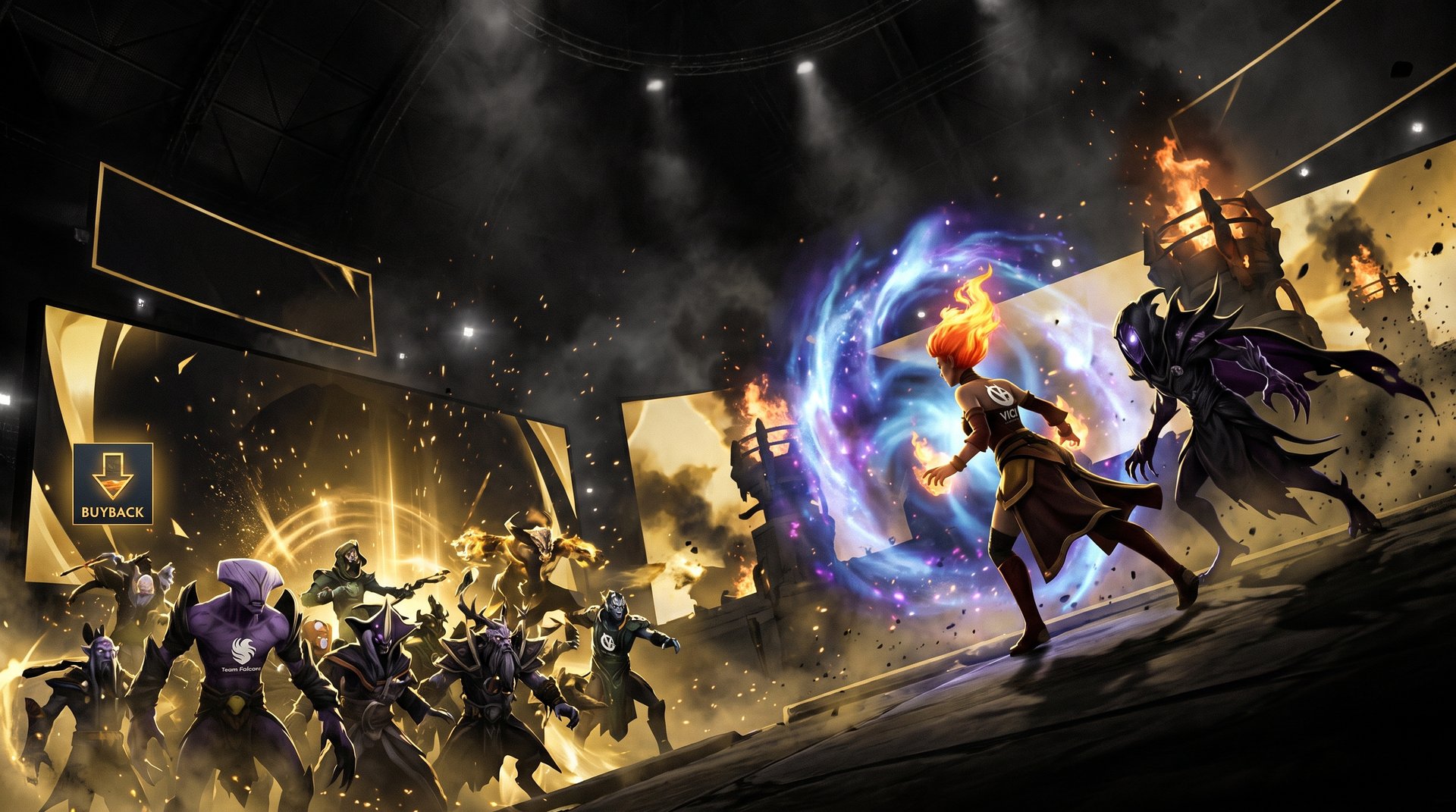
Game 1 was the kind of match Falcons normally drag back by forcing ugly buyback windows and making the enemy walk uphill into layered counter-initiation. Instead, Vici were the ones controlling the expensive defensive moments. According to the match recap coverage, Falcons had to commit multiple buybacks on the high-ground defense, and once those resources were burned, Vici converted them into megas and a clean close. That is a huge tell. If the favorite is the team buying back first in a long map, the pressure balance is already wrong.
Game 2 was even more convincing. Vici moved away from the Lina-centered map and into a Slark mid plus Lone Druid side-core structure, backed by Beastmaster, Keeper of the Light, and Treant Protector. That draft is not random sauce. It gives you lane flexibility, objective speed, a vision war edge, and a core that punishes isolated supports whenever the map starts to open. Falcons answered with Ringmaster, Dawnbreaker, Ember Spirit, Gyrocopter, and Clockwerk. On paper, that lineup can still fight. In practice, it needs cleaner initiation and better formation than they showed.
The biggest sign that Vici deserved the result was how their lineups solved different problems:
- Game 1: survive the first phase, scale harder, and make Falcons pay for every extended objective.
- Game 2: accelerate the map with summons, vision, and pickoff pressure before Falcons’ teamfight shape stabilizes.
- Both games: keep Falcons reacting, not dictating.
That is why this series matters more than a simple “Chinese team upsets TI winner” headline. It was a style answer, not just a hot streak.
Game 1 Breakdown: The Lina Map That Broke Falcons Late
Game 1 ran almost a full hour, and that matters because late game exposes whether your lineup still has clean win conditions after everybody gets their second and third item timing. Vici’s draft was Lina, Spectre, Dark Seer, Tusk, and Mirana. Falcons answered with Clockwerk, Snapfire, Winter Wyvern, Windranger, and Tiny.
The first thing Immortal players notice here is that Vici drafted a lineup that does not need to overforce early. They have multiple ways to take skirmishes, but they are really aiming for a later map state where Dark Seer teamfight control and Spectre global entry make every bad spread formation lethal. Falcons, meanwhile, had a lineup with playmaking, yes, but also one that can get awkward if its jump sequence is even a half-second off. Tiny and Windranger can still win fights late, but they want clean target access and cleaner info than Vici allowed.
| Team | Game 1 Core Heroes | Support Heroes | What the Draft Wanted |
|---|---|---|---|
| Vici Gaming | Lina, Spectre, Dark Seer | Tusk, Mirana | Scale, punish spread fights, own late objective setups |
| Team Falcons | Tiny, Windranger, Snapfire | Clockwerk, Winter Wyvern | Start fights first, burst one core, chain spells on reset |
Xm’s Lina finished 19/5/14 and led the game in net worth. That is the obvious stat, but the more important point is what Lina represented in this draft. She was not just a lane winner. She was the hero that made Falcons play from uncertainty. If Falcons commit onto Spectre or Dark Seer first, Lina keeps hitting. If they commit onto Lina first, Spectre gets to enter after information is spent. Against a team that usually thrives on dictating target priority, that is a nasty problem.
Spectre going 4/3/28 tells you the same story. That scoreline is not “hard carry solo-stomp.” It is teamfight connection. Vici were not relying on one hero to do everything. They had layered follow-up, multiple entry points, and enough late-game damage that every prolonged exchange favored them.
Falcons still put up numbers. Tiny ended 9/3/14. Windranger had 12/7/9. Snapfire had 9/6/17. That is why you cannot look at kills alone and pretend Falcons were fine. Their cores got farm, but their fight shape kept getting taxed. Clockwerk died 11 times. Winter Wyvern died 11 times. Once your backline is getting forced that hard in long maps, your second wave of control starts collapsing.
The late-map turning point was exactly the kind of sequence good teams plan for and impatient pub players ruin. Vici started threatening high ground at a timing where Falcons could defend, but only by overspending. Falcons burned key buybacks. Vici disengaged, re-entered, and turned that resource trade into a winning endgame. That is old-school disciplined Dota. Not flashy, but brutally high percentage.
From a ranked perspective, the lesson is simple: if your lineup wins longer fights, stop taking 50-50 forced ramps. Hit the objective, force TPs, bait the defensive cooldown, back out, then re-enter when the enemy support formation is broken. High-MMR games are full of players who understand their hero but still do not understand the second entry of a fight. Vici did.
Game 2 Breakdown: Xm’s Slark Mid Was Not a Meme Pick
Game 2 is the one casual readers are going to butcher. They will see Slark mid, copy it into a 4k pub, lose lane to a ranged hero they do not understand, and then say the pro game is fake. That is not what happened here. Vici’s second draft was Treant Protector, Lone Druid, Keeper of the Light, Beastmaster, and Slark. Falcons ran Ringmaster, Gyrocopter, Ember Spirit, Dawnbreaker, and Clockwerk.
Look at the support and side-core package around Slark. This is not solo queue greed. This is a lineup built to:
- Control vision better than the other team.
- Take towers early through summons and grouped pressure.
- Threaten pickoffs when the map breaks open.
- Give Slark better fight angles instead of asking him to front-load the game.
That is why the pick worked. Xm went 10/0/7, but the zero deaths are the key stat. Slark mid is strongest when the enemy does not get clean first contact on him and when your team gives him vision edges after the lanes end. Treant plus Beastmaster plus Keeper does exactly that. Suddenly every fogged lane becomes dangerous. Every retreat path gets worse. Every support that shows one second too long becomes free essence shift stacks and free map control.
| Game 2 Hero | Player Score | Why It Mattered |
|---|---|---|
| Slark | 10/0/7 | Could enter and exit fights with better information than Falcons had |
| Lone Druid | 4/3/5 | Forced objective pressure and made Falcon rotations expensive |
| Beastmaster | 6/4/13 | Added roar threat and extra map scouting |
| Keeper of the Light | 3/2/17 | Enabled pace, shove, and disengage discipline |
| Treant Protector | 1/4/13 | Made the vision war miserable for Falcons |
Falcons never got the game state they wanted. Gyrocopter finished just 3/3/6. Ember Spirit ended 3/4/1. Ringmaster and Clockwerk both died six times. Those are not disaster numbers in isolation, but in a 32-minute loss they show something important: Falcons were getting dragged into bad engagements before their lineup’s layered control could breathe.
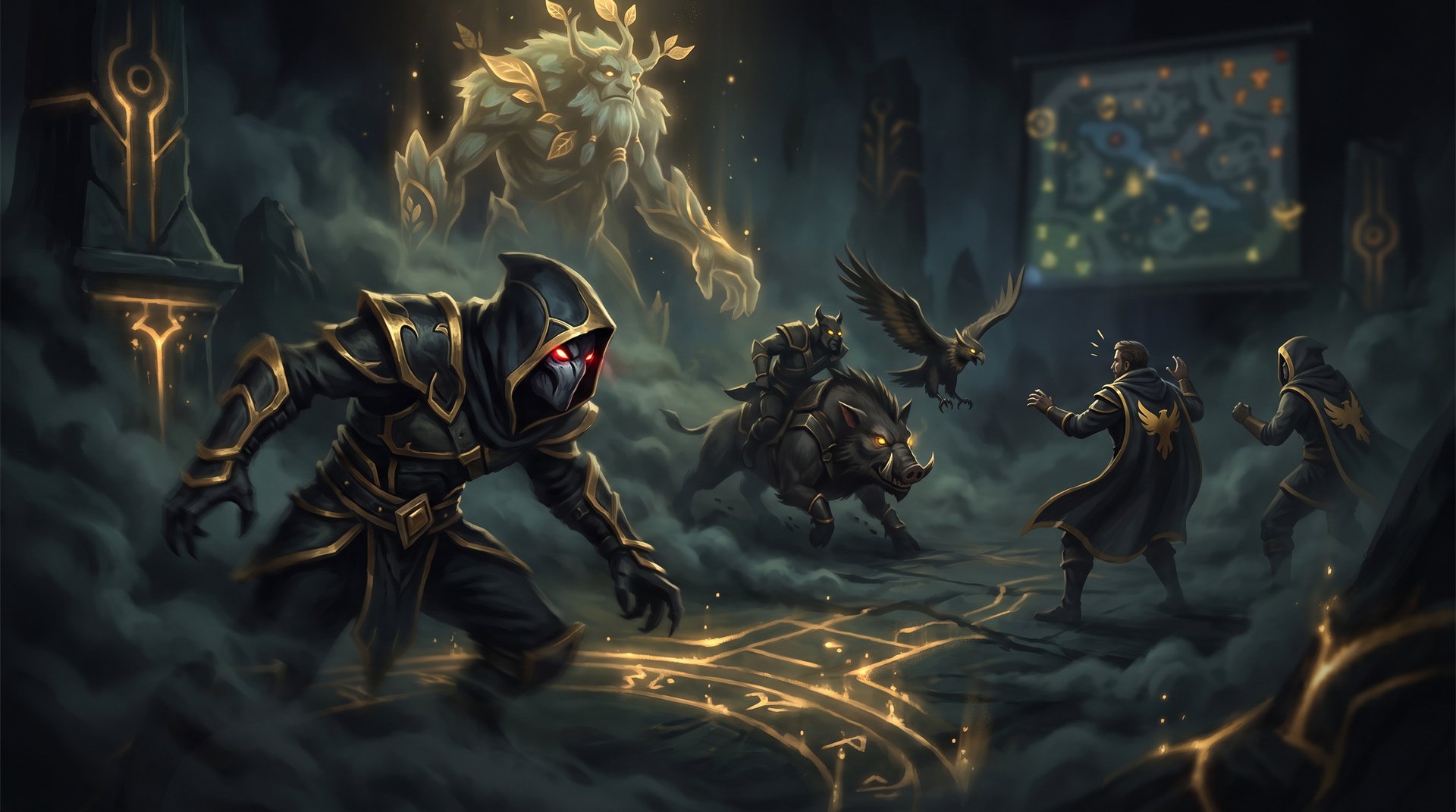
The best way to think about Game 2 is this: Vici drafted information superiority. Treant’s map presence, Beastmaster summons, Keeper lane shove, and Lone Druid objective threat all forced Falcons to reveal earlier and more often. Slark thrives when the enemy reveals first. That is why the pick looked broken.
If you are below Immortal, the easiest mistake is to think Slark mid won because “Slark is OP.” That is lazy analysis. Slark mid won because Vici created a game where the enemy supports could not safely hold vision and the enemy cores could not enter fights on their terms. The hero was the finisher, not the whole structure.
What the Drafts Actually Said
The easiest way to miss this series is to overfocus on hero names and ignore draft logic. Vici’s two wins came from different looks, but the logic stayed consistent.
- They protected their supports better than Falcons protected theirs.
- They drafted clearer second-wave teamfight.
- They were willing to pivot from standard mid damage in Game 1 to off-angle map control in Game 2.
- They forced Falcons to play perfect Dota just to keep the game even.
That last point matters most. A lineup that “can win if executed perfectly” is not automatically the better draft. In tournament Dota, especially in playoffs, the better draft is often the one that asks less perfection of its own team while demanding more perfection from the opponent. Vici did that in both maps.
Another subtle point: Falcons did not get easy support games. Clockwerk appeared in both maps and never felt like a free initiator. In Game 1 he went 2/11/17. In Game 2 he went 2/6/9. Those are decent assist counts, but the deaths matter because Clock wants to trade his body for a decisive entry, not just die first and pray the rest of the fight works out. When the opposing draft has better counter-initiation windows and better vision on re-entry, that job becomes ugly fast.
Meanwhile, Vici’s support shells were easier to play around:
- Mirana and Tusk let them contest and follow.
- Treant and Keeper let them control space before the fight fully starts.
- Both pairs gave their cores cleaner information than Falcons had.
That is why this series should be remembered as a support architecture win as much as a core showcase.
What This Says About 7.41d
We are late enough into 7.41d that most public discussions are becoming fake certainty. People act like the patch is “solved” because they can name ten high-priority heroes. It is not solved. It is just better understood at the first layer. This series showed that the real edge is now in how those heroes are packaged.
Look at a few of the relevant hero trends from the current OpenDota sample:
- Lina: 12 pro picks, 9 pro wins. Still one of the cleanest tempo-to-scale mids when your draft can protect her firing line.
- Beastmaster: 15 pro picks, 9 pro wins. No surprise. Vision plus objective pressure still wins serious games.
- Ringmaster: 15 pro picks, 7 pro wins. Strong hero, but not an auto-win if the enemy draft denies clean support positioning.
- Clockwerk: 18 pro picks, 6 pro wins. Still valuable, but clearly not free value into drafts with layered disengage and better second-wave punish.
- Dark Seer: 9 pro picks, 7 pro wins. That is one of the most telling numbers in the whole pool.
Dark Seer is a great example of how patches get misunderstood. Lower brackets often think of him as a specialist hero that only works with specific vacuum combos. High-MMR players know the real value is broader. He lets you fix lane geometry, reset fights, buff your carry’s damage pattern, and punish clustered objective play. In Game 1, that exact type of value showed up around Vici’s whole win condition.
The other hero everyone will talk about is Slark. Be careful. OpenDota’s public aggregate currently shows very little pro sample on Slark, which is exactly why sloppy takes are dangerous. A low pick count does not mean bad hero. It often means niche deployment. Slark is strongest when the draft around him creates information asymmetry. Vici built the whole second map around that asymmetry.
What high-MMR players steal from this
You do not steal the exact hero every time. You steal the logic: if your supports and side core give you vision superiority, your mid can be greedier and less standard than usual.
What lower-MMR players copy badly
They copy the Slark mid without copying the Treant, Beastmaster, and map-control shell that made the hero functional. That is how you turn a pro innovation into an avoidable pub loss.
Hero Trend Table
Here is the useful patch context. These are not every hero from the series, just the ones that tell the clearest story about why the drafts worked.
| Hero | Current Pro Record | Why Teams Still Want It | Pub Warning |
|---|---|---|---|
| Lina | 9 wins in 12 pro picks | Fast lane pressure and reliable late physical output | Needs formation and frontline discipline |
| Beastmaster | 9 wins in 15 pro picks | Vision, summons, tower pressure, single-target catch | Feels weak if your team never groups around roar windows |
| Dark Seer | 7 wins in 9 pro picks | Still elite at fight reset and clumped punishment | Do not pick it if your team refuses to enter on surge timings |
| Ringmaster | 7 wins in 15 pro picks | Strong control, flexible utility, good tempo support | Looks better than it is when your team loses the vision war |
| Clockwerk | 6 wins in 18 pro picks | Reliable start button when backline access exists | Can feed fast into layered saves and counter-initiation |
| Keeper of the Light | 5 wins in 6 pro picks | Map shove, sustain, tempo, and disengage utility | Requires players who understand wave priority |
What Pub Players Should Copy From the Series
If you are actually trying to gain MMR, do not just clip the fancy moments. Copy the scalable stuff.
1. Stop drafting isolated win conditions
Vici’s drafts did not depend on one hero landing a miracle spell. Their heroes solved each other’s problems. That is the real difference between 6k+ drafting conversations and lower-bracket “counterpick” talk. A counterpick that does not fit your support shell is often worse than a slightly weaker hero that keeps your game coherent.
2. Respect support deaths more than carry deaths in replay review
In both maps, the shape of the support game said more than the carry totals. If your first support is dying before they spend real cooldown value, your draft might still be fine but your formation is not. That is the kind of problem coaching solves fast. If your games keep looking good in lane and bad after minute 18, Dota 2 coaching is usually higher EV than mindlessly grinding another fifty solo queue games.
3. Learn second-entry fights
Most pub players know how to start a fight and almost nobody knows how to re-enter one. Vici won the long map because they understood when to back off after forcing resources, then come back before Falcons could rebuild shape. That skill transfers directly to ranked.
4. Vision heroes make weird cores look legit
Treant, Beastmaster, Mirana, even Tusk in certain games — these heroes make greedy or off-angle cores dramatically better because they reduce uncertainty. If you want to experiment with less standard mids, start by improving the information layer around them.
5. If you only have time for one thing, fix your objective discipline
Low-MMR players think climbing is about more kills. It is mostly about wasting fewer winning positions. Watch the way Vici pressured structures and compare it to the way random pubs overchase. One is trying to end the game. The other is trying to win the scoreboard.
When You Should Grind This Meta and When You Should Skip the Grind
There are two honest paths after a series like this. The first is to study it properly and use the patch knowledge in your own games. The second is to admit that you understand the ideas but do not have the time, pool, or patience to convert them into rank quickly enough.
If you are already close to your goal and just need tighter execution, keep grinding. Read our breakdowns on the best heroes on 7.41d before EWC 2026, our earlier EWC playoff picture analysis, and the latest read on Team Yandex eliminating Team Spirit. Those posts connect well with what Vici just showed.
If you are stuck in the same medal despite understanding the game, that is when it becomes rational to look at a Dota 2 MMR boost, calibration service, or a focused coaching session. Team Smurf exists for exactly that middle zone: players who know what good Dota looks like but cannot keep spending month after month on the same grind.
And if the patch has pushed you into behavior score hell or low priority after tilt queueing, fix the account first. That is what low priority removal is for. Grinding strategy on a broken account environment is just expensive self-harm.
Use the Meta or Let Us Do the Hard Part
If Vici’s drafts made you realize your own games are losing on structure, timing, and map discipline, Team Smurf can help. Get a faster climb with an Immortal booster, fix the leaks with coaching, or recalibrate cleanly before the patch shifts again.
FAQ
Sources: GosuGamers match recap, Field Level Media result summary, OpenDota match 8900508749, OpenDota match 8900623530.