TI 2026 Qualified Teams: The Full List

The International 2026 field is finally locked, and the biggest story is not just that Nigma Galaxy sneaked through as the 16th team. It is that Europe got four qualifier slots, and the region immediately turned the last week of June into a bloodbath.
Valve confirmed the format and invite list on June 29, then the final qualifier results finished the picture: seven direct invites, nine qualifier teams, Shanghai from August 13 to August 23, and a five-round Swiss phase before the main event. If you care about pro Dota, this is the cleanest snapshot of where the game actually sits heading into TI. If you care about climbing pubs, this is also a free lesson in what holds up when every draft, every lane, and every smoke actually matters.
This is not another generic “here are the teams” recap. We are going deep into who qualified, why Europe got so much weight, how the final weekend played out, and what high-MMR pub players should steal from these qualifier runs right now.
Contents
TI 2026 Field Locked: Valve Confirmed The Dates, Format, And Pressure Cooker
Valve’s official TI 2026 update dropped on June 29 and cleaned up the full picture. The International 2026 runs from August 13 to August 23 in Shanghai, with the final four days staged at the Oriental Sports Center. The structure matters because it changes how teams will prepare.
- August 13-16: Group Stage with a five-round Swiss system.
- August 17: Five elimination matches to finish the field.
- August 20-23: Main event in the arena.
That Swiss phase is a big deal. Teams do not just need one stable opener. They need enough depth to survive multiple opponent styles in a compressed window. This is where fake top teams usually get exposed. A lineup that only wins through one comfort script can get hard-countered twice and suddenly spend the rest of the event playing scared.
The prize pool was listed at US$1.6 million at announcement, which is smaller than old TI-era inflation but almost irrelevant to the competitive meaning. The Aegis still warps everything. Teams will hide strats, rework lane setups, and start scrimming like psychos because TI is still the only event where one good week can permanently rewrite a player’s legacy.
TI 2026 Qualified Teams: Full List
Valve handed out seven direct invitations, then the last nine spots were claimed through regional qualifiers. Europe got the headline because East and West Europe were merged and awarded four slots. China got two. Southeast Asia, South America, and North America got one each.
| Slot Type | Team | Region | How They Got In |
|---|---|---|---|
| Direct Invite | 1win Team | Europe/CIS | Season invite after one of the strongest trophy counts of the year |
| Direct Invite | Team Falcons | MENA/Europe circuit | Season invite |
| Direct Invite | Team Liquid | Europe | Season invite |
| Direct Invite | BetBoom Team | Europe/CIS | Season invite |
| Direct Invite | Team Yandex | Europe/CIS | Season invite after multiple elite event wins |
| Direct Invite | Aurora Gaming | SEA | Season invite on consistency and repeated deep runs |
| Direct Invite | Xtreme Gaming | China | Season invite and home-region relevance heading to Shanghai |
| Qualifier | Team Spirit | Europe | Claimed the first European slot |
| Qualifier | TEAM VISION / PARIVISION | Europe | Claimed the second European slot |
| Qualifier | HULIGANI | Europe | Came through open qualifiers and beat NAVI plus Virtus.pro |
| Qualifier | Nigma Galaxy | Europe | Won the final European slot with a 2-1 over Yellow Submarine |
| Qualifier | Vici Gaming | China | Qualified through one of China’s two slots |
| Qualifier | Team Resilience | China | Qualified through China’s second slot |
| Qualifier | OG | Southeast Asia | Won the SEA qualifier |
| Qualifier | LGD Gaming | South America | Won South America after the former HEROIC core moved under LGD |
| Qualifier | GamerLegion | North America | Won North America as the lone regional representative |
Why Europe Getting Four Slots Changes The Whole Tournament
The biggest structural change this year is not cosmetic. Valve merged East and West Europe and handed the region four TI slots. That tells you exactly how the competitive ecosystem looked in 2026: too many real teams in one lane, not enough room to pretend weaker regions deserved parity just because of old format habits.
Look at what actually came out of that qualifier:
- Team Spirit took the first slot.
- TEAM VISION / PARIVISION took the second.
- HULIGANI made TI through an open-qualifier-to-closed-qualifier miracle run.
- Nigma Galaxy survived the final elimination path and beat Yellow Submarine 2-1 for the last ticket.
That is a brutal set of outcomes for everyone who missed. Virtus.pro missed. NAVI missed. Yellow Submarine missed. MOUZ missed. In a normal year, at least one of those names might sneak in just by region math. This year the math got replaced by merit.
And if you watched enough high-MMR pubs or scrims this season, the reason is obvious. Europe still has the widest overlap between elite lane mechanics, fast support movement, and draft elasticity. The region is overloaded with teams that can punish lazy offlane openings, protect greed better than pub players expect, and shift tempo without turning every game into random brawling.
That last part matters. Bad teams call it chaos. Good teams call it controlled initiative. The qualifier results rewarded teams that could change gears without losing map shape.
| European Slot | Team | What Their Qualification Says |
|---|---|---|
| Slot 1 | Team Spirit | Still one of the cleanest pressure teams when the bracket gets serious |
| Slot 2 | TEAM VISION / PARIVISION | Peaked at the right time and looked like one of the sharpest teams in the world |
| Slot 3 | HULIGANI | Open-qualifier momentum plus real nerve under elimination pressure |
| Slot 4 | Nigma Galaxy | Experience, stubbornness, and enough clutch factor to survive the last day |
How The Final Weekend Actually Played Out
The cleanest way to understand this qualifier is to stop thinking in logos and think in survival paths.
Nigma Galaxy Took The Last Seat The Hard Way
The last confirmed qualification match was Nigma Galaxy vs Yellow Submarine, and Nigma won 2-1 to claim the final TI spot. GosuGamers lists that series under match ID 654531. That matters because it was not some fake 2-0 stomp where one team auto-collapsed. It was a real last-chance series with elimination pressure and enough back-and-forth to show who still trusted their own calls.
Nigma’s road was messy but revealing:
- They swept Rune Eaters.
- They swept NAVI.
- They then lost 1-2 to Team Spirit in the match for the first slot.
- They came back and beat Yellow Submarine 2-1 for the last available place.
That is exactly the kind of path that exposes whether a team only has upper-bracket swagger or whether it can reset mentally after a punch to the mouth. Nigma reset. Yellow did not do enough with their chance.
This is also a very Nigma thing. Their 2025-2026 season was unstable, the roster story was noisy, and yet once the qualifier turned into a series of do-or-die games, they still found the one thing veteran teams can manufacture better than new stacks: clarity in the decisive fight.
HULIGANI Were Not A Cute Story. They Were A Real Bracket Threat.
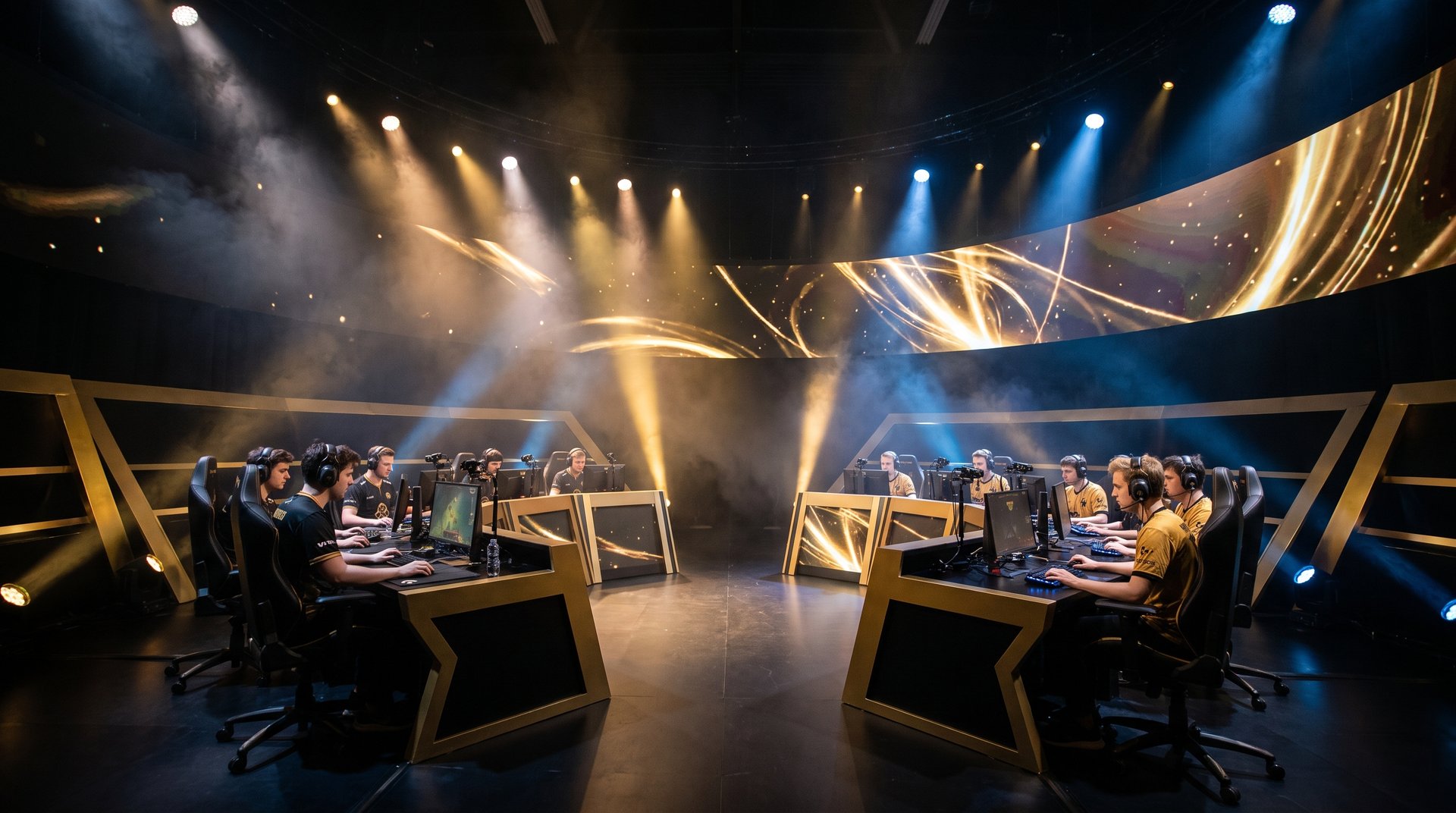
HULIGANI qualifying through Europe’s third slot is the part casual readers are most likely to underrate. They came from the open bracket and then beat NAVI and Virtus.pro on the way to TI. That is not luck. That is a team arriving with tempo, confidence, and a game model no one adapted to fast enough.
Open-qualifier teams are dangerous when they do three things well:
- They enter with fresh draft priorities instead of recycled tournament habits.
- They play simpler first-20-minute Dota than the big names.
- They commit faster in fights because nobody is trying to preserve reputation.
In other words, they are often harder to play against than “better” teams because they waste less time deciding whether to punch. High-MMR players know exactly what this feels like. Sometimes the scary opponent is not the most famous one. It is the stack that keeps collapsing on your small inefficiencies before you have finished your second sentence in voice.
GamerLegion, OG, LGD, Vici, And Team Resilience Rounded Out The Regional Picture
The non-European qualifiers matter for different reasons:
- GamerLegion came through North America and will be the region’s only representative.
- OG took Southeast Asia’s slot.
- LGD Gaming won South America after the former HEROIC core moved under the LGD banner.
- Vici Gaming and Team Resilience grabbed China’s two slots.
Vici are especially interesting because Hotspawn highlighted veteran names around that lineup, including Faith_bian, XinQ, and y`. That is not random nostalgia bait. If China sends a team with old-school teamfight discipline and real off-map patience into a Swiss system, they can farm wins off sloppy favorites very quickly.
The Teams That Matter Most Once We Get To Shanghai
Every TI has sixteen teams. Usually only six to eight feel real. This year the pool looks wider, but there is still a difference between making TI and showing up as a problem.
- PARIVISION / TEAM VISION
They feel like the sharpest “arrive hot” team in the field. Even secondary coverage is pointing at them as one of the scariest teams alive right now. If your midgame depends on opponents mispositioning first, do not queue into these guys. - Team Spirit
Still a nightmare when the series slows down and the map gets tense. Spirit punish impatience better than almost anybody, and TI Swiss is exactly where overforced moves start killing people. - Team Yandex
Three big titles in one season is not an accident. A lot of teams look clean while ahead. The teams that matter at TI are the ones that stay emotionally stable once the game turns ugly. - 1win Team
They were one of the best teams in the world early in the season and still carry top-end upside. If the prep is clean, they can absolutely run over a side of the bracket. - Team Falcons
Nobody likes dealing with a lineup that can both brute-force lanes and still pivot into map-wide suffocation if they do not get their first timing window. - Nigma Galaxy
I am not saying they are title favorites. I am saying nobody rational wants to draw an experienced elimination-hardened team in a volatile format.
What Pub Players Should Steal From These Qualifier Runs
This is the part most blog posts miss. Qualifier Dota is useful for pubs when you know what to isolate. You are not copying every pro draft. You are stealing the repeatable habits that survive pressure.
1. Stop Drafting Like You Need To Win The Game In One Stroke
The teams that survived did not draft for highlight clips. They drafted for lane recoverability, clean second-smoke execution, and objectives after won fights. A lot of 7k+ pub games are thrown because one side drafts five heroes that all need the same part of the map at minute 14.
If you are serious about climbing:
- Pick cores that can still hit a wave and reconnect after one bad fight.
- Do not overload on “fight now” heroes with no tower damage.
- Make sure somebody on your side can start and somebody else can actually hit what gets started on.
2. The Best Teams Collapse Faster, Not Louder
Watch how qualifier winners convert one piece of information. A support shows on a ward for two seconds, and suddenly three heroes are already moving. In pubs, people act like they need a committee meeting before crossing the river.
Fast collapse beats fancy move. If your stack or duo wants MMR, practice one thing: the instant two-man move off the first real vision clue. That wins more games than another speech about “macro”.
3. Veteran Teams Value Their Buybacks Better Than Most Pubs Value Roshan
Nigma surviving the final day is a reminder that old teams are rarely perfect, but they are usually better at understanding which death matters. Pub players hemorrhage games by dying for impossible wave cuts, greedy Tormentor hits, or one extra neutral camp while buyback is down.
4. Open-Qualifier Dota Teaches The Best Tempo Discipline
HULIGANI’s run is a good reminder that lower-profile teams often play cleaner early-mid transitions than more famous lineups. Why? Because they are not trying to prove they are geniuses. They are trying to survive. That means fewer vanity moves and more “take the free camp, connect to the lane, hit the tower, leave” Dota.
That is exactly how a lot of pub players should play too. Not every lead needs a dive. Not every stun needs three more spells. Sometimes the immortal move is just take the map, take the ward line, choke the exits, and wait for the other guy to panic.
| Qualifier Lesson | What Pub Players Usually Do | What Actually Wins MMR |
|---|---|---|
| Survive lane pressure | Force ego trades with no resource plan | Preserve regen, secure level timings, punish overstep |
| Convert vision | Talk too long and rotate too late | Instant two-hero move, then bring the third |
| Play from a lead | Dive Tier 2 for style points | Take map control, force bad exits, squeeze Roshan |
| Handle late game | Spend buyback for random skirmishes | Save buyback for objective-defining fights |
Where TeamSmurf Actually Helps If TI Season Is Making You Tilt
TI season is the time when players watch pros, get inspired, then immediately ruin five ranked games trying to copy the wrong part of pro Dota. The answer is not to cosplay Team Spirit from herald communication or blind-pick some offlane concept you half understood from a clip.
The useful part is structure:
- Role-specific hero pools with actual patch logic behind them.
- Coaching or boosting support when you are stuck in a bracket that punishes consistency instead of rewarding it.
- Duo queue or calibration help if you know your current account state is griefing your climb.
Best Use Of TeamSmurf During TI Season Practical Value
Do not chase pro gimmicks. Build a cleaner version of your own game. That means getting help around hero pool discipline, rank recovery, and tempo mistakes that repeat every session.
What Helps
- Narrowing to heroes that fit the current meta and your bracket
- Fixing repeated macro leaks like dead-side farming and bad smoke timing
- Using rank services when you need account recovery instead of another cope streak
What Does Not
- Copying entire pro drafts without understanding lane purpose
- Spamming mechanically hard heroes because a TI team won one series
- Pretending random pubs have pro-level comms and trust
Bottom Line
TI 2026 already feels better because the field makes sense. The direct invites are heavy, Europe earned its four-slot overload, China kept two live bullets, and the final ticket went to a Nigma team that had to actually bleed for it.
The biggest signal from this qualifier cycle is simple: discipline is back in style. Not boring Dota. Not passive Dota. Disciplined Dota. The teams that made it through were the ones that could lane cleanly, move first off information, and avoid throwing entire games for one extra flashy fight.
If you are grinding MMR during TI season, that is the takeaway worth stealing. Not the cosmetics. Not the fan narratives. The decision quality.
FAQ
If watching TI-level Dota makes you want to push your own rank before Shanghai, start with our best Dota 2 boosting services roundup, work through the MMR boosting guide, or book a session through our Dota 2 coaching service.
Want To Climb During TI Season Instead Of Just Watching It?
Use the qualifier meta the right way. Tighten your hero pool, stop throwing tempo, and get real help if your account is stuck.
TeamSmurf can help with Dota 2 boosting, coaching, calibration, and ranked recovery while the patch is still hot.
See Dota 2 Boosting Options Browse TeamSmurf