The Overwatch System in Dota 2: How Player Reviews Actually Work

Dota 2 has one of the most intricate and polarizing behavior enforcement systems in competitive gaming. The Overwatch system — Valve’s community-powered review mechanism — sits at the heart of how the game handles toxic behavior, intentional feeding, and communication abuse. But most players have only a vague understanding of how it actually works. Who reviews reports? What gets flagged? How do verdicts affect your account?
This guide breaks down the entire Dota 2 Overwatch system from the ground up — how reports are filed, how experienced players evaluate them, what happens when a verdict is reached, and how it all connects to your behavior score and matchmaking bracket. Whether you have been reported, are curious about becoming a reviewer, or just want to understand what keeps your ranked games (somewhat) clean, this is the definitive explanation.
Table of Contents
- What Is the Dota 2 Overwatch System?
- History and Origin of Dota 2 Overwatch
- How the Report System Works
- What Behavior Gets Reported
- Who Can Be an Overwatch Reviewer?
- How the Review Process Actually Works
- Verdicts and Outcomes
- The Behavior Score System Explained
- How It Affects Your Matchmaking
- How to Keep Your Behavior Score High
- Frequently Asked Questions
What Is the Dota 2 Overwatch System?
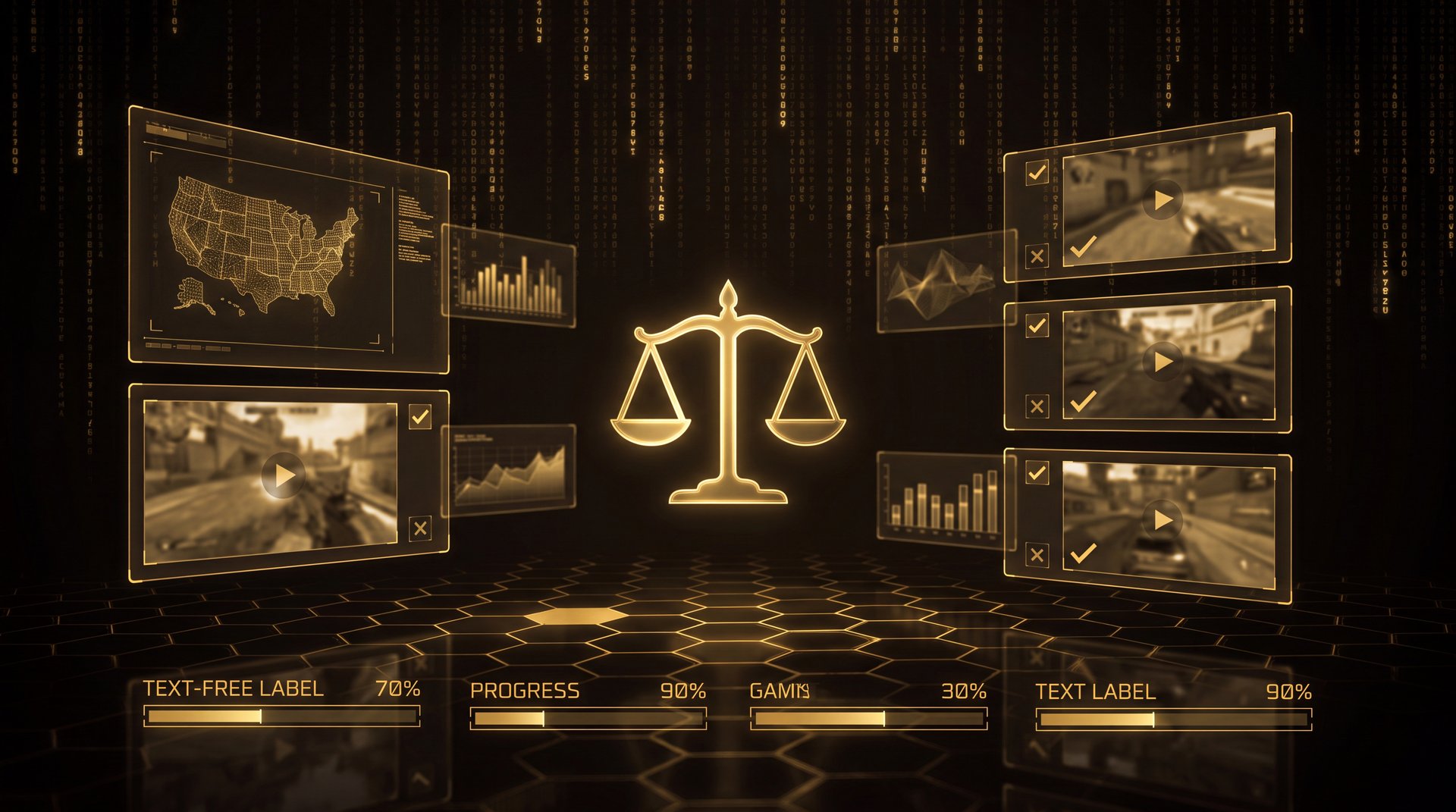
The Dota 2 Overwatch system is a peer-review mechanism that allows experienced, high-conduct players to watch anonymized clips of reported games and vote on whether the reported player exhibited bad behavior. Instead of relying solely on automated systems or Valve employees to review every report, Overwatch distributes the moderation workload across the community itself.
When a player receives a certain number of reports within a given timeframe, the game generates an anonymized case. This case — a roughly 8-15 minute clip of the reported player’s gameplay — gets queued for review. Eligible reviewers are then asked to watch the clip and determine whether the behavior shown meets the threshold for a penalty.
The system borrows conceptually from Riot Games’ original Tribunal (which was retired in 2014) and Valve’s own CS:GO Overwatch, though the Dota 2 implementation has its own unique structure tied to the game’s behavior score framework. It is designed to be scalable, community-driven, and resistant to false reports by requiring consensus among multiple independent reviewers.
Understanding Overwatch is essential for any serious Dota 2 player, not just because it determines whether you get penalized, but because it shapes the quality of every lobby you enter. Players who understand how the system works can make better decisions about how to conduct themselves in difficult games — and can better evaluate whether Dota 2 boosting services they might use operate in ways that respect the system.
History and Origin of Dota 2 Overwatch
Valve introduced the Overwatch review system for Dota 2 as part of its broader anti-toxicity push in the late 2010s. Prior to Overwatch, the game’s primary enforcement tools were automated bans triggered by abandonment rates and a basic report system that fed into Low Priority queue placement — a pool where poorly-behaved players had to win a certain number of matches before regaining access to normal matchmaking.
The problem with purely automated enforcement was obvious: it could not distinguish between a player who was genuinely griefing and one who was having an off game, playing an unconventional strategy, or dealing with a laggy connection. Human reviewers watching the actual gameplay footage could make that distinction far more reliably.
Valve also introduced the behavior score system alongside and in conjunction with Overwatch. Rather than a binary banned/not-banned state, behavior score created a continuous spectrum of conduct ratings that shaped every aspect of the matchmaking experience. Overwatch verdicts became one of the primary levers through which behavior score could be reduced significantly in a single action.
Over time, Valve has iterated on the Overwatch eligibility criteria, the types of clips reviewed, and the consequences of verdicts. The core mechanic — experienced players watching anonymized clips and voting — has remained constant, but the system has grown more sophisticated in how it weights reviewer reliability, handles edge cases, and integrates with the broader communication ban and ranked restriction ecosystem.
The system has been controversial at times. Critics point out that community reviewers can have biases, that the 8-15 minute clip window may miss context from earlier in a match, and that the asymmetric recovery rate makes accidental or context-dependent penalties disproportionately harmful. Valve has acknowledged some of these criticisms and made incremental adjustments, but the fundamental community-review model has remained intact since launch.
How the Report System Works
Every Dota 2 player has a limited number of reports they can submit per week. This cap prevents mass reporting campaigns and ensures that each report represents a meaningful negative experience rather than a reflexive reaction to a lost game.
Report Categories in Dota 2
When you submit a report, you must categorize the behavior you witnessed. The available categories determine how the case will be evaluated in Overwatch:
- Intentional feeding — Deliberately dying to the enemy team without attempting to play the game
- Ability abuse — Using hero abilities specifically to harm teammates (for example, using Blinding Potion on allies, or Lion Finger on a friendly carry during a team fight)
- Harassment — Persistent verbal or text-based abuse directed at teammates or opponents
- Communication abuse — Spamming voice chat, playing music through the microphone, or using pings disruptively
- Account buying or selling — Indicating that the account is being played by someone other than the registered owner at a significantly higher skill level
Reports are time-stamped to the match in question, and the match data — including the full replay — is stored server-side. When Valve’s systems determine that a player has accumulated enough reports to warrant review, it selects the most representative match (typically the one with the highest report count and strongest signal) and creates an anonymized Overwatch case from it.
How Reports Accumulate Into an Overwatch Case
Not every report generates an Overwatch case. The system uses a threshold model: a player must receive multiple reports within a rolling time window before a case is created. The exact thresholds are not publicly documented by Valve, but community analysis suggests that three to five reports across two to three separate matches within a week is typically sufficient to trigger case generation.
Reports are also weighted. If a player consistently reports others who are later found guilty by Overwatch, that player’s future reports carry more weight. Conversely, players with a history of filing reports that result in not-guilty verdicts see their report weight reduced over time. This creates a self-correcting feedback loop that degrades the influence of bad-faith reporters.
One important implication: if you are being targeted by a coordinated harassment campaign where multiple people report you in the same match, the system should in theory be resilient to this because those reporters’ track records matter. However, if the reports span multiple games and come from different players, the threshold can still be reached even if individual reporters have mixed track records.
What Behavior Gets Reported — and What Does Not
A common misconception is that losing badly, playing poorly, or picking an unusual hero will get you reported into Overwatch. In practice, the system is more resilient to these false positives than players assume. Reviewers are asked to evaluate specific behaviors, not overall game performance.
Behavior That Consistently Triggers Overwatch Cases
- Courier killing — Repeatedly killing the team’s own courier in the fountain or on the map
- Fountain hugging — Remaining at base for extended periods without participating in the game
- Controlled feeding — Running to specific enemy positions repeatedly to die, often in patterns suggesting deliberate intent
- Item destruction — Selling or dropping core items at inopportune moments to sabotage the team’s economy
- Chat wheel spam and voice harassment — Flooding communication channels with repetitive sounds or abusive language
- Ability griefing — Targeted, repeated misuse of team-affecting abilities to harm allies
Behavior That Typically Does Not Lead to Overwatch Verdicts
- Dying frequently due to skill gap or poor decision-making
- Playing unconventional heroes in unusual positions
- Disagreeing with teammates in text chat about strategy
- Having a low KDA in a single match
- Pausing the game for legitimate reasons
- Buying non-standard item builds
Understanding this distinction is practically valuable. If you are frustrated in a game and say something heated in chat, you may trigger an automatic communication review. But if you continue playing the game to the best of your ability and do not grief, the Overwatch reviewer who ultimately evaluates your clip will see a player who was competitive, not one who was sabotaging the team. Chat behavior and gameplay behavior are assessed through partially separate pipelines.
Who Can Be an Overwatch Reviewer?
Overwatch access is not available to all players. Valve gates reviewer eligibility behind a combination of behavior score, hours played, and account standing. The specific thresholds have been adjusted over time, but the general criteria include:
| Criteria | Approximate Threshold | Purpose |
|---|---|---|
| Behavior Score | Above approximately 9,000 out of 12,000 | Ensures reviewer has demonstrated good conduct |
| Hours Played | 500+ hours in Dota 2 | Ensures reviewer understands the game well enough to evaluate nuanced play |
| Account Standing | No active bans or penalties | Prevents penalized players from reviewing others |
| Phone Verification | Required for ranked features | Reduces smurf accounts acting as reviewers |
| Reviewer Reliability | Maintained track record above threshold | Reliability score must remain above minimum to retain access |
Reviewers are not shown who the reported player is, what their MMR is, which team won the match, or any identifying information. The anonymization is designed to prevent reviewers from being swayed by bias toward or against high-MMR players, popular streamers, or personal acquaintances.
If a reviewer’s verdicts consistently diverge from the consensus, their reliability score drops and they may lose Overwatch access. This creates an incentive to review carefully and honestly rather than rubber-stamping guilty or not-guilty verdicts reflexively. New reviewers start with a lower weight and must build a track record of accurate verdicts before their votes carry significant influence.
The reviewer pool is self-selecting in an interesting way. Players who reach and maintain high behavior scores tend to be players who are cooperative and communicative, which means they are also the players most likely to correctly identify genuinely harmful behavior when they see it in review clips. The eligibility system reinforces this alignment between reviewer character and reviewer judgment.
How the Review Process Actually Works
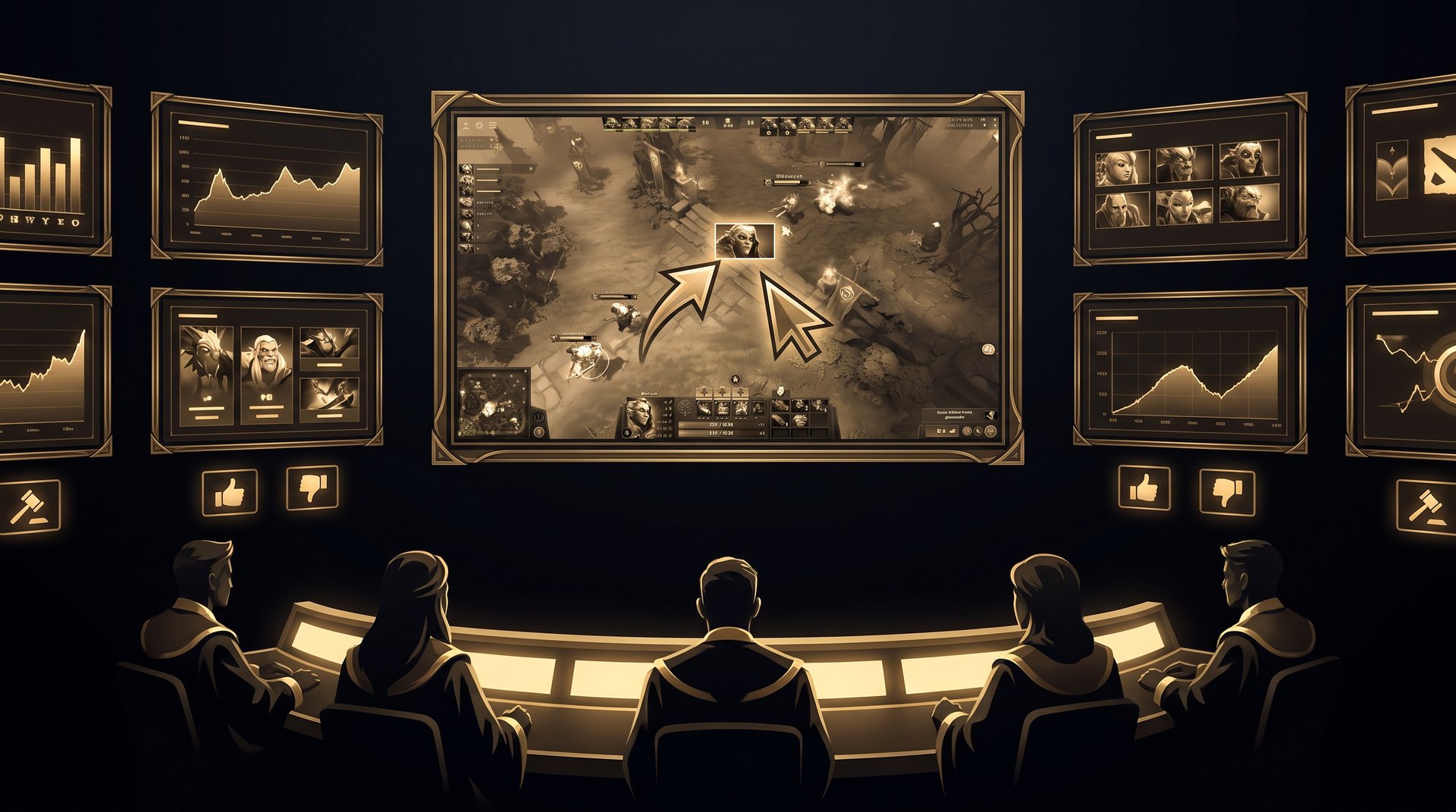
When a reviewer opens an Overwatch case, they are presented with a clip of the reported player’s match. The clip is typically 8-15 minutes long and is selected to capture the behavior that generated the most reports. Reviewers are told the category of the report (feeding, ability abuse, etc.) so they know what to look for.
Step-by-Step Reviewer Experience
- Case notification — The reviewer sees a notification in the main menu that an Overwatch case is available
- Clip playback — The case loads a replay-style viewer showing the match from the reported player’s perspective
- Category context — The report category is displayed so the reviewer knows what behavior to evaluate
- Observation phase — The reviewer watches the clip, which may be sped up during less relevant sections
- Verdict submission — At the end of the clip, the reviewer submits a verdict: guilty or not guilty
- Confirmation weighting — Valve’s backend aggregates the verdict with other reviewers’ submissions and applies the reliability weighting
A single reviewer’s vote does not determine the outcome. Valve requires a consensus among multiple reviewers before a penalty is applied. The exact number required is not public, but estimates from community analysis suggest that three to five concurrent guilty verdicts from reliable reviewers are typically required to confirm a case.
The Reliability Score System
Every reviewer has an internal reliability score that Valve tracks. When you submit a verdict that matches the eventual consensus outcome, your reliability score increases slightly. When you diverge from consensus — especially repeatedly — it decreases. Reviewers with higher reliability scores have their verdicts weighted more heavily in the final determination.
This creates a meritocratic reviewing pool where experienced, accurate reviewers carry more influence than players who just started reviewing cases. It also means that gaming the system by always clicking not guilty or always clicking guilty will eventually reduce your influence to near-zero as your reliability diverges from consensus patterns.
The practical implication for reported players is significant: if the evidence in your clip is genuinely ambiguous, experienced reviewers who have seen many similar cases are more likely to give you the benefit of the doubt than new reviewers who may be pattern-matching too aggressively. The system, when functioning well, should become more accurate over time as the reviewer pool matures.
Verdicts and Outcomes
When an Overwatch case reaches consensus, one of two verdicts is recorded: guilty or not guilty. The consequences differ significantly depending on which outcome is reached.
Not Guilty Verdict
If reviewers determine that the reported behavior does not meet the threshold for a penalty, the case is closed without action against the reported player. Importantly, the player who filed the report also loses a small amount of report credibility — repeated false reports that result in not-guilty verdicts will gradually reduce that player’s influence in the report system.
This is an important anti-harassment mechanism. Players who abuse the report system to grief their enemies — a behavior known as report-trolling — find that their reports become progressively less effective over time. A player with a history of false reports who floods a target with eight reports in a week will find that those reports collectively carry less weight than a single credible report from a reliable reporter.
Guilty Verdict
A guilty verdict triggers a significant, immediate drop in behavior score — one of the most severe penalties the system can apply outside of an outright account ban. Depending on the severity of the behavior and the current behavior score, this can result in:
- Communication ban — Muted from text and voice chat for a set duration, escalating with repeat offenses
- Low Priority queue — Restricted to a separate matchmaking pool for a set number of wins, not games
- Behavior score drop — Immediate reduction, often substantial enough to shift the player into a lower conduct bracket
- Ranked restrictions — In severe or repeated cases, inability to queue for ranked matches for a period
- Account suspension or ban — For extreme or repeat offenders, especially when automated systems detect coordinated griefing patterns
Repeat Offenders Face Escalating Penalties
The Dota 2 penalty system scales aggressively with repeat offenses. A first-time Overwatch guilty verdict might result in a 20-match Low Priority sentence. A third or fourth violation within a short window can result in a temporary or permanent account ban. Valve explicitly states in its terms of service that behavior that disrupts other players’ game experience is grounds for account termination.
The Behavior Score System Explained
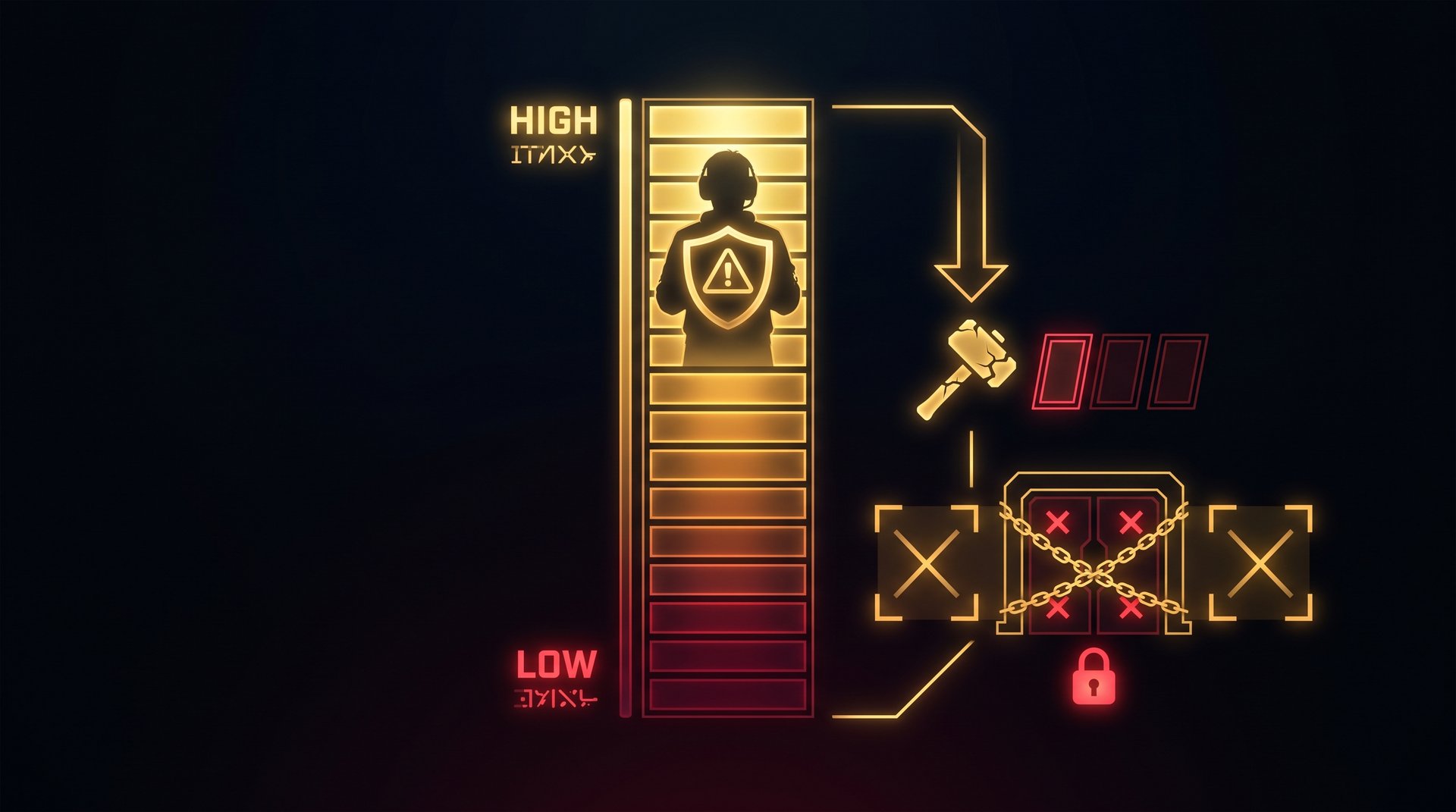
The Dota 2 behavior score is a numerical rating between 0 and 12,000 that reflects a player’s overall conduct history. It is one of the primary factors the matchmaking system uses to group players together. All accounts start at a mid-range score and move up or down based on behavior throughout each game.
How Behavior Score Changes Over Time
| Action | Score Impact | Notes |
|---|---|---|
| Completing a match without abandoning | +25 to +50 | Varies by match length and conduct within the game |
| Receiving commendations | +50 to +150 per batch | Commendations from the same player pool carry decreasing weight over time |
| Abandoning a match | -200 to -500 | Larger penalty for ranked matches; safe-to-leave exceptions apply |
| Receiving multiple reports in one game | -100 to -300 | Reports alone cause minor drops; Overwatch confirmation causes major drops |
| Overwatch guilty verdict | -1,000 to -3,000 | One of the most significant single-event penalties in the entire system |
| Low Priority sentence active | No recovery during sentence | Score cannot increase while player is serving Low Priority time |
Behavior Score Brackets and What They Mean for Your Games
Valve groups players into informal conduct brackets based on their score range. While Valve does not publicly disclose the exact bracket boundaries, community research and datamining have established a rough picture of how the brackets work in practice:
- 10,000 to 12,000 (Excellent) — Top conduct tier; games feature the most stable and cooperative teammates; Overwatch review access typically unlocked at this range
- 7,000 to 9,999 (Good) — Solid conduct; normal matchmaking; occasional toxic players but broadly stable games with reasonable communication
- 4,000 to 6,999 (Neutral) — Visible degradation in average game quality; more frequent smurfs, griefers, and match abandons
- 2,000 to 3,999 (Poor) — Noticeably worse experience; very high abandon and griefing rates; ranked access may be restricted at this level
- 0 to 1,999 (Very Low) — Severe conduct bracket; near-permanent Low Priority queue; limited feature access; effectively a shadow ban state for most content
Once a player drops into the lower brackets, recovering is extremely slow. The score caps how much you can gain per game, so digging out from below 2,000 can take hundreds of hours of clean gameplay. This is intentional — Valve designed the system to make conduct penalties sticky so that habitual griefers cannot easily reset their reputation by playing a dozen good games.
The asymmetric design also means that a single bad decision — one evening of frustrated griefing after a bad loss streak — can set your score back by the equivalent of 50-100 clean games. Players who understand this tend to develop better habits around when to queue and when to step away, which is itself part of the intended behavioral change the system is designed to drive.
How Overwatch and Behavior Score Affect Your Matchmaking
Behavior score is one of several signals that Dota 2’s matchmaking algorithm uses to group players. When you queue for a match — ranked or unranked — the system attempts to place you with and against players who have similar behavior scores, not just similar MMRs.
This means that a player with a very high MMR but a low behavior score will not be matched with the best players in the game. Instead, they will be placed in lobbies with lower-score players at various MMR levels, which degrades the quality of their game experience significantly. From a competitive standpoint, this is arguably the most impactful consequence of a low behavior score — you are effectively locked out of playing with the best-conduct players in the game, regardless of your skill level.
Conversely, maintaining a high behavior score means your games are populated by players who are less likely to abandon, less likely to intentionally feed, and more likely to communicate constructively. The quality gap between a 12,000 behavior score lobby and a 4,000 behavior score lobby in Dota 2 is enormous and immediately noticeable to anyone who has experienced both ends of the spectrum.
For players who are serious about climbing MMR, behavior score is therefore not just an ethical consideration — it is a direct competitive advantage. If you want to read more about how MMR works and how to climb effectively, our complete Dota 2 MMR climbing guide covers the mechanics in detail. And if you are worried about whether outside help can affect your account standing, our breakdown of whether Dota 2 boosting is safe for your account addresses the behavior score and ban risk questions directly.
Low Priority Queue — The Most Visible Behavior Penalty
When behavior score drops below certain thresholds — or immediately following an Overwatch guilty verdict — players may be placed into Low Priority queue. This is a separate matchmaking pool with several punishing characteristics:
- Matches are filled with other penalized players, meaning the average game quality is significantly lower than standard matchmaking
- You must win a set number of matches to exit — not just play matches, but win them, which takes longer in low-quality lobbies
- Your behavior score cannot increase while you are in Low Priority, making recovery impossible until the sentence is served
- Communication restrictions may apply even within the Low Priority pool itself
Low Priority is designed to be unpleasant enough to deter the behavior that sent you there. The combination of bad teammates, mandatory wins, and inability to gain behavior score during the sentence creates a strong negative reinforcement loop. For most players, serving a Low Priority sentence — especially a long one — is motivation enough to change behavior.
How to Keep Your Behavior Score High and Avoid Overwatch
Avoiding Overwatch is straightforward in principle: do not engage in the behaviors that trigger reports. But the practical reality is that Dota 2 is a high-stress competitive environment where frustration is common, and maintaining composure game after game requires active effort and good habits built over time.
Practical Tips for Maintaining a High Behavior Score
- Mute early and often — If a teammate is being toxic in voice or chat, mute them at the first sign rather than engaging. You cannot get provoked into saying something reportable if the source is already muted.
- Never abandon unless it is safe to leave — The abandon penalty is one of the single largest score deductions in the game. If the game detects the abandon as safe-to-leave because another player disconnected and did not return, the penalty does not apply.
- Commend freely after good games — Commendations from players outside your regular friend group carry significant weight. Commend players in public lobbies after good games and you will occasionally receive commendations in return that help build your overall score.
- Do not type in chat when frustrated — Text chat is monitored by automated systems independently of Overwatch. Triggering keyword detection for slurs or abusive language can result in an immediate communication ban that begins degrading your score before any human review takes place.
- Play out the game even when it looks lost — Dota 2 has one of the largest comeback potential windows of any MOBA. Stopping play, farming the jungle to run out the timer, or standing at the fountain while technically alive generates exactly the clip material that Overwatch reviewers are looking for.
- Take breaks between matches on loss streaks — Tilt is the single biggest predictor of report-generating behavior. Recognizing when you are not in the right mental state to play a clean, cooperative game is a skill that pays significant dividends in behavior score over time.
For players who want to skip the grind entirely and start fresh at a higher MMR bracket with a clean behavior score, the best Dota 2 boosting services offer a way to reach your target rank without the accumulated baggage of a punished main account. Alternatively, consider our Dota 2 coaching sessions to improve fast enough that you stop ending up in the losing games where frustration tends to boil over into reportable behavior.
What to Do If You Have Been Reported Unfairly
There is no formal appeal process for individual Overwatch cases in Dota 2. Valve’s position has consistently been that the community consensus mechanism is accurate enough at scale that individual appeals are not practical to process. However, if you believe your account was penalized in error, you have a few options:
- Submit a support ticket to Valve detailing the specific match in question and the circumstances you believe were misread by reviewers
- Provide context about connection issues, technical problems, or other extenuating circumstances that may have made your gameplay look like intentional griefing
- Focus on rebuilding your behavior score through clean gameplay, which will gradually offset a single incident over time
Valve support does reverse penalties in cases of demonstrated false positives, particularly when technical issues can be documented — for example, an ISP outage causing repeated disconnects that were logged as abandons. However, do not expect a response to a support ticket if your only argument is that you did not do anything wrong without any supporting evidence or documentation to back up the claim.
Want to Play in Higher-Quality Lobbies?
Your behavior score determines your lobby quality as much as your MMR does. If you want to experience Dota 2 in the top conduct brackets with cooperative, skilled teammates, improving both your MMR and your conduct record is the path forward. Our services are designed to help you get there efficiently and safely.
Boost My Dota 2 MMR Compare Top Boosting Services