Team Spirit’s Third Aegis: How They Won TI 2026

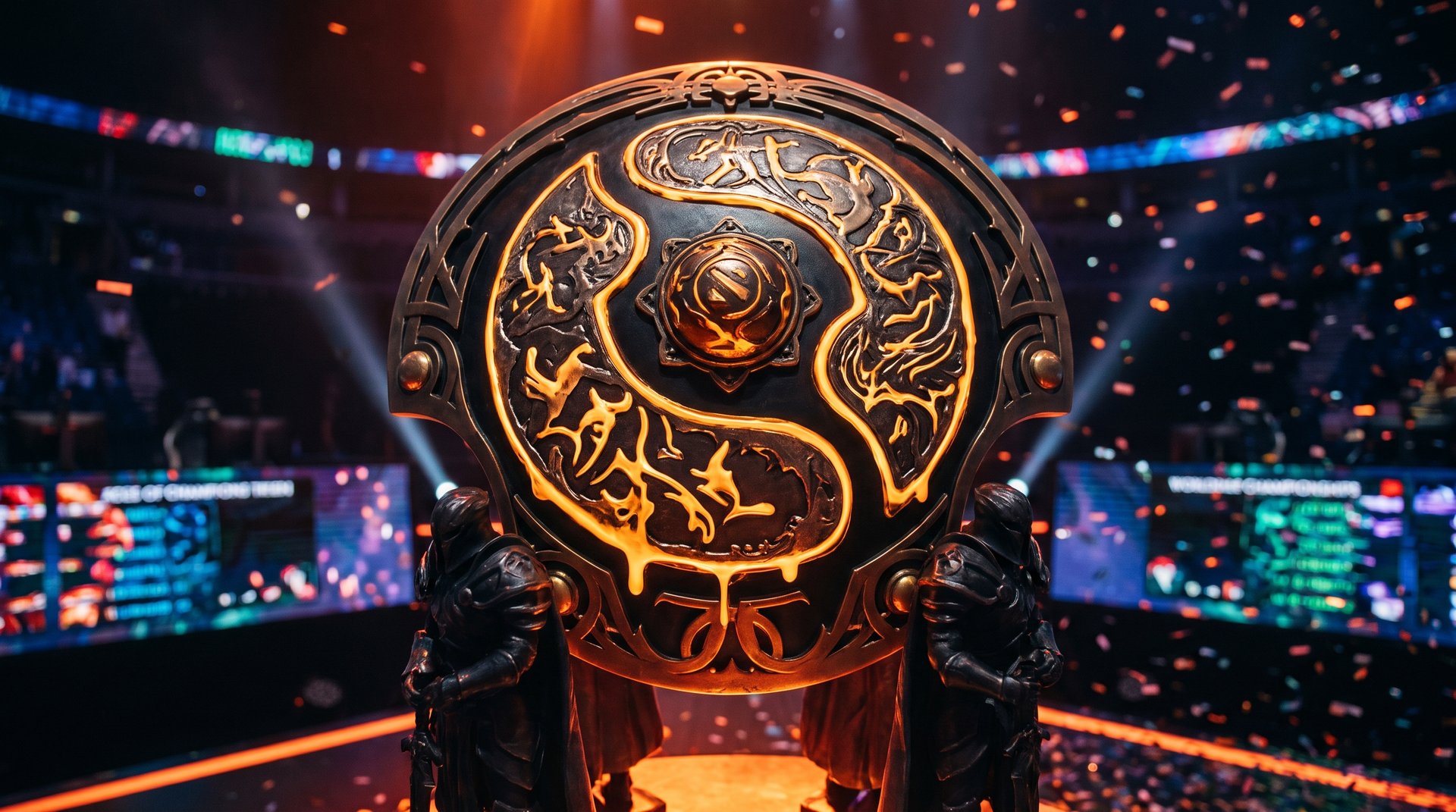
On August 23, 2026, inside Shanghai’s Oriental Sports Center, Team Spirit lifted the Aegis of Champions for the third time. No team has ever done that. Not OG. Not Wings. Not Liquid. Spirit are alone at the top of Dota 2 history.
What makes this win even more remarkable: Spirit came in as underdogs to their own final. TEAM VISION had gone through the entire group stage without dropping a series, swept Spirit in the groups, and entered the playoffs as the heaviest TI favorites in years. Spirit took them down 3-2 in a grand final that went all five games.
This is the complete breakdown — roster, tournament run, why they won, and what it means for your ranked games right now.
Table of Contents
- A Historic Third Aegis
- The 2026 Roster Breakdown
- Group Stage: Spirit’s Path
- TEAM VISION’s Dominance
- Lower Bracket Run to the Final
- Grand Final: Spirit vs TEAM VISION
- Yatoro and Collapse: Three-Time Champions
- Miposhka: Player to Coach Champion
- Why Spirit Keeps Winning
- What TI 2026 Means for the Scene
- Lessons for Your Ranked Climb
- FAQ
A Historic Third Aegis
Three TI titles. Let that sit for a moment.
OG won back-to-back in 2018 and 2019 — considered the greatest dynasty in Dota 2 history. Team Spirit took TI 2021 as complete outsiders, then proved it was no fluke by winning TI 2023. Now they have three. The only comparable achievement in esports would be teams like Dynasty or SKT in League of Legends, but Dota 2’s TI is widely considered the hardest esports championship to win — one event per year, 16 best teams in the world, enormous variance even in a Bo5.
The prize pool for TI 2026 was approximately $3.33 million, boosted from a base of $1.6 million through 30% of support bundle sales. Spirit claimed the top prize of $1.4 million. TEAM VISION settled for second, Team Yandex third, and BoomBoys (formerly BetBoom Team) finished fourth at $196,771.
| Place | Team | Prize |
|---|---|---|
| 1st | Team Spirit | $1,400,000 |
| 2nd | TEAM VISION (PARIVISION) | ~$598,000 |
| 3rd | Team Yandex | ~$332,000 |
| 4th | BoomBoys | $196,771 |
| 5th-6th | Team Liquid, Nigma Galaxy | ~$162,832 each |
The numbers tell one story. The journey to get there tells a much better one.
The 2026 Roster Breakdown
Spirit’s 2026 TI-winning roster is not the same five that won in 2021 or 2023. The core has shifted — but the identity has not. Here is who was on the squad:
| Player | Role | TI Titles | Notes |
|---|---|---|---|
| Illya “Yatoro” Mulyarchuk | Carry (Pos 1) | 3 (2021, 2023, 2026) | Only 3x TI champion as a player alongside Collapse |
| Denis “Larl” Sigitov | Mid (Pos 2) | 2 (2023, 2026) | 13th player ever to win TI twice |
| Magomed “Collapse” Khalilov | Offlane (Pos 3) | 3 (2021, 2023, 2026) | Only 3x TI champion as a player alongside Yatoro |
| Aleksandr “rue” Filin | Soft Support (Pos 4) | 1 (2026) | First Aegis |
| Alexey “not me” Kosmynin | Hard Support (Pos 5) | 1 (2026) | Won TI in debut tournament appearance |
| Yaroslav “Miposhka” Naidenov | Coach | 3 (2021, 2023 as player; 2026 as coach) | Unique: three titles across player and coach roles |
The headline stat: Yatoro and Collapse are now the first Dota 2 players in history to win TI three times. Miposhka, who captained and played pos 5 in the 2021 and 2023 lineups, stepped into a coaching role for the 2026 season and won the title a third time in a completely different capacity.
rue and not me — the two players bringing fresh blood into the lineup — both walked away with their first Aegis. Notably, not me won the whole thing on his TI debut. That is the kind of pressure performance that separates a great team from a merely talented one.
Group Stage: Spirit’s Path
Spirit entered TI 2026 with momentum but not the dominant reputation that TEAM VISION carried into the event. Their group stage run reflected that — strong early, with one painful loss that would define the tournament narrative.
Round by round in the group stage:
- Round 1: Swept Xtreme Gaming 2-0. Clean series, no complications.
- Round 2: Swept Aurora Gaming 2-0. Spirit looked sharp, exploiting slower draft styles.
- Round 3: Beat Team Liquid 2-1. A harder series — Liquid pushed back in game two — but Spirit closed it out.
- Round 4: Lost to TEAM VISION 0-2. VISION swept them convincingly, announcing themselves as the team to beat.
That loss to VISION in the groups set up the entire tournament arc. Spirit dropped to a lower seed in the bracket, putting them in a tougher playoff path from the start. Some teams crumble when an opponent beats them that decisively. Spirit used it as information.
TEAM VISION’s Dominance
TEAM VISION — also known as PARIVISION, the CIS squad coached by Dota 2 legend Clement “Puppey” Ivanov — was the most dominant team at TI 2026 before the grand final. They became the first team to secure a direct playoff berth by going undefeated in the group stage, sweeping every series they played until they faced Spirit in the final.
Their group stage run: beat Team Resilience 2-0, beat defending champions Team Falcons 2-1, swept BoomBoys 2-0, then swept Spirit 2-0. VISION was not just winning — they were winning convincingly, often making games look one-sided in draft and execution.
Entering the playoffs, VISION were the clear betting favorites. Most analysts expected them to cruise through upper bracket and lift the Aegis. What happened instead is why people watch sports.
Lower Bracket Run to the Final
Spirit did not take the easy road to the grand final. Coming through the lower bracket at TI means you can only afford one more series loss — every match is elimination. Spirit navigated this with the composure of a team that has done this before, which they have.
The lower bracket run at TI 2026 required Spirit to win multiple consecutive best-of-three series against opponents who were themselves top-16 teams in the world. Each series was a situation where one bad draft, one tilted carry performance, one misread of the meta could end the run.
What stood out throughout the lower bracket: Spirit’s adaptability. They were not running a rigid signature hero pool. They were reading what opponents prepared against them, adjusting picks across games within each series, and leaning on Yatoro’s ability to perform on a wide range of carries to keep opponents guessing.
By the time Spirit reached the grand final, they had played more games than VISION — the classic upper bracket vs lower bracket dynamic. VISION came in fresher. Spirit came in battle-tested.
Grand Final: Spirit 3-2 TEAM VISION
The grand final between Spirit and TEAM VISION was a genuine five-game battle. Spirit had already lost to VISION twice before reaching this point — in the group stage and presumably in earlier playoff interactions — making the task of beating them in a Bo5 all the more difficult psychologically.
The series went to five games. That alone tells you neither team had a decisive meta advantage or outright outpicked the other consistently. These were two teams that understood each other deeply, reading adjustments in real time and forcing the series to a deciding game.
In game five, Spirit closed it out.
The post-TI analysis from the community points to several factors that tilted game five in Spirit’s favor:
- Yatoro’s resourcefulness: Playing carry for a lower bracket team means you are often playing from behind in net worth relative to an upper bracket opponent who has had easier series. Yatoro’s ability to stay alive, find farm efficiency in contested situations, and come online at the right time is a skill that does not show up on a kill scoreboard.
- Collapse’s impact on side lanes: The offlane role in 7.41e is heavily about early tempo — winning your lane or making enough noise to let the midlaner breathe and the carry farm. Collapse has always excelled in high-pressure situations, and in a Bo5 grand final, that does not change.
- Miposhka’s draft reads: Now in the coaching seat, Miposhka’s fingerprint on Spirit’s drafting style is still unmistakable. Between-game draft adjustments in a five-game series are where championships are decided more often than in any individual team fight, and Spirit’s adjustments game to game kept VISION from settling into a comfortable pattern.
Yatoro and Collapse: The Only Three-Time Champions
This deserves its own section because it will not happen again for a very long time — if ever.
Illya “Yatoro” Mulyarchuk and Magomed “Collapse” Khalilov are the first Dota 2 players in the 15-year history of The International to win the tournament three times as players. TI 2021. TI 2023. TI 2026. Those three names are now permanently on the Aegis of Champions.
Consider the context. Between those victories, the DPC circuit changed format multiple times. Valve shifted how invites were allocated. The competitive landscape rotated entirely — the Chinese meta dominance, the Western surge, the CIS core establishing itself. Through all of that, these two players stayed together, stayed with Spirit, and won.
What Makes Yatoro Different
Yatoro at his peak is the best carry player in the world. That statement is not controversial at this point — it is the consensus of the high-MMR community and supported by the evidence of three TI championships on his resume.
What separates him from other world-class carries: he does not need ideal conditions. He has won TIs coming through the lower bracket, coming from behind in group stage, playing against teams that have specifically studied his patterns. His laning phase is technically tight, his farming efficiency is elite, and his teamfight decision-making under pressure is the cleanest of anyone playing the game.
For players trying to improve their carry game, watching Yatoro’s replays is one of the highest-value activities you can do. Not because his item builds are flashy — they are usually correct but not exotic — but because of what he does in the in-between moments: the warding aggression, the repositioning before fights, the clarity on when to take space versus when to stay safe and let the team work.
What Makes Collapse Different
Collapse plays heroes that create chaos — Mars, Axe, Tidehunter, Magnus, Enigma — and extracts maximum value from his team’s momentum. He is not a passive offlaner who just soaks experience. He is an active threat from the first minute of the game.
In 7.41e, the offlane has high variance. The meta around match duration and high-ground sieging means offlaners need to have impact before the game reaches a stalemate. Collapse’s style is inherently suited to this: he creates early chaos, wins or draws his lane through aggression or creative positioning, and rotates to create opportunities for the rest of the team before enemies are fully itemized.
Three TI titles is the result of consistent excellence in a role that rewards chaos and punishes passivity. Collapse has never been passive.
Miposhka: From Player to Coach Champion
Yaroslav “Miposhka” Naidenov’s story at TI 2026 is unique in Dota 2 history: he is now a three-time TI champion in two different roles. He won TI 2021 and TI 2023 as Spirit’s captain and position 5 player. He won TI 2026 as head coach.
The transition from player to coach is notoriously difficult in esports. Most great players do not become great coaches because the skills are different. Playing requires pattern recognition in real time, mechanics, and in-game decision-making. Coaching requires the ability to transmit knowledge to others, manage preparation cycles, run draft analysis, and stay calm while five other people are doing the actual playing.
Miposhka has shown he can do both. His presence in the coaching seat almost certainly influenced how Spirit approached preparation for each opponent at TI 2026, and specifically how they adjusted their draft approach after losing to VISION in the group stage. You do not just show up to a Bo5 grand final against the team that swept you and figure out new answers on the fly. Those answers come from preparation, from analysis of what went wrong, from a coaching environment that does not panic after adversity.
Why Spirit Keeps Winning
After three TI titles, the question changes from “how did they win this year” to “why do they keep winning.” The honest answer involves several factors that go beyond any individual player performance.
Roster Stability Around a Flexible Core
Spirit has never been afraid to change players around Yatoro and Collapse, but they have never touched those two. The org made TORONTOTOKYO and Miposhka available — players who had just won TI — and brought in Larl and eventually rue and not me. Every change upgraded or maintained the team’s ceiling while keeping the identity intact: aggressive, proactive, read-focused Dota 2 built on a world-class carry.
Most orgs do not have the discipline to sit still on a winning formula. They panic, over-rotate, add flashy names that do not fit, or lose players to buyouts. Spirit has consistently made quiet, correct decisions.
The Miposhka Factor
Having a three-time TI champion as your head coach — someone who played in those winning lineups and understands Spirit’s culture from the inside — is not something you can replicate by hiring an analyst from another team. The institutional knowledge, the shared language around preparation, the trust between Miposhka and the players: that is years of work compressed into an advantage that shows up in a five-game grand final.
Lower Bracket Hardening
This is something the community underweights. Spirit came through the lower bracket. That means they played more games, faced elimination pressure earlier, and arrived at the grand final having been tested more thoroughly than VISION. There is a real argument that playing more high-stakes games before the final is an advantage rather than a disadvantage — you are sharper, your adjustments are more recent, and your tilt resistance has been tested and found solid.
Adaptability Over Signature Heroes
Teams with a rigid “signature hero pool” are exploitable. Opponents study your patterns, ban your carries, and draft to eliminate your win conditions. Spirit under Miposhka’s coaching philosophy plays a wider pool. Yatoro is dangerous on hard carries, flash farming carries, and even more utility-oriented options when the draft calls for it. That flexibility forces opponents to make uncomfortable decisions in draft rather than executing a pre-planned ban sequence.
What TI 2026 Means for the Scene
TI always triggers a roster shuffle. Players re-evaluate contracts, orgs make decisions based on results, and the entire competitive landscape reshuffles for the next DPC season. TI 2026 is no different — and in some ways the post-TI shuffle is already unusually active.
Key storylines to watch:
- TEAM VISION’s response: Finishing second when you were the biggest favorites in the tournament is a painful result. Puppey’s squad will face roster questions — some players may explore options elsewhere, and VISION will need to decide whether to stay together or rebuild around different pieces.
- Team Falcons’ rebuild: The defending champions from TI 2025 lost Aui_2000 to retirement post-TI. Rebuilding around a player’s departure, especially at support, is one of the hardest things an org can do mid-cycle.
- Patch 7.42 incoming: The post-TI patch is the most anticipated patch of the year. Valve typically releases a major balance update a month or so after TI. Community discussion puts the 7.42 window in late September 2026, potentially around PGL Wallachia Season 9 (September 17-27). Every hero that was dominant in 7.41e is a nerf candidate. The meta will shift.
Lessons from Spirit’s Win for Your Ranked Climb
Watching TI and taking it back to your ranked games is one of the best things you can do for improvement. Spirit’s TI 2026 run offers several directly applicable lessons.
Lesson 1: Win Conditions Over Signature Picks
Spirit does not lock in their favorite hero and force it every game. They identify what win condition the current game state demands — deathball, late-game carry, pick-off, siege — and draft to execute that condition cleanly. In ranked, players who spam one hero do fine up to a point, then hit a wall when the pool adapts to them. Develop 2-3 heroes per role that cover different win conditions.
Lesson 2: Between-Game Adjustment Is Where Matches Are Won
In a ranked series you often cannot literally adjust your picks, but you can adjust your approach. If the enemy carry outfarmed you in game one, play more aggressively to deny the farm path in game two. If your pos 5 got completely outleveled, change your lane assignment or early rotation plan. Spirit beat TEAM VISION across five games by adjusting within the series. Be the player who adjusts, not the one who just runs the same approach into a wall.
Lesson 3: Stay Calm Under Adversity
Spirit was swept by VISION in the group stage. They then won the tournament. The mental component of not tilting after a bad result — not overadjusting, not panicking, not abandoning your prepared approach just because it failed once — is something Spirit does at an elite level. In ranked, after a loss streak, the instinct is to play differently out of frustration. Usually that makes things worse. Stay calibrated.
Lesson 4: Roles Matter More Than You Think
Collapse as a three-time TI winner plays offlane. He is not the flashiest, highest-kill-count player in every game. His value comes from creating space, absorbing pressure, and enabling Yatoro. If you are climbing as a support or offlaner and feeling invisible in your ranked games, watch Collapse replays. His rotations, his sacrifice timing, and his ability to convert disadvantaged situations into draws or wins are the kind of skill that does not show up in a networth graph but wins championships.
If the grind feels too slow or the skill gap at your target MMR feels too wide right now, our Dota 2 boosting services can place you in the bracket where your actual skill belongs while you continue developing. The safety and process of working with Immortal-rank boosters is covered in detail for anyone with questions.
Frequently Asked Questions
Capitalize on the Post-TI Window
The weeks after TI are historically the best time to push MMR. The meta is solved, the player pool is motivated, and patch 7.42 has not reshuffled everything yet. Whether you want to grind it yourself or get placed in the bracket your skill deserves, TeamSmurf’s Immortal-rank boosters are ready.
Get MMR Boost Book a Coaching Session