Post-TI 2026: Why This Is Your Best Window to Push MMR

Team Spirit just claimed their third Aegis of Champions at The International 2026. The confetti has barely settled, the trophy photos are still being posted — and for pub players, that means one thing: the best MMR-grinding window of the year just opened.
Every post-TI period follows the same pattern. Pros are traveling, signing new contracts, taking breaks, or adapting to entirely new rosters. The players responsible for the hardest lobbies at 6,500+ MMR simply are not queueing right now. The meta is settled. Patch 7.41e is not changing before PGL Wallachia Season 9 starts on September 17. You have an 11-day window to push harder than at any other point in the year.
This guide breaks down exactly why this window is special, which heroes to abuse in the current meta, and how to structure your grind so you peak — not burnout — before Wallachia kicks off and the pros return to ranked.
Table of Contents
Why Post-TI Lobbies Are Different
If you have been playing Dota 2 for more than a couple of years, you already feel this shift — you just may not have put a name to it. The post-TI lull is real, and it is not random. It is structural.
Here is what actually happens every year after The International ends:
- Top-end players travel or celebrate. Pro players who just competed at TI are in tournament hotels, flying home, or at sponsor dinners. They are not grinding ranked the night the event wraps.
- Break announcements hit immediately. This year, Nisha confirmed a competitive break within 48 hours of TI ending. Gpk from BetBoom did the same. These are some of the highest-MMR accounts in Europe. When they stop queueing, the 7,000-8,500 MMR range gets measurably easier for everyone below them.
- Free agents do not spam ranked. Players between teams, like Ghost from GamerLegion who is now a free agent, are usually in talks, attending meetings, or waiting on contracts — not running 15 ranked games a day.
- New roster chemistry requires LAN scrims, not ranked. Teams that are rebuilding — Team Liquid (Malr1ne replacing Nisha), BetBoom (restructuring around Save- at mid), OG (floating Topson for the mid slot) — are running scrimmages and testing builds in private lobbies, not your public queue.
The net result: the 6,500-8,500 MMR bracket in EUW and EUE, and similar ranges on other servers, runs noticeably softer for a two-to-three week window after every TI. If you are in Divine or low Immortal, you will feel this directly. If you are climbing through Legend or Ancient, the ripple effect still matters because the 7K players who occasionally smurf in your bracket are also less active.
The Roster Shuffle Factor
The 2026 post-TI roster shuffle is particularly chaotic, which makes this window even better than usual.
Here is the current state of the major Western European and international rosters as of September 6:
| Team | Status | Key Move |
|---|---|---|
| Team Liquid | Rebuilding | Nisha on break, Malr1ne joining as mid |
| BetBoom Team | Restructuring | Gpk on break, Save- moving to mid, Kataomi out |
| OG | Scouting | Topson floated for mid slot, SEA/EU hybrid rebuild |
| GamerLegion | Free agents | Ghost out, Timado linked as possible carry |
| Falcons | Uncertain | Cr1t- hinted current roster played its final tournament together |
Teams in rebuild mode do not run ranked. Newly formed rosters that have never played together run scrimmages. Free agents play a few games to stay warm, but rarely with the intensity of a player who has a full squad and a tournament schedule to prepare for.
The deadline for finalizing rosters before competitive play resumes is PGL Wallachia Season 9 on September 17. After that date, the new lineups lock in, teams start taking ranked and scrims seriously again, and your window narrows. You have 11 days from today.
SumaiL, whose retirement was widely rumored, is now linked to Playtime in South America — meaning he will likely be playing on a South American server, not flooding your EU or NA queue. Another variable removed from your bracket.
The 7.41e Meta: What to Abuse
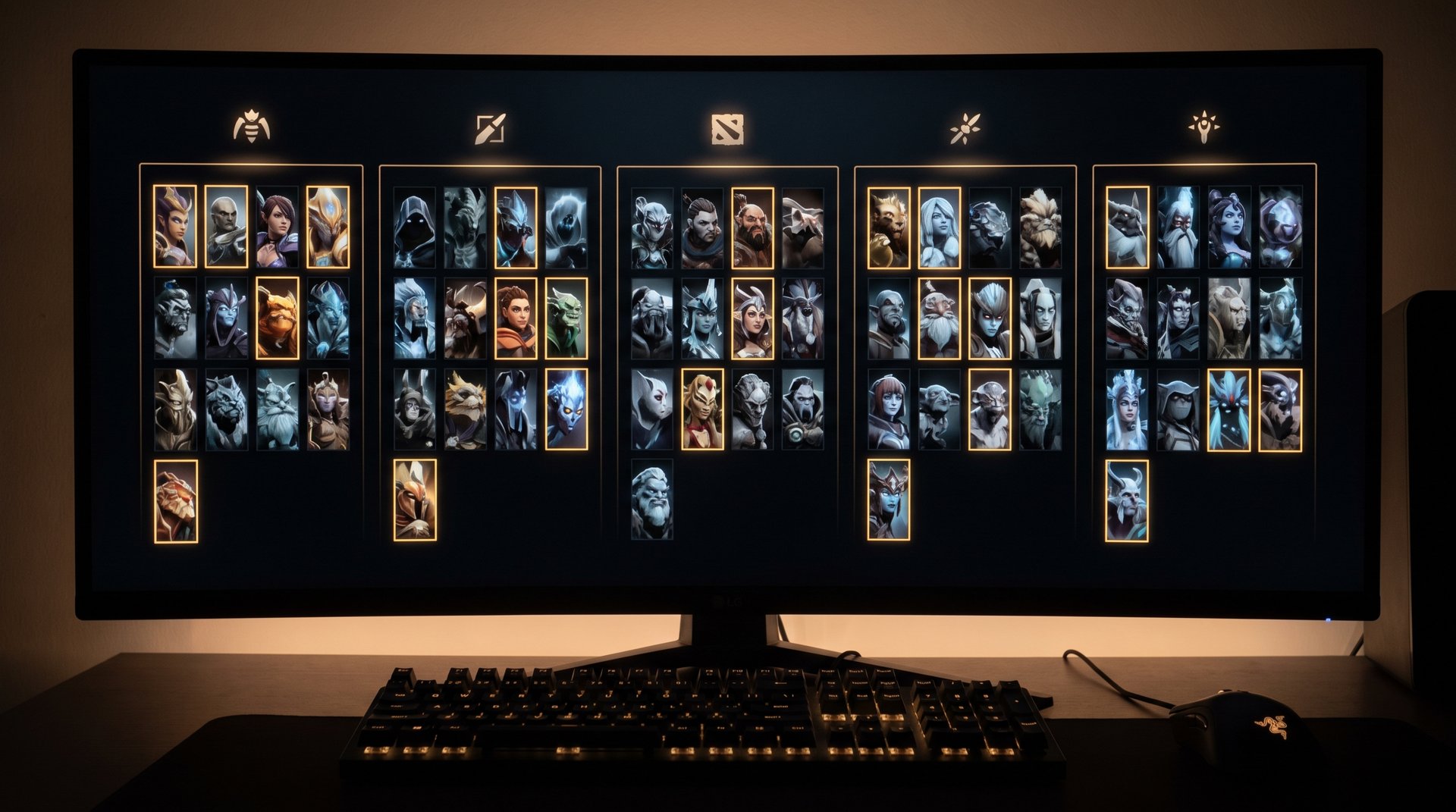
Patch 7.41e, nicknamed the “Summer Scrub” patch, has been live for approximately two weeks. The meta is settled. There will be no patch changes before Wallachia. That is important because a settled patch means the right heroes are known, the counters are figured out, and you can simply lock in a hero and get reps without the rug being pulled mid-grind.
What is working right now
Ursa (Carry): The highest win rate in the position 1 role in 7.41e. The Fury Swipes rework interacts beautifully with the current item builds — Power Treads into Blink Dagger into Diffusal Blade gives you a kit that can solo Roshan before 15 minutes on most maps. At Ancient and below, your teammates often do not know how to counter Ursa’s Roshan timing. Stack three early kills, take Rosh at 10-12 minutes, and convert. Simple, high-impact, repeatable.
Io (Position 5): Above 56% win rate across all brackets according to community data from CyberScore’s 7.41e meta report. Io rewards game sense over mechanics. If you can relocate correctly and know which carry to tether, you will win more games than an average player with any flashier hero. The hero is also draft-flexible, meaning enemies rarely ban it despite how broken it is in the right hands.
Ringmaster (Position 4/5): Also at the 56%+ tier alongside Io. Tame the Beast is one of the more oppressive setup tools in the current patch. The hero has a low pick rate relative to its win rate, which means enemies are less likely to be prepared for its toolkit. High upside for players willing to put in ten to fifteen games to learn the ability interactions.
Mars (Offlane): The Arena of Blood plus Scepter upgrade combination makes Mars one of the best teamfight initiators in the current meta. Critically, Mars is a direct counter to the right-clicker meta — you can literally wall off a carry and neutralize them for the duration of the fight. He works with almost any support lineup and does not need a specific item to come online.
Axe (Offlane): Wave control, jungle access, and a blink-Culling Blade threat that is lethal against melee carries. Axe has been quietly strong throughout 7.41e and received no nerfs in recent sub-patches. If you are playing offlane and want a hero with a high floor — you will always be useful, even if behind — Axe is the pick.
What is not working
Drow Ranger took a cluster of indirect nerfs in 7.41e. Hurricane Pike duration dropped from 6 seconds to 5 seconds, Mask of Madness is weaker on ranged heroes, and Butterfly lost 5 agility (while gaining 5 damage, which is less efficient for the hero’s breakpoint targets). Drow is no longer the free stabilizer she was two patches ago. If you were relying on her, it is time to transition.
Bane and Clockwerk are both still tier 1 supports per the CyberScore meta report, so they are worth considering alongside Io and Ringmaster if you prefer more controlling playstyles.
Tier List by Role: September 6, 2026
| Role | S-Tier (Play These) | A-Tier (Strong) | Avoid Right Now |
|---|---|---|---|
| Carry (Pos 1) | Ursa | Phantom Lancer, Morphling, Medusa | Drow Ranger |
| Mid (Pos 2) | Templar Assassin, Viper | Lina, Storm Spirit, Puck | Invoker (high skill floor, poor ROI right now) |
| Offlane (Pos 3) | Mars, Axe | Tidehunter, Legion Commander, Dark Seer | Timbersaw (item-dependent, long payoff) |
| Soft Support (Pos 4) | Ringmaster, Clockwerk | Earthshaker, Ember Spirit, Bounty Hunter | Lone Druid support |
| Hard Support (Pos 5) | Io, Bane | Dazzle, Ancient Apparition, Rubick | Undying (item-starved in current meta) |
The above is based on pub win rate data from community sources (Dotabuff, CyberScore) and the current 7.41e patch notes. These valuations apply specifically to pub games — the pro meta at Wallachia will look different because coordinated teams draft around Io differently than solo queue does.
Bracket-Specific Strategy
Herald to Archon: Ursa is your cheat code
At this bracket, Roshan is almost never contested properly. Run Ursa, build Power Treads into Vladmir’s Offering, and take Roshan the moment you hit level 9 or 10. In Herald-Archon, teammates often will not follow up on Aegis-enabled fights, so play for pickoffs and high-ground pressure rather than teamfights. The hero’s Enrage provides enough EHP to trade 1v2 in skirmishes if you have Fury Swipes stacked. Your MMR ceiling per session: +200 MMR if you run 8-10 games and maintain a positive mental state. Do not play beyond 5 games in a single sitting.
Legend to Ancient: Io is the silent carry
This bracket has enough coordination for Io to work but not enough to draft specific counters. Tether a Ursa or a Phantom Lancer and do not break tether during fights. The Relocate spell is the single most impactful ability in the game when used correctly — use it to save cores in losing fights or to set up smoke ganks from unexpected angles. At Legend-Ancient, most enemies do not know how to close a game when their prey teleports away. That confusion wins you fights. Climbing from Ancient to Divine is where TeamSmurf sees the most requests because this bracket gap is genuinely the hardest — Io can bridge part of it if you invest the games.
Divine to Immortal: Mars and Ringmaster reward game knowledge
High Divine and low Immortal is where hero mechanics matter less and draft + positioning matter more. Mars forces enemies to respect Arena of Blood or walk into it — that psychological pressure alone creates space for your cores to farm. Ringmaster’s Tame the Beast chains are devastating in coordinated 5-man pushes that this bracket starts executing. Pick one hero, play it for your entire post-TI grind, and track what specifically is losing you games (farm timing, positioning, draft read) rather than switching heroes when you lose.
If you are stuck in a specific bracket and burning sessions without progress, the MMR boosting guide on TeamSmurf outlines exactly when a structured boost makes more sense than continued grinding against a skill wall.
Your 11-Day Game Plan
You have from today (September 6) until September 16 — the day before PGL Wallachia Season 9 begins — to run your best post-TI grind. Here is how to structure it without burning out.
Days 1-3 (Sep 6-8): Lock in your hero pool
- Pick one primary hero from the S-tier in your role and one A-tier backup
- Play 3 games maximum per day — quality over volume
- Warm up with one unranked game before queuing ranked
- Track what you specifically lost each game (objectives, kills, farm) in a notes app or paper
Days 4-7 (Sep 9-12): Volume phase
- Increase to 4-5 games per day if your mental is good
- If you lose 3 in a row, stop for the day — do not grind through tilt
- Review the one play from each game that cost you the most (Dotabuff match timeline is useful here)
- Do not switch heroes based on single-game results
Days 8-11 (Sep 13-16): Close the window strong
- Return to 3 games per day — you want your peak performance when the calibration matters most
- The last two days before Wallachia, lobbies may start filling back up as pros return to ranked warm-up
- Bank your gains; do not play after midnight local time when tilt risk increases
Following this structure, you are looking at 35-45 games over the window. At a 55% win rate — which is realistic if you are playing the right hero in settled meta — that is approximately 8-10 net wins. In the 4,000-6,000 MMR range, that is roughly 200-250 MMR gained. In higher brackets, the per-win gain is smaller but the quality of results is more consistent because variance is lower.
When the Window Closes
PGL Wallachia Season 9 starts September 17 in Bucharest, Romania. Sixteen of the world’s best Dota 2 teams compete September 17-27 for a $1,000,000 prize pool. This is the first Tier 1 major of the post-TI 2026 season, and it is effectively the deadline for roster finalization.
Once Wallachia begins:
- Teams that locked their new rosters start taking ranked scrims seriously for warm-up
- Pro players who were free agents and just signed contracts re-enter structured practice schedules
- Players like Nisha, even on break from competitive, often start playing ranked again to stay sharp once the travel and celebration phase ends
- The bracket difficulty at 6,500-8,500 MMR normalizes back to baseline
The next comparable quiet window after this one is typically the gap between Wallachia ending (September 27) and the next major announcement. However, that window is usually shorter and less predictable. The post-TI window you are in right now is the most reliable low-noise window of the year.
When Boosting Makes Sense This Window
The post-TI period is also the best time of year to use a Dota 2 MMR boost if you are targeting a specific rank milestone. Here is why:
- Booster availability is highest. TeamSmurf’s Immortal-rank boosters are also in post-TI mode — no tournaments to prep for, no intense scrim schedules. More of them are available to take orders, which means faster queue times and more active hours per day on your account.
- Boost completion is faster. In softer post-TI lobbies, Immortal boosters complete orders in fewer games with fewer stomps needed. This translates to faster MMR gain per session and less total time on your account.
- Rank thresholds feel urgent right now. If you are 100-200 MMR short of a bracket milestone — say, Ancient 5 into Divine — grinding that gap over the next 11 days is realistic. If you are 500+ MMR short, a structured boost gets you to the threshold quickly so you can maintain from there with your own play.
The question is not whether boosting works — it does, and it is safe when done through verified Immortal accounts like TeamSmurf uses. The question is timing. Post-TI is when that timing lines up best.
If you are within striking distance of a rank threshold and have a clear hero pool, the decision matrix is simple: grind the window yourself with the strategy above, and if you stall, a Dota 2 coaching session can identify the specific skill gap blocking your climb faster than 50 ranked games of guessing.
Use the Post-TI Window Before It Closes
The easiest lobbies of the year are running right now. If you want to hit your target rank before PGL Wallachia Season 9 resets the difficulty on September 17, TeamSmurf’s Immortal-rank boosters are available with their fastest turnaround of the year.
Get Your MMR Boost Book a Coaching Session