PGL Wallachia Season 8 Playoffs Day 2 Results: Match IDs, Draft Priority, and Immortal Ranked Lessons

PGL Wallachia Season 8 Playoffs Day 2 was the first real stress test of this bracket, and it gave us exactly what ranked players care about: clear draft priority shifts, late-game carry patterns that are actually winning, and support pairings that decide lanes before minute five.
We got four major series in one day. BetBoom beat Liquid 2-1 in upper bracket. Aurora beat PARIVISION 2-1 in upper bracket. Falcons eliminated Spirit 2-0 in lower bracket. SouthAmericaRejects knocked out HEROIC 2-1 in lower bracket. Those results were not random. The same heroes kept showing up, the same lane concepts kept paying off, and the same bad habits kept getting punished.
This breakdown covers match-level details, exact match IDs, map scores, draft priority, and what 7k+ players should steal for ranked immediately. If you are grinding medals and tired of losing to “meta abuse,” this is the practical version. No fluff, no fake theory, just what won on stage and why it translates to pubs.
Table of Contents
- Playoffs Day 2 Results and Match IDs
- BetBoom vs Liquid Draft and Tempo Breakdown
- Aurora vs PARIVISION Carry Priority Shift
- Falcons vs Spirit Elimination Patterns
- SouthAmericaRejects vs HEROIC Chaos Control
- Hero Priority Table from Day 2
- Immortal Ranked Lessons You Can Copy
- How to Use This in Your Next 10 Games
- Day 3 Outlook and Prep
- 30-Minute Replay Protocol
- Position-by-Position Lessons
- FAQ
- Fast Improvement CTA
PGL Wallachia Season 8 Playoffs Day 2 Results and Match IDs
First, here are the exact map IDs and outcomes so you can open replays and verify every point yourself. This is the fastest way to level up. Watch the first 12 minutes of each map and focus on support movement, not highlight clips.
| Series | Score | Map Match IDs | Winner |
|---|---|---|---|
| BetBoom Team vs Team Liquid (Upper Bracket) | 2-1 | 8784508335, 8784597508, 8784700248 | BetBoom Team |
| Aurora Gaming vs PARIVISION (Upper Bracket) | 2-1 | 8784176993, 8784255815, 8784373796 | Aurora Gaming |
| Team Falcons vs Team Spirit (Lower Bracket) | 2-0 | 8783980542, 8784047386 | Team Falcons |
| SouthAmericaRejects vs HEROIC (Lower Bracket) | 2-1 | 8783810675, 8783863589, 8783919534 | SouthAmericaRejects |
Across these 11 maps, one thing is obvious: teams that won lane control and built cleaner second-Roshan setups closed games, even in long 45 to 60 minute maps. This is exactly why solo queue games feel decided before your carry finishes second item. The setup phase is king.
BetBoom vs Liquid: Why BetBoom Took the Upper Bracket Spot
This was the headline series of Day 2. Liquid won map one hard, then BetBoom adjusted and took maps two and three with better objective pacing.
Map-by-map scoreline
- Map 1 (8784508335): Liquid 34 – 11 BetBoom, 35.1 min
- Map 2 (8784597508): BetBoom 27 – 10 Liquid, 46.3 min
- Map 3 (8784700248): BetBoom 42 – 17 Liquid, 42.5 min
Liquid’s map-one win came from clean teamfight execution and enough control to keep BetBoom’s cores from stabilizing. But in maps two and three, BetBoom’s carry and mid pair converted farm to fight much faster. The raw kill score in map three tells the story: 42 to 17 is not “one bad throw,” it is systemic control.
Player impact snapshot
From available map stats, BetBoom’s core throughput in the wins was extreme. On map two, Alchemist hit 869 GPM. On map three, Queen of Pain posted 21/2/14 with 779 GPM. That is not just hero comfort. It means Liquid failed to keep mid and side wave pressure synced after first BKB timings.
For ranked players, this is the classic mistake: you win one lane, then split map attention and feed high-ground vision. BetBoom repeatedly punished disconnected vision with instant jump and reset cycles.
Draft ideas worth stealing
- Flexible mid tempo core: QoP style heroes that can start fights and still scale.
- Lane support with save or counter-initiation: Rubick and similar heroes keep early fights playable even when lanes are rough.
- Greed only with cover: Alchemist looked broken when teamfight cooldowns protected his first major timings.
Want to learn these timings faster than trial-and-error Queue with a high-MMR analyst at Team Smurf coaching and review your first 15 minutes map by map.
Aurora vs PARIVISION: Carry Pool Depth Won the Series
This series looked even on paper after map one, but Aurora’s adaptation was sharper. PARIVISION smashed map one, then Aurora stabilized and took maps two and three.
- Map 1 (8784176993): PARIVISION 31 – 10 Aurora, 28.5 min
- Map 2 (8784255815): Aurora 35 – 11 PARIVISION, 42.9 min
- Map 3 (8784373796): Aurora 48 – 16 PARIVISION, 58.6 min
Map three is the key. At 58.6 minutes, this stops being about lane matchups and becomes about discipline: buyback tracking, outpost control, and wave prep before Roshan. Aurora handled late-game spacing better and got cleaner entries from frontliner plus mobile damage core.
The carry outputs tell you why this was winnable for either side and why Aurora closed it anyway. We saw huge economy numbers on both teams: Medusa at 888 GPM, Windranger at 796 GPM, Terrorblade at 805 GPM. But net worth is meaningless if your teamfight vision and spell layering are one second late.
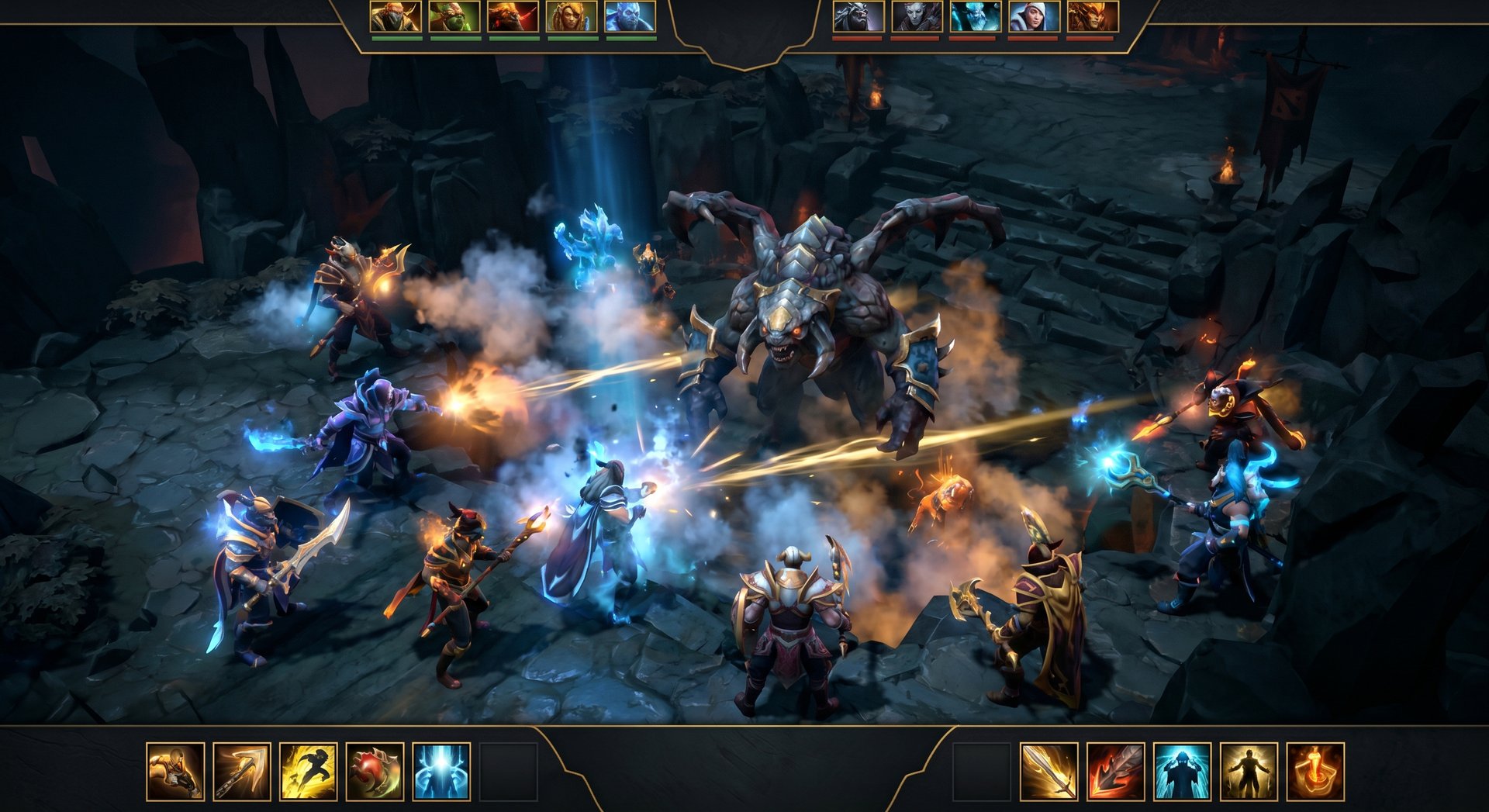
What high-MMR players notice here
- Supports played for map shape, not random picks. Wards were used to force predictable pathing into choke points.
- Carry players respected buyback windows. They did not full commit if enemy major cooldowns were not confirmed.
- Second and third item choices matched game state. Not auto-buying the same build every map.
This is why many Ancient to Divine players stay stuck. Mechanics are enough for lane phase, but item path and objective sequencing are weak. If you want to skip months of this, Team Smurf MMR boost is the direct option, and if you want to learn while climbing, pair it with coaching.
Falcons vs Spirit: The Cleanest Elimination of the Day
Falcons eliminated Spirit 2-0, and while map two went long, the identity was clear in both maps: faster initiation, cleaner frontline resets, and stronger conversion after winning one fight.
- Map 1 (8783980542): Falcons 42 – 14 Spirit, 40.9 min
- Map 2 (8784047386): Falcons 47 – 28 Spirit, 66.0 min
Even in the 66-minute map, Falcons kept finding high-value starts. Spirit had moments, but they could not consistently punish cooldown windows. The notable individual line was Doom output over both maps, including 804 GPM in map two, plus heavy teamfight impact.
Ranked lesson: when your offlaner has this level of map presence, your support’s job is not “follow carry.” Your job is to hold vision and smoke around the offlane timing, then reconnect to carry after objective conversion.
SouthAmericaRejects vs HEROIC: Why Chaos Teams Need Structure
This lower bracket series was close and messy in exactly the way pubs are messy. SouthAmericaRejects won 2-1, with map two going to HEROIC before SAR closed map three strongly.
- Map 1 (8783810675): SAR 36 – 32 HEROIC, 45.1 min
- Map 2 (8783863589): SAR 30 – 30 HEROIC, 50.8 min (HEROIC win)
- Map 3 (8783919534): SAR 35 – 19 HEROIC, 47.6 min
Map two had equal kill score and still ended decisively because resource conversion was better on HEROIC’s side. That should remind every ranked player that KDA is not game state. Towers, Roshan, and lane control are game state.
Map three flip came from SAR’s cleaner fight entry and better core protection. High GPM lines from Monkey King and Queen of Pain were backed by stable front-to-back execution, not random skirmish spam.
Hero Priority from Day 2: What Was Actually Contested
Using the 11-map Day 2 sample, these heroes showed the strongest contest rates in drafts. This is small sample data, but it is very useful for same-week ranked reads.
| Hero | Picks | Win Rate | Practical Ranked Read |
|---|---|---|---|
| Rubick | 8 | 37.5% | Still first-phase value for lane control and spell steal utility, but needs team structure. |
| Hoodwink | 7 | 57.1% | Flexible support pressure with fast move timing and pickoff threat. |
| Pangolier | 6 | 50.0% | Reliable mid/offlane tempo if team can follow Rolling Thunder windows. |
| Phoenix | 5 | 40.0% | High ceiling, but weak if your team does not draft around Egg fights. |
| Queen of Pain | 5 | 80.0% | Best mid tempo performer in this sample. Punishes disconnected supports hard. |
| Tiny | 5 | 60.0% | Lane pressure and burst still premium, especially with vision advantage. |
| Tidehunter | 4 | 100.0% | Simple, stable teamfight anchor for coordinated stacks and party queues. |
These trends also line up with what high-level pubs already show on 7.41b style pacing: durable frontliners and high-tempo mids are safer than greedy dual-carry drafts unless your lanes are clearly favored.
Global pub context from OpenDota snapshot
For broader pub context, heavily picked heroes with strong overall win rates include Spectre (54.54%), Wraith King (53.71%), Dawnbreaker (53.12%), Axe (52.59%), and Legion Commander (52.46%). That is useful because Day 2 drafts repeatedly respected these lane-to-midgame profiles with bans and role pressure.
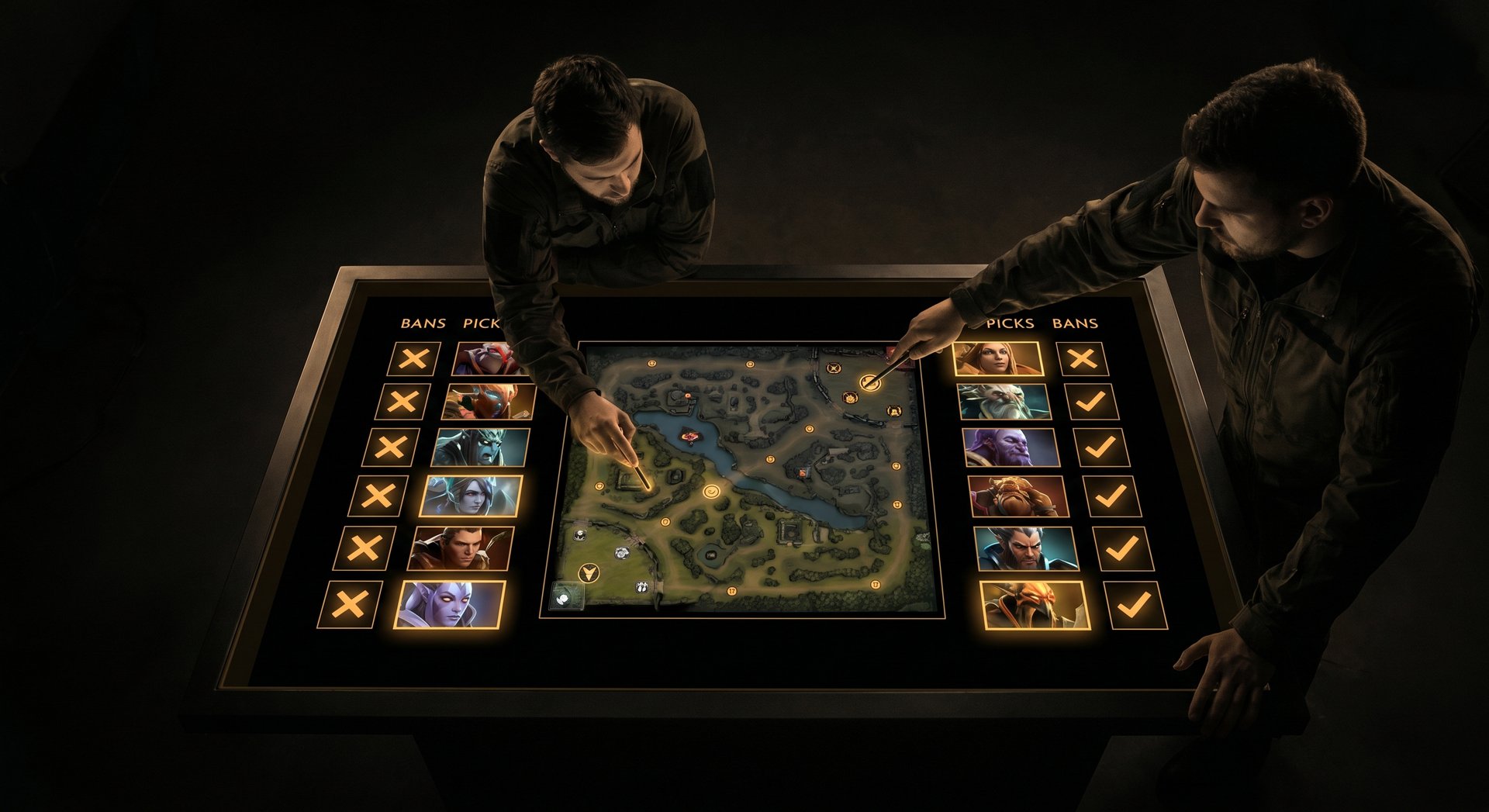
Immortal Ranked Lessons from Day 2
1) Draft for your first two objective windows, not your dream six-slot build
Every winning team had a coherent minute-12 to minute-25 plan. Either they had better first Roshan threat, better tower siege after one pickoff, or better cooldown cycle around smoke. In pubs, most losses happen because teams draft five heroes that want different game speeds.
2) Mid plus position four synergy decides pace
QoP, Pangolier, and Tiny style heroes looked strongest when position four did not AFK behind carry. The support connected mid runes, smoke pressure, and lane refill timing. If you play support in ranked and you are never near runes at six and eight, you are gifting map control.
3) Long games are not random, they are discipline checks
The 58.6 and 66.0 minute maps were won by teams with better buyback awareness and wave prep. In Immortal games, the side that keeps side lanes shoved before Roshan has an enormous edge. It forces enemy teleports and creates split decision pressure.
4) Stop overvaluing kill score
SAR vs HEROIC map two ended with 30-30 kills and still had a clear winner. If you only track KDA, your macro never improves. Track these three instead: tower differential, Roshan control, and lane position before every smoke.
5) Frontline stability is underrated in solo queue
Tidehunter’s perfect sample win rate here is not because hero is “broken forever.” It is because simple initiation plus reset tools are easier to execute than fragile combo drafts when comms are weak. If your stack tilts fast, pick stability.
How to Apply This in Your Next 10 Ranked Games
Here is a practical mini-plan you can run immediately.
| Game Block | Focus | What to Track | Pass or Fail Rule |
|---|---|---|---|
| Games 1-3 | Lane control and rune support timing | 6/8 minute rune contests, support rotations | Fail if mid gets zero rune help in two straight games |
| Games 4-6 | First objective conversion after one pickoff | Tower damage or Roshan attempts after won fight | Fail if team wins fight then farms jungle instead |
| Games 7-10 | Late-game discipline and buyback usage | Deaths without buyback, lane shove before Roshan | Fail if core dies with no buyback before objective fight |
If you want this process done with direct oversight, use coaching. If you are short on time and need rank movement now, use MMR boosting or calibration service. If behavior score or Low Priority is blocking your climb, fix that first with LP removal.
Day 3 Outlook: What to Watch Before You Queue Ranked
At the time of writing, the next playoff block includes PARIVISION vs Falcons, SouthAmericaRejects vs Liquid, and Aurora vs BetBoom. Even before results lock in, Day 2 gives clear prep points you can use for both viewing and your own grind.
Series pressure points
- PARIVISION vs Falcons: Can PARIVISION protect slower economy cores against Falcons’ early map pressure
- SAR vs Liquid: Can SAR keep chaotic skirmishes under control against Liquid’s cleaner objective setups
- Aurora vs BetBoom: Highest quality macro test. Both teams showed strong adaptation after losing maps.
If you are studying for improvement, do not watch these like a fan only. Track one specific thing each map:
- Where does position four stand at minute six, eight, and ten
- Which team pushes side lane before smoke, and which team smokes blind
- Who controls post-fight warding after first Roshan
This is how you build transferable MMR skill. Not by copying one random item build from a highlight clip, but by understanding repeatable map decisions.
Replay Protocol: 30-Minute Study Routine for Real Climbing
Most players say they “watch replays” but do it passively and learn almost nothing. Here is a 30-minute method our Immortal analysts use when coaching clients from Archon to low Immortal. Run this on one Day 2 map and one of your own losses.
Minute 0-5: Lane theory check
- Pause at 1:30, 3:00, and 5:00.
- Note creep equilibrium and support position for each side lane.
- Mark which lane is allowed to play aggressively and which lane is surviving.
In Day 2 pro maps, supports almost never “hover with no job.” Every movement had purpose: secure lotus, block camp, stack for reset, or protect rune access.
Minute 6-12: Rune and first rotation control
- Track who contests power runes and who gives them for free.
- Check if the winning mid hero uses rune to pressure side lane or wastes time farming small camp.
- Mark first smoke timing and outcome.
BetBoom’s recovery pattern against Liquid started here. They synced resources around active cores instead of forcing random tower dives.
Minute 13-22: Objective conversion quality
- After each pickoff, ask: tower, Roshan, deep vision, or nothing
- If answer is nothing, that team is bleeding win probability.
- Track TP usage before major objective calls.
Falcons were excellent here versus Spirit. They did not overchase fights. They converted and reset.
Minute 23+: Buyback and lane geometry discipline
- Before every Roshan fight, check side lanes. Are they pushing for your team or against you
- Track core deaths with and without buyback.
- Note if teams take high ground with cooldowns available or forced.
Aurora’s late-game win over PARIVISION is a good model here. Their fight entries in map three were far more deliberate once game passed minute 40.
Position-by-Position Lessons from Day 2
Carry (Pos 1)
Do not AFK for perfect six-slot conditions. The winning carries in Day 2 showed up for first real timing with one survivability layer and one damage layer. They joined when map pressure demanded it, then returned to efficient farm.
- Join key fights with purpose, do not drift.
- Preserve buyback when game is unstable.
- Farm patterns should keep TP option for objective contest.
Mid (Pos 2)
Mid heroes that controlled tempo with support backup looked strongest. QoP and similar profiles punished map errors instantly. If you play mid and never call support to secure rune or smoke, you are giving away your best advantage window.
Offlane (Pos 3)
Frontline consistency decided many fights. Tidehunter style anchors are not flashy but they reduce execution burden for entire team. This matters more in pubs than in pro because comms are weaker.
Soft Support (Pos 4)
Position four decided game pace repeatedly in these maps. The role is not “extra damage.” The role is tempo logistics: rune checks, smoke starts, lane refill, and vision conversion after kills.
Hard Support (Pos 5)
The best fives did one thing very well: they died for useful map state, not for random deward ego moves. Place wards that support objective pathing, not pretty minimap dots.
FAQ
Final Take: Day 2 Was About Structure, Not Highlights
PGL Wallachia Season 8 Playoffs Day 2 confirmed something every Immortal player already feels: games are won by structure. Better objective windows. Better support timing. Better buyback discipline. Highlights look cool, but structure gets MMR.
If you want faster rank gains without random trial-and-error, Team Smurf gives you both paths. Learn with experts or skip the grind entirely.
Climb Smarter This Week
Get direct help from verified high-MMR players. Improve your decision making, fix role-specific mistakes, or fast-track medal progression.