PGL Wallachia Season 8 Decider Day: Final Playoff Race, Match Results, and 7.41b Meta Lessons

PGL Wallachia Season 8 Decider Day: Final Playoff Race, Match Results, and 7.41b Meta Lessons
PGL Wallachia Season 8 decider day is the biggest Dota 2 story right now because the Swiss stage is about to lock the final playoff spots, and the bracket is already chaos. In one event, we already saw Team Yandex and Tundra Esports crash out in 15th-16th, while BetBoom and Aurora started 3-0, and Team Liquid, Team Falcons, and PARIVISION clinched in round 4.
This is exactly the kind of tournament day where rank grinders can learn more in 2 hours than from 20 random pub replays. You get pressure drafts, elimination games, and teams showing their real priorities in patch 7.41b.
In this report, we break down the full Swiss path from April 18 to April 21, the three decider series on April 22, the teams already qualified, and the hero trends that actually matter if you are trying to gain MMR this week. We also connect pro trends to ranked execution, lane by lane, with practical notes from an Immortal viewpoint.
Table of Contents
- Why This Is The Main Dota 2 Story In The Last 48 Hours
- Tournament Snapshot: Format, Dates, Prize Pool, and Stakes
- Swiss Stage Results (Rounds 1-4) and What Changed
- Decider Day Matchups (April 22): Who Is In, Who Is Out
- Teams Already Qualified For Playoffs
- The Biggest Collapse: Yandex and Tundra Exit 15th-16th
- Patch 7.41b Meta Read: Hero Priorities and Ban Pressure
- Immortal Ranked Lessons You Can Copy Today
- 7-Day MMR Plan Based On Wallachia Draft Patterns
- FAQ
Why This Is The Main Dota 2 Story In The Last 48 Hours
If you look at pure relevance, PGL Wallachia Season 8 decider day is the top topic in the current 24-48h window. There are no larger Valve patch notes in that window, and no larger LAN event with this level of team density running at the same time.
The event has multiple high-search triggers at once: big names, upset eliminations, and immediate playoff qualification pressure. This is exactly the type of story that pulls both casual viewers and rank-focused players.
- Date window: Group stage active April 18-22, 2026
- Current turning point: Round 4 finished on April 21, three decider series scheduled April 22
- Event level: Tier 1 LAN, 16 teams, $1,000,000 prize pool
- Immediate headlines: Yandex and Tundra eliminated at 0-3, playoffs filling fast
When pro Dota is this volatile, you should not treat it as just spectator content. You should treat it as a live lab for ranked climbing.
Tournament Snapshot: Format, Dates, Prize Pool, and Stakes
PGL Wallachia Season 8 runs in Bucharest, Romania from April 18 to April 26, 2026. The group phase uses Swiss format Bo3 matches until each team reaches three wins or three losses. Top eight move to double-elimination playoffs.
| Category | Detail |
|---|---|
| Location | Bucharest, Romania (PGL Studio) |
| Dates | April 18-26, 2026 |
| Teams | 16 |
| Format | Swiss Bo3 group stage, then double-elimination playoffs |
| Prize Pool | $1,000,000 |
| 1st Place | $300,000 |
| 2nd Place | $175,000 |
Swiss format matters for betting and for draft prep because every round changes pairing quality. A bad round 1 can snowball into elimination matches fast, especially if your stand-in pool is limited.
Swiss Stage Results (Rounds 1-4) and What Changed
The clean way to read this tournament is as a momentum map. Who adjusted after round 1, who did not, and who cracked under elimination pressure.
Round 1 signals
- Xtreme 2-0 NAVI
- PARIVISION 2-0 MOUZ
- BetBoom 2-0 VP
- Team Falcons 2-0 Team Yandex
- HEROIC 2-1 Tundra
Big theme, favorites started shaky in specific lanes. Yandex and Tundra both entered pressure paths immediately.
Round 2 pressure split
In 1-0 and 0-1 pairings, we saw real separation:
- Aurora 2-1 Xtreme
- BetBoom 2-0 Team Liquid
- Team Falcons 2-1 Team Spirit
- PARIVISION 2-0 HEROIC
- SA Rejects 2-0 Team Yandex
- VP 2-1 Tundra
At this point, Yandex and Tundra were 0-2, one loss from elimination.
Round 3 elimination and qualification matches
Round 3 was where the event truly blew up:
- BetBoom 2-1 Team Falcons (BetBoom qualified)
- Aurora 2-1 PARIVISION (Aurora qualified)
- NAVI 2-1 Team Yandex (Yandex eliminated)
- MOUZ 2-1 Tundra (Tundra eliminated)
Yandex and Tundra out at 15th-16th was the biggest shock of the event so far, especially after both were grand finalists at ESL One Birmingham 2026.
Round 4 (April 21): playoff tickets and final decider setup
- Team Liquid 2-0 HEROIC (Liquid qualified)
- Team Falcons 2-0 GamerLegion (Falcons qualified)
- PARIVISION 2-1 SA Rejects (PARIVISION qualified)
- Team Spirit 2-1 NAVI (NAVI eliminated)
- Xtreme 2-0 Vici (Vici eliminated)
- MOUZ 2-1 VP (VP eliminated)
Now the event is down to three decider series for final playoff spots.
| April 21 Series | Result | Direct Impact | Reference Match ID |
|---|---|---|---|
| Team Liquid vs HEROIC | 2-0 | Liquid clinched playoffs | Gosu 648564 |
| Team Spirit vs NAVI | 2-1 | NAVI eliminated | Gosu 648568 |
| Team Falcons vs GamerLegion | 2-0 | Falcons clinched playoffs | PGL Wallachia S8 Group Stage R4 |
| PARIVISION vs SA Rejects | 2-1 | PARIVISION clinched playoffs | PGL Wallachia S8 Group Stage R4 |
Decider Day Matchups (April 22): Who Is In, Who Is Out
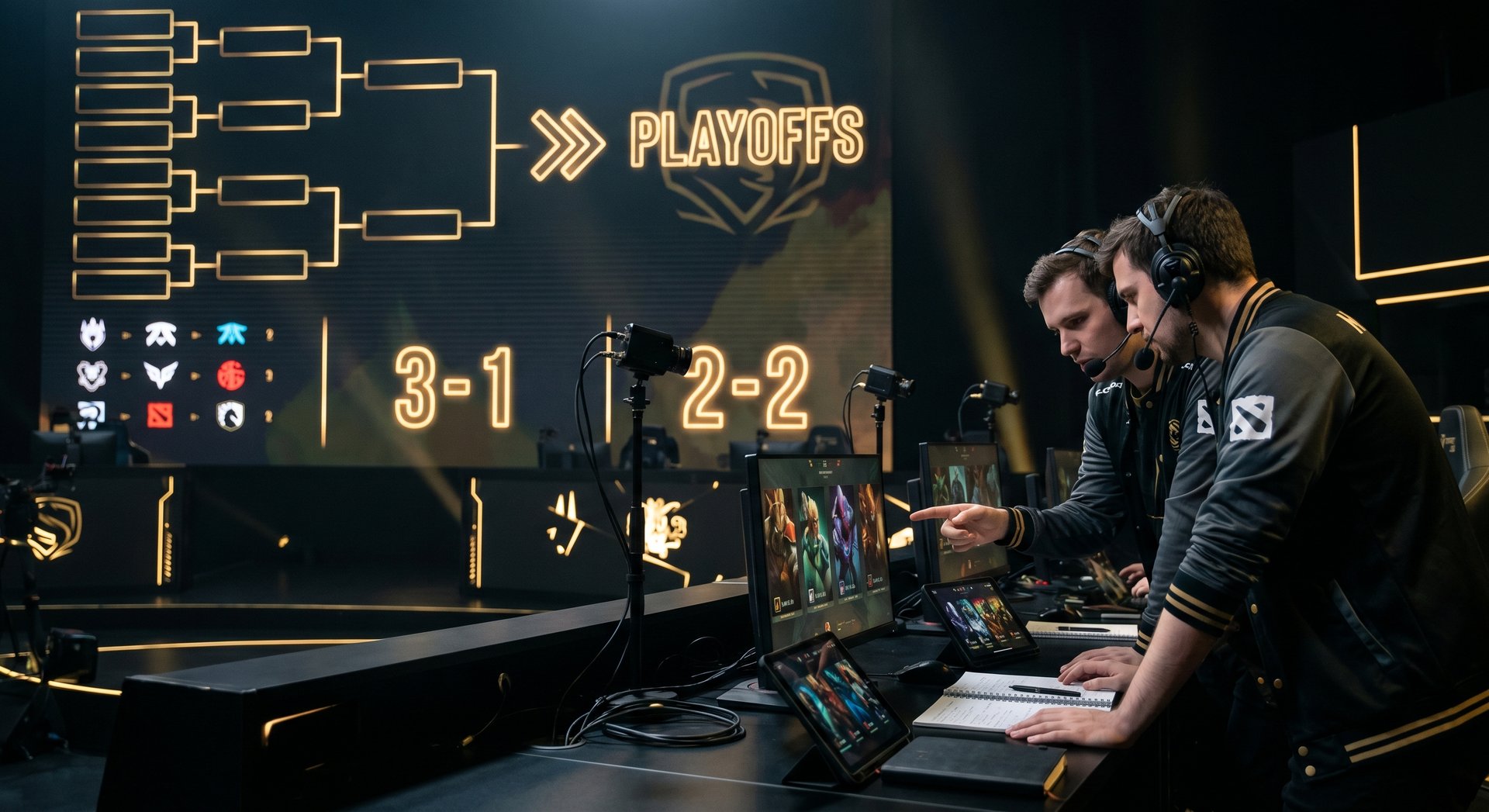
These are the final Swiss deciders for 2-2 teams. Win and you enter playoffs. Lose and you finish 9th-11th or 12th-14th depending on tie rules and Buchholz.
| Time (UTC) | Series | Record Before Match | What Is At Stake |
|---|---|---|---|
| 08:00 | GamerLegion vs HEROIC | 2-2 vs 2-2 | Last-chance playoff ticket |
| 11:00 | SA Rejects vs MOUZ | 2-2 vs 2-2 | Last-chance playoff ticket |
| 14:00 | Xtreme vs Team Spirit | 2-2 vs 2-2 | Last-chance playoff ticket |
Immortal read: these are not normal Swiss games. These are mini elimination finals. Draft greed drops, lane reliability goes up, and teams lean into heroes that can force objective timing by minute 20 to 25.
Expect less experimental picks, more stable teamfight cores, and safer support pairings with guaranteed lane value.
What to watch in the draft phase
- First-phase support priority, especially high comfort stunners and lane enablers
- Tempo offlane picks that can force tower map pressure before carry timing
- Carry picks with both lane insurance and Roshan conversion
- Ban pressure on heroes that punish blind 2nd-phase mids
Teams Already Qualified For Playoffs
As of post-round-4, these five teams already secured playoffs:
- BetBoom (3-0)
- Aurora (3-0)
- PARIVISION (3-1)
- Team Liquid (3-1)
- Team Falcons (3-1)
Only three slots remain, and six teams are fighting for them.
The Biggest Collapse: Yandex and Tundra Exit 15th-16th
This is the real upset headline. Team Yandex and Tundra were both eliminated 0-3 and placed 15th-16th, earning $10,000 each.
That result is brutal when you remember context. These were finalists at ESL One Birmingham 2026, and Tundra won that event.
Why this happened
- Stand-ins and roster disruption: Yandex used DM as stand-in offlaner; Tundra used V-TUNE while Pure handled visa process
- Poor Swiss start: both teams went 0-2 early and were forced into elimination immediately
- Pressure draft execution: in elimination Bo3, small lane mistakes snowball harder than in standard league play
From a coaching perspective, this is a clean reminder: in compressed formats, your floor matters more than your peak. One weak opening day can erase a month of form.
Patch 7.41b Meta Read: Hero Priorities and Ban Pressure
Public meta and pro pressure are not identical, but they overlap enough to build a practical climb plan.
Current 7.41b aggregate stats show:
- Most picked heroes: Lion 27.9%, Pudge 27.3%, Rubick 21.9%
- Highest win rate leaders: Spectre 54.7%, Wraith King 53.9%, Phantom Lancer 53.3%
- High ban pressure examples: Anti-Mage 21.9% ban rate, Meepo 20.2%, Huskar 19.9%, Tinker 18.7%
| Hero | Pick Rate | Win Rate | Ban Rate | MMR Interpretation |
|---|---|---|---|---|
| Lion | 27.9% | 49.3% | 6.0% | Popular comfort support, not auto-win |
| Pudge | 27.3% | 50.5% | 16.7% | Still strong if lane is protected and tempo is clean |
| Spectre | 9.6% | 54.7% | 7.7% | High conversion carry if game pace is controlled |
| Wraith King | 12.7% | 53.9% | 3.9% | Simple timing carry for stable pubs |
| Phantom Lancer | 9.2% | 53.3% | 17.6% | Strong if enemy wave clear is weak |
Important detail for serious grinders: high pick rate and high win rate are different signals. High pick can mean comfort and availability. High win with lower pick can mean a punish pick that wins when selected into correct drafts.
How this links to Wallachia decider games
In decider Bo3s, coaches usually reduce volatility. That means fewer YOLO greed lines and more heroes that secure lanes, defend towers, and convert first Aegis. If your ranked pool cannot do that, your MMR will swing hard on teammate variance.
Immortal Ranked Lessons You Can Copy Today
Most players watch pro games for picks and forget the real lessons. The real lessons are pace, map shape, and lane resource discipline.
Lesson 1: Draft for your first two map moves, not for fantasy 45-minute fights
In elimination pressure, teams draft for minute 8 and minute 12 map actions. They do not draft five heroes that need perfect three-item windows. In pubs, do the same. If your lineup cannot pressure side lanes after first catapult, you are already behind tempo.
Lesson 2: Supports must solve lanes, not only teamfights
A support that looks strong in late fights can still lose your game by minute 6 if lane setup is weak. This is why lane-secure supports stay high priority in tense Swiss rounds.
Lesson 3: Carry greed must match your offlane hero
Do not blind greedy carry into passive offlane, then complain no space. If your offlane cannot start fights early, your carry must join earlier timings or your map collapses at second Roshan setup.
Lesson 4: Vision timing beats random smoke timing
Many 6k-7k games are thrown by smokes without wave prep. Better pattern: push one side lane, plant vision on enemy entry routes, then smoke through your own prepared map. Pro teams do this under pressure because it reduces variance.
Lesson 5: Buyback discipline is not optional
In Swiss deciders, one bad buyback can kill entire tournament life. In pubs, one bad buyback kills your comeback odds. If your next objective is not contestable after buyback, hold it.
7-Day MMR Plan Based On Wallachia Draft Patterns
If you want practical results, follow this for one week and track wins by role and game duration.
Day 1-2: Pool lock and lane scripts
- Pick 3 heroes for your main role and 2 backups
- Write first 6 minutes lane plan per hero
- Review one losing replay focused only on lane resource trades
Day 3-4: Objective conversion
- After every won fight, call one objective instantly
- Track how many times your team gets tower, Roshan, or deep wards after won fights
- If conversion is below 50%, your shot-calling is the issue, not mechanics
Day 5-6: Draft discipline under pressure
- Do not pick outside pool in first two ranked games of session
- Ban one counter you always lose to, every game
- Queue only when you can commit full focus for at least two games
Day 7: Audit and optimize
- Check win rate by hero, side, and game length
- Remove weakest hero from pool even if you enjoy it
- Add one pro-inspired timing play to your next week
If you do not have time to run this process yourself and need faster rank progress, Team Smurf MMR Boost can help you skip the most punishing grind phase. If your goal is learning with direct feedback, go with Dota 2 Coaching. If your account is stuck in punishment queue, use Low Priority Removal.
What To Expect Next At Wallachia
Once decider day locks the final three teams, playoffs begin April 23 in double elimination. The key question is whether 3-0 teams keep form or get exposed once opponents have full prep time.
Historically, teams that peak in Swiss can still drop in playoffs if their draft trees are narrow. Watch for adaptation in game 2 and game 3, especially support openings and carry bans. That is usually where bracket winners separate themselves from group-stage specialists.
Team-by-Team Decider Reads (Immortal Perspective)
GamerLegion vs HEROIC
This series is a classic structure fight. GamerLegion looked stable in elimination rounds because they kept their map state clean after lane stage. HEROIC looked stronger when they could force pace through early rotations and objective snowball. The team that controls first two smoke windows should be favorite.
What matters most is not flashy mechanics. It is whether supports can secure twin objectives after first successful fight: ward line and side tower chip. In high-MMR games this is where people throw. They win one fight and farm jungle. Pro deciders punish that instantly.
SA Rejects vs MOUZ
SA Rejects showed they can punish draft greed and survive chaotic games. MOUZ showed they can recover from poor starts and still close elimination series, like their 2-1 over Tundra. This matchup is mostly about discipline in game 2 adaptation. If one side loses game 1 and then refuses to solve lane problems, series is over.
Watch offlane value in this series. If offlane gets utility timing and starts connecting to supports by minute 11 to 14, their carry will play cleaner fights. If offlane gets delayed, every fight starts with bad angles and forced defensive ults.
Xtreme vs Team Spirit
On paper this is the highest ceiling decider. Team Spirit survived elimination pressure versus NAVI with a 2-1. Xtreme rebounded with a 2-0 over Vici in round 4. Both teams can play structured Dota and both can punish overextensions hard.
The likely edge comes from mid matchup preparation and second-phase ban quality. In Swiss deciders, game 3 is often decided by which team still has one comfort hero left after two drafts. If you burn all comfort in game 1 and 2, you play game 3 with fake confidence picks. That usually fails.
Draft Patterns From Round 4 You Should Copy In Ranked
The biggest trap for ranked players is copying only hero names. Real improvement comes from copying draft logic.
Pattern A: Stable first phase, flexible core reveal later
Top teams reduce risk early by taking supports or universal picks that keep lanes playable. Then they reveal core specifics after seeing two to three enemy picks. In pubs, this means you should stop first-phasing your most counterable comfort core every game.
Pattern B: Objective timing synced to item spikes
Good teams do not take random 5v5s. They fight when one key timing is online, like a support level 6 spike plus first major carry item. If your stack is fighting every time smoke is up with no timing check, you are gambling, not playing macro.
Pattern C: Ban for your own win condition, not only enemy comfort
In pressure drafts, bans are often used to protect your own game plan. Example logic: if your carry needs a long lane and wave control, ban heroes that delete waves or punish split pressure. Ranked captains ignore this and then wonder why their lineup never reaches 25-minute shape.
| Draft Mistake In Pubs | What Pro Teams Do Instead | Practical Fix For You |
|---|---|---|
| Blind pick greedy carry too early | Hide carry until key counters are shown | Hold carry for phase 2 whenever possible |
| Pick lane-losing supports for late game combos | Secure lanes first, combo second | Use supports with guaranteed lane impact |
| No plan for first Roshan timing | Draft with clear Rosh damage and setup | Add one hero with objective conversion tools |
| Ban random comfort heroes | Ban to protect own map plan | Identify one hero that breaks your win path, ban it |
Role-Specific Climb Notes From Wallachia Tempo
Carry (Pos 1)
Stop defaulting to full greed in every draft. In decider-style games, the best carry games are not always highest net worth at minute 25. They are stable map games with fewer deaths, cleaner lane exits, and faster objective conversion when your team wins one fight.
- Prioritize lane sustain and wave safety over max greed
- Track enemy catch spells before every side lane push
- Treat buyback as strategic resource, not panic button
Mid (Pos 2)
Mid impact in Swiss pressure comes from first movement quality, not lane KDA screenshot. If your first rotation creates rune control plus kill threat, your supports can ward aggressive entries and your carry farms safer triangles.
- Call first power rune contest clearly
- Rotate with support vision, not alone into fog
- Push one lane before smoke, every time
Offlane (Pos 3)
Offlane is the bracket insurance role in stressful series. If offlane hero cannot start reliable fights by 15-20, your lineup depends on perfect execution from everyone else. That is not realistic in pubs.
- Build for initiation windows, not only scaling aura greed
- Force enemy reactions on deadlane to free your carry map
- Lead smoke timings when key item arrives
Support (Pos 4/5)
Most supports lose games by over-roaming without lane accounting. Watch pro deciders and you see supports roam with purpose, after wave state is fixed.
- Before roaming, secure wave and pull timing for your core
- Ward where next fight will happen, not where fight already ended
- Save one defensive TP for enemy map collapse attempts
If You Are Stuck Right Now, Here Is The Fastest Decision Tree
Use this before queueing to avoid random ladder sessions.
| Your Situation | Best Next Move | Team Smurf Option |
|---|---|---|
| You have time but no structure | Run the 7-day plan and replay audit | Coaching |
| You need rank quickly for party or season target | Skip inconsistent pub variance | MMR Boost |
| Your account is trapped in low priority | Clear punishment queue fast and reset | LP Removal |
| Your calibration was bad | Fix MMR baseline before full grind | Calibration Service |
Final point. Decider-day Dota always rewards players who reduce chaos in their own games. You cannot control random teammates. You can control your draft discipline, map timing, and item-based fight planning. That is how Immortal players keep climbing across patch shifts.
FAQ
Want Faster MMR Results Without Coinflip Grind
Use the same high-level discipline from pro prep, but with direct execution support. Team Smurf offers rank-focused boosting, calibration, and coaching built for real climb outcomes.
Get Dota 2 MMR Boost
Fix Calibration Faster
Read more Team Smurf guides