LGD South American Roster Ends After TI 2026

LGD’s South American roster is over just three months after the org returned to Dota 2, and the breakup landed at exactly the moment the post-TI 2026 shuffle started heating up. The contracts expired on August 24, the players were released, and a project that looked dangerous in May is suddenly back on the market.
That headline is bigger than one org change. This lineup had one of the strangest arcs of the year: a fast rise after LGD picked up the former HEROIC core, a second-place finish at BLAST Slam VII, a rough Esports World Cup, a last-minute competitive-integrity disaster with TaiLung, and then the emergency Topson stand-in story that made them one of the easiest teams to root for in Shanghai.
If you only want the short version, here it is: LGD did not collapse because the players were bad. The roster got punched by timing, instability, and mid-lane chaos at the worst possible moment. For pub players, there is a lot to steal from how they still survived group stage pressure, played around veteran call structure, and squeezed value from a stand-in situation that should have killed their event before it started.
This guide breaks down what happened, why the split matters, which players are the best pickups, and what 7K+ pub players can actually learn from LGD’s TI stretch. If you would rather skip the grind and apply those lessons straight to your own climb, TeamSmurf’s Dota 2 MMR boost service and Immortal coaching exist for exactly that.
Table of Contents
What Happened to LGD After TI 2026
LGD released its South American roster after the players’ contracts expired on August 24. That is the clean factual core. According to GosuGamers’ report on the breakup, former manager Barbara “Babi” Bornia said the whole roster was only signed through August 24, so once The International run ended there was no automatic continuation.
The names now on the market are Yuma, Wisper, Thiolicor, and KJ. Topson was only a stand-in, so he was never the long-term mid solution. TaiLung was already out of the picture after his ban from TI 2026 and future PGL events over competitive-integrity issues. That matters because people will talk about this as if LGD dumped a finished five-man project. It was not a finished five. It was a roster trying to survive a direct hit to the most important role in modern Dota just days before TI.
The ending looks harsh, but the split is not the same thing as a total failure. This roster finished second at BLAST Slam VII, reached TI 2026 through the South American qualifier, survived the group stage, and only fell in the elimination round to Team Yandex. Yandex later finished third, which makes LGD’s final exit less embarrassing than the raw 9th-13th placement suggests.
In other words, this was a team with real ceiling that never got to show its stable version on the biggest stage. That is why the breakup matters. Several teams shopping for post-TI upgrades are not just looking at “free agents.” They are looking at players who already proved they can work inside a high-pressure cross-region lineup and still function when the draft prep gets wrecked.
The Full Timeline: May to August
The best way to understand this story is to track the sequence. If you skip the order of events, you end up with the lazy take that “LGD underperformed and disbanded.” That misses the entire point.
| Date | Event | Why It Mattered |
|---|---|---|
| May 2026 | LGD returned to Dota 2 by signing the former HEROIC core | Instantly gave the org a competitive lineup with South American identity and proven LAN upside |
| June 2026 | Roster finished second at BLAST Slam VII | Confirmed this was not a content move or nostalgia pickup — the team could actually threaten strong opposition |
| July 2026 | Results cooled off and the team placed 9th-12th at Esports World Cup 2026 | Showed the lineup still had volatility and was not yet consistent across big events |
| August 9, 2026 | TaiLung was banned from TI 2026 and future PGL events | The roster lost its original midlaner four days before the biggest event of the year |
| August 10, 2026 | LGD announced Topson as an emergency stand-in | Saved the roster from total collapse but forced a full identity rewrite with almost no prep time |
| August 13-16, 2026 | LGD survived TI group stage pressure | Important because most teams would have mentally broken after a last-minute mid swap |
| Mid-August 2026 | LGD lost to Team Yandex in the elimination round | Ended the run at 9th-13th, but the opponent later finished third, which softens the result |
| August 24, 2026 | Contracts expired and the roster split | Turned a fan-favorite TI survival story into one of the first major post-TI free-agent pools |
| September 17, 2026 | PGL Wallachia Season 9 opens the next tier-one phase | Gives teams only a short window to rebuild around these available names |
This timeline explains why the roster has so much market value despite the split. The team never got a normal ramp into TI. They got the worst possible version of a roster stress test: public controversy, a mid-lane emergency, zero long-term certainty, then direct elimination pressure. And they still looked playable.
From an Immortal-player perspective, the interesting part is what did not break. Their side-lane fundamentals stayed good. Their teamfight timing was still coordinated enough to survive the early phase of TI. Their willingness to draft around a veteran read-heavy stand-in instead of forcing the old structure is exactly the kind of practical adaptation lower-MMR teams refuse to do.
Why the Roster Split So Fast
The easy answer is “the contracts ended.” The real answer is that four deeper forces probably pushed the breakup from possible to inevitable.
1. The project was built on short-term proof, not long-term security
LGD only came back to Dota 2 in May. That already tells you the org was testing the water. When a legacy brand exits a scene, then re-enters with a cross-region roster on a short contract window, you should read that as a performance bet. The players had to prove the lineup was worth a longer commitment quickly.
They did enough to create hope, especially with the BLAST Slam VII runner-up finish, but not enough to create certainty. Once TI ended with a 9th-13th finish, the org had an easy legal and financial exit point.
2. The TaiLung ban broke the original competitive thesis
The real loss was not just “a player unavailable.” The team lost its original growth engine. TaiLung was framed before TI as a 17-year-old Peruvian prodigy and a major reason outsiders wanted to watch LGD. Young explosive mids do not just add mechanics. They define tempo, rune priority, smoke paths, and how much lane pressure the supports can borrow.
Once that piece disappeared, every other role had to compromise. The offlaner cannot take the same greed windows. The supports cannot protect the same runes. The carry cannot always expect the same amount of space creation through mid rotations. Replacing that with Topson gives you genius, but it does not give you continuity.
3. Topson improved the ceiling but changed the shape of the team
Topson was a life raft and a draft tax at the same time. He gave LGD instant respect, experience, and weird-angle win conditions. He also forced the team to compress its prep around a player with his own lane habits, hero preferences, and map reads. That is not criticism. That is just how stand-ins work when they are true stars instead of pure role fillers.
Most teams with a last-minute stand-in become simpler. LGD had to become smarter. They needed faster support reactions, better read on which fights were actually worth taking, and more discipline on wave states because Topson’s value is highest when the map gives him creative entry points.
4. Post-TI timing favors movement over patience
Once the event ends, every org starts asking the same question: should we double down now, or spend the same money on a cleaner rebuild? With PGL Wallachia Season 9 starting on September 17, teams do not have months to hesitate. If the paperwork already ends on August 24 and the roster just went through an exhausting TI run, moving on becomes the path of least resistance.
That is why I do not read this split as some moral statement about the players. I read it as a timing decision in a market that always becomes brutal after TI.
Player Stock: Who Looks Best Now
Not all free agents come out of a breakup with the same market value. The players from this roster will not be judged equally, and they should not be.
| Player | Current Stock | Why Teams Should Care |
|---|---|---|
| Yuma | High | Stable carry profile, low-drama fit, and already tested in a roster that had to play through chaos |
| Wisper | Very high | Still one of the best lane-to-midgame pressure offlaners when the draft gives him initiation freedom |
| Thiolicor | Medium-high | Useful for teams wanting aggressive support movement without overpaying for bigger-name fours |
| KJ | Medium-high | Solid structure piece for teams that need captain-style calm after a messy season |
| Topson | Wildcard | If he wants to keep playing, he instantly changes any roster’s ceiling, but nobody should assume long-term availability |
| TaiLung | Near-zero short term | Too much risk after the ban, regardless of raw talent |
Wisper is probably the most plug-and-play prize
If I am a serious org rebuilding for the 2026-27 season, Wisper is the cleanest buy. Elite offlaners who can pressure lane, absorb dangerous farm, and still look useful once the map becomes ugly are always expensive. You do not need a perfect system to get value from him. You just need a team that understands how to convert offlane pressure into triangle access or mid tower pressure.
That is also why Wisper’s pub lessons transfer so well to high-MMR players. When you watch his best games, the key thing is not flashy spell use. It is how early pressure gets turned into map permission. Lower brackets keep treating offlane wins like kill score. Better players treat them like geometry.
Yuma is the safest long series carry fit
Carry players coming out of chaotic lineups often get underrated because people remember the team’s collapse points, not the games where the carry kept the economy intact. Yuma’s stock should be strong because he stayed inside a difficult structure without becoming a liability. That matters to any team planning for multi-series events instead of one-off qualifiers.
For pub players, the Yuma lesson is discipline. When your mid situation is unstable, the carry who refuses bad fights and keeps lane-to-jungle transitions clean becomes ten times more valuable than the guy who joins every random smoke just to look active.
KJ and Thiolicor are worth more than the market usually pays support duos
Support pairs are always weird in shuffle season. Everyone claims they matter, then orgs spend the money on cores. But when a team survives a crisis at TI, the supports deserve part of the credit. You cannot patch over a stand-in mid without support discipline. Someone has to manage wards, refill information gaps, and decide whether the team can still contest deep jungle camps or should snap back to defensive vision.
If a roster wants instant coherence instead of pure star power, splitting this support structure up might actually be a mistake. There is value in keeping players who already know how to speak the same panic language under LAN pressure.
Topson is the wildcard everyone will talk about
Topson is the headline magnet, but he is also the hardest roster-planning problem. If he wants a real comeback, every tier-one team has to ask the question. If he views this TI as a one-off rescue mission, then the conversation dies fast. The important thing is that his stand-in run reminded everyone of a simple truth: creative mids still warp drafts even when they are not grinding the entire season.
That matters for pub play too. The Topson effect is not “be weird for the sake of it.” It is understanding that if you bend one lane matchup far enough, the enemy supports start making bad map choices. That is where unusual hero pools become real MMR tools instead of meme picks.
How Topson Changed The Team
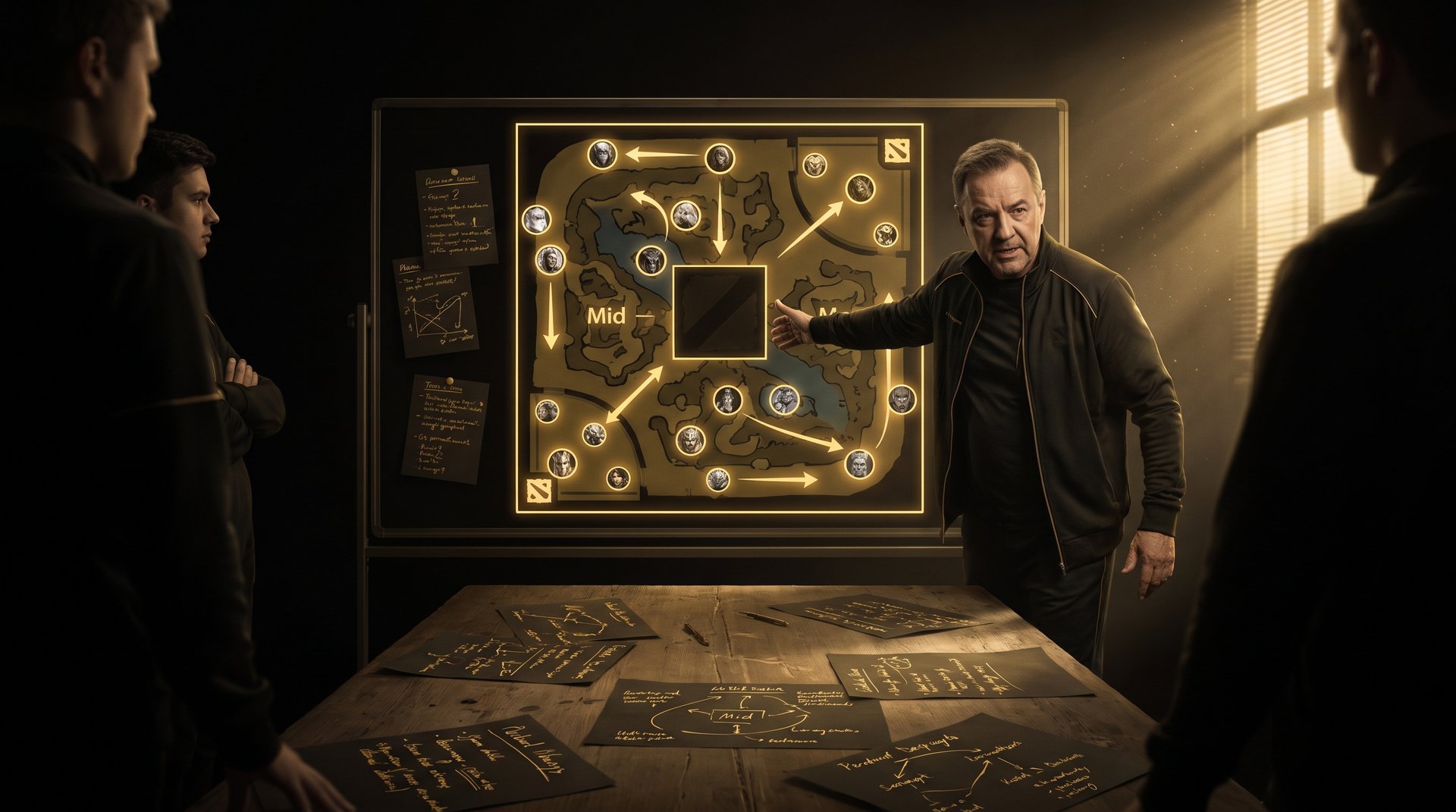
Topson did not simply replace TaiLung. He changed the operating system. That is the single best lens for reading LGD’s TI run.
TaiLung represented youthful tempo, high-ceiling growth, and a more natural long-term project. Topson represented emergency wisdom, lane manipulation, and instant respect in draft. Those are not interchangeable assets. When you swap one for the other four days before TI starts, every role around them has to reinterpret its job.
Lane pressure became less about brute forcing and more about map access
With an explosive young mid, teams often build around straight-line confidence: secure water runes, crash the lane, rotate first, force a support response. With Topson, the value often comes one layer later. He makes the enemy ask bad questions. Do we commit two heroes to the lane? Do we protect the support stack? Do we mirror his move or hold our tower?
That kind of pressure is harder to coordinate if the rest of the roster has not played with him for months. So when LGD still looked functional at points in Shanghai, that was not just Topson being Topson. It was evidence that the rest of the team did real adaptation work.
Supports had to cover more uncertainty
This is the part lower-MMR players always miss when they watch star mids. Creative mids look free because the support infrastructure behind them is working overtime. Someone has to protect side-lane equilibrium while mid becomes strange. Someone has to place wards that allow a non-standard farming route. Someone has to decide when “follow the mid idea” becomes “cut losses and reset.”
If you are a position 4 or 5 trying to climb, this is gold. Stop asking whether your mid is weird. Ask whether your next smoke, ward, or TP actually supports the weirdness. If it does, you get surprise value. If it does not, you create one of those awful pub games where everyone is playing a different patch in their own head.
Draft flexibility became the real asset
When a roster loses its original mid on August 9 and announces a stand-in on August 10, the only way to survive is to draft a wider tree of possible game states. You cannot rely on months of polished five-man sequencing. You need lanes that can recover if one matchup flips, teamfights that still function if the tempo changes, and side lanes that do not auto-lose while the mid player freelances.
That is also one reason I expect teams to keep studying this LGD run even after the roster split. In a season full of stand-ins, visa issues, and emergency rebuilds, a team that stayed competitive after such a violent late change becomes useful tape.
Pub Lessons You Can Steal Today
This is where the article becomes useful for actual MMR climbing. News is nice, but if you cannot turn it into better decisions, it is just spectator content.
1. If your roster changes, simplify your win condition immediately
LGD lost continuity and survived by finding functional structure fast. Pubs are the same. If your team last-picks something unexpected, if your lane matchup goes wrong, or if your offlaner suddenly wants to jungle, stop trying to play the “ideal” version of the draft. Pick the easiest version that still wins.
That usually means one of three calls: play for tower trading, play for first Roshan, or play for triangle denial. Too many 3K to 5K players burn games because they keep trying to execute the original script after the script is already dead.
2. Offlane pressure is about future space, not current kills
Wisper-style offlane impact works because pressure changes where the enemy is allowed to farm next. If you bully the carry out but then your team never invades the new safe camp pattern or contests the refill lane, you only won the lane cosmetically.
When we coach players at TeamSmurf, this is one of the most common gaps we fix. They know how to win a trade. They do not know how to convert that trade into map ownership. That is why a session of Dota 2 coaching often does more for climbing than another hundred random pubs.
3. Carries should become more conservative when the mid lane is unstable
Yuma’s value in a chaotic structure is the reminder that the carry does not need to become a hero every time the map gets messy. Often the correct response is the opposite: clean your farm pattern, keep a TP window, and refuse coin-flip fights until your item turns one area of the map back into yours.
That is the difference between “playing active” and “feeding in the name of helping.” The first is timing. The second is guilt.
4. Supports climb faster when they think in information layers
LGD’s supports had to rebuild certainty every time the team’s shape changed. Pub supports should copy that mindset. Your first ward is not just vision. It is a statement about what your team thinks the next three minutes look like. Your second ward either confirms the read or patches the mistake.
Players stuck in Ancient and low Divine often place perfectly legal wards that do not answer the actual next question. That is why their cores still die “with vision up.” The map was lit, but the important branch was dark.
5. Weird mids only work when side lanes stop demanding babysitting
Everyone loves the Topson fantasy. Very few players earn it. The reason is simple: unusual mid patterns are only strong when the other four heroes are not already bleeding. If both side lanes are unstable, your weird mid stops being innovation and starts being abandonment.
So if you want to copy the style, do it properly. Stabilize one side lane. Secure one support rotation window. Then use the weird movement to hit a map point the enemy thinks is safe.

What This Means for the Next Season
The breakup matters because the next season starts fast. PGL Wallachia Season 9 begins on September 17 with a $1,000,000 prize pool, so orgs do not have the luxury of a long think. Players with recent TI reps and proven LAN composure are exactly the type that move first in this market.
My expectation is that the ex-LGD names get split across multiple rebuilds rather than staying together unchanged. The reason is not chemistry failure. It is market logic. Different teams will want different pieces of the package:
- Need offlane aggression? Wisper becomes attractive immediately.
- Need carry stability? Yuma fits better than flashier but noisier options.
- Need supports who can survive panic conditions? KJ and Thiolicor have a case.
- Need a one-event ceiling spike? Everyone asks about Topson.
LGD’s own future is harder to call. The org could rebuild with a new roster, step back again, or stay flexible until a better opportunity appears. What matters more for fans is that this breakup says something about the current Dota market: legacy brands are willing to move fast, but they are not gifting anyone long runway.
That should also shape how pub players think about their own improvement. The scene is harsher, faster, and less patient than people admit. The players who rise are not always the most gifted. They are often the ones who adapt quickest when the original plan dies. That is why strong account recovery and bracket climbing are less about theoretical perfection and more about fast practical decisions. If you are tired of learning those lessons the slow way, the best route is still either a focused MMR boosting plan, a vetted specialist boosting service comparison, or a proper strategy session through TeamSmurf.
And yes, the safety question still matters if you go that route. If you are weighing options, read TeamSmurf’s breakdown of whether Dota 2 boosting is safe before you buy anything. Most players ask that after they pay. Smart players ask it first.
FAQ
Want Faster Improvement Than Post-TI Guesswork?
You can study every roster move in the scene, or you can take the useful parts straight into your own games with help from Immortal players who already know what wins on the current patch.
Get MMR Boost Book Coaching Fix Low Priority