

Innate Abilities in Dota 2: What They Are and the Ones That Change How You Play

Every hero in Dota 2 has one. It sits above your regular ability bar, it never takes up a skill slot, and it is always on — whether you press a button or not. Innate abilities are passive bonuses baked into a hero identity at a fundamental level, and since Valve reworked the entire system in Patch 7.41, they have become one of the most important mechanics in the game to understand.
This guide covers exactly what innate abilities are, how they work in the current 7.41f patch, which heroes have the most gameplay-changing innates, and how they differ from talents. If you have been ignoring innates or just treating them as minor stat bonuses, this article will change how you think about hero selection and matchups.
Patch verified: 7.41f. All innate ability mechanics described in this article reflect the current patch state. Specific base values may be fine-tuned in future minor patches — always check in-game tooltips for the latest exact numbers.
In This Guide
What Are Innate Abilities in Dota 2?
An innate ability in Dota 2 is a passive, hero-specific bonus that exists outside the normal four-ability layout. Every hero has exactly one innate ability. It does not occupy ability slots Q, W, E, or R. It cannot be activated in most cases. It is simply always present, doing its job in the background — from the moment the game starts until the last hero falls.
Valve introduced innate abilities in Patch 7.33 (May 2023) as part of a broader effort to give every hero a unique mechanical identity. Before innates, some heroes felt interchangeable at a basic level — their stats differed but their kit structure was the same. Innates solved this by adding a layer of passive mechanics that reflected each hero conceptually. Lifestealer gets faster as he levels up. Naga Siren gets harder to hit when illusions surround her. Techies still explodes when he dies. These are not just stat bonuses; they are personality mechanics.
Innates are visible in the hero UI during drafting and in-game. In the ability bar, the innate ability appears as a smaller icon separate from the main ability row. Hovering over it shows the full mechanic description and — since the 7.41 rework — a clear breakdown of how the ability scales with hero level.
Why Innates Matter for Your Matchups
Understanding innate abilities matters most in two situations: picking heroes and itemizing against them. When you pick Naga Siren, knowing that her Eelskin innate gives her evasion means you need to prioritize True Strike items like Monkey King Bar to fight her effectively. When you play Lifestealer, knowing his attack speed innate scales with hero level tells you exactly how strong he will be at level 6, 12, and 18 — and when to look for fights.
In the current 7.41f meta, where Facets have been removed and much of that gameplay variety was absorbed back into hero kits, innate abilities carry more weight than ever. Many heroes received significant innate reworks in 7.41, and ignoring them means missing a core part of what makes a hero strong right now. If you are trying to climb MMR consistently, understanding what innates do in matchups is a genuine edge over players who do not.
The scope of innate abilities spans the entire hero pool. Some innates are straightforward flat-stat bonuses. Others create entirely new interaction systems. The ten heroes covered later in this article represent the extreme end — innates so powerful or mechanically unique that they define how you approach the hero both as a player and as an opponent.
How Innate Abilities Work in Patch 7.41f
The 7.41 patch overhauled the innate ability system significantly. If you learned about innates before March 2026, you need to understand what changed.
The New Level-Scaling System
Before 7.41, innate abilities in many cases scaled based on ability levels — meaning they got stronger when you leveled specific skills. This created awkward situations where upgrading one ability would silently buff a passive you might not have noticed. In 7.41, Valve standardized the system.
Innate abilities now scale per hero level, not per ability level. Every innate has a base value at level 1 and increases by a fixed increment with each hero level. This makes innates more predictable and rewarding to understand — you can calculate exactly how strong a hero’s innate will be at any point in the game just by knowing their level.
For example, Lifestealer’s innate grants +5 attack speed per hero level. At level 10, that is +50 attack speed added on top of his normal stats. At level 25, it becomes +125 attack speed. This is a massive, compounding advantage over an agility-based carry who gets attack speed only from items. And it requires no item investment at all. Understanding this level breakpoint is what separates Lifestealer players who time their fights correctly from those who pick fights at the wrong level.
The New Innate Ability UI
Patch 7.41 added a new UI element to every innate ability tooltip. When you hover over an innate icon in-game, you will see which specific parameters increase with level and their current values. This eliminates guesswork. You can see “current bonus: +X” at a glance, which is especially useful for checking where an enemy hero stands mid-game.
To check an enemy’s innate mid-game: click on the enemy hero to open their unit panel, then hover over the small innate icon in the lower-left area of their ability row. The tooltip shows both the base mechanic and the current scaled value based on their current level. This is information that was always theoretically accessible but is now surfaced cleanly in the UI — no more memorizing scaling tables for every hero you face.
Facet Power Absorbed Into Innates
With Facets removed in 7.41, Valve redistributed much of that gameplay variety. In many cases, the strongest or most interesting Facet option for a hero was absorbed directly into their innate ability or regular kit. This means some innates in 7.41f are considerably more powerful than their pre-7.41 versions, because they now contain mechanics that were previously locked behind a Facet choice.
The net result: 7.41f innates punch harder than they did in 7.40 and earlier. Heroes whose best Facets mapped cleanly into their innates came out of the rework stronger. Heroes whose Facets did not absorb well into innates — Treant Protector, Razor, Crystal Maiden — suffered winrate drops. Understanding which heroes benefited from this absorption versus which ones lost out helps you read the current meta more accurately.
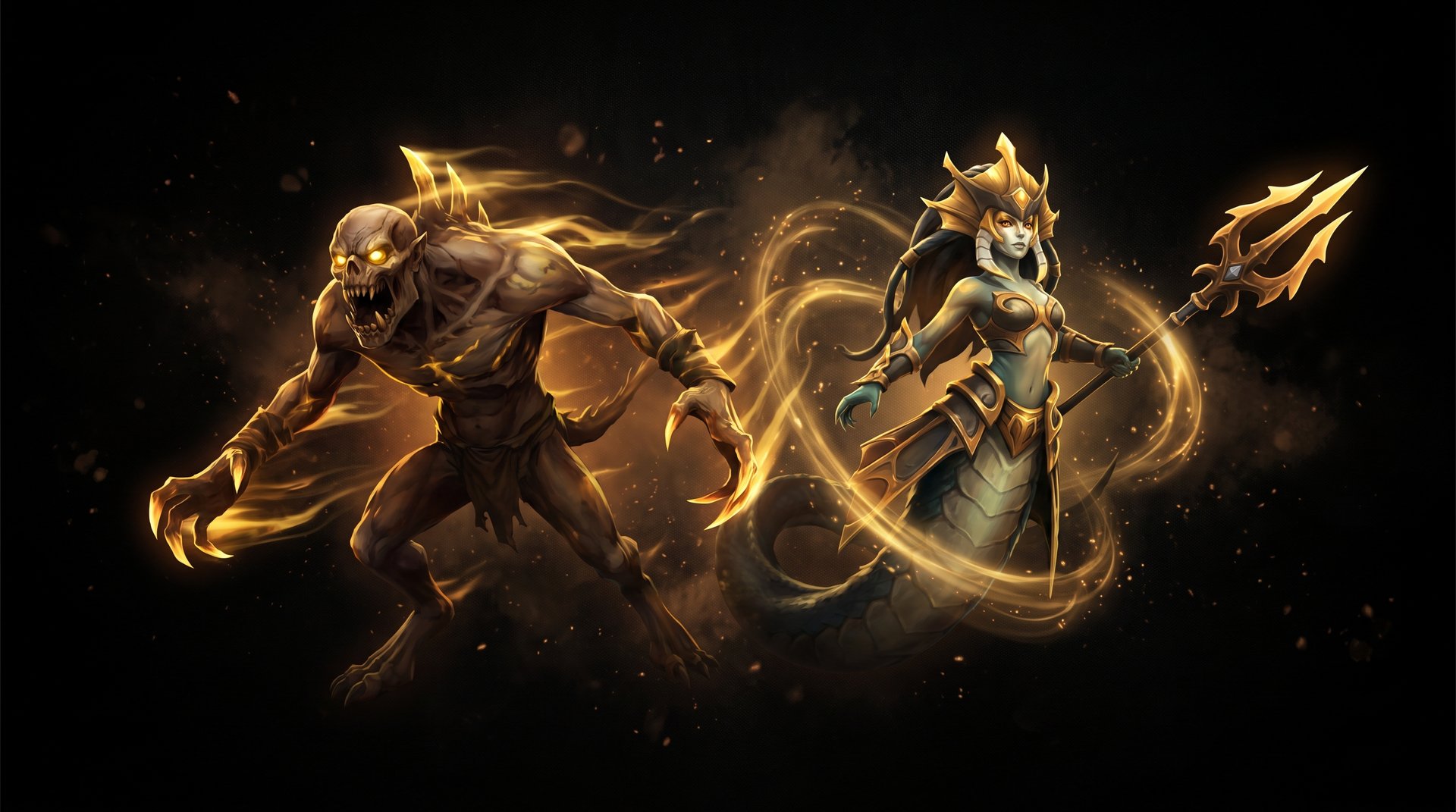
10 Innate Abilities That Change How You Play
Not all innates are equal. Some are minor stat padding. Others fundamentally change how a hero scales, how you itemize, and how you approach the game. Here are the ten most gameplay-impactful innates in the current 7.41f patch — explained from a high-MMR perspective.
1. Lifestealer — The Attack Speed Engine
Lifestealer’s innate grants +5 attack speed per hero level. This is one of the most transparently powerful innates in the game. It is permanent, stacks with all attack speed sources, and scales throughout the entire game.
At level 6, you have +30 attack speed before any items. At level 12, +60. At level 25, +125. For a hero who wins through raw physical DPS and lifesteal, this free attack speed acceleration is enormous. It means Lifestealer gets value out of damage items faster, because he is already swinging quickly without attack speed investment. Combined with the Feast passive (which lets him steal HP% with each attack), every attack speed point directly translates to survivability.
This innate is one of the core reasons Lifestealer saw a +7.55% winrate jump in Patch 7.41 and has remained a top carry pick throughout 7.41f. He attacks with the aggression of an agility carry but the HP pool of a strength carry — and the innate is what bridges that gap.
2. Naga Siren — Eelskin Evasion Machine
Naga Siren’s Eelskin innate provides 5% base evasion plus an additional 5% per nearby illusion, scaling to 8% per illusion at higher hero levels. Because Naga Siren consistently fields two, three, or four illusions at once, her effective evasion in a real fight is substantial — often reaching 25-30% or higher when illusion count is full.
This innate changes how you itemize against Naga. Monkey King Bar is not just situational — it becomes almost mandatory to attack her reliably in full-illusion scenarios. Illusion-stripping abilities and items also take on extra value, since killing her illusions reduces her effective damage reduction. Naga players, meanwhile, should understand that staying near illusions is not just about damage output — it is also about passive survivability from the evasion stacking.
3. Doom — The Punishment Pulse
Doom’s innate triggers a damage pulse that deals 15% of the total damage an enemy received over the past 2.5 seconds, distributed across nearby enemies in an AoE radius. The pulse threshold and scaling increase at hero levels divisible by 6 — levels 6, 12, 18, and 24.
In practice, this makes Doom extraordinarily punishing in sustained fights. Every source of damage — his own abilities, allied attacks, item procs — contributes to the damage threshold that triggers the pulse. In a teamfight where Doom is present and enemies are taking sustained hits, the pulse fires repeatedly, adding significant AOE pressure that requires no additional input from the Doom player beyond being in the fight.
This innate rewards aggressive, fight-heavy Doom play. Sitting back does not charge the pulse. Being in the thick of a fight, where damage is flying in all directions, maximizes it. Doom players who understand this innate naturally develop a more proactive laning and fighting style than those who see him as purely an Ult-bot.
4. Techies — Death Barrel
Techies’ innate is one of the most iconic kill-confirmation tools in the game: when Techies dies, a green barrel spawns at the death location and explodes 1.5 seconds later. The barrel deals significant AoE damage to any enemies standing on the spot where Techies fell.
This innate was reintroduced in 7.41 as a callback to Techies’ legendary pre-rework kit. In context: Techies is rarely difficult to kill. He is squishy, often caught out of position, and frequently focused on placing mines rather than fighting. The death barrel punishes greedy enemies who stand on his corpse to contest the kill gold or deny him. At high-level play, experienced players know to immediately disengage from a dying Techies — which means the barrel alone changes the spatial geometry of fights around him, forcing enemies to give him space even in death.
5. Bristleback — Spiny Shell and Quill Stack Retention
Bristleback’s innate, Spiny Shell, is central to his lane presence and late-game scaling. The core mechanic: Quill Spray stacks built up during a fight are retained rather than instantly decaying, giving Bristleback a persistent DPS threat that carries over between encounters.
Quill Spray stacks increase the damage of each subsequent shot fired. Without stack retention, Bristleback resets between fights and must rebuild his DPS from zero each engagement. With the innate, entering a second fight with existing stacks means his Quill Spray damage output starts high immediately — a significant advantage in the chaotic multi-fight skirmishes that define mid-game Dota 2.
The Spiny Shell component also provides passive armor, making Bristleback tankier than his raw stats suggest. This innate is a large part of why itemizing against Bristleback specifically — knowing that physical mitigation matters more than magic resistance, and that prolonged fights benefit him more than quick burst exchanges — is important for anyone facing him in the offlane.
6. Huskar — Berserker’s Blood
Huskar’s Berserker’s Blood innate is a defining mechanic that makes him one of the most dangerous heroes to chase: as his HP decreases, he gains increasing attack speed and magic resistance. At very low health, these bonuses become extreme.
This creates the counterintuitive situation where a half-health Huskar is significantly more dangerous than a full-health one. The magic resistance component specifically counters the most common instinct when finishing a low-HP hero — throwing nukes and spells — while the attack speed makes him lethal in close quarters even with minimal items. Players who understand Berserker’s Blood know not to chase a low-HP Huskar without either reliable physical burst damage or a hard disable that stops him from attacking.
This innate is one of the clearest examples of an ability that requires matchup knowledge to play against correctly. If you want to understand why Axe, Bane, and heroes with reliable disables counter Huskar better than spell casters, Berserker’s Blood is the answer.
7. Pudge — Flesh Heap
Pudge’s Flesh Heap innate provides permanent strength gain from nearby hero deaths. Each time a hero dies near Pudge — enemy or ally — he gains a stack of strength that stays with him for the rest of the game. Strength adds HP and HP regeneration at a rate of 22 HP and 0.1 HP regen per point.
The gameplay impact is cumulative and significant over time. A Pudge who participates actively in fights and lanes near dying heroes snowballs into an increasingly tanky threat with no item investment required. After 40-50 stacks across a normal game, the bonus HP is meaningful and starts to compound with HP amplification items.
Pudge players should actively position near dying enemies and allies to maximize Flesh Heap accumulation. Avoiding fights early — often correct for survival — costs Pudge innate stacks that would improve his late-game durability. High-MMR Pudge play involves a conscious trade-off: take risks to be near kills, because each stack compounds his power for the rest of the game.
8. Crystal Maiden — Arcane Aura
Crystal Maiden’s Arcane Aura innate provides bonus mana regeneration to all nearby allied heroes. This is a global team-affecting passive — every ally within radius benefits continuously throughout the game, which has historically made Crystal Maiden one of the most impactful support draft picks in coordinated play.
Understanding this innate matters for draft analysis more than individual gameplay. Teams with multiple high-mana-cost heroes — Leshrac, Invoker, Enigma — benefit enormously from having Crystal Maiden in the lineup, because Arcane Aura allows those heroes to cast more frequently without constant mana item investment. The aura effectively frees up item slots for combat items on allied spell casters.
Crystal Maiden was a winrate loser in Patch 7.41 (-3.5%) due to losing a powerful Facet that had amplified her ultimate. However, her Arcane Aura innate itself remains functional and impactful. Even in a weaker patch for her personally, the team-wide mana sustainability she provides through the innate justifies her draft slot in the right lineup.
9. Arc Warden — The Tempest Double Duplication Mechanic
Arc Warden’s ultimate, Tempest Double, creates an illusion that independently controls its own full set of abilities and items at the moment of cast. While technically an ultimate rather than a standalone innate, the duplication mechanic is so central to Arc Warden’s kit identity — and so closely tied to how his innate system interacts with item usage — that it belongs in any serious discussion of game-changing hero mechanics.
The Tempest Double is not a distraction illusion. It is a second Arc Warden that can cast Flux, Magnetic Field, Spark Wraith, and use active items independently. When Arc Warden has Gleipnir, the Double has Gleipnir. When he has Daedalus, the Double has Daedalus. The Double deals full ability damage and applies item effects fully. Killing the Double does not end Arc Warden.
This is why Arc Warden has one of the highest skill ceilings in the game and why building expensive aura and activated items is so justified on him — every item you buy is effectively two items. Understanding this from the opponent’s perspective requires treating Arc Warden in every fight as two full heroes, not one hero with a summon.
10. Batrider — Absorbed Facet Power in the Innate Layer
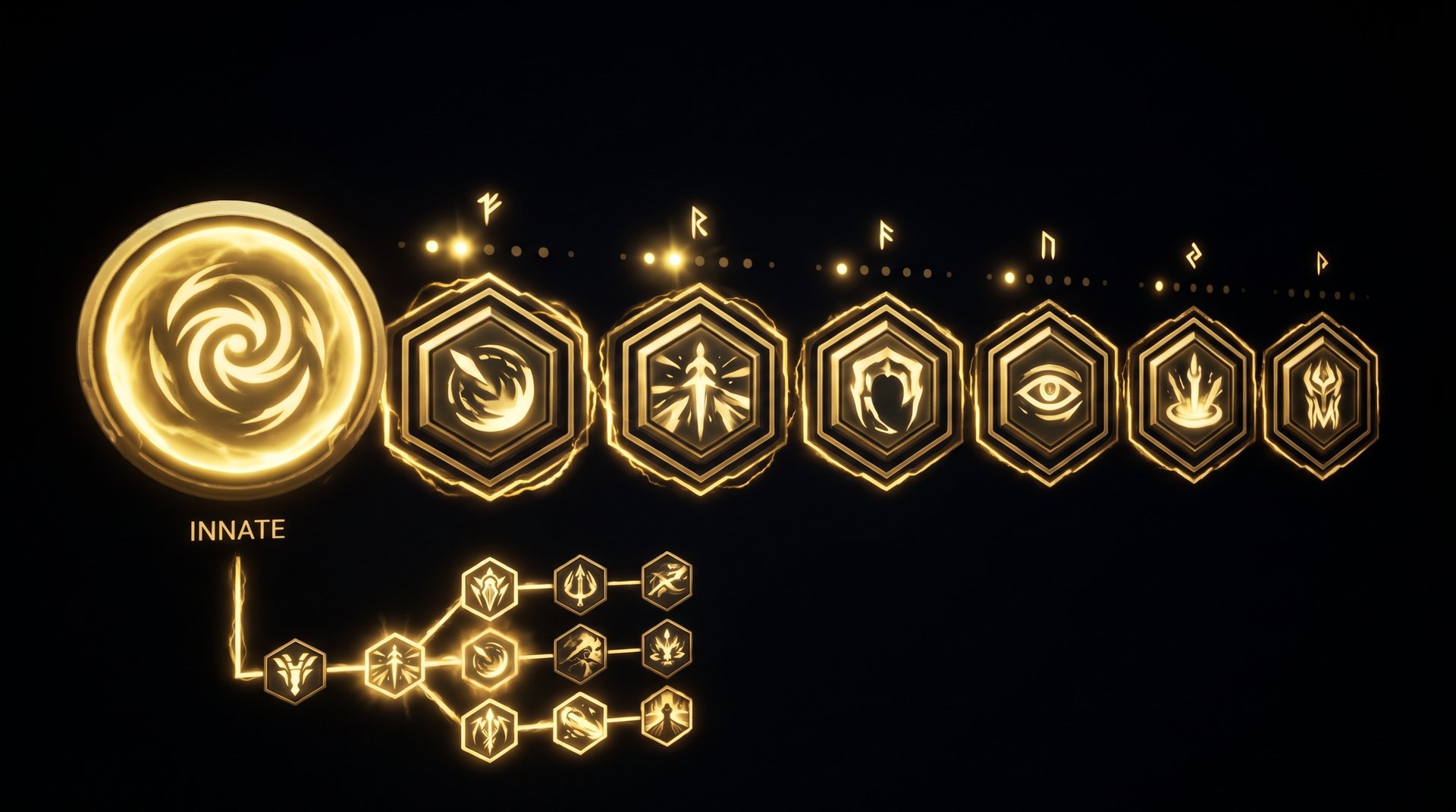
Batrider is the clearest example of how the Facet-to-innate absorption worked in 7.41. Before the patch, his Facets defined much of his power and neither option felt transformative — the result was a sub-47% winrate. In 7.41, his innate absorbed the strongest mechanical elements of his previous Facet choices, resulting in a significantly stronger baseline kit with no player input required.
His reworked innate enhances both Firefly and Flamebreak, expanding effective range and improving the synergy between his core spells. Combined with the reworked Shiva’s Guard (which now provides +75 AoE to ability radii), Batrider’s spells cover an area that was previously achievable only with specific item combinations. The result: Batrider posted the largest single-patch winrate jump of 7.41 at +9.36%, reaching 56.08%.
His example matters beyond just one hero. It demonstrates what happens when Facet power is correctly absorbed: the hero becomes meaningfully stronger without requiring players to make any changes to their build or decision-making. The power is simply there, in the innate layer, always.
Innate Abilities vs. Talents vs. Facets: What Is the Difference?
With multiple passive mechanics in Dota 2’s history, it is easy to conflate innate abilities with talents or the now-removed Facet system. Here is a direct comparison of how each system works and what distinguishes them.
| Mechanic | When Active | Player Choice? | Scales With | Status in 7.41f |
|---|---|---|---|---|
| Innate Ability | Always (passive from game start) | No — always active | Hero level (base + increment) | Active — reworked in 7.41 |
| Talents | Active after selection | Yes — chose one of two options at levels 10, 15, 20, 25 | Fixed bonus per level chosen | Active — unchanged system |
| Facets | Active for full match after pre-game selection | Yes — selected before match start | Varied per Facet design | Removed in Patch 7.41 |
Innates vs. Talents
Talents are chosen at levels 10, 15, 20, and 25. At each level, you pick one of two options — stat bonuses, ability upgrades, or unique effects. They require active decision-making at the moment of leveling. Innate abilities require nothing — they are always on, always scaling, and cannot be changed or switched.
The interaction between innates and talents is important for high-level play. Some talents directly enhance a hero’s innate ability — adding range, increasing stack thresholds, or improving the passive scaling rate. When this happens, leveling that talent effectively upgrades both the talent benefit AND the innate mechanic simultaneously. Checking your hero’s talent tree for innate-enhancing options is worth doing in the laning phase.
Innates vs. Facets (Removed)
Facets were pre-game passive modifiers introduced in Patch 7.36 and removed in Patch 7.41. They were chosen from two or three options before the match started — similar in structure to innates, but with genuine player choice. The key difference: Facets introduced pre-game decisions. Innates do not. You get your hero’s innate regardless of what you choose or how you play.
With Facets removed in 7.41, much of what you see in current innates is former Facet content absorbed into the passive layer. The strongest Facets became permanent innate mechanics. The rest were cut. This is the central story of the 7.41 patch for hero design — consolidation of variety into the baseline kit.
Which Innate Abilities Are Worth Building Around?
Some innates are passive background bonuses that require no adjustment to your item build. Others should fundamentally change how you prioritize items and fight timings. Here is a breakdown by role for the most impactful innates.
Carry Players
Lifestealer’s attack speed innate means you do not need to rush attack speed items early. Prioritize raw damage and HP first — the innate handles attack speed progression automatically, and the result is a hero that attacks with surprising speed before he has finished his core build. Naga Siren’s Eelskin evasion means you can delay Butterfly until later, since you have passive physical damage mitigation built in through illusion proximity. Arc Warden’s Tempest Double interaction means item value is doubled on every activated item — prioritize items with strong actives over passive stat sticks wherever possible. For carry players looking to understand which heroes convert innate power into ranked results fastest, our best Dota 2 boosting services guide includes Immortal-rank picks for the current meta.
Support Players
Crystal Maiden’s Arcane Aura reduces the need for mana investment by allied heroes early in the game. If you are drafting teammates for a CM lineup, pick mana-hungry heroes more freely. If you are playing against CM, assume your enemies have 30-50% more effective mana than their item builds suggest. Pudge support players should stay near dying heroes consistently to stack Flesh Heap. This means active fight participation and lane aggression matter more than passive warding. If you need help accelerating your understanding of these mechanics at the support role, working with a high-MMR coach who understands the current innate landscape is one of the fastest paths forward.
Offlane Players
Bristleback players should look for sustained fights rather than quick burst exchanges. His quill stack retention rewards staying in fights longer, where stacks accumulate and DPS escalates over time. Running from a fight at 10 stacks and re-engaging with them is a major advantage unique to this innate. Doom players should position aggressively to trigger the punishment pulse consistently — the innate rewards fight participation, not passive farming. If you are trying to raise your rank on the offlane role, both of these heroes have innates that reward the right habits: stay in fights longer, position aggressively.
Common Mistakes Players Make With Innate Abilities
Even experienced players make recurring errors around innate abilities. These are the most common in pub play right now.
- Chasing low-HP Huskar with spells or nukes. Berserker’s Blood peaks at low HP. His magic resistance at 20-30% HP makes spells ineffective. Chase him only with physical burst or reliable disables — not nukes.
- Standing on a dying Techies. The death barrel explodes 1.5 seconds after he dies. The correct response to seeing Techies die in front of you is to immediately move away from his corpse. This mistake kills players in pub games constantly.
- Not buying Monkey King Bar against Naga Siren with illusions. True Strike bypasses evasion. Against a Naga with 3-4 illusions out, your attacks without MKB have a significant chance to miss the real hero and illusions alike. MKB is mandatory, not situational.
- Underestimating Lifestealer’s attack speed at level 8-10. Because of the innate scaling, Lifestealer attacks noticeably faster than his agility stat suggests at early-to-mid levels. Do not pick fights against him expecting a slow strength carry — he is already swinging hard before he has items.
- Ignoring Crystal Maiden’s mana aura in team comp analysis. This innate changes how often every allied hero can cast spells. Picking a mana-hungry lineup against CM means your enemies are effectively 30-50% more efficient on mana than their builds suggest. Account for this in matchup decisions.
- Not accounting for Pudge’s HP scaling from Flesh Heap stacks. A Pudge who has been in many fights has considerably more HP than his item build and base stats show. Check his stack accumulation in the scoreboard before initiating on him — what looks like a killable target may have 600+ bonus HP from accumulated stacks.
Frequently Asked Questions
Master the Current Patch Faster
Innate abilities, item reworks, neutral item changes — Patch 7.41f is one of the most mechanically dense updates Dota 2 has seen. Our Immortal-rank boosters and coaches play this patch at the top of the ladder daily. Whether you want to climb MMR with the current meta heroes or break through a persistent rank ceiling, we can help.
Get MMR Boost Get Coaching


