How to Pay for Dota 2 Boosting: PayPal, Crypto, and Cards Compared

You found the service, picked your rank target, and the order form is open. Then comes the question most guides skip entirely: which payment method should you actually use?
The choice matters more than it looks. Credit cards, PayPal, and cryptocurrency each carry different rules around chargebacks, refunds, privacy, and transaction fees. Pick the wrong one and you either expose more personal data than you need to, or you limit your recovery options if the booster stops delivering. Pick the right one and the whole process is clean, private, and recoverable if something does go wrong.
This guide breaks down every realistic option — credit and debit cards, PayPal, Bitcoin, Ethereum, and stablecoins like USDT — with a side-by-side comparison table, a list of payment red flags to watch for, and a section on how legitimate services like the best Dota 2 boosting services handle transactions.
What Is Covered
Why the Payment Method Matters for Dota 2 Boosting
When you buy a physical product online, payment method selection is mostly about convenience. Dota 2 boosting is different for several important reasons.
First, the service is intangible and delivered over days or weeks. You hand over access to your account — or at least your login credentials for duo lobbies — before the full service is complete. That creates a window where disputes become complicated. If something goes wrong partway through, whether the booster stops logging in or the wrong rank tier gets targeted, you need a payment method that gives you realistic options for escalation.
Second, the Dota 2 boosting market is global. A buyer in Australia might be paying a service registered in Eastern Europe, Southeast Asia, or the UAE. Cross-border transactions introduce currency conversion fees, additional fraud-screening delays, and different consumer-protection laws depending on which payment rails you use.
Third, some buyers care about discretion. Not everyone wants a charge labeled with a gaming-service name appearing on a bank statement. Certain payment methods handle this more cleanly than others.
Fourth, the platform a service uses to process payments signals how professional they are. A legitimate service will offer multiple options and be transparent about fees and refund terms. A sketchy one will push you toward bank transfers, gift cards, or obscure wallets with no recourse — which is itself a red flag covered later in this guide.
Before paying for any boost, think about three things: What happens if I need a refund? How much personal information am I sharing? And are the fees and terms clearly stated before checkout?
Credit and Debit Cards: The Most Common Choice
The majority of Dota 2 boosting purchases are completed with a credit or debit card via a standard payment processor — usually Stripe or a regional equivalent. This is the default option for most buyers and for good reason: checkout takes under a minute and the funds are handled by a regulated financial intermediary.
How Card Payments Work for Boosting Services
When you pay by card, you are transacting with the payment processor, not the boosting service directly. The service integrates Stripe or a similar processor, and your card details never touch the service’s own servers — they go straight to the processor’s encrypted environment. The service receives a confirmation that payment cleared along with a transaction ID and the amount.
This separation matters. Even if the boosting service had weak data security on their end, your card number is protected by the processor’s infrastructure. It also means refunds and disputes go through the processor, not through informal negotiation with the service itself.
Pros of Paying by Card
- Chargeback rights: If the service fails to deliver and refuses to refund, you can file a chargeback with your card issuer. Most card networks give you 60 to 120 days to dispute a charge. For services that simply disappear, this is your strongest protection.
- Instant processing: Card payments clear in seconds. Your order goes live immediately without any waiting period for payment to confirm on a blockchain or clear a bank hold.
- No third-party account required: You do not need to register with a wallet provider or fund a separate account. Enter card details, pay, done.
- Automatic currency conversion: If the service prices in USD and you hold EUR or GBP, your card issuer handles conversion. You see the final charge in your home currency on your statement.
- Strong fraud monitoring: Card networks flag unusual patterns. If someone steals your card and tries to use it, the same infrastructure that protects your spending protects you here.
Cons and Things to Watch
- Debit cards offer less protection than credit cards: A credit card chargeback usually pauses the debit while the dispute resolves. A debit card dispute pulls money that has already left your account — recovery is possible but slower and not always guaranteed depending on your bank.
- Some issuers block gaming-service charges: A small number of banks categorize boosting-adjacent merchants as high-risk and auto-decline the transaction. If your first card attempt fails, try a different card or contact your bank to whitelist the merchant category. This is more common with debit cards from smaller regional banks.
- Statement visibility: The merchant name appears on your statement. Legitimate services usually use neutral DBA (doing business as) names, but this varies by provider.

PayPal: Familiar but More Complicated Than It Looks
PayPal is the most recognized online payment brand globally, which is why many buyers default to it without much thought. For Dota 2 boosting specifically, the picture is more nuanced than the brand recognition implies.
PayPal Buyer Protection — Does It Actually Apply?
PayPal’s buyer protection program covers tangible goods and many digital services. However, PayPal’s terms have historically excluded certain service categories, and the exact coverage for gaming services varies by region and how the merchant has configured their account.
In practice, many buyers have successfully filed PayPal disputes for boosting orders that went undelivered. The typical process involves submitting a case through PayPal’s Resolution Center, after which PayPal places a temporary hold on the funds during investigation. If the dispute is found in the buyer’s favor, a refund is issued. For straightforward non-delivery cases, this tends to work reasonably well.
The complication arises with partial delivery. If 60 percent of an MMR boost was completed before the booster stopped, a PayPal dispute becomes ambiguous. There is no clean metric for “how much of the service was delivered” and outcomes vary significantly depending on how both parties present the case and what documentation exists.
The Chargeback Calculation From the Service’s Side
PayPal chargebacks are disproportionately expensive for small merchants compared to card-processor chargebacks. Fees can reach $20 per disputed transaction plus the refunded amount. Services that have encountered fraudulent disputes — buyers who claim non-delivery after receiving the full service — sometimes add caveats around PayPal payments or charge a small processing surcharge.
This is not a reason to avoid PayPal as a legitimate buyer. It is context for why some services may hold PayPal orders for a short verification period before activating the booster, or why pricing for PayPal might be marginally higher than direct card payments.
When PayPal Makes Sense
PayPal is a good choice when you already have a funded PayPal balance and prefer a single-click checkout. It also adds one layer of abstraction between your bank account and the merchant, since the service sees only your PayPal email rather than any card or banking details.
For a safe Dota 2 boosting purchase, PayPal combined with a service that has a strong published refund policy gives you two recovery layers: the service’s own money-back guarantee first, and PayPal’s Resolution Center as a documented fallback.
Cryptocurrency: Bitcoin, Ethereum, and Stablecoins
A growing number of Dota 2 boosting services accept cryptocurrency, and adoption has increased steadily as wallets have become more user-friendly. For some buyers, crypto is the clear preferred option. For others, it raises unfamiliar questions. Here is a straightforward breakdown of what you need to know.
Why Crypto Is Common in the Boosting Industry
From the service’s perspective, crypto eliminates chargeback fraud entirely. Once a transaction confirms on-chain, no third party can reverse it. This lets services price crypto payments more aggressively — some pass savings back to buyers in the form of a discount in the 2 to 5 percent range.
From the buyer’s perspective, the main draws are financial privacy and efficient cross-border transfers. A buyer in South America paying a service in Europe with USDT avoids bank transfer fees, currency conversion markups, and international transfer hold periods that can delay order activation by 24 to 72 hours. The transaction settles in minutes regardless of geography.
Bitcoin (BTC): The Recognizable Option
Bitcoin is the most widely recognized cryptocurrency but often the least practical for boosting payments in the $30 to $100 range. Transaction fees on the Bitcoin network fluctuate and can spike to $5 to $30 during busy periods — a significant overhead on a $40 order. Confirmation times also vary between 10 minutes and several hours depending on network congestion and the fee you set.
Bitcoin works fine for larger orders where the fee represents a small percentage of the total, and for buyers who already hold BTC and prefer not to convert to another asset. For orders under $100, it is generally not the most efficient crypto option.
Ethereum (ETH): Faster but Volatile
Ethereum has faster confirmation times and is supported by most major crypto payment processors that boosting services use. However, ETH prices are volatile. A meaningful price drop between the moment you send and the moment the service finalizes the rate can cause a minor shortfall — though most services address this with a short tolerance window that locks the rate for 15 to 30 minutes from quote generation.
Ethereum network fees (gas fees) also fluctuate, though they are generally lower than Bitcoin fees for simple transfers. ETH is a solid option if you hold it and your order amount is above $75, where the gas fee becomes a small percentage of the total.
Stablecoins (USDT, USDC): The Most Practical Crypto Option
Stablecoins solve the volatility problem by pegging the token value to the US dollar. A USDT payment for $50 arrives as $50, full stop, regardless of what crypto markets do in the seconds between sending and receiving.
USDT on the TRC-20 network (Tron blockchain) in particular has near-zero transaction fees — typically under $0.50 — and confirmation in 1 to 3 minutes. This makes it the most technically efficient payment option for boosting purchases in the $30 to $200 range. USDC on Solana has similar characteristics. If you are comfortable setting up a non-custodial wallet, stablecoins offer the cleanest crypto payment experience.
The Privacy Angle
Crypto transactions are pseudonymous, not anonymous. The transaction is public on the blockchain but linked to a wallet address rather than your legal identity — unless you purchased the crypto through a KYC-verified exchange that ties the wallet to your name. For buyers who want gaming spending kept private from bank statements, cryptocurrency purchased via a non-KYC exchange or converted from an existing balance provides a meaningful privacy layer that no card or PayPal payment can match.
The Core Trade-Off: No Payment-Level Recourse
The same finality that makes crypto attractive to services is the buyer’s primary risk. There is no PayPal Resolution Center, no card network dispute process, and no bank to call. If the service takes your crypto and delivers nothing, your only avenue is the service’s own refund policy. If that fails, you have no payment-level backstop.
This means crypto payments should only be used with services that have a documented, clearly-worded refund guarantee and a track record you can verify. Saving 3 percent on fees by paying in crypto to a zero-reputation service is not a worthwhile trade.
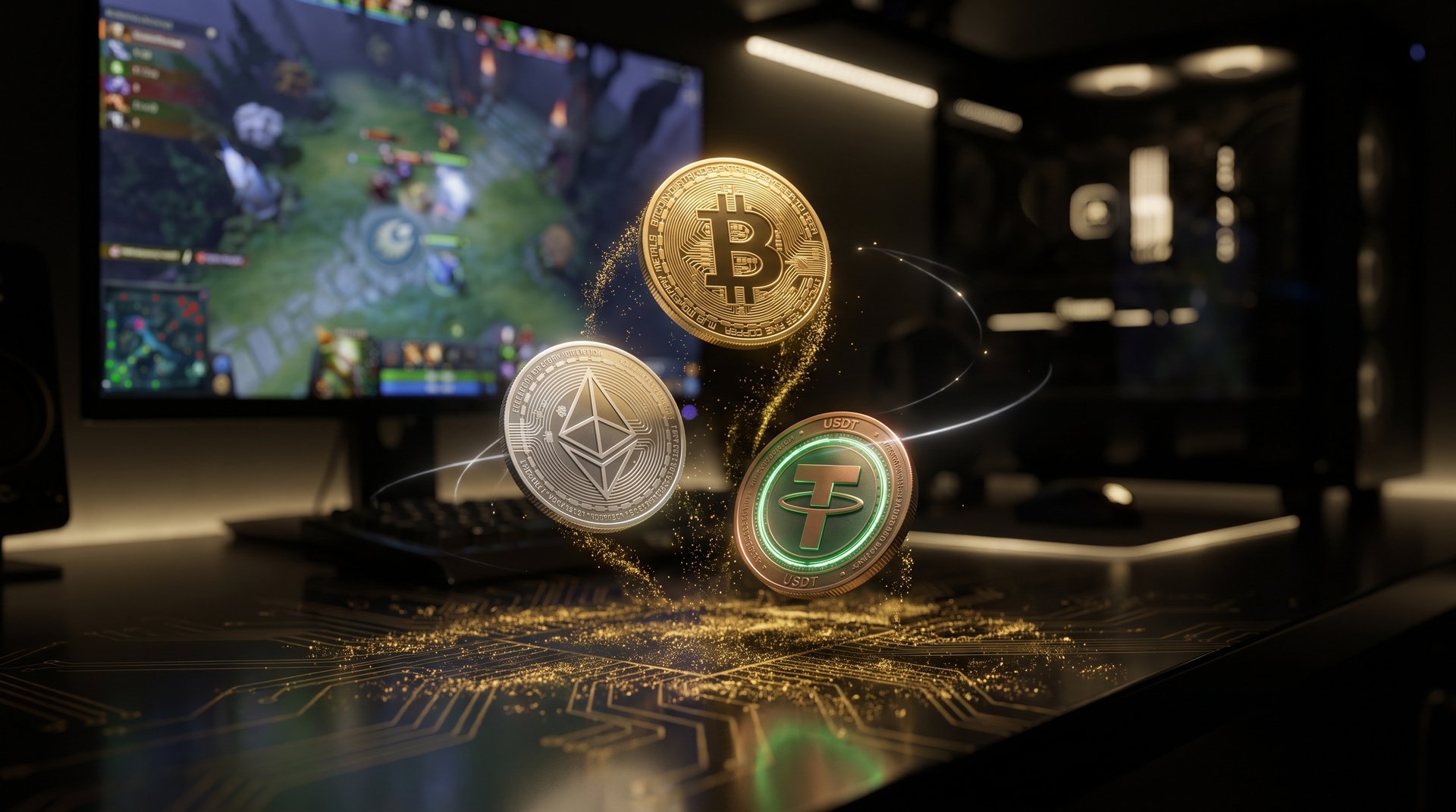
Payment Method Comparison Table
Here is how the main payment methods compare across the factors that matter most for a boosting purchase.
| Method | Buyer Protection | Privacy Level | Transaction Fees | Speed | Chargeback Available |
|---|---|---|---|---|---|
| Credit Card | Strong (card network dispute, 60-120 days) | Low | None to buyer | Instant | Yes |
| Debit Card | Moderate | Low | None to buyer | Instant | Limited |
| PayPal | Moderate (Resolution Center) | Medium | None to buyer | Instant | Via dispute |
| Bitcoin (BTC) | None | High | Variable ($1-30) | 10-60 min | No |
| Ethereum (ETH) | None | High | Moderate ($0.50-5) | 2-5 min | No |
| USDT TRC-20 | None | High | Near-zero (under $0.50) | 1-3 min | No |
Red Flags in Payment Handling
The way a service handles payments reveals more about its legitimacy than almost any other signal. These are the patterns that should prompt you to look elsewhere immediately.
They Only Accept Gift Cards or Prepaid Vouchers
No legitimate boosting service asks for Steam wallet codes, Google Play gift cards, or any kind of prepaid voucher as a payment method. Gift cards are irreversible, difficult to trace, and the preferred vehicle for virtually every online service scam documented in 2025 and 2026. If this is the only option offered, the service is a scam. Walk away.
They Ask for a Direct Bank Transfer to a Personal Account
Legitimate businesses use payment processors. They do not ask customers to wire money to a personal bank account — especially an international one. A bank transfer to a private account has effectively zero consumer protection. There is no dispute mechanism, no intermediary, and recovery is extremely unlikely if the service disappears.
No HTTPS on the Checkout Page
Any page that collects payment information must have a valid SSL certificate (the padlock icon in your browser bar and “https://” at the start of the URL). If the checkout page does not have this, any information you enter is transmitted in plaintext. Close the page immediately.
No Published Refund Policy Before Checkout
Any service worth paying should have a clearly stated refund or guarantee policy visible before you enter payment details. The absence of a refund policy is not an oversight — it is deliberate. It prevents buyers from referencing terms that would support a complaint or dispute. Services with legitimate track records are confident enough in their delivery to publish clear guarantees.
For a broader look at how payment scams intersect with service fraud, the guide on the biggest Dota 2 boosting scams covers documented cases from the past year.
Asking for Payment Outside the Official Website
A Discord account or Telegram contact claiming to represent a service and asking you to send payment directly to them — bypassing the website — is a social engineering attack, not a legitimate support interaction. Even if they share branding that looks like the real service, never initiate a payment through an unofficial channel.
Pressure to Pay Quickly Before a “Deal Expires”
Artificial urgency (“pay in the next 10 minutes or lose this price”) is a pressure tactic designed to prevent you from taking time to verify the service. Legitimate services do not time-pressure payment. Real promotions have published end dates and do not disappear in minutes.
How TeamSmurf Handles Payments
TeamSmurf processes payments through secure, industry-standard gateways. Credit and debit cards go through an encrypted processor — no card data is stored on TeamSmurf’s servers at any point. Crypto payments use a confirmed rate at order time, so price movement during the few minutes it takes to send a transaction does not cause shortfalls or order rejections.
Every order comes with a clear delivery guarantee. If the target rank is not reached, refunds are available. This matters most for buyers who choose crypto, since it provides a contractual backstop even without a payment-network dispute mechanism. The refund policy is visible before checkout, not buried in a terms-of-service link.
TeamSmurf is a Dota 2-only specialist service, which means the boosters handling your account are not generalist freelancers working across five different games. That focus is one of the reasons the delivery guarantee is credible — the team knows the game well enough to commit to ranked outcomes with confidence. You can see current pricing and get an instant quote on the Dota 2 MMR boost page without entering any payment information upfront.
If you are comparing services before deciding, the breakdown on the best Dota 2 boosting services page covers payment method availability, delivery guarantees, and verified pricing across the major providers.
Tips for Paying Safely Regardless of Method
These practices apply regardless of whether you pay by card, PayPal, or crypto.
Use a Dedicated Email Address
If you create an account with the boosting service using email login, consider using a separate email address for gaming purchases. This keeps your primary inbox clean and limits exposure if the service’s email list is ever compromised in a data breach. An alias address through a provider like ProtonMail or SimpleLogin takes two minutes to create.
Screenshot Your Order Confirmation
Before closing the order confirmation page, save the page or take a screenshot that clearly shows the order number, total amount paid, date, and any stated delivery timeframe. If you need to file a chargeback or dispute, this documentation is significant supporting evidence. An order number alone is sometimes enough to expedite a dispute resolution in your favor.
Verify the URL Before Entering Payment Details
Phishing sites that mimic popular boosting services exist and are occasionally promoted via Google ads. Always check the full domain name — not just the site branding — before entering any payment information. An extra hyphen, a different TLD (.net instead of .com), or a subdomain like “teamsmurf.scamdomain.com” are signs you are on a fake site. Bookmark the real service URL after your first verified visit.
For Crypto: Verify the Wallet Address Character by Character
Clipboard hijacking malware replaces a cryptocurrency wallet address you copy with an attacker’s address when you paste it. This is the most common way crypto payments are stolen during otherwise legitimate transactions. The protection is simple: paste the destination wallet address into a plain text editor first, then manually compare several characters from the beginning, middle, and end of the address against what is displayed on the service’s payment page before confirming the transaction.
Know What a Refund Actually Requires Before You Pay
Read the refund policy before paying, not after. Understand whether partial refunds apply, what the submission window is, and how requests are made. Services with strong MMR boosting processes and clear delivery commitments publish this information openly. Weak or absent refund terms are a substitute for confidence the service does not have.
Frequently Asked Questions
Ready to Place Your Order?
TeamSmurf accepts credit cards, debit cards, PayPal, and cryptocurrency — with a documented refund policy on every order. Get a live price quote in seconds without entering any payment details.